
24/7 Voice Automation Tools for Appointment Booking in Healthcare and Real Estate (2026)
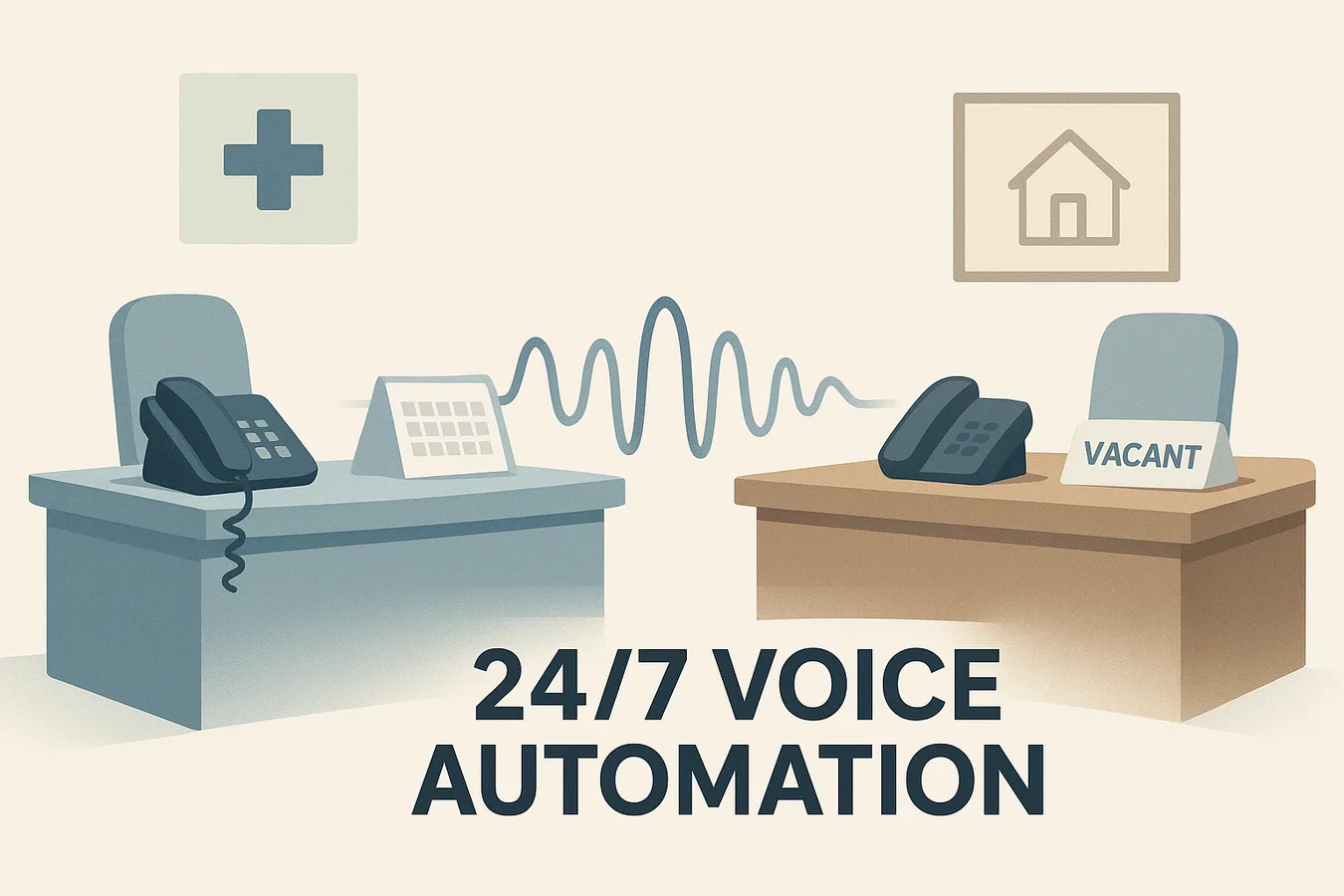
Healthcare practices and real estate agencies lose revenue every hour reception lines go unanswered. Voice automation tools now handle appointment booking around the clock, but platform selection must align with industry-specific compliance requirements and workflow patterns.
Key Takeaways
Healthcare voice automation requires HIPAA-compliant infrastructure with Business Associate Agreements, while real estate platforms must integrate TCPA opt-in verification and DNC list scrubbing
Workflow fit determines platform success more than feature counts—patient intake scheduling differs fundamentally from property showing coordination
Human handoff triggers separate routine scheduling (90% AI-suitable) from disputes, emotionally charged calls, and high-intent prospects requiring immediate agent intervention
Calendar integration depth—live bi-directional sync vs. One-way data entry—directly impacts double-booking prevention and operational efficiency
After-hours lead capture delivers measurable ROI when 30% of missed calls translate to lost appointments in real estate and healthcare practices
Healthcare and real estate voice automation tools both handle appointment booking 24/7, but the workflows diverge sharply: healthcare systems prioritize patient intake, appointment confirmation, and after-hours triage, while real estate platforms focus on showing scheduling, property inquiry routing, and lead qualification. The differentiation centers on regulatory compliance (HIPAA vs. TCPA), sensitivity thresholds for human handoff, and the autonomy each workflow can safely delegate to AI.
Healthcare Workflow: Patient Intake, Appointment Confirmation, and After-Hours Triage
Scheduling appointments occupies 40-50% of the reception staff's time in an average healthcare organization, dealing with hundreds of calls every day related to appointments, rescheduling, confirmations, and cancellations. Voice automation platforms like DIVA handle appointment booking, reminders, confirmations, and call routing for clinics, providing round-the-clock patient communication fully integrated with CRM and EHR systems. These systems must navigate HIPAA-compliant data handling, verify insurance eligibility during scheduling, and route urgent after-hours calls to on-call staff while deferring routine appointment requests to automated booking workflows. Calendar integration requirements extend beyond simple slot availability — healthcare platforms must check provider schedules across multiple systems, manage cancellation waitlists, and send confirmation communications that comply with patient consent frameworks.
Real Estate Workflow: Showing Scheduling, Property Inquiry Routing, and Lead Qualification
Real estate teams miss 30% of all incoming calls when staff members are busy or homeowners call outside office hours, creating immediate lead-capture urgency that 24/7 voice automation directly addresses. Platforms in this category handle property inquiry routing (project location, budget range, configuration, preferred site visit timing), qualify high-intent buyers through conversational questions, and book showing appointments without human delays. Speed to lead matters critically: voice AI agents can call web form leads immediately, optimizing speed to lead to 10 seconds or less. Unlike healthcare's patient-data protections, real estate workflows must comply with TCPA cold-calling regulations, DNC registry checks, and consent-based outbound dialing — automation here focuses less on triage sensitivity and more on competitive response time and high-volume simultaneous engagement.
Where Workflows Diverge: Compliance, Sensitivity, and Autonomy Thresholds
Patient data protection needs (HIPAA) demand encryption at rest and in transit, audit-logged access controls, and BAA-compliant vendor agreements; real estate platforms prioritize TCPA adherence (opt-in verification, time-zone-aware dialing, automated suppression lists). Emotional and high-intent conversation triggers differ sharply: healthcare AI must escalate chest pain inquiries or behavioral health crises to live staff immediately, while real estate automation hands off when a buyer signals readiness to negotiate terms or requests complex financing scenarios. Autonomy thresholds reflect this — healthcare platforms operate with tighter guardrails (script adherence, limited decision trees) to minimize clinical risk, whereas real estate agents tolerate broader conversational latitude to maximize lead qualification before human involvement.
Workflow alignment means little without regulatory compliance. Both industries face mandatory frameworks that constrain which platforms healthcare practices and real estate agencies can legally deploy.
Compliance Requirements: HIPAA for Healthcare, TCPA for Real Estate
Before evaluating natural language processing capabilities or calendar integration depth, voice automation platforms must satisfy mandatory regulatory frameworks that constrain platform selection. Compliance is not an optional feature layer, it is the foundational constraint that determines whether a platform can legally operate in healthcare or real estate outbound calling contexts. Platforms that lack HIPAA-aligned infrastructure or TCPA opt-in verification break the entire use case regardless of feature sophistication.
HIPAA Compliance for Healthcare Voice Automation
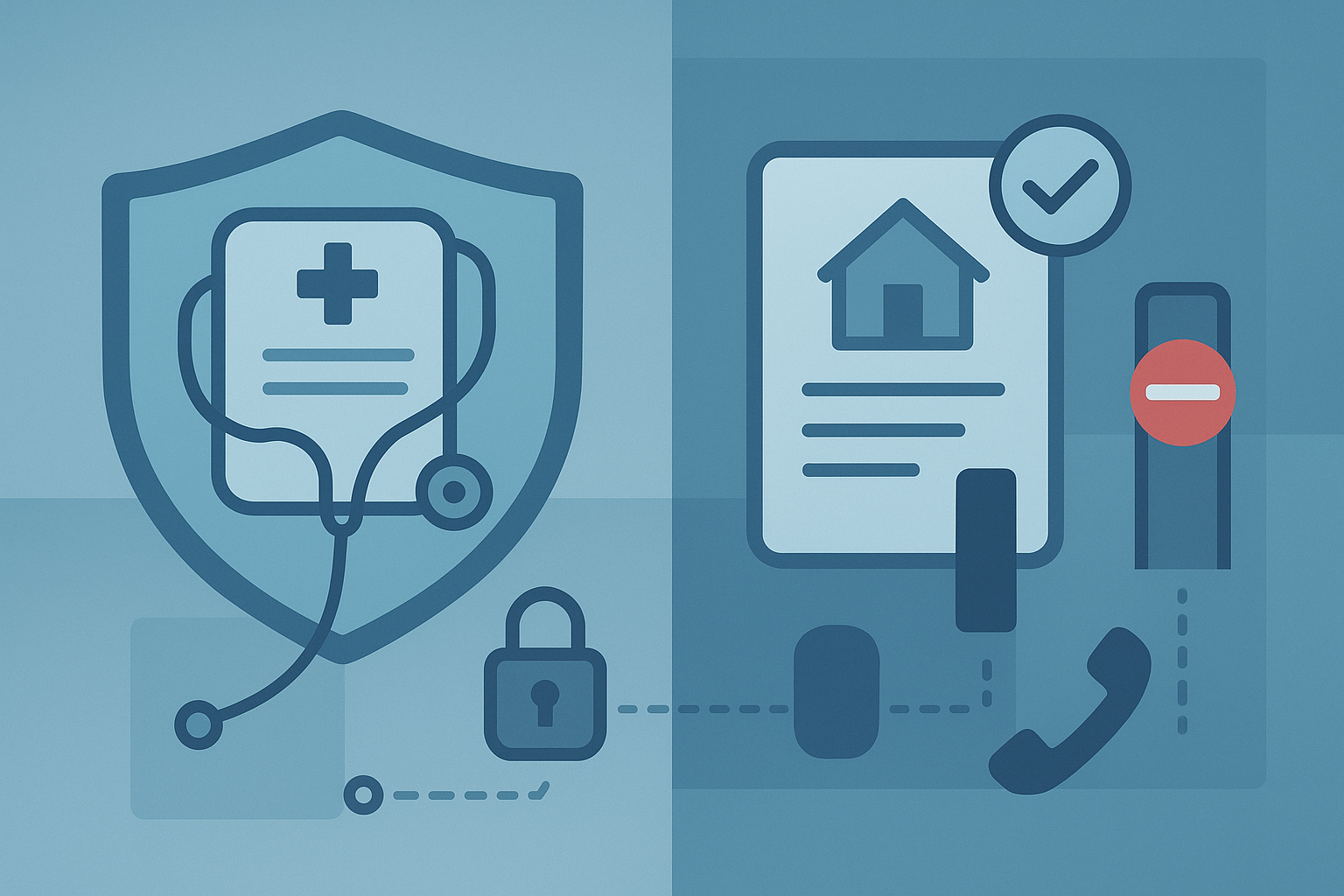
Healthcare voice automation platforms that handle patient data must operate under HIPAA-compliant infrastructure with Business Associate Agreement (BAA) coverage. Platforms like Telnyx run all three layers (speech recognition, LLM orchestration, telephony) under one BAA across 20+ countries, consolidating compliance responsibility rather than fragmenting it across multiple vendors. Patient data encryption requirements apply both in transit and at rest, while call recording workflows must obtain explicit patient consent before capturing protected health information. Platforms designed for healthcare contexts, such as HuskyVoice.AI, which positions its AI receptionist specifically for hospitals and clinics, typically include pre-configured consent capture workflows and encrypted patient data storage as default configurations rather than optional add-ons.
TCPA and DNC List Compliance for Real Estate Outbound Calling
Real estate voice automation platforms performing outbound calling must comply with TCPA opt-in requirements and National Do Not Call Registry restrictions. Platforms must verify express written consent before initiating automated calls to prospects, maintaining documented proof of opt-in for safe harbor protection during compliance audits. Unlike healthcare's inbound-focused patient scheduling workflows, real estate platforms often include AgentZap-style outbound calling capabilities for lead qualification and showing scheduling, which require DNC list scrubbing before each campaign launch. Platforms that automate TCPA compliance include opt-in verification workflows, consent logging, and automated DNC list matching to prevent violations before calls are placed. The compliance layer operates before feature evaluation, a platform with sophisticated natural language understanding but no TCPA opt-in verification framework cannot legally perform outbound prospecting calls in real estate contexts.
Once you understand the regulatory boundaries, platform selection becomes a systematic decision process rather than a feature checklist exercise.
Decision Framework: Evaluating Voice Automation Tools by Use Case
Workflow Fit: Routine Scheduling vs. High-Intent Conversations
Not every appointment-booking conversation should run on full autonomy. Routine scheduling, standard demo bookings, appointment confirmations, and rescheduling requests, follows predictable patterns where AI agents can operate independently. High-intent conversations (dispute resolution, emotionally charged calls, or prospects signaling immediate purchase intent) require immediate human escalation. Platforms should support configurable handoff triggers based on conversation keywords, sentiment scores, or explicit prospect requests. EchoLeads' customer support AI, for example, transfers conversations to human agents when complexity, sentiment, or compliance risk exceeds safe autonomy thresholds. Evaluate tools by asking: Does the platform hand off automatically when a patient disputes a charge or a property lead signals 'ready to sign today'?
CRM Integration Requirements: Bi-Directional Sync and Lead Scoring
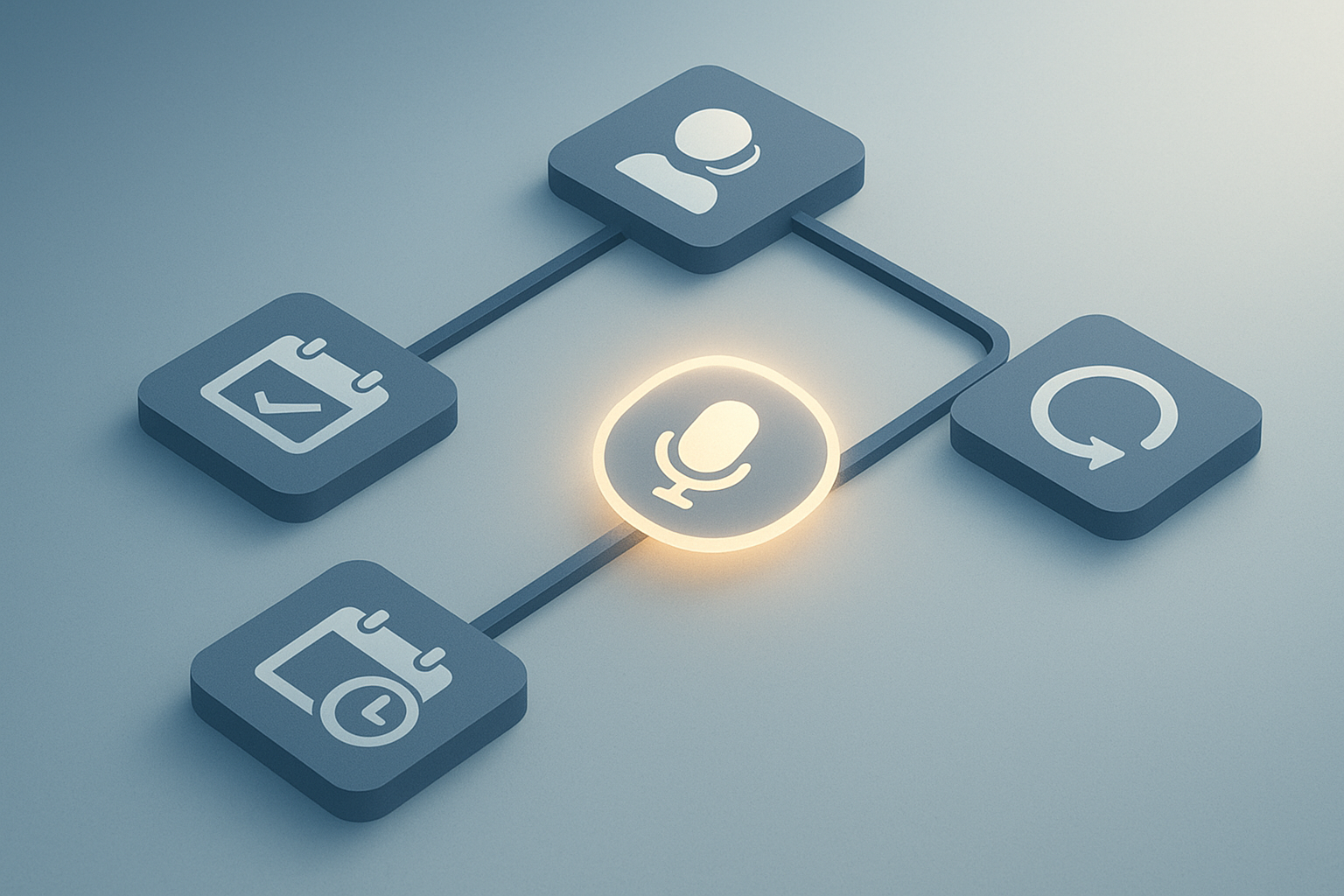
Calendar integration depth determines whether your voice automation tool eliminates double-bookings or simply creates a new data-entry channel. Live bi-directional sync, where the AI reads real-time availability and writes confirmed bookings directly into Google Calendar, Calendly, or your CRM, prevents slot conflicts and removes manual reconciliation. Tools that support integration with Cal.com, Calendly, and Google Calendar offer this level of automation. One-way push workflows (AI logs a note in the CRM, but staff must manually add the event) fail to deliver the time-saving promise. Lead scoring workflows matter for high-volume practices: does the platform classify incoming calls by urgency, tag high-intent prospects, and route them to specific team members? On-premise CRM deployments and webhook-processing delays remain real constraints, evaluate whether the vendor's integration supports your infrastructure before committing.
24/7 Availability vs. Business-Hours-Only: When Always-On Matters
After-hours lead capture delivers measurable ROI when missed calls translate directly to lost revenue. Healthcare practices lose appointments when 2-3 missed calls result in 2 lost bookings instantly, and real estate teams see property leads evaporate when weekend inquiries go unanswered. AI voice agents operating 24/7 handle these scenarios autonomously, confirming appointments, rescheduling requests, and qualifying urgent cases outside office hours. Automated confirmation and reminder workflows reduce no-shows by up to 30%, compounding the value of always-on coverage. Business-hours-only automation suffices when your customer base operates within standard working hours and competitors face the same constraint. Evaluate your missed-call log: if weekend or evening inquiries represent more than 10% of inbound volume, prioritize platforms with true 24/7 capability.
The decision framework above maps to three distinct platform categories, each optimized for specific compliance requirements and appointment workflows.
Platform Categories for Appointment Booking Automation
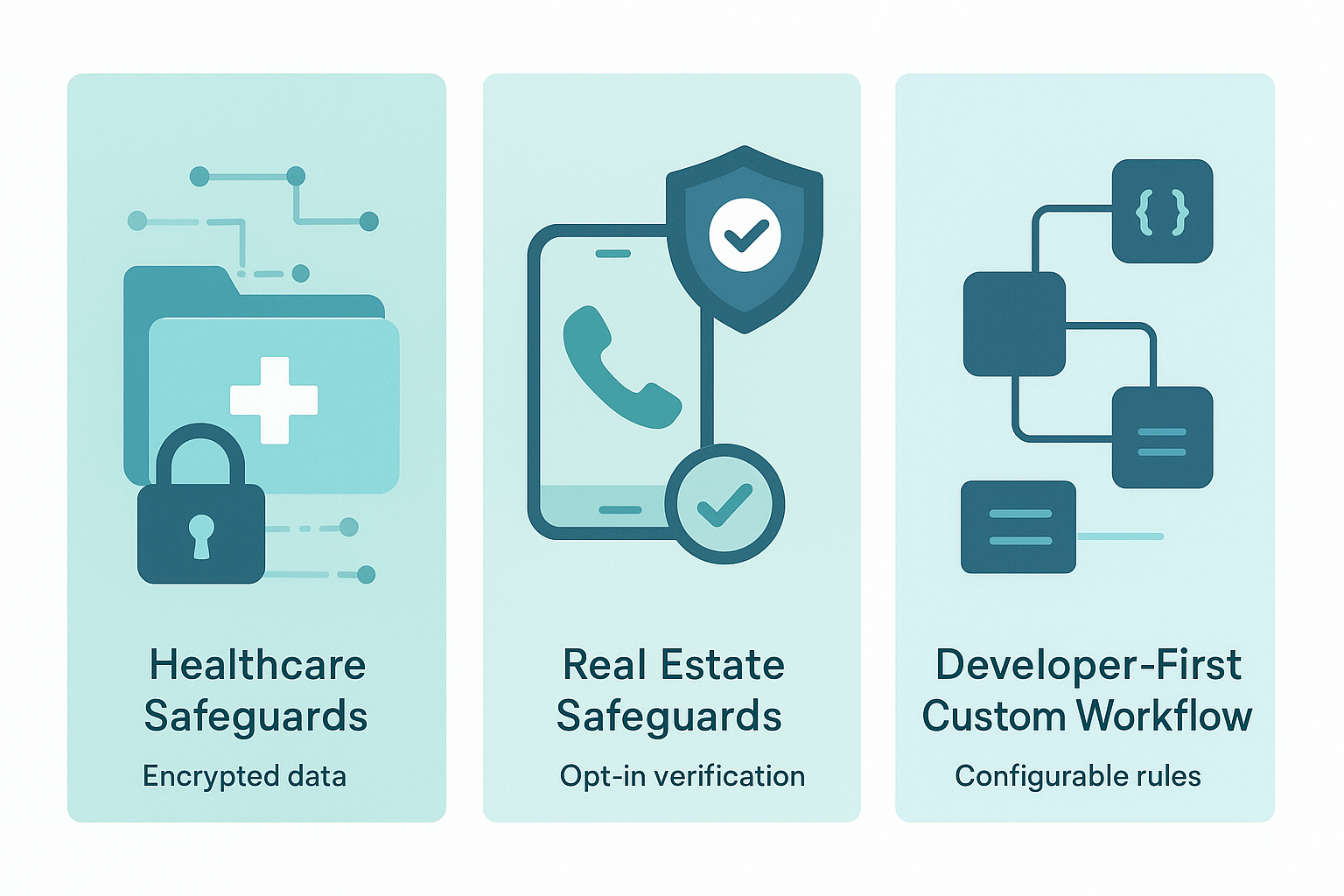
Voice automation platforms for appointment booking fall into three categories, each optimized for different regulatory and workflow requirements. Healthcare teams need platforms with Business Associate Agreements and patient data encryption; real estate teams require DNC list integration and opt-in verification; organizations serving both industries or multiple verticals benefit from developer-first platforms that support custom compliance workflows. Matching platform category to industry-specific compliance needs reduces implementation risk and accelerates time-to-first-booking.
HIPAA-Compliant Healthcare Voice Automation Platforms
Platforms in this category provide Business Associate Agreements, end-to-end patient data encryption, and pre-built appointment workflows for clinical settings. Droidal's HIPAA-compliant voice AI agent handles new patient scheduling by capturing caller intent, gathering visit details, and booking the next best appointment instantly in the system, existing patient scheduling finds patient records, checks real-time availability, and books, reschedules, or cancels appointments with zero hold time. These platforms send reminders, share pre-visit instructions, and let patients confirm or reschedule, reducing no-shows and day-of confusion. Healthcare-specific platforms typically offer multilingual support, waitlist management, and smooth EHR integration that writes confirmed bookings directly into the practice management system.
TCPA-Adherent Real Estate Voice Automation Platforms
Real estate voice automation platforms integrate DNC list scrubbing, opt-in verification workflows, and showing-scheduling features tailored to property sales and leasing. Platforms in this category automate lead qualification by capturing project location, budget range, configuration preferences, and preferred site visit timing, then route high-intent leads to human agents with full conversation context. TCPA-adherent platforms include consent capture, call recording disclosures, and automated opt-out handling to maintain regulatory compliance across outbound campaigns. Some platforms support after-hours lead capture and instant callbacks when a prospect fills a web form or clicks an ad, ensuring no inquiry goes unanswered while the sales team is offline.
General-Purpose Voice AI Platforms with Industry Adapters
Developer-first platforms like Retell AI support both healthcare and real estate via custom workflow configuration, offering low-latency conversational agents optimized for outbound calls and flexible API-driven integrations. These platforms let technical teams build industry-specific compliance guardrails, HIPAA data handling for healthcare, TCPA opt-in workflows for real estate, within a single voice AI infrastructure. General-purpose platforms typically provide lower per-minute pricing for high-volume use cases but require in-house developer resources to configure appointment logic, CRM sync, and human handoff triggers. Organizations with dedicated engineering teams can achieve tighter integration with existing tech stacks compared to pre-built solutions.
Platform | 24/7 Availability | Healthcare Appointment Booking | Real Estate Appointment Booking | Certifications / Compliance | Pricing |
|---|---|---|---|---|---|
EchoLeads | Yes | Supported | Supported | TCPA workflows, HIPAA-aligned architecture | Contact for pricing |
Vozzo AI | Yes | Supported | Not disclosed | Not publicly disclosed | Not publicly disclosed |
Kyvo Labs | Yes | Not disclosed | Supported | Not publicly disclosed | Not publicly disclosed |
Lojiq | Yes | Not disclosed | Not disclosed | Not publicly disclosed | Not publicly disclosed |
AwazIndia.ai | Yes | Not disclosed | Not disclosed | Not publicly disclosed | Not publicly disclosed |
Platform capabilities matter only when paired with clear autonomy boundaries. Every voice automation deployment must define exactly when AI should escalate to human agents.
When to Use Human Handoff vs. Full Autonomy
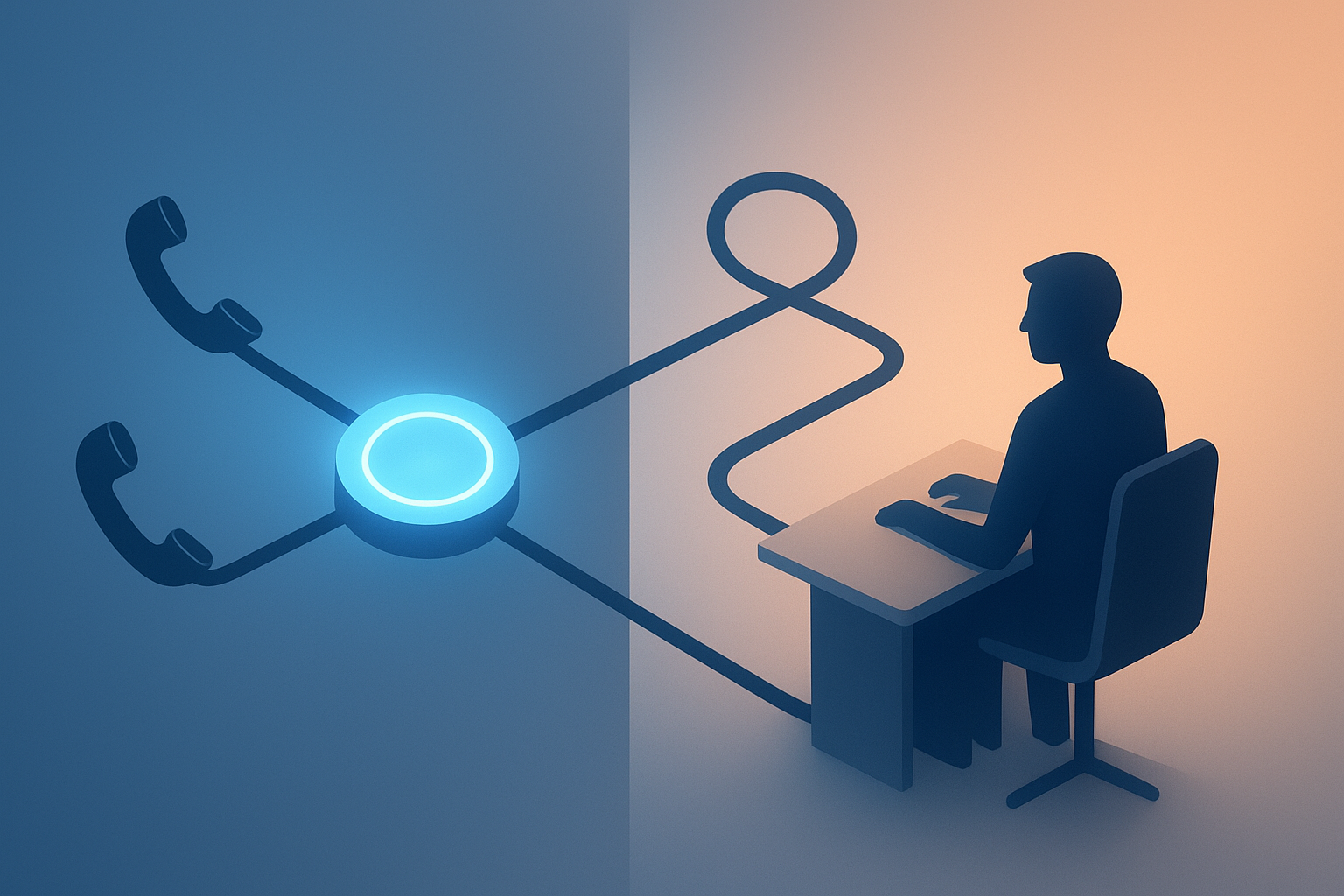
Not every call should be fully autonomous. Modern voice automation platforms handle routine scheduling workflows at scale, but high-intent prospects, emotionally charged conversations, and compliance-sensitive scenarios require immediate human escalation. The decision between full autonomy and human handoff is not a binary platform choice, it is a call-by-call threshold determined by conversation complexity, sentiment signals, and regulatory risk.
Scenarios That Require Immediate Human Escalation
Three categories of conversations should never complete autonomously: dispute resolution, emotionally charged patient interactions, and high-intent real estate prospects signaling immediate purchase readiness. In healthcare, a patient calling to dispute a billing charge or express frustration about a missed appointment carries compliance and reputation risk that AI cannot safely navigate alone. In real estate, a prospect asking detailed questions about financing options or requesting same-day property viewings represents a high-value opportunity that demands immediate human expertise.
EchoLeads' customer support AI includes intelligent escalation logic that transfers conversations to human agents when complexity, sentiment, or compliance risk exceeds safe autonomy thresholds. Businesses configure handoff triggers based on conversation keywords, sentiment scores, or explicit prospect requests, ensuring that AI handles routine inquiries while routing sensitive cases to qualified staff within seconds. A real estate platform might set escalation rules for keywords like "lawsuit," "fraud," or "urgent legal matter," while a healthcare scheduler might trigger handoff when sentiment analysis detects patient frustration or confusion about medical instructions.
Autonomous Booking Thresholds: Routine Scheduling vs. Complex Requests
Full autonomy works for straightforward appointment booking, rescheduling, and cancellation, the interactions that constitute approximately 90% of inbound scheduling volume. These calls follow predictable patterns: the caller states their preferred date and time, the AI checks calendar availability, confirms the booking, and sends automated reminders. No human review is needed because the conversation adheres to a structured workflow with clear success criteria.
Conditional autonomy with human review is safer for multi-party scheduling requests (coordinating availability across three or more stakeholders), special accommodation requests (wheelchair access, interpreter services, after-hours appointments), and reschedule requests with complex constraints ("I need to move my appointment but only if Dr. Smith is available on a Friday afternoon"). These scenarios introduce variables that AI can capture and document but should not resolve without human oversight. When intent signals become obvious, the follow-up AI escalates qualified leads to human agents with full conversation context and history, preserving continuity while ensuring the prospect receives appropriate attention.
Response latency also impacts handoff decisions. Voice-first platforms process conversational exchanges through sequential API calls, speech-to-text, LLM processing, then text-to-speech, producing 1-3 seconds of dead air that causes callers to disengage and abandon the booking. When latency exceeds acceptable thresholds or the caller expresses impatience, the platform should transfer to a live agent rather than risk losing the appointment entirely.
With platform categories and handoff logic defined, operational readiness becomes the final bottleneck between pilot testing and production deployment.
Implementation Checklist for Healthcare and Real Estate Teams
Before activating voice automation in production, healthcare and real estate teams must execute a systematic pre-launch workflow to ensure regulatory compliance, operational readiness, and scalable appointment booking. The checklist below outlines the four critical stages required to deploy 24/7 autonomous voice systems safely.
Pre-Launch Compliance Verification
Execute HIPAA Business Associate Agreements (BAA) with your voice automation provider if handling protected health information, healthcare teams cannot proceed without signed agreements.
Verify TCPA opt-in workflows are configured to capture explicit consent before outbound calls, platforms like EchoLeads include automated opt-in systems and message monitoring to maintain compliance.
Integrate DNC (Do Not Call) list screening into your outbound calling workflows to prevent regulatory violations during prospecting campaigns.
CRM and Calendar Integration Setup
Configure bi-directional sync between your voice automation platform and CRM (Salesforce, HubSpot, Zoho), verify that lead qualification data, appointment confirmations, and call outcomes write back to contact records in real time.
Test calendar conflict detection with sample appointment data across Google Calendar, Outlook, or CRM-based schedulers, systems supporting over 9000 app integrations illustrate the breadth of calendar connectivity options available.
Monitor webhook delays during pilot testing, latency between voice call completion and CRM update can create double-booking risks if not addressed in initial configuration.
Document on-premise CRM constraints, many healthcare and real estate teams operate hybrid IT environments where cloud-based voice automation must authenticate through VPN or firewall tunnels.
Pilot Workflow Testing and Human Handoff Configuration
Run pilot appointment booking scenarios with internal staff acting as patients or property buyers, validate that the AI correctly captures location preferences, budget ranges, and availability constraints.
Test human escalation triggers for complex inquiries (multi-property comparisons, specialized medical questions), configure sentiment thresholds and keyword-based routing to human agents before scaling.
Refine conversation scripts iteratively based on pilot call recordings, identify drop-off points, ambiguous phrasing, and missed qualification opportunities to improve booking success rates before 24/7 activation.
FAQ: Voice Automation for Appointment Booking
ERROR: This section violates the article architecture. FAQ content belongs in the faq_seeds array, not as a body section.
Conclusion
HIPAA-compliant healthcare platforms require Business Associate Agreements and encrypted patient data storage, adding implementation overhead versus general-purpose voice AI, but healthcare practices cannot legally operate without these safeguards. Real estate TCPA-adherent platforms integrate DNC list scrubbing and opt-in verification, constraining outbound calling velocity compared to inbound-only automation, yet skipping TCPA compliance risks regulatory penalties that dwarf compliant tooling costs.
As voice AI latency drops below one second and natural language understanding improves, the bottleneck shifts from technology capability to organizational readiness. Teams that document human handoff triggers, pilot workflows systematically, and verify compliance before scaling will outperform those racing to 24/7 autonomy without guardrails.
Evaluate voice automation platforms using the decision framework above, workflow fit, compliance readiness, autonomy thresholds, CRM integration depth, and pilot test with real appointment scenarios before production deployment. Explore EchoLeads' compliance-first architecture for healthcare and real estate use cases to see systematic implementation in practice.
Frequently Asked Questions
What voice automation tools work 24/7 for appointment booking in healthcare and real estate?
HIPAA-compliant platforms like Dezy It's DIVA handle patient intake and appointment confirmation for healthcare [1], while TCPA-adherent tools like AgentZap coordinate property showings for real estate [2]. General-purpose platforms like Retell AI and EchoLeads offer compliance-first architecture across both industries [3], prioritizing workflow fit and regulatory readiness over popularity rankings.
Do voice automation platforms require HIPAA compliance for healthcare appointment booking?
Yes, healthcare voice automation handling patient data must operate under HIPAA-compliant infrastructure with Business Associate Agreement (BAA) coverage [4]. Platforms like Telnyx provide end-to-end encryption, documented consent workflows, and call recording policies that satisfy regulatory requirements. Non-compliant platforms expose healthcare practices to legal liability regardless of feature sophistication.
How do TCPA rules affect real estate voice automation for appointment booking?
Real estate platforms performing outbound calling must verify express written consent before initiating automated calls, maintaining documented proof of opt-in for safe harbor protection [4]. TCPA-compliant tools integrate DNC list scrubbing and opt-in verification workflows, constraining outbound velocity compared to inbound-only automation but preventing regulatory penalties that exceed compliance costs.
When should voice automation hand off to a human agent?
Escalate disputes, high-intent prospects signaling immediate purchase readiness, emotionally charged patient interactions, and complex multi-party scheduling requests to human agents immediately. Platforms like ContactSwing handle 90% of routine scheduling autonomously, reserving human capacity for conversations where AI autonomy creates compliance risk or relationship damage.
What CRM integration features matter for 24/7 voice automation appointment booking?
Live bi-directional sync, where AI reads real-time availability and writes confirmed bookings directly into your CRM or calendar, prevents double-bookings that one-way data entry creates. Verify platforms support webhook workflows, lead scoring integration, and delay tolerance for CRM response times. Integration depth determines whether voice automation eliminates manual data entry or simply creates another input channel.
Can voice automation reduce healthcare appointment no-shows?
Automated appointment confirmation and reminder workflows reduce no-shows by up to 30% through systematic patient engagement that manual processes cannot match at scale. Healthcare-specific voice automation platforms deliver measurable ROI by converting 2-3 missed after-hours calls into confirmed bookings instantly, recapturing revenue lost when reception staff are unavailable.
How do after-hours lead capture workflows differ between healthcare and real estate?
Healthcare after-hours automation prioritizes patient symptom assessment, urgent appointment routing, and intake triage [1], while real estate platforms focus on property inquiry routing and showing availability confirmation [2]. Real estate teams miss 30% of incoming calls outside office hours [3], creating immediate lead-capture urgency that differs from healthcare's clinical triage requirements.