
6 Best AI Phone Lead Qualification Software for 24/7 Calls
Bengaluru SaaS teams face a persistent challenge: qualifying inbound leads around the clock without scaling headcount linearly. AI phone agents automate lead qualification through voice conversations, freeing human SDRs for high-value deal cycles.
Key Takeaways
AI phone lead qualification software automates 24/7 inbound and outbound call handling using conversational AI that maps responses to BANT frameworks.
Pricing models vary from usage-based (per-minute or per-call) to flat-rate and seat-based, each with distinct implications for Bengaluru SaaS teams with fluctuating call volumes.
CRM integration depth determines lead-score refinement accuracy — bi-directional sync enables feedback loops while uni-directional sync limits context visibility.
Kannada language support exists across platforms, but none publish dialect-specific accuracy benchmarks for Mysuru, Belagavi, or code-switching scenarios.
Karnataka call-recording compliance requires single-party consent and AI disclosure, yet most vendor documentation lacks region-specific consent workflows.
Yes — several platforms can qualify leads automatically through 24/7 phone conversations. Tools like Silverthread Labs, EchoLeads, Retell AI, and Vapi.ai deploy AI voice agents that answer inbound calls instantly, score prospects against BANT criteria (Budget, Authority, Need, Timeline), and route qualified leads to CRM or human SDRs in real time. The workflow runs autonomously: call initiation, conversational scoring, threshold evaluation, CRM sync, and human handoff when buying intent is high.
Core Workflow: How AI Voice Agents Handle Lead Qualification Calls
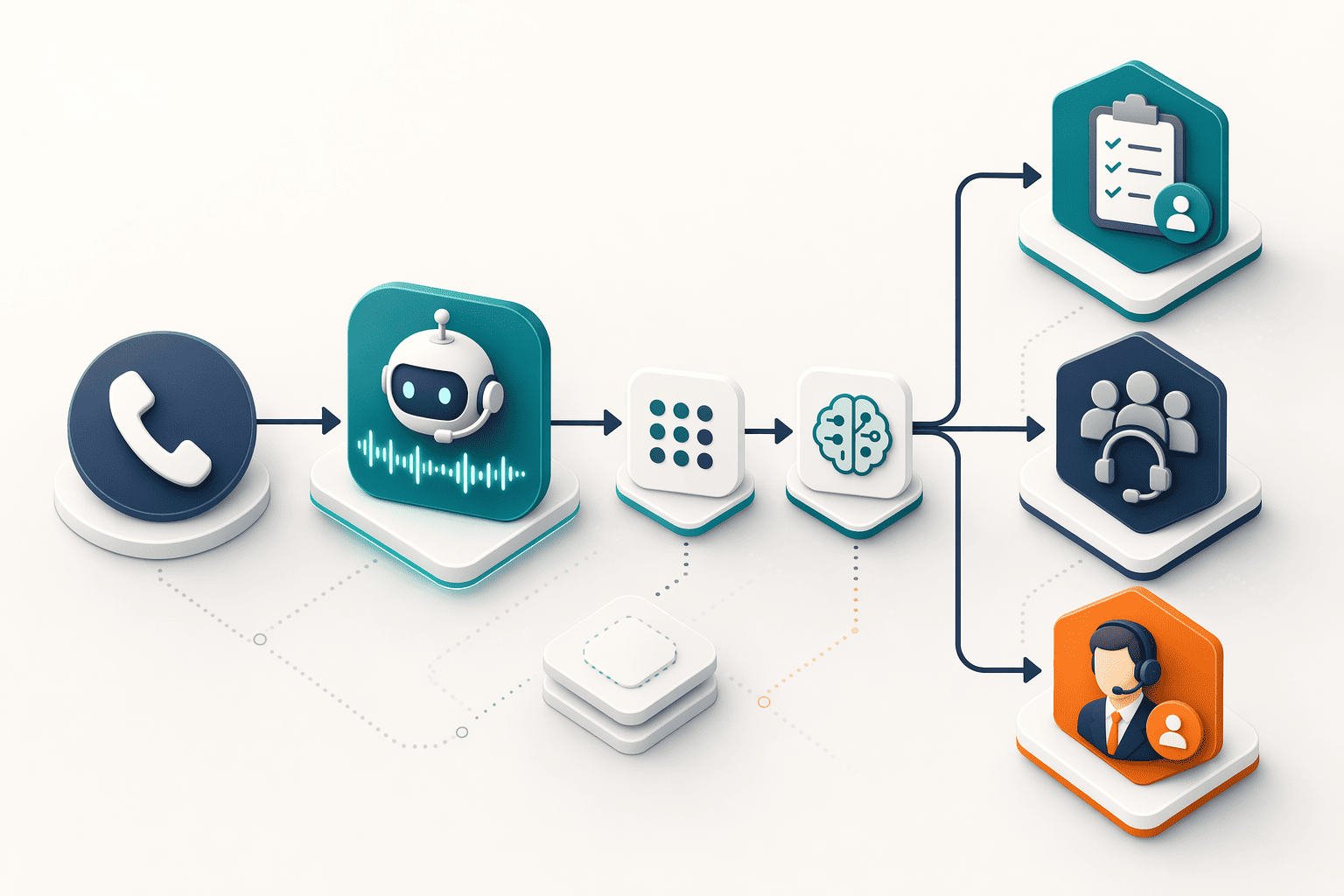
AI phone qualification follows a five-step loop that mirrors human SDR discipline but operates at machine speed and consistency:
Call initiation — The agent answers every inbound call immediately (typically under 1 second) or dials outbound lists on schedule. No voicemail delays, no off-hours gaps.
Conversational BANT scoring — Natural language understanding extracts budget signals, decision-maker role, urgency cues, and pain points from the prospect's spoken responses. The agent asks the same qualification script every time, eliminating human inconsistency.
Threshold evaluation — Each lead receives a numeric score against your ICP criteria. Prospects above the "hot lead" threshold trigger immediate routing; those below go into nurture sequences or disqualify.
Routing decision, Hot leads reach a human in real time (SIP transfer or warm handoff with full context), while qualified-but-not-urgent leads update the CRM and enter automated follow-up.
Conversation log sync, Full transcript, sentiment markers, and qualification scores write to your CRM record within seconds. Sales reps see the entire context before picking up the transferred call.
This consistency matters: research shows sales reps waste up to 50% of their time on unqualified prospects. AI pre-filters that noise, routing only high-intent conversations to human SDRs.
Why Bengaluru SaaS Companies Deploy 24/7 AI Phone Agents
Four factors drive adoption among Bangalore SaaS teams specifically:
Time-zone coverage, Inbound demo requests from US (EST/PST) and EU (CET/GMT) buyers land outside IST business hours. A 24/7 AI agent responds in under one second, booking meetings before competitors wake up. Leads contacted within 5 minutes are 100 times more likely to qualify than those reached after 30 minutes.
Regional language support, Karnataka enterprise buyers often prefer initial conversations in Kannada or Tamil. Platforms like EchoLeads support 70+ languages, though none publish dialect-specific accuracy benchmarks for Kannada variants.
Cost arbitrage, Rotating SDR shifts to cover 24/7 inbound calls require 3-4 FTEs at ₹40,000, ₹60,000/month each. A subscription AI agent runs at flat monthly cost (₹15,000, ₹50,000 depending on call volume), eliminating shift premiums and turnover churn.
Volume handling during launches, Product Hunt launches, webinar campaigns, or viral LinkedIn posts spike inbound volume 5-10× for 48-72 hours. AI agents scale instantly to handle hundreds of simultaneous calls without hiring temp SDRs or missing hot leads.
For broader platform context and Bangalore-specific vendor comparisons, see our Best AI Voice Agents for Bangalore Startups guide.
Understanding the operational mechanics behind these platforms reveals how conversational AI transforms raw phone interactions into structured lead data.
How AI Voice Agents Qualify Leads: Workflow Breakdown Across Platforms
Inbound Call Handling and IVR Integration
When a prospect calls an inbound number, platforms route the call through IVR menu logic to detect intent, whether the caller seeks product information, support, or appointment booking. FrontivaAI's lead-qualification product illustrates this flow: the agent answers within seconds, parses opening statements for keywords ("pricing," "demo," "availability"), and branches into qualification script or support queue accordingly. Most platforms employ NLU-based keyword matching rather than static IVR menus, enabling the agent to detect ambiguous phrases ("I'm just browsing" vs. "ready to buy this quarter") and adjust conversational depth in real time. Platforms differ in IVR customization depth, some require developer-level configuration for multi-tier menus, while others offer no-code drag-and-drop workflow editors.
Outbound Dialing and Pre-Qualification Campaigns
Outbound workflows begin with contact-list upload (CSV or CRM sync) and call-pacing selection. Predictive dialers maximize volume for high-velocity campaigns, placing multiple simultaneous calls per agent; progressive dialers place one call at a time for personalized outreach. Pre-qualification scripts are customizable across platforms, but API-based dialer integration may require developer support contracts despite platform documentation advertising open APIs. Agents parse early-funnel responses ("We're evaluating options," "I don't have budget authority") to score leads before human handoff, enabling SDRs to focus on warm prospects rather than cold discovery.
BANT-Criteria Scoring and Human-Handoff Triggers
Platforms map conversational responses to BANT dimensions, budget, authority, need, timeline, defined by IBM's original framework. When a prospect says "We're evaluating options this quarter," the agent tags timeline as short-term; "I need to check with procurement" signals low authority. A lead meeting at least three of four BANT criteria triggers CRM update with high-priority status. Human-handoff occurs when conversation clarity falls below preset thresholds or when the caller explicitly requests a human agent. Voice AI for Bangalore businesses relies on this escalation logic to preserve conversion rates while automating first-touch qualification. CRM bi-directional sync writes conversation transcripts, lead scores, and next-action recommendations into custom fields; status updates (contacted/converted/churned) flow back to refine agent behavior over time.
Selecting the right platform requires evaluating three critical dimensions: how vendors charge for usage, how deeply they integrate with existing CRM workflows, and how accurately they handle regional languages.
Comparison Criteria: Pricing Models, CRM Integration, and Regional Language Support
Pricing Model Taxonomy: Usage-Based, Flat-Rate, Per-User
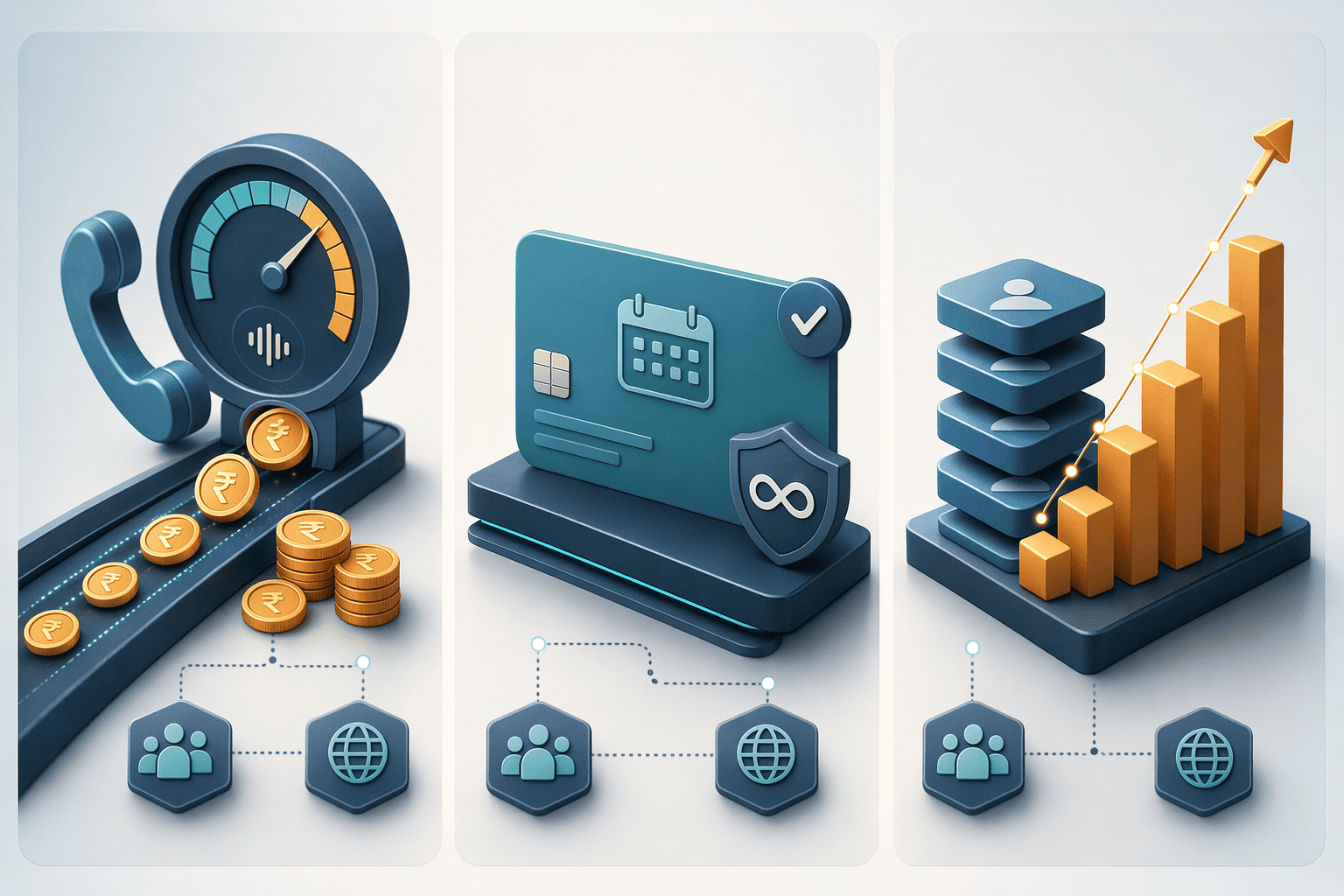
AI phone lead qualification software typically follows one of three pricing models. Usage-based pricing charges per minute or per call, scaling costs directly with call volume, ideal for Bengaluru SaaS teams with fluctuating outbound activity. Flat-rate pricing offers a predictable monthly per-seat cost; platforms may charge between ₹1,200 and ₹6,500 per user per month, but you pay for unused capacity when lead volumes dip. Per-user pricing charges seat, penalizing growth as your team expands. Hidden limits often appear in free tiers: SMS quotas, payment-processing fees, and seat minimums can inflate costs beyond the advertised rate. Verify all cost floors before committing, no single authoritative source publishes verified cost breakdowns across platforms.
CRM Integration Depth: Uni-Directional vs. Bi-Directional Sync
CRM integration depth determines how effectively your AI agent refines lead scores in real time. Uni-directional sync writes qualified leads into your CRM but does not read CRM status updates, the agent operates on initial form-fill data alone, missing context from rep notes or subsequent interactions. Bi-directional sync flows CRM status updates back to the AI agent, allowing it to adjust lead scores and recommend next actions based on rep feedback. For Bengaluru SaaS teams managing high-velocity inbound pipelines, bi-directional sync solves the inconsistent scoring and manual data entry problems that plague uni-directional workflows. Platforms with deep HubSpot, Salesforce, or Zoho integrations typically support bi-directional flows, but verify the specific data objects (contact fields, deal stages, custom properties) that sync in each direction.
Kannada and Regional Language Support Caveats
Platforms claim Kannada support but none publish dialect-specific accuracy benchmarks. Accent-handling challenges surface when AI agents encounter Mysuru vs. Belagavi Kannada dialects or code-switching between Kannada and English during enterprise sales calls. Without published accuracy metrics for regional dialects, Bengaluru SaaS teams should test language performance in pilot deployments before scaling. Verify whether the platform's Kannada model handles the specific regional accent and code-switching patterns your customer base uses, generic "Kannada support" claims often underperform in production when real-world accents differ from the training corpus.
With evaluation criteria established, a side-by-side comparison of leading platforms clarifies which solutions match specific operational requirements and budget constraints.
EchoLeads vs. Exotel vs. Yellow.ai vs. Kore.ai vs. Uniphore vs. Gupshup: Platform Breakdown
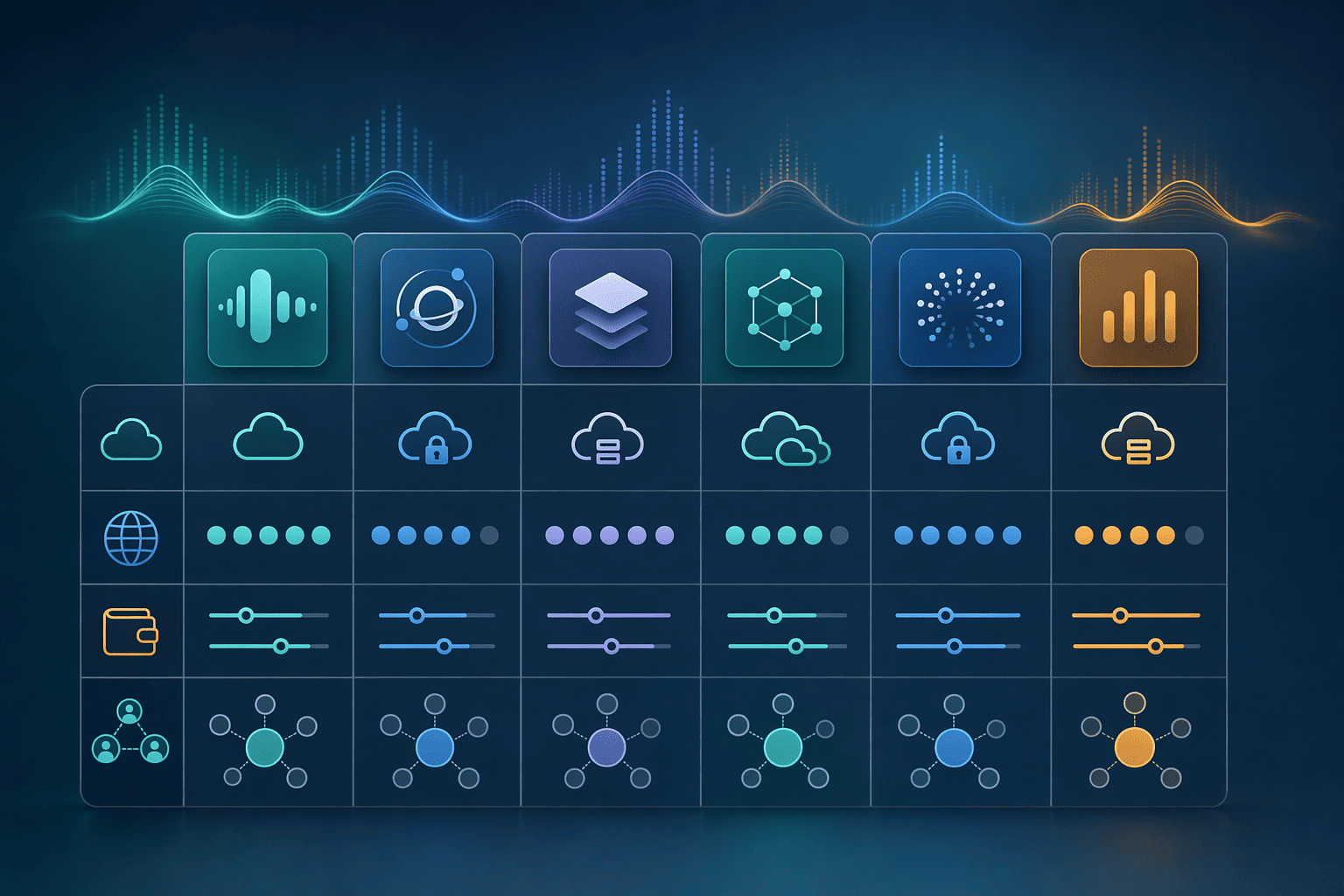
Platform Comparison Table
Platform | Pricing | Deployment | Inbound/Outbound | Languages | CRM Integration | Call Routing | Rating | India Availability |
|---|---|---|---|---|---|---|---|---|
EchoLeads | Custom pricing | Cloud | Both | 70+ (includes Kannada) | Bi-directional (Salesforce, HubSpot, Zoho) | Keyword/sentiment handoff | 4.8/5 | Yes (Bengaluru-focused) |
Exotel | Usage-based | Cloud | Both | Regional Indian languages | API-based | IVR routing | 4.6/5 | Yes (pan-India) |
Yellow.ai | Enterprise quotes | Cloud/On-prem | Both | 135+ | Native CRM connectors | Intent-based routing | 4.5/5 | Yes |
Kore.ai | Contact sales | Cloud/Hybrid | Both | 100+ | API integrations | NLU-driven escalation | 4.4/5 | Yes |
Uniphore | Enterprise custom | Cloud/On-prem | Both | 40+ (Indic focus) | Pre-built connectors | Emotion-aware routing | 4.3/5 | Yes |
Gupshup | Per-conversation | Cloud | Both | 30+ | Webhook-based | Rule-based routing | 4.2/5 | Yes |
The six platforms above represent the spectrum of voice-first automation in India's SaaS market. Each handles inbound inquiries and outbound prospecting, but deployment models, language portfolios, and CRM integration depth vary significantly. For Bengaluru-based teams managing fluctuating call volumes, usage-based or custom pricing offers better scalability than per-seat enterprise contracts. Voice-first booking workflows mirror lead qualification architectures, both rely on 24/7 availability, multilingual support, and CRM synchronization to convert conversations into pipeline.
EchoLeads: Usage-Based Pricing and CRM-Integrated Workflow
EchoLeads operates on custom pricing that scales with call volume rather than seat count, making it suitable for teams with unpredictable inbound spikes. The platform supports Kannada as part of a broader 70+ language portfolio and maintains bi-directional CRM sync with Salesforce, HubSpot, and Zoho. When conversation clarity falls below preset thresholds, the system configures handoff triggers based on conversation keywords, sentiment scores, or explicit prospect requests.
<strong>Cons:</strong> No published Kannada-specific accuracy benchmarks exist in the brand's documentation. Free tiers have hidden SMS quotas that require verification before committing. API integration may require developer support contracts for custom workflows.
<strong>Best for:</strong> Bengaluru SaaS teams with fluctuating inbound volume who need CRM-integrated lead scoring and regional language support without per-seat licensing costs.
Exotel, Yellow.ai, Kore.ai, Uniphore, Gupshup: Platform Summaries
<strong>Exotel</strong> charges per-minute usage fees and operates pan-India with IVR routing. CRM integration relies on API connections rather than native bi-directional sync. Regional Indian language support covers Hindi, Tamil, Telugu, Bengali. Best for teams prioritizing pay-as-you-go billing over bundled enterprise plans.
<strong>Yellow.ai</strong> requires enterprise quotes and offers 135+ languages with intent-based routing. The platform supports cloud and on-premise deployment, with native CRM connectors for major platforms. India-focused teams benefit from localized compliance frameworks, though Karnataka-specific call-recording guidance is not documented in public resources.
<strong>Kore.ai</strong> positions itself for hybrid deployments (cloud + on-prem) with NLU-driven escalation. Pricing is contact-sales only. The platform's 100+ language portfolio and API integrations suit large enterprises with complex IT requirements but may introduce implementation delays for smaller teams.
<strong>Uniphore</strong> emphasizes emotion-aware routing and 40+ Indic languages, targeting financial services and healthcare verticals. Enterprise custom pricing and pre-built CRM connectors reduce integration overhead, though the platform's on-prem option requires dedicated infrastructure.
<strong>Gupshup</strong> bills per-conversation and uses webhook-based CRM integration. The platform's 30+ language support and rule-based routing fit mid-market teams needing basic automation without the complexity of intent-based or emotion-aware systems. India availability is confirmed, but regional compliance documentation (Karnataka consent workflows) is limited across most vendor sites.
Beyond platform features, Bengaluru SaaS teams must navigate Karnataka's call-recording regulations and consent requirements, areas where vendor documentation often falls short.
Legal and Compliance Gaps: Karnataka Call Recording and Consent Requirements
Karnataka Call Recording and Consent Workflows
Karnataka's call-recording regulations follow India's broader Information Technology Act framework, which generally permits single-party consent: one party to the conversation must consent to the recording. However, businesses deploying AI voice agents must implement disclosure obligations at call initiation, such as 'This call may be recorded and is handled by an AI agent', to satisfy transparency requirements and avoid consent disputes.
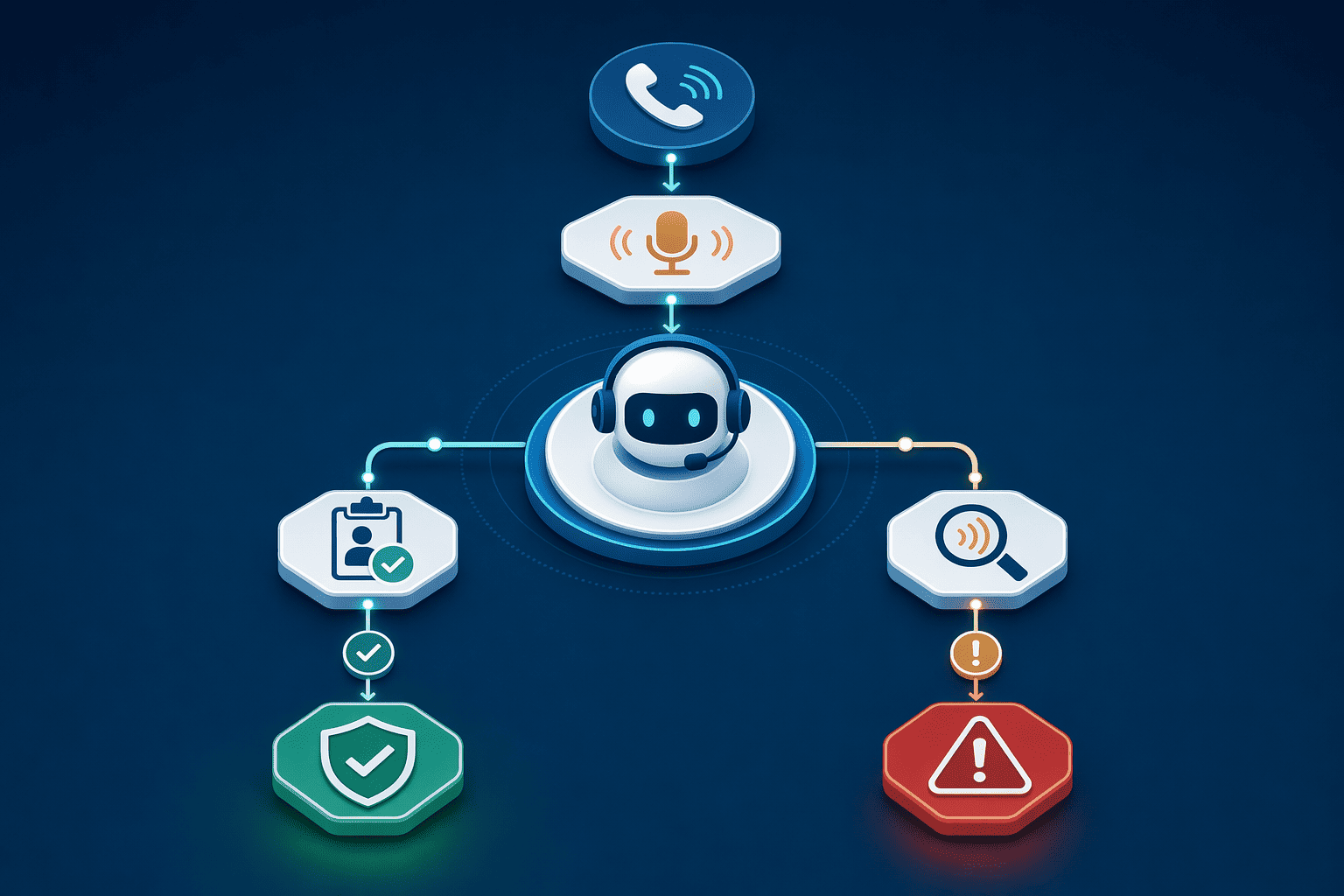
India's National Do Not Call (NDCR) registry prohibits unsolicited commercial calls to registered numbers. AI agents must scrub outbound contact lists against NDCR before dialing to comply with TCPA-equivalent requirements. Platforms like EchoLeads integrate workflows with TCPA compliance, offering automated DNC list synchronization and consent-capture mechanisms to honor consumer requests immediately. However, vendors vary in NDCR integration depth: some auto-scrub lists, while others require manual upload and periodic refreshes, creating compliance risk for organizations that rely on real-time outbound prospecting.
Vendor Documentation Gaps and Legal Counsel Recommendation
Most vendor documentation lacks Karnataka-specific consent workflows or call recording guidance. GDPR and CCPA compliance features appear in many tools' marketing materials, but implementation depth varies widely: some vendors provide data-processing agreements (DPAs) and conversation-log encryption, while others reference compliance without operational detail. This variance creates deployment risk for organizations operating across jurisdictions or handling regulated data.
Compliance-aware AI agents address the lead-handoff problem described in DataOps Group's analysis: sales teams ignore marketing leads when follow-up is friction-heavy or leads are poorly qualified. By filtering unqualified or non-consented leads upfront and automating opt-out handling, AI agents ensure only compliant, high-intent prospects reach human reps. This structural fix, raising the qualification bar before handoff, reduces follow-up friction and aligns sales and marketing around shared definitions of qualified leads.
Organizations should consult legal counsel before deployment to validate vendor compliance claims against Karnataka-specific requirements, particularly for call recording, NDCR integration, and data localization obligations under RBI Digital Lending Directions. Vendors often reference compliance without operational detail, and authoritative guidance on TCPA and call recording requirements for automated booking systems remains limited.
When to Use AI Voice Agents vs. Human SDRs for Lead Qualification
AI Voice Agent Use Cases: Volume, Hours, Language
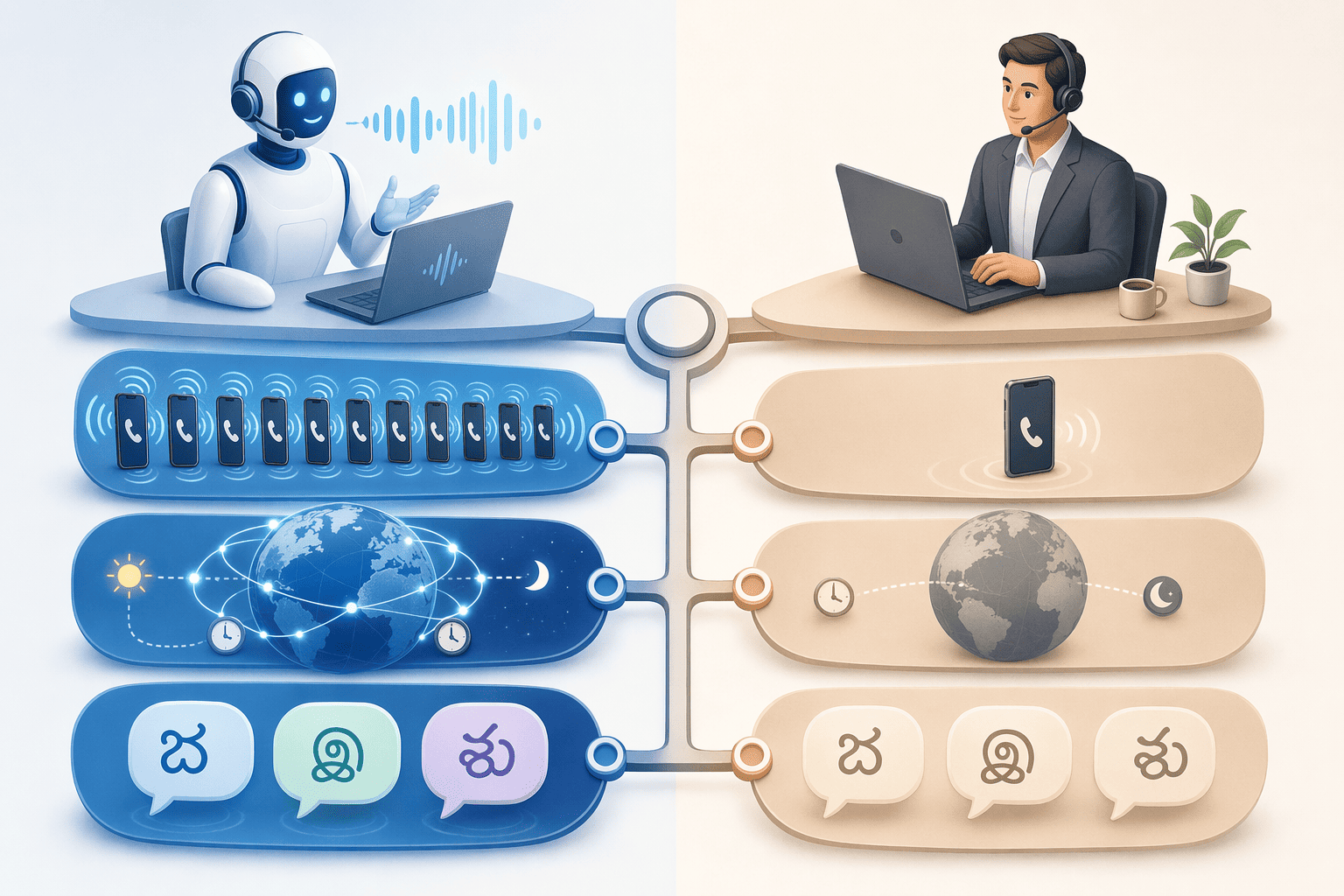
AI voice agents excel in three scenarios. First, high inbound volume: platforms like EchoLeads handle hundreds of simultaneous calls, executing thousands of outreach calls at scale. Second, 24/7 coverage: Voice AI agents engage prospects continuously across time zones, ideal for Bengaluru SaaS companies targeting US and EU buyers during off-hours. Third, regional language support: multilingual agents qualify leads in Kannada, Tamil, or Telugu, critical for Karnataka enterprise buyers. EchoLeads supports 70+ languages for these workflows. These agents automate cold calling, follow-ups, and lead qualification for low-touch SaaS products with standardized criteria.
Human SDR Use Cases: Complexity, Relationship, Nuance
Human SDRs remain key for complex enterprise deals involving multi-stakeholder buying committees and 6 to 12 month sales cycles. They excel at relationship-building, warm introductions, executive outreach, and consultative selling for high-ACV products. Nuanced objection handling, particularly around pricing models or integration concerns, requires human judgment. Voice agents escalate when conversation clarity falls below preset thresholds; the platform is not suitable for every call. EchoLeads and competitors offer human-handoff workflows, but customization depth for escalation triggers varies. Hybrid models work best: AI agents pre-qualify volume leads, routing high-intent prospects to human SDRs for relationship closure.
Usage-based pricing (EchoLeads, some competitors) scales with call volume but requires SMS-quota verification; flat-rate pricing offers cost predictability but penalizes low-volume months. Bi-directional CRM sync (EchoLeads, Exotel, Yellow.ai) enables lead-score refinement but requires API configuration; uni-directional sync is simpler to deploy but lacks feedback-loop accuracy. As AI voice agent NLU engines improve dialect-level accuracy and vendors publish regional-language benchmarks, Bengaluru SaaS teams will shift from pilot deployments to full-scale adoption, but Karnataka-specific call-recording consent workflows and vendor compliance transparency remain gaps that legal frameworks must address by 2027. Start with a pilot deployment to test Kannada dialect accuracy and CRM sync depth, then explore EchoLeads's usage-based pricing and pre-built integrations for Salesforce, HubSpot, and Zoho CRM.
Frequently Asked Questions
Can AI phone agents handle Kannada-speaking leads accurately?
Platforms like EchoLeads, Exotel, Yellow.ai, Kore.ai, Uniphore, and Gupshup support Kannada, but none publish dialect-specific accuracy benchmarks. Accent-handling challenges surface when AI agents encounter Mysuru versus Belagavi dialects or Kannada-English code-switching. Pilot deployments are key to test regional accuracy before scaling to full production volumes.
What is the cost difference between AI voice agents and human SDR teams for 24/7 lead qualification?
AI agents use usage-based pricing (per-minute or per-call) that scales with call volume, while human SDR teams require fixed salary and benefits costs for rotating shifts to maintain 24/7 coverage. AI approaches deliver lower per-qualified-lead costs at high volumes, whereas human teams incur high fixed costs regardless of call fluctuations.
Do AI phone lead qualification platforms integrate with Salesforce, HubSpot, and Zoho CRM?
Platforms like EchoLeads, Exotel, Yellow.ai, Kore.ai, Uniphore, and Gupshup integrate with Salesforce, HubSpot, and Zoho CRM. Bi-directional sync writes qualified leads and conversation logs to the CRM while reading status updates back for lead-score refinement. Sync depth varies, some platforms write conversation transcripts to custom fields, others only update lead status.
What are the legal requirements for AI voice agent call recording in Karnataka?
Karnataka call-recording regulations follow single-party consent: one party must consent to the recording. AI agents must disclose they are automated systems at call start ('This call may be recorded and is handled by an AI agent'). Most vendor documentation lacks Karnataka-specific consent workflows, so consulting legal counsel before deployment is key.
When should Bengaluru SaaS companies use AI voice agents instead of human SDRs?
AI voice agents excel in three scenarios: high inbound volume (hundreds of calls daily), 24/7 coverage requirements, and low-touch SaaS products. Human SDRs remain key for complex enterprise deals involving multi-stakeholder buying committees, 6 to 12 month sales cycles, and high-ACV consultative selling. Hybrid approaches combine AI-first qualification with human escalation for high-value leads.
Do free tiers of AI phone lead qualification platforms have hidden limits?
Free tiers often impose hidden limits including SMS quotas, payment processing fees, and seat minimums. Verify these constraints before committing, as they can dramatically increase effective costs once trial volumes scale. No single authoritative source publishes cost-floor verification across platforms, making vendor-specific documentation review critical.
How do AI voice agents escalate to human SDRs when conversation clarity falls?
Platforms escalate when conversation clarity falls below preset thresholds, when callers explicitly request human agents, or when BANT scoring indicates high-value leads requiring consultative approaches. Escalation trigger customization depth varies across platforms, some allow granular threshold adjustments while others use fixed escalation rules. Handoff workflows transfer conversation context to human SDRs for continuity.