
AI Solutions for Calling and WhatsApp Lead Generation: Platform Comparison 2026
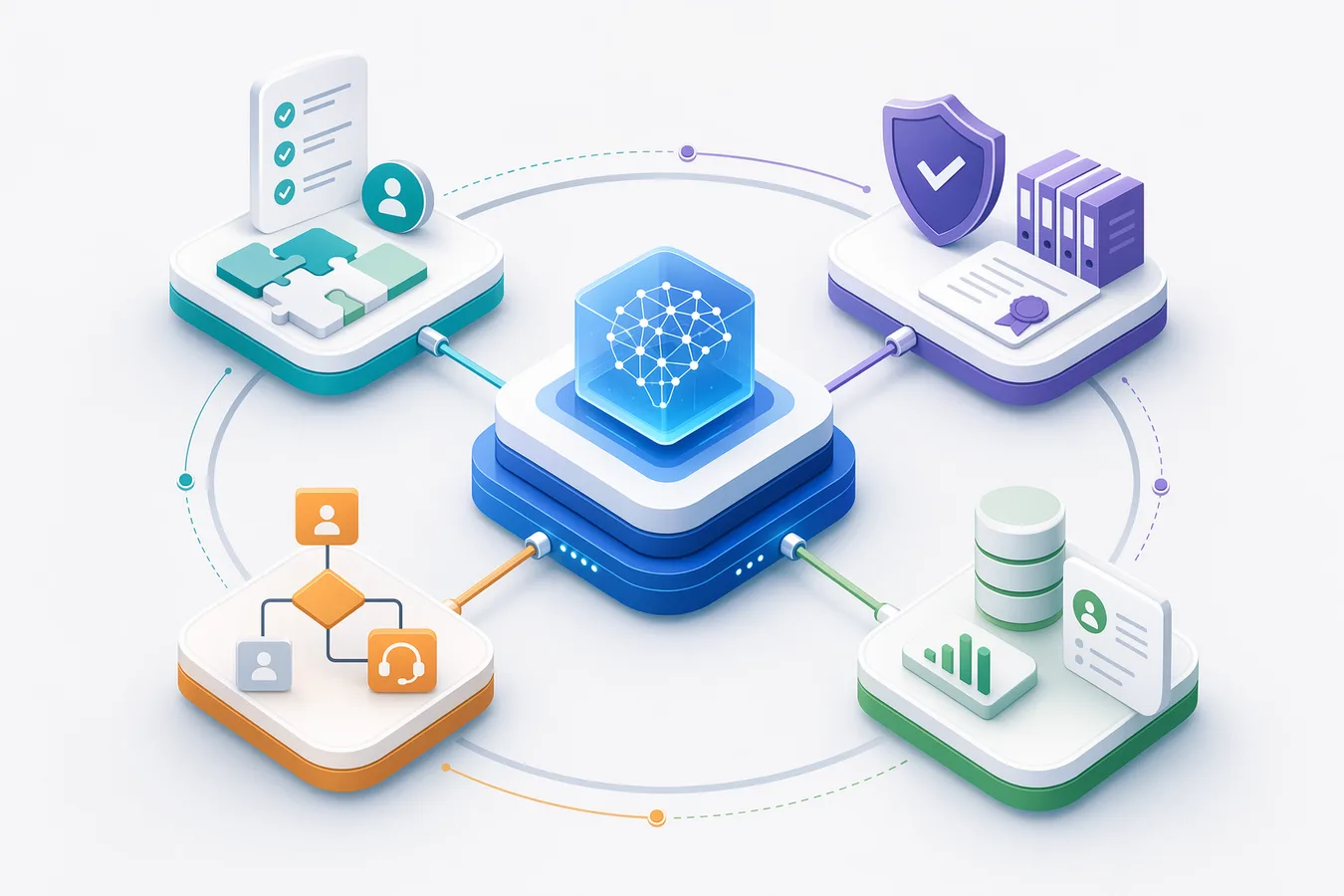
AI-powered voice calling and WhatsApp automation now converge in unified platforms that handle multi-touch lead qualification, appointment booking, and human handoff across channels. Choosing the right architecture requires evaluating workflow integration, compliance readiness, and escalation logic.
Key Takeaways
Voice calling suits cold outbound qualification and appointment booking, while WhatsApp excels at warm inbound response and asynchronous follow-up
Omnichannel platforms maintain persistent conversation context across voice and WhatsApp, reducing lead friction compared to multi-channel systems with siloed histories
TCPA voice consent and WhatsApp opt-in requirements are separate compliance frameworks that must both be enforced in your CRM workflow
Effective human handoff logic uses confidence thresholds, sentiment detection, high-value signals, and explicit requests to route leads at the conversion-critical moment
Industry-specific use cases—healthcare appointment booking, real estate after-hours inquiries, B2B qualification—determine which platform architecture delivers highest ROI
Yes — multiple AI platforms now combine voice calling and WhatsApp messaging for lead generation, including EchoLeads, Bland AI, and Vapi. These dual-channel systems automate outbound voice qualification and inbound WhatsApp engagement within one platform, handling different lead temperatures through the channel best suited to each stage.
Why Voice Calling and WhatsApp Serve Different Lead Temperatures
Voice calling suits outbound cold and warm lead qualification — proactive reach, appointment booking, and structured discovery calls that move prospects from awareness to interest. AI calling agents initiate contact, ask qualifying questions about budget and timeline, and book meetings without waiting for inbound signal.
WhatsApp serves inbound warm and hot lead response. With 175 million people contacting businesses on WhatsApp daily, the channel handles reactive engagement — instant replies to product questions, 24/7 availability for prospects researching after hours, and automated follow-ups operating around the clock. Buyers already on WhatsApp expect immediate answers; voice calling for these inquiries adds friction.
The lead-temperature logic: use voice to create urgency and book next steps with prospects who haven't raised their hand yet. Use WhatsApp to capture and qualify inbound interest the moment it arrives, maintaining engagement until a human agent takes over.
The Omnichannel vs Multi-Channel Distinction
Multi-channel does not automatically mean omnichannel. Platforms that offer both voice and WhatsApp can still operate channels independently, a lead's voice call history may not surface when the WhatsApp agent responds, forcing the buyer to repeat context.
True omnichannel systems unify conversation context across channels. A prospect who books an appointment via voice call receives WhatsApp confirmation with meeting details retained from the call. When the lead replies on WhatsApp two days later with a question, the AI agent recalls the original voice conversation and adjusts its response accordingly. Persistent context prevents dropped handoffs and eliminates redundant qualification questions.
The omnichannel distinction becomes the primary evaluation criterion in platform comparisons: does the system share lead state, conversation history, and qualification data across voice and messaging, or does each channel start from zero context every time?
Understanding what each channel does best sets the foundation for evaluating platform capabilities and integration depth.
Key Capabilities to Evaluate: Voice, Messaging, and Workflow Integration
No single AI solution is universally best for lead generation. The right platform depends on four evaluation dimensions: workflow fit, compliance readiness, human handoff logic, and CRM integration. Teams that assess these capabilities upfront avoid costly mid-deployment pivots and compliance exposure.
Workflow Fit: Industry-Specific Use Cases
Platforms excel in different verticals. Healthcare appointment booking demands HIPAA-sensitive handling and reminder workflows to reduce no-shows, even 2-3 missed calls can lose 2 appointments instantly. Real estate requires after-hours lead capture with multilingual support; instant callbacks and site visit scheduling are conversion-critical. Financial services prioritize compliance-sensitive qualification that handles sensitive data securely during loan application pre-screening. Ecommerce benefits from order status automation and upsell triggers that respond to cart behavior in real time. Evaluate whether pre-built industry templates cover your conversation patterns or if you'll need custom workflow design.
Compliance Readiness: TCPA for Voice, WhatsApp Opt-In for Messaging
Voice and messaging channels carry distinct compliance frameworks. Outbound calling in regulated markets like India must follow TRAI rules, calls restricted to 9 AM, 9 PM, DND registry checks mandatory, and non-compliance can result in ₹25,000+ fines plus telecom blacklisting. WhatsApp enforces a 24-hour conversation window after user initiation and requires pre-approved templates for outbound messages beyond that window. Platforms that automate opt-in logging, maintain consent records for one year, and provide audit trails reduce legal risk. Check whether the vendor natively supports both voice TCPA workflows and WhatsApp opt-in enforcement, or if compliance becomes a manual add-on task.
Human Handoff Logic as a Key Evaluation Criterion
High-intent or sensitive conversations should escalate to human agents quickly. Look for configurable triggers: confidence thresholds (when the AI detects uncertainty), keyword detection (pricing objections, competitor mentions), and sentiment analysis (frustration indicators). The best platforms transfer full conversation context, transcripts, qualification scores, next steps, so human reps don't restart discovery. Escalation logic isn't optional; it's conversion-critical when AI reaches the boundary of safe autonomy.
With these evaluation criteria in mind, the platform landscape divides into four architectural families, each optimized for distinct lead generation workflows.
When evaluating platforms that combine AI voice calling and WhatsApp automation for lead generation, four architectures emerge with distinct trade-offs: omnichannel suites that unify conversation context across channels, voice-first bulk campaign engines, messaging-centric multi-agent workspaces, and WhatsApp-native CRM workflows. The table below compares EchoLeads, Dhiyo AI Labs, respond.io, and Fuzen across the decision framework introduced earlier, AI calling capability, WhatsApp automation depth, CRM integrations, pricing transparency, and setup model.
Platform | AI Calling | WhatsApp Automation | CRM Integrations | Pricing Model | Setup |
|---|---|---|---|---|---|
EchoLeads | Yes—autonomous qualification, 24/7 inbound/outbound | Yes—unified conversation context with voice | Salesforce, HubSpot, Zoho, real-time sync | Contact for pricing | Templates, 72-hour deploy |
Dhiyo AI Labs | Yes—bulk outbound campaigns, TRAI compliance | Limited evidence | Not publicly detailed | Not publicly disclosed | Not publicly detailed |
Respond.io | Limited evidence | Yes—WhatsApp API, multi-agent workspace | Yes—rule-based + AI agent routing | Contact for pricing | API integration required |
Fuzen | No evidence | Yes—6-step lead workflow, WhatsApp CRM | Yes—unified inbox, CRM sync | Not publicly disclosed | WhatsApp Business API setup |
EchoLeads: Omnichannel Lead Generation with Autonomous Qualification
EchoLeads positions itself as an omnichannel AI sales agent suite integrating voice, WhatsApp, and CRM into a unified automation workflow. The platform's core differentiator is conversation context retention: a lead qualification started on a voice call continues seamlessly into WhatsApp follow-ups without re-asking questions. CRM integrations with Salesforce, HubSpot, and Zoho enable real-time field updates during live conversations, eliminating post-call manual data entry.
Strengths: Unified conversation context across voice and WhatsApp channels reduces lead friction and supports complex multi-touch qualification workflows. Autonomous qualification operates 24/7 without requiring human-in-the-loop handoff for routine booking and CRM updates.
Limitations: Pricing transparency on the website is limited, no self-serve tier or published starting price is visible, requiring a sales conversation to scope cost.
Best For: Teams running multi-channel lead generation campaigns (paid ads → voice qualification → WhatsApp nurture) who need conversation context to persist across touchpoints and CRM automation without manual sync.
Dhiyo AI Labs: Bulk Voice Campaigns for Scale
Dhiyo AI Labs emphasizes high-volume outbound voice calling with India-focused compliance (TRAI registration) per competitor outline evidence. The platform's architecture is optimized for bulk campaign execution, thousands of simultaneous calls for lead qualification, appointment booking, and survey collection. WhatsApp automation capability is not prominently documented in available competitor materials, suggesting this is a voice-first solution rather than an omnichannel suite.
Best For: Sales teams executing large-scale outbound voice campaigns in India who prioritize call volume and compliance over multi-channel conversation orchestration.
Respond.io: WhatsApp-First Multi-Agent Workspace
Respond.io is architected as a messaging-centric platform with WhatsApp Business API integration and multi-agent collaboration workflows. The competitor outline's comparison table distinguishes AI agents (autonomous conversation handling) from rule-based chatbots (keyword-trigger responses), respond.io supports both, allowing teams to deploy AI for qualification and rules-based flows for FAQ triage. Voice calling capability is not evidenced in available competitor materials, positioning this as a messaging-first workspace rather than a voice-enabled lead generation suite.
Best For: Customer support and sales teams managing high-volume WhatsApp conversations across multiple human agents who need AI assistance within a shared inbox but do not require voice calling automation.
Fuzen: WhatsApp CRM Integration with 6-Step Lead Management
Fuzen's documented architecture centers on a 6-step WhatsApp lead management workflow per competitor outline: capture (form/ad integration), qualify (conversational AI), book (calendar sync), dashboard (analytics), human handoff (escalation triggers), and security (compliance monitoring). CRM integrations enable unified inbox functionality and field-level sync. Voice calling capabilities are not detailed in available competitor evidence, suggesting WhatsApp is the primary engagement channel.
Best For: Sales teams running WhatsApp-centric lead generation campaigns who need structured workflow automation (capture → qualify → book) with CRM sync but do not require voice calling as part of the lead engagement stack.
Platform architecture determines channel capabilities, but lead temperature and industry context determine which channel to use when.
When to Use Voice Calling vs. WhatsApp Messaging for Lead Outreach
Lead Temperature and Channel Fit
Cold leads, prospects with no prior relationship, respond best to voice calling for proactive qualification and appointment booking. A live conversation establishes trust faster than text and surfaces budget, timeline, and decision-making authority in seconds. Warm leads, those who have engaged but aren't ready to buy, benefit from WhatsApp nurturing: content delivery, appointment confirmation, and automated follow-ups that maintain momentum without pressure. One fitness case study reported an 87.7% lead conversion rate using WhatsApp AI for trial bookings. Hot leads, ready to buy, can be handled through either channel, but escalate to a human agent quickly to close the deal; AI should not handle the final negotiation alone.

Industry Vertical Considerations
Healthcare: Voice for appointment booking (urgency + compliance), WhatsApp for reminders and pre-visit instructions. Real estate: WhatsApp for after-hours inquiries and property details, voice for scheduling property showings. Financial services: Voice for compliance-sensitive qualification (loan applications, account verification), WhatsApp for document collection and status updates. Ecommerce: WhatsApp for order status and low-value inquiries (with over 2 billion active users[5], teams often receive 50, 100, or 500+ messages per day[5]), voice for high-value upsell or support escalation. EchoLeads supports both use cases within one platform, so businesses don't have to choose between voice-only or WhatsApp-only tools, they can deploy the right channel per lead type and industry workflow.
Channel choice must align with regulatory frameworks that govern automated outreach in each medium.
Compliance Requirements: TCPA, WhatsApp Policies, and Opt-In Rules
TCPA and DNC Compliance for Outbound Voice Calling
Outbound voice calling automation in the United States requires prior express written consent before dialing, scrubbing call lists against Do Not Call (DNC) registries, and respecting calling time restrictions, typically 8 AM to 9 PM in the recipient's local time zone. In India, the Telecom Regulatory Authority (TRAI) enforces similar rules: calls are restricted to 9 AM to 9 PM only, and businesses must check the National Do Not Call (NDNC) registry before every campaign. Non-compliance carries steep penalties, ₹25,000+ fines and telecom blacklisting in India, and consent records must be maintained for 1 year. Platforms like EchoLeads provide built-in TCPA compliance workflows, reducing the burden of manual DNC scrubbing and consent tracking.
WhatsApp Opt-In and 24-Hour Conversation Window
WhatsApp Business API enforces a strict opt-in and conversation-window model. Businesses must use pre-approved message templates for the first outreach; once a user replies, a 24-hour conversation window opens during which the business can send free-form messages without template restrictions. After 24 hours of inactivity, the business must revert to pre-approved templates or obtain fresh consent. Platforms that automate WhatsApp lead generation, such as EchoLeads, which maintains an automated opt-in system and message monitoring, handle template submission, opt-in documentation, and 24-hour window tracking natively. When evaluating vendors, confirm whether the platform provides compliance control automation and API-aligned workflows, or whether your team must build this compliance layer separately.
Compliance prevents outreach violations, but intelligent escalation logic drives actual conversions by routing high-intent leads to humans at the optimal moment.
How Human Handoff and Escalation Logic Impact Conversion Rates
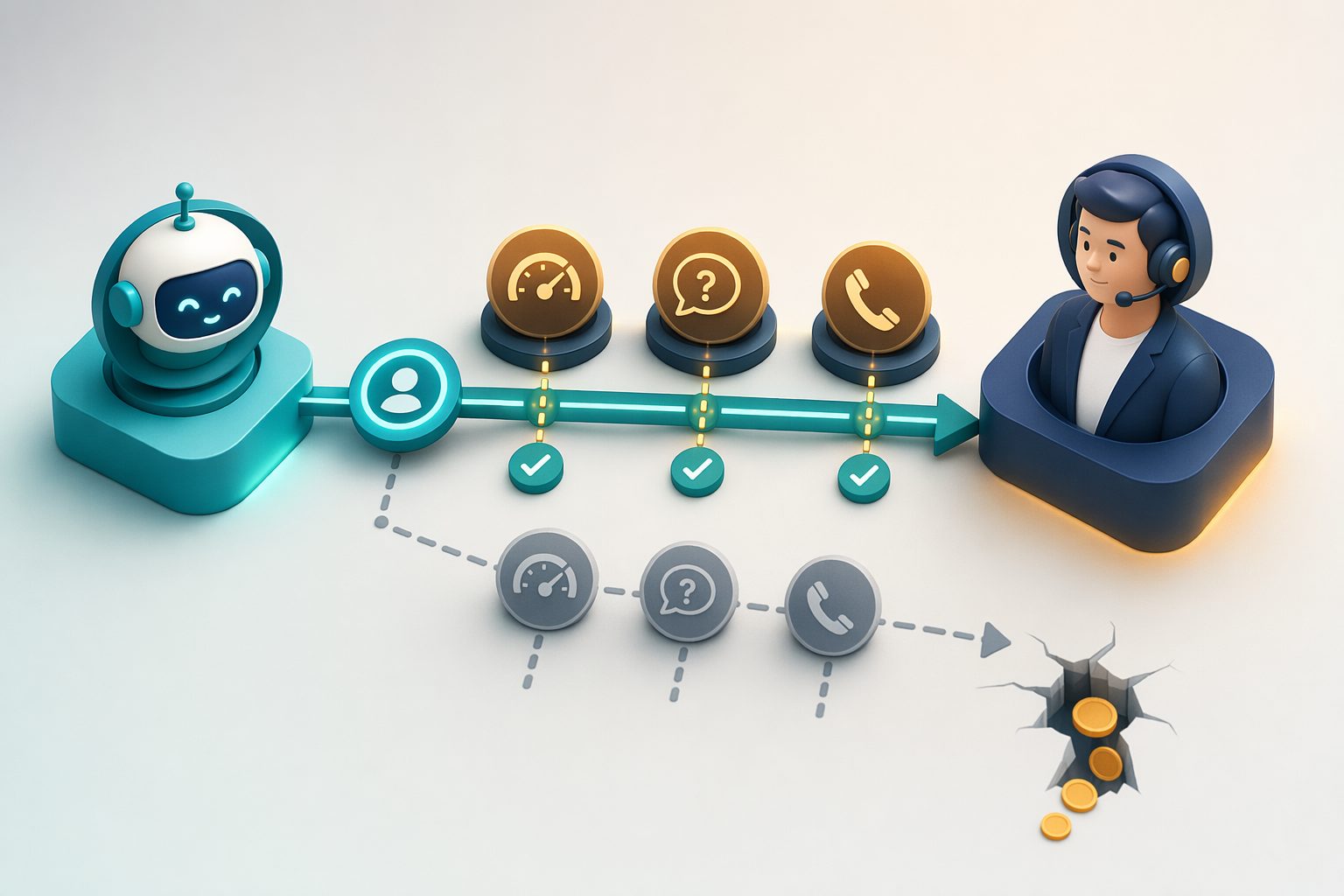
Human handoff is conversion-critical, the goal is not to maximize AI autonomy but to route high-intent leads to humans at the right time. Premature escalation wastes the $38,400 per year in cost savings[7] that automation delivers, while delayed escalation loses ready-to-buy prospects.
Escalation Triggers: Confidence Thresholds and Sentiment Analysis
Effective escalation logic uses four categories of triggers: (1) Low AI confidence scores, when the AI's understanding falls below 90% confidence[6], escalate to avoid errors; (2) Negative sentiment detection, frustration or dissatisfaction signals require human empathy; (3) High-value lead indicators, mentions of budget above threshold or requests for proposals flag buying intent; (4) Explicit user requests, 'I want to speak to a human' overrides all automation. EchoLeads allows businesses to configure these handoff triggers based on conversation keywords, sentiment scores, or explicit prospect requests.
Ownership Transfer and CRM Integration
The AI must pass the full conversation transcript, lead score, and CRM record update to the human agent so pick-up happens mid-conversation without repeating questions. Ask vendors whether this transfer is automated and whether the CRM record updates in real time. When intent signals become obvious, the follow-up AI escalates qualified leads to human agents with full conversation context and history, preserving continuity and maximizing conversion.
Final Recommendation
Voice-first platforms like Dhiyo AI Labs excel at bulk outbound campaigns but lack WhatsApp automation depth; messaging-first platforms like respond.io offer rich WhatsApp workflows but have limited voice calling evidence. EchoLeads and similar omnichannel platforms unify both channels with persistent conversation context, suited for teams that need lead continuity across voice and messaging without switching tools.
As AI voice latency drops below 500ms and WhatsApp Business API adoption grows past 535 million users in India alone, the compliance gap between outbound voice and inbound messaging will narrow, platforms that unify both channels with native compliance tooling will become the category standard by 2027.
Start by documenting your current lead response workflow and compliance posture, then request demos from EchoLeads, Dhiyo AI Labs, respond.io, and Fuzen to compare escalation logic and CRM integration depth for your specific industry vertical. Explore EchoLeads' omnichannel lead generation suite to see how unified conversation context and autonomous qualification route high-intent leads to human agents automatically.
Frequently Asked Questions
Can AI fully replace human sales agents for lead generation?
No, AI handles qualification, appointment booking, and low-complexity inquiries, but high-intent or sensitive conversations should move to a competent human agent quickly. AI voice agents enable sales teams to focus on high-intent prospects, not replace them [5].
What is the difference between multi-channel and omnichannel lead generation?
Multi-channel platforms support voice, WhatsApp, and SMS but channels may operate independently. Omnichannel maintains persistent conversation context across channels, a lead's WhatsApp history surfaces during a voice call, eliminating repeated context. Multi-channel does not automatically mean omnichannel [1][2].
Do I need separate consent for voice calling and WhatsApp messaging?
Yes, TCPA requires prior express written consent for automated voice calls, and WhatsApp enforces opt-in consent documented in your CRM. The consent mechanisms are separate, and WhatsApp enforces 24-hour conversation windows with pre-approved templates. Consent records must be maintained for one year [3][4].
How long does it take to set up an AI voice + WhatsApp lead generation system?
Setup time varies by platform complexity. No-code platforms can go live in hours to days, while API-based solutions require developer resources and may take weeks. Some platforms claim deployment in as little as 30 minutes for basic use cases.
What industries benefit most from AI voice calling and WhatsApp automation?
Healthcare sees high ROI from appointment booking and reminders, even 2-3 missed calls can lose 2 appointments instantly. Real estate benefits from after-hours property inquiries, financial services from compliance-sensitive qualification, and ecommerce from order status and upsell automation [3][4].
How much does AI voice calling cost compared to WhatsApp messaging?
Voice calling typically costs $0.09, $0.12 per minute depending on platform and commitment tier. WhatsApp messaging costs vary by volume tier but are generally lower per interaction. Total cost of ownership includes setup, usage, and CRM integration fees, pricing transparency is inconsistent across vendors.
When should the AI escalate a lead to a human agent?
Escalate when AI confidence falls below 90%, user expresses frustration or negative sentiment, high-value lead indicators appear (budget mention, proposal request), or user explicitly requests a human. High-intent or sensitive conversations should move to a competent human agent quickly [6][7].