
Why Are My Appointment No-Show Rates So High Despite Confirmed Bookings?
Confirmed appointments still produce 10-30% no-show rates across industries. Initial booking acceptance does not guarantee attendance when the appointment day arrives. The gap between confirmation and commitment drives persistent revenue loss.
Key Takeaways
Confirmation captures intent at booking time but does not verify ongoing commitment as the appointment approaches
High no-show rates persist due to reminder fatigue, timezone errors, calendar sync failures, and manual follow-up bottlenecks
Re-confirmation rate 24-48 hours before appointments predicts attendance better than initial booking confirmation
Voice AI re-confirmation workflows enable two-way dialogue at scale to verify real-time intent before appointments
Measuring cost per no-show and baseline attendance rates reveals the ROI opportunity for automated re-verification systems
Why Confirmed Appointments Still Result in No-Shows
A confirmed appointment measures booking acceptance at a single moment — not ongoing intent or calendar commitment. Confirmation creates a record in your system; it does not guarantee the prospect will prioritize the meeting, add it to their active calendar, or follow through when the day arrives. That disconnect explains why no-show rates persist at double-digit levels even after initial confirmation.

The Confirmation Rate vs Attendance Rate Disconnect
Most appointment businesses should plan for a 10–25% no-show rate before reminders [1].[1] Across healthcare settings specifically, the average patient no-show rate ranges from 5% to 33% [2], with higher-touch specialties such as pediatrics and sleep clinics reporting rates near 30–39%. These benchmarks reflect structural factors — competing priorities, scheduling friction, perceived urgency — that operate independently of whether the prospect verbally or digitally confirmed the booking.
Industries with longer lead times between booking and appointment see the gap widen. Therapy and fitness often run near 20 to 22% without reminders [1];[1] legal, veterinary, and dental appointments sit closer to 10 to 12% [1].[1] The variation reflects how much time elapses between confirmation and the scheduled slot: the longer the gap, the more opportunities for competing obligations to displace the original commitment.
What 'Confirmed' Actually Measures
Confirmation captures booking acceptance at the time of scheduling, not a binding commitment to attend. The prospect may verbally agree, click a calendar link, or receive a confirmation email, but that action measures only that they accepted the slot *then*, not that they added it to the calendar they check daily, set a personal reminder, or evaluated how the appointment fits with other obligations three weeks later. Confirmation is a snapshot of intent; attendance requires sustained prioritization across days or weeks.
This temporal gap is why systems relying solely on initial confirmation see persistent no-show rates: the booking workflow confirms *capacity* (the slot exists, the prospect accepted it), but it does not verify *commitment* (the prospect remembers it, values it, and has no conflicting priority when the day arrives). Closing that gap requires reminders, re-engagement workflows, and calendar-integration mechanisms that move the appointment from a static system record into the prospect's active time-management routine.
Understanding the structural difference between booking acceptance and attendance commitment explains why initial confirmations fail to predict actual show rates.
The Confirmation-Commitment Gap: What "Confirmed" Really Means
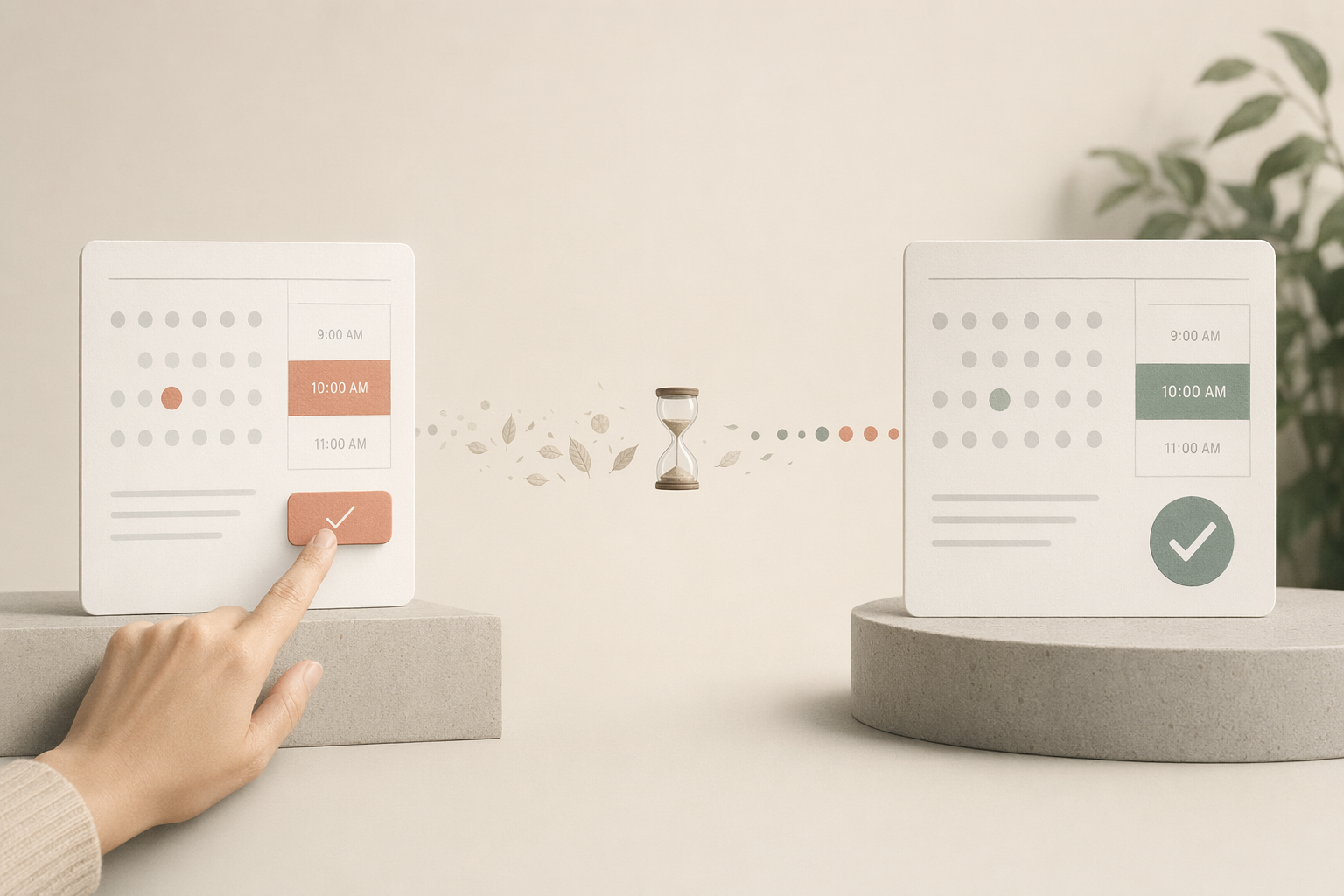
When a patient says "yes" at booking time, most practices treat that confirmation as a binding commitment. But confirmation is a point-in-time signal that captures intent at the moment of scheduling, not active intent on the day of the appointment. This distinction defines the confirmation-commitment gap: the space between initial acceptance and the follow-through required to show up weeks or months later.
Confirmation as a Point-in-Time Signal
A confirmed booking reflects the patient's intentions when they scheduled, but that intent naturally erodes over days or weeks without re-engagement. Research published in *The Health Care Manager* found that appointments scheduled 30 days or more in advance carried a 47% no-show rate, compared to 23% for visits booked within 0 to 30 days [3]. The longer the gap between confirmation and appointment, the more time life has to intervene, and the less salient the original commitment becomes.
Most patients confirm an appointment without adding it to their personal calendar, setting their own reminders, or making concrete plans to attend. They assume the practice will remind them, or they trust themselves to remember, and both assumptions frequently fail. The confirmation itself creates a false sense of closure for both the practice and the patient.
Why Intent Degrades Over Time
Intent erosion happens through three natural mechanisms: time-lag disengagement, competing priorities, and simple forgetfulness. A patient who books an appointment three weeks out is making a commitment in one context (motivated, available, symptom-aware) but must honor it in a different context (busier, symptom-reduced, distracted). Patient no-show rates can be as high as 30% in some clinics, driven by practical barriers like transportation issues, concerns about cost, and psychological factors including a negative previous experience [4]. These are not signs of disrespect, they represent a breakdown in the patient journey between booking and attendance.
For non-urgent appointments especially, the absence of ongoing symptoms or visible consequences makes it easy for other obligations to take precedence. A work conflict, a child's school event, or an unexpected errand can all displace an appointment that felt important weeks ago but no longer feels critical today. Without structured re-engagement, the practice has no mechanism to detect or reverse this drift.
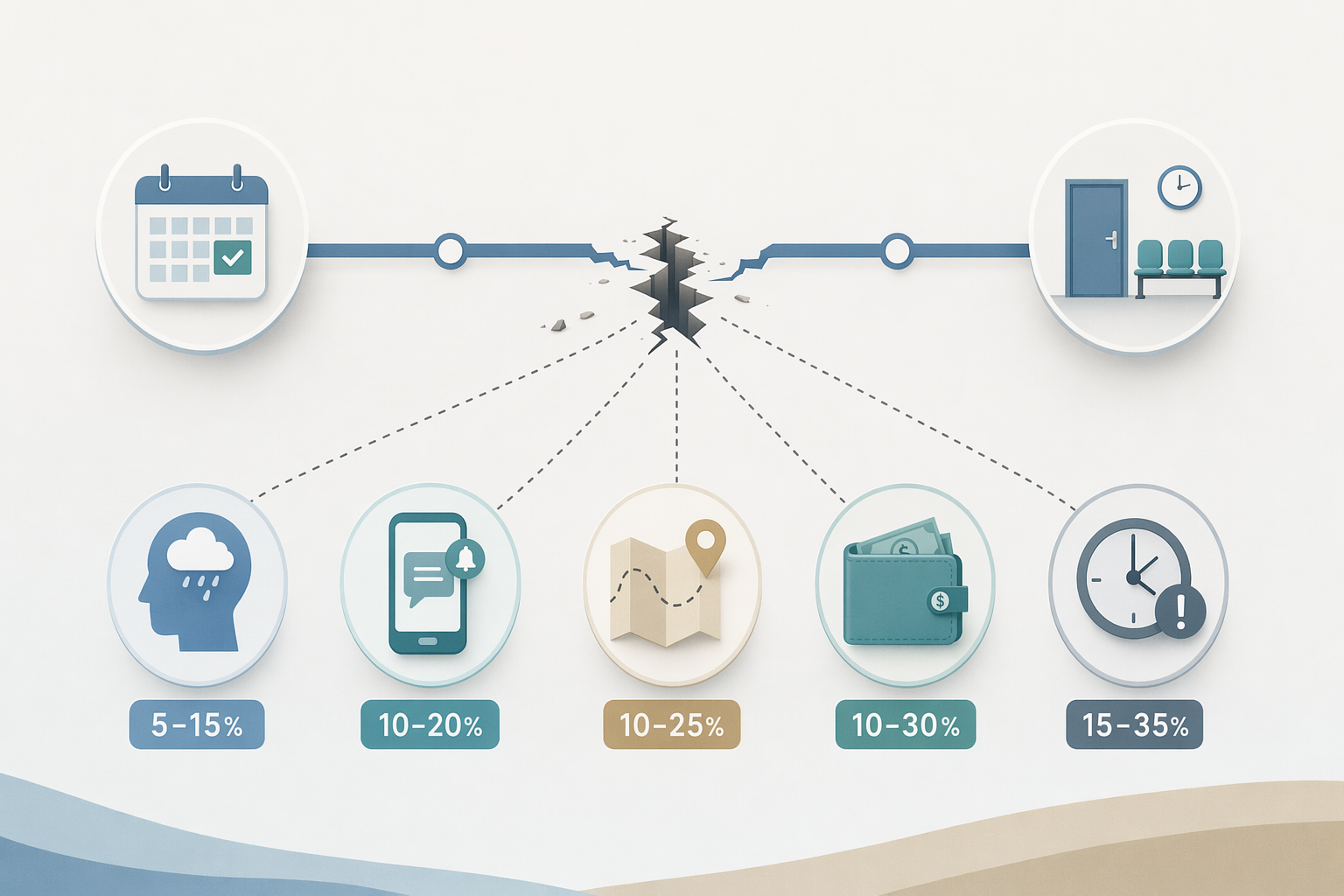
Beyond the confirmation-commitment gap, five operational failures compound no-show risk even when patients initially accept appointments.
Root Causes of High No-Show Rates Despite Booking Confirmations
No-show rates persist even when patients or clients confirm an appointment because the confirmation itself does not address five structural gaps in the scheduling-to-attendance workflow. Therapy and fitness bookings average 20 to 22% no-show rates without reminders, while legal, veterinary, and dental appointments run closer to 10 to 12%[1], specialty variation signals that root causes differ by use case.
Reminder Fatigue and Suboptimal Cadence
Over-reminding desensitizes recipients. Generic confirmation-plus-reminder sequences sent on a fixed schedule (e.g., 7 days, 24 hours, 2 hours) train patients to ignore messages rather than confirm intent. Monday morning appointments no-show at 2× the rate of Tuesday afternoon[5], and appointments booked more than 4 weeks out no-show at 3× same-week bookings[5], evidence that timing and lead time, not just reminder frequency, predict no-show risk.
Timezone and Scheduling Confusion
Remote or multi-location bookings fail when the confirmation email lists the time in the provider's timezone without converting to the patient's local time. A confirmed 3 PM EST appointment becomes a missed 12 PM PST slot when the patient interprets the time literally.
Calendar Sync Failures
Confirmation sent does not mean appointment added. An email or SMS confirmation without a calendar-integration link (ICS attachment, Google/Outlook one-click add) leaves the patient without a personal trigger to remember. The appointment lives only in the provider's system, not the patient's daily calendar.
Lack of Real-Time Re-Confirmation Closer to Appointment
The structural gap: no second verification touchpoint 24 to 48 hours before the appointment. Patients who confirmed weeks earlier may have forgotten or deprioritized the visit. Voice AI re-confirmation workflows address this by calling patients closer to appointment time to verify intent, EchoLeads supports smart reminders and instant calendar integration, but many practices still rely on one-time confirmation at booking.
Manual confirmation workflows introduce additional failure points that automated systems must overcome to reduce no-show rates at scale.
How Manual Follow-Up Systems Contribute to No-Show Rates
Manual Outreach Bottlenecks and Human Error
Manual confirmation workflows fail at scale because front-desk teams can only call 20-30 patients per day. High-volume practices with 100+ daily appointments cannot reach everyone 24-48 hours before their slot, the very window when confirmation calls are most effective. When staff manually dial a list of 80 upcoming appointments, the last 50 patients receive no call, or the call arrives too late to influence their attendance decision.

Inconsistency compounds the problem. One receptionist may prioritize new-patient confirmations; another may focus on high-value appointments; a third may skip calls entirely during busy intake periods. Forgotten callbacks, misdialed numbers, and voicemail-only attempts create gaps that passive systems cannot close. Manual systems also lack the temporal precision needed for optimal reminder timing, a call placed at 4:00 PM on a Friday for a Monday morning slot is far less effective than one placed Sunday evening, but manual workflows rarely account for such nuance.
Passive Confirmation Methods vs Active Re-Engagement
Automated email and SMS reminders outperform manual systems on speed and consistency, research shows they can reduce no-show rates by 30-50% [6], but they remain one-way broadcasts. A text message reading "Your appointment is tomorrow at 2 PM" does not verify whether the patient still intends to attend, whether they need to reschedule, or whether they even saw the message. Passive reminders assume intent; they do not confirm it.
Active re-engagement through voice calls closes this gap. A conversational AI agent can call the patient, ask "Can you confirm you're still coming tomorrow at 2 PM?", handle yes/no/reschedule responses in real time, and update the schedule immediately. This two-way interaction surfaces last-minute conflicts that passive reminders miss. Platforms like EchoLeads operate 24/7, using AI to automate customer conversations and appointment scheduling across channels. The category solution here is not to replace human staff but to complement them, voice AI handles routine confirmations at scale while staff focus on complex scheduling scenarios that require judgment.
Voice AI automation addresses the structural gaps in passive reminder systems by adding real-time intent verification through two-way dialogue.
Voice AI Automation for Real-Time Re-Confirmation Workflows
How Voice AI Re-Confirmation Works
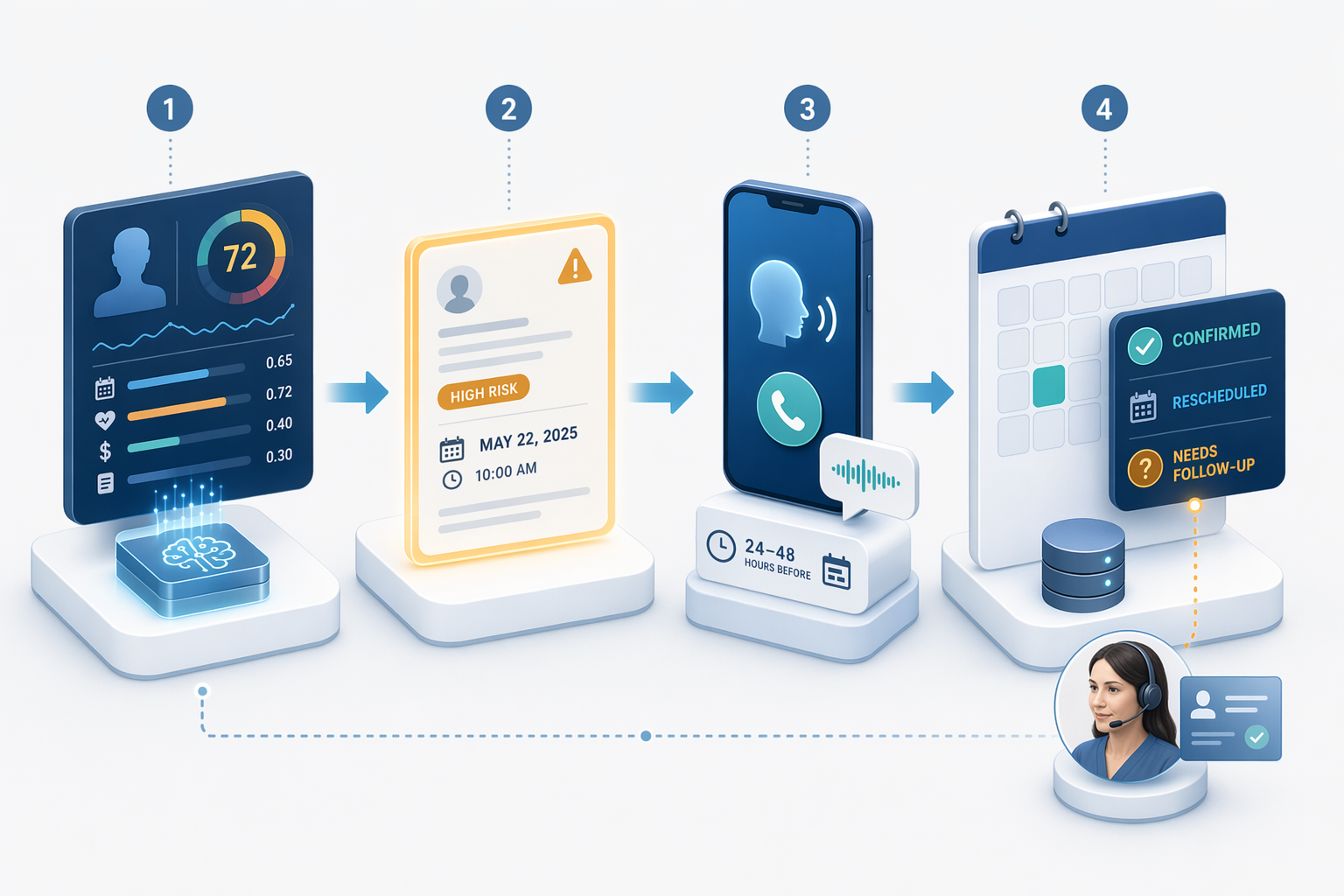
Voice AI re-confirmation operates as a 4-step predictive intervention layer, not a mass reminder tool. Machine learning models trained on specialty, appointment lead time, and day-of-week signals [7] predict which appointments carry the highest no-show risk. These models achieve performance ranging from 52% to 99.44%, with Logistic Regression most common in 68% of studies [7]. Once a high-risk appointment is flagged, the Voice AI agent places an outbound call 24-48 hours before the scheduled time. The agent asks the patient to confirm or reschedule via natural dialogue, detecting hesitation or conflicting commitments through conversational cues. Appointments that remain unconfirmed after the call are flagged for human follow-up, ensuring manual teams focus only on the subset that needs intervention.
Voice AI vs SMS Reminders: Active Verification vs Passive Notification
SMS reminders broadcast a one-way message and hope the patient reads it. Voice AI conducts a two-way dialogue: the agent asks follow-up questions when a patient sounds uncertain, offers real-time rescheduling options, and confirms intent before ending the call. This active verification model addresses the commitment-confirmation gap that SMS cannot close. Monday morning appointments no-show at 2x Tuesday afternoon rates, and appointments booked more than 4 weeks out no-show at 3x same-week bookings [5]. Voice AI targets these high-risk segments automatically, while SMS treats every appointment identically regardless of risk profile.
When EchoLeads Fits in Your Re-Confirmation Stack
EchoLeads operates as the voice layer for high-risk appointment segments, Monday mornings, therapy and fitness verticals, new patient intakes, where passive reminders fail. The AI calling agent qualifies and books appointments 24/7, syncs directly with CRM calendars, and flags unconfirmed appointments for human review. It complements existing reminder systems rather than replacing them: routine low-risk appointments continue receiving SMS, while high-risk slots receive active voice verification. Complex situations, billing questions, medical clarifications, still route to human reps, but EchoLeads scales the re-verification layer that manual teams cannot handle at volume. The platform integrates with Salesforce, HubSpot, and Zoho for real-time updates.
Effective no-show prevention requires shifting measurement focus from initial confirmation rates to re-verification metrics and revenue impact.
Measuring No-Show Prevention: Metrics Beyond Confirmation Rate
Why Confirmation Rate is a Vanity Metric
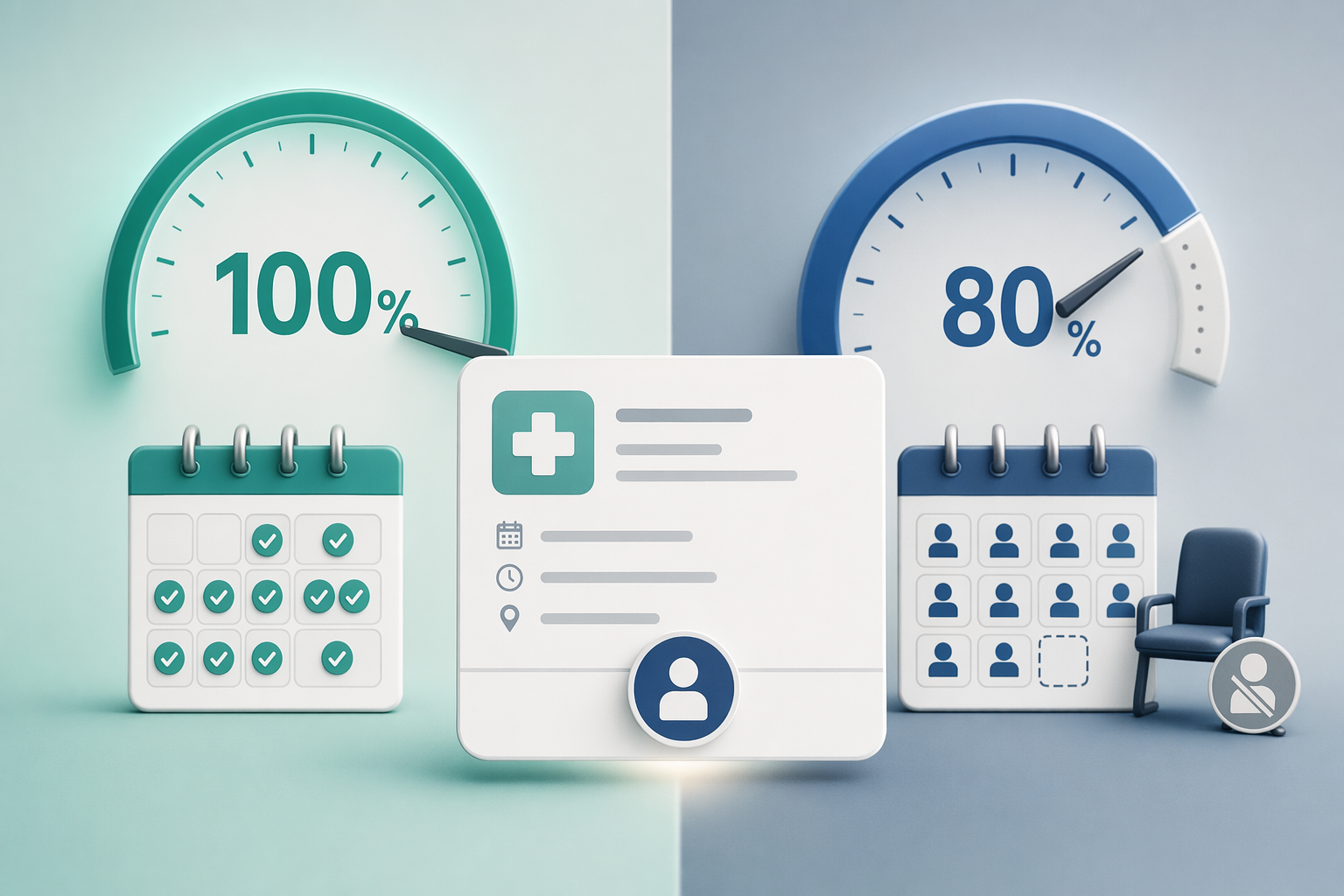
Confirmation rate, the percentage of scheduled appointments that receive initial patient confirmation, tells you almost nothing about actual attendance. A practice can achieve 100% confirmation rate and still experience 20% no-shows if those confirmations were obtained weeks before the appointment without subsequent intent verification. The metric measures compliance with a single touch-point, not commitment to attend. What matters is whether the patient shows up, not whether they said "yes" on initial booking.
Re-Confirmation Rate and Intent Verification Quality
Re-confirmation rate, the percentage of initially confirmed appointments successfully re-verified 24 to 48 hours before the scheduled time, is the leading indicator of attendance. This metric captures recency of intent: a patient who confirms again the day before is far more likely to attend than one whose last interaction was three weeks prior. Track re-confirmation rate by appointment type, lead time, and patient segment to identify which cohorts require earlier or more frequent verification touches.
Cost
Calculate ROI by measuring baseline no-show rate, implementing re-confirmation workflows, then computing (baseline no-shows − post-intervention no-shows) × average revenue per appointment. If a primary care practice books 200 appointments monthly at a baseline 15% no-show rate (30 no-shows), reducing that to 8% (16 no-shows) prevents 14 no-shows per month. At $150 to 200 per missed primary care appointment [2], that's $2,100 to 2,800 in monthly recovered revenue, or $25,200 to 33,600 annually. For specialty practices where a no-show costs $250 to 400 [5], or procedure-based settings at $500 to 800 per no-show [5], the same 14-appointment reduction yields $42,000 to 67,200 annual recovery. EchoLeads tracks re-confirmation rate and intent signals in its analytics dashboard, providing visibility into which verification workflows drive the highest attendance lift per appointment type.
Generic SMS reminder platforms handle high-volume broadcast efficiently but do not verify real-time intent; EchoLeads Voice AI adds two-way dialogue for intent verification on high-risk appointments where the confirmation-commitment gap is widest. As machine learning prediction models improve (52-99% performance range per 2025 research), Voice AI re-confirmation will shift from reactive reminder layer to proactive risk-targeting system that allocates outreach based on predicted no-show probability by specialty, day, and lead time. Calculate your cost per no-show this week using the formula from section 6, then explore EchoLeads Voice AI calling workflows to test re-confirmation automation on your highest-risk appointment segments.
Frequently Asked Questions
What is the average no-show rate for confirmed appointments?
Most appointment businesses should plan for a 10-25% no-show rate before reminders [1] [1]. Across healthcare specifically, the average patient no-show rate ranges from 5% to 33% [2] [2], with higher rates in specialties with longer lead times between booking and appointment dates.
Why do patients no-show even after confirming their appointment?
A confirmed appointment measures booking acceptance at a single moment, not ongoing intent or calendar commitment [1][2]. Initial confirmation captures intent at booking time, but that intent naturally erodes over days or weeks due to forgetfulness, life events, and lack of re-engagement closer to the appointment time.
How much does a no-show cost a medical practice?
Primary care appointments lose $150-200 per no-show, specialty visits $250-400, and procedures $500-800 [5]. A practice booking 200 monthly appointments at 15% baseline no-show (30 no-shows) that reduces the rate to 8% saves 14 appointments monthly, worth $2,100-2,800 in recovered primary care revenue [2].
What is the best timing for appointment reminders?
The 24-48 hour window before appointments provides optimal re-confirmation timing [6]. Verification closer to appointment time captures real-time intent better than early reminders, which patients dismiss or forget. Inconsistent manual follow-up timing compounds no-show risk when staff prioritize different appointment types unpredictably.
How does Voice AI re-confirmation differ from SMS reminders?
SMS reminders broadcast a one-way message and hope the patient reads it [7][5]. Voice AI conducts two-way dialogue: the agent asks follow-up questions when a patient sounds uncertain, offers real-time rescheduling options, and confirms intent before ending the call, verifying commitment rather than just delivering information.
Can Voice AI completely replace human appointment confirmation calls?
Voice AI scales routine re-verification at high volume for high-risk appointment segments, Monday mornings, therapy and fitness verticals, new patient intakes [7][5]. Complex situations requiring billing clarification, patient confusion resolution, or special accommodations still need human follow-up. Voice AI complements rather than replaces staff entirely.
Which appointment types have the highest no-show rates?
Therapy and fitness appointments show 20-22% no-show rates compared to 10-12% for legal, veterinary, and dental visits [1]. Monday morning appointments experience approximately 2x higher no-show rates than other weekday slots [5]. New patient intakes consistently show higher risk than established patient follow-ups across specialties [2].