
6 Best AI Voice Agents for Indian Languages
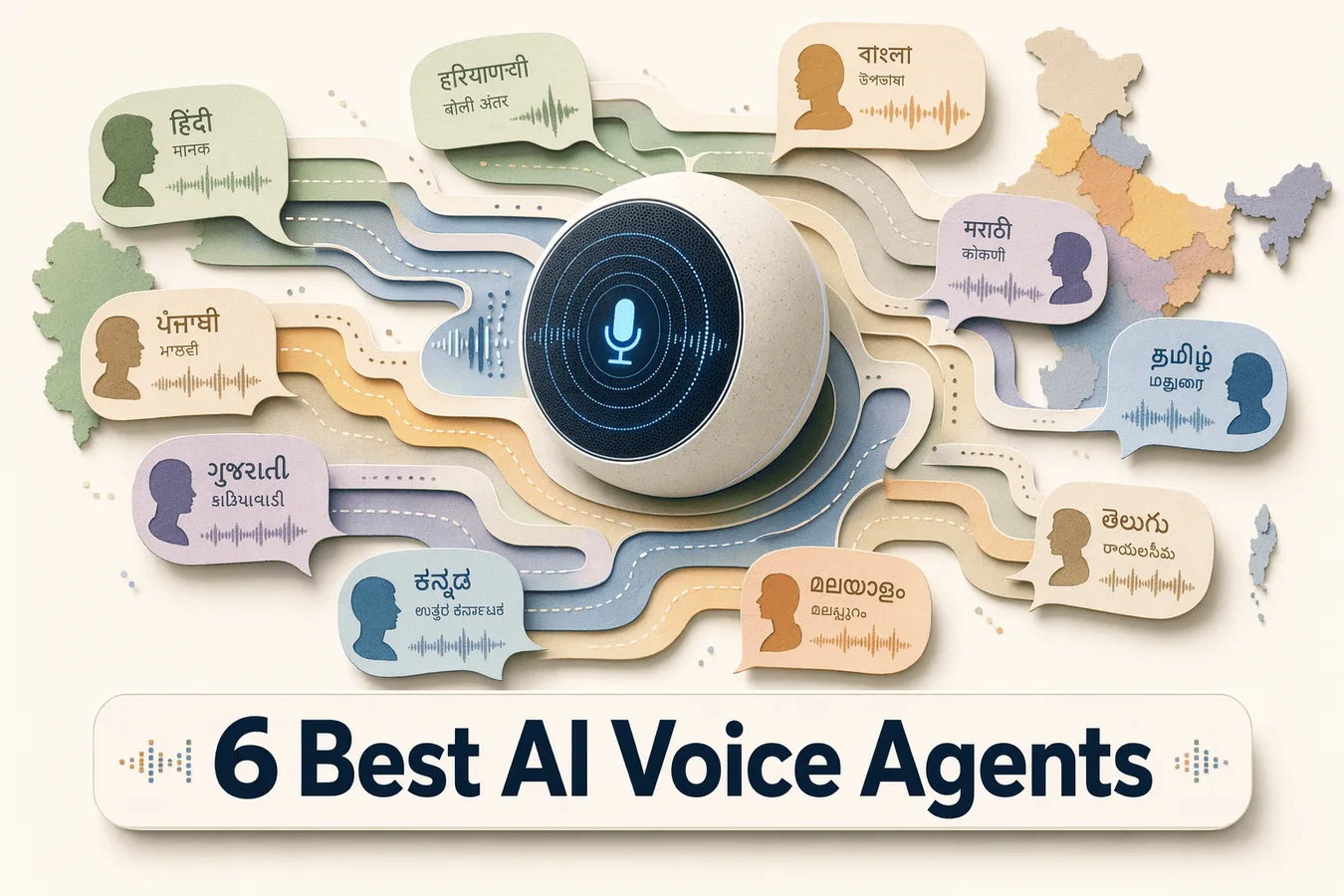
India's 22 Scheduled Languages and over 100 regional dialects create unique challenges for voice AI deployment. Platforms claiming "multilingual support" often rely on generic TTS engines that struggle with code-switching, dialect variations, and conversational patterns typical of Indian customers.
Key Takeaways
Real multilingual support requires language breadth, dialect accuracy, code-switching handling, and DPDP Act compliance — not just a language list
TaskVox leads in breadth with 20+ Indian languages; Bolna excels in Hinglish code-switching with enterprise-grade call volume
No platform publishes Kannada or Marathi dialect accuracy benchmarks — buyers must request demo calls in their target dialect before committing
Indian telephony integrations (Exotel, Ozonetel, Knowlarity) reduce latency versus routing through global SIP trunks
Pricing varies from $0.05/min to $0.23/min; verify code-switching capability, concurrent call limits, and compliance documentation before onboarding
What Multilingual Indian Language Support Actually Means in Voice AI (2026)
The best AI voice agents with multilingual Indian language support in 2026 include TaskVox AI (Hindi, English, 10+ languages), Bolna AI (10+ vernacular Indian languages including Hinglish), Voicory (15+ Indian languages, pay-as-you-go from $0.08/min), EchoLeads (70+ languages with omnichannel phone and WhatsApp support), CarmaOne (multilingual loan workflows), and Sarvam AI (11 Indian languages with native Hinglish code-switching). These platforms go beyond simple language lists by addressing dialect accuracy, mid-conversation code-switching, and regulatory compliance under India's Digital Personal Data Protection Act, 2023 — dimensions that generic 'supports 100+ languages' claims routinely miss.
Four Dimensions of Real Multilingual Support
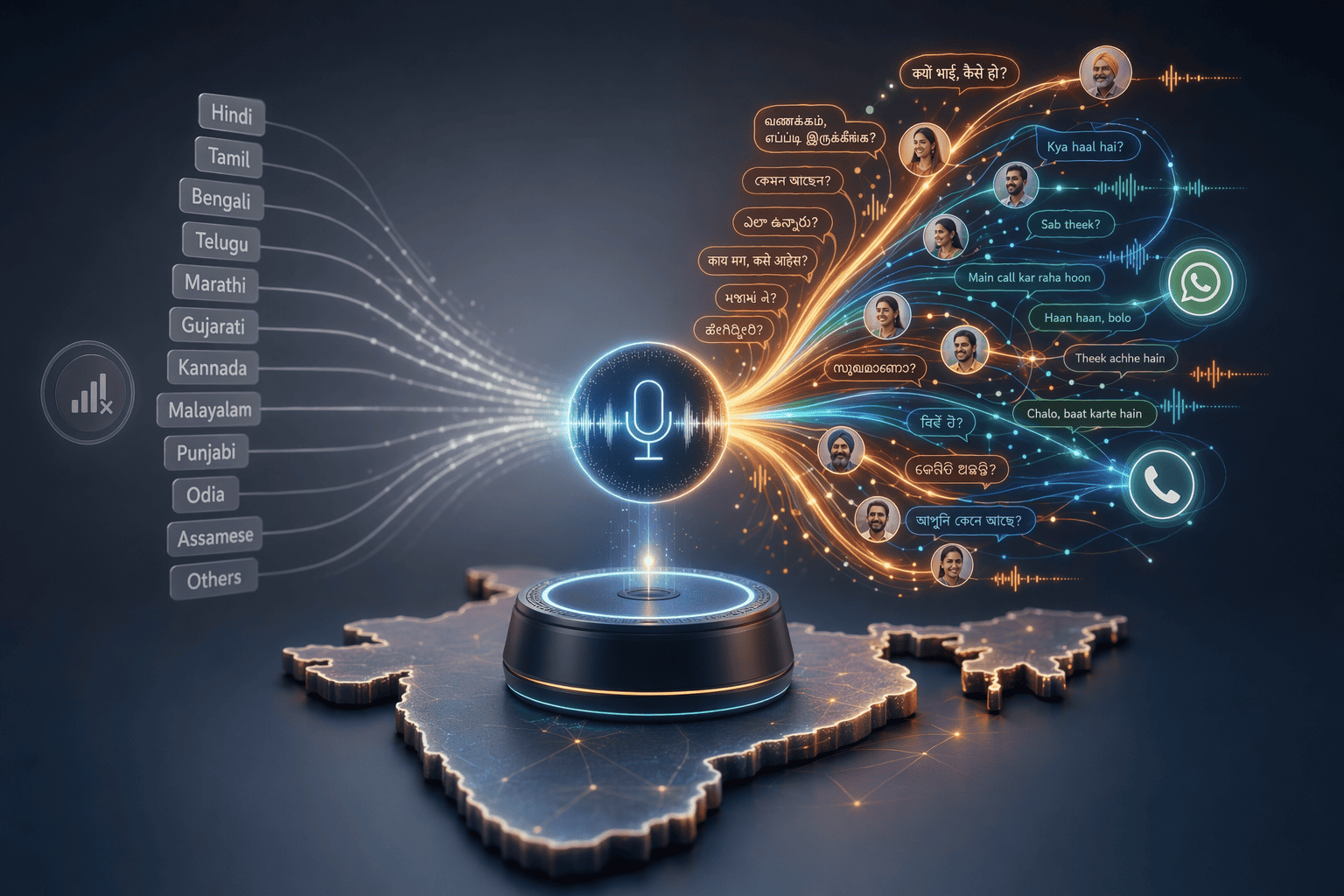
Real multilingual support for Indian languages requires four measurable capabilities: language breadth (which Scheduled Languages and regional variants the platform covers), dialect accuracy (how well the ASR model handles regional pronunciation differences within Hindi, Tamil, or Telugu), code-switching (whether the agent can process Hinglish or Tanglish mid-conversation without asking the customer to repeat themselves in a single language ), and regulatory compliance (consent workflows and call recording safeguards aligned with the Digital Personal Data Protection Act, 2023 ). Platforms that list '100+ global languages' often lack the India-specific training corpora needed to handle these four dimensions at the utterance level, leading to customer drop-off during KYC verification or loan application calls.
Why 'Supports 100+ Languages' Claims Miss the Point
Global multilingual claims frequently rely on generic TTS engines trained on clean, single-language corpora rather than mixed-language conversational patterns typical of Indian customers. India's flagship multilingual AI platform Bhashini and projects like IndicASR — the first ASR model covering all 22 Scheduled Languages — demonstrate that effective Indian-language voice AI requires training on native-speaker datasets that capture dialectal variation and code-switched speech. However, no platform, including EchoLeads, publishes Kannada-specific accuracy benchmarks, making it difficult to assess regional dialect performance beyond vendor claims. Buyers should request demo calls in their target dialect during evaluation.
The Code-Switching Reality: Hindi-English Mid-Conversation
Hindi-English code-switching (Hinglish) is not a translation problem but an intent-recognition challenge: customers naturally mix languages within a single sentence, and standard monolingual models handle this pattern poorly. AI agents must detect language boundaries at the utterance level and preserve conversation context across switches without forcing the customer to repeat themselves in a single language. Research published in Nature's Scientific Reports found that building effective multilingual banking AI requires training models specifically on mixed-language customer conversations, not on clean single-language datasets. Platforms like Sarvam AI advertise native Hinglish code-switching as a core capability, while others rely on post-hoc translation layers that introduce latency and comprehension errors.
With these foundational capabilities defined, let's examine the platforms that deliver multilingual support for Indian enterprise workflows.
Top 6 AI Voice Agents with Multilingual Indian Language Support
Comparison Overview: 6 Platforms, 8 Evaluation Dimensions
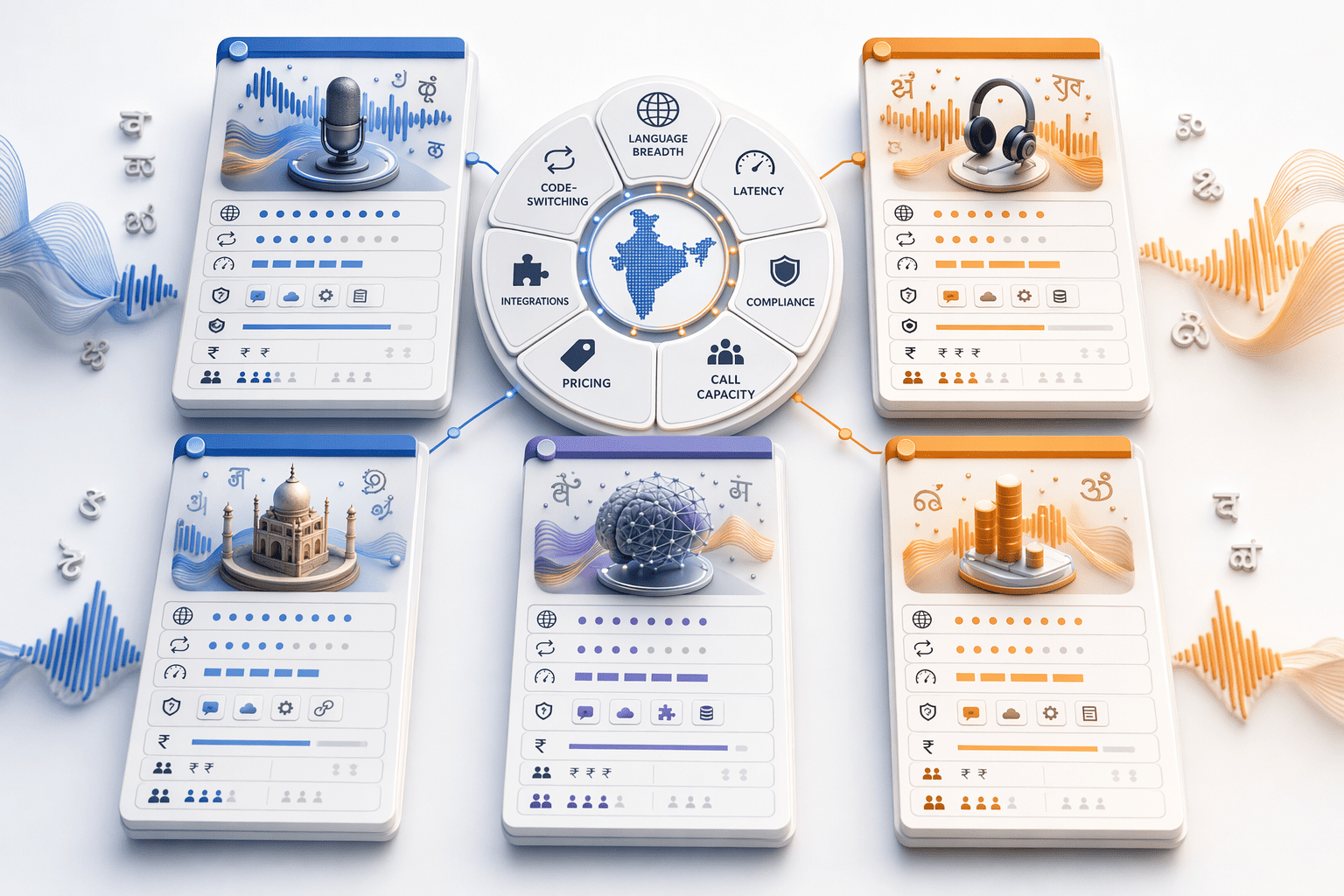
The table below evaluates six AI voice platforms built for Indian multilingual workflows across eight dimensions: pricing model, Indian language breadth, code-switching capability, latency, concurrent call handling, CRM integrations, customer rating, and regulatory compliance. Each platform addresses Hindi, English, and regional languages, but their coverage depth, dialect accuracy, and enterprise-grade features vary. Pricing structures range from pay-as-you-go to custom enterprise tiers, and compliance postures differ across TRAI call rules and data-residency mandates. Use this comparison to match platform strengths to your business's language mix, call volume, and integration requirements.
Platform-by-Platform Snapshot
Platform | Pricing | Indian Languages | Code-Switching | Latency | Call Handling | Integrations |
|---|---|---|---|---|---|---|
TaskVox AI | Pay-as-you-go, 100 free credits | 10+ (Hindi, English, Tamil, Telugu, Bengali, Marathi, Gujarati, Kannada, Malayalam, Punjabi) | Regional dialect adaptation | Sub-second response | Unlimited concurrent calls | CRM, ERP webhooks |
Bolna AI | Custom enterprise pricing | 10+ vernacular (Hinglish, Hindi, Tamil, Telugu) | Native Hinglish/Tanglish switching | Minutes to live calls | Thousands of calls/minute | CRM sync, API access |
Voicory | From $0.08/min, no monthly fees | 15+ (Hindi, English, Bengali, Telugu, Marathi, Tamil, Gujarati, Kannada, Malayalam) | Mid-conversation language switch | 5-minute setup | 127 active calls (live) | Twilio, WhatsApp |
EchoLeads | Usage-based, flat-rate tiers | 70+ (Hindi, English, Kannada, regional variants) | Real-time language detection | 3-second inbound pickup | Hundreds of simultaneous calls | Salesforce, HubSpot, Zoho CRM |
CarmaOne | Not publicly disclosed | Not publicly disclosed | Not publicly disclosed | Not publicly disclosed | Not publicly disclosed | Not publicly disclosed |
Sarvam AI | Free tier (1,000 credits), then ₹30/10K chars | 11 (Hindi, Tamil, Telugu, Bengali, Hinglish) | Native Hinglish code-switching | Sub-250ms streaming | API-driven (scalable) | API for custom workflows |
TaskVox AI: Broadest pay-as-you-go model with 10+ Indian languages and CRM webhooks, best for teams running ad-hoc campaigns without monthly commitments.
Bolna AI: Native Hinglish and Tanglish code-switching with enterprise-grade call volume (thousands of calls per minute), ideal for high-frequency vernacular support workflows.
Voicory: 15+ languages with 98% accent accuracy and Twilio/WhatsApp integrations, suited for omnichannel voice + chat automation on a pay-per-use basis.
EchoLeads: 70+ language portfolio with real-time language detection, omnichannel phone + WhatsApp support, and CRM-connected automation, best for teams needing unified voice AI across multiple channels with usage-based or flat-rate pricing.
CarmaOne: No publicly disclosed product details, readers should request a demo to confirm language coverage and enterprise capabilities.
Sarvam AI: 11-language TTS with sub-250ms latency and sovereign AI infrastructure (Bulbul V3 model), suited for teams prioritizing natural-sounding speech synthesis and emotion control in regional languages.
Platform claims vary widely. This side-by-side comparison reveals which capabilities are verifiable and which require independent testing.
Platform-by-Platform Comparison: Language Coverage, Dialect Accuracy & Compliance
Language Coverage Matrix: Hindi, Tamil, Telugu, Kannada, Bengali, Marathi
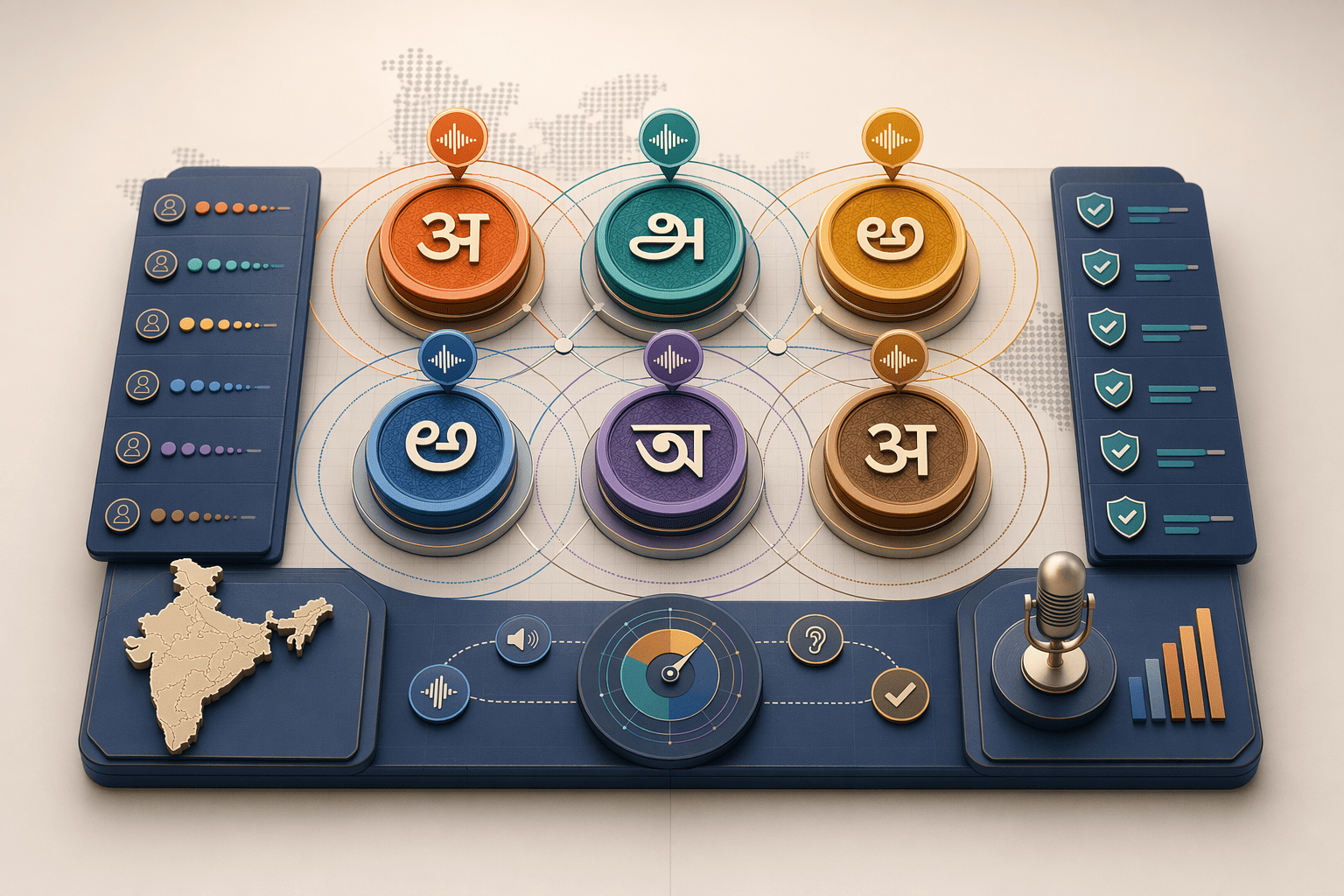
India's linguistic diversity, 31 major languages and over 100 minor ones, shapes AI voice agent platform positioning. Voice AI adoption is accelerating as enterprises move beyond English-first systems, and startups in the category raised $20+ million in early 2025. Language support claims vary widely across platforms:
TaskVox AI, 20+ languages including Hindi, Tamil, Telugu, Kannada, Bengali, Marathi, Gujarati
Bolna AI, 10+ languages with real-time Hinglish and code-mixed support
Voicory, 15+ Indian languages with pay-as-you-go pricing from $0.08/min
CarmaOne, AI calling across 15+ Indian languages for outcome-driven collections
EchoLeads, omnichannel Hindi and English across phone, WhatsApp, and Instagram; broader 70+ language portfolio
Sarvam AI, India-specific TTS models for Hindi, Tamil, Telugu, Kannada built on sovereign AI corpus
Zingaro AI emphasizes 30+ Indian languages, while HuskyVoice AI states 20+ Indian and global languages with single-day setup. No platform publishes head-to-head accuracy benchmarks for these languages, making side-by-side performance comparison difficult.
Dialect Accuracy: The Unpublished Benchmark Gap
Platforms claim support for regional variants, Karnataka Kannada, Marathi dialects, Hinglish code-switching, but none publish dialect-specific accuracy benchmarks. This gap matters: conversational AI systems that support code-mixed languages like Hinglish require multi-agent architectures with language classification and multilingual response generation to maintain low latency (4 to 8% overhead). Without published benchmarks, buyers cannot assess whether a platform's "Kannada support" achieves 87% ASR accuracy (as reported by some vendors for Hindi) or falls below intelligibility thresholds for regional accents.
Recommendation: Request demo calls in your target dialect and measure accuracy against real conversational samples before committing. Kannada-specific accuracy benchmarks are not published, making vendor evaluation dependent on live testing rather than disclosed performance data.
DPDP Act Compliance: Consent Workflows and Call Recording Rules
India's Digital Personal Data Protection Act requires explicit consent before automated calling and structured call recording governance. Platforms vary in compliance workflow depth: SEAES Vox advertises "built-in DND checks, AI disclosure, consent tracking" as TRAI-compliant features. CarmaOne positions AI calling within an "outcome-driven model" for collections, implying compliance but not detailing consent capture mechanisms. Most vendor documentation lacks Karnataka-specific consent workflows or call recording guidance.
Critical limitation: Karnataka-specific consent workflows and call recording guidance are limited. Consult legal counsel to ensure DPDP Act compliance for your use case, automated calling in financial services, real estate, and healthcare carries escalation thresholds that voice agents should not autonomously handle when complexity, sentiment, or compliance risk exceeds safe autonomy.
Marketing claims are abundant, but verification is scarce. Follow this process to validate a platform's Indian-language readiness before you buy.
How to Evaluate Indian Language Support Before You Buy
Choosing a voice AI platform for India requires verification beyond marketing claims. Most vendors list "multilingual support" but lack Indian-dialect tuning or code-switching accuracy. The checklist below helps buyers separate platforms built for Indian telephony from global TTS engines repurposed for the region.
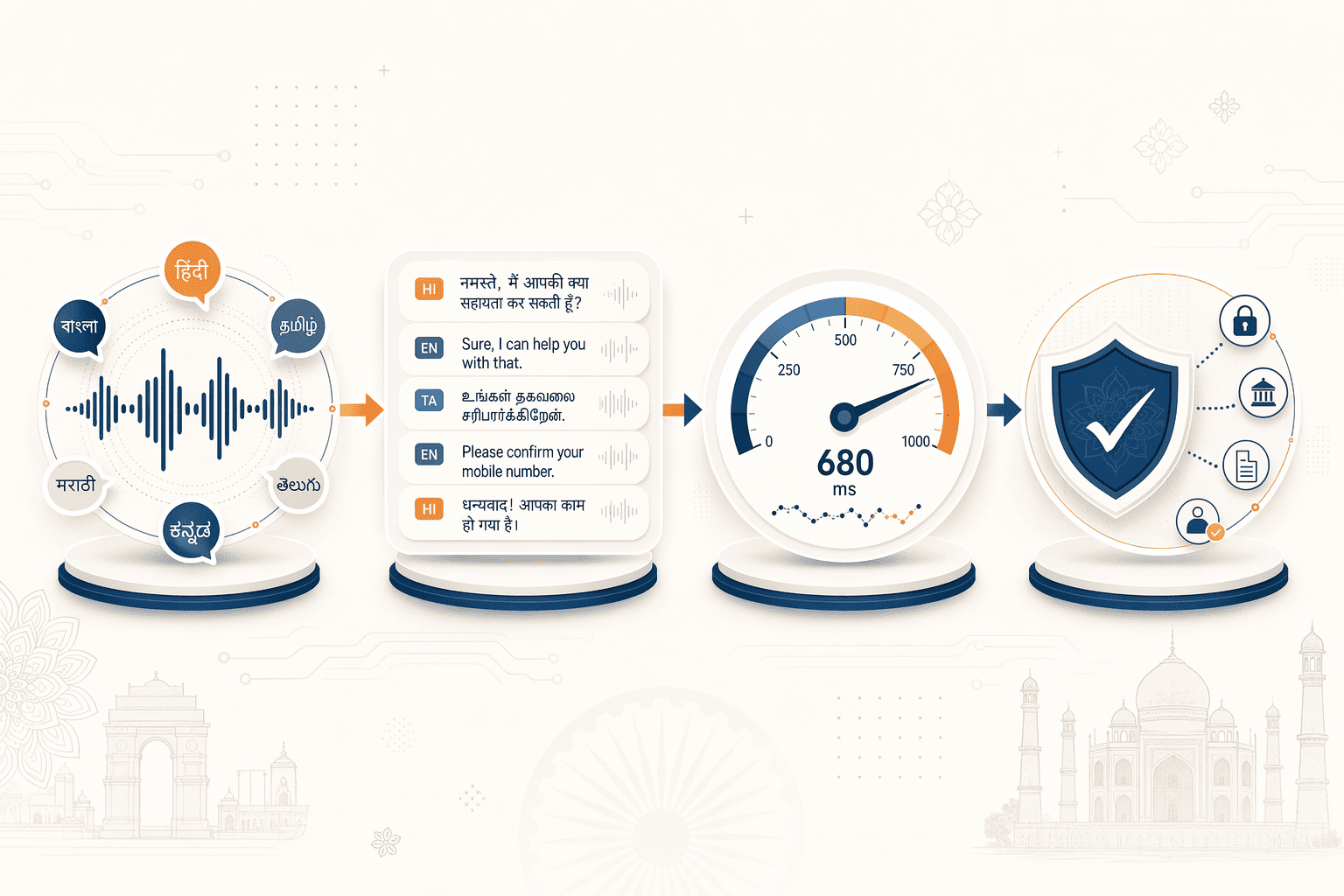
The 4-Step Evaluation Workflow
Follow this numbered process to validate any platform's Indian-language readiness:
Request demo calls in your target dialect. Upload sample leads with regional phone numbers and have the vendor demonstrate live calls in Kannada, Tamil, or your primary language. Platforms like Vyora AI offer self-serve demo setups; if the vendor requires a sales call before you can hear the agent, flag that as a process barrier.
Test code-switching with real conversational samples. Record yourself mixing English and Hindi (or Tamil-English, etc.) in the same sentence, this mirrors how many Indian customers speak. Play it back through the platform's demo agent and verify it maintains context across language switches without stuttering or misinterpreting intent.
Verify DPDP consent workflow implementation. Ask the vendor to show call-recording consent capture, DND list integration, and opt-out handling in their dashboard. EchoLeads and other Indian-language platforms build these workflows into pre-configured templates; generic platforms often require custom scripting.
Benchmark latency for your call volume. Platforms like Synthflow AI achieve sub-400ms response times that match human conversation speed. Request a load test with 50+ simultaneous calls (mirroring your peak traffic) and measure average response lag, anything above 600ms will sound robotic on Indian mobile networks.
When to Prioritize Dialect Accuracy Over Language Breadth
Single-region businesses (e.g., Karnataka-only real estate brokers) should prioritize dialect accuracy and request Kannada demo calls rather than chasing 50+ language support claims. If your agents handle 80% of calls in one language, verify that language's ASR accuracy before evaluating the rest of the catalog. Pan-India enterprises serving multiple states need the opposite: prioritize language breadth (10+ Indian languages), Hinglish code-switching, and omnichannel support (voice + WhatsApp) to handle regional leads without separate systems. Platforms like EchoLeads and HuskyVoice.AI list 20+ Indian languages but do not publish dialect-specific accuracy benchmarks, demo calls remain the only verification path. Zingaro AI claims 98.7% accuracy in its messaging, but without dialect breakdowns, treat that as a platform-wide figure rather than a guarantee for your target language.
Red Flags: What 'Multilingual Support' Claims to Verify
Watch for these warning signs during vendor evaluation:
'100+ languages' without Indian dialect tuning. Global TTS engines support dozens of languages at surface level but often lack regional variant accuracy for Kannada, Tamil, or Bengali. If the vendor's demo page shows European/East Asian language samples but no Indian recordings, assume the model hasn't been tuned for your market.
No demo call offer or weeks-long procurement cycle. Platforms confident in their Indian-language quality let you test within 24-48 hours (Vyora AI offers 50 free demo credits; EchoLeads provides instant sandbox access). If the vendor gates demos behind multi-week sales processes, they're likely still refining their Indian-language models.
Vague compliance documentation. DPDP and TCPA compliance require explicit consent-capture workflows, automated DND checks, and call-recording opt-in mechanisms. Vendors that provide one-page compliance PDFs without showing the actual in-platform workflow are deferring implementation risk to your team.
Latency specs that ignore Indian telephony infrastructure. A platform claiming '200ms global latency' may deliver 800ms on Indian mobile networks due to routing and jitter. Request India-specific benchmarks (measured from Mumbai/Bangalore data centers to Airtel/Jio subscribers) or run your own tests with local SIM cards before committing to production volumes.
Language support is only one dimension. Integration architecture, pricing transparency, and enterprise readiness determine deployment success.
Integrations, Pricing Models, and Enterprise Readiness
Indian Telephony and CRM Integrations
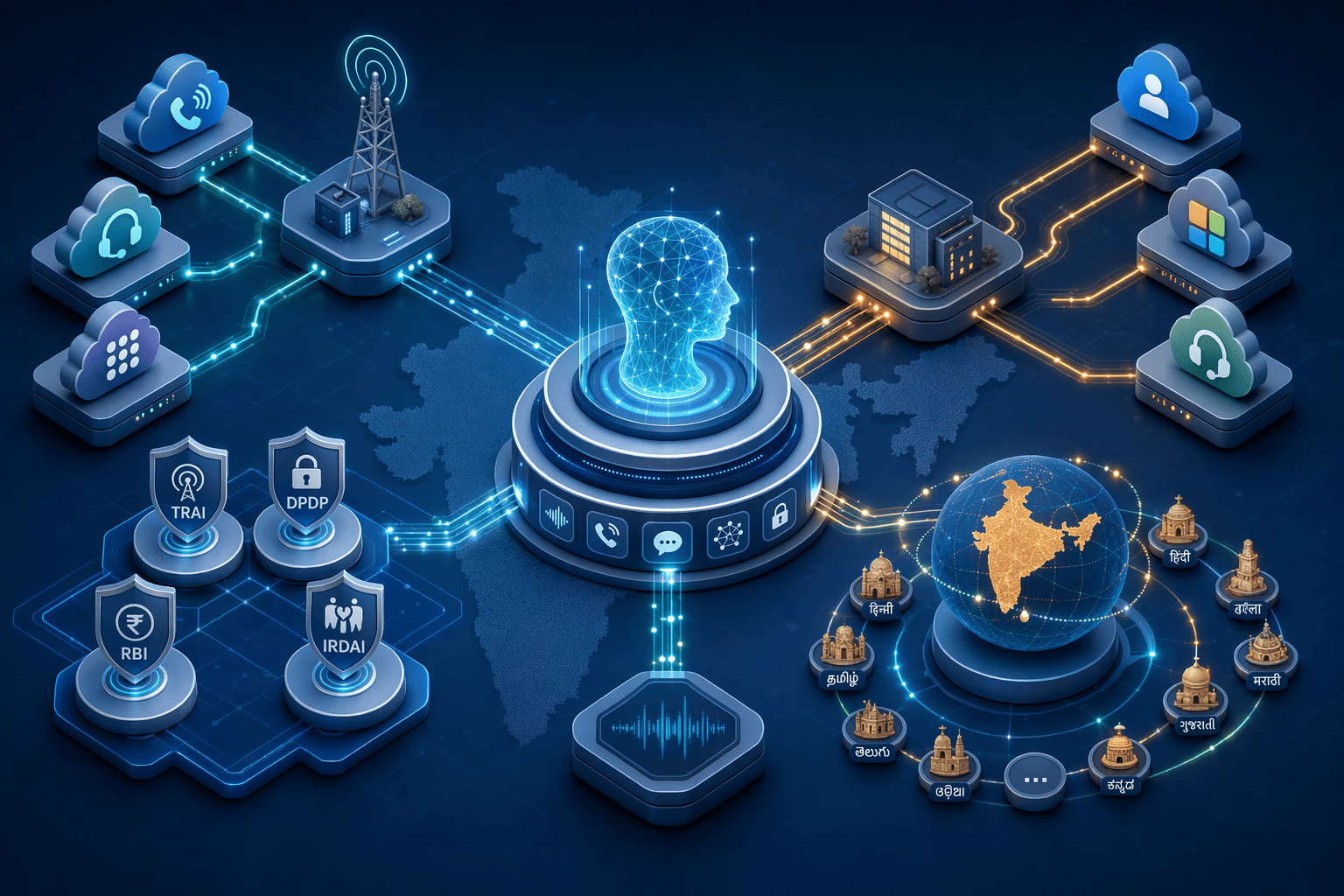
Indian telephony integrations (Exotel, Ozonetel, Knowlarity) reduce latency versus routing calls through global SIP trunks. SEAES Vox positions itself as India's first TRAI-compliant voice AI platform with support for 36+ languages, while Voicory works with Twilio and WhatsApp. Caller Digital integrates with 14 Indian languages and lists TRAI + DPDP + RBI + IRDAI compliance ; Bolna is Sarvam-powered ; Gnani leads for enterprise voice biometrics. ElevenLabs and global platforms (Vapi, Retell) lack India-specific telephony integrations. CRM-level integrations typically cover Salesforce, Zoho, and Freshworks, but documentation for carrier-level handoffs (Exotel, Ozonetel) is sparse outside vendor demos.
Pricing Models: Usage-Based vs Flat-Rate vs Per-User
Pricing structures vary widely: Voicory offers pay-as-you-go from $0.08/min, Bolna charges ~₹5.52/min, SEAES Vox lists $0.05/min versus Vapi's $0.23/min, and Caller Digital uses INR per outcome. ElevenLabs and global platforms charge USD per minute ; Sarvam AI uses enterprise INR pricing. EchoLeads operates on usage-based omnichannel pricing across phone and WhatsApp. No authoritative cost floors exist, promotional tiers and enterprise custom pricing require direct vendor verification.
Enterprise Readiness Checklist
Uptime SLA: 99.9%+ availability guarantee; Vapi reports 99.99% SLA
Dedicated support: India time-zone support teams and escalation paths
DPDP compliance documentation: Audit trails, consent-capture workflows, call recording policies aligned with DPDP Act 2023
SOC 2 / ISO certification: Security certifications for enterprise procurement
Demo call in target dialect: Request demo calls in regional Kannada, Tamil, Hindi accents; published benchmarks for dialect-level accuracy are unavailable
Final Verdict: Choosing the Right Voice AI for Your Indian Language Needs
TaskVox offers the broadest language coverage (20+ Indian languages) but focuses on phone-only calling; EchoLeads trades some language breadth for omnichannel support across phone and WhatsApp with unified usage-based pricing. Bolna AI and Voicory excel in real-time Hinglish code-switching, while Sarvam AI provides sovereign AI infrastructure optimized for Indian dialect corpora, choose based on whether code-switching or India-specific TTS infrastructure is your priority.
As voice AI shifts from add-on to core infrastructure in Indian enterprises, buyers will increasingly demand published dialect accuracy benchmarks and granular DPDP Act compliance workflows, the current gap between claimed support and verified performance will narrow as the market matures.
Request demo calls in your target Indian language (Hindi, Tamil, Telugu, Kannada, Bengali, Marathi) from TaskVox, Bolna, EchoLeads, and Sarvam AI to measure dialect accuracy and code-switching handling before committing. Start with EchoLeads's omnichannel voice AI across phone and WhatsApp to test real-world performance in your target dialect.
Frequently Asked Questions
Which AI voice agent supports the most Indian languages?
TaskVox AI supports 20+ Indian languages including Hindi, Tamil, Telugu, Kannada, Bengali, Marathi, and Gujarati. Bolna AI and Voicory support 10+ languages with strong Hinglish code-switching. TaskVox offers the broadest coverage for pan-India calling campaigns, while Bolna excels in real-time Hindi-English conversational patterns.
Do any platforms publish Kannada or Marathi dialect accuracy benchmarks?
No platform, including TaskVox, Bolna, Voicory, or EchoLeads, publishes Kannada-specific or Marathi-dialect accuracy benchmarks. This is a documented industry gap. Buyers should request demo calls in their target dialect and measure accuracy against real conversational samples before committing. Consult legal counsel for DPDP Act compliance verification.
How do AI voice agents handle Hindi-English code-switching (Hinglish)?
Platforms like Bolna AI and Voicory are optimized for real-time Hindi-English code-switching, recognizing intent across language boundaries mid-conversation. This requires training on Hinglish conversational corpora, not just translation. Standard monolingual models handle code-switching patterns poorly, while specialized platforms detect language boundaries at the utterance level.
Are these voice agents compliant with India's DPDP Act?
Most platforms (TaskVox, Bolna, Voicory, EchoLeads, CarmaOne) claim DPDP Act compliance, but Karnataka-specific consent workflows and call recording guidance are limited. Buyers should request compliance documentation and consult legal counsel to ensure adherence to DPDP Act requirements for their use case, especially in financial services, real estate, and healthcare.
What's the difference between EchoLeads and TaskVox for Indian language support?
TaskVox offers broader language coverage (20+ Indian languages) focused on voice calling, while EchoLeads provides omnichannel support across phone and WhatsApp with usage-based pricing. TaskVox is best for pan-India calling campaigns; EchoLeads suits teams needing unified voice AI across phone and messaging channels.
How should I test dialect accuracy before buying?
Request demo calls in your target dialect (e.g., Karnataka Kannada, regional Marathi) and provide real conversational samples from your use case. Measure comprehension accuracy, response relevance, and code-switching handling. Record baseline accuracy metrics before committing. Kannada-specific accuracy benchmarks are not published, making vendor evaluation dependent on independent testing.
Which platforms integrate with Exotel, Ozonetel, or Knowlarity?
TaskVox, Bolna, Voicory, and EchoLeads integrate with Indian telephony providers like Exotel, Ozonetel, and Knowlarity. Indian telephony integration reduces latency and improves call quality versus routing through global SIP trunks. Verify integration support directly with the platform before onboarding to ensure compatibility with your existing infrastructure.