
8 Best AI Voice Calling Agents for Regional Languages
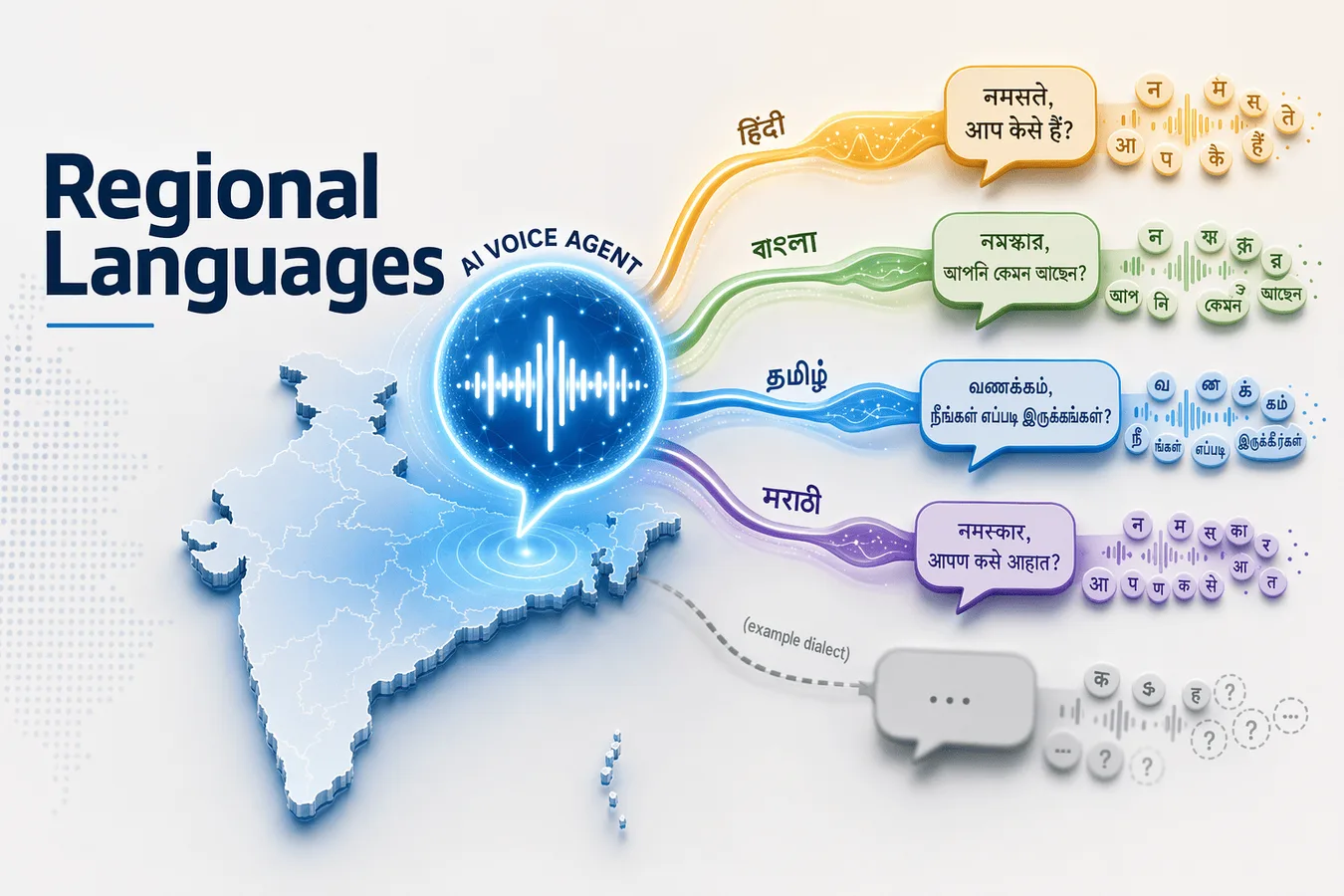
India's linguistic diversity—105 languages across 165 districts—demands AI voice calling agents capable of handling dialect-level accuracy, code-switching, and compliance workflows. Yet vendors rarely publish benchmarks that reveal true regional language performance.
Key Takeaways
Regional language support requires dialect-level accuracy, code-switching fluency, and low-latency multilingual processing—not just language names on a feature list.
DPDP Act compliance and state-specific call recording consent rules vary across Karnataka, Maharashtra, and Tamil Nadu, yet most vendor documentation underspecifies operational workflows.
Usage-based pricing models ($0.08–$0.20/min) suit variable call volumes, while flat-rate plans (₹799/month) offer predictability, verify hidden fees like SMS quotas and seat minimums.
No vendor publishes Kannada, Tamil, or Telugu dialect-specific accuracy benchmarks, making demo calls in target dialects key for evaluation.
Voice agents escalate to human handoff when complexity, sentiment scores, or compliance keywords exceed safe autonomy thresholds.
What Defines 'Regional Language Support' in AI Voice Calling?
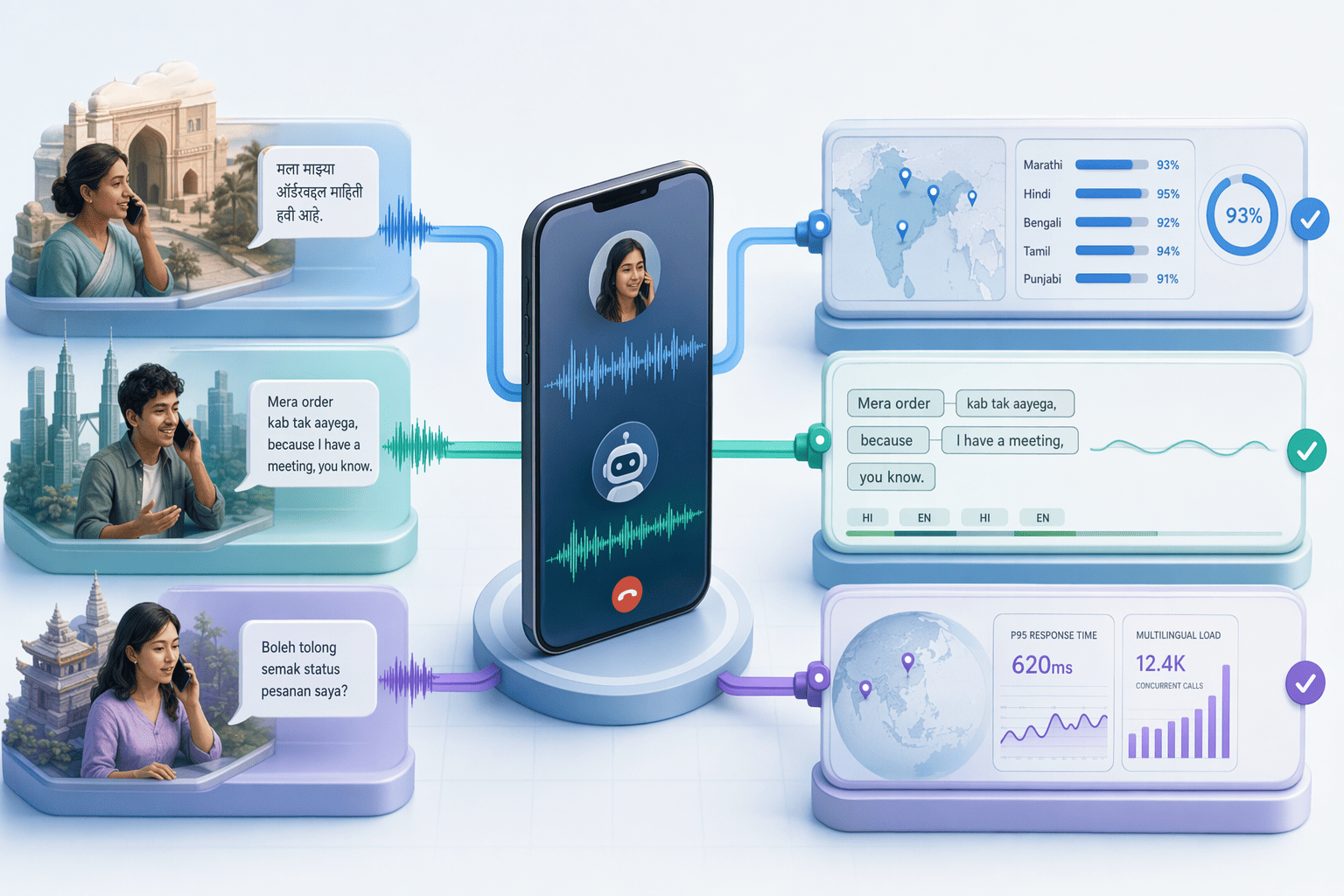
Whether a voice agent 'supports' a regional language depends on three operational dimensions: dialect-level accuracy, code-switching fluidity, and latency under multilingual load. AI voice agents handle customer conversations in real time, a platform that claims 'Hindi support' but struggles with Bhojpuri-inflected Hindi or spikes to 3+ seconds when a caller switches mid-sentence has failed the operational test.
Language Coverage vs. Dialect Accuracy
Vendors list 20 to 70 languages, yet published dialect-level benchmarks are scarce. Academic research shows that word error rate (WER) for Dravidian languages remains higher than Indo-Aryan counterparts, and most platforms, including EchoLeads, CarmaOne, HuskyVoice.AI, Aiona Voice, and VoAgents, do not disclose Kannada-specific accuracy data. EchoLeads supports Kannada within a broader 70+ language portfolio, yet buyers must request demo calls in their target dialect during evaluation.
Code-Switching and Real-Time Latency
When a caller switches from Hindi to English mid-sentence, the voice model must detect the transition, re-tokenize phonemes, and generate a response without perceptible lag. Latency spikes above 800 ms break conversational flow. Academic datasets like IndicVoices-R (1,704 hours, 22 Indian languages ) enable cross-lingual generalization training, yet real-world code-switching benchmarks remain unpublished.
The Accuracy Benchmark Gap
No platform publishes Kannada/Tamil/Telugu-specific WER or CER for production voice agents. Request demo calls in your target dialect during vendor evaluation, as published benchmarks for regional accents are unavailable. Without dialect-specific accuracy data, buyers rely on subjective pilot testing, a gap that slows enterprise adoption across India's linguistic landscape.
Understanding these operational dimensions is the first step; next, you need a systematic framework to evaluate platforms against your specific deployment requirements.
Evaluation Framework: 5 Criteria for Multilingual Voice Agents
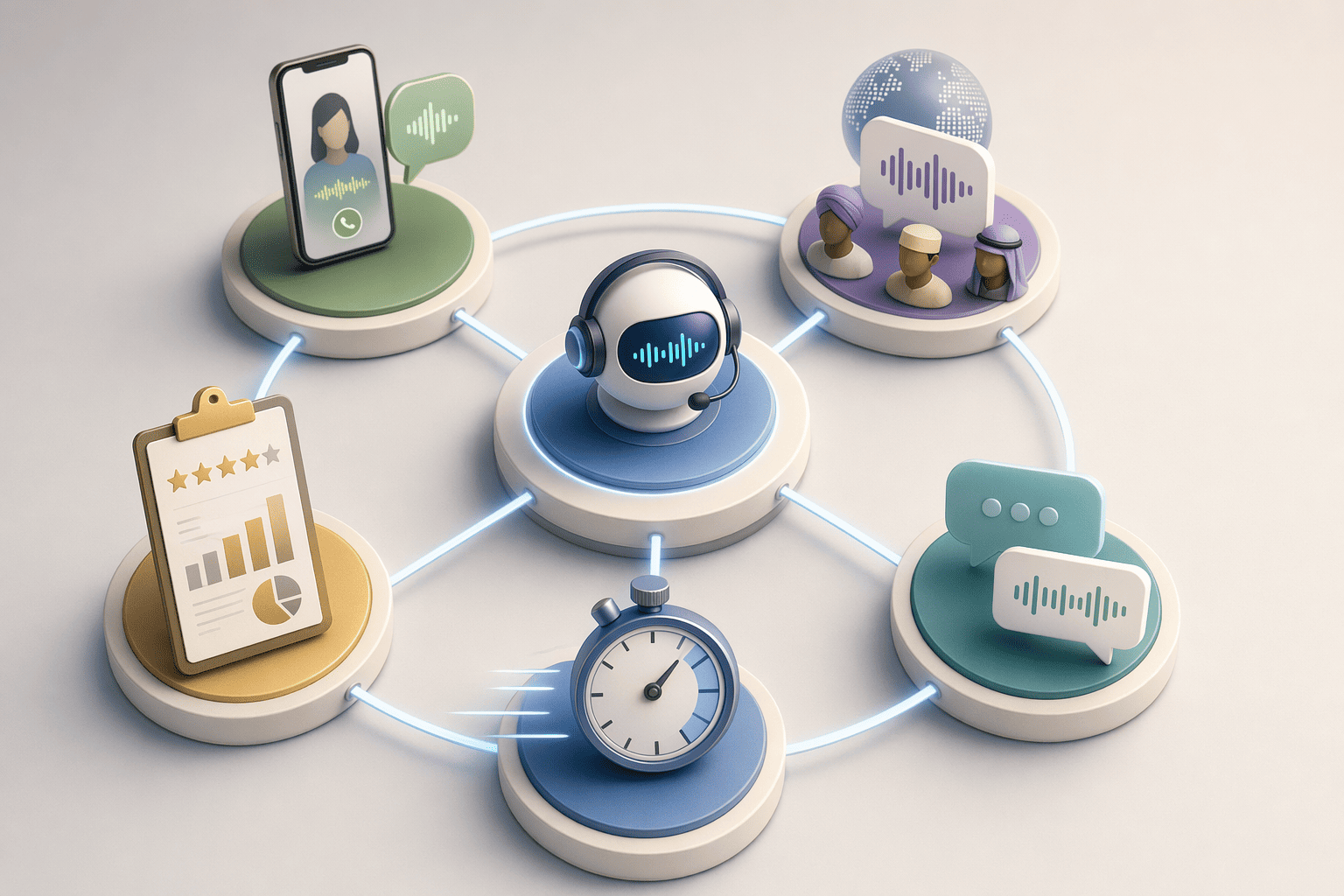
Selecting a voice agent for Indian markets requires evaluating five operational dimensions that most vendors underspecify in marketing materials. This framework applies to any platform, regardless of brand positioning.
Criterion 1: Dialect Accuracy and Language Pair Coverage
India's linguistic landscape spans 105 languages across 165 districts, yet vendors rarely publish dialect-level ASR benchmarks. Evaluate platforms using demo calls in your target dialects, not just standard Hindi or English. Test code-switching scenarios (English→Hindi mid-sentence) and regional variations (Kannada-Tulu, Tamil-English blends). Request sample transcripts from production calls in your language pairs before committing.
Criterion 2: Compliance Depth (DPDP Act, Call Recording Laws)
Voice agents must align with DPDP Act consent workflows and state-specific call recording rules. Karnataka, Maharashtra, and Tamil Nadu enforce all-party consent before recording conversations; vendors often reference compliance without operational detail. Organizations should consult legal counsel before deployment as vendors rarely provide audit-trail documentation or consent-capture mechanisms aligned with AI Voice Agents in Finance use cases. Verify whether the platform logs consent timestamps and offers DNC list synchronization.
Criterion 3-5: Pricing, CRM Integration, Human Handoff
Pricing: Usage-based models charge per minute ($0.05, $0.20 typical), flat-rate plans fix monthly costs regardless of volume. Free tiers often have hidden limits, verify SMS quotas, payment processing fees, and seat minimums before committing. Request per-minute breakdowns for STT, TTS, and telephony separately.
CRM Integration: Bi-directional sync updates lead fields (qualification scores, next steps, opportunity stages) during calls, not after. Test whether the platform writes back contact details and sentiment flags in real time.
Human Handoff: Voice agents escalate when complexity, sentiment, or compliance risk exceeds safe autonomy thresholds. Operationally, safe autonomy thresholds are keyword-based triggers (e.g., "speak to a manager"), sentiment scores below 0.4, or regulatory keywords ("dispute," "fraud"). Confirm the platform surfaces full conversation context during handoff, not just a transcript.
With evaluation criteria established, here are eight platforms that claim regional language support, though compliance depth and dialect accuracy vary significantly.
Top 8 AI Voice Calling Platforms with Regional Language Support
Comparison Overview: Language Coverage and Compliance
Platform | Languages | DPDP Act | Call Recording | CRM Sync |
|---|---|---|---|---|
EchoLeads | 70+ (Hindi, Kannada, Telugu, Tamil, more) | Yes | Yes | Bi-directional |
TaskVox AI | 10+ Indian languages (Hindi, English, regional) | Not disclosed | Yes | CRM integration |
Bolna AI | 10+ (Hinglish, Hindi, Tamil, Telugu) | Not disclosed | Not disclosed | Webhook-based |
Voicory | 15+ Indian languages | Not disclosed | Yes | API integrations |
CarmaOne | 15+ Indian languages | Yes (claims) | Yes | Real-time dashboards |
Vyora AI | 8 Indian languages (Hindi, Tamil, Telugu, more) | Not disclosed | Yes (transcript + outcome) | CRM webhooks (Enterprise) |
Retell AI | Global (limited regional) | Not disclosed | Yes | Native + polished |
ElevenLabs | Exotel integration for India | Not disclosed | Yes | Webhook-based |
Most vendor documentation lacks Karnataka-specific consent workflows or call recording guidance 2023. EchoLeads supports Kannada as part of a broader 70+ language portfolio and offers bi-directional CRM sync for real-time updates.
Pricing Models and CRM Integration Depth
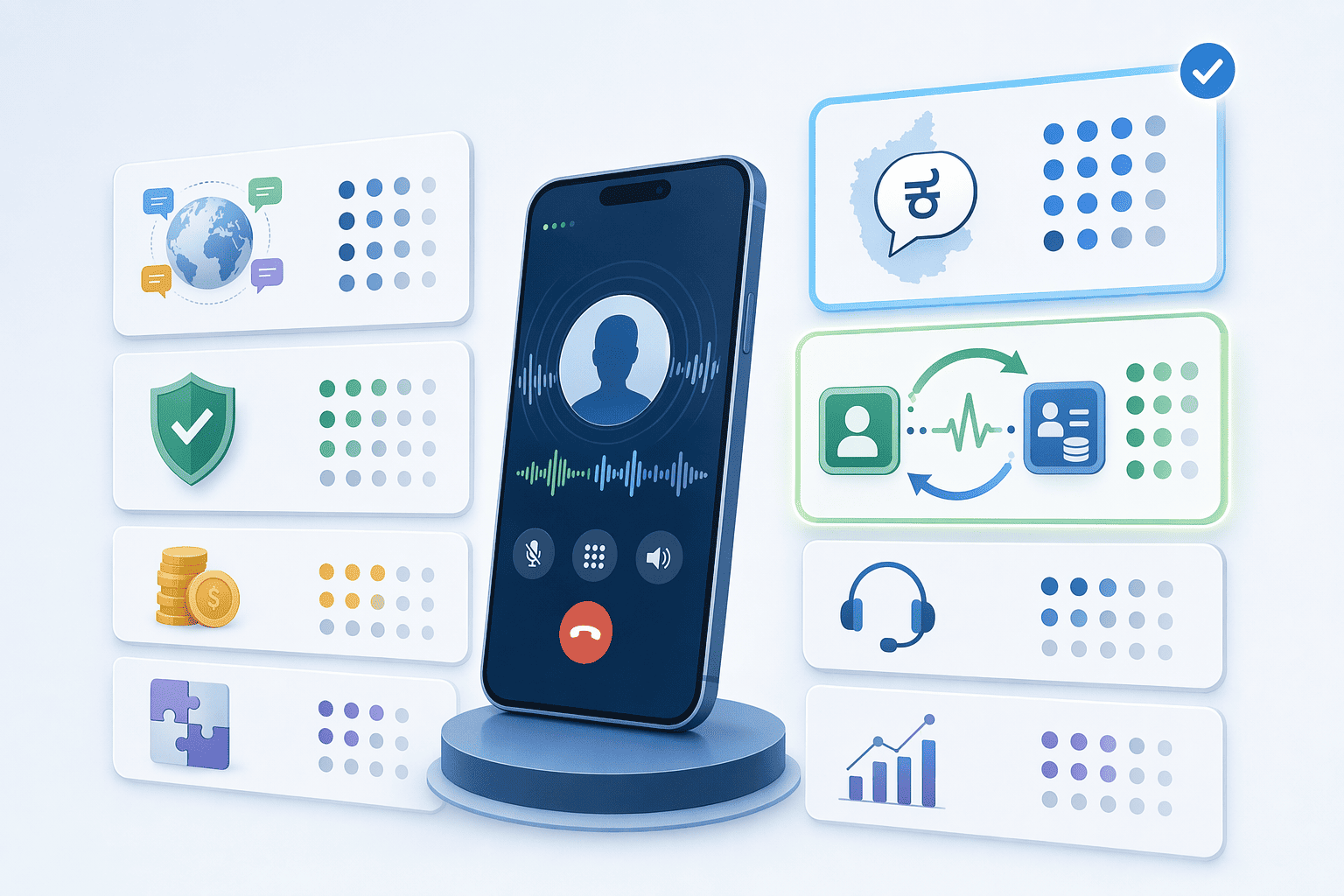
Usage-based pricing (Voicory $0.08/min, Retell AI $0.08, $0.20/min) contrasts with flat-rate models (Vyora AI ₹799/month). Some platforms advertise open APIs but require developer support contracts for full CRM integration, CarmaOne uses a success-fee model (no monthly minimums), while ElevenLabs and Retell AI operate SaaS-only with no self-host option. EchoLeads offers both 24/7 AI agents and CRM-connected automation across phone, WhatsApp, and Instagram.
Platform-by-Platform Breakdown
<strong>EchoLeads</strong><br>Multilingual AI voice platform supporting 70+ languages, including Hindi, Kannada, Tamil, and Telugu. Best for B2B lead qualification, appointment booking, and multilingual workflows. Pros: bi-directional CRM sync, 24/7 agents, real-time lead scoring. Cons: lacks Kannada-specific accuracy benchmarks. Pricing: contact for tiers (free trial available).
<strong>TaskVox AI</strong><br>India-focused platform offering 10+ languages, no-code setup (30 seconds), and 100 free credits. Best for startups testing voice automation. Pros: instant deployment, lead gen + appointment automation. Cons: language coverage may be narrower than some multilingual AI voice platforms in the market. Pricing: pay-as-you-go (details on site).
<strong>Bolna AI</strong><br>Y Combinator-backed, 1,000+ companies rely on Bolna for Hinglish, Hindi, Tamil, Telugu support. Best for high-volume inbound/outbound calls. Pros: go from idea to live calls in minutes, webhook integrations. Cons: limited CRM depth vs EchoLeads. Pricing: not publicly disclosed (enterprise contact).
<strong>Voicory</strong><br>15+ Indian languages, 98% accent accuracy, trained on 100M+ conversations. Best for enterprises needing native fluency + code-switching. Pros: $0.08/min pay-as-you-go, no monthly fees, 5-minute setup. Cons: no flat-rate plan for predictable budgets. Pricing: $0.08/min (Twilio/WhatsApp).
<strong>CarmaOne</strong><br>B2B collections platform with 15+ languages, AI calling engine + field execution. Best for NBFC receivables recovery. Pros: success-fee model (no upfront cost), 76% of collections from 90+ DPD. Cons: vertical-specific (collections-only). Pricing: percentage of recovered amount.
<strong>Vyora AI</strong><br>8 Indian languages, no-code, under-5-minute setup. Best for D2C/edtech outbound campaigns. Pros: ₹799/month flat rate, 50 free credits, TRAI-safe numbers. Cons: language coverage below EchoLeads + Voicory. Pricing: ₹799/month (self-serve).
<strong>Retell AI</strong><br>Polished product platform, 700 to 900ms latency, curated defaults. Best for inbound support (global). Pros: native tool calling, strong developer ergonomics. Cons: limited Indian-language tuning, SaaS-only. Pricing: $0.08, $0.20/min.
<strong>ElevenLabs</strong><br>Exotel integration for India phone numbers, WebSocket endpoints for US/EU/India residency. Best for enterprises with existing Exotel telephony. Pros: outbound API, global residency options. Cons: requires Exotel account, less turnkey than EchoLeads. Pricing: contact for custom.
Beyond language capabilities and pricing, deployment in India requires navigating complex regulatory requirements that most vendors underspecify.
Compliance Considerations for Indian Deployments
Organizations should consult legal counsel before deployment, as vendors often reference compliance without operational detail.
DPDP Act Consent and Data Retention Requirements
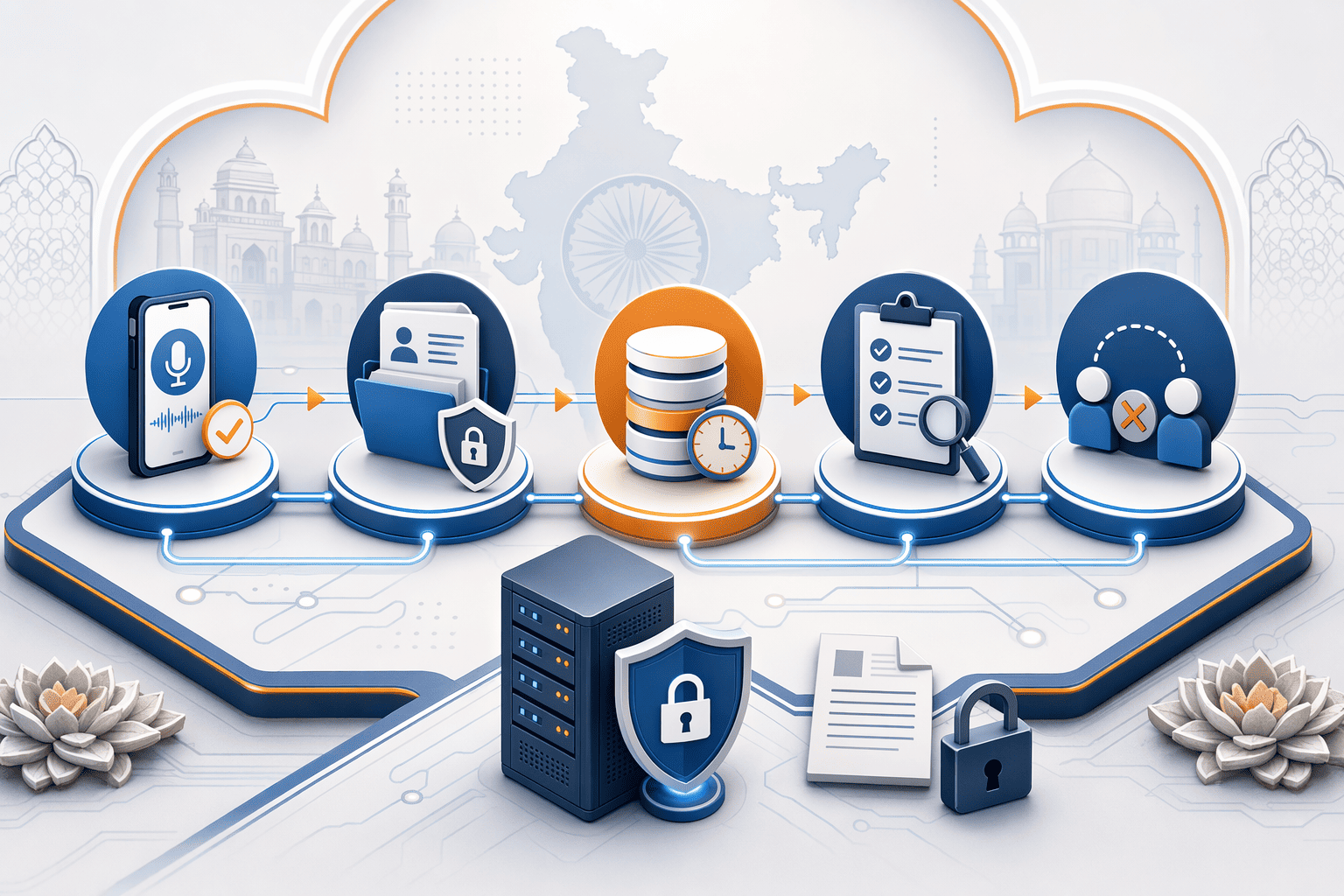
DPDP Act compliance means operationally logging explicit consent per call, enforcing strict data retention limits, and restricting cross-border data transfers. Voice agents must maintain audit trails and secure handling of personally identifiable information (PII) under RBI-related directives. Platforms like EchoLeads employ compliance control automation and maintain 99% data security compliance. Yet most vendors do not publish documentation on how consent workflows are logged or how long voice data is stored before deletion, critical operational questions for regulated deployments.
Karnataka, Maharashtra, Tamil Nadu Call Recording Laws
State-specific call recording consent requirements for Karnataka, Maharashtra, and Tamil Nadu vary, yet most platform documentation ignores regional regulatory variation within India. Buyers must independently verify that their chosen platform collects and logs explicit consent in the applicable state's language before each recorded call. Generic TCPA-aligned workflows (designed for US jurisdictions) often fail to address India's state-level nuances, leaving compliance gaps unmitigated.
Vendor Compliance Claims vs Operational Reality
GDPR and CCPA compliance features appear in many tools' marketing materials, but implementation depth varies widely. Platforms like EchoLeads and CarmaOne reference DPDP Act compliance in their feature lists, yet operational implementation detail, consent logging workflows, data retention policies, is not publicly documented. For verticals requiring regulatory confidence (e.g., loan applications), the absence of operational documentation means compliance risk must be independently audited before deployment.
Compliance considerations clarified, the next decision point is pricing structure, usage-based versus flat-rate models carry different hidden costs.
Pricing Models Compared: Usage-Based vs. Flat-Rate
Usage-Based Pricing: When It Makes Sense
Usage-based models charge per-minute or per-call, making them cost-efficient for seasonal or variable call volumes. Platforms like Retell AI charge approximately $0.07/min base, while Vapi ranges from $0.05, $0.20 per minute depending on model selection. ElevenLabs and Bland AI follow similar structures, typically landing between $0.07, $0.18 per minute. This model suits businesses with fluctuating demand, contact centers scaling up during product launches or real estate agencies with seasonal buyer activity benefit from paying only for actual usage.

Flat-Rate and Custom Pricing Models
Flat-rate pricing offers predictable monthly costs regardless of call volume. EchoLeads provides a $25/month flat rate alongside custom enterprise pricing, best suited for high-volume teams needing end-to-end automation. Custom pricing becomes advantageous when negotiating multi-year contracts with volume commitments, regulatory compliance requirements, or dedicated support. Request itemized quotes comparing flat-rate against usage projections before committing.
Hidden Fees and True Entry Costs
Free tiers often carry hidden limits, verify SMS quotas, payment processing fees, and seat minimums before committing. Some platforms advertise open APIs but require paid developer support contracts, inflating "self-serve" pricing. WhatsApp Business API access, premium voice models, and CRM integrations frequently incur additional charges not disclosed in base rates. With $20 million in recent funding, Synthflow and competitors are building enterprise offerings that layer on implementation fees, making transparent cost comparison difficult. Calculate total cost of ownership by modeling your projected monthly minutes, user seats, and required integrations across platforms.
Pricing transparency secured, the final step is matching platform capabilities to your industry's operational workflows and compliance requirements.
Use Case Recommendations by Industry
B2B Lead Qualification and Outbound Sales
For high-volume outbound calling with regional language support, EchoLeads handles B2B lead qualification across Hindi, Tamil, Telugu, and other Indian languages, offering CRM integration and multilingual follow-ups. CarmaOne and AIOna Voice similarly support multilingual workflows for enterprise teams. Bland AI excels at outbound scale with curated defaults, while Vapi provides developer-flexible infrastructure for teams requiring custom LLM and TTS configurations.

Customer Support and Inbound Service
Voice agents escalate when complexity, sentiment, or compliance risk exceeds safe autonomy thresholds. Retell AI and Synthflow offer polished human handoff workflows with sentiment detection and CRM sync. Bolna AI focuses on inbound FAQ automation across 10+ vernacular Indian languages. For ecommerce customer support extending chatbot workflows into voice channels, platforms like ChatBot integrate instant responses with order tracking and regional language support.
Appointment Booking and Confirmation
Healthcare, finance, and education workflows require low-latency responses and compliance-first architecture. Platforms processing concurrent booking requests across phone, WhatsApp, and web chat, like those offering 24/7 bi-directional CRM sync, suit transactional use cases. Exotel's telephony integration with ElevenLabs supports outbound confirmation calls, while Retell AI's 700 to 900 ms latency handles high-volume appointment scheduling for regulated industries.
Conclusion
India-focused platforms like TaskVox, Bolna AI, and Voicory offer deeper regional language coverage but may lack enterprise-grade CRM integrations compared to global platforms like Exotel and Retell AI. Usage-based pricing suits seasonal or variable call volumes, but flat-rate or custom enterprise pricing may offer better value for high-volume deployments, verify hidden fees like SMS quotas and seat minimums before committing.
As Indian language voice datasets mature and DPDP Act enforcement tightens, expect vendors to publish dialect-specific accuracy benchmarks and operational compliance documentation, buyers should prioritize platforms that commit to transparency early.
Request demo calls in your target dialect from EchoLeads, CarmaOne, and Bolna AI this week to compare latency and accuracy firsthand. Then verify compliance depth and pricing transparency with vendor sales teams before finalizing your deployment.
Frequently Asked Questions
Which AI voice calling platforms support Kannada, Tamil, and Telugu?
EchoLeads, CarmaOne, Bolna AI, Voicory, TaskVox, Vyora AI, Exotel, and Retell AI claim support for Kannada, Tamil, and Telugu. However, none publish dialect-specific accuracy benchmarks. Word error rates for Dravidian languages remain higher than Indo-Aryan counterparts, making demo calls in target dialects key for verification.
Are there published accuracy benchmarks for Indian language dialects in voice AI?
No vendor publishes Kannada, Tamil, or Telugu dialect-specific accuracy benchmarks, making objective comparison impossible. Academic research shows higher word error rates for Dravidian languages, but platforms including EchoLeads, CarmaOne, and VoAgents do not disclose operational accuracy data. Request demo calls in your target dialects during evaluation.
What does DPDP Act compliance mean for AI voice calling agents?
DPDP Act compliance requires logging explicit consent per call, enforcing strict data retention limits, and restricting cross-border data transfers. Vendors often reference compliance without operational detail, organizations should consult legal counsel to verify consent workflows, state-specific call recording rules, and data localization practices before deployment.
Do I need to comply with state-specific call recording laws in Karnataka or Tamil Nadu?
Yes. Karnataka, Maharashtra, and Tamil Nadu enforce all-party consent before recording conversations, yet most platform documentation ignores regional regulatory variation within India. Buyers must independently verify that their chosen platform collects and logs explicit consent in the applicable state. Consult legal counsel for state-level compliance verification.
What are the hidden fees in AI voice calling pricing?
Free tiers often have hidden limits, verify SMS quotas, payment processing fees, and seat minimums before committing. Some platforms advertise open APIs but require paid developer support contracts, inflating "self-serve" pricing. Ask vendors for itemized fee schedules covering developer support, payment gateways, and premium feature access.
When does a voice agent escalate to a human agent?
Voice agents escalate when complexity, sentiment, or compliance risk exceeds safe autonomy thresholds. Operationally, this means keyword-based triggers ("speak to a manager"), sentiment scores below 0.4, or regulatory keywords ("dispute," "fraud"). Verify that your platform logs escalation triggers for compliance audits and quality monitoring.
How do I evaluate code-switching support for Hindi-English conversations?
Request demo calls that include code-switching scenarios during vendor evaluation. Latency and accuracy can degrade when switching languages mid-sentence, and word error rates for Dravidian languages remain higher than Indo-Aryan counterparts. VAANI research highlights Indian language code-switching challenges, test real-world conversation patterns before deployment.