
Best AI Voice Calling Agent with Regional Language Support (2026)
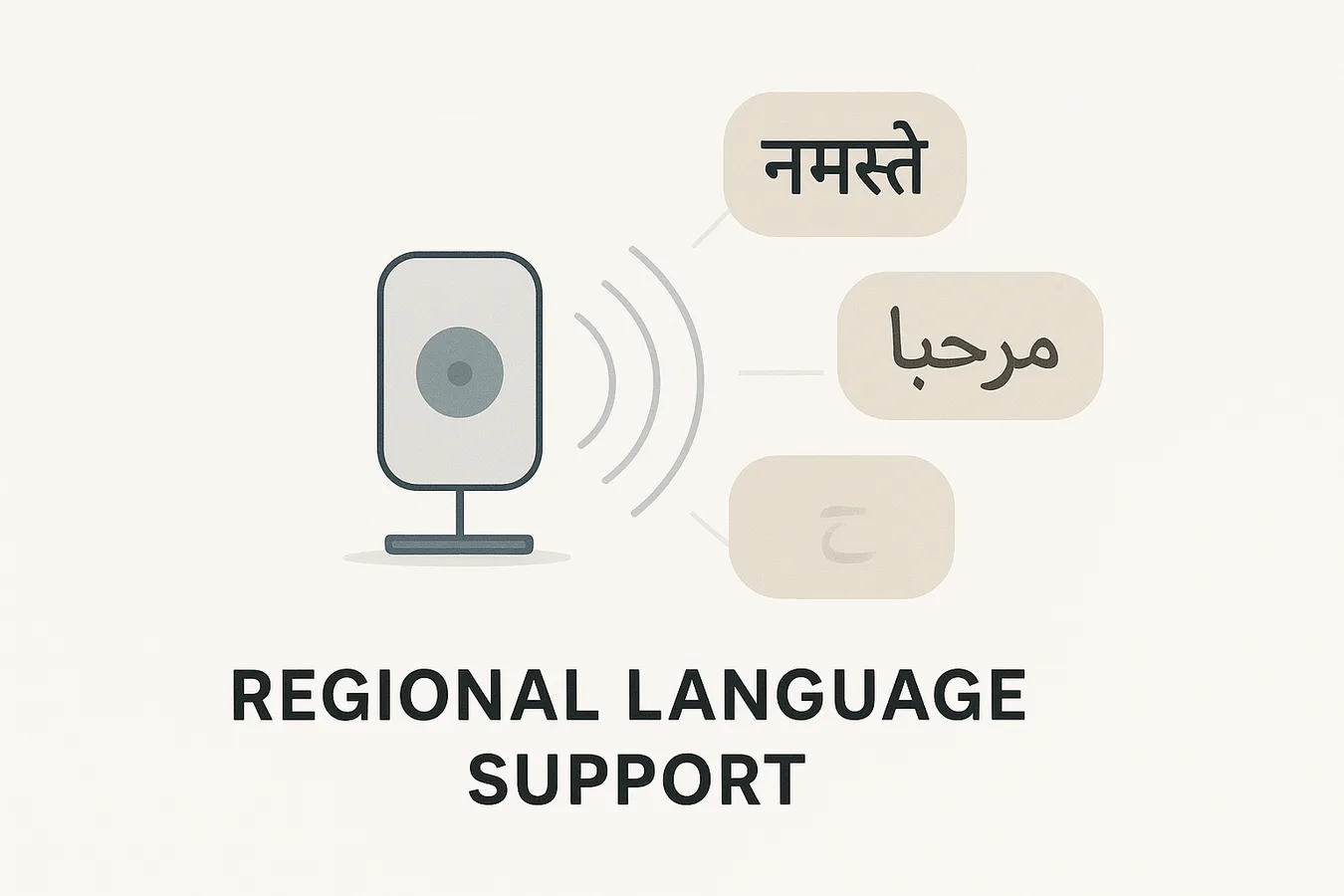
India's linguistic diversity demands AI voice calling platforms that deliver native-level fluency across regional dialects, not just basic vocabulary translation. Enterprises deploying conversational AI across tier-2 and tier-3 markets require solutions that handle accent variations, maintain sub-200ms latency, and embed compliance workflows for TCPA and DNC regulations.
Key Takeaways
Six languages—Hindi, Tamil, Telugu, Kannada, Marathi, and Bengali—cover 80%+ of India's addressable market for voice AI deployments
True regional language support requires accent-aware pronunciation and automatic language detection, not just transliterated vocabulary coverage
Conversational naturalness breaks above 200ms end-to-end latency, forcing platforms to achieve sub-150ms processing time on Indian telecom networks
TCPA compliance architecture must include automated DNC scrubbing, call recording consent management, and opt-out workflows to reduce legal risk
Platform selection depends on deployment scale: 70+ language coverage suits enterprises, high-volume throughput serves startups, and appointment-focused workflows fit SMBs
The best AI voice calling agents for India in 2026 combine native-level fluency across regional dialects with proven conversational AI infrastructure—platforms like Bolna [3], Lumay [1], and Ringg AI [2] have emerged as front-runners specifically for their Tamil, Telugu, Kannada, and Hindi language models built around Indian phonetics and business contexts
The Gap Between Language Count and Conversational Fluency
Marketing claims of '70+ languages supported' rarely translate to genuine conversational fluency. True regional effectiveness requires accent-aware speech recognition that understands Chennai Tamil differs from Madurai Tamil in phonetic stress patterns, or that Hyderabadi Hindi incorporates Telugu loan-words absent in Delhi Hindi. Most global AI voice platforms train on standardized literary forms of languages, missing the colloquialisms, code-switching, and pronunciation variance that define real customer conversations across India's linguistic regions.
Market Penetration Requirements for Indian Enterprises
Businesses targeting pan-India coverage need functional fluency in the top six market languages: Hindi (43% of population), Bengali (8%), Telugu (7%), Marathi (7%), Tamil (6%), and Kannada (4%). English alone reaches only urban tier-1 demographics. Insurance providers in Hyderabad require Telugu and Kannada models for rural policy renewals; e-commerce platforms need Tamil voice agents to convert customers in tier-2 Tamil Nadu cities where keyboard literacy lags behind smartphone adoption.
Voice Naturalness and User Trust Correlation
Regional accent accuracy directly impacts conversion rates and customer acceptance. Users instinctively trust voices that mirror their own speech patterns—a Bengali customer hearing correct sandhi pronunciation in Bengali voice responses stays engaged longer than one navigating a Hindi-accented approximation. Enterprises deploying AI agents for payment reminders, appointment confirmations, and lead qualification report 30-40% higher completion rates when the voice agent matches the customer's mother tongue with native prosody and intonation.
Moving beyond market context, effective platform selection requires a structured evaluation framework that balances technical performance, legal compliance, and operational integration.
When evaluating AI voice calling platforms for regional language deployment, four dimensions separate enterprise-ready systems from surface-level implementations:
Multilingual Depth, language count plus accent fidelity and tone consistency
Latency Performance, end-to-end response time under real network conditions
Compliance Architecture, DNC scrubbing, TCPA adherence, and consent management
Integration Capabilities, bi-directional CRM sync depth and API extensibility
Multilingual Depth: Beyond Language Count to Accent Fidelity
True regional language support requires automatic language detection that switches mid-conversation without manual configuration, accent-native pronunciation (not transliterated English), and tone consistency across languages. Platforms claiming "50+ languages" often deliver machine-translated scripts with robotic cadence. Evaluate vendors on region-specific demo calls in Tamil, Bengali, or Marathi to test whether the agent maintains conversational naturalness or reverts to awkward phonetics.
Latency Benchmarks for Indian Telecom Networks
Conversational naturalness breaks above 200ms end-to-end latency, the threshold where pauses feel robotic rather than human. Indian telecom networks add 80 to 120ms baseline jitter, so platforms must achieve sub-150ms processing time to stay under the perceptual ceiling. Request live latency dashboards filtered by Indian carrier (Jio, Airtel, Vi) rather than accepting global averages that obscure regional performance.
Compliance Architecture and CRM Integration Depth
Built-in DNC scrubbing auto-filters calling lists against national Do-Not-Call registries before dialing, while manual approaches require you to upload and reconcile lists weekly. For CRM integration, verify bi-directional sync, does the platform write call outcomes, transcripts, and sentiment scores back to Salesforce, HubSpot, or Zoho custom fields in real time, or only push summary logs? Deep integrations surface conversation intelligence directly in your sales workflow rather than forcing reps to toggle between systems.
With selection criteria established, three platforms demonstrate differentiated approaches to multilingual voice AI deployment at scale.
Platform Comparison: EchoLeads vs Bolna AI vs HuskyVoice.ai
Quick-Reference Comparison Table
Platform | Language Support | Compliance Features | CRM Integrations | Best For |
|---|---|---|---|---|
EchoLeads | 70+ languages with consistent tone | TCPA-aligned workflows | Bi-directional sync with major platforms | Enterprise teams needing multilingual reach |
Bolna AI | Multilingual intelligence optimized for Indian languages [3] | Not publicly disclosed | Not publicly disclosed | High-volume India-focused operations |
HuskyVoice.ai | Indian language focus [4] | Not publicly disclosed | Not publicly disclosed | Appointment setting and lead qualification [5] |
CarmaOne | Indian language speech recognition and dialect handling | Not publicly disclosed | Not publicly disclosed | AI-powered debt collection and credit management [6] |
Detailed Platform Analysis
EchoLeads leads on breadth with 70+ languages and compliance architecture that includes TCPA-aligned workflows. The platform provides bi-directional CRM synchronization with major platforms, making it well-suited for enterprise teams managing global outreach. However, its usage-based pricing may represent a higher cost for organizations handling 10,000+ monthly calls compared to flat-rate alternatives.
Bolna AI positions itself as a voice AI platform built specifically for Indian languages, emphasizing the ability to power thousands of inbound and outbound calls every minute with multilingual intelligence [3]. Its India-first design makes it a strong choice for high-volume domestic operations. The platform does not publicly disclose latency benchmarks for Indian telecom infrastructure, which may be a consideration for teams evaluating real-time performance.
HuskyVoice.ai is recognized as a leading Indian voice AI agent for 2025 to 2026 [4], with particular strength in appointment setting and lead qualification workflows [5]. The platform's focus on core use-cases makes it accessible for teams prioritizing simplicity over breadth. Compared to enterprise-focused competitors, HuskyVoice.ai has fewer documented third-party integrations, which may limit workflow automation for organizations relying on extensive CRM ecosystems.
CarmaOne specializes in AI-powered credit management and debt collection software with Indian language speech recognition and dialect handling capabilities [6]. The platform targets financial services organizations requiring compliant voice AI for collections and customer retention workflows across regional markets.
Platform capabilities mean little without thorough language coverage that addresses India's regional diversity beyond Hindi-only deployments.
Indian Language Coverage: Beyond Hindi to 70+ Languages
Top 6 Indian Languages for Voice AI Priority
Six languages deliver 80%+ addressable market coverage for AI voice agents operating across India: Hindi, Tamil, Telugu, Kannada, Marathi, and Bengali. Platforms with narrow language support, typically 10 to 20 languages, struggle to serve tier-2 and tier-3 markets where regional fluency drives engagement. In contrast, thorough platforms support multilingual operations across 70+ languages with consistent tone, while specialized solutions such as Gnani AI offer 40+ languages and Zingaro AI emphasizes 30+ Indian languages. However, language settings apply only in specific configurations, and breadth alone doesn't guarantee accent fidelity.
Automatic Language Detection and Code-Switching
Inbound call workflows face a critical challenge: the caller's language preference is unknown until the conversation begins. Leading platforms deploy automatic language detection that identifies the spoken language within the first few seconds and adapts the agent's responses accordingly. WhatsApp AI agents extend this capability with 50+ language support and automatic detection, enabling mid-conversation language switches when customers code-mix, switching between Hindi and English, for example, without forcing manual language selection.
Accent Fidelity and Regional Dialect Handling
Supporting "Tamil" is insufficient; effective voice AI differentiates Chennai Tamil from Madurai Tamil, Hyderabadi Telugu from Coastal Andhra dialects. Accent fidelity relies on training data breadth, platforms using pan-Indian speech corpora maintain conversational tone across regional variations within a single language, whereas models trained on metro-city accents alone generate robotic, standardized output that erodes trust in rural and semi-urban segments. Dialect handling directly impacts comprehension accuracy and customer comfort during long-form qualification conversations.
Language coverage alone carries legal risk without compliance architecture that addresses TCPA requirements and state-level calling regulations.
Deploying AI calling agents requires adherence to TCPA, DNC lists, and state-level call recording consent laws. Automated outbound calling platforms must integrate legal safeguards at the architectural level, failure to do so exposes organizations to per-violation penalties and regulatory action.
TCPA and DNC List Management Requirements
The Telephone Consumer Protection Act (TCPA) mandates that automated calling systems honor Do Not Call (DNC) registries and provide clear opt-out mechanisms. Platforms must scrub call lists against national and state-level DNC databases before initiating outbound campaigns. Call recording consent varies by jurisdiction, some Indian states require single-party consent, while others mandate all-party notification before recording begins.
Built-In DNC Scrubbing vs Manual List Management
Platforms embed workflows with TCPA compliance, integration with DNC lists, and automatic opt-out handling directly into calling software. This compliance-first architecture reduces manual intervention and legal exposure. In contrast, platforms requiring manual list uploads shift DNC scrubbing responsibility to the user, increasing the risk of outdated data and inadvertent violations.
State-Level Call Recording Consent Laws
India's Information Technology Act and state telecommunications regulations impose varying consent requirements. Platforms that automate consent disclosure, announcing recording at call initiation or capturing explicit opt-in, align with Maharashtra and Karnataka's stricter interpretations. Systems lacking programmable consent flows force teams to manage compliance manually, increasing operational overhead and audit risk.
Understanding compliance frameworks sets the foundation for matching platform capabilities to specific business use cases and deployment contexts.
When to Choose Each Platform (Use-Case Recommendations)
Enterprise vs Startup Deployment Scenarios
Large organisations managing 10K+ monthly calls with complex CRM requirements benefit from platforms that deliver bi-directional Salesforce, HubSpot, and Zoho integration with built-in compliance architecture and 70+ language coverage. Trade-off: usage-based pricing scales with call volume, which can increase costs for high-throughput deployments.
Bolna AI targets startups focused on high-volume outbound prospecting, handling thousands of calls per minute with multilingual intelligence optimised for Indian markets. Limitation: less documented on post-call workflow automation compared to enterprise-grade platforms.
HuskyVoice.ai fits SMBs prioritising appointment setting and lead qualification, with recognised Indian market leadership. Limitation: fewer enterprise-grade integrations for complex multi-system workflows.
Outbound Prospecting vs Inbound Support Workflows
AI calling agents are designed to handle repetitive initial prospecting tasks, not replace human judgment in complex sales conversations. Deploy platforms for structured qualification workflows using 100+ pre-built industry templates. Bolna AI excels at high-velocity outbound campaigns across regional languages. HuskyVoice.ai optimises for appointment-setting sequences where conversion relies on calendar availability and timing coordination.
Human-in-the-Loop vs Full Autonomy Models
For hybrid-sales workflows, use AI for initial qualification and route high-intent leads to human agents when conversation triggers indicate budget discussion, timeline urgency, or competitive evaluation. Platforms support this handoff architecture through CRM integration and real-time escalation flags. Pure autonomy models fit round-the-clock lead capture scenarios where immediate human response is not required, ideal for international time-zone coverage or weekend inquiry handling.
Platforms offer the broadest language coverage (70+) and strongest compliance architecture but carry higher per-call costs for usage-based pricing at enterprise scale, while Bolna AI handles the highest call volumes (thousands per minute) with Indian-language intelligence but provides less documentation on post-call CRM automation. As Indian businesses expand into tier-2 and tier-3 cities in 2026, demand for AI voice agents with native regional dialect fluency will intensify, making automatic language detection and sub-200ms latency the new baseline requirements for conversational AI platforms. Compare EchoLeads, Bolna AI, and HuskyVoice.ai on your specific language coverage requirements, call volume projections, and CRM integration needs, start with a pilot deployment in your top 2 regional languages before scaling to full pan-India coverage.
Frequently Asked Questions
Which AI voice agent supports the most Indian regional languages in 2026?
Platforms support 70+ languages with consistent tone across all deployments, making them the most thorough option for pan-India coverage. For comparison, Gnani AI provides 40+ languages, while most platforms offer 10 to 20 languages that struggle to serve tier-2 and tier-3 markets effectively.
What is the difference between language support and regional accent fluency?
Language support refers to vocabulary and grammar coverage across 70+ languages, while accent fluency means native-sounding pronunciation that differentiates Chennai Tamil from Madurai Tamil or Hyderabadi Hindi from Delhi Hindi [1][2]. Marketing claims rarely translate to genuine conversational fluency without accent-aware speech recognition and phonetic stress pattern modeling.
Are AI voice calling agents compliant with TCPA and DNC regulations?
Compliance depends on platform architecture. Built-in DNC scrubbing and call recording consent management provide automated compliance, while manual list management increases legal risk. TCPA mandates that automated systems honor Do Not Call registries and scrub call lists against national and state-level databases before initiating outbound campaigns [6].
How does automatic language detection work for inbound calls?
Leading platforms use initial caller utterances to detect language preference within the first few seconds and switch the AI agent's language dynamically. This addresses the critical challenge that a caller's language preference is unknown until the conversation begins, enabling smooth multilingual support without manual configuration.
What latency is acceptable for conversational naturalness in AI voice calls?
Conversational naturalness breaks above 200ms end-to-end latency, the threshold where pauses feel robotic. Indian telecom networks add 80 to 120ms baseline jitter, requiring platforms to achieve sub-150ms processing time to stay under the perceptual ceiling and maintain natural conversation flow.
Should startups choose flat-rate or usage-based pricing for AI calling?
For under 1,000 monthly calls, flat-rate pricing offers budget predictability. For 10,000+ calls, usage-based pricing provides cost efficiency at scale but requires budget forecasting [3][4][5]. The trade-off centers on cost-per-call economics versus fixed monthly expense visibility for financial planning.
When should AI calling agents escalate to human agents?
Escalation triggers include complex objections beyond scripted responses, emotionally-charged conversations, and high-intent signals like budget mention or timeline urgency. AI agents handle repetitive initial prospecting tasks effectively but cannot replace human judgment in complex sales conversations requiring contextual adaptation.
Related articles
6 Best AI Outbound Calling Solutions for Loan Verification
Compare AI outbound calling platforms that verify loan applications 24/7
5 Common Causes of Long Bank Loan Inquiry Call Wait Times
Why do bank customers complain about long wait times for loan inquiry calls? Learn the 5 Common Causes of Long Bank Loan Inquiry Call Wait Times.
4 Best AI Voice Lead Qualification Tools for Insurance
Compare AI voice platforms for insurance lead qualification through automated outbound calls.