
Best AI Voice Calling Platform for Small Business Outbound Sales (2026 Comparison)
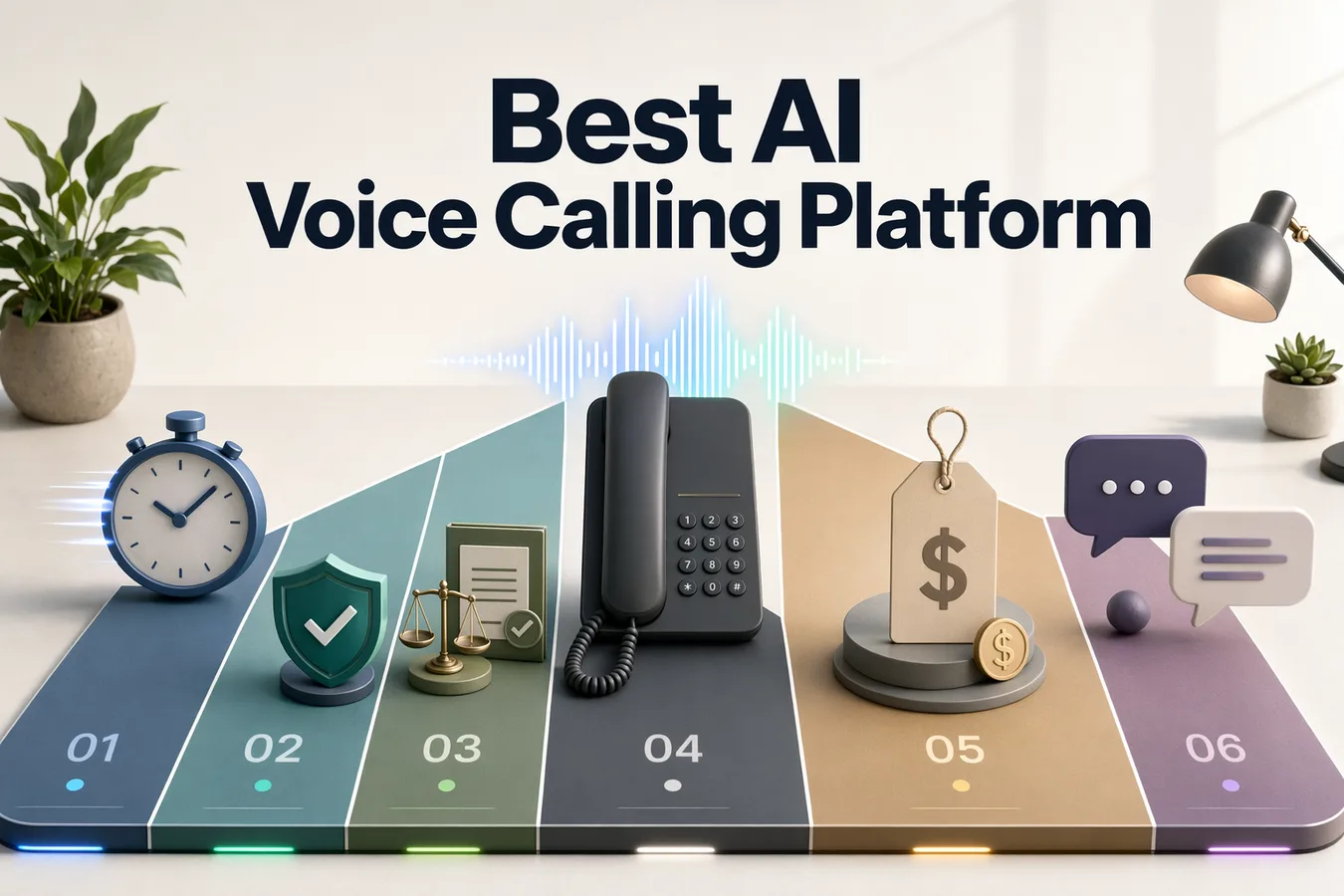
Small business outbound sales teams face a unique challenge when evaluating AI voice calling platforms: most comparison content is written for enterprise buyers with dedicated engineering teams and unlimited budgets.
This guide compares six platforms—Retell AI, Bland AI, Vapi, Synthflow, CloudTalk, and —across the four evaluation criteria that actually matter for SMB outbound sales: latency, compliance architecture, production pricing, and off-script conversation handling.
Key Takeaways
Response latency specs (300ms vs. 1s) measure different things—lab model inference vs. Real-world conversational delay—making direct comparisons misleading without testing under live call conditions.
Developer-first platforms (Retell, Vapi, Bland) offer maximum CRM customization but require engineering resources; no-code platforms (Synthflow, EchoLeads) trade API flexibility for faster deployment accessible to non-technical teams.
TCPA compliance certification tells you a platform can call legally, but doesn't guarantee it handles state-level consent laws, DNC list integration, or automatic opt-out workflows for your specific market.
Production pricing at 500-2000 monthly calls includes per-minute rates, telephony fees, and (for API platforms) engineering setup time—transparent total cost of ownership varies significantly across platforms.
Off-script conversation quality—how well an AI handles unexpected objections, callback requests, or competitor comparisons, has no published benchmark, making live demo testing with prepared objection scripts key before purchase.
Small businesses need an AI voice calling platform that delivers predictable qualification results under real call conditions, protects against compliance risk without requiring legal review per campaign, operates transparently at production call volumes (not advertised demo rates), and maintains conversation quality when prospects deviate from the script, four criteria that outweigh platform popularity or feature-count comparisons.
Why Generic 'Best Platform' Lists Miss the SMB Use Case
Enterprise-focused platform reviews emphasize integrations, seat-based pricing, and enterprise-grade SLAs, constraints irrelevant to small business buyers operating with one or two calling seats, limited engineering resources, and regulatory risk budgets measured in founder time rather than legal counsel hours. When one vendor [tested 10 platforms over six weeks][1], measuring lead qualification accuracy and objection handling across 800+ outbound calls, the methodology surfaced evaluation dimensions (speed-to-lead response, cost per qualified conversation) that generic feature checklists and G2 ratings systematically ignore. Small businesses need platforms where autonomous qualification works without human monitoring, because there is no human monitoring team, and where compliance failures trigger account suspension, not negotiated remediation plans.
The Four Evaluation Dimensions Competitors List but Don't Explain
End-to-end latency under real call conditions: Not the 300ms lab benchmark vendors quote, but the observed delay between prospect speech-end and agent response-start during live calls on congested carrier networks, measured across time zones and device types.
Compliance architecture for TCPA/DNC/state recording laws: Whether the platform embeds do-not-call list screening, consent capture, and two-party recording disclosures as pre-call defaults rather than optional add-ons requiring manual configuration per campaign.
Production pricing vs advertised rates at SMB call volumes: The actual per-minute or per-qualified-lead cost at 500-2,000 monthly calls, including telephony fees, CRM sync charges, and overage penalties, not the entry-tier rate shown on the pricing page.
Off-script conversation quality when prospects deviate from the script: How the agent handles interruptions, tangential questions, and objections outside the scripted path, scenarios that constitute 40-60% of real outbound calls but appear in 0% of vendor demos.
Platform choice matters because [personalized AI-driven calls achieve 36% higher meeting conversion rates][2] than traditional outreach, but only when the platform's operational behavior matches the SMB's resource constraints and risk tolerance. No external research yet quantifies SMB-specific weighting of these four criteria; final prioritization depends on business type (transactional vs consultative sales), geography (state-level recording laws), and whether the platform will operate autonomously or with human escalation paths.
Understanding what small businesses need is only the first step, the criteria you use to evaluate platforms determine whether you select a solution that works in theory or one that delivers results under real-world call conditions.
Four Evaluation Criteria Competitors Don't Explain (But You Should Prioritize)
Most comparison articles list latency, compliance, pricing, and conversation quality as evaluation axes, then stop at checkbox summaries. Here's what each criterion actually means when you're about to commit 500-2,000 monthly outbound calls to a platform.

End-to-End Latency: What 'Under 800ms' Actually Means for Call Quality
Spec sheets advertise response timing, ~300ms, ~400ms, <1 second[3], but these numbers measure different things. A platform's '~300ms' might describe internal model latency in lab conditions, while the '<1s' claim captures the full conversational turn-taking delay a prospect hears on a live call. For SMB appointment booking, sub-1-second feels natural enough for structured workflows ('What's your budget range?'). High-objection prospecting demands sub-500ms, because any pause after 'Is this a sales call?' signals automation. Ask vendors: *What does your latency metric include, model inference only, or model + TTS + network round-trip?* Then test with a live call script that interrupts the AI mid-sentence; the recovery speed is the latency that matters.
Compliance Architecture Beyond the 'TCPA Compliant' Checkbox
'TCPA certified' tells you the platform *can* call; it doesn't guarantee it can call *legally in your market*. Operational compliance infrastructure includes three layers vendors rarely detail upfront. First: DNC list integration cadence, how often does the platform scrub against the national and state-level registries? Daily refresh is the compliance floor; anything slower exposes you to ₹25,000 (India) or equivalent per-violation penalties[4]. Second: state-level call recording consent workflows, some jurisdictions require two-party consent disclosures *before* the conversation begins, not buried in a post-call transcript. Third: consent record retention, regulators expect timestamped opt-in logs maintained for 1+ years[4]. Ask during demos: *Show me the DNC sync logs and consent storage architecture.* If the vendor can't produce both in under two minutes, their compliance is aspirational.
Production Pricing Transparency: Advertised Rates vs Real Per-Minute Costs
Headline rates, 'under a dime per minute'[5], obscure total cost of ownership at SMB call volumes. For API-first platforms, real TCO has three components. Advertised per-minute rate ($0.07-$0.12) covers model inference + TTS; add telephony provider fees (Twilio, Telnyx) that aren't bundled. Setup overhead: platforms requiring custom orchestration burn 'three weeks of engineering time'[5] even for standard appointment-booking workflows, translating to mid-four-figure deployment costs before your first call. Overage rates: many vendors price the first 500-1,000 minutes attractively, then tier up 20-40% past volume thresholds. Calculate your 90-day projected volume (e.g., 1,200 calls × 4 min average = 4,800 minutes), multiply by the *second-tier* rate, and add setup. That's your real budget.
Off-Script Conversation Handling: Testing Adaptability Before You Commit
No published benchmark defines 'good' off-script quality, this is qualitative assessment. Prepare a 5-objection test script for your trial period: (1) prospect asks for callback time outside business hours; (2) challenges the AI's authority ('Am I talking to a bot?'); (3) requests info the script doesn't anticipate ('What's your cancellation policy?'); (4) interrupts mid-pitch with unrelated question; (5) asks to speak to a manager immediately. Run the script on three separate calls. Grade each response: did the AI acknowledge the objection naturally, provide a reasonable answer or escalation path, and retain conversational flow? Two or more fumbled responses mean the platform's NLU isn't production-ready for your use case.
With evaluation criteria defined, the next step is understanding how each platform implements these priorities across architecture, deployment speed, and operational cost structure.
Platform-by-Platform Breakdown: Retell AI, Bland AI, Vapi, Synthflow, CloudTalk, EchoLeads
The six platforms below represent three architectural philosophies: developer-first orchestration (Retell AI, Vapi), stack-owned deployment (Bland AI), no-code scenario builders (Synthflow), cloud-calling add-ons (CloudTalk), and autonomous qualification with human escalation (EchoLeads). The table compares pricing, outbound support, latency, and CRM integration depth.
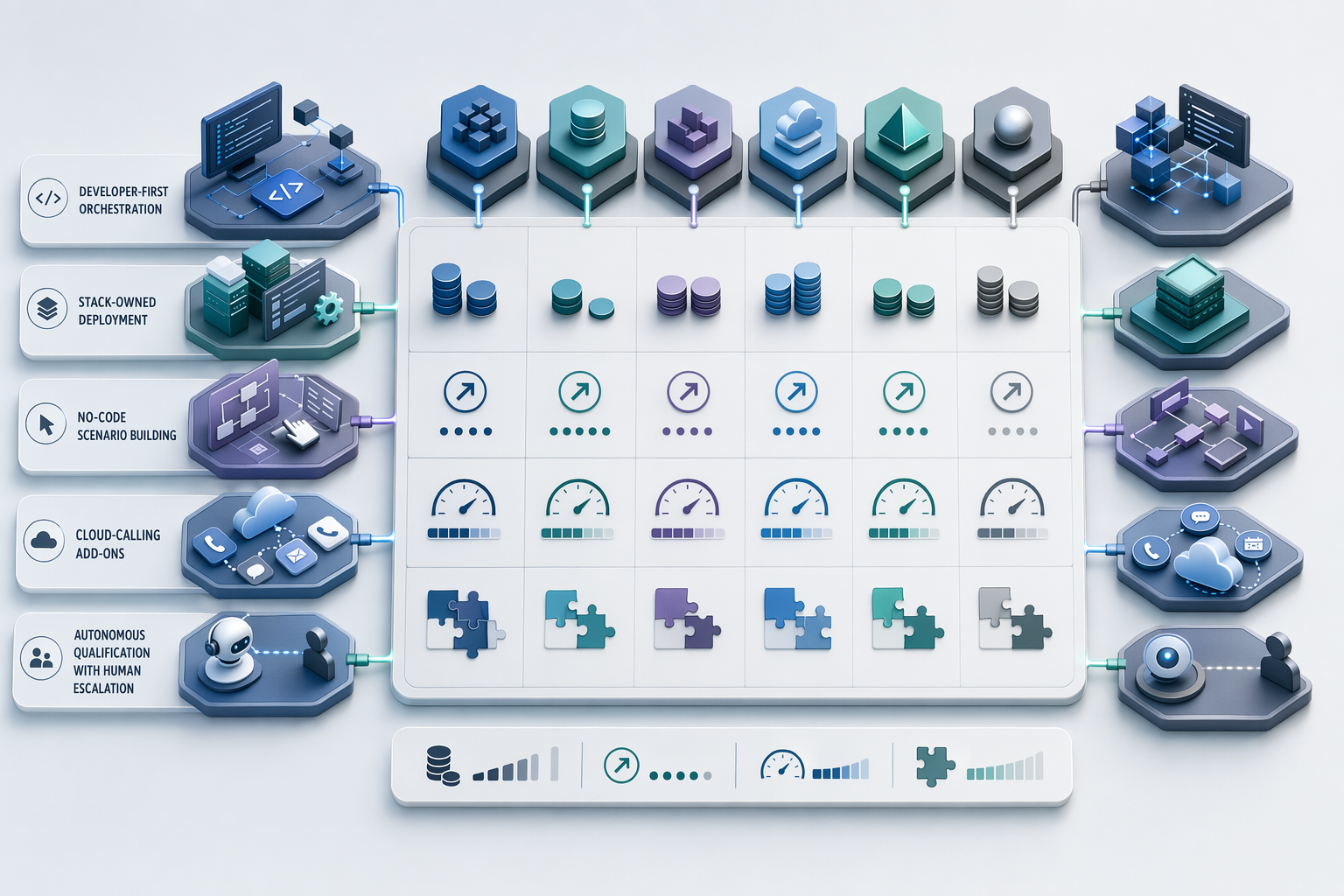
Side-by-Side Comparison: Latency, Compliance, Pricing, Off-Script Handling
Platform | Pricing (per min) | Latency | Outbound Calling | Implementation | CRM Integrations | User Rating (G2) |
|---|---|---|---|---|---|---|
EchoLeads | Custom | ~300ms | Yes (autonomous 24/7) | Low-code | HubSpot, Salesforce, Zoho, custom | N/A |
Retell AI | $0.05–$0.15 + telephony[6] | ~350ms[6] | Yes (API-first)[6] | Developer-first | Via API[6] | N/A |
Vapi | $0.13–$0.20/min[7] | ~750ms[7] | Yes (orchestration)[7] | Developer-first | Bring your own[6] | N/A |
Bland AI | $0.07–$0.12/min[7] | ~400ms[6] | Optimized for scale[6] | Developer-first | HubSpot, Salesforce, Zapier[6] | N/A |
Synthflow | $0.08–$0.09/min | Not disclosed | Yes | No-code | Standard integrations | N/A |
CloudTalk | Starting $25/user/mo | Not disclosed | Add-on feature | Low-code | 87+ integrations | 87% excellent/very good |
Retell AI: Developer-First Orchestration for High-Volume Outbound
Retell AI powers thousands of voice agents in production[6] with a managed infrastructure approach[6] that prioritizes voice quality and low latency[6]. Engineers define agent behavior while Retell handles speech-to-text, LLM orchestration, and telephony. Best-for: high-volume SMBs with technical teams needing sub-400ms latency. Limitations: requires engineering resources to configure and maintain, and setup time measured in hours to days[7].
Bland AI: Fastest to Deploy for Stack-Owned Calling
Bland AI owns the entire stack[7], model, telephony, infrastructure, and is the fastest to deploy for high-volume outbound calling[7]. The API-first platform is optimized for thousands of concurrent outbound calls[6] (lead generation, appointment reminders, surveys). Best-for: SMBs prioritizing speed and throughput over customization. Limitations: less flexibility on model choice and orchestration than platforms where you bring your own LLM/TTS, and picking the wrong configuration can burn three weeks of engineering time.
Vapi: Orchestration Layer for Custom Workflow Integration
Vapi is a developer-first orchestration layer[7] that lets users bring their own LLM, TTS, and telephony[6]. The platform wires components together, handles barge-in, and exposes a clean SDK for teams embedding voice agents inside existing products. Best-for: SMBs with existing automation stacks needing granular control over parallel tool calls and timeouts. Limitations: requires engineering time to configure, and per-minute costs ($0.13, $0.20/min[7]) add up at scale faster than stack-owned alternatives.
Synthflow: No-Code Scenario Studio for Non-Technical Teams
Synthflow lets non-technical sales teams build autonomous AI calling agents using a no-code Scenario Studio[8]. The AI conducts outbound conversations, handles objections, qualifies leads against BANT or MEDDIC criteria[8], and routes prospects to human closers with full CRM context[8]. A sales manager can build and deploy a production-ready agent in an afternoon[8]. Best-for: SMBs without engineering resources needing turnkey outbound qualification. Limitations: less flexibility than API platforms for complex multi-step workflows or custom integrations.
CloudTalk: Cloud Calling with AI Agent Add-On
CloudTalk is a cloud-calling platform where 87% of G2 reviewers rated it excellent or very good for teams under 50 agents. The platform onboards quickly and handles basic CRM integrations without custom development. AI voice agent features are an add-on rather than core product. Best-for: SMBs already using CloudTalk for human calling who want to layer AI agents onto existing workflows. Limitations: 42% of TrustRadius users cited feature limitations as a reason for exploring alternatives, and CloudTalk doesn't guarantee uptime on standard plans.
EchoLeads: Autonomous 24/7 Qualification with Human Escalation Architecture
EchoLeads operates in full-autonomy mode for routine qualification use cases, standard demo bookings, appointment confirmations, tier-1 qualification workflows, without human oversight during the call. When complexity, sentiment, or compliance risk exceeds safe autonomy thresholds, the customer support AI includes intelligent escalation logic that transfers conversations to human agents. This human escalation architecture is a strength: high-intent or sensitive conversations move to human agents quickly with full conversation context and history, ensuring compliance and conversion quality. Best-for: SMBs needing autonomous lead qualification with handoff for high-intent conversations. Limitations: AI calling functionalities are contingent on the chosen plan, and compliance adherence (TCPA, DNC, state regulations) is required for deployment.
Platform capabilities matter only if they align with your business type, call volume, and team resources, the decision framework below maps the six platforms to specific SMB use cases.
How to Choose: Decision Framework by Business Type and Sales Volume
Framework: Matching Platform to Business Model and Call Volume
The right AI voice agent platform is less about popularity and leans more on workflow and use-case fit. With 81% of sales teams implementing or experimenting with AI [9] and teams using AI reporting 30% better productivity and 50% more lead generation [10], platform choice compounds across every downstream metric. Segment your evaluation by business type and monthly call volume:
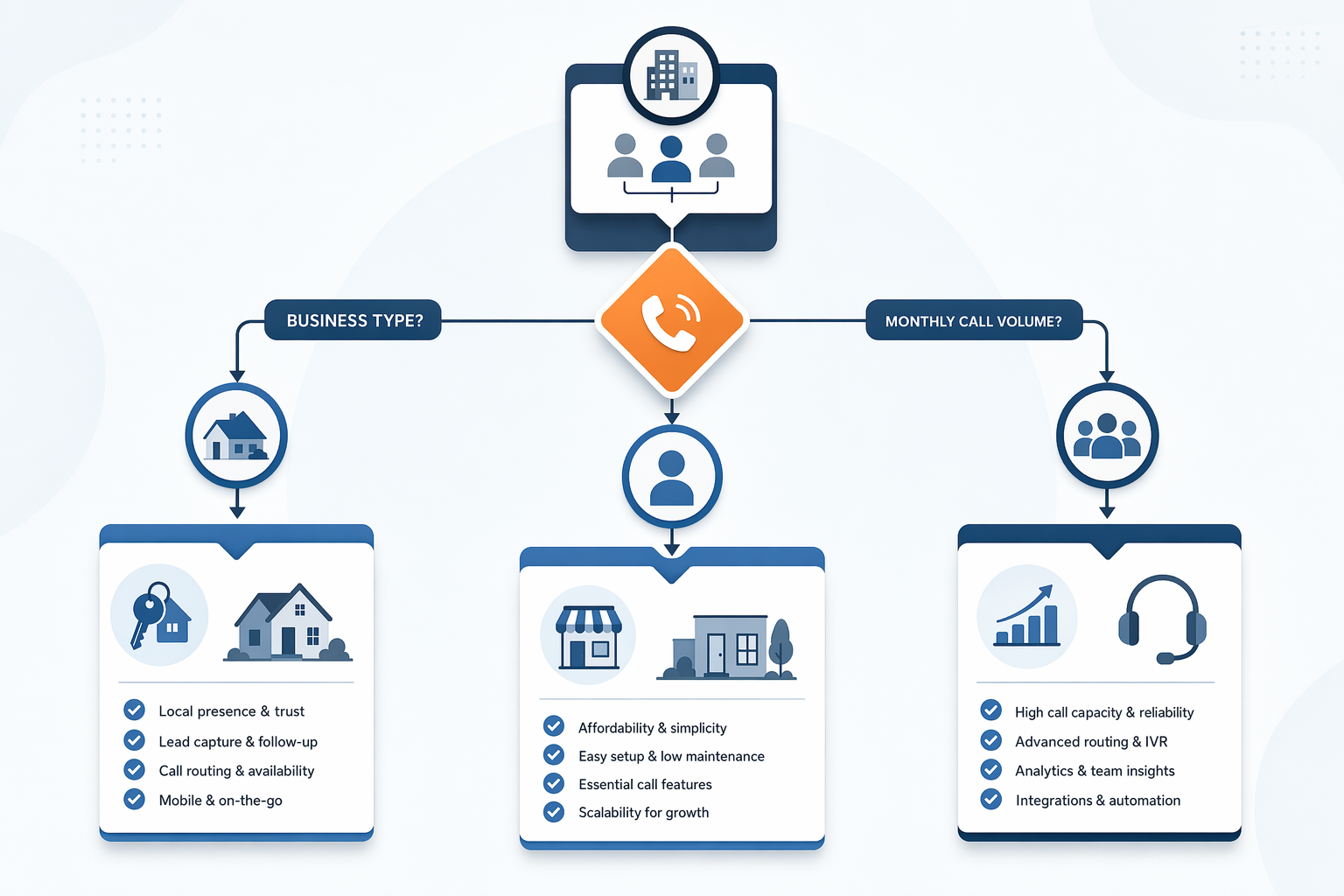
Low-volume exploratory (< 500 calls/month), prioritize ease of implementation, transparent pricing, and human escalation logic. EchoLeads uses pre-built industry templates to deploy autonomous calling agents within 72 hours.
Medium-volume qualification (500 to 2,000 calls/month), prioritize off-script handling, conversational branching, and CRM bi-directional sync. Platforms with developer-first APIs (Retell, Vapi) support custom qualification logic and webhook reliability for real-time field updates.
High-volume prospecting (2,000+ calls/month), prioritize sub-400ms latency, concurrent call capacity, and per-minute cost transparency. Platforms built for scale (Bland, EchoLeads) handle hundreds of simultaneous conversations without quality degradation.
Real Estate & Home Services: Appointment Booking + Follow-Up Nurturing
Real estate is a definitive use-case for voice-led automation as speed is paramount. Missed appointments cost the US healthcare system alone over $150 billion annually, with individual providers losing up to $38,400 per year, the same economics apply to property showings. Real estate SMBs prioritize appointment booking reliability, callback scheduling within minutes of form submission, and off-script objection handling for questions like "Is the seller motivated?" or "What's the neighborhood like?" Platforms with strong calendar integration (Google Calendar, Outlook), human escalation triggers for high-intent leads, and conversational AI that adapts to prospect tone (Synthflow, EchoLeads) deliver the highest booking-to-showing conversion rates. EchoLeads deploys in 72 hours using industry-specific templates for real estate, automating lead qualification, appointment booking, and CRM updates without manual coordination.
B2B SaaS: Lead Qualification + CRM Bi-Directional Sync
SaaS SMBs prioritize lead qualification depth, extracting BANT criteria (Budget, Authority, Need, Timeline) during the first call, and CRM webhook reliability for real-time field updates without manual data entry. Developer-first platforms (Retell, Vapi) lead here with custom-field mapping, bi-directional sync that writes qualification scores back into Salesforce or HubSpot, and API-driven conversation branching that adapts to prospect responses. No-code platforms (Synthflow) lag on CRM integration depth, often requiring Zapier middleware that introduces latency and breaks on schema changes. For SaaS teams running demo-qualified-lead workflows, platforms with pre-built CRM connectors and structured data extraction (EchoLeads, Retell) reduce setup time from weeks to days.
Ecommerce & D2C: Cart Abandonment + Order Confirmation Calls
Ecommerce SMBs prioritize high call volume handling (cart abandonment campaigns can trigger thousands of daily calls), multi-language support for regional markets, and low per-minute costs at scale. Platforms with transparent production pricing and proven scalability (Bland, EchoLeads) process concurrent calls without quality loss. EchoLeads supports 70+ languages for multilingual workflows and handles order tracking, refunds, and product inquiries across voice and messaging channels. For D2C brands running post-purchase confirmation or upsell workflows, platforms with rich media support (product catalogs, payment links) and store backend integration deliver higher conversion than voice-only solutions.
Beyond features and pricing, two operational factors determine whether your AI voice deployment protects your business and delivers qualified leads to your sales team: compliance architecture and human escalation workflows.
Compliance and Human Handoff Architecture, What to Ask Before You Sign
TCPA, DNC, and State-Level Call Recording Consent: The Operational Checklist
Deploying AI calling agents requires adherence to TCPA, DNC lists, and state-level call recording consent laws. In February 2024, the FCC clarified that AI-generated voices are treated as artificial or prerecorded voice under TCPA, placing AI voice calls under the same legal framework as robocalls. SMBs must ask vendors three operational questions: How often does the platform sync with DNC lists, daily or weekly? Where are consent records stored and for how long? Does the platform handle state-by-state call recording consent automatically (California two-party, Texas one-party) or require manual configuration?
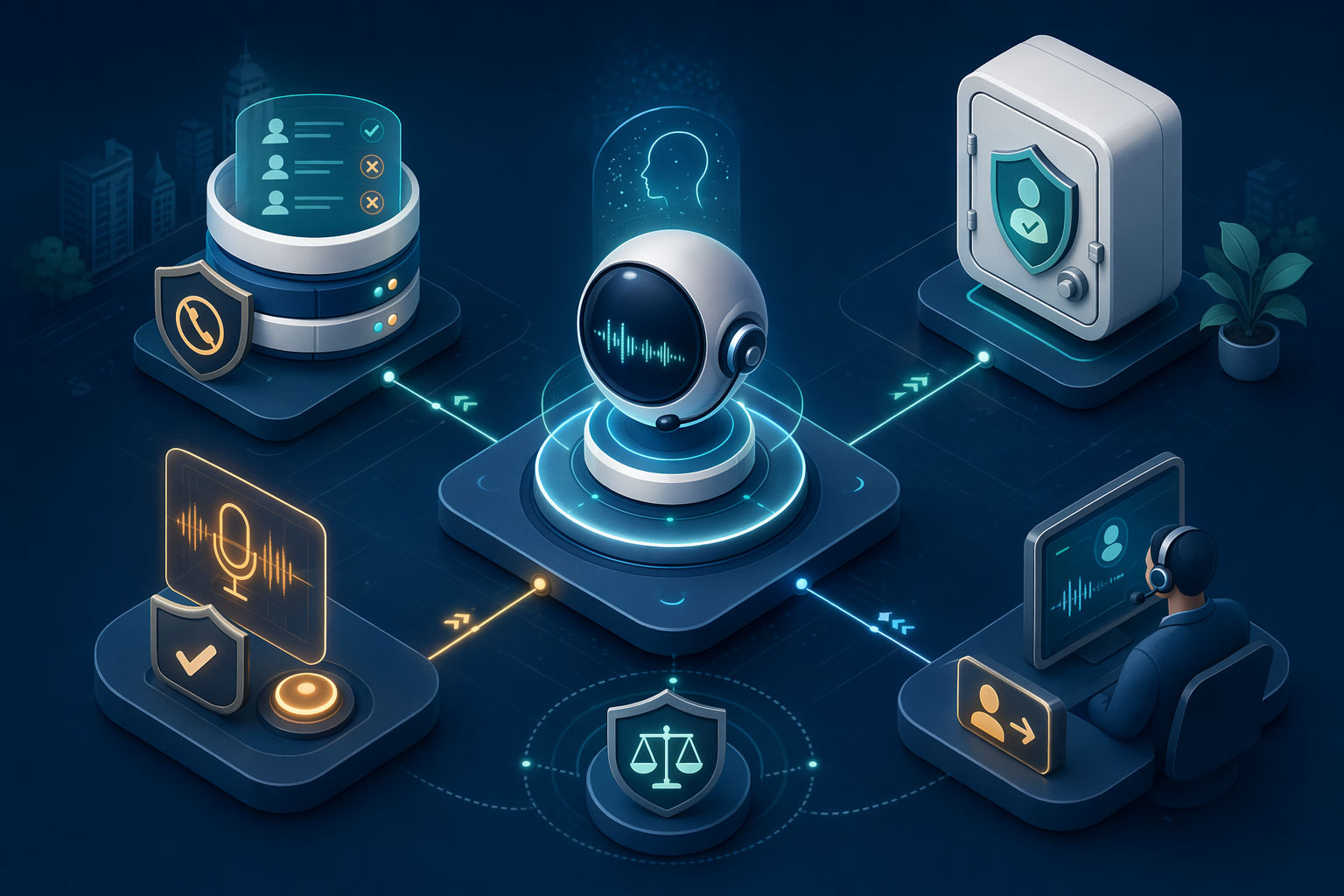
EchoLeads integrates workflows with TCPA compliance, DNC list integration, and automatic opt-out handling. These are table-stakes features, not differentiators, all six platforms claim compliance. The difference lies in operational proof: ask for DNC sync cadence (TRAI regulations mandate 24-hour updates), consent record retention duration (TRAI requires 1 year), and call-time restrictions (9 AM, 9 PM in India; vary by state in the US). Request audit trails showing compliance monitoring in action.
Human Escalation Triggers: When AI Should Hand Off to a Rep
AI should not close all calls; high-intent or sensitive conversations should move to a human agent quickly. No sources define human escalation architecture in operational terms, so SMBs should treat escalation as a demo checklist item: What triggers handoff, high-intent signals (prospect asks for pricing, requests contract review), sensitive objections (challenges AI authority), or compliance red flags (TCPA concern voiced)? What is the handoff speed, real-time transfer or callback queue? Does the human rep see the AI transcript and call history, or start the conversation cold?
EchoLeads' intelligent escalation logic transfers conversations to human agents when complexity, sentiment, or compliance risk exceeds safe autonomy thresholds. 2024 survey, 61% of B2B buyers prefer a rep-free buying experience, but they still want helpful, relevant information when complexity warrants it. Request a live demo of a high-intent handoff scenario: does the AI preserve conversation context, route to the right rep, and complete the transfer within seconds? Good escalation architecture reduces abandonment and increases conversion when human expertise is required.
Choosing the Right AI Voice Calling Platform for Your SMB
Developer-first platforms (Retell, Vapi, Bland) deliver maximum CRM customization and webhook flexibility but require engineering resources and setup time, no-code platforms (Synthflow, EchoLeads) trade API flexibility for faster deployment and non-technical team accessibility. Transparent per-minute pricing matters most at medium-to-high call volumes (500-2000+ monthly calls), low-volume exploratory SMBs should prioritize ease of implementation over cost optimization.
As AI voice agents move from early-adopter prospecting experiments to mainstream SMB sales infrastructure in 2026-2027, the competitive differentiator will shift from 'does it work?' to 'how well does it handle the 20% of calls that deviate from the script?' Off-script conversation quality and human escalation architecture will become first-class buying criteria as businesses demand reliable performance under real-world conditions.
Compare the platforms that match your business type using the decision framework in section 4, then run live demo calls with 5 unexpected objections to test off-script handling and human escalation workflows before signing. Learn how EchoLeads handles lead qualification and appointment booking with built-in compliance architecture.
Frequently Asked Questions
What latency is acceptable for AI voice calling in outbound sales?
Sub-1 second latency works for appointment booking and routine qualification, while high-objection prospecting benefits from sub-500ms to maintain conversational flow[3]. Spec sheets advertise ~300ms, ~400ms, or <1s[3], but these numbers measure different things, internal model latency in lab conditions versus full conversational turn-taking delay on live calls[3][4][5].
Do AI voice agents need to disclose they are AI when making outbound calls?
Yes, in most jurisdictions. The FCC clarified in February 2024 that AI-generated voices are treated as artificial or prerecorded voices under TCPA, placing AI voice calls under the same legal framework[11]. Disclosure requirements vary by jurisdiction and use case, so SMBs should consult legal counsel for their specific market and call type[11][4].
What does production pricing look like for 500-2000 monthly outbound calls?
Headline rates of $0.08-$0.09 per minute[5] obscure total cost of ownership for SMBs. Real TCO includes advertised per-minute rates ($0.07-$0.12), telephony provider fees (Twilio, Telnyx) that aren't bundled, and setup costs[3][4][5]. For API-first platforms, engineering time adds significant upfront cost[3]. Transparent pricing matters most at 500-2000 call volumes where these components compound.
How do I test an AI voice platform's off-script conversation quality before buying?
No published benchmark defines 'good' off-script quality, making this qualitative assessment critical. Prepare a 5-objection test script for trial calls: (1) callback request outside business hours, (2) authority challenge ('Am I talking to a bot?'), (3) information request outside the script, (4) competitor comparison, (5) compliance question[3][4][5]. Assess handoff speed and context preservation during escalation.
Should small businesses choose a no-code or developer-first AI voice platform?
SMBs without engineering resources should prioritize no-code platforms (Synthflow, EchoLeads) for faster deployment and non-technical team accessibility[6][7]. Businesses with existing automation stacks benefit from developer-first platforms (Retell, Vapi) that offer deep webhook support, custom-field CRM mapping, and API flexibility for embedding voice agents in existing products[6][7].
What triggers should move a call from AI to a human sales rep?
High-intent triggers (pricing inquiry, contract review request, demo scheduling) and sensitive triggers (compliance objection, authority challenge, emotional escalation) should move calls to human agents quickly[11][4]. Good platforms preserve call context, transcript, call history, extracted data, during handoff[11]. Test escalation triggers as a demo checklist item before signing[4].
Can AI voice agents integrate with Salesforce and HubSpot for outbound sales?
Yes, but integration depth varies by platform architecture. Developer-first platforms (Retell, Vapi) offer deep webhook support for real-time sync, custom-field mapping, and bi-directional updates[9][10]. No-code platforms (Synthflow, EchoLeads) provide pre-built integrations with limited custom-field mapping[9][10]. SaaS SMBs prioritizing BANT qualification need CRM webhook reliability for real-time field updates without manual data entry[9].