
Best AI Voice Calling Platforms for B2B Sales Teams with Appointment Booking (2026)
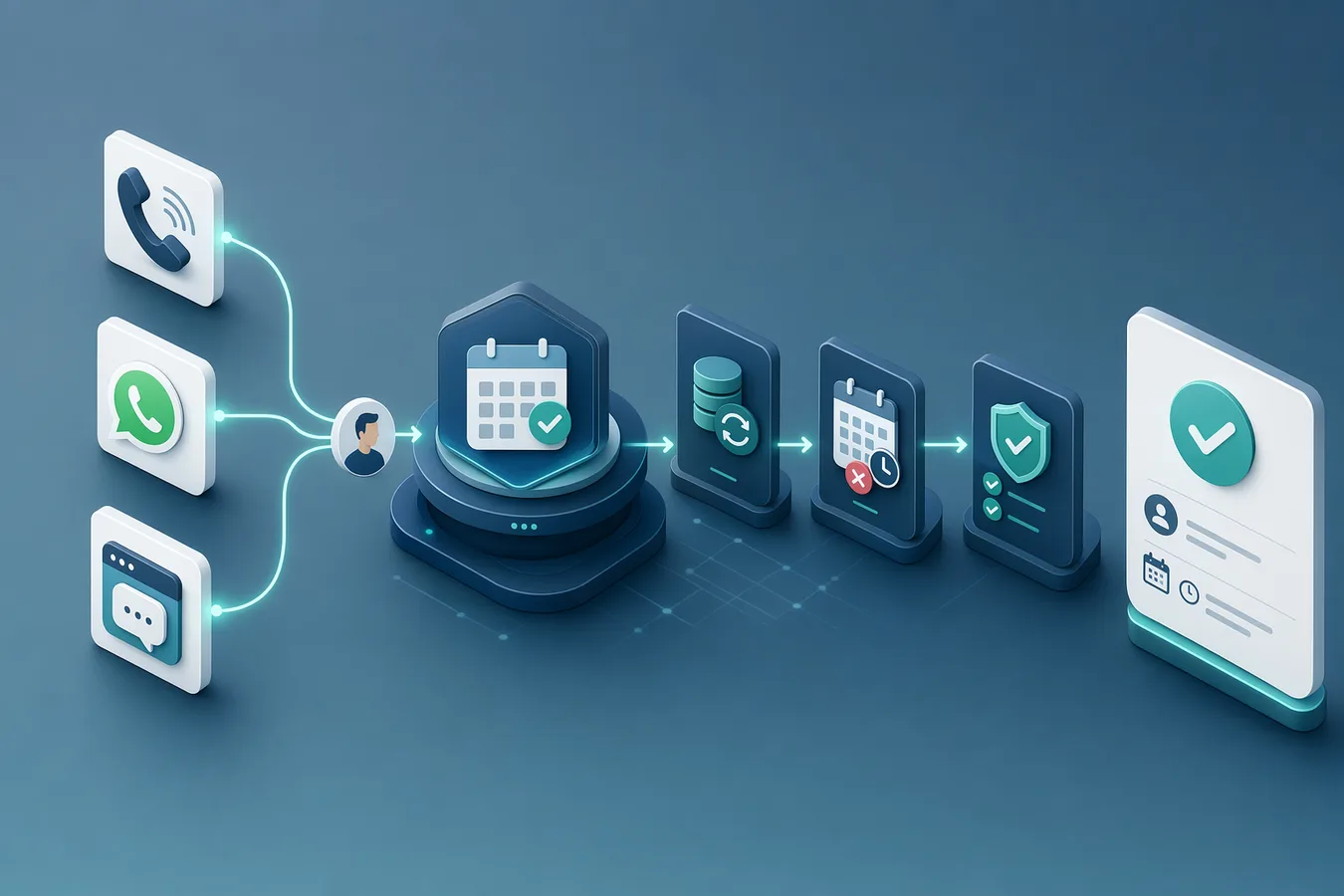
B2B sales teams require AI voice calling platforms that deliver more than passive scheduling—combining omnichannel booking, CRM synchronization, calendar conflict resolution, and compliance-ready workflows to convert leads faster.
Key Takeaways
Effective platforms unify phone, WhatsApp, and web chat for omnichannel appointment booking with real-time calendar conflict detection
Platform selection depends on workflow fit: high-volume outbound teams need DNC compliance and rapid deployment; distributed teams need channel unification
CRM integration must deliver bidirectional sync, lead scoring, and intelligent handoff logic—not just call logs
AI agents augment rather than replace sales teams, using escalation triggers to route complex conversations to human reps
Compliance features (TCPA adherence, DNC scrubbing, call recording consent) are non-negotiable for regulated industries
What Makes an AI Voice Calling Platform Effective for B2B Sales Appointment Booking
Effective B2B sales appointment booking platforms deliver omnichannel support (phone, WhatsApp, web chat), real-time CRM synchronization, calendar conflict detection, and compliance-aligned workflows. These capabilities separate purpose-built sales systems from generic scheduling utilities that handle bookings but fail under real-world qualification, rescheduling, and follow-up scenarios.
Why Speed and Availability Matter for B2B Lead Conversion
Leads contacted within the first five minutes are 21x more likely to convert [1], yet the average B2B sales team responds in 42 hours [1]. This gap explains why 24/7 AI availability is the primary value proposition — platforms that answer instantly [1] capture inbound opportunities that would otherwise become missed-call losses. For healthcare appointment systems, 2-3 missed calls translate to 2 lost appointments instantly, quantifying the opportunity cost in real revenue.
From Inbound Answering to Outbound Qualification
B2B sales teams increasingly require platforms that handle both inbound appointment capture and outbound lead qualification calls — not passive scheduling alone. Outbound sales automation frameworks position qualification before booking as the converging use case: platforms that conduct structured conversations to qualify budget, timeline, and decision-making authority before scheduling appointments deliver higher conversion rates than tools that simply find open calendar slots.
Booking Reliability vs. Booking Capability
The evaluation lens shifts from 'can it book appointments?' to 'how reliably does it handle confirmation, rescheduling, and conflict resolution?' Platforms that process thousands of concurrent booking requests across multiple channels without degrading response quality, and that automatically detect calendar conflicts and send structured reminders, solve the operational problem B2B sales teams face daily. Systems that book but fail to reschedule or confirm create downstream friction that negates the initial speed gain.
Understanding these foundational requirements sets the stage for evaluating specific selection criteria that separate workflow-ready platforms from feature-rich but operationally mismatched tools.
Key Selection Criteria: Omnichannel Support, CRM Integration, and Compliance Readiness
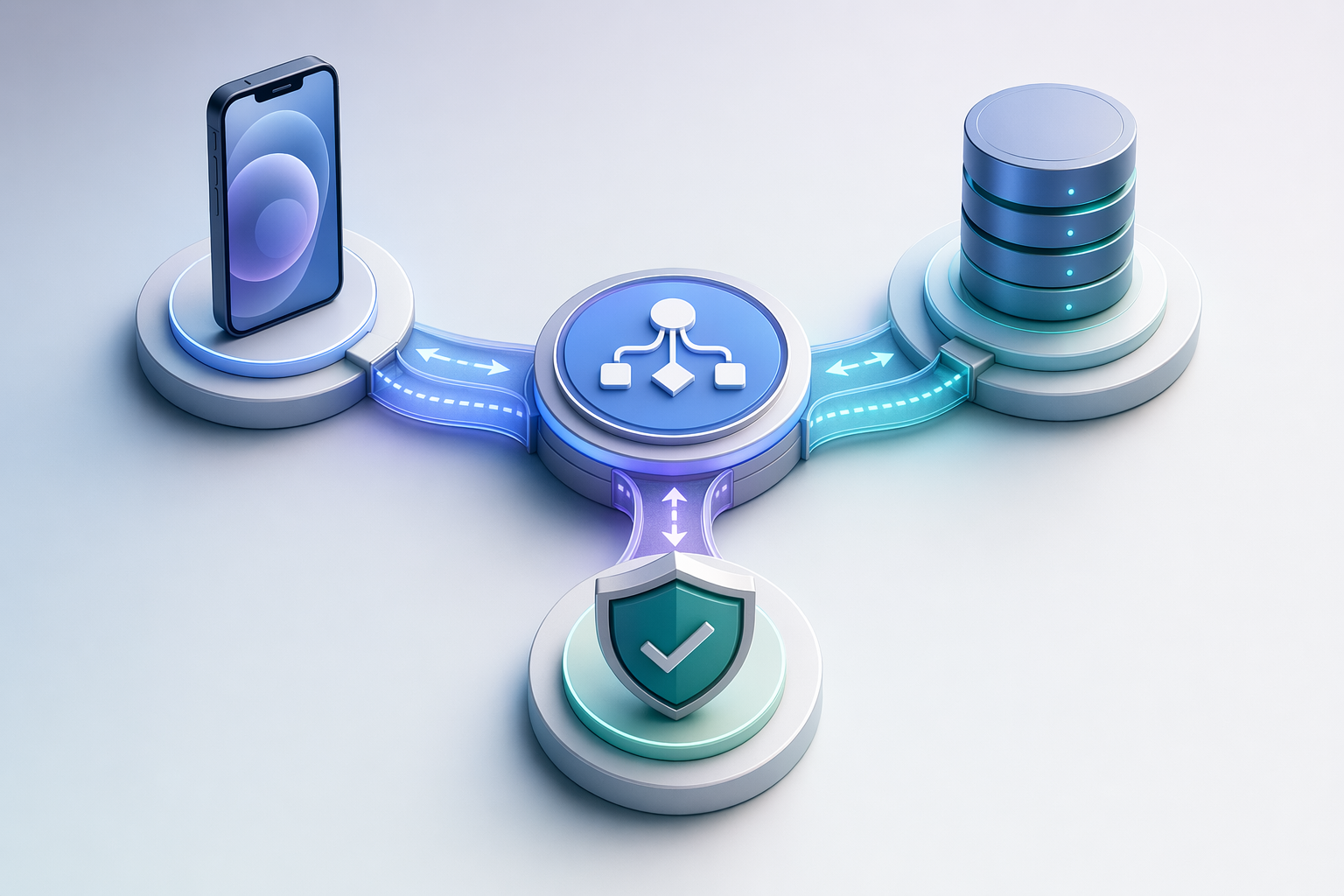
The right AI voice agent platform is less about popularity and leans more on workflow and use-case fit. B2B sales teams operate across fragmented touchpoints, phone, WhatsApp, web chat, and require platforms that unify these channels while maintaining conversation context, syncing lead data bidirectionally with CRM systems, and adhering to outbound calling compliance standards. The criteria below organize evaluation around workflow readiness rather than feature checklists.
Omnichannel Booking Capabilities
B2B prospects engage across multiple channels depending on context, a phone call during office hours, a WhatsApp message after 7 PM, a web chat during a demo video. Platforms that support phone, WhatsApp, and web chat in a unified workflow ensure that a lead who starts a conversation on one channel can continue it on another without repeating qualification steps. Selection should prioritize no-code or full-stack AI employee solutions [2] that orchestrate multi-channel engagement within a single automation platform, rather than stitching together separate tools for each channel.
CRM Synchronization and Bi-Directional Data Flow
CRM integration in practice means more than logging call outcomes. Platforms must support bi-directional data flow: updating contact fields, syncing lead scoring changes, progressing opportunity stages, and triggering SDR handoff workflows based on what the prospect says during the call. Personalized AI-driven calls achieve 36% higher meeting conversion rates [3] when CRM-synced lead scoring informs outbound calling logic in real time. Evaluate whether the platform can update CRM records during live conversations, not just after the call ends, and whether it can trigger automated opportunity stage progression after a booking.
Compliance Requirements: TCPA, DNC, and Call Recording Consent
Automated calling is only permitted with TCPA and DNC adherence, this is a non-negotiable selection filter before evaluating feature depth. Platforms must include built-in DNC list scrubbing, opt-out handling, call recording consent workflows, and compliance protocols for data security in regulated verticals like financial services. Financial services appointment booking requires in-built compliance protocols for data security, positioning compliance readiness as an industry-specific baseline rather than an optional add-on.
With selection criteria established, the next step is comparing how leading platforms deliver omnichannel support, CRM integration, and compliance readiness in practice.
Platform Comparison: EchoLeads, Synthflow, Bland AI, Retell AI, and Vapi
This section evaluates five platforms that serve B2B sales teams needing appointment booking and AI voice calling. Each review uses the same depth: strengths, limitations, and best-for scenarios. The ranked order reflects workflow fit for distributed teams managing multi-channel lead pipelines.
1. EchoLeads: Omnichannel Booking with Calendar Conflict Detection
EchoLeads processes thousands of concurrent booking requests across phone, WhatsApp, and web chat. The system schedules meetings in real time and handles bookings automatically, mitigating manual scheduling bottlenecks.
Strengths: Omnichannel appointment capture (voice, messaging, chat) with integrated calendar conflict resolution. Teams using Salesforce, HubSpot, or Zoho benefit from bi-directional CRM synchronization.
Limitations: Human escalation is required for high-intent or sensitive conversations, the platform does not handle every call autonomously. This is deliberate design, not a technical gap.
Best For: Distributed B2B sales teams needing WhatsApp + phone + web chat booking with CRM-connected workflows.
2. Synthflow: No-Code Outbound for Small Agencies
Synthflow positions itself as the only end-to-end voice AI platform with in-house telephony, claiming ROI delivered in weeks. The no-code deployment model suits small agencies and independent brokers who lack engineering resources.
Strengths: Pre-built logic flows reduce configuration time. Workflow visualization makes agent behavior transparent to non-technical users.
Limitations: Outbound-first design, inbound qualification and appointment booking workflows are less mature than dedicated omnichannel platforms.
Best For: Small B2B teams prioritizing outbound prospecting over inbound appointment management.
3. Bland AI: Enterprise-Scale Proof
Bland claims 1,312,186,530 calls resolved to date and reports that 250+ enterprises run on the platform, including Kin Insurance, Mutual of Omaha, TravelPerk, and Samsara.
Strengths: High-volume capacity and enterprise deployment track record. 24/7 operation without staffing expansion.
Limitations: Appointment booking features are less emphasized than general call automation, teams needing calendar-native workflows may require additional tooling.
Best For: Enterprise B2B sales teams already operating at scale who value proven deployment stability over specialized booking logic.
4. Retell AI: Lead Generation Specialization
Retell AI describes itself as an AI voice agent platform for automating calls, emphasizing agents that sound human and execute tasks.
Strengths: Developer-friendly API makes custom integration straightforward for engineering teams. Task execution focus aligns well with lead qualification workflows.
Limitations: Less documentation on multi-channel appointment booking, primary use case appears to be voice-only lead generation rather than omnichannel scheduling.
Best For: B2B sales teams with engineering capacity who want to build custom voice workflows on a flexible API.
5. Vapi: Infrastructure-Layer Flexibility
Vapi offers a low-level voice infrastructure platform that developers use to assemble custom voice agents. The platform emphasizes flexibility over pre-built workflows.
Strengths: Maximum control for teams needing non-standard voice logic. Developers report low-latency performance for real-time conversational flows.
Limitations: No turnkey appointment booking, teams must build calendar integration, conflict resolution, and confirmation flows from scratch.
Best For: Engineering-led organizations that treat voice infrastructure as a build-vs-buy decision and have capacity to maintain custom logic.
Platform capabilities matter only when aligned with organizational structure, the same feature set that accelerates a distributed team may overwhelm a focused outbound squad.
Workflow Fit Over Popularity: Matching Platforms to Sales Team Structures
Platform selection starts with organizational structure, not feature lists. Sales teams operating at different scales and CRM depths need different platform capabilities. Below are three workflow archetypes and the platform features that map to each.
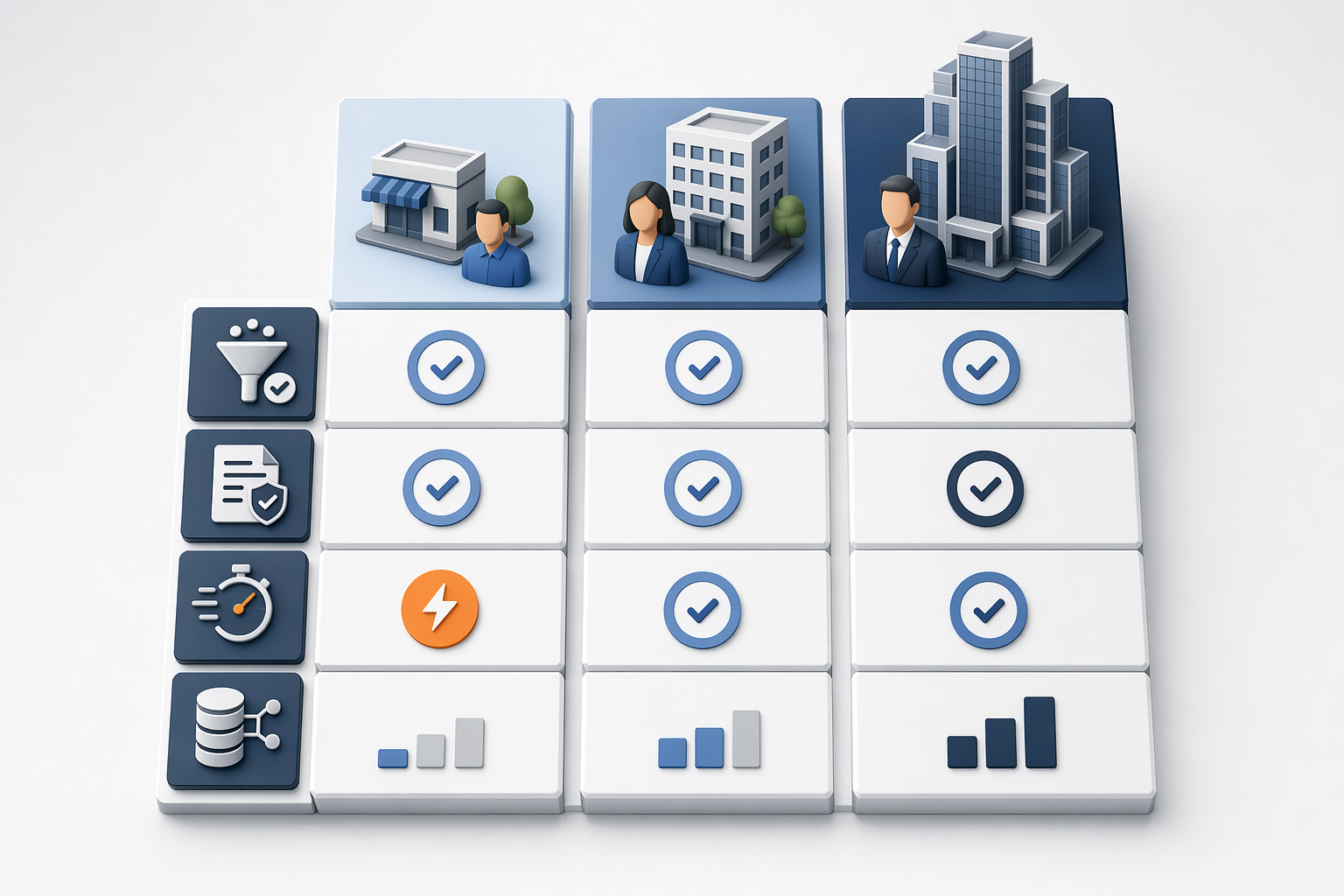
High-Volume Outbound Teams: Speed-to-Launch and DNC Management
Teams dialing hundreds of prospects daily prioritize compliance tooling and rapid agent deployment. Look for platforms with built-in DNC list scrubbing, TCPA-aligned consent logging, and campaign templates that reduce setup time from weeks to days. Transparent per-minute pricing and flexible telephony integrations help budget modeling[4]. Retell AI reports that automating first-touch qualification saves outbound teams 900+ hours annually[4], underscoring the ROI of speed-to-launch for high-volume workflows.
Distributed Omnichannel Teams: WhatsApp, Phone, and Web Chat Unification
B2B prospects switch channels mid-journey; distributed teams need unified booking to prevent drop-off. Platforms that retain conversation context across phone, WhatsApp, and web chat eliminate the need for prospects to repeat qualification details. EchoLeads supports AI WhatsApp appointment booking with conversation continuity across multiple channels, enabling distributed teams to handle bookings without channel-specific queue management. Evaluate whether the platform synchronizes lead state in real time or requires manual handoff between channels.
Enterprise Sales Teams: CRM-Synced Lead Scoring and SDR Handoff
Enterprise workflows require bidirectional CRM sync and automated SDR notifications when leads hit qualification thresholds. Integration depth and pricing transparency serve as pre-qualification filters before feature-by-feature review[5]. Platforms with native Salesforce or HubSpot connectors update lead scores, opportunity stages, and next-step tasks during live calls, not as batch exports. Look for configurable handoff triggers, keyword match, sentiment score, or explicit prospect requests, that route high-intent leads to human reps with full conversation history.
Beyond platform selection, successful deployment depends on technical implementation details that determine whether automation delivers instant booking or creates new friction points.
Implementation Considerations: Calendar Sync, Conflict Detection, and Human Handoff Logic
Calendar Conflict Detection and Automated Resolution
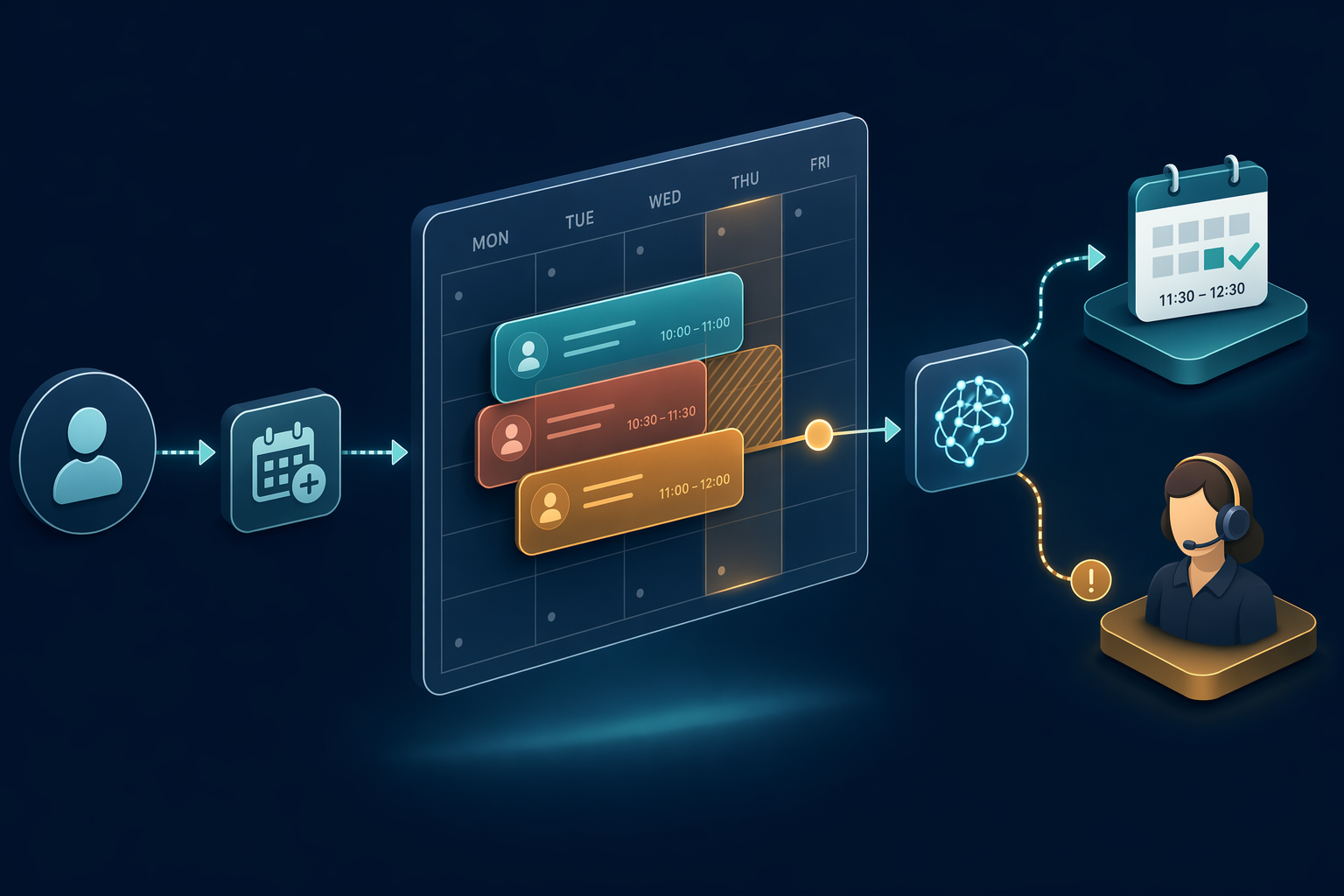
Platforms that promise instant booking must detect double-bookings and resolve conflicts without manual intervention. EchoLeads seamlessly integrates with calendar systems, enabling real-time availability checks as well as automatic scheduling using safe appointment scheduling AI workflows. The system schedules meetings in real time and handles bookings automatically, mitigating manual scheduling bottlenecks entirely. Vendors like Droidal position HIPAA-compliant Voice AI Agents that check real-time availability and book appointments instantly, setting a baseline expectation that conflict detection is no longer optional, it is table-stakes for B2B sales teams that cannot afford missed or overlapping bookings.
Multi-Timezone Handling for Distributed Sales Teams
Global B2B prospecting surfaces booking requests across time zones; platforms must translate prospect-side local times into the correct sales-rep calendar slot to avoid early-morning or late-night errors. EchoLeads includes a timezone-aware booking system with automated confirmation calls, ensuring that a 2 p.m. Sydney request lands in the London rep's calendar at the correct UTC-adjusted hour. Distributed teams report scheduling accuracy as the primary driver of prospect satisfaction, a single missed-timezone error converts an enthusiastic lead into a no-show.
Human Escalation Triggers for High-Intent Prospects
AI agents augment rather than replace sales teams; high-intent or complex conversations require human judgment. EchoLeads' customer support AI includes intelligent escalation logic that transfers conversations to human agents when complexity, sentiment, or compliance risk exceeds safe autonomy thresholds. Businesses configure these handoff triggers based on conversation keywords, sentiment scores, or explicit prospect requests, ensuring that when intent signals become obvious, the follow-up AI escalates qualified leads to human agents with full conversation context and history. The strategist's disclaimer holds: AI calling agents handle repetitive initial prospecting, while human reps close complex sales conversations.
Developer-focused API platforms like Retell AI deliver maximum customization but require engineering resources to build pipelines; marketing-friendly dashboards like EchoLeads suit sales teams who need booking automation without technical dependencies. Single-channel phone-only platforms are sufficient for teams with existing call center infrastructure; omnichannel platforms like EchoLeads add value when prospects engage across WhatsApp, phone, and web chat simultaneously.
As B2B buyers increasingly expect instant responses across multiple channels, the platforms that combine omnichannel booking with CRM-synced lead scoring will define the next generation of sales automation, moving beyond reactive appointment capture to proactive qualification and handoff.
Evaluate EchoLeads's omnichannel booking and calendar conflict detection features to see if they fit your distributed sales team's workflow, or compare quotes from Synthflow, Bland AI, and Retell AI to find the platform that matches your team structure and CRM depth.
Frequently Asked Questions
What is the difference between AI appointment scheduling and AI lead qualification for B2B sales?
Appointment scheduling captures inbound booking requests, while lead qualification involves outbound calling to assess prospect fit before booking [1]. Modern platforms like EchoLeads converge both capabilities, handling inbound appointment capture and outbound lead qualification in unified workflows rather than treating them as separate functions.
How does calendar conflict detection work in AI voice calling platforms?
Platforms check existing calendar entries in real-time during the conversation and propose alternative time slots when conflicts are detected. EchoLeads integrates with calendar systems to enable real-time availability checks and automatic scheduling within seconds, resolving double-bookings without manual intervention through safe appointment scheduling AI workflows.
Do AI voice agents replace human sales reps for B2B appointment booking?
AI agents augment rather than replace sales teams; high-intent or complex conversations require human judgment. Platforms like EchoLeads include intelligent escalation logic that transfers conversations to human agents when complexity, sentiment, or compliance risk exceeds safe autonomy thresholds, freeing SDRs to focus on nuanced qualification.
What compliance features do B2B sales teams need in an AI calling platform?
B2B sales teams require TCPA adherence, DNC list scrubbing, opt-out handling, call recording consent workflows, and data security protocols [2][3]. Financial services and regulated industries need in-built compliance mechanisms as a non-negotiable selection filter. Teams should verify platform certifications directly, as source documents lack platform-by-platform compliance comparisons.
How much does AI voice calling cost for B2B sales appointment booking?
Pricing varies by platform: some charge per-minute calling costs plus telecom fees, others use seat-based or usage-based models [2][3]. Starting prices differ across EchoLeads, Synthflow, Bland AI, Retell AI, and Vapi. Teams should request custom quotes for enterprise use cases due to pricing transparency gaps.
Can AI voice platforms book appointments across phone, WhatsApp, and web chat?
Omnichannel booking capability varies by platform [4][5]. EchoLeads processes concurrent booking requests across phone, WhatsApp, and web chat without queue management, retaining conversation context across channels so prospects avoid repeating qualification details. Some competitors focus on phone-only or require separate integrations for chat channels.
How quickly can a B2B sales team deploy an AI voice calling platform?
Speed-to-launch benchmarks range from 30 minutes for turnkey setups to days or weeks for enterprise deployments requiring CRM integration and compliance review [2][3]. Deployment speed differs from call answer speed; platforms that advertise rapid launch still require configuration time for bidirectional CRM sync and channel unification.