
Best Multi-Channel AI Chatbot for Lead Generation (2026)
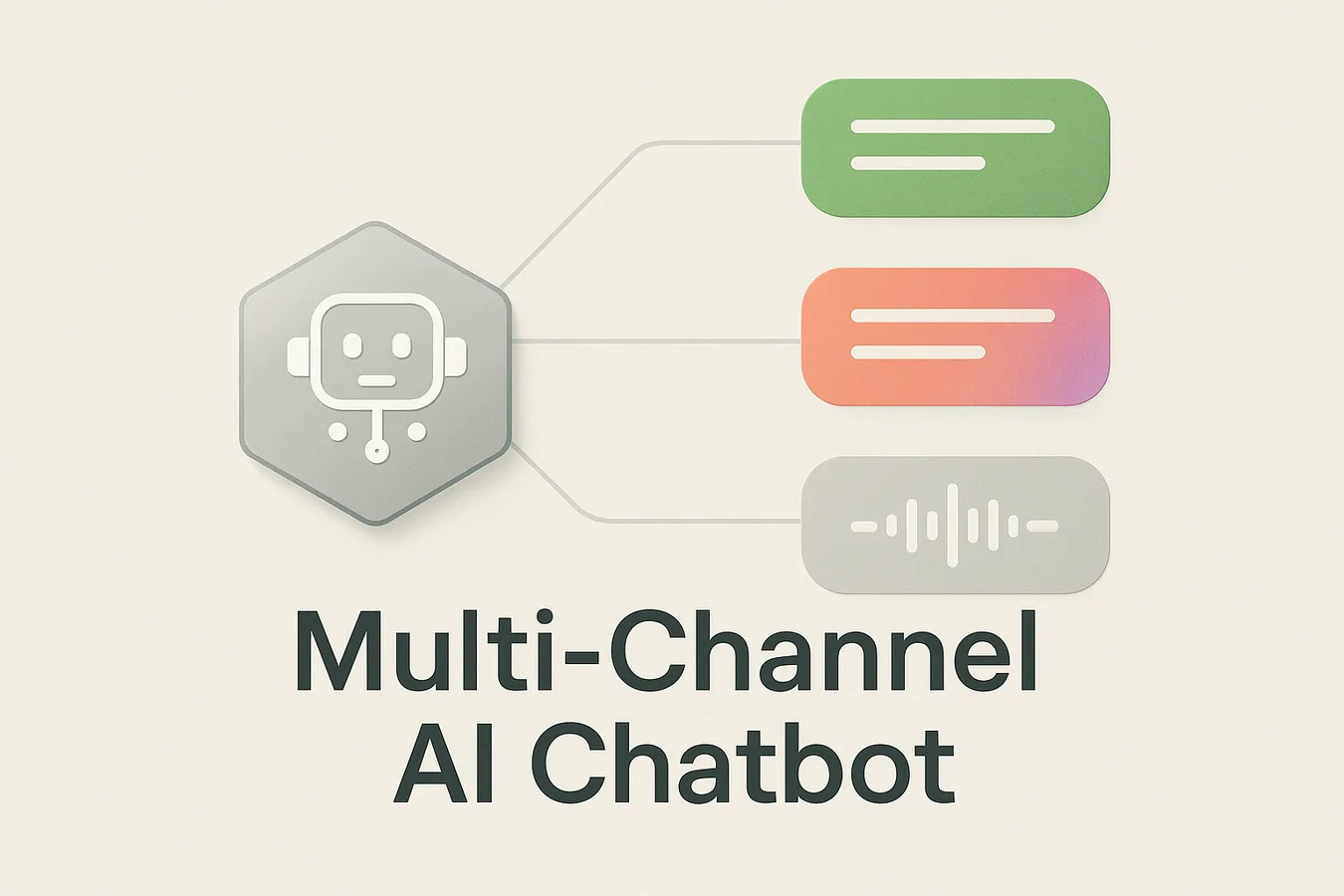
Multi-channel AI chatbots automate lead qualification and appointment booking across WhatsApp, Instagram DMs, and voice calls simultaneously, maintaining conversation context as prospects switch between channels.
Key Takeaways
Affordable multi-channel AI chatbot solutions range from ₹1,500 to ₹15,000 per month, with platforms offering WhatsApp, Instagram DM, and voice support.
WhatsApp Business API setup requires pre-approved message templates and Meta Application configuration, adding 24–48 hours of technical overhead.
Cross-platform AI maintains qualification state when leads switch channels—template-based tools reset conversation context at each boundary.
Compliance safeguards for voice calling and Instagram rate limiting are built into dedicated platforms but require manual implementation in open-source frameworks.
Pricing models include usage-based (₹5–9 per voice minute), flat-rate monthly (₹1,500–15,000), and enterprise custom—choose based on lead volume and channel mix.
Introduction
Affordable multi-channel AI chatbot solutions for lead generation typically range from ₹1,500 to ₹15,000 per month, with platforms offering WhatsApp, Instagram DM, and voice support across all tiers. Identifying an affordable solution requires evaluating hidden costs such as WhatsApp Business API setup time, Instagram account restriction risk, voice calling compliance overhead, and CRM integration complexity. AI chatbots are affordable, relatively simple to implement, and effective at driving efficiency when evaluating total cost of ownership [7]. This guide compares platform pricing models, compliance frameworks, and implementation timelines to help you select the right multi-channel AI solution for lead-generation workflows.
What Makes a Multi-Channel AI Chatbot 'Affordable' for Lead Generation?
Affordability in multi-channel AI extends beyond sticker price to include setup effort, ongoing compliance monitoring, and the cost of conversation failures when AI logic does not adapt across messaging versus voice contexts. A ₹3,999-per-month solution requiring 60 hours of manual configuration may prove more expensive than a ₹15,000 turnkey platform with built-in compliance guardrails.
Pricing Model Categories
Three dominant pricing structures serve different lead-volume profiles. Usage-based models charge per voice minute (₹5 to 9 per minute [4]) and per message sent, making them cost-effective for businesses handling fewer than 1,000 qualified conversations monthly. Flat-rate subscriptions bundle unlimited messages and a fixed voice-minute allocation, with plans from ₹1,499 per month [9]. Enterprise custom pricing applies when lead volumes exceed 10,000 monthly interactions or when white-label deployment and on-premise hosting are required.
Hidden Cost Drivers
WhatsApp message template approval delays can add 2 to 4 weeks to launch timelines when businesses lack pre-approved templates [4]. Instagram rate-limiting violations triggered by aggressive automation can suspend accounts for 24 to 72 hours, halting inbound lead flow. Voice calling compliance requires ongoing legal review that generic automation platforms do not provide natively. AI chatbot development cost in India varies based on features, AI models, integrations, and project complexity, with enterprise-grade solutions ranging from ₹7,00,000 to ₹10,00,000+ when custom compliance and CRM sync are factored in [8].
WhatsApp, Instagram DM & Voice: Why Cross-Platform Integration Matters
Cross-platform integration requires maintaining conversation state, adapting qualification logic to each channel's constraints, and preventing compliance violations specific to messaging versus voice. A lead who initiates contact via Instagram DM, receives a WhatsApp follow-up, and later accepts a voice call expects the AI to recall prior qualification answers without repetition.
Conversation Context Retention Across Channels
Stateful AI platforms store qualification responses in a unified lead record that persists across WhatsApp, Instagram, and voice interactions. Template-based tools reset conversation history at each channel switch, forcing leads to re-answer qualification questions and reducing conversion rates. AI-based chatbots in conversational commerce demonstrate strong increases in convenience for participants when context is preserved across sessions [5].
Platform-Specific API Requirements
WhatsApp Business API access requires a verified Meta Business Account, approved phone number, and pre-approved message templates for initial outreach. Instagram automation relies on the Instagram Graph API, which enforces rate limits of approximately 200 API calls per hour per user to prevent spam. Voice calling integrations use SIP trunking or carrier APIs with mandatory caller ID verification and opt-out mechanisms to comply with TCPA regulations. Generic workflow automation platforms provide API connectors but do not enforce compliance guardrails, leaving businesses responsible for legal review and throttling logic.
Key Selection Criteria for Multi-Channel AI Lead Generation Platforms
Selecting the right platform requires evaluating channel coverage, AI qualification depth, CRM bi-directional sync, compliance automation, and total cost of ownership across a 12-month period. Platforms optimized for a single channel often lack the adaptive logic required to handle leads who switch between text and voice mid-conversation.
Native vs. Integrated Channel Support
Native multi-channel platforms build WhatsApp, Instagram, and voice capabilities into a single unified interface, reducing the need for third-party middleware. Integrated solutions connect separate voice providers and messaging APIs via webhooks, introducing latency and additional failure points. AI cold calling software combines natural-sounding voice, real-time coaching, smooth CRM integration, and compliance features; when voice is integrated rather than native, CRM sync often requires custom development [1].
AI Qualification Logic vs. Template-Based Responses
Advanced AI platforms use natural language processing to extract intent, budget, timeline, and decision authority from unstructured lead responses, dynamically adjusting follow-up questions based on prior answers. Template-based systems rely on keyword matching and predefined decision trees that break when leads provide ambiguous responses. Modern AI call bots can understand customer intent, tone, and emotional cues during conversations [6], a capability absent in template-driven tools.
Platform Comparison: Multi-Channel AI Chatbot Solutions
The following comparison evaluates five platforms across starting price, WhatsApp support, Instagram DM support, voice call support, and lead qualification automation. Data sourced from manufacturer websites as of May 2026.
Platform | Starting Price | Instagram DM | Voice Calls | Lead Qualification | |
|---|---|---|---|---|---|
BolBharatAI | ₹3,999/month | Yes | Not disclosed | Yes | Yes |
ChatMaxima | ₹1,499/month | Yes | Not disclosed | Not disclosed | Yes |
Cleverly | ₹397/month | Yes | Not disclosed | Yes | Yes |
EchoLeads | ₹15,000/month | Yes | Yes | Yes | Yes |
Goodcall | ₹79/month | No | Not disclosed | Yes | Yes |
My AI Front Desk | $48.75/month (~₹4,000) | Yes | Not disclosed | Yes | Yes |
ChatMaxima and BolBharatAI offer the lowest entry prices with documented WhatsApp support, while EchoLeads provides explicit Instagram DM and voice calling capabilities across all plans. Goodcall focuses primarily on scheduling rather than multi-channel lead qualification. Cleverly and My AI Front Desk support WhatsApp and voice but do not publicly document Instagram DM integration.
Best for Budget-Conscious Teams: ChatMaxima
ChatMaxima's ₹1,499-per-month Starter plan [9] provides WhatsApp automation, unlimited access to its MaxIA AI engine, and support for OpenAI, Claude, Google Gemini, Deepseek, and Llama models. The platform is built for small teams and entrepreneurs who prioritize cost over advanced voice or Instagram DM features. WhatsApp message limits and CRM integration depth are not disclosed in public pricing.
Best for Voice-Centric Lead Qualification: Goodcall
Goodcall starts at ₹79 per month and focuses exclusively on inbound voice calls with AI-powered lead qualification [1]. The platform does not support WhatsApp or Instagram DM natively, making it suitable for businesses where phone calls dominate lead intake. Goodcall excels in voice AI for outbound sales calls but requires third-party integrations for messaging channels [2].
Best for Multi-Channel Compliance & Turnkey Setup: EchoLeads
EchoLeads supports Voice, WhatsApp, and Instagram across all pricing plans with built-in compliance safeguards, automated opt-in systems, and message monitoring to prevent platform penalties. The Monthly Recurring plan starts from ₹15,000 per month, positioning it as a premium option for teams requiring turnkey deployment without technical configuration.
Generic Automation Tools (n8n, Pabbly): Setup Complexity vs. Cost Trade-Offs
Generic workflow automation platforms like n8n and Pabbly offer WhatsApp, Instagram, and voice API connectors at lower subscription costs but require technical expertise to configure AI agents, maintain compliance, and handle conversation state across channels.
Technical Prerequisites and Developer Time
Configuring n8n for multi-channel AI requires setting up separate workflows for WhatsApp Business API webhooks, Instagram Graph API polling, and SIP trunk voice integration. Each channel demands custom logic for opt-in consent, message template approval, rate limiting, and CRM data mapping. Basic rule-based chatbots are affordable, but AI-powered chatbots with NLP, machine learning, and enterprise integrations cost significantly more when factoring in developer time for custom compliance and integration work [8].
Compliance Requirements Across WhatsApp, Instagram & Voice Channels
Each communication channel imposes distinct compliance obligations that AI platforms must enforce to prevent account suspensions, regulatory fines, and reputational damage. Multi-channel platforms that automate compliance monitoring provide significant operational value beyond simple API connectivity.
WhatsApp Business API Compliance
WhatsApp requires businesses to obtain explicit opt-in consent before initiating conversations and limits outbound messaging to pre-approved templates. After a user replies, a 24-hour conversation window opens during which free-form messages are permitted. Businesses must maintain opt-in records and provide clear opt-out mechanisms. Conversational AI WhatsApp chatbots must be built using state-of-the-art natural language processing techniques to handle dynamic conversations within these constraints [10].
Instagram Engagement Guidelines and Rate Limiting
Instagram enforces rate limits of approximately 200 API calls per hour per user to prevent spam and bot abuse. Aggressive automation triggering rapid DM sequences can result in temporary account restrictions lasting 24 to 72 hours. Platforms with built-in throttling controls and engagement safeguards reduce the risk of violating Instagram's Community Guidelines and Commerce Policies.
TCPA and Call Recording Consent for Voice
The Telephone Consumer Protection Act (TCPA) in the United States requires prior express written consent before making automated calls or sending automated text messages to mobile phones. Businesses must scrub call lists against National Do Not Call (DNC) registries and provide clear opt-out mechanisms. Conversational AI powered by natural language processing and machine learning can help reduce spam calls by verifying caller intent [11], but compliance with TCPA and DNC remains the business's legal responsibility.
Implementation Roadmap: From Setup to First Qualified Lead
Implementation timelines vary significantly between turnkey platforms and custom-configured automation tools. Dedicated multi-channel AI platforms can deliver first qualified leads within 24 to 48 hours, while generic workflow tools may require 2 to 4 weeks of technical setup and compliance review.
Step 1: WhatsApp Business API Setup
Businesses must create a Meta Business Account, verify their phone number, and submit message templates for approval. Template approval typically takes 24 to 72 hours, though rejections due to policy violations can extend this timeline. Turnkey platforms handle template submission and approval tracking as part of onboarding.
Step 2: Instagram Graph API Connection
Instagram DM automation requires a Facebook Page linked to the Instagram Business Account and an approved Instagram Graph API app. Businesses must configure webhook subscriptions to receive incoming DM events in real time. Platforms with pre-built Instagram connectors complete this step during initial setup.
Step 3: Voice Calling Integration and TCPA Compliance
Voice calling requires a verified phone number, SIP trunk or carrier API integration, and configuration of call recording consent prompts. Businesses must scrub call lists against DNC registries and implement opt-out mechanisms. AI calling setup time ranges from 24 hours for turnkey platforms to 2 to 4 weeks for custom implementations requiring legal review and carrier approval [4].
Step 4: AI Training and Qualification Logic Configuration
AI platforms require training data to understand industry-specific terminology, qualification criteria, and appropriate escalation triggers for human handoff. Platforms offering pre-built industry templates reduce training time to 2 to 4 hours. AI sales agents can prospect, qualify, and follow up with leads at scale when properly trained on business-specific qualification logic [3].
Cost Analysis: Usage-Based vs. Flat-Rate vs. Enterprise Pricing Models
Choosing the optimal pricing model depends on lead volume, channel mix, and whether conversation volume is predictable or seasonal. The following analysis compares total monthly cost across three lead-volume scenarios: 500 qualified leads, 2,000 qualified leads, and 5,000+ qualified leads.
Usage-Based Pricing: Best for Low-Volume or Seasonal Campaigns
Usage-based models charge per voice minute (₹5 to 9 per minute [4]) and per message sent. For illustration, a company handling 500 qualified leads monthly with an average 3-minute voice call per lead and 10 WhatsApp messages per lead would incur approximately ₹7,500 to 13,500 in voice costs plus ₹500 to 1,000 in messaging costs, totaling ₹8,000 to 14,500 per month, competitive with flat-rate plans when volume is low.
Flat-Rate Pricing: Predictable Cost for Mid-Volume Teams
Flat-rate subscriptions bundle unlimited messaging and a fixed voice-minute allocation. For a company handling 2,000 qualified leads monthly, flat-rate plans eliminate overage risk and simplify budgeting. ChatMaxima's ₹1,499-per-month plan [9] provides the lowest flat-rate entry point but may impose message caps requiring plan upgrades at higher volumes.
Enterprise Custom Pricing: White-Label and On-Premise Deployment
Enterprise plans support lead volumes exceeding 5,000 monthly interactions and include white-label branding, on-premise deployment, dedicated account management, and custom SLA guarantees. Enterprise plans include custom AI model training, full API access, 99.9% uptime SLA, and white-label options [4]. Pricing is negotiated based on lead volume, integration complexity, and compliance requirements, typically starting at ₹50,000+ per month.
Conclusion
Selecting the most affordable multi-channel AI chatbot for lead generation requires balancing upfront subscription costs against hidden expenses like WhatsApp template approval delays, Instagram rate-limiting risk, voice calling compliance overhead, and CRM integration complexity. ChatMaxima and BolBharatAI provide budget-friendly entry points for teams prioritizing WhatsApp and basic voice support, while Goodcall excels in voice-centric qualification for inbound call-heavy workflows. EchoLeads offers turnkey multi-channel deployment with built-in compliance safeguards, making it a strong fit for teams requiring WhatsApp, Instagram DM, and voice support without technical configuration. Start by auditing your current lead-generation channel mix, document what percentage of inbound leads arrive via WhatsApp, Instagram DM, and voice calls, then select a platform whose native channel support and pricing model align with your actual lead distribution.
What's the most affordable AI chatbot solution that works across WhatsApp, Instagram DMs, and voice calls for lead generation?
ChatMaxima starting at ₹1,499 per month [9] and BolBharatAI at ₹3,999 per month offer the lowest entry prices with documented WhatsApp and voice support, while EchoLeads at ₹15,000 per month provides explicit Instagram DM integration and built-in compliance safeguards.
Do I need technical expertise to set up WhatsApp Business API for AI chatbot automation?
WhatsApp Business API requires creating a Meta Business Account, verifying a phone number, and submitting message templates for approval. Turnkey platforms handle these tasks during onboarding. Generic automation tools like n8n require manual API credential management, webhook configuration, and compliance logic implementation, typically demanding 2 to 4 weeks of developer time [4].
Can AI chatbots maintain conversation context when leads switch between WhatsApp, Instagram DMs, and voice calls?
Stateful AI platforms store qualification responses in a unified lead record that persists across WhatsApp, Instagram, and voice interactions, preventing leads from re-answering questions. Template-based tools reset conversation history at each channel switch, reducing conversion rates. Context preservation across sessions strongly increases participant convenience [5].
What compliance safeguards should multi-channel AI chatbots include to prevent platform penalties?
WhatsApp requires explicit opt-in consent and pre-approved message templates; Instagram enforces rate limits of approximately 200 API calls per hour; voice calling demands TCPA compliance, DNC scrubbing, and call recording consent. Dedicated platforms embed these guardrails natively, while generic automation tools leave businesses legally responsible for compliance violations and potential account suspensions.
How long does it take to deploy a multi-channel AI chatbot from setup to first qualified lead?
Turnkey platforms deliver first qualified leads within 24 to 48 hours by automating WhatsApp template submission, Instagram API connection, and voice calling integration. Custom implementations using n8n or Pabbly require 2 to 4 weeks for API configuration, compliance review, and CRM sync testing [4].
Is usage-based pricing or flat-rate monthly pricing more cost-effective for multi-channel lead generation?
Usage-based pricing (₹5 to 9 per voice minute) suits low-volume or seasonal campaigns handling fewer than 1,000 qualified leads monthly. Flat-rate plans like ChatMaxima's ₹1,499 per month [9] eliminate overage risk for mid-volume teams. Enterprise custom pricing applies when lead volumes exceed 5,000 monthly interactions.
Do generic automation platforms like n8n and Pabbly support AI lead qualification across WhatsApp, Instagram, and voice?
N8n and Pabbly provide API connectors for WhatsApp, Instagram, and voice but require manual configuration of AI qualification logic, compliance guardrails, and conversation state management. AI-powered chatbots with NLP and enterprise integrations cost significantly more when factoring in developer time [8].