
5 Ways Healthcare Facilities Can Handle High Call Volumes
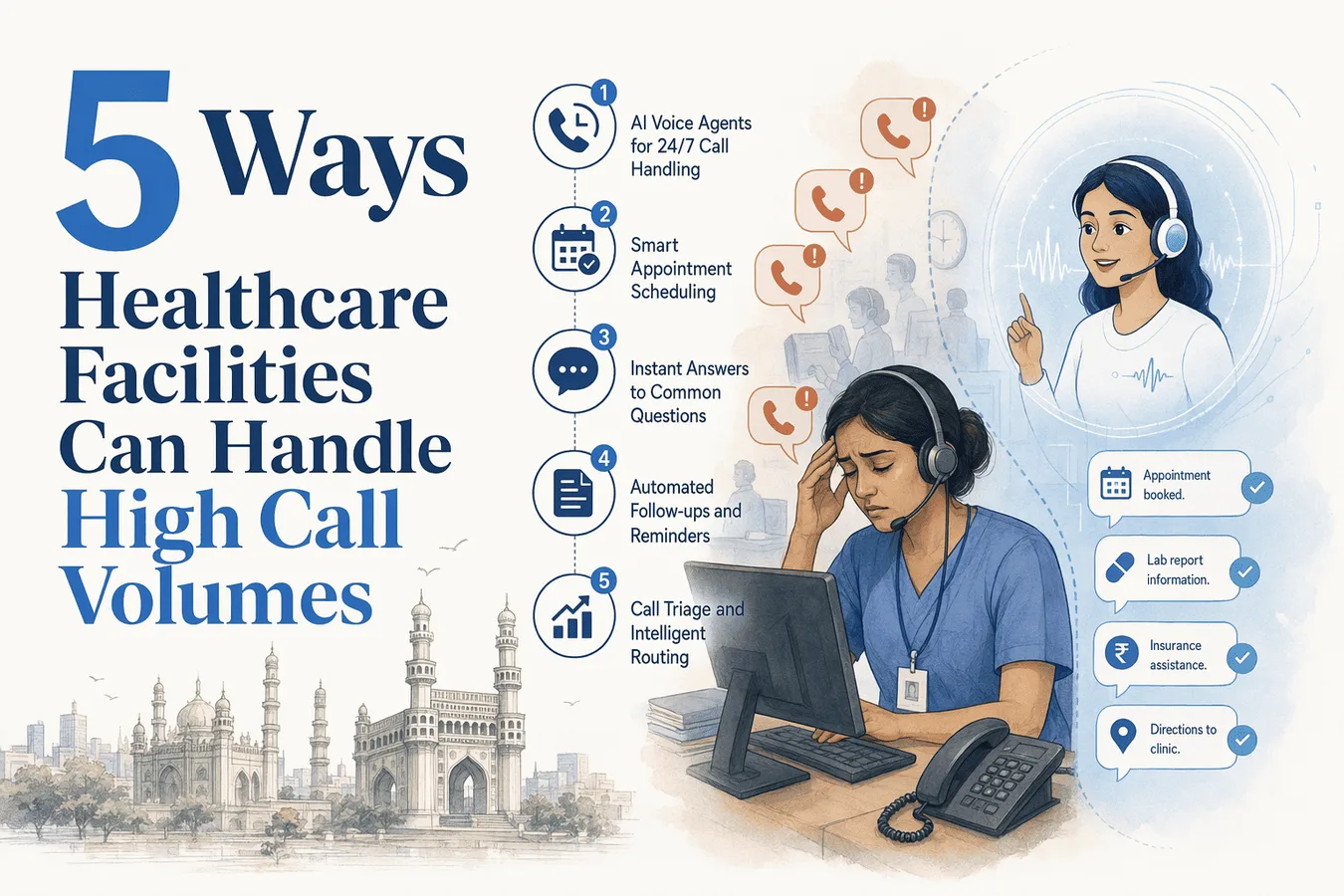
Healthcare facilities in Hyderabad face mounting pressure from high call volumes during peak hours, often leading to hold times exceeding five minutes and patient frustration. Deploying AI voice agents automates routine tasks while maintaining 24/7 patient access without expanding front-desk staff.
Key Takeaways
AI voice agents answer inbound calls 24/7, automating patient intake, appointment scheduling, and routine inquiries without adding headcount
Four-phase implementation workflow covers intake automation, scheduling integration, reminder management, and escalation protocols for complex cases
Regional language support for Telugu, Kannada, and Hindi addresses Hyderabad's linguistic diversity, though dialect accuracy requires vendor testing
Multi-channel appointment reminders (SMS, WhatsApp, voice) reduce no-show rates from 30-40% to under 10% within 60 days
Escalation thresholds ensure complex clinical cases and emergency calls route immediately to human staff while AI handles routine conversations
Why Healthcare Facilities Face Growing Call Volume Pressure
Healthcare facilities in Hyderabad handle high call volumes without hiring more staff by deploying AI voice agents that automate appointment scheduling, patient intake, and routine inquiries — deflecting repetitive conversations from human teams while maintaining 24/7 patient access. Platforms like EchoLeads, HuskyVoice AI, and Slotify Care provide conversational AI built for Indian healthcare workflows, handling hundreds of patient calls every week without expanding payroll.
Peak-Hour Bottlenecks and Patient Access Delays
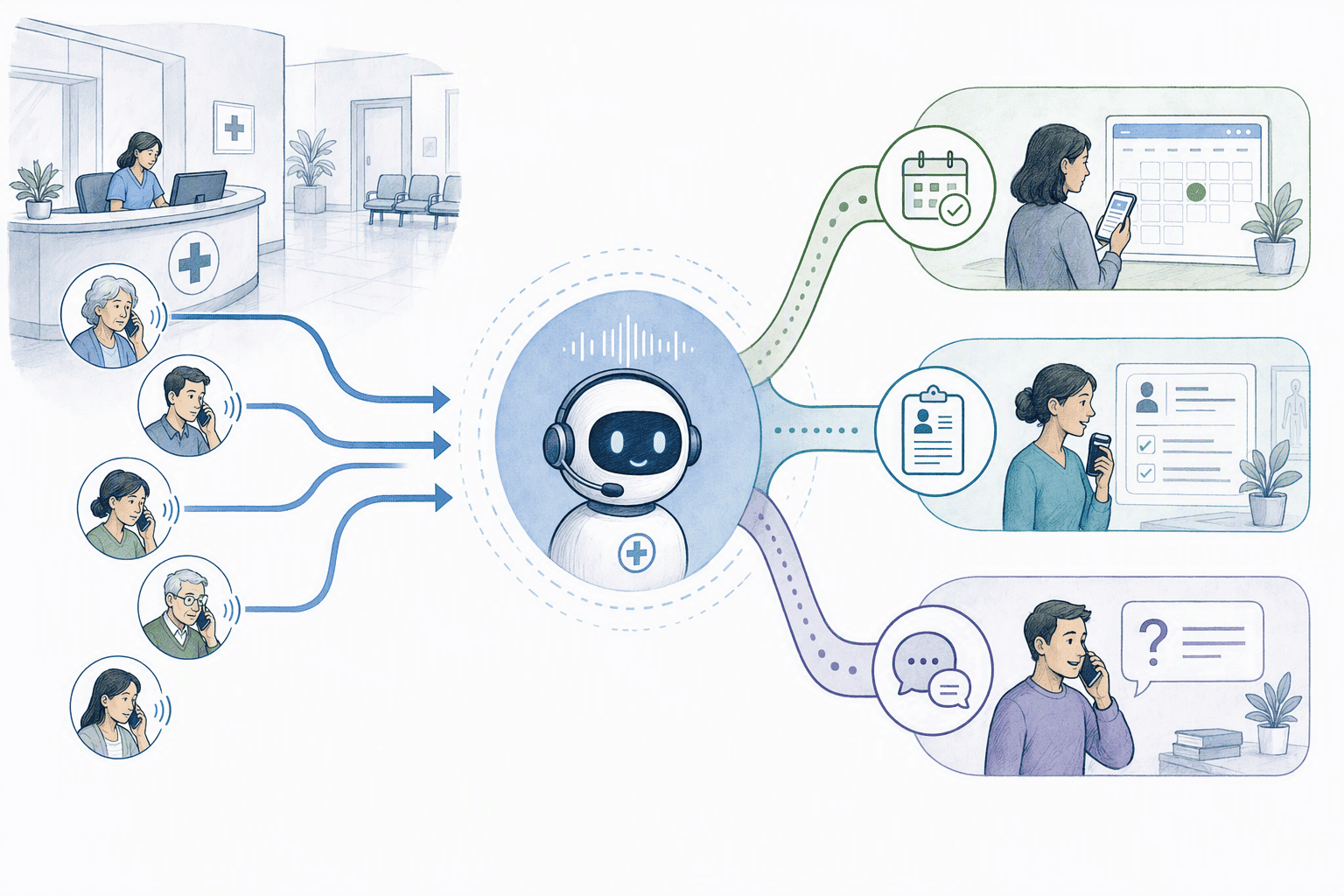
Specialty clinics in Hyderabad often experience hold times of 3-5 minutes during peak hours, as high call volumes can quickly overwhelm front desk teams and administrative staff. Multi-specialty hospitals managing hundreds of patient calls every week face scheduling delays, missed appointments, and reduced patient satisfaction. AI voice agents answer within 3 seconds, eliminating queue times for appointment bookings, prescription refill requests, and insurance verification.
After-Hours Call Overflow and Missed Appointments
Calls outside business hours typically route to voicemail or third-party answering services, contributing to no-show rates of 15-30% when reminder systems are absent. A clinic with 40 appointments per day and a 15% no-show rate loses ₹90,000 monthly at ₹500 per consultation. AI voice platforms operating 24/7 confirm bookings, send automated WhatsApp reminders at 24 hours and 2 hours before appointments, and offer rescheduling slots when patients reply CANCEL — converting 40% of cancellations to reschedules.
Staffing Constraints in Hyderabad's Healthcare Labor Market
Hiring additional front-desk staff in Hyderabad carries recurring salary costs, training overhead, and attrition risk. AI voice agents handle appointment scheduling, patient intake coordination, and insurance verification without per-seat licensing fees, enabling clinics to scale patient access without expanding headcount — addressing the staffing constraint that drives the original query.
Understanding the pressure points sets the stage for exploring how conversational AI technology addresses these challenges through automation.
How AI Voice Agents Work as a Staffing Alternative
What AI Voice Agents Do (and What They Don't)
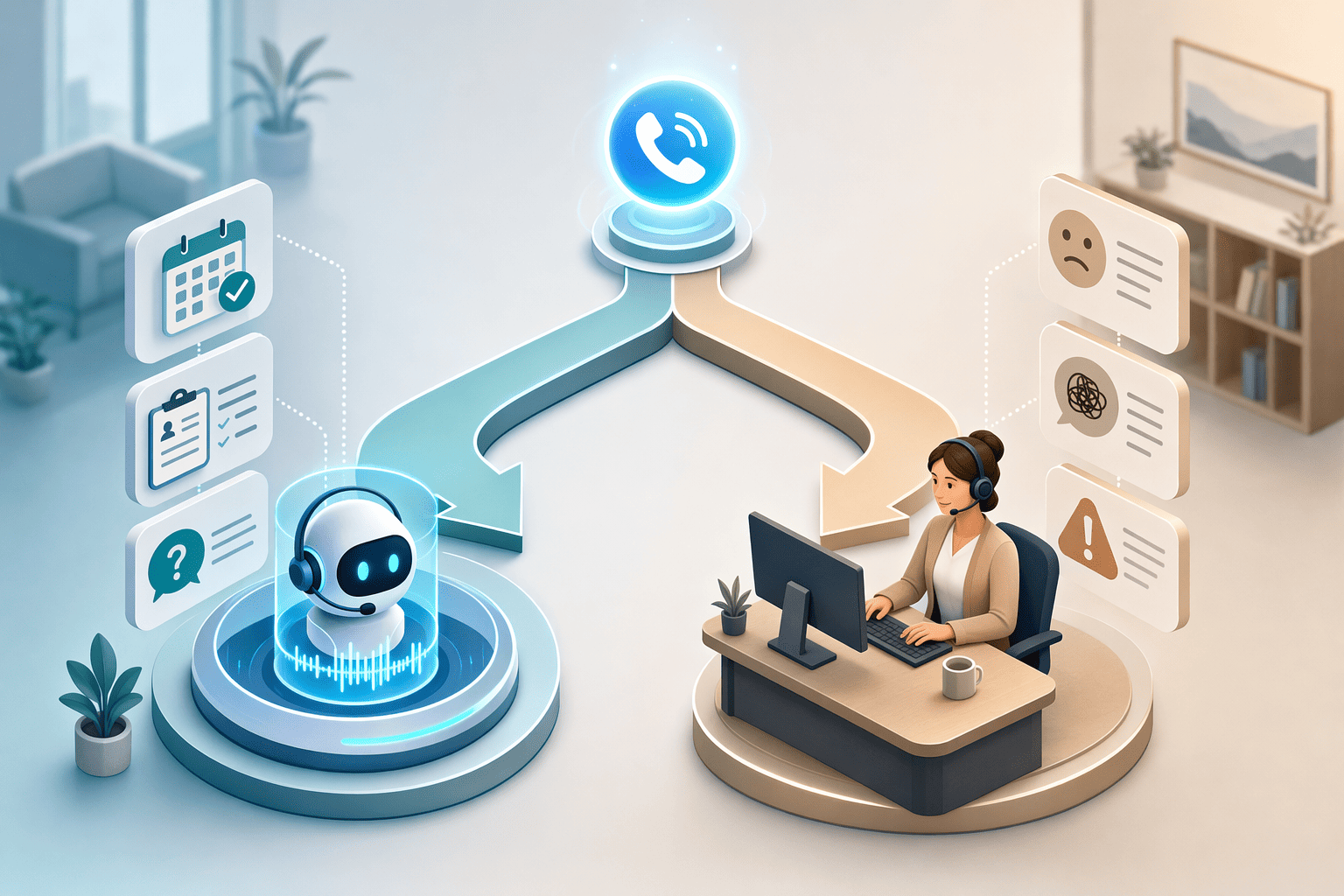
AI voice agents are conversational AI systems that answer inbound calls 24/7 without adding headcount. They handle routine inquiries, appointment booking, and information collection. Complex cases—emotionally charged conversations or multi-step sequences—escalate to human staff.
The Four-Step Call Handling Workflow
Call answering, AI picks up within seconds.
Intent clarification, The agent asks what the caller needs.
Information gathering, Collects patient details, symptoms, or appointment preferences.
Scheduling or escalation, Books the slot or transfers to a human for complex cases.
When AI Voice Agents Fit (and When They Don't)
AI voice agents suit high-volume routine tasks: intake, scheduling, reminders. They do not replace staff for nuanced clinical triage or patient disputes.
Platform | Use Case Fit | Pricing | Language Support |
|---|---|---|---|
Healthcare booking, multilingual follow-ups | Contact for pricing | 70+ languages | |
Expeed | Healthcare call centers, triage | Not publicly disclosed | English, regional languages |
ScienceSoft | Enterprise healthcare workflows | Custom quotes | English |
Answering Agent | After-hours answering service | Not publicly disclosed | English |
Ameridial | Managed contact center + AI for providers, payers, pharmacies | Contact for pricing | English |
With the foundational technology in place, facilities can begin implementation by automating the first touchpoint in the patient journey.
Phase 1: Automating Patient Intake and Information Gathering
Information Collection Workflows for Multi-Specialty Clinics
AI voice agents execute patient intake in a structured sequence that multi-specialty clinics and diagnostic centers can deploy within days. The workflow proceeds in five steps:
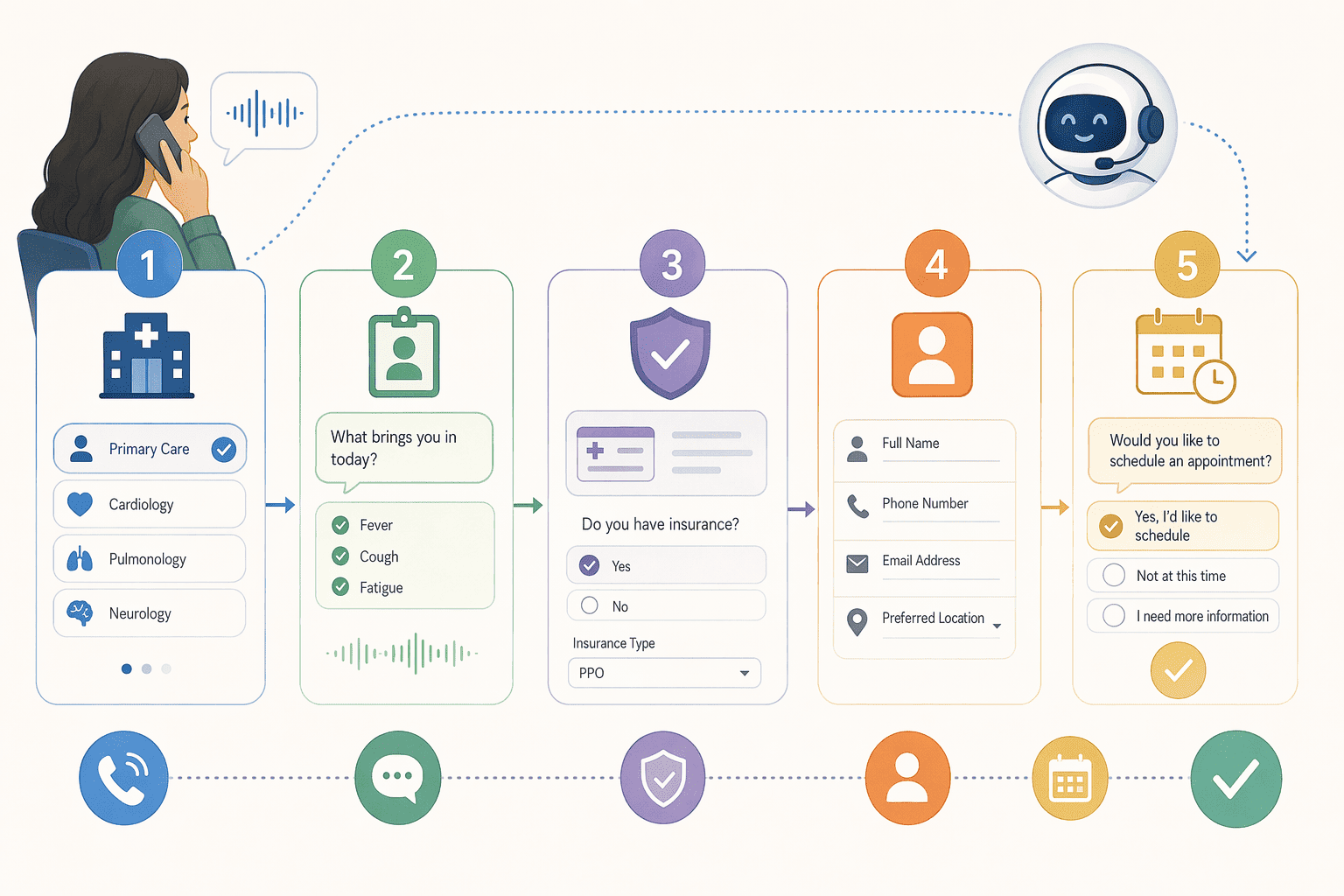
Caller greeting and intent capture, the system answers calls instantly in Hindi or English, identifies whether the caller is booking a new appointment, rescheduling, or requesting lab results.
Demographic data collection, the agent gathers name, date of birth, and contact number through natural conversation, validating responses in real time.
Reason for visit, the agent captures chief complaint, symptom onset, and preferred department (cardiology, orthopedics, diagnostics).
Insurance verification, the system confirms coverage details or notes self-pay status, flagging incomplete information for staff follow-up.
Preferred contact method, the agent confirms whether the patient prefers WhatsApp confirmations, SMS reminders, or email receipts.
Hyderabad's Apollo Clinics and CARE Hospitals, which handle 50 to 80 calls per day, deploy these intake workflows to maintain response speed during peak morning hours (9 to 11 AM) and post-lunch surges (2 to 4 PM).
Handling Incomplete or Ambiguous Information
When callers provide partial information, for example, "I need an appointment" without specifying department or symptoms, the AI initiates clarification loops by asking targeted follow-up questions: "Which doctor or department are you looking to see?" or "Can you describe your main concern?". The system is designed to escalate to human staff when conversation clarity falls below preset thresholds, preventing incomplete intake records from entering the EMR. Platforms like VoxPro Solutions route these escalations to 24×7 hospital call center agents who complete the intake manually, ensuring data accuracy without abandoning the caller.
CRM and EMR Integration for Smooth Documentation
Collected intake data flows directly into hospital management systems (HMS) via API, eliminating manual transcription. When a caller confirms an appointment slot, the AI updates the EMR with patient demographics, reason for visit, insurance status, and contact preferences, all synchronized within seconds. Administrative staff receive structured intake records rather than voicemails or handwritten notes, reducing clerical workload by an estimated 8 hours per week in a three-provider clinic. Integration with platforms like Epic, Oracle, and Athena enables real-time calendar conflict detection and automated WhatsApp or SMS confirmations, closing the intake loop without staff intervention.
Once intake workflows capture patient information reliably, the next phase connects that data to scheduling systems for real-time appointment booking.
Phase 2: Integrating with Scheduling Systems in Real Time
Calendar Integration Patterns for Indian Practice Management Systems
AI voice agents connect to scheduling systems through APIs, webhooks, or middleware to check availability and book appointments in real time. EchoLeads books appointments directly into Google Calendar, Outlook, or CRM-based schedulers, processing concurrent booking requests across phone, WhatsApp, and web chat with bi-directional CRM sync. India-specific platforms like Clinexora offer intelligent appointment scheduling with automated WhatsApp/SMS reminders and integrate natively with practice management workflows.
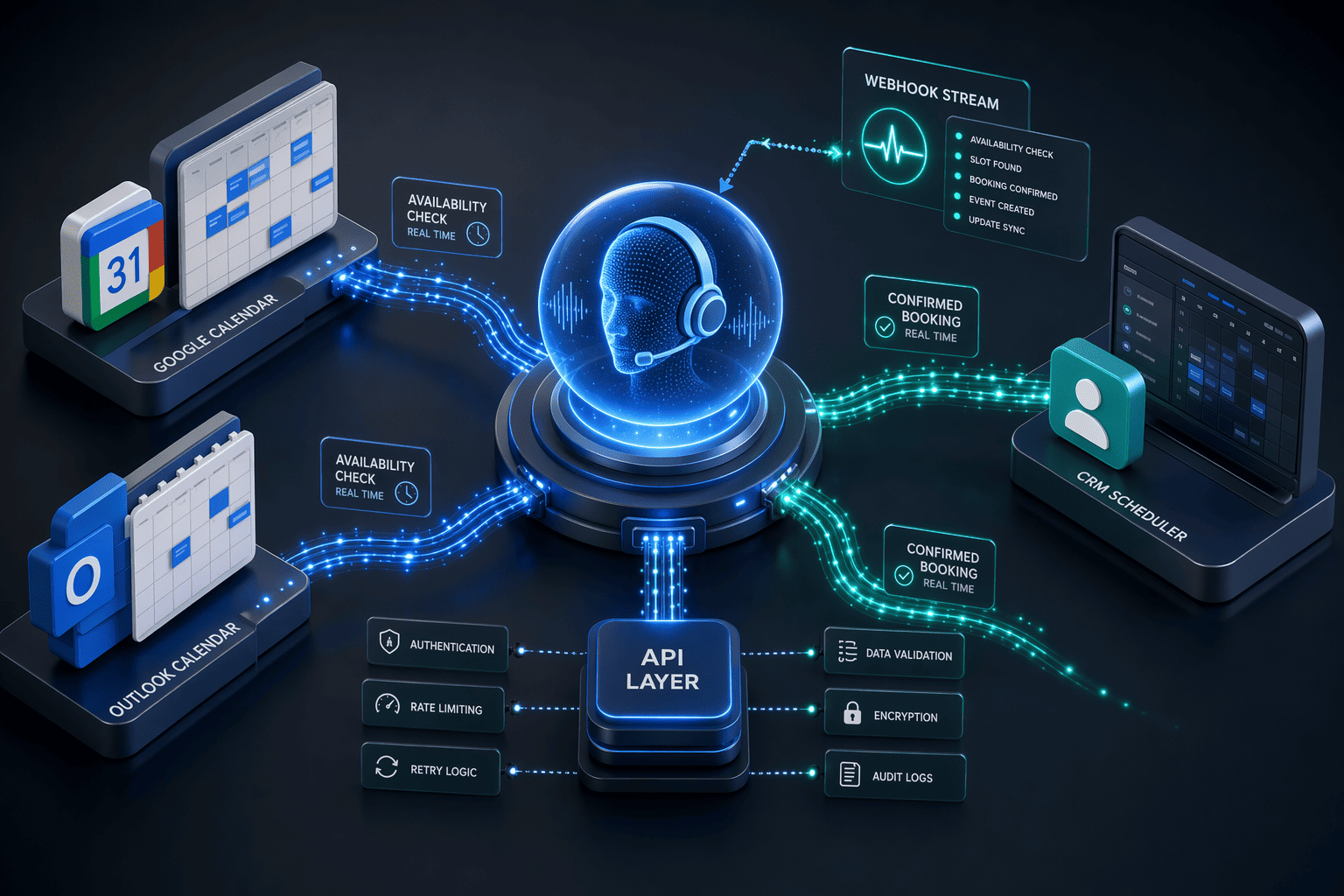
The integration workflow follows five steps:
Check provider availability in real time by querying the EMR or scheduling system's API.
Present available slots to the caller in natural language.
Confirm appointment details, provider name, date, time, reason for visit.
Write the booking to the EMR/scheduling system via API or webhook.
Send confirmation via the caller's preferred channel (SMS, WhatsApp, voice).
Handling Multi-Provider and Multi-Location Scheduling
Multi-specialty clinics require scheduling logic that navigates provider availability, location preferences, and appointment-type constraints. The AI checks each provider's calendar, filters slots by specialty (general medicine, dentistry, ophthalmology), and presents location-specific options when the practice operates across multiple sites. Round-robin routing distributes appointments fairly across a team, while specialty-based routing directs patients to the appropriate provider based on their stated need.
When to Escalate Scheduling Requests to Human Staff
AI voice agents escalate complex scheduling scenarios that exceed safe autonomy thresholds. Escalation triggers include multi-step sequences like specialist referrals requiring insurance pre-authorization, emotionally charged conversations where the caller is distressed, and non-standard appointment types (multi-provider consultations, surgical pre-ops) that demand human judgment. Simple practices can auto-book most appointments; multi-location hospital chains need tighter escalation rules to preserve clinical workflow integrity.
After appointments are booked, proactive communication through automated reminders becomes critical to reducing no-show rates.
Phase 3: Managing Appointment Confirmations and Reminders
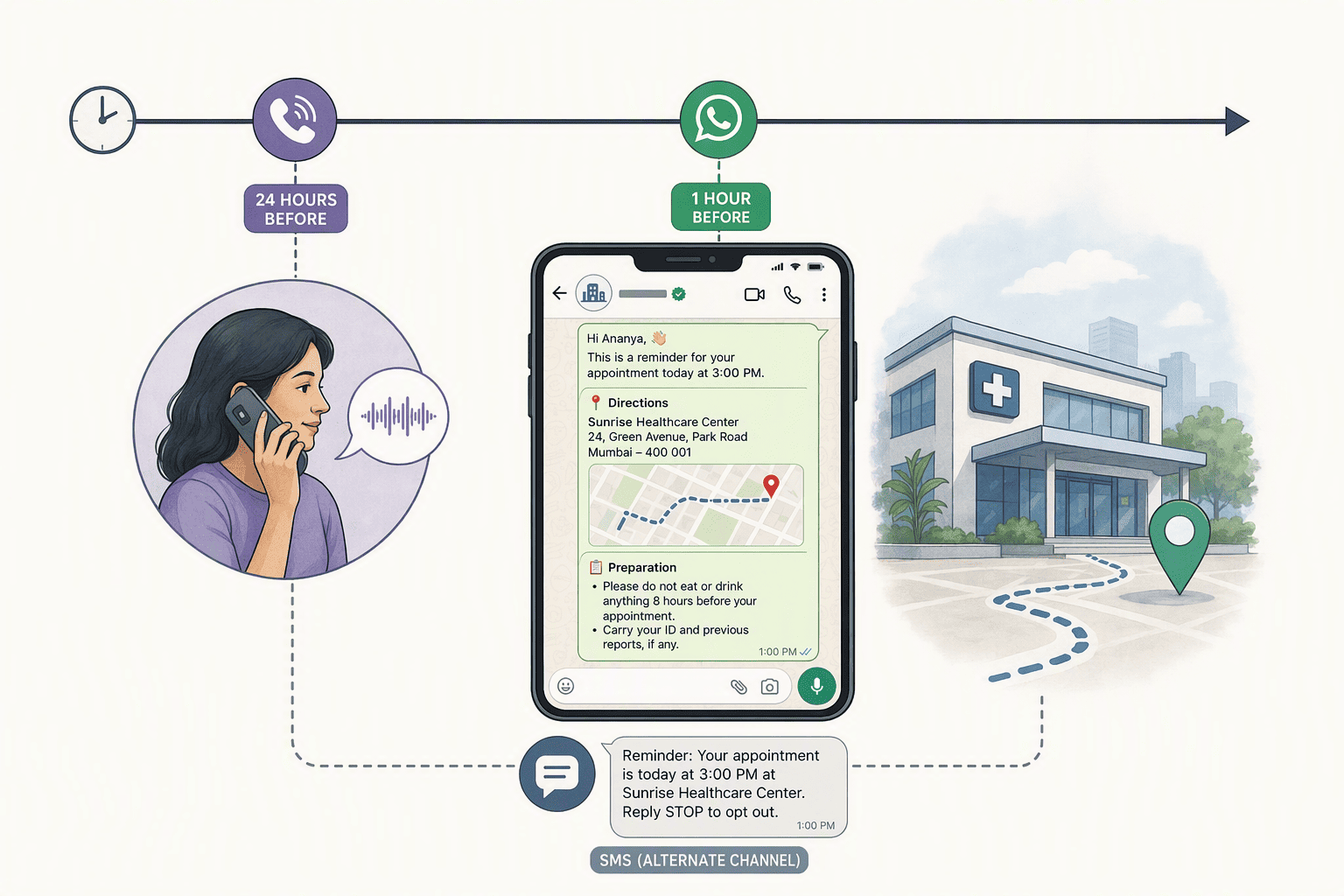
Multi-Channel Reminder Strategies (SMS, WhatsApp, Voice)
AI voice agents send appointment reminders via multiple channels based on patient preference and response history. RingEmAll's AI calls every patient 24 hours before the appointment, then sends WhatsApp directions one hour before the visit with location, doctor name, and prep instructions. SMS reminders work for patients who prefer text, but single-channel strategies fail in India due to low engagement rates, DND blocking, and lack of two-way interaction. Multi-channel approaches (SMS + WhatsApp + voice) perform better because they reach patients where they actually engage. EchoLeads processes concurrent booking requests across phone, WhatsApp, and web chat, allowing facilities to automate reminder timing and content across all channels from one platform. Pre-approved message templates are required for WhatsApp business use in India, and EchoLeads' AI WhatsApp sales agent handles template compliance automatically.
Handling Cancellations and Rescheduling via Automated Prompts
Patients can cancel or reschedule by replying to SMS or WhatsApp reminders, or by calling the AI voice agent. RingEmAll's AI finds a new slot from the live calendar, confirms with the patient, and updates the system instantly. This workflow releases the canceled slot for rebooking without staff intervention. Voice agents check real-time calendar availability during the call and offer alternative times within the patient's stated constraints. The system then syncs the change back to the hospital management system or practice management software, ensuring staff see only the outcomes rather than managing each rescheduling request manually.
No-Show Reduction Impact and Compliance Considerations
Indian clinics operating without automated appointment reminder systems experience no-show rates of 30 to 40 percent. Automated WhatsApp reminders at 24 hours and two hours before each appointment reduce no-show rates to under 10 percent within 60 days. However, Karnataka-specific call recording and consent workflows are not standardized in vendor documentation. Healthcare facilities must consult legal counsel for jurisdiction-specific requirements before deploying automated voice reminders, particularly for call recording consent (which varies state-by-state in India), WhatsApp template rules (pre-approved message templates required for business use), and SMS opt-in requirements (DND registry compliance under TRAI regulations).
Even the most sophisticated AI systems encounter situations requiring human judgment, making escalation protocols the final implementation phase.
Phase 4: Setting Up Escalation Protocols for Complex Cases
Defining Escalation Triggers Based on Facility Complexity
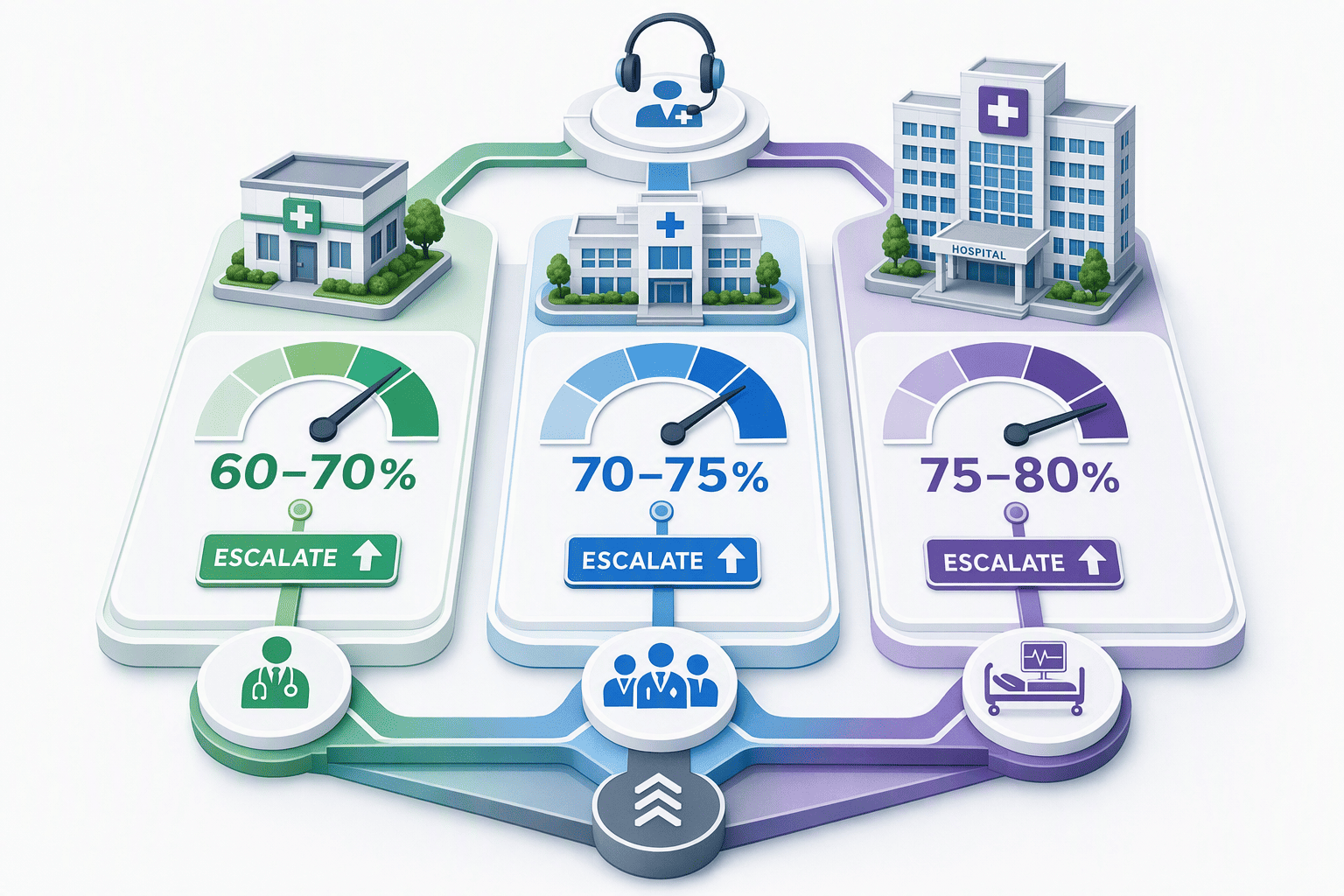
Escalation thresholds vary by facility complexity. Single-specialty practices with low clinical variability can set higher confidence thresholds (60-70%) and allow more clarification loops before escalating to human staff. Multi-specialty clinics handling diverse patient needs require moderate thresholds (70-75%), while hospital chains managing complex scheduling and diverse patient populations need tighter thresholds (75-80%) to escalate early and avoid clinical risk. Platforms like Cure Clock and Krrivo offer India-focused healthcare communication workflows that include escalation logic for patient interactions. Quandary's analysis of AI-powered healthcare contact centers emphasizes that modern conversational AI systems must escalate complex cases to live staff rather than forcing patients through static menu trees.
Technical Configuration for Conversation Clarity Thresholds
Configure clarity thresholds based on AI confidence scores and clarification loop limits. EchoLeads allows administrators to configure handoff triggers based on conversation keywords, sentiment scores, or explicit patient requests. Set escalation when confidence falls below facility-specific thresholds (e.g., 70% for multi-specialty clinics) or after three clarification loops without resolution. Fraud, identity theft, or account disputes trigger immediate escalation, ensuring high-risk conversations reach human staff instantly.
Human Handoff Workflows and Staff Training
When escalation occurs, the AI passes full conversation context, patient details, reason for call, clarification history, to the human agent in real time. EchoLeads retains conversation history and escalates transcripts and context to human representatives. Train staff to handle escalated calls efficiently by reviewing pre-call context summaries and focusing on resolution rather than re-qualifying the patient. A high-volume neurology practice case study demonstrates AI-driven call center operations can improve access and efficiency when escalation protocols are properly configured.
Beyond technical workflows, Hyderabad's multilingual patient population demands region-specific language capabilities that match local communication patterns.
Regional Language Support and Hyderabad-Specific Considerations
Language Support Requirements for Hyderabad Healthcare Facilities
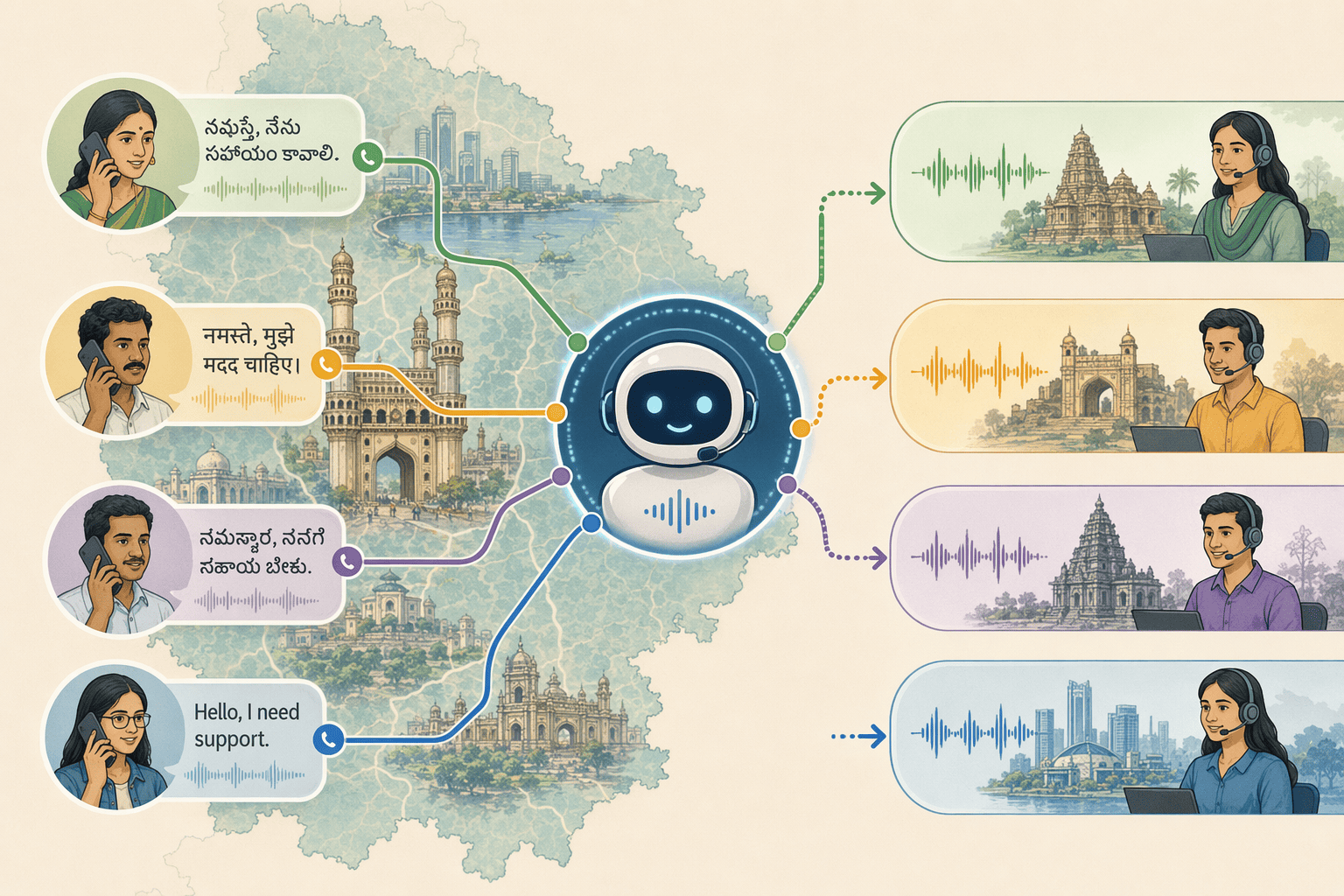
Hyderabad's linguistic landscape demands multi-language AI voice agents. Telugu is the majority language, followed by Kannada and Hindi among migrant populations, while English serves educated urban patients. AI voice agents help clinics automate appointment booking and call routing in these languages. Healthcare facilities that deploy English-only systems lose a significant portion of patients who prefer regional languages for medical conversations.
Evaluating Language Accuracy During Vendor Selection
EchoLeads supports 70+ languages including Telugu, Kannada, and Hindi, though Kannada-specific accuracy benchmarks are not published. During vendor evaluation, request demo calls in target dialects. Ask: (1) 'Can I hear a demo call in Telugu/Kannada/Hindi with a native speaker?', (2) 'What accuracy rate do you measure for regional language calls?', (3) 'How does the system handle code-switching (e.g., Telugu-English mix)?', (4) 'What happens when the caller's dialect differs from the trained model?', (5) 'Do you provide regional language accuracy reports post-deployment?' Test with real patient scenarios, appointment booking in Telugu, rescheduling in Hindi, follow-up questions in Kannada, to verify fluency before signing.
After-Hours Call Patterns and 24/7 Coverage Benefits
Hyderabad healthcare facilities see peak after-hours call volume during evening hours (6 to 9 PM) when working patients call, and weekend mornings. AI voice agents enable 24/7 patient communication, letting patients book, reschedule, or cancel appointments at any hour. This converts calls that would otherwise go to voicemail or third-party answering services. Multi-specialty clinics like Apollo, diagnostic centers like Vijaya Diagnostics, and single-specialty practices benefit from round-the-clock scheduling, ensuring no lead is lost due to closed front-desk hours.
Conclusion
AI voice agents excel at high-volume routine tasks, intake, scheduling, confirmations, with sub-second response times, but complex cases requiring clinical judgment or emotionally charged conversations still need human staff. Facilities should configure escalation thresholds based on their patient population complexity. Regional language support is critical for Hyderabad's linguistic diversity; platforms like EchoLeads support 32+ languages, yet healthcare facilities must test dialect accuracy during vendor evaluation rather than assume coverage based on language-name lists alone.
As AI voice agent natural language understanding improves, particularly for code-switching and regional dialects, and integration with India-specific EMR platforms deepens, the escalation rate for routine healthcare calls will continue declining. This evolution frees human staff to focus on the 10-15% of interactions that genuinely require clinical expertise or empathetic judgment.
Explore how EchoLeads's AI voice agents handle patient intake, scheduling, and multi-language support for Hyderabad healthcare facilities, see regional implementation examples and request a Telugu/Kannada demo call.
Frequently Asked Questions
How much does it cost to deploy an AI voice agent for a healthcare facility in Hyderabad?
Pricing models vary across vendors: per-call charges (₹5-15), per-minute rates (₹2-8), or monthly subscriptions (₹15,000-50,000). Compared to hiring additional front-desk staff in Hyderabad (₹18,000-25,000/month plus benefits), AI voice agents typically deliver cost savings after handling 200+ routine calls monthly.
Can AI voice agents handle emergency or urgent patient calls?
No. AI voice agents are designed exclusively for routine inquiries, appointment scheduling, and information collection, not emergency triage or urgent medical advice. Emergency calls must be configured to escalate immediately to human staff or route directly to emergency services to ensure patient safety and appropriate clinical response.
What happens when a patient speaks a regional language the AI doesn't support well?
When the AI detects low conversation clarity from unsupported dialects or code-switching, it escalates the call to a human staff member who can handle the language. EchoLeads supports 70+ languages including Telugu, Kannada, and Hindi, though facilities should request demo calls in target dialects during vendor evaluation.
Do healthcare facilities need legal approval to record patient calls with AI voice agents in Karnataka?
Karnataka-specific call recording and consent workflows are not standardized in vendor documentation. Organizations should consult legal counsel before deployment to ensure compliance with state regulations. GDPR/CCPA compliance implementation depth varies widely across vendors, requiring case-by-case legal review for healthcare call recording practices.
How long does it take to integrate an AI voice agent with existing clinic scheduling software?
Integration timelines depend on EMR complexity: API-based integrations typically complete in 1-2 weeks, while middleware or custom integrations require 4-6 weeks. EchoLeads connects to Google Calendar, Outlook, and CRM-based schedulers, processing concurrent bookings without double-scheduling through real-time availability checks.
Can AI voice agents reduce no-show rates even for patients who don't respond to SMS reminders?
Yes. Multi-channel reminder strategies combining SMS, WhatsApp, and voice calls reach patients who ignore SMS-only reminders. Automated WhatsApp reminders at 24 hours and two hours before appointments reduce no-show rates from 30-40% to under 10% within 60 days, addressing the limitations of SMS-only communication in India.
What metrics should healthcare facilities track to measure AI voice agent ROI?
Track five key metrics: (1) call answer rate within one second versus baseline hold times, (2) appointment booking conversion rate from calls, (3) no-show rate reduction post-deployment, (4) staff hours saved on phone intake tasks, and (5) after-hours call capture that would otherwise reach voicemail.