
6 Ways to Cut Unqualified Leads
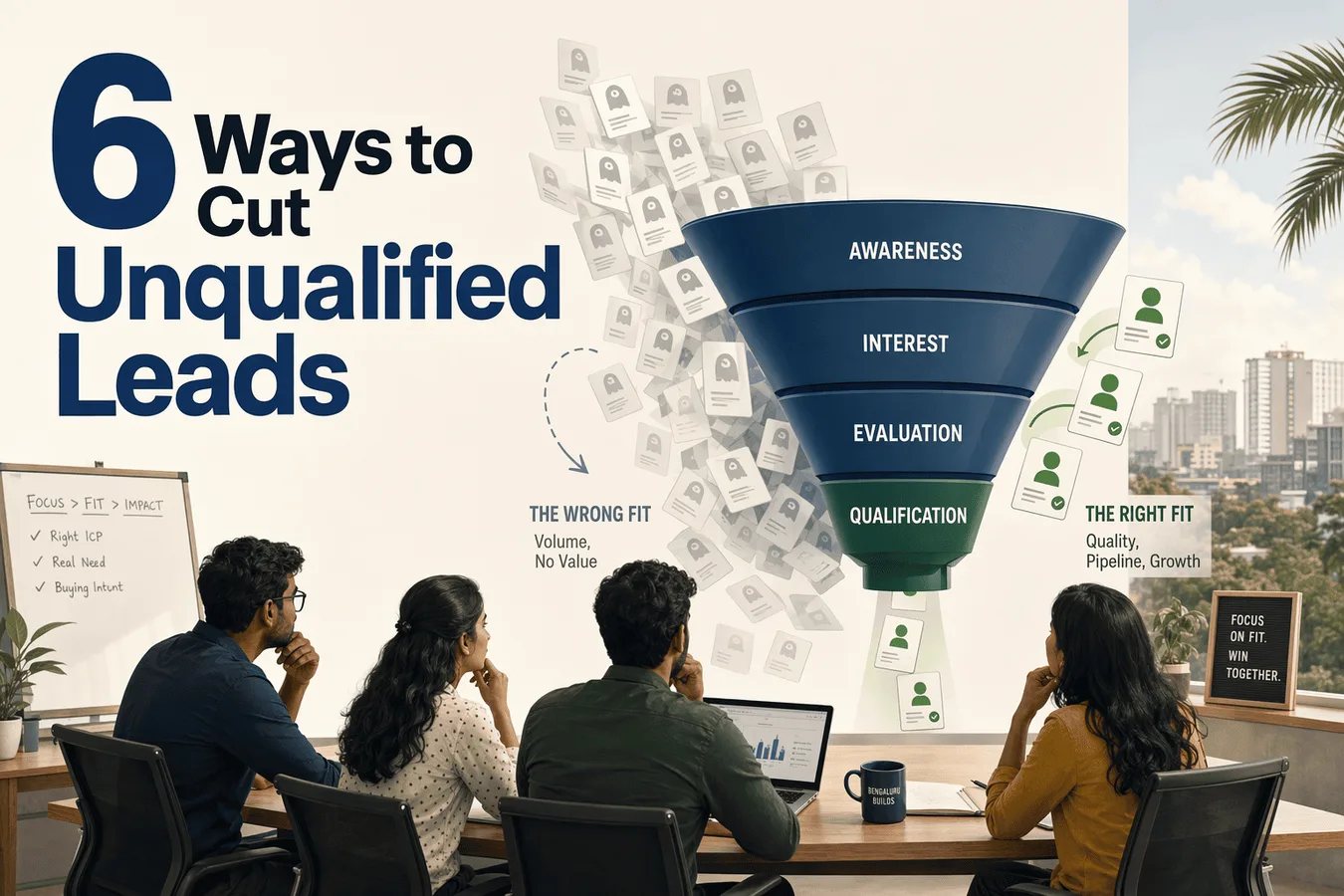
Sales teams lose productive hours chasing leads that will never convert. Manual qualification processes allow unqualified prospects to consume rep capacity, delaying revenue-generating conversations with high-intent buyers.
Key Takeaways
Sales teams waste 15–30 minutes per lead on manual qualification when they lack automated lead scoring and real-time intent signals
AI-driven qualification combines firmographic data, behavioral signals, and conversational analysis to filter leads before human handoff
Bengaluru SaaS companies choose between CRM-native platforms (Salesforce, HubSpot) and standalone automation tools (EchoLeads, LeadSquared) based on velocity and pricing models
Effective lead qualification frameworks use BANT or MEDDIC criteria to identify budget, authority, need, timeline, and competitive context
Common mistakes include treating engagement metrics as buying intent and failing to disqualify leads with negative signals like wrong company size or no budget authority
Why Sales Teams Waste Time on Unqualified Leads
Sales teams spend excessive time on unqualified leads because they lack automated lead scoring, receive volume-driven MQLs without intent signals, and inherit handoffs that require manual re-qualification from scratch. When marketing optimizes for MQL count instead of buying intent, sales inherits a pipeline where 25% of leads are clearly unqualified—throwing away 25% of sales payroll before the first meaningful conversation.

The Manual Qualification Bottleneck
Without automated lead scoring, reps manually research every contact before qualifying them—checking LinkedIn, scanning website activity, and cross-referencing firmographics. This manual process delays response to high-intent prospects who expect immediate engagement. Sales teams waste up to 50% of their time on unqualified prospects, hours that could close ready-to-buy deals. The research burden pushes first-contact timing from minutes to days, by which time competitors have already engaged the prospect.
Misaligned Marketing-Sales Handoff
Many marketing teams are measured on MQL volume, not revenue impact. This drives campaigns optimized for form fills, downloads, and webinar registrations—activities that signal curiosity, not buying intent. Sales then inherits thousands of contacts with no behavioral context: which pages they visited, how long they engaged, or whether their account shows research activity in the category. The handoff contains a name, a company, and a lead source—nothing that indicates readiness to buy. Reps re-qualify from scratch, calling contacts who downloaded a PDF but have no active buying needs.
The Hidden Cost of Chasing Dead Ends
The productivity drain compounds across the quarter. If 3,000 MQLs ship to sales but reps work only 900 of them, the remaining 2,100 sit untouched, eventually recycled into nurture lists nobody reads. 79% of marketing leads never convert into sales, primarily due to lack of proper nurturing and qualification. Every hour a rep spends on a dead-end call is an hour not spent closing qualified opportunities. For Bengaluru SaaS companies operating high-velocity sales models, delays like this can affect pipeline velocity and quota attainment. Platforms like EchoLeads address this by automating first-pass qualification across voice and messaging channels, routing only intent-qualified prospects to human reps, one approach among several AI-driven methods SaaS teams use to reclaim sales capacity.
Understanding the root cause is only the first step, AI-powered qualification tools offer a systematic solution to eliminate these bottlenecks before leads reach your sales team.
How AI Lead Qualification Filters Out Bad Leads Before Human Handoff
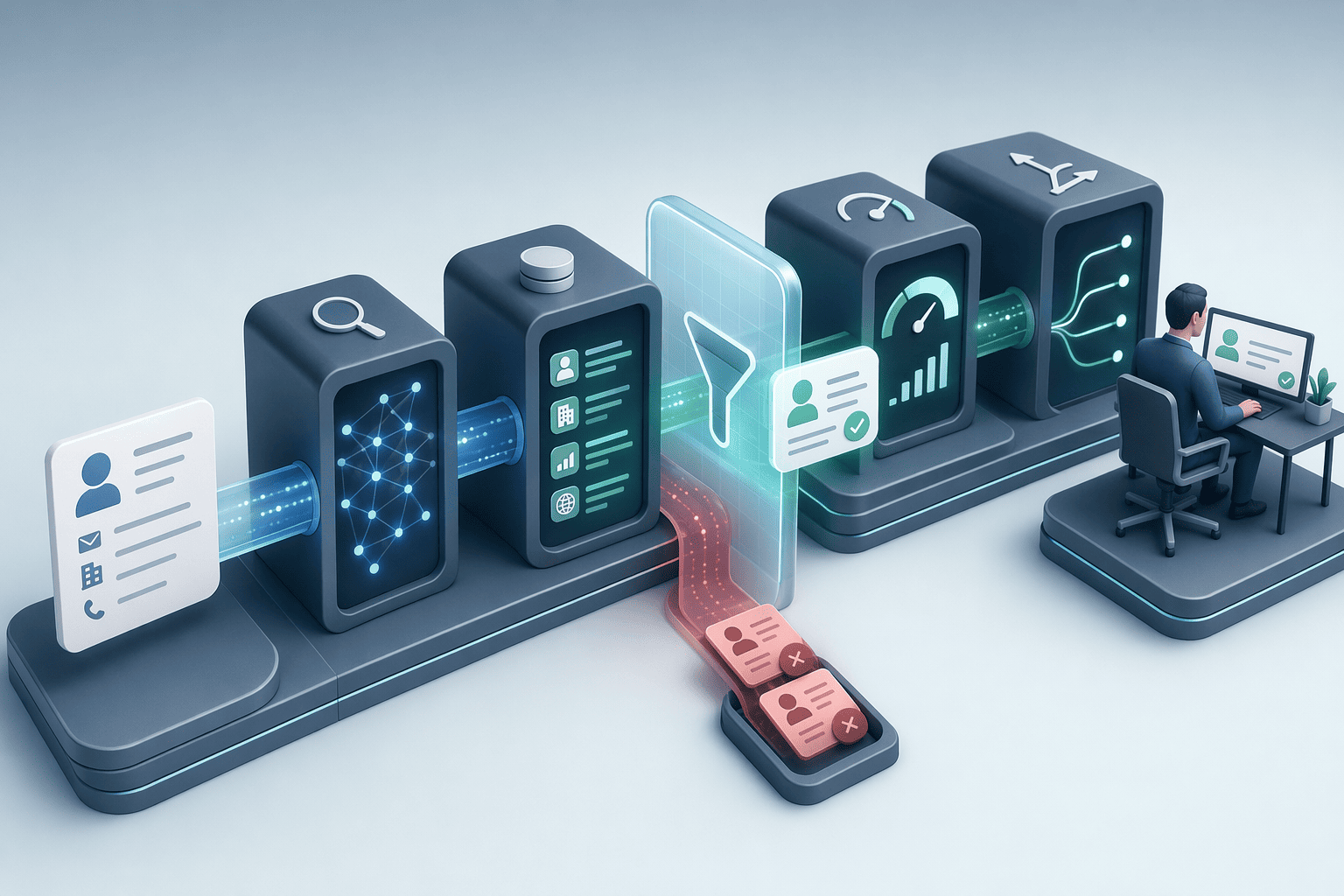
Manual lead qualification creates the bottleneck: sales reps spend 15 to 30 minutes per lead gathering firmographic data, researching tech stacks, and verifying contact details across disconnected tools. AI-powered qualification collapses that timeline to seconds by orchestrating research, enrichment, scoring, and routing autonomously, no human triggering required.
Automated Lead Scoring Models
Machine learning models score leads in real-time by combining three data layers:
Define your ideal customer profile. Establish firmographic criteria, industry, company size, revenue band, location, that match your best-fit accounts.
Assign point values to attributes. Weight demographic signals (job title, decision-making authority) and behavioral signals (website visits, email opens, content downloads) according to historical conversion data.
Set scoring thresholds. Calibrate pass/fail cutoffs that separate high-intent prospects (routed to sales) from low-fit leads (routed to nurture sequences).
Refine continuously. Feed closed-won and closed-lost outcomes back into the model to adjust weights and improve prediction accuracy over time.
EchoLeads' smart lead scoring AI evaluates tone, urgency, keyword usage, and sentiment during live calls, translating conversational signals into actionable qualification scores without manual tagging.
Intent Signal Integration
AI platforms ingest third-party intent data to identify buying-ready contacts before your competitors do. Automated systems pull signals from website activity (pricing-page visits, feature comparisons), content engagement (whitepaper downloads, webinar attendance), and technology-stack changes (new martech deployments, software migrations) across publisher networks and vendor ecosystems. When a prospect's cumulative intent score crosses a preset threshold, the platform escalates the lead to human follow-up immediately, capturing interest while it's fresh.
Disqualification Workflows
Automated rules route low-score leads away from human pipelines, preserving rep capacity for high-intent prospects. Disqualification triggers include ICP mismatches (company size below minimum, wrong industry, unsupported geography), negative behavioral signals (unsubscribed from emails, no engagement in 90 days), and missing buying signals (no budget authority, timeline beyond twelve months). Instead of cluttering sales queues, these leads flow into drip nurture sequences, re-engagement campaigns that surface them again only when intent signals reappear.
With the technical foundation established, Bengaluru SaaS teams must evaluate which automation platform aligns with their sales motion and budget constraints.
Comparing AI Sales Automation Tools for Bengaluru SaaS Teams
Platform Overview and Positioning
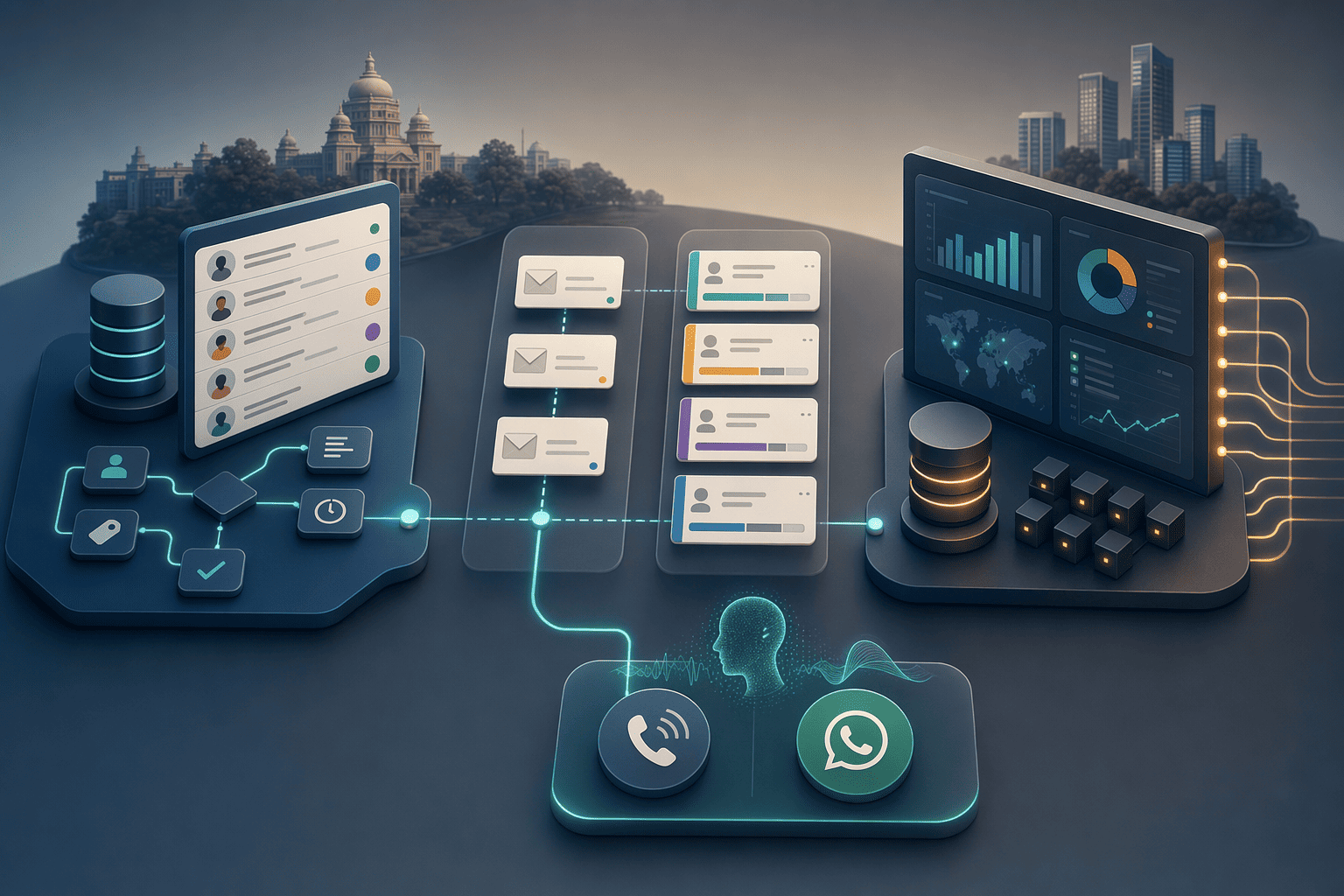
Bengaluru SaaS companies face a crowded sales automation landscape, each platform positions itself differently. LeadSquared and Zoho CRM anchor the CRM-native camp, embedding lead scoring and workflow automation directly into their contact-management engines. Freshsales and HubSpot Sales Hub straddle the middle, offering strong email sequences and pipeline visibility while keeping pricing accessible for small to mid-market teams. Salesforce Sales Cloud serves enterprise buyers who need deep customization, multi-cloud orchestration, and a sprawling ecosystem of pre-built connectors. EchoLeads breaks the mold as a voice-AI-first platform: it automates qualification via conversational phone and WhatsApp bots, scoring leads in real time and routing high-intent prospects to human reps within seconds. Where traditional CRMs store and score, EchoLeads converses and qualifies, capturing intent signals that form-fill data misses entirely.
Feature and Integration Comparison
Platform | Starting Price | Core Lead Qualification Features | CRM Capabilities | Top Integrations | Free Trial |
|---|---|---|---|---|---|
EchoLeads | $25/month flat rate | Conversational voice AI; real-time ICP scoring; multi-channel (phone, WhatsApp, Instagram) qualification | Bi-directional sync with Salesforce, HubSpot, Pipedrive, Zoho; auto-updates qualification scores | Salesforce, HubSpot, Pipedrive, Zoho (bi-directional) | Available |
LeadSquared | ₹25,000/month (~$300) | Automated lead capture from web forms, ads; BANT-style scoring rules; workflow triggers based on engagement | Native CRM with pipeline stages, activity tracking, email sequences | Google Ads, Facebook Ads, Zapier, WhatsApp Business API | 14 days |
Freshsales | ₹1,199/user/month (~$15) | AI-powered lead scoring (Freddy AI); email open/click tracking; auto-assignment rules | Contact/deal management, visual pipeline, built-in phone/email | Freshworks suite, Mailchimp, Segment, Zapier | 21 days |
Zoho CRM | ₹800/user/month (~$10) | Blueprint automation; Zia AI for lead prediction; web-form scoring | Full CRM: contacts, deals, tasks, custom modules | Zoho suite (Books, Campaigns, Desk), Google Workspace, Microsoft 365 | 15 days |
HubSpot Sales Hub | Free tier; ₹3,600/month (~$45) Starter | Email tracking, meeting scheduler, basic lead scoring in paid tiers | Native Marketing Hub integration; deal pipelines; task automation | Gmail, Outlook, Slack, Salesforce (via connector), 1,000+ app marketplace | Free tier available |
Salesforce Sales Cloud | ₹2,000/user/month (~$25) Essentials | Einstein Lead Scoring; workflow rules; approval processes | Industry-leading CRM: accounts, opportunities, forecasting, custom objects | MuleSoft, Tableau, Slack, 3,000+ AppExchange apps | 30 days (Essentials) |
The table reveals a tier split: EchoLeads offers flat-rate simplicity and conversational AI qualification at the lowest entry price, making it accessible for bootstrapped SaaS teams who need immediate speed-to-lead. LeadSquared and Salesforce anchor the high end, enterprise pricing reflects deep workflow customization and multi-cloud orchestration. Freshsales and Zoho deliver mid-tier balance: strong scoring engines (Freddy AI, Zia AI) paired with native CRM pipelines, ideal for teams that want unified visibility without per-seat costs spiraling. HubSpot's free tier democratizes basic tracking, but advanced lead scoring and automation require paid plans. Integration breadth favors Salesforce (3,000+ apps) and HubSpot (1,000+ marketplace), while EchoLeads' bi-directional CRM sync ensures qualification data flows back into existing systems without manual logging.
Best-Fit Scenarios by Sales Model
High-velocity SaaS (PLG motion, rapid trial→paid conversion): EchoLeads wins when speed and conversational context drive qualification, voice bots capture intent signals (budget, timeline, pain) during the initial call, auto-booking demos without human handoff. The flat-rate model absorbs unlimited lead volumes, critical for product-led teams scaling trial sign-ups. Enterprise SaaS (complex buying committees, multi-touch cycles): Salesforce Sales Cloud and LeadSquared dominate here. Salesforce's custom objects and approval workflows mirror intricate procurement processes, while LeadSquared's BANT scoring aligns with enterprise evaluation criteria. Both platforms support territory-based routing and forecast modeling key for seven-figure deals. Product-led growth (self-serve adoption, usage-based expansion): HubSpot Sales Hub and Freshsales strike the best balance, HubSpot's free tier lowers adoption friction for engineering-first teams, and its Marketing Hub integration tracks user behavior pre-trial. Freshsales' Freddy AI predicts expansion likelihood based on product usage patterns, surfacing upsell triggers automatically. Zoho CRM fits budget-conscious startups needing full CRM functionality without enterprise sticker shock, though its lead scoring requires more manual rule-building than Freddy or Zia.
For Bengaluru-based SaaS companies navigating regional compliance and multilingual qualification needs, EchoLeads' regional deployment supports local WhatsApp number provisioning and Hindi/Kannada conversational flows, critical when targeting domestic SMBs alongside international enterprise buyers. The decision ultimately hinges on sales motion: conversational velocity favors voice AI; workflow complexity favors CRM-native engines; budget constraints favor tiered freemium plays.
Selecting the right tool is half the battle, building a repeatable qualification framework ensures your team applies consistent criteria across every lead.
Building a Lead Qualification Framework for SaaS Sales Teams
Defining Your ICP and Qualification Criteria
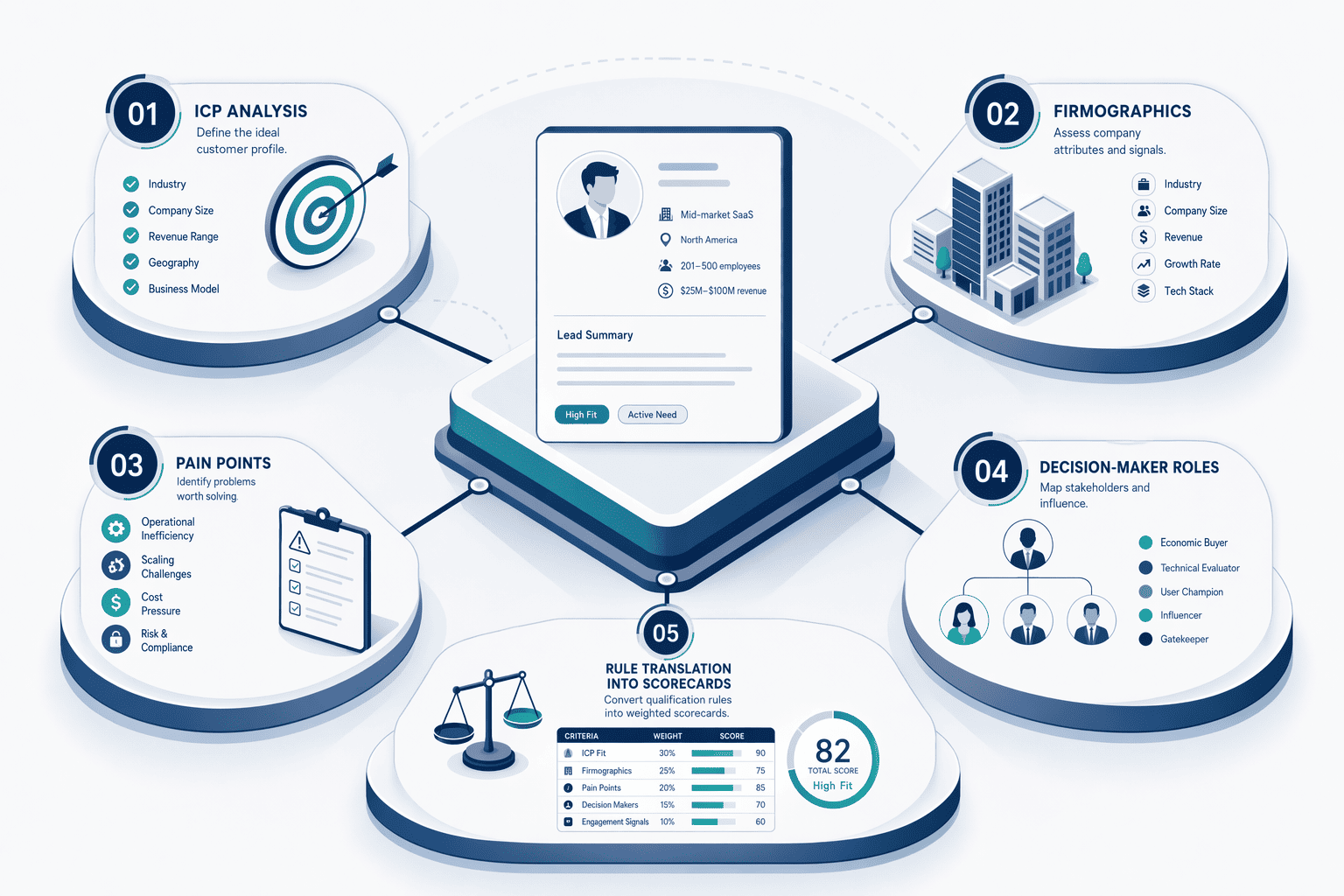
Lead qualification helps you determine which leads are worth pursuing so your team closes more deals rather than chasing prospects who never convert. Start by documenting your ideal customer profile (ICP) attributes in five steps: (1) analyze your best customers by revenue and retention; (2) identify shared firmographics, industry, company size, growth stage; (3) map common pain points and buying triggers; (4) define decision-maker roles and approval workflows; (5) translate each attribute into scorable yes/no or multi-point criteria.
For tech and SaaS buyers, Callbox recommends eight key qualification questions: What problem are you trying to solve? What's your current solution and why change now? Who else is involved in the decision? What's your budget range? What's your timeline for implementation? What are your success metrics? How do you evaluate vendors? What concerns do you have about switching? These questions identify pain points and urgency, clarify decision-making authority, and align budgets and timelines with your solution.
Setting Score Thresholds and Routing Rules
Automated lead qualification uses artificial intelligence to assess leads in real-time based on predetermined criteria and behavioral signals. Once your ICP is codified, assign point values to each criterion, for example, decision-maker role = 25 points, budget confirmed = 20 points, timeline under 90 days = 15 points, current pain acute = 15 points. Set three thresholds: 80+ points = sales-qualified lead (SQL) routed immediately to sales; 50 to 79 points = marketing-qualified lead (MQL) entered into nurture sequences; <50 points = disqualified or long-term drip. Organizations adopting automated qualification systems report administrative cost reductions ranging from 30-50%.
EchoLeads automates question-asking and scoring via conversational intelligence, evaluating tone, urgency, keyword usage, and sentiment during live inbound calls. The platform applies handoff triggers based on conversation keywords, sentiment scores, or explicit prospect requests, routing high-scoring leads to human reps while nurturing warm prospects automatically.
Iterating Based on Conversion Data
Track which scored leads convert to closed-won deals every quarter. Compare conversion rates across score bands: if your 50 to 79 MQL band converts at 8% but 80+ SQLs convert at only 12%, your thresholds may be too permissive, tighten the SQL floor to 85 points. Similarly, if a criterion (e.g., industry vertical) shows no correlation with win rate, reduce its weight or remove it. Companies implementing immediate lead response systems see conversion rate improvements, with some reporting increases of up to 80% when leads receive rapid follow-up. Adjust criteria quarterly based on closed-won data to keep your framework aligned with real buying behavior.
Even with a solid framework in place, common execution errors undermine qualification accuracy and allow bad leads to slip through.
Common Lead Qualification Mistakes SaaS Teams Make
Scoring on Engagement Instead of Intent
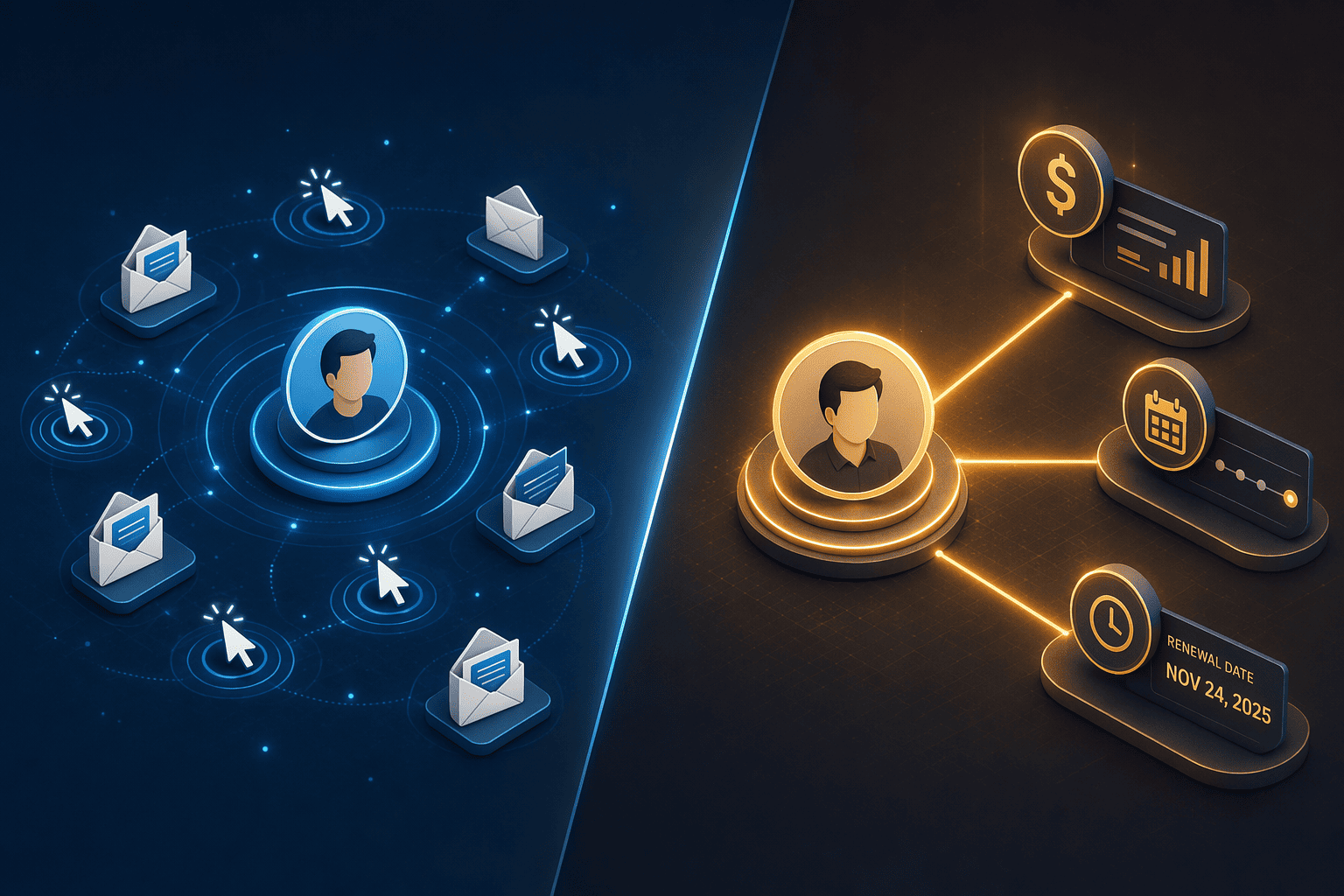
Mistake: Treating high email open rates or website visits as buying intent. Engagement signals, opens, clicks, demo video views, measure attention, not purchase readiness. A prospect who downloads three white papers may be researching for a future budget cycle, not evaluating vendors this quarter. Lead scoring assigns quantitative values to specific criteria, activities, or data points that indicate a lead's sales-readiness. When teams conflate engagement with intent, calendars fill with early-stage contacts who lack budget or authority.
Corrective action: Add intent signals to your scoring model, requested pricing, asked about implementation timelines, mentioned a competitive renewal date. EchoLeads' smart lead scoring AI evaluates tone, urgency, keyword usage, and sentiment during live calls, distinguishing prospects who are exploring from those ready to decide. Separate engagement scores from buying-intent scores in your CRM; route high-intent leads immediately, nurture high-engagement contacts for future cycles.
Ignoring Negative Qualification Signals
Mistake: Failing to disqualify leads with red flags, wrong company size, no budget, competitive employment, misaligned use case. Teams build scoring models that add points for positive signals but never subtract for negatives. A prospect at a 10-person startup pursuing an enterprise-tier product still scores high if they opened five emails and attended a webinar. Sales reps waste cycles on conversations that can never close.
Corrective action: Build disqualification rules into your scoring logic. Explicit lead scoring is based on data you've received from the lead directly; demographic and firmographic data fall under this category. Define thresholds for company size, industry fit, and revenue range; auto-disqualify when a prospect falls outside your ICP. EchoLeads can detect triggers such as fraud accusations, identity verification failures, and emotionally charged conversations, escalating when complexity or sentiment exceeds safe autonomy thresholds. Apply the same principle to qualification: when a prospect signals they're outside your target profile, route them to nurture or disqualify outright.
Static Scoring Models That Never Update
Mistake: Setting scoring rules once and never revisiting them as ICP and market conditions change. Job titles shift, decision makers leave, and entire domains change. A model built in Q1 2024 may still prioritize Director-level contacts when your closed-won data now shows VP-level buyers drive faster cycles. Without quarterly audits, scoring drifts out of alignment with reality.
Corrective action: Run quarterly scoring audits. Compare your top-scoring leads' conversion rates against bottom-quartile scores; if conversion spreads are narrow, recalibrate your criteria. Review closed-won records for patterns, which firmographic attributes, which behaviors, which engagement sequences correlate with deals. Update your model to reflect those patterns. Implicit lead scoring involves paying attention to a lead's behavior, including behavioral scoring, active, and passive buying behavior. As buyer behavior evolves, so must your scoring logic.
Conclusion
CRM-native tools like Salesforce and HubSpot offer deep customization and enterprise integrations but require longer setup and higher pricing, while standalone automation platforms such as EchoLeads and LeadSquared deliver faster deployment and voice AI capabilities suited to high-velocity SaaS sales models. Free-tier tools provide basic lead scoring for small teams testing qualification workflows; paid platforms add intent signal integrations, negative qualification rules, and CRM bi-directional sync needed for scale.
By 2027, AI lead qualification will shift from reactive scoring, analyzing past behavior, to predictive intent modeling. Platforms that combine third-party intent data, conversational AI, and closed-loop feedback from CRM will dominate, as manual qualification becomes economically unviable for SaaS sales teams operating at scale.
Start by documenting your current ICP and qualification criteria this week, then explore EchoLeads's voice AI demo to see how conversational qualification automations handle inbound leads in real-time.
Frequently Asked Questions
What is the difference between MQL and SQL in lead qualification?
An MQL (marketing qualified lead) meets engagement criteria like content downloads or webinar attendance, while an SQL (sales qualified lead) demonstrates buying intent and fits sales' firmographic requirements. Automation tools use scoring thresholds to determine when an MQL transitions to SQL status for handoff.
How does AI lead scoring work in practice?
AI scoring models analyze firmographic data (company size, industry), behavioral signals (website activity, content downloads), and third-party intent data to assign real-time numerical scores. Machine learning combines these three layers to prioritize leads most likely to convert, automating what previously required manual research.
What lead qualification questions should SaaS sales teams ask?
Callbox recommends eight key questions for tech buyers: What problem are you solving? What's your current solution and why change now? Additional questions cover budget, timeline, decision-maker access, competitive evaluation, and implementation readiness, mapping to BANT or MEDDIC frameworks that conversational AI can automate.
Why do sales teams ignore marketing-qualified leads?
Sales teams perceive MQLs as low-quality when they're scored on engagement metrics rather than buying intent or fit. Volume-driven MQL targets create noise that buries genuinely qualified leads, eroding trust between sales and marketing and causing reps to skip follow-up entirely.
How often should we update our lead scoring model?
Review scoring criteria quarterly based on closed-won data to identify which scored leads actually converted. ICP shifts, new target verticals, product changes, market conditions, require model updates to maintain accuracy. High-velocity SaaS teams iterate faster when trial-to-paid conversion patterns change.
Can lead qualification be fully automated or does it require human review?
Initial scoring and routing can be fully automated using AI models and rule-based workflows. However, high-score SQLs typically receive human review before sales handoff to validate fit and personalize outreach, a hybrid approach balances speed with accuracy for final qualification decisions.
What are negative qualification signals and why do they matter?
Negative signals, wrong company size, no budget authority, competitive employment, geographic mismatch, disqualify leads regardless of engagement score. Failing to capture these attributes wastes rep time on prospects that will never convert, creating hidden revenue risk when teams build scoring models that only add points for positive signals.