
4 Best Voice AI for Appointment Calls
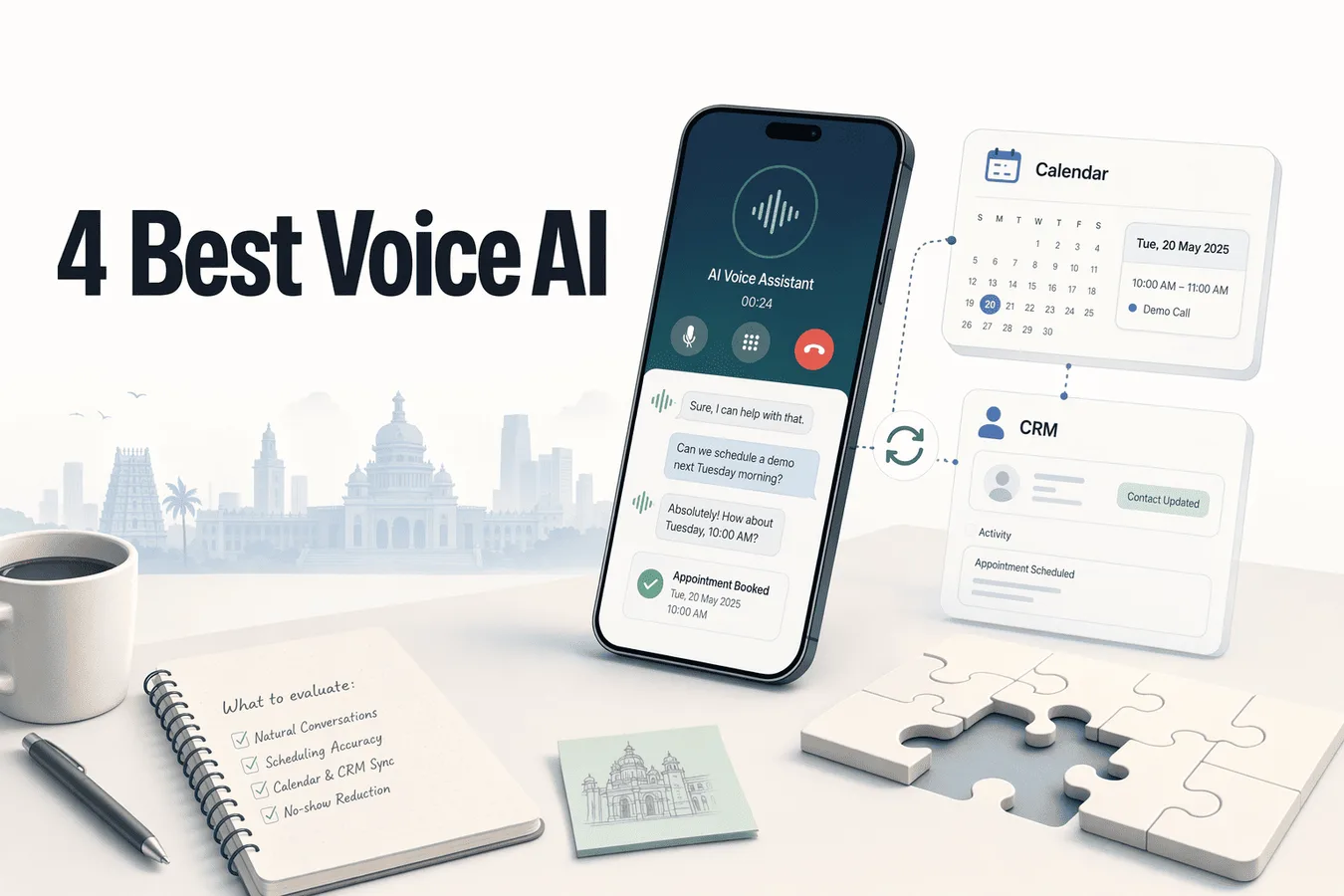
AI voice appointment scheduling tools automate booking workflows with natural-sounding phone calls that handle requests, sync calendars, and confirm appointments without human intervention.
Indian SaaS teams need platforms that integrate with CRMs, support multilingual conversations including Kannada and Hindi, and comply with local call recording regulations.
Key Takeaways
Conversational AI uses natural language processing to handle dynamic appointment requests with sub-second latency, unlike menu-driven IVR systems that follow rigid scripts
Pricing models include usage-based (per-minute or per-call), flat-rate monthly, and per-seat tiers—choose based on call volume patterns and integration complexity
No platform publishes Kannada-specific accuracy benchmarks; verify multilingual performance through live demos before committing
CRM integration requires bidirectional sync that pulls lead context and pushes qualification scores, conversation transcripts, and booking data back into Zoho, HubSpot, or Salesforce
TCPA compliance demands prior express written consent for automated calls, and Karnataka requires two-party consent for call recording
What Makes a Voice AI Appointment Scheduler Sound Natural?
Several platforms automate appointment scheduling with natural-sounding voice calls, including EchoLeads, Goodcall, FrontivaAI, and ArcasVoice. What sets them apart is whether they use conversational AI (context-aware, adaptive dialogue) or rigid IVR menus. 'Natural' means the system understands intent in real time, remembers context across exchanges, and escalates smoothly to human agents when needed.
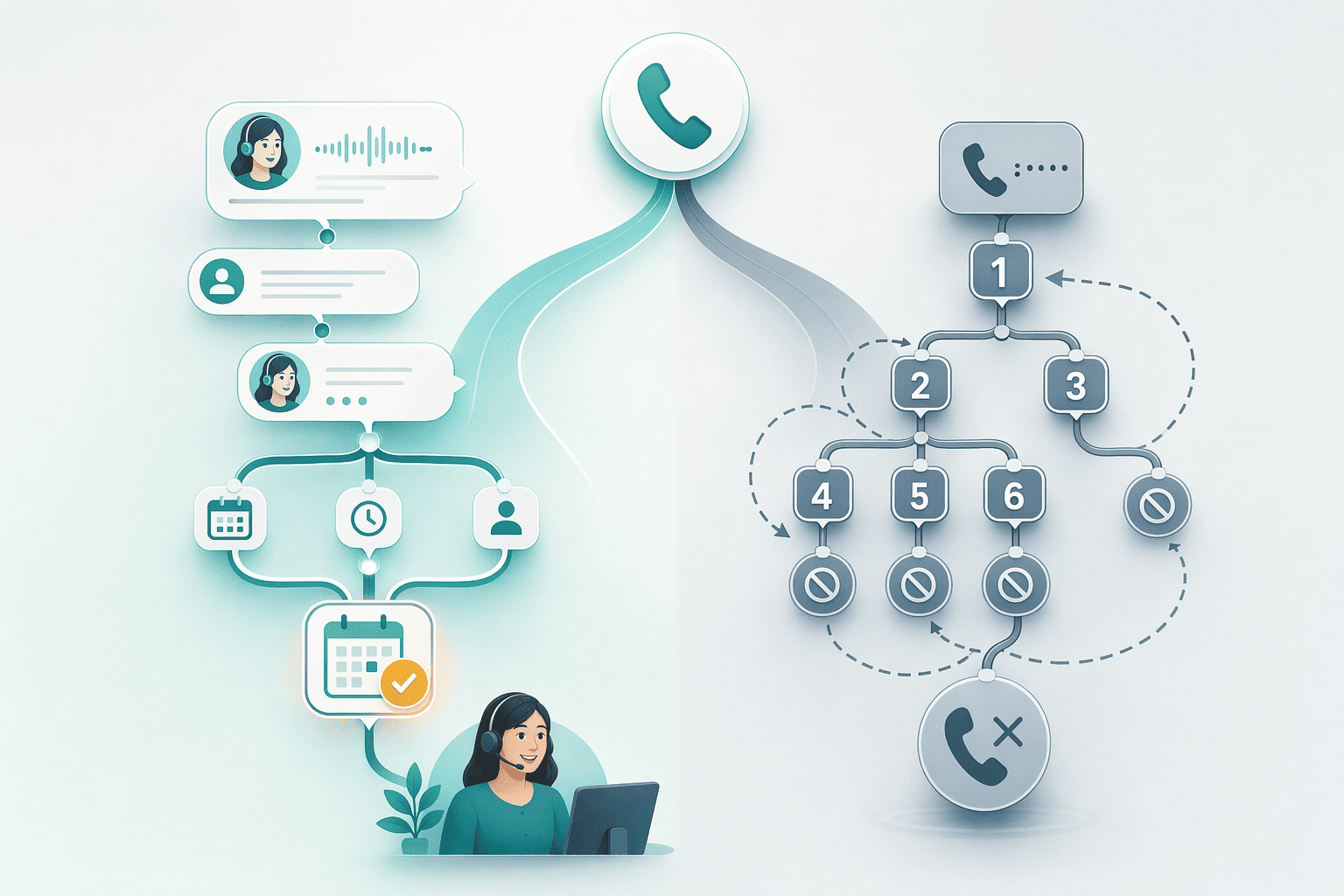
Conversational AI vs IVR-Based Scheduling
Traditional IVR systems lock callers into menu-driven scripts with zero contextual memory; conversational AI uses natural language processing to interpret spoken requests and adapt responses dynamically. NLP algorithms process natural human-generated languages like English and French, enabling machines to understand, interpret, and generate language in a contextually accurate way. Chatbot-based schedulers, while text-first, lack the voice-native flow that conversational AI delivers through real-time speech recognition.
Key Naturalness Benchmarks
A natural-sounding voice AI meets four benchmarks: sub-second latency, accurate accent handling across regional dialects, contextual memory that recalls prior turns in the conversation, and intelligent handoff triggers when complexity exceeds safe thresholds. NIST's user trust evaluation framework highlights that many factors get incorporated into trust decisions, making consistent protocol for interpreting data requests key. Systems that miss these benchmarks revert to robotic, menu-driven experiences.
24/7 Availability and Human Handoff
Natural voice AI operates around the clock, booking appointments without hold music or voicemail. When a caller's request involves pricing negotiations, complex objections, or emotional tone, the system escalates to a live agent with full conversation context. This bi-directional handoff ensures high-intent prospects receive human attention while routine bookings stay automated.
Once you understand what makes a voice AI sound natural, the next step is evaluating platforms that meet those benchmarks for Indian SaaS workflows.
8 AI Voice Scheduling Platforms for Indian SaaS Teams
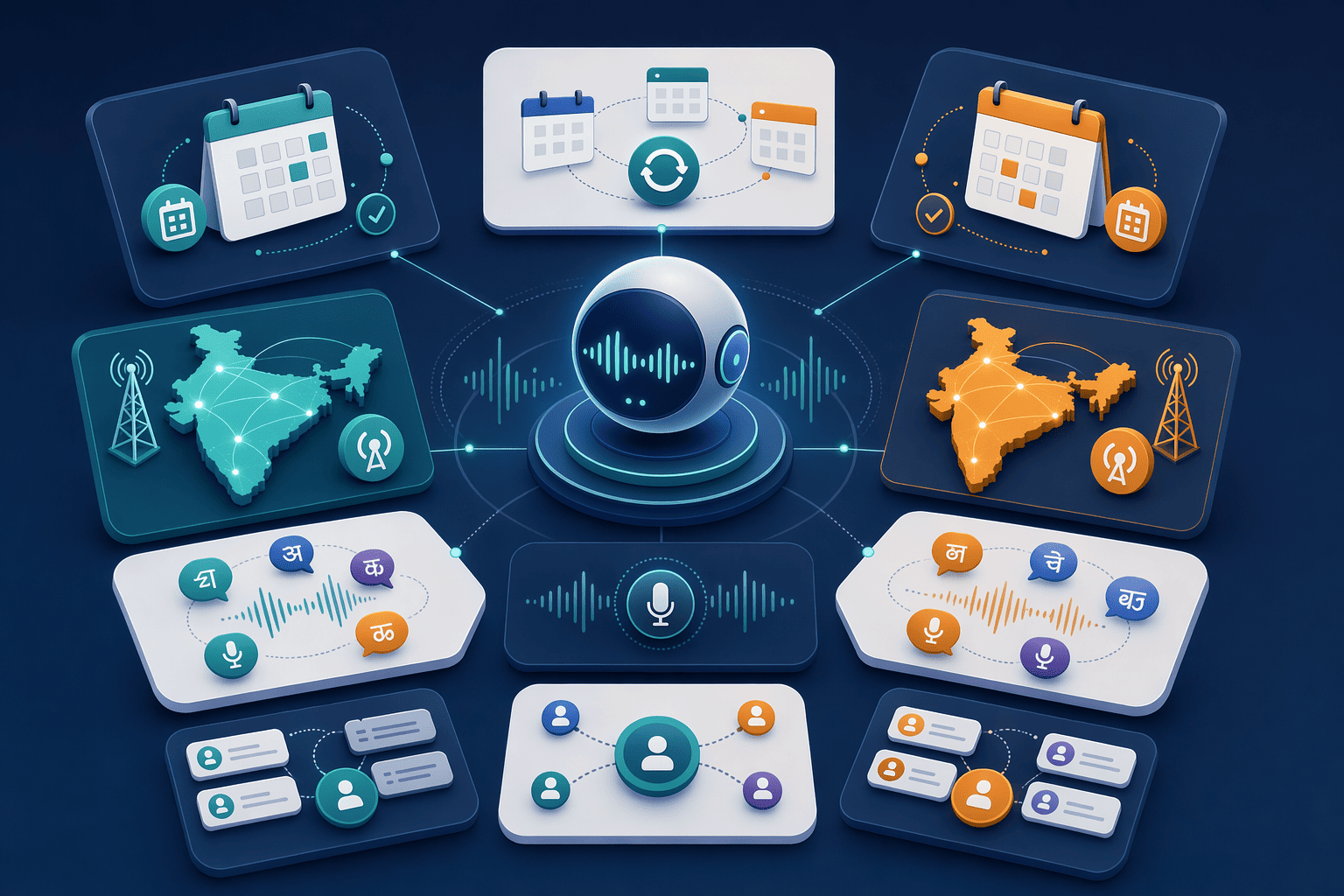
Bengaluru SaaS teams need AI voice platforms that handle appointment scheduling with natural-sounding calls, CRM synchronization, and multilingual support. The platforms below were evaluated on pricing transparency, calendar integration depth, telephony coverage in India, and 24/7 availability.
Platform | Pricing | Calendar/CRM Integrations | 24/7 Availability | Multilingual Support |
|---|---|---|---|---|
EchoLeads | Custom pricing | Google Calendar, Outlook, CRM-based schedulers | Yes | 70+ languages |
Goodcall | Not publicly disclosed | Google Calendar, industry-standard CRMs | Yes | English, Spanish, limited regional coverage |
Infyom | Not publicly disclosed | Basic calendar sync | Yes | English, Hindi |
Omind | Not publicly disclosed | CRM integrations available | Yes | English, regional languages |
EchoLeads: Conversational AI with Omnichannel Workflows
EchoLeads processes concurrent booking requests across phone, WhatsApp, and web chat, syncing appointments directly into Google Calendar, Outlook, or CRM-based schedulers. The platform supports sales, lead qualification, inbound enquiry handling, appointment booking, CRM integrations, and multilingual follow-ups. Pricing is custom. Best for: Bengaluru SaaS teams needing 24/7 multilingual booking with deep CRM automation. For broader context, see Best Voice AI for Bangalore Startups.
Additional Platforms
VoiceCentra answers every call and books appointments 24/7 with direct calendar sync. Oosai operates in 20+ languages, completing 180K+ bookings with 99.9% uptime. Silverthread Labs combines lead qualification with appointment booking — hot leads reach a human within seconds. Goodcall, Infyom, and Omind offer similar 24/7 voice scheduling; pricing and integration depth vary by vendor.
Understanding the platform landscape helps you evaluate features and pricing, but seeing the actual workflow clarifies how AI voice booking eliminates manual scheduling bottlenecks.
How AI Voice Appointment Booking Works (Step-by-Step)
AI voice appointment booking automates the entire scheduling journey — from the moment the phone rings to the confirmed calendar entry. Here's how the workflow unfolds in eight steps:
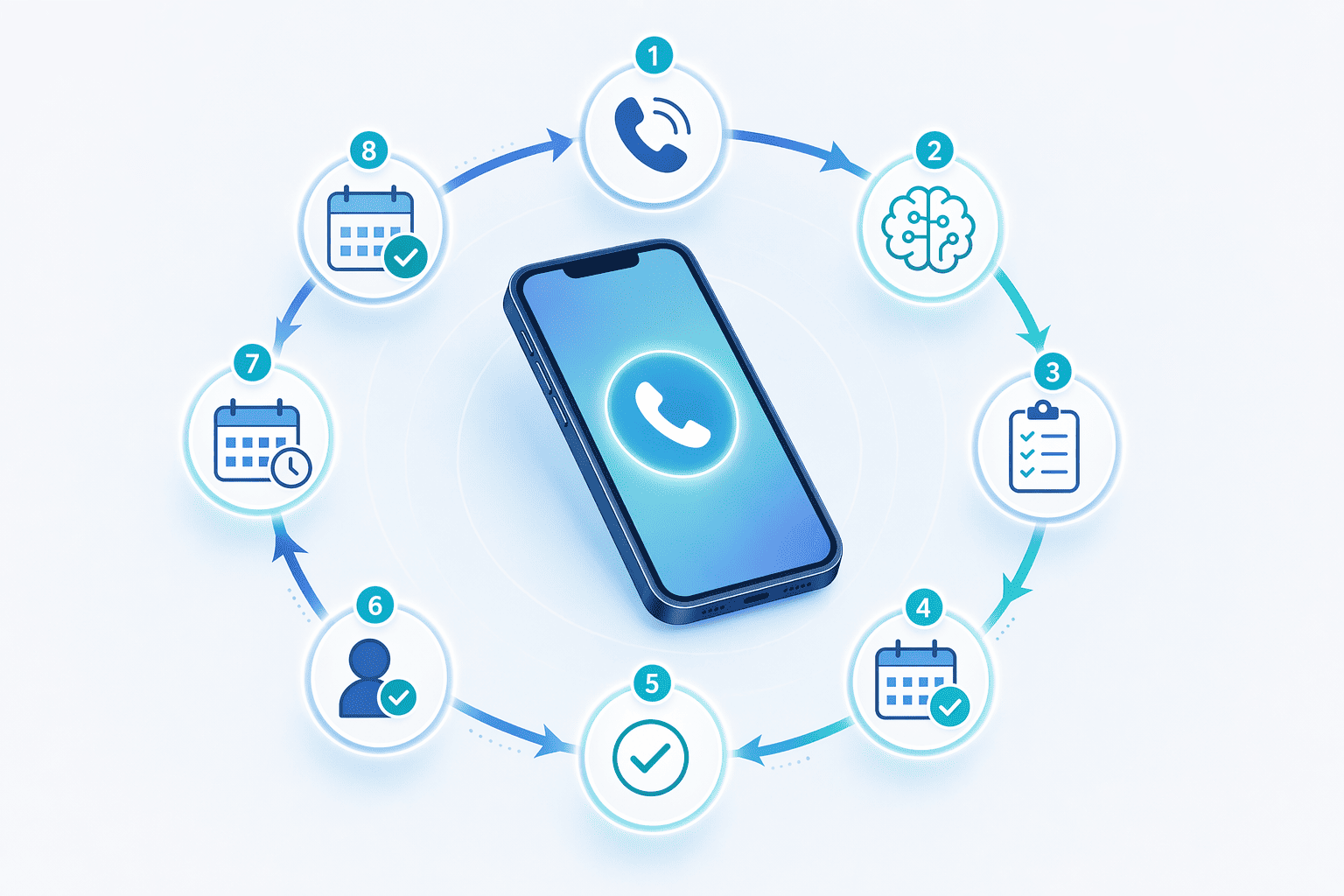
Step 1-3: Inbound Call Handling and Intent Recognition
Answer the call instantly. AI voice agents pick up inbound calls within 3 seconds, eliminating hold queues.
Greet the caller naturally. The agent introduces itself using conversational AI that mimics human speech patterns and tone.
Recognize booking intent. Natural language processing identifies phrases like "I need to schedule" or "book a demo" and routes the conversation to the appointment workflow.
Step 4-6: Availability Check, Slot Proposal, and Confirmation
Query calendar availability in real time. The AI checks Google Calendar, Outlook, or CRM-based schedulers for open slots matching the caller's preference.
Propose time slots conversationally. The agent offers 2-3 available windows: "I have Tuesday at 2 PM or Thursday at 10 AM—which works better for you?"
Handle objections and reschedules mid-call. If the caller requests a different time or timezone adjustment, the AI adapts instantly without transferring to a human.
Step 7-8: Calendar Sync and Follow-Up
Write the appointment to the calendar. The AI commits the booking using the Calendly Scheduling API or direct CRM integration, logging details like caller name, contact info, and meeting type.
Send confirmation and log the interaction. Within seconds, the caller receives SMS, email, or WhatsApp confirmation, and the full transcript is logged in the CRM for follow-up.
This 8-step flow eliminates manual scheduling, reduces response time from hours to seconds, and ensures no booking request falls through the cracks, whether the call arrives at 9 AM or 9 PM.
With the workflow mapped, comparing pricing models reveals hidden costs and helps match platform economics to your call volume patterns.
Comparison: Pricing Models & Free Tiers
Pricing Model Comparison: Usage-Based vs Flat-Rate vs Per-Seat
Voice AI platforms typically use three pricing models. Usage-based pricing charges per minute or per call, scaling with call volume. Flat-rate plans offer a fixed monthly fee, for example, EchoLeads provides a $25/month flat rate, suited for businesses with predictable inbound volumes. Per-seat models tie costs to the number of team members using the platform, common in enterprise contact-center tools. Usage-based works best for high-volume outbound prospecting where costs align with campaign scale. Flat-rate suits SaaS companies with steady inbound lead flow. Per-seat pricing benefits teams needing role-based access control and centralized billing.

Hidden Costs in Free Tiers
Free tiers often carry hidden limits. According to industry analyses, SMS quotas, payment processing fees, and developer support contracts can inflate costs at scale. Most platforms advertise a per-minute rate that rarely covers the full cost, speech-to-text, LLM processing, phone calls, and add-ons each add charges. Before committing, verify SMS quotas, payment processing fees, and seat minimums. A free tier that caps at 50 calls per month or requires a paid support contract for API access can become expensive once your appointment volume exceeds trial limits.
Cost Optimization Strategies
Choose a pricing model based on your call volume, business hours, and integration complexity. High-volume outbound prospecting benefits from usage-based pricing that scales with campaign activity. Predictable inbound appointment scheduling suits flat-rate plans that eliminate per-call billing surprises. Team-based workflows requiring role management justify per-seat models. Always read the fine print on free tiers to avoid unexpected overage charges when SMS quotas, payment processing fees, or developer support contracts kick in at production scale.
Pricing clarity matters, but for Indian SaaS teams serving regional markets, multilingual support determines whether your AI can actually handle customer conversations.
Multilingual Support: Kannada, Hindi & Beyond
Multilingual Voice AI Benchmarks
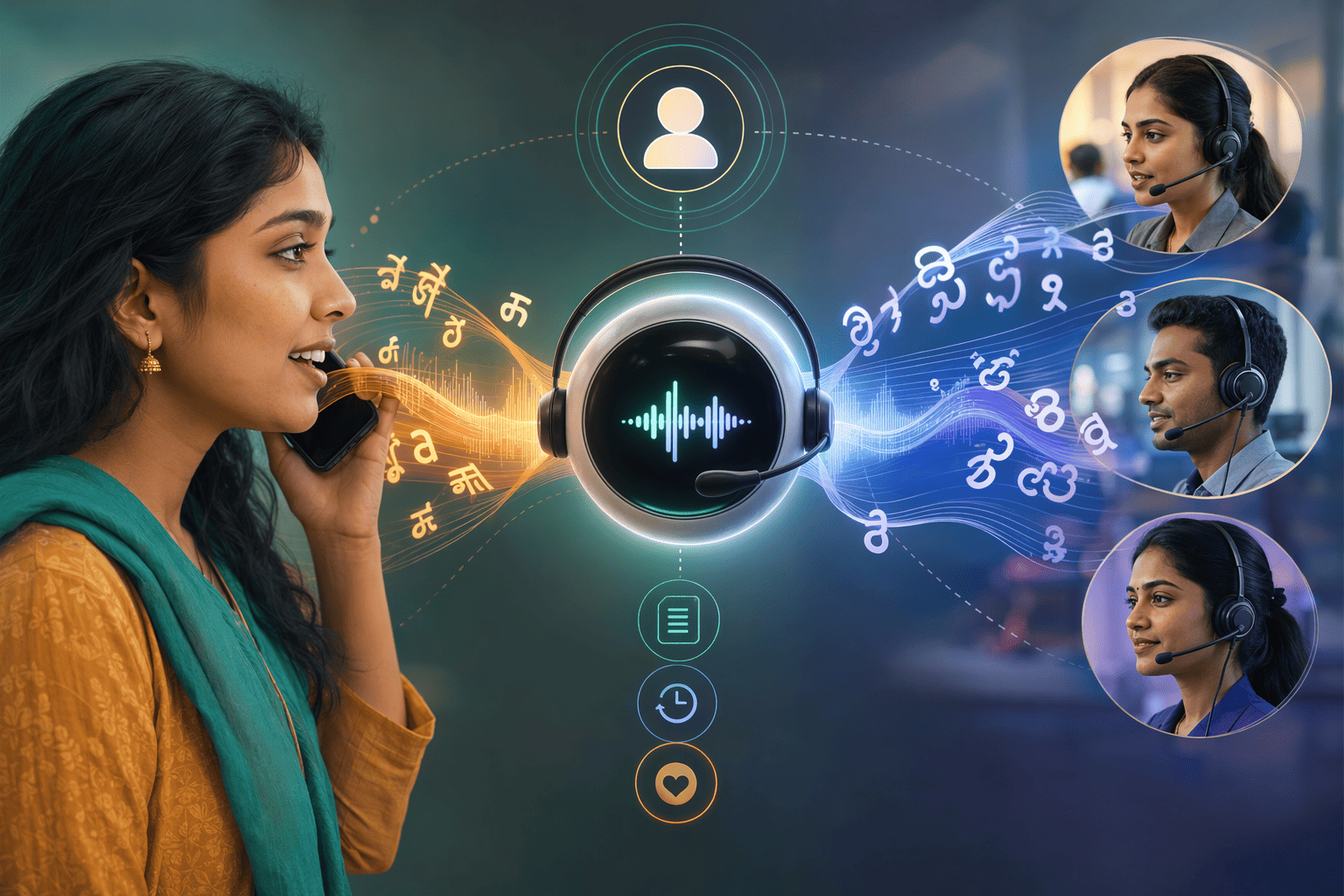
'Multilingual support' in practice means handling code-switching (Hinglish), regional accent variations (Bangalore English vs Delhi Hindi), and dialect nuances within a single language. For Kannada, this includes distinctions between Mysore Kannada, Coastal Kannada, and Bangalore colloquial usage, differences most platforms ignore. Effective multilingual voice AI must recognize when callers shift mid-sentence between languages, adapt to regional pronunciation patterns, and maintain conversation context across language boundaries.
The Kannada Accuracy Gap
No platform publishes Kannada-specific accuracy benchmarks. This is an industry-wide measurement gap, not a vendor advantage. Buyers should verify Kannada accuracy through live demos before committing, request test calls with native Kannada speakers using typical SaaS booking scenarios. Voice AI evaluation frameworks exist, but published Kannada benchmarks do not.
Platform-by-Platform Multilingual Capabilities
EchoLeads supports Kannada as part of a 70+ language portfolio. Zingaro AI emphasizes 30+ Indian languages. HuskyVoice AI states 20+ Indian and global languages with single-day setup. Bolna AI is noted for regional-language markets requiring inbound support and proactive callbacks. Most competitors claim broad language counts but omit Kannada dialect handling, buyers should test accent recognition for Mysore, Coastal, and Bangalore variants during evaluation.
Language support unlocks regional markets, but integration depth determines whether your AI voice agent operates as a standalone tool or a true extension of your sales stack.
Integration Requirements: CRM, Calendar & Telephony
CRM Sync Depth: Zoho, HubSpot, Salesforce, Custom
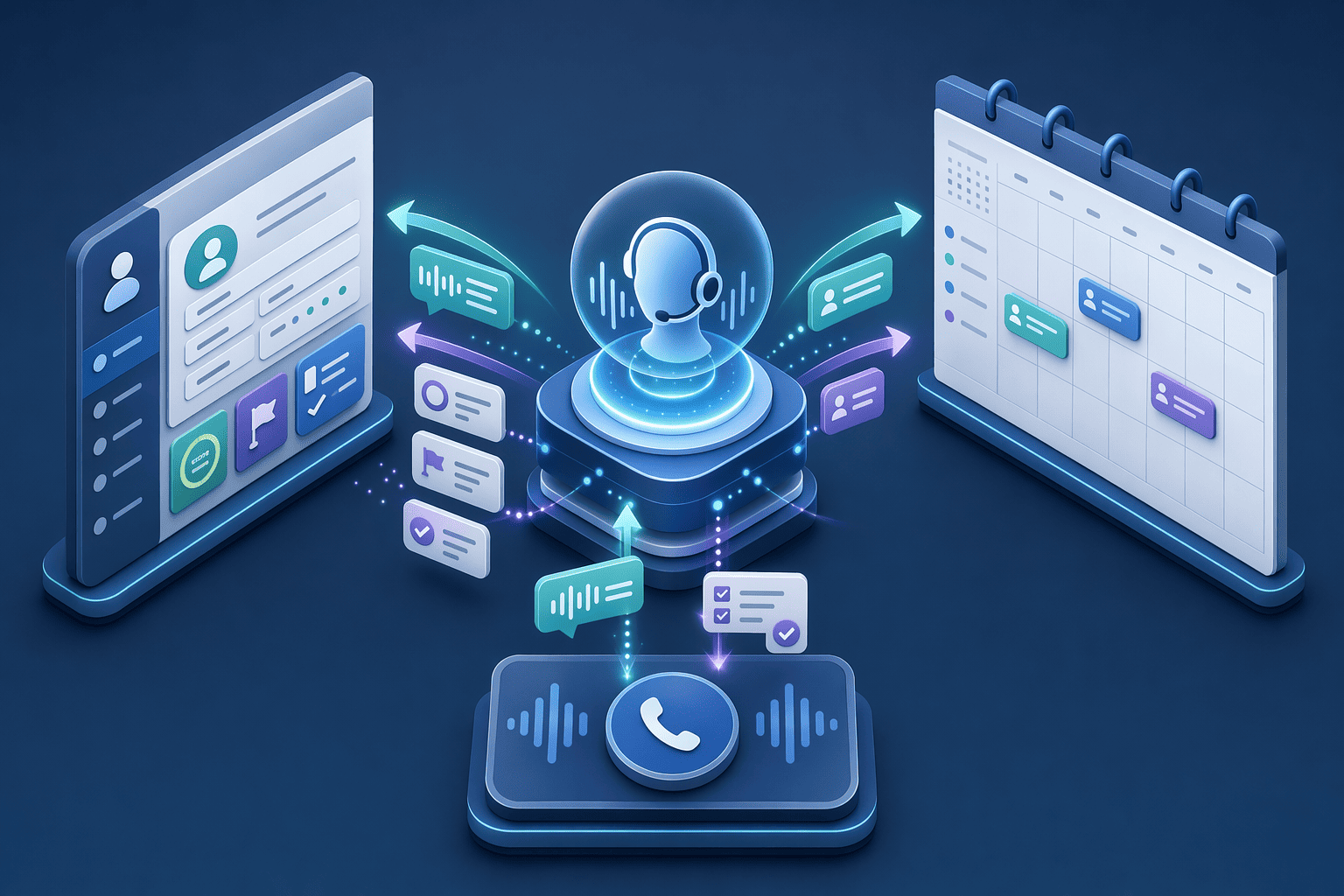
CRM integration for AI appointment scheduling means bidirectional sync, not just writing bookings into a system, but pulling lead context out and pushing qualification scores, conversation transcripts, and next steps back in. Among Bengaluru SaaS teams, Zoho (~30% startup share), HubSpot (~25%), and Salesforce (~12%) dominate. Platforms like FrontivaAI's lead qualification product illustrate how appointment data flows into CRM fields, lead scoring, timeline, budget, without manual entry. EchoLeads integrates bi-directionally with Salesforce, HubSpot, Pipedrive, and Zoho, writing back qualification scores and conversation transcripts automatically. Some platforms advertise open APIs but require developer support contracts despite the claim, verify API documentation quality and support requirements before committing.
Calendar API Integration: Google Calendar, Outlook, Custom
Calendar integration depth determines whether your AI can book in real time or force customers through a link-based flow. Real-time availability checks matter when Bengaluru SaaS teams serve global customers, timezone handling (IST vs PST, GMT) prevents double-bookings. EchoLeads books appointments directly into Google Calendar, Outlook, or CRM-based schedulers, processing concurrent requests across phone, WhatsApp, and web chat. Recurring appointment support and conflict detection run server-side, so agents never propose unavailable slots.
Telephony and WhatsApp Business API
Telephony infrastructure (Plivo, Twilio, Exotel) determines call quality and latency. Synthflow's platform uses in-house telephony for sub-100 ms latency. WhatsApp Business API integration depth matters for Indian customers who prefer WhatsApp over SMS, confirmation messages, rescheduling requests, and reminders all flow through WhatsApp rather than email. EchoLeads processes bookings across phone and WhatsApp with bi-directional CRM sync, maintaining conversation context across channels.
Technical integration enables smooth workflows, but legal compliance protects your business from regulatory penalties and customer trust erosion.
Compliance Considerations for Automated Voice Calls in India
TCPA and Call Recording Consent
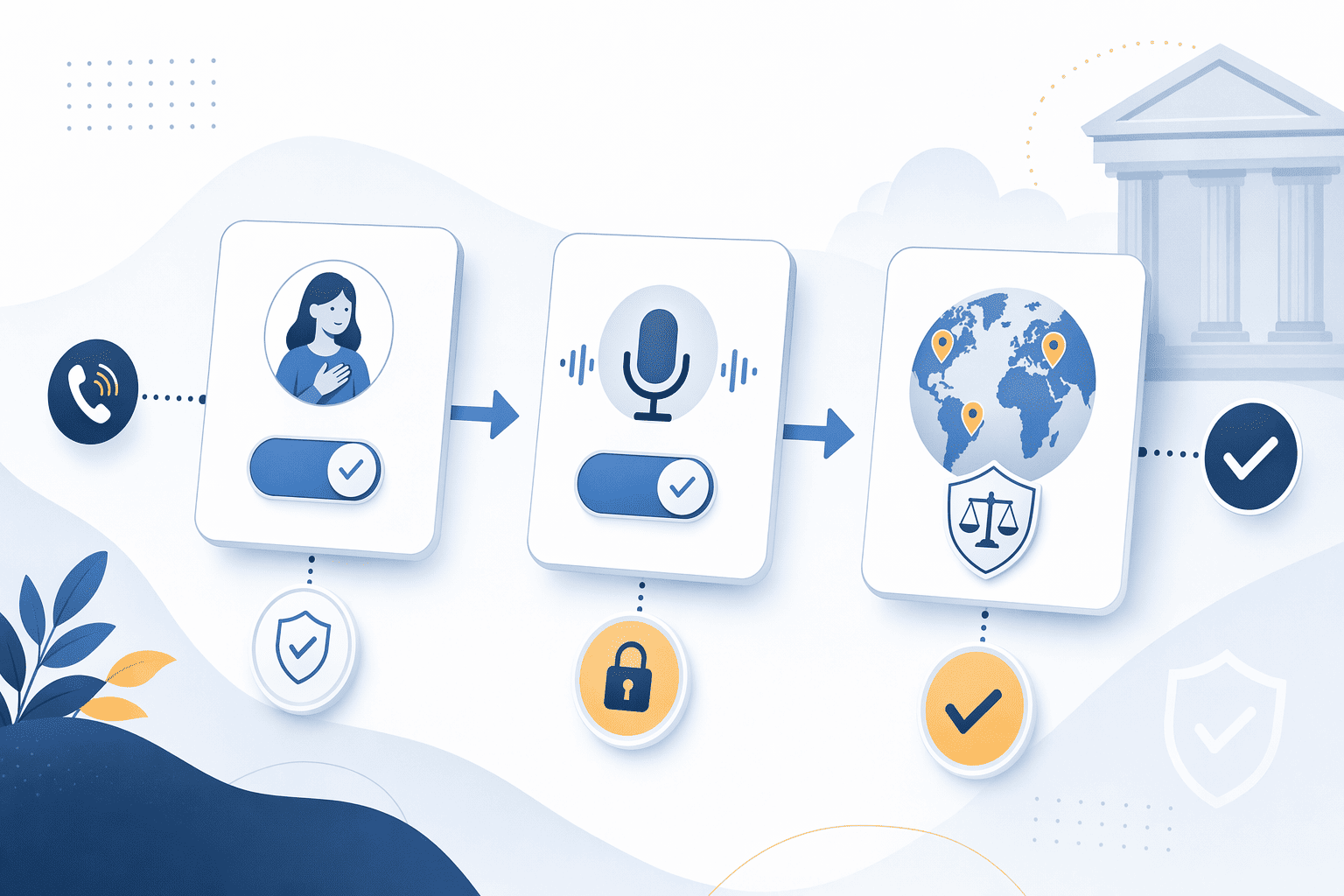
The Telephone Consumer Protection Act (TCPA) requires prior express written consent before placing automated calls to consumers. For Bengaluru SaaS teams deploying voice agents, consent workflows are not just legal checkboxes, they build customer trust in AI-driven interactions. Call recording consent varies by jurisdiction: some states require all-party consent before recording conversations. However, compliance workflows can slow booking: adding TCPA opt-in and recording consent introduces friction that delays appointment confirmation.
Karnataka-Specific Call Recording Regulations
Most compliance guides treat India as a single jurisdiction, but Karnataka-specific call recording and consent workflows differ from national norms. Two-party consent requirements and jurisdictional nuances for automated booking remain underserved in authoritative guidance, competitors ignore this gap entirely.
Compliance Gaps and Legal Counsel Recommendation
Legal guidance on TCPA and call recording requirements for automated booking in India is limited. Recommend consulting legal counsel for implementation. Balance speed with compliance by integrating consent workflows early: automated Do Not Call (DNC) registry checks and consent-capture mechanisms reduce friction while maintaining regulatory alignment.
Choose the Right Voice AI for Your Appointment Workflow
Usage-based pricing suits high-volume outbound teams (pay per call/minute) while flat-rate monthly pricing suits predictable inbound workflows, choose based on your call volume pattern, not on advertised 'flexibility.' Platforms that advertise 'open APIs' may require developer support contracts for advanced integrations, verify API documentation quality and support requirements before committing, even if the platform claims self-serve setup.
As conversational AI improves accent handling and code-switching for Indian languages (Kannada, Hindi, Hinglish), expect more platforms to publish multilingual accuracy benchmarks, the current lack of Kannada-specific benchmarks will become a competitive liability for platforms that ignore regional language quality.
Start by documenting your CRM sync requirements (Zoho, HubSpot, Salesforce, custom) and monthly call volume, then test EchoLeads alongside 2-3 alternatives through live demos to verify Kannada/Hindi accuracy and calendar integration depth before committing.
Frequently Asked Questions
What is the difference between conversational AI and IVR for appointment scheduling?
Conversational AI uses natural language processing to interpret spoken requests, recall prior conversation turns, and adapt responses dynamically, handling rescheduling and edge cases in real time. IVR systems lock callers into menu-driven scripts with zero contextual memory, following rigid decision trees that cannot handle unscripted requests.
Which AI voice scheduling platforms support Kannada and Hindi?
EchoLeads supports Kannada as part of a 70+ language portfolio, while FrontivaAI, Oosai, and HuskyVoice also claim Kannada and Hindi support. However, no platform publishes Kannada-specific accuracy benchmarks, verify accent handling and code-switching performance through live demos before committing.
What are the hidden costs in free tiers for AI voice appointment scheduling?
Free tiers often carry hidden limits including SMS quotas, payment processing fees, seat minimums, and developer support contracts required for advanced integrations. Verify these constraints during platform evaluation, advertised 'open API' access may require paid support contracts at scale.
How do AI voice agents integrate with CRMs like Zoho, HubSpot, and Salesforce?
CRM integration for AI appointment scheduling requires bidirectional sync, pulling lead context, custom fields, and conversation history from the CRM, then pushing qualification scores, booking data, and next-step actions back in. Among Bengaluru SaaS teams, Zoho, HubSpot, and Salesforce dominate, and integration depth varies significantly across platforms.
What compliance requirements apply to AI voice appointment scheduling in India?
TCPA requires prior express written consent before placing automated calls to consumers. Karnataka-specific call recording regulations require two-party consent, differing from national norms. Legal guidance for automated booking in India is limited, consult legal counsel for implementation.
Can AI voice scheduling tools handle WhatsApp Business API for confirmations?
WhatsApp Business API integration allows appointment confirmations, rescheduling requests, and reminders via WhatsApp, preferred by Indian customers over SMS or email. Integration depth varies by platform; some require custom development for full WhatsApp functionality, while others offer native support.
What is the typical pricing model for AI voice appointment scheduling platforms?
Platforms use three models: usage-based (per-minute or per-call), flat-rate monthly, and per-seat. High-volume outbound prospecting benefits from usage-based pricing that scales with campaign activity, while predictable inbound workflows suit flat-rate plans. Choose based on call volume patterns, not advertised flexibility.