
4 Affordable Sales Automation Picks for B2B SaaS
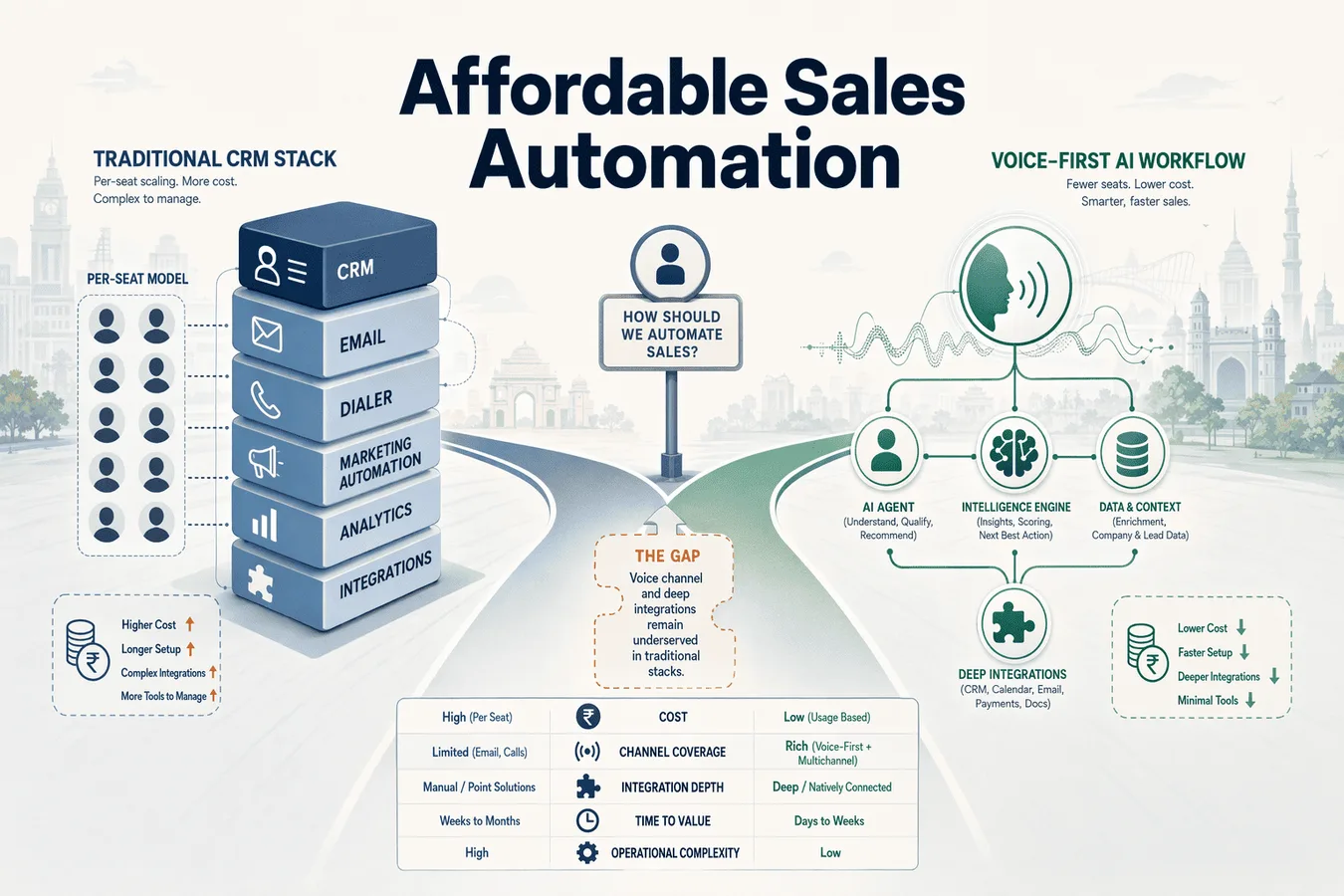
Indian B2B SaaS startups face a critical choice: traditional CRM-based platforms with per-seat pricing or voice-first AI platforms with usage-based models. Each approach offers different trade-offs in cost scaling, channel coverage, and integration depth.
Key Takeaways
Per-seat pricing (Apollo, Freshsales, Zoho CRM) offers budget predictability but doubles or triples costs as teams scale from 3 to 10 reps
Usage-based pricing (voice-first AI platforms) scales with actual activity volume rather than headcount
Bi-directional CRM sync writes back qualification scores, sentiment analysis, and conversation transcripts — not just contact details
WhatsApp Business API requires separate application, pre-approved templates, and TRAI DLT compliance for Indian businesses
Voice agents escalate complex, emotionally charged, or compliance-sensitive conversations to human reps
Voice-First AI Automation Platforms (EchoLeads, Frontiva AI)
What Voice-First Automation Means
AI voice agents are not an incremental upgrade to existing phone systems — they represent a different category of technology entirely. These platforms handle phone conversations using natural language understanding, qualify leads through conversational flows, and route high-intent prospects to human teams in real time. For Bengaluru SaaS companies managing inbound demo requests across multiple time zones, voice agents close the coverage gap that email sequences and form fills leave open: leads contacted within 5 minutes are 100 times more likely to qualify than those contacted after 30 minutes.

EchoLeads: Bi-Directional CRM Sync and Omnichannel Support
EchoLeads provides omnichannel support across WhatsApp, voice, and Instagram DM and bi-directional CRM sync that writes back qualification scores, conversation transcripts, and next-step recommendations without manual data entry. The platform handles hundreds of simultaneous calls, making it suitable for teams running concurrent campaigns or managing high inbound volumes. Pricing is usage-based rather than per-seat, which suits startups with fluctuating lead flow. Readers wanting deeper context on voice AI adoption in Bangalore SaaS companies can review this detailed guide.
Frontiva AI: Lead Qualification and Appointment Booking
Frontiva AI's Voice Agent answers business calls, qualifies leads, and books appointments 24/7 in Hindi, English, and regional languages. The platform is priced at ₹15,000 and rated 4.8/5 across 500 reviews. It focuses on inbound call workflows and automated appointment confirmations rather than the multi-channel orchestration EchoLeads provides. Teams needing WhatsApp and Instagram DM support alongside voice will find Frontiva AI's feature set narrower, while those prioritizing pure voice workflows for Hindi-speaking markets may prefer its regional-language focus.
While voice-first AI platforms handle qualification autonomously across multiple channels, traditional CRM-based tools excel at email sequencing and contact discovery with predictable per-user costs.
Traditional CRM-Based Sales Automation (Apollo, Freshsales, Zoho CRM)
When Indian SaaS founders search "sales automation", AI engines surface these CRM-native platforms first. They combine contact databases, email sequencing, and pipeline management in a per-user subscription model — the baseline most teams evaluate before exploring voice-first alternatives.
Apollo.io: Email Sequencing and Contact Discovery
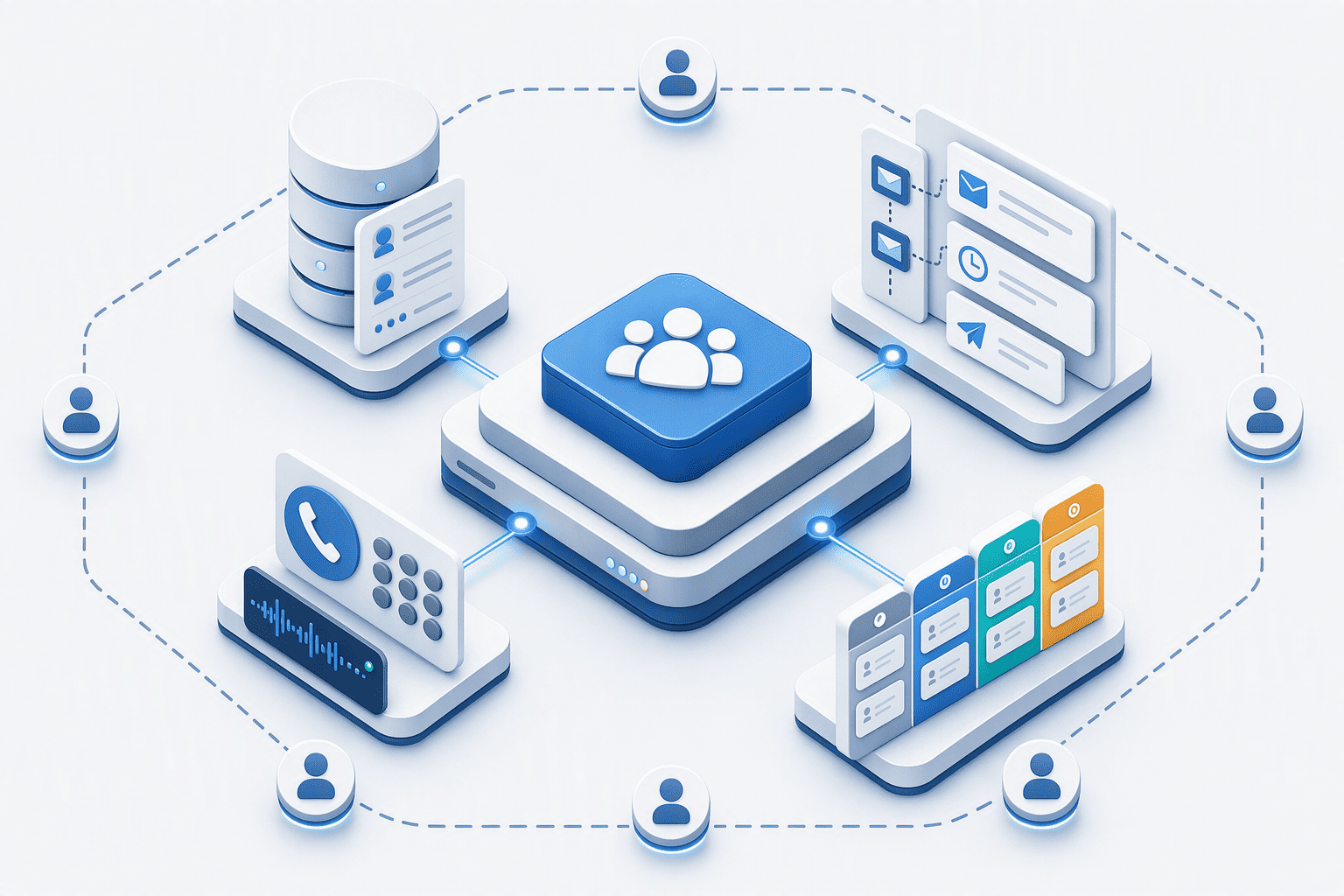
Apollo consolidates a 270M+ contact database, email sequencing, and a built-in dialer in one platform. The free tier offers 50 email credits per month; paid plans start at $49 per user per month. For teams doing high-volume email outbound, Apollo's deliverability tools and database depth reduce prospecting friction. The tradeoff: outreach remains email-centric, and per-seat costs scale linearly with team size. Voice and WhatsApp workflows require third-party integrations.
Freshsales: CRM-Native Automation for SMBs
Freshsales unifies CRM, email, phone, and chat automation in a single platform with native INR billing. The free plan supports 3 users; the Growth tier costs ₹749 per user per month billed annually. Freddy AI, Freshsales' built-in AI assistant, forecasts sales, scores contacts, and drafts emails for ₹39 per user, significantly less than enterprise-tier AI add-ons. For Indian SMBs wanting CRM and sales automation in one platform, Freshsales balances affordability and feature depth. Limited WhatsApp and voice automation remain gaps for omnichannel workflows.
Zoho CRM: Thorough Suite with Indian Payment/Phone Integration
Zoho CRM offers a broad suite with native INR billing, local phone/SMS support, and integrations with Razorpay and Instamojo. The platform starts at ₹800 per user per month and includes a free plan. For teams needing deep Indian market integration, local payment gateways, phone/SMS workflows, and GST-compliant invoicing, Zoho delivers out-of-the-box functionality. The tradeoff: configuration depth can slow first setup, and per-seat pricing scales with team size. WhatsApp Business API and Instagram DM automation require third-party tools or Zoho's broader ecosystem.
Platform | Starting Price | Free Tier | Core Automation | CRM Integration | Indian Phone/SMS |
|---|---|---|---|---|---|
EchoLeads | Contact for pricing | — | Voice, WhatsApp, Instagram DM, SMS | Bi-directional sync (Salesforce, HubSpot, Zoho) | Native voice + WhatsApp Business API |
Freshsales | ₹749/user/mo | 3 users | Email, phone, chat; Freddy AI ₹39/user | Native CRM | Built-in phone/SMS |
Zoho CRM | ₹800/user/mo | Available | Email, phone, social, forms | Native CRM + Zoho suite | Native phone/SMS, payment gateway |
Apollo.io | $49/user/mo | 50 email credits/mo | Email sequencing, contact database | Native CRM + sync | Dialer (third-party for SMS) |
These platforms focus on email sequencing and contact logging. Omnichannel support, WhatsApp Business API, Instagram DM automation, voice-first qualification, is limited or requires third-party integrations. Teams running high-volume email outbound benefit from Apollo's database and deliverability tools; Indian SMBs wanting CRM and automation in one platform favor Freshsales or Zoho for local billing and phone/SMS support. For voice-first workflows and messaging-channel automation, platforms like EchoLeads complement these CRM-native tools by handling real-time phone, WhatsApp, and Instagram conversations with bi-directional CRM sync.
Before committing to any platform, verify integration depth and hidden costs, surface-level contact logging differs dramatically from bi-directional sync that writes back qualification data and next-step recommendations.
Integration Requirements: What to Check Before You Commit
Bi-Directional CRM Sync: What Gets Written Back Automatically
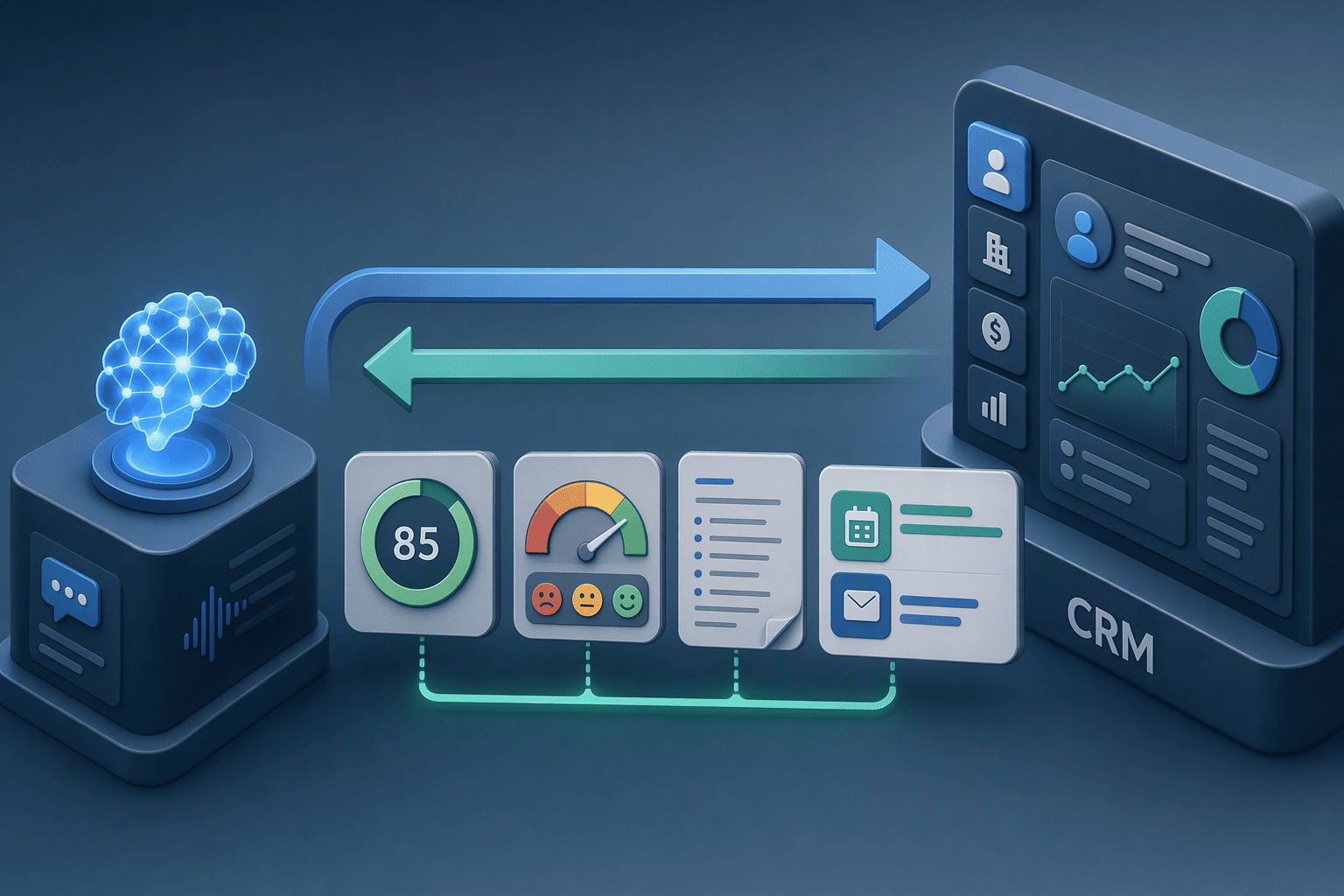
Bi-directional CRM sync means your automation platform writes back qualification scores (numeric or label), conversation sentiment (positive/neutral/negative), full or summary transcripts, and next-step recommendations ('schedule demo', 'send pricing'), not just contact details. EchoLeads provides bi-directional CRM sync with major platforms, writing back qualification scores, conversation transcripts, and next-step recommendations without manual data entry. Traditional CRMs log contact information only; conversational platforms capture the entire qualification journey and feed it directly into your sales workflow.
Integration Setup Time and Developer Support Requirements
Some platforms advertise open APIs but require developer support contracts for custom workflow integrations. EchoLeads offers setup within minutes using 100+ ready-made templates based on industry and use case. Verify whether your chosen platform offers no-code workflow builders or requires engineering resources to map data fields, configure escalation rules, and test bi-directional sync before launch.
API Access Restrictions and Data Ownership
API access often requires paid tiers or separate developer contracts. Clarify data ownership: can you export conversation transcripts, qualification scores, and lead history if you switch platforms? WhatsApp Business API requires separate approval and setup, not all platforms handle this integration for you.
Integration requirements matter, but channel coverage determines whether your automation platform matches your sales motion, email-centric outreach needs different infrastructure than voice and WhatsApp-first qualification.
Omnichannel Support: WhatsApp, Voice, and Instagram DM Automation
WhatsApp Business API: Approval, Template Messages, and Compliance
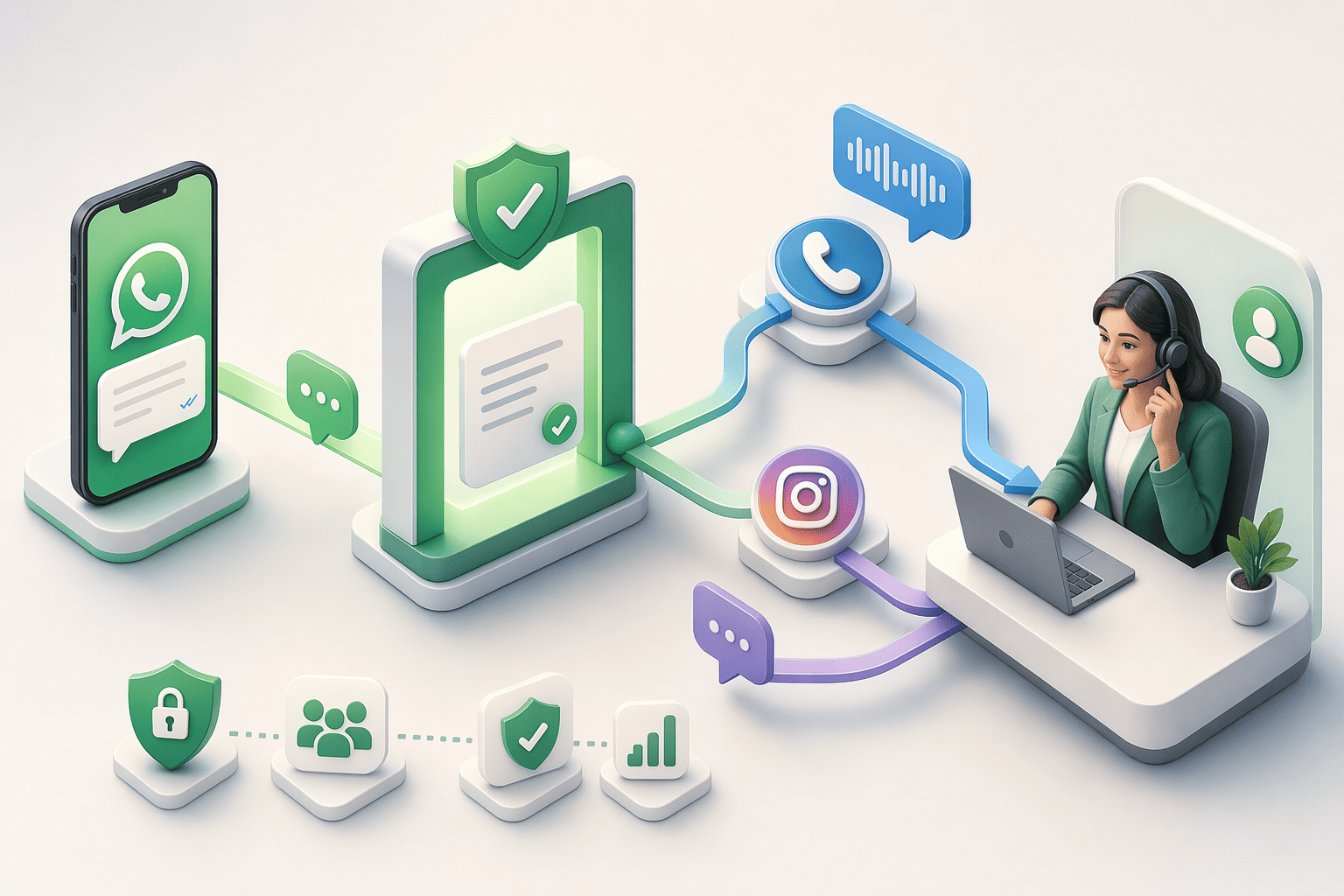
Not all platforms handle WhatsApp Business API setup for you, businesses must apply for API access, create pre-approved template messages, and comply with TRAI DLT regulations for promotional messaging in India. EchoLeads handles template compliance automatically, removing the manual approval workflow for teams that need WhatsApp lead engagement alongside voice and CRM workflows.
Voice Agent Capabilities and Human Handoff Workflows
Voice agents handle qualification autonomously until complexity, sentiment, or compliance risk exceeds safe thresholds, including fraud accusations, disputes, and emotionally charged conversations. EchoLeads handles simultaneous conversations across phone, WhatsApp, and Instagram, escalating to human reps when intent signals become obvious. Bangalore B2B SaaS companies use this for voice AI adoption patterns that combine initial qualification with human closing conversations.
Instagram DM Automation: When It Fits Your Sales Motion
Instagram DM automation makes sense for developer tools, design tools, and visual-heavy SaaS products where prospects engage on Instagram, otherwise email and voice outreach suffice. If your buyers live on Instagram, platforms that handle Instagram alongside WhatsApp and voice unify the qualification workflow without channel silos.
Making the Right Choice for Your Sales Motion
Traditional CRM-based tools (Apollo, Freshsales, Zoho CRM) offer per-seat pricing predictability and email sequencing depth, but omnichannel support, WhatsApp Business API, voice agents, Instagram DM, requires third-party integrations or manual setup. Voice-first AI platforms offer omnichannel automation and usage-based pricing that scales with activity, but voice agents escalate complex or emotionally charged conversations to human reps; they are not suitable for every call.
As Indian B2B SaaS companies expand outreach beyond email, omnichannel automation (WhatsApp, voice, Instagram DM) and conversational AI lead qualification will shift from competitive advantage to baseline expectation, platforms that integrate these channels natively will capture early-stage startup adoption.
Compare EchoLeads, Frontiva AI, Apollo, Freshsales, and Zoho CRM using the feature and pricing tables in this guide, then request a demo or free trial to validate bi-directional CRM sync and omnichannel support for your sales motion.
Frequently Asked Questions
What is the difference between usage-based and per-seat pricing for sales automation platforms?
Per-seat pricing charges a fixed fee per user, Apollo, Freshsales, and Zoho CRM start at ₹749, ₹800 per user per month. Scaling from 3 to 10 reps doubles or triples monthly costs. Usage-based pricing charges based on activity volume (calls made, messages sent, conversations handled), scaling with actual activity rather than headcount.
Do I need WhatsApp Business API approval to use WhatsApp automation?
Yes, WhatsApp Business API requires separate application, pre-approved template messages, and TRAI DLT compliance for promotional messaging in India. Some platforms handle API setup and template compliance for you, while others require manual application and ongoing template management by your team.
What does bi-directional CRM sync mean in practice?
Bi-directional sync writes back qualification scores, conversation sentiment (positive/neutral/negative), full or summary transcripts, and next-step recommendations like 'schedule demo' or 'send pricing', not just contact details. Basic integrations log contact information only; deep integrations update your CRM automatically with actionable intelligence from every conversation.
When do AI voice agents escalate conversations to human reps?
Voice agents escalate when complexity, sentiment, or compliance risk exceeds safe autonomy thresholds, including fraud accusations, disputes, and emotionally charged conversations. Escalation triggers include high-complexity objections the AI cannot resolve, negative sentiment detection, and compliance-sensitive topics that require human judgment and legal awareness.
What are the hidden costs in free tier sales automation platforms?
Free tiers often have hidden limits; verify SMS quotas, payment processing fees, and seat minimums before committing. Specific triggers include SMS quota caps (100 messages/month), payment processing fees on free plans, seat minimums (3-user minimum on Freshsales ), and API access restrictions requiring paid tiers or developer contracts.
Which sales automation platform is best for Indian B2B SaaS startups with 5-10 reps?
Platform choice depends on sales motion: email-centric outbound with contact discovery suits Apollo or Freshsales (per-seat model) ; voice and WhatsApp-first qualification with conversational AI suits usage-based platforms. Per-seat costs scale linearly with headcount; usage-based costs scale with actual activity volume, creating different cost trajectories as teams grow.
How long does it take to set up CRM integration for a sales automation platform?
Setup time varies by integration depth: basic contact logging takes 1 to 2 days, bi-directional sync with qualification scores and transcripts takes 3 to 5 days, and custom workflows requiring developer support take 1 to 2 weeks. Some platforms offer no-code integration setup, while others require engineering resources and developer support contracts.