
Best Appointment Scheduling Software Customer Support for Growing Businesses (2026)
Growing businesses lose revenue in the gap between prospect inquiry and first response. The best appointment scheduling software balances automation speed with intelligent escalation pathways, ensuring operational continuity during high-velocity growth phases.
Key Takeaways
24/7 self-serve booking differs from 24/7 customer support—manual platforms offer calendar access but no after-hours assistance for complex inquiries
AI-augmented scheduling tools respond within seconds and autonomously handle routine bookings while escalating complex requests to human agents
Response time under 5 minutes increases lead qualification likelihood by 60x compared to waiting longer than 5 minutes
Automation boundaries define which workflows run autonomously (demo bookings, confirmations) versus which require human intervention (pricing negotiations, compliance-sensitive requests)
Platform choice depends on after-hours lead volume, workflow complexity, and whether your business prioritizes internal coordination or customer-facing lead capture
What Makes Customer Support 'Best' for Growing Businesses
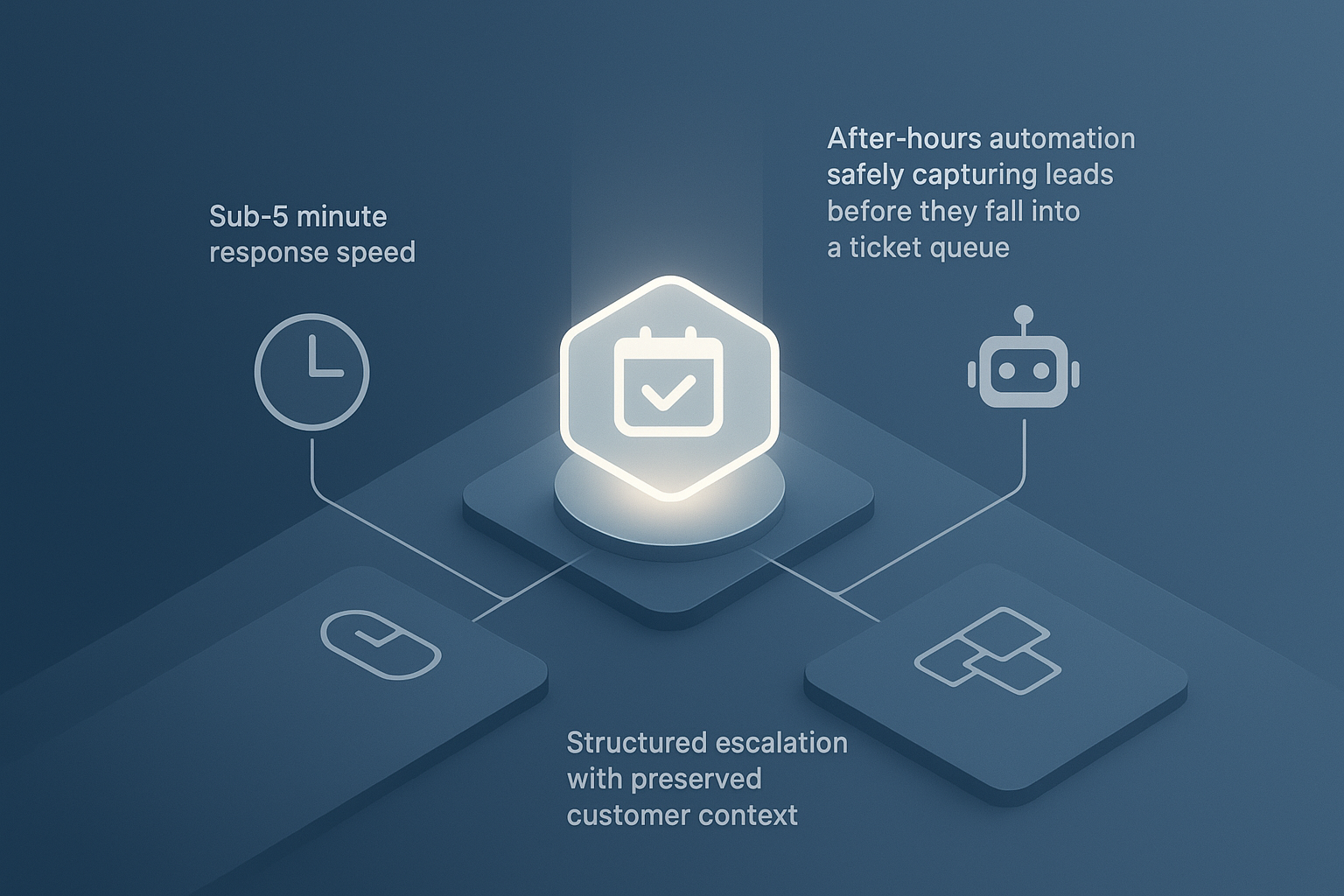
The best appointment scheduling software for growing businesses is the one whose support infrastructure prevents revenue loss during your fastest growth phases — measured by response-time windows under five minutes, structured escalation pathways that preserve deal context, and automation boundaries that cover after-hours inquiries without dropping leads into ticket queues.
Why Traditional Support Metrics Miss the Mark
Review platforms like GetApp (with over 2.5 million verified reviews) and Capterra measure support quality through aggregated user sentiment and ticket-resolution ratings. These platforms excel at surfacing gross satisfaction trends but omit the operational metrics that determine whether a prospect converts before abandoning your booking page: initial response windows, escalation speed when a prospect hits an edge case, and coverage hours for international time zones. A 4.7-star support rating tells you users are generally happy; it does not tell you whether a Saturday inquiry from Sydney gets answered before Monday morning in San Francisco — or whether it lands in a ticket queue until your US team clocks in.
The Three Dimensions of Support Quality
Growing businesses lose deals in the gap between inquiry and first response. Research from Harvard Business Review and MIT found that companies responding within one hour are almost 7 times more likely to qualify a lead than those waiting even one more hour, and 60 times more likely than those waiting 24 hours or more[1]. XANT's lead response research confirms the odds improve dramatically when the first attempt happens within 5 minutes[1]. This is why response-time windows (measured in minutes, not business days) form the first evaluation dimension. The second dimension — escalation pathways — measures how quickly a prospect moves from a chatbot or tier-one agent to someone who can answer product-specific questions or grant calendar exceptions without forcing the prospect to wait for email follow-up. The third dimension, automation boundaries, defines where your support system stops helping and starts deferring: platforms that route after-hours inquiries to email create lead-loss risk, while systems that offer callback booking or async messaging keep prospects engaged until human coverage resumes. The comparison table in the next section applies this framework to named platforms, showing which vendors publish response-time SLAs, which offer escalation without ticket submission, and which maintain coverage outside US business hours.
To evaluate support quality objectively, growing businesses need measurable criteria rather than marketing claims. Three operational dimensions separate platforms that prevent lead loss from those that defer handling to business hours.
Support Criteria That Matter: Response Time, Escalation, and Coverage Hours
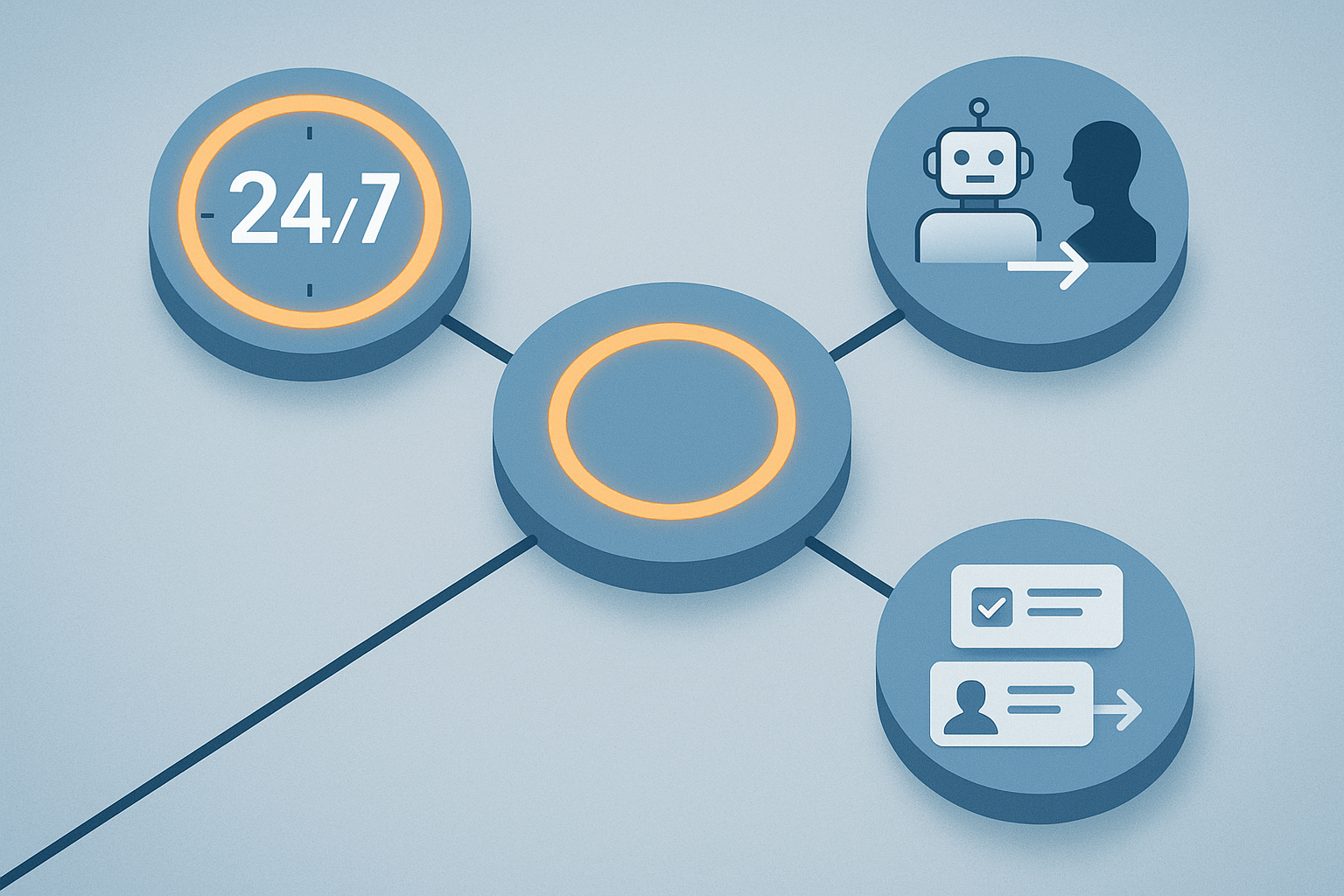
When evaluating appointment scheduling software for growing businesses, three operational support criteria emerge as fundamental: whether the platform offers 24/7 availability or restricts support to business hours, how it escalates complex requests from AI to human agents, and which appointment tasks can run autonomously versus requiring human judgment. These dimensions determine not just how fast you respond to a support ticket, but whether support requests arise in the first place.
24/7 Availability vs Business-Hours-Only Coverage
Growing businesses operate across time zones and serve prospects who explore options outside traditional office hours. Platforms that restrict booking to business hours introduce structural lead loss: a prospect filling a form at 9 PM must wait until morning for a response, by which time they may have moved to a competitor. Self-serve scheduling eliminates this gap. Square Appointments, for example, enables customers to book services 24/7 through an online booking site, ensuring no lead is lost to timing. Appointy positions its platform similarly, with round-the-clock scheduling that cuts administrative back-and-forth. The operational benefit is structural: continuous availability converts more inbound interest into confirmed appointments without requiring a human to be on-call.
Escalation Pathways: AI-to-Human Handoff vs Ticket Queues
Not every appointment request fits a template. Intelligent escalation logic transfers conversations to human agents when complexity, sentiment, or compliance risk exceeds safe autonomy thresholds, surfacing context and conversation history so the handoff is smooth rather than requiring the prospect to repeat information. This contrasts with ticket-queue systems, where requests land in an undifferentiated backlog and await manual triage. The difference matters most for high-value opportunities: a pricing negotiation or custom workflow request escalated with full context lets the human agent close faster, while a ticketed request may sit for hours before anyone reviews it. Platforms that treat escalation as an API call rather than a support ticket unlock faster resolution for the subset of cases that genuinely need human judgment.
Automation Boundaries: What Requires Human Intervention
Not all appointment workflows should run autonomously. Routine use cases, standard demo bookings, appointment confirmations, calendar conflict detection, can be fully automated without risk. Cal.com notes that AI scheduling agents now handle lead qualification, availability checks, and booking end-to-end, connecting directly to CRM and calendar stack. But complex cases, pricing negotiations, custom SLA requests, compliance-sensitive workflows, still require human judgment. Zoho Bookings describes its platform as equipped with AI for easy appointment setup customized to user needs, yet the boundary between autonomous execution and human review remains a design choice each business must calibrate. The goal is not to eliminate human involvement entirely, but to reserve it for situations where judgment, negotiation, or regulatory oversight add irreplaceable value.
Section 3 applies these three criteria, availability, escalation pathways, and automation boundaries, to named platforms side-by-side, showing how each product balances self-serve automation with human support capacity.
Manual scheduling platforms dominate the market for internal coordination and low-volume use cases. Their support models reflect a design priority: simplicity over operational continuity.
Manual Scheduling Platforms: Calendly, Acuity, and Human-Touch Support Models
Calendly and Acuity: Self-Serve Booking with Limited Escalation
Calendly earns strong user satisfaction, a 4.7 rating from 4,050 Capterra reviews[5], and is recognized as the 'best overall pick'[4] for professionals and sales teams. Acuity Scheduling is positioned for flexibility[4], serving consultants, therapists, and coaches who need intake forms and HIPAA-compliant options[5]. Yet public rankings emphasize features and ease of use, not operational support metrics like escalation speed or after-hours coverage.
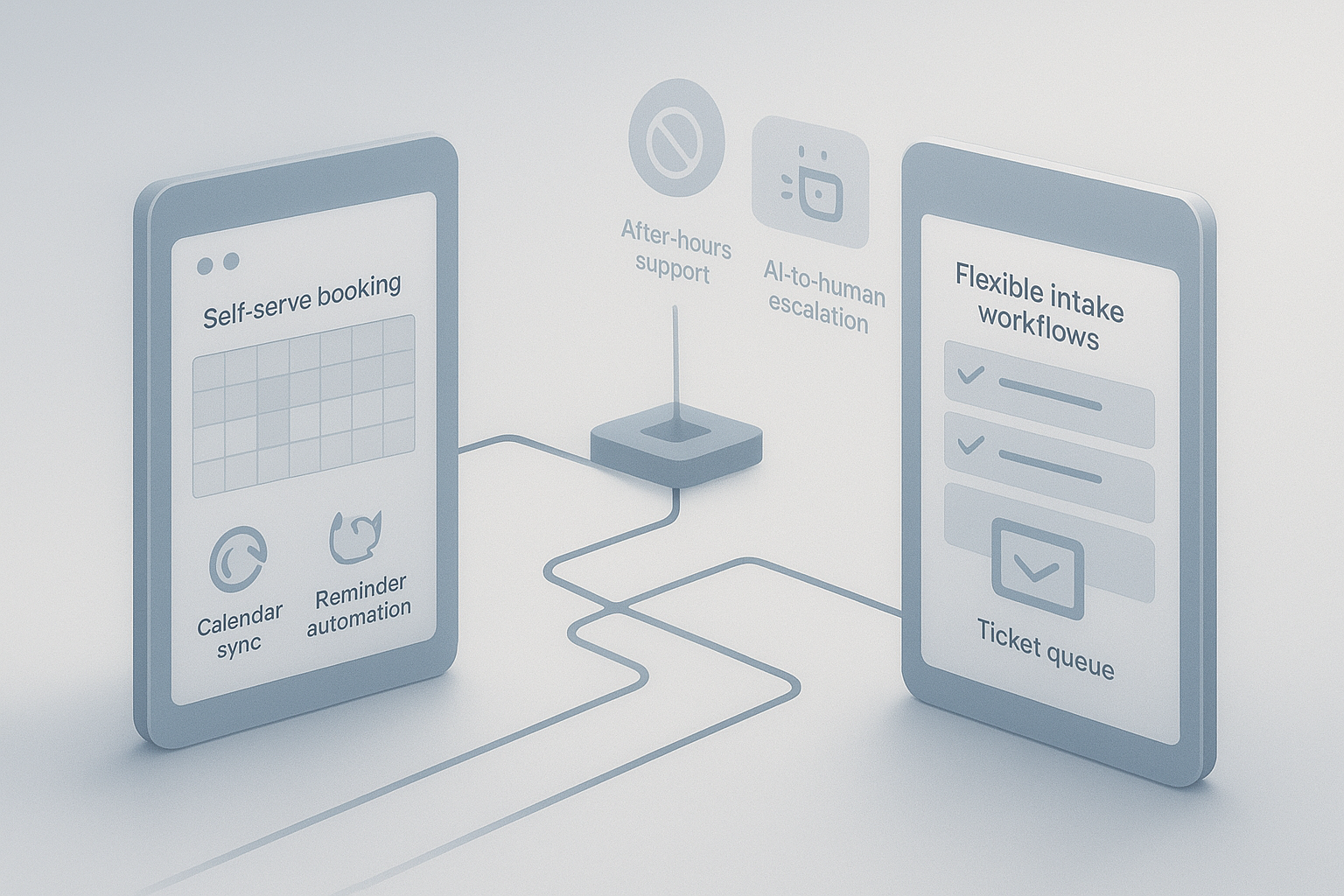
Against the three-dimension framework, both platforms show clear gaps. 24/7 availability is limited to self-serve booking; no live agent handles after-hours inquiries. AI-to-human escalation does not exist, support relies on ticket queues or email. Automation boundaries extend only to calendar sync and reminders[5]; neither platform deploys autonomous booking agents that qualify leads or negotiate custom workflows.
When Manual Platforms Excel
Manual platforms fit teams with predictable business-hours lead flow and low-complexity appointment types, client check-ins, internal meetings, or straightforward service bookings. Square Appointments, free for single-user businesses[5], suits local service businesses already using Square POS[5]. Setmore targets service businesses[4] with similar needs.
The human-touch advantage, familiar interface, no learning curve for autonomous agents, comes with a structural limitation: leads that need qualification or custom scheduling outside business hours fall through the cracks. For growing businesses facing high-velocity inbound flow or after-hours inquiries, manual platforms shift the support burden back to email queues or delayed callbacks, undermining the scheduling automation they were meant to deliver.
AI-augmented platforms shift the support model from passive calendar sync to active lead engagement. Their architecture addresses the gap manual platforms leave: after-hours inquiry handling and intelligent escalation.
AI-Augmented Scheduling: EchoLeads, My AI Front Desk, and Autonomous Booking with Human Handoff
How AI-Augmented Tools Address After-Hours Lead Loss
Manual scheduling platforms like Calendly and Acuity Scheduling provide clean booking interfaces and calendar sync, but they require prospects to navigate a self-service flow during business hours. When leads arrive outside office hours or need real-time answers before committing to a slot, manual tools cannot respond, the prospect either waits until morning or moves on. AI-augmented scheduling platforms close this gap by combining autonomous 24/7 booking with intelligent escalation to human agents when complexity or sentiment signals require it.
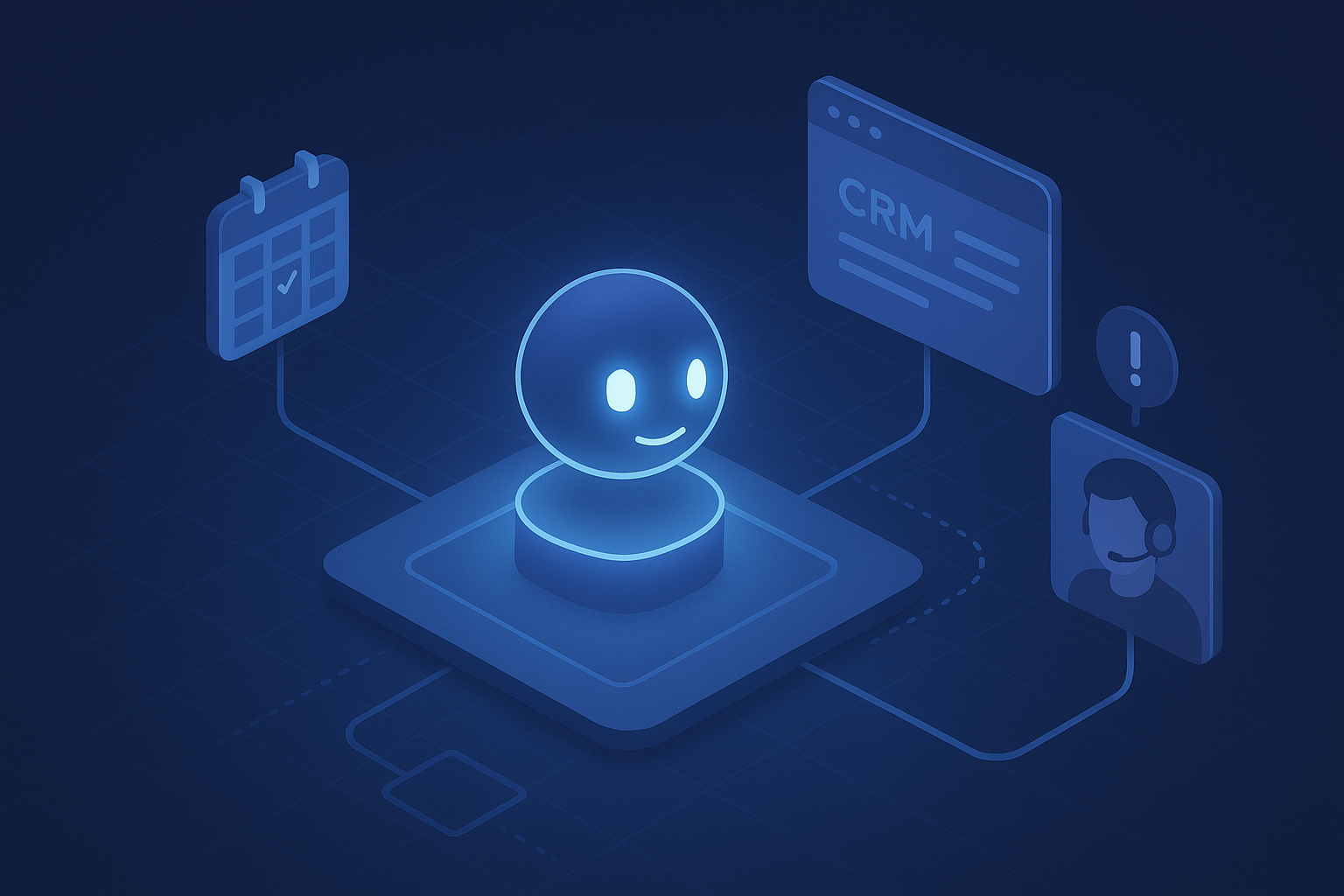
AI scheduling agents handle lead qualification, availability checks, and booking end-to-end [3], connecting directly to CRM and calendar infrastructure. For high-volume inbound scenarios, demo requests, product inquiries, consultation bookings, this model delivers operational continuity that self-service tools cannot match. Research shows nearly 90% of patients still book appointments by phone at least some of the time [6], underscoring the persistent demand for conversational booking workflows that autonomous agents are designed to handle.
The trade-off: AI-augmented platforms require upfront workflow design, CRM integration configuration, and clear escalation rules. Manual platforms have lower setup friction but offer no after-hours coverage and no intelligent routing when prospects need human guidance. For growing businesses with predictable booking workflows and high lead volume, the AI-augmented model addresses a real operational gap.
EchoLeads: Omnichannel Scheduling with Safe AI Workflows
EchoLeads handles the full AI booking workflow from initial inquiry responses to calendar confirmation and follow-up reminders without human intervention. The platform supports omnichannel booking via phone and WhatsApp, calendar conflict detection, CRM synchronization, and automated structured reminders, operating across voice, messaging, and web chat channels.
Strengths: The autonomous AI voice agents execute booking confirmations, calendar writes, and CRM field updates before the call ends, reducing manual data entry and ensuring real-time record accuracy. The customer support AI includes intelligent escalation logic that transfers conversations to human agents when complexity, sentiment, or compliance risk exceeds safe autonomy thresholds. This AI-to-human handoff model addresses the operational gap between fully autonomous tools and manual platforms: routine bookings run autonomously 24/7, while edge cases receive immediate human attention with full conversation context.
Limitations: The platform requires CRM integration setup to unlock full automation, booking confirmation, calendar writes, and field updates depend on active CRM connectivity. Complex pricing negotiations or custom contract terms still require human handoff; the AI operates within defined workflows and escalates when conversations exceed those boundaries. Businesses without established CRM workflows may face longer onboarding cycles compared to plug-and-play manual schedulers.
Best for: Growing businesses with high inbound lead volume, after-hours inquiries, and predictable booking workflows, demo requests, product inquiry follow-ups, consultation scheduling, where autonomous handling plus intelligent escalation delivers both operational continuity and safe human oversight. For implementation details on autonomous booking workflows, see the guide on how to automate appointment booking through phone calls.
Traditional appointment platforms bundle scheduling with payment processing or team management. Their support offerings follow an add-on model, scaling with customer tier rather than operational need.
Traditional Platforms with Add-On Support: Square Appointments and Setmore
Square Appointments: 24/7 Booking with Payment Integration
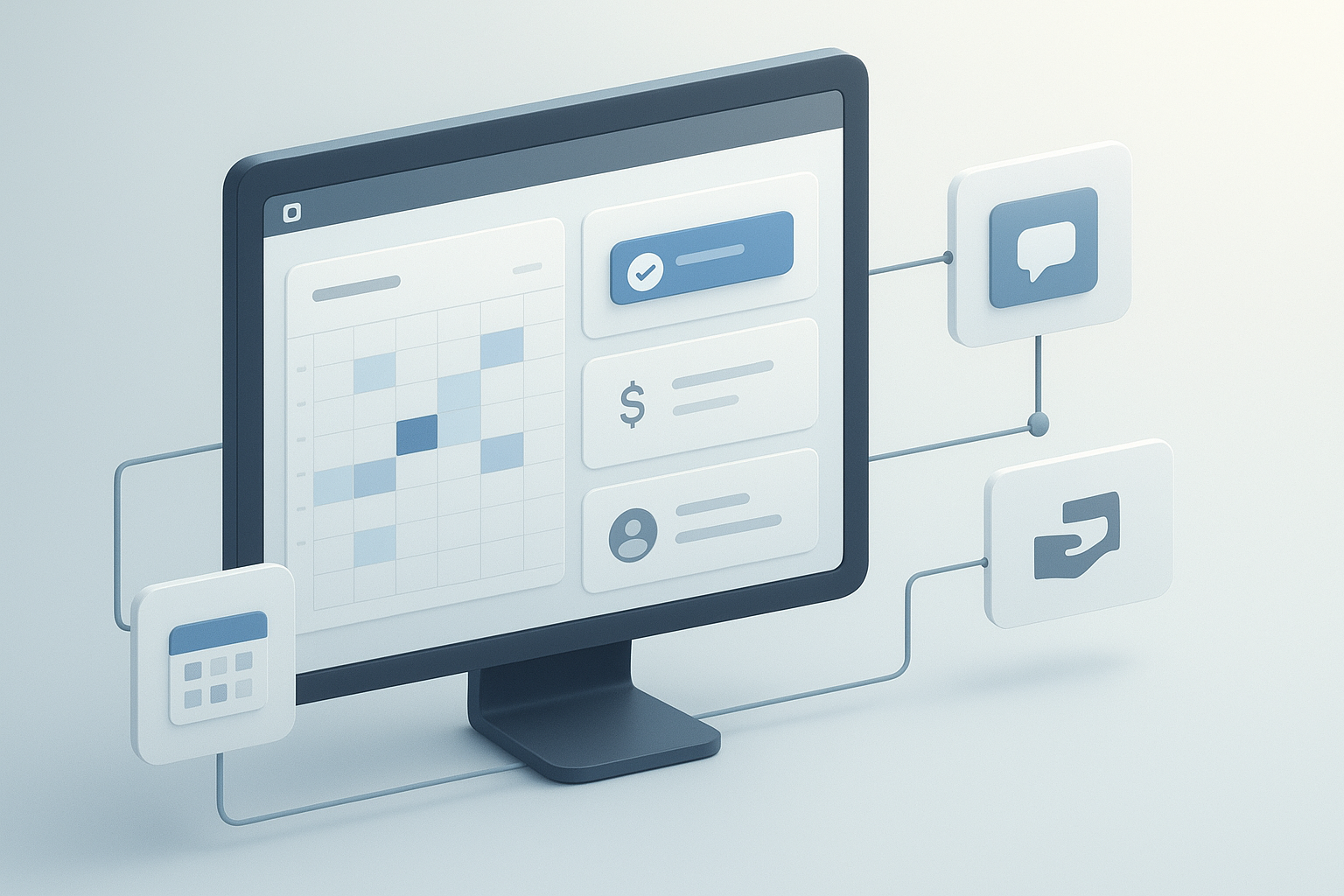
Square Appointments operates as a hybrid: clients book your services 24/7 via a self-serve site, but live support runs business-hours only. Payment processing is native (Stripe, Square, PayPal on all plans), making it ideal for salons, clinics, and fitness studios where in-person transactions dominate. Staff scheduling and resource allocation (rooms, stations) sync in real time, reducing double-bookings. However, complex qualification or after-hours escalation requires manual ticket submission, no AI-driven handoff logic.
Setmore and Fresha: Add-On Support for Multi-Location Teams
Setmore and Fresha position themselves for team-oriented workflows, round-robin scheduling, collective availability, multi-location calendars, which research suggests correlates with better internal handoff capabilities [7]. Both offer live support as a paid-tier upgrade rather than built-in escalation. If your booking volume peaks during business hours and payment processing or multi-location coordination matters more than autonomous after-hours triage, these platforms deliver. For businesses facing high inbound volume outside office hours or needing conversation-driven qualification, traditional add-on models introduce manual friction that AI-augmented tools automate end-to-end.
When to Choose Each Support Model (Scenario-Based Recommendations)
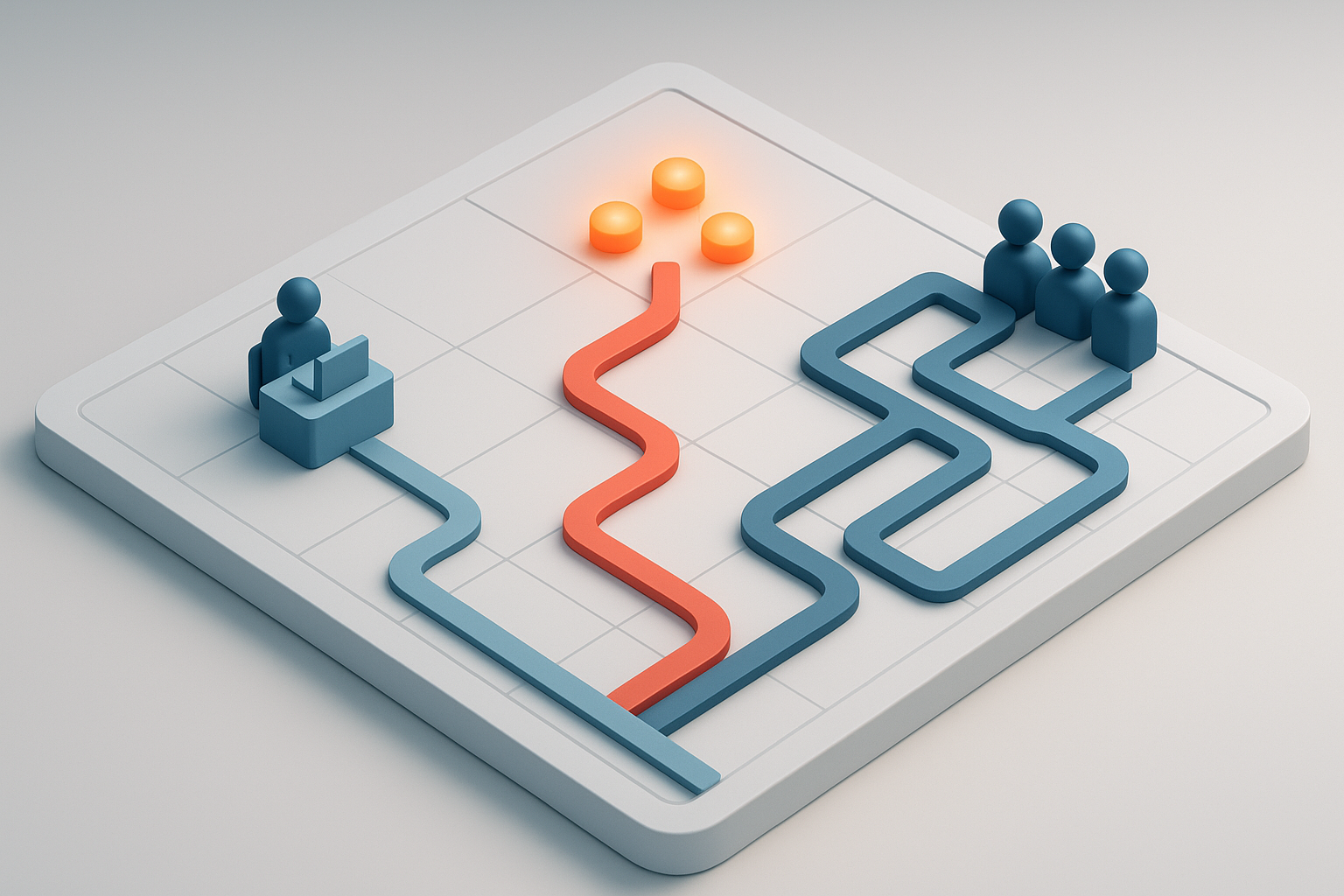
The best support model depends on lead volume, after-hours inquiry frequency, and workflow complexity. No single platform is optimal across all scenarios, here's how to match your situation to the right support tier.
Low-Volume Internal Scheduling: Manual Platforms
For businesses with predictable internal meeting cadences and minimal inbound lead volume, manual platforms like Calendly or Acuity Scheduling deliver sufficient self-serve booking. These tools handle recurring team meetings, one-on-one consultations, and scheduled check-ins where participants book during business hours. Pricing starts at $10, $16 per seat per month, and free tiers cover basic use cases with unlimited meetings and calendar sync.
High-Volume Inbound Leads with After-Hours Inquiries: AI-Augmented Tools
When inbound lead volume spikes outside business hours, operational continuity requires autonomous handling. Harvard Business Review found that companies responding within one hour are almost 7x more likely to qualify a lead, and 60x more likely than those waiting 24 hours or more[1]. For this scenario, AI-augmented platforms like EchoLeads process thousands of concurrent booking requests across phone, WhatsApp, and web chat without queue degradation. EchoLeads' 24/7 appointment scheduling ensures every lead receives immediate engagement, qualifying high-intent prospects and booking meetings directly into calendars through conversational workflows.
Service Businesses with Payment Integration Needs: Traditional Platforms
For local service businesses requiring in-person appointment booking with payment collection, platforms like Square Appointments or Setmore integrate POS systems directly into the scheduling workflow. Square's free tier includes booking pages, calendar sync, and payment processing, with paid plans starting at $29 per month per location. These tools suit salons, clinics, and retail services where deposits or pre-payments are standard.
The FAQ section addresses common questions about support escalation speed, automation boundaries, and channel availability across these tiers.
Conclusion
Manual platforms like Calendly and Acuity deliver low-friction setup and familiar interfaces but cannot handle after-hours inquiries beyond self-serve booking, creating lead loss risk for high-velocity inbound teams. AI-augmented platforms like EchoLeads provide 24/7 operational continuity and intelligent escalation but require upfront CRM integration and workflow design to define automation boundaries.
As AI agents become the default support layer in appointment scheduling, the category will split between self-serve-only tools for internal coordination and autonomous-with-escalation platforms for customer-facing lead capture, expect hybrid models to emerge that combine business-hours human touch with after-hours AI coverage.
Explore EchoLeads' AI appointment scheduling to see how omnichannel booking and intelligent escalation work for growing businesses with after-hours lead volume.
Frequently Asked Questions
What is the difference between 24/7 booking and 24/7 customer support?
24/7 booking allows customers to self-schedule via a calendar interface anytime, while 24/7 customer support provides live assistance (human or AI) for complex inquiries and escalations outside business hours [2]. Square offers self-serve access, whereas AI-augmented platforms handle autonomous booking plus intelligent escalation [3].
How do AI-to-human escalation pathways work in appointment scheduling software?
AI handles routine bookings autonomously, demo confirmations, calendar writes, conflict detection, but transfers conversations to human agents when complexity, sentiment, or compliance risk exceeds safe thresholds [3]. Escalation surfaces context and conversation history for smooth handoff, unlike manual platforms' ticket queues or email support [6].
Which appointment scheduling software has the fastest response time for growing businesses?
AI-augmented tools respond within seconds for routine bookings, manual platforms rely on self-serve booking with business-hours email support (hours to days), and traditional platforms offer paid live support. Research shows responding within 5 minutes makes leads 60x more likely to qualify than waiting longer [1].
Can appointment scheduling software handle phone calls and WhatsApp bookings?
Omnichannel support, phone, WhatsApp, web chat, is available in AI-augmented platforms, while manual platforms (Calendly, Acuity) and traditional platforms (Square, Setmore) typically support web-only or SMS-only booking [2]. AI platforms transfer complex conversations to human agents with full context when needed [3].
What are automation boundaries in appointment scheduling?
Automation boundaries separate fully autonomous tasks (demo bookings, confirmations, rescheduling within policy) from tasks requiring human intervention (complex pricing, custom workflows, compliance-sensitive requests) [2]. AI platforms run routine patterns autonomously but escalate edge cases for safety, not handling all calls without human oversight [3].
How do I choose between Calendly and EchoLeads for customer support quality?
Calendly excels for low-volume internal scheduling with predictable business-hours inquiries, self-serve booking, email support, familiar interface. EchoLeads suits high-volume inbound leads with after-hours inquiries, offering 24/7 autonomous booking, omnichannel support, and intelligent escalation for operational continuity [1].
Do appointment scheduling platforms integrate with CRM systems for real-time availability?
CRM integration and real-time calendar conflict detection are standard in AI-augmented platforms and available as add-ons in manual platforms via Zapier or native integrations. Traditional platforms focus on payment processing integration rather than CRM synchronization [7]. CRM integration prevents double-booking and maintains lead context across systems.