
What Sales Automation Tools Work 24/7 for Lead Qualification and Booking Meetings
Introduction
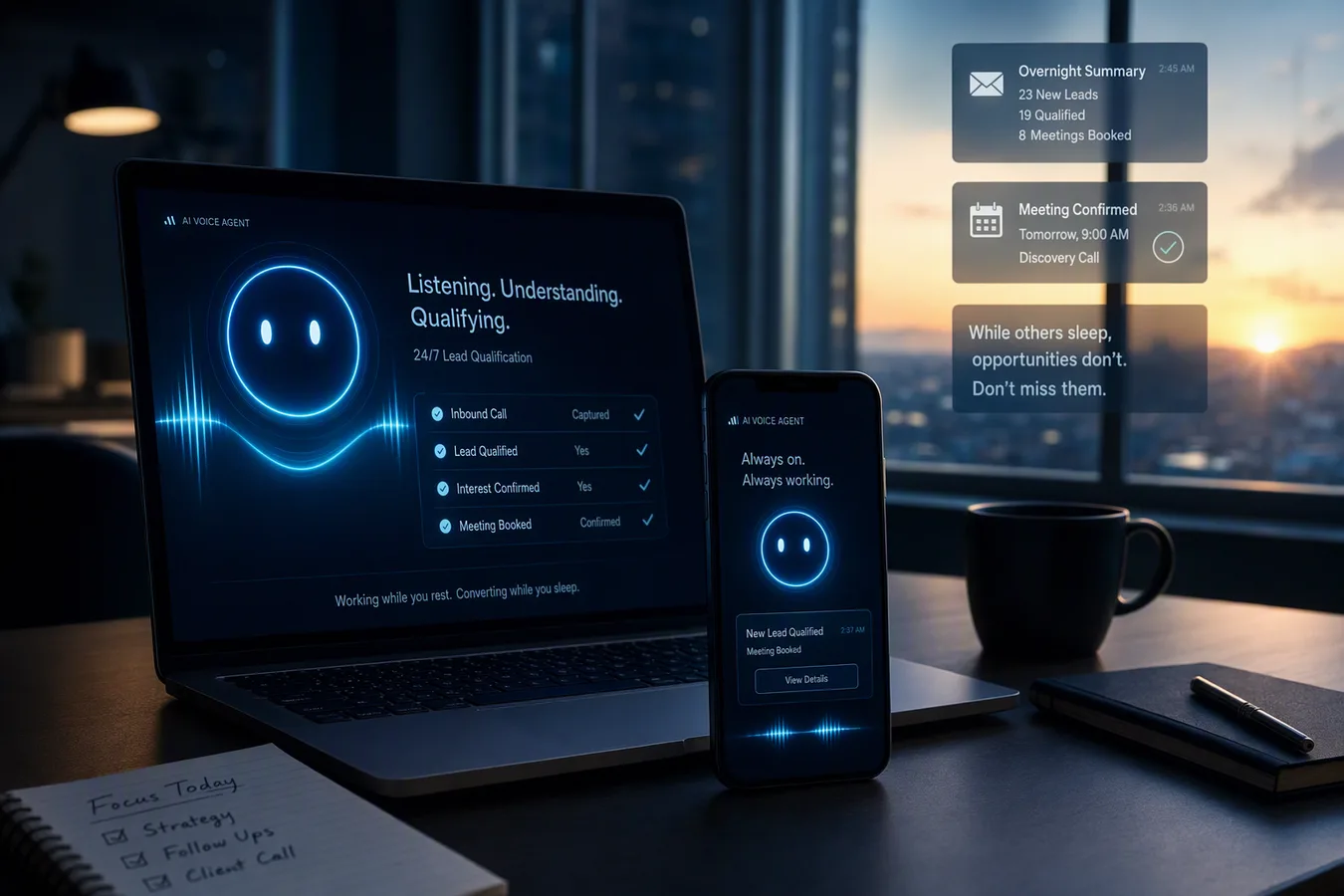
A lead submits a query at 11 PM. By 9 AM the next morning they have already booked a demo with your competitor. That lost deal isn't a sales failure, it is a speed failure.
Research confirms the pattern: 67% of lost sales happen before the conversation even starts, often because a human never responded in time. For Indian revenue teams managing high lead flow, staffing a round-the-clock qualification team is financially impossible. The practical solution is an AI voice agent that identifies interest, captures details, and books meetings directly into your team's calendar while your human reps sleep.
The technology is already running in production. In debt mediation alone, one firm's customized agents process 100,000 calls a day and deliver 1.5x more conversions than human agents. This article unpacks exactly how these always-on qualification systems work, what they cost in Indian rupees, the compliance guardrails they require, and the specific moments they must hand off to a live person.
Key Takeaways
Automated lead qualification changes the unit economics of follow-up by eliminating the delay between inquiry and first meaningful contact. Here is what the current landscape looks like for Indian operators:
AI voice agents qualify fully on their own: They run predefined scripts, evaluate interest against criteria in real time, and book meetings into Google Calendar, Outlook, or CRM schedulers without a human listening in.
Compliance is non-negotiable: Legitimate Indian deployments scrub against the DND registry, capture explicit consent, and adhere to TRAI's telemarketing regulations for every outbound and inbound interaction.
Live CRM sync makes the business case: Bidirectional read and write access during the call deduplicates records, enriches handoff notes, and ensures a rep picks up exactly where the AI stopped.
Cost is per minute, not per seat: Two-way AI voice calls run roughly ₹5 to ₹4 per minute from a prepaid wallet. That rate is the visible cost; phone number rentals, one-way announcement traffic, and wallet top-up mechanics form the total picture.
The autonomy boundary is real and defined: AI agents hand off to a human the moment a conversation hits complex objections, sensitive data disclosure, or an emotional escalation that a script cannot resolve safely.
What 24/7 Sales Automation Tools Actually Qualify Leads and Book Meetings
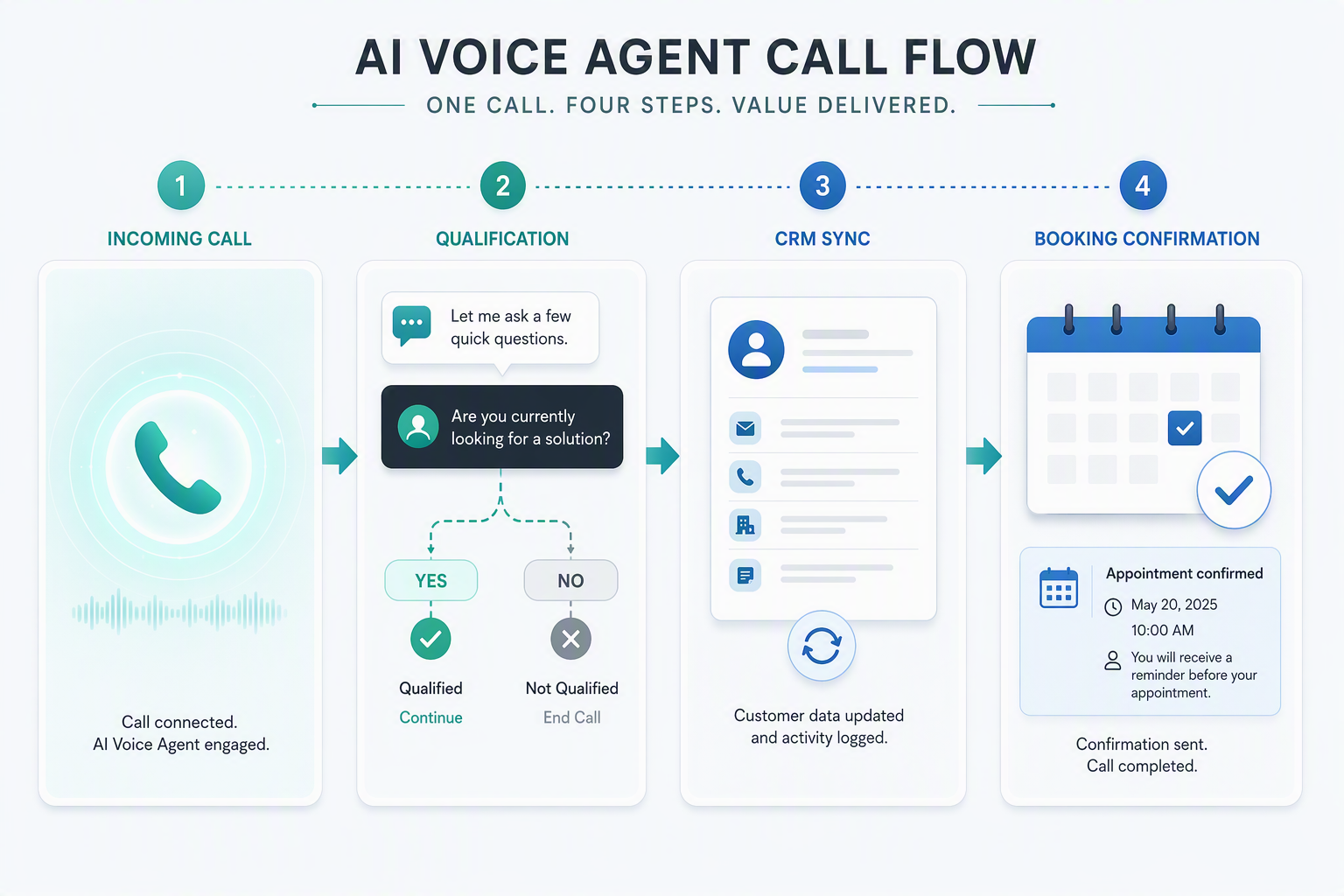
The category most Indian operators mean by "24/7 sales automation for qualification" is AI voice agents paired with a CRM and calendar engine. The sequence inside a single call is methodical.
Stage | What the AI Does | Real-World Mechanism |
|---|---|---|
Inbound Answer or Outbound Dial | Picks up within seconds or dials a scrubbed list. EchoLeads deploys agents that answer inbound calls within 3 seconds. A delay at this point already drops conversion probability significantly. | The Voice Logica platform evaluates prospect interest in real time, collecting key information and automatically recording the data in your CRM. |
Qualification Conversation | Converses in natural language, asks the discovery questions programmed into its script, and scores the lead against predefined criteria while the call is still live. | The AI evaluates the quality and level of interest based on those predefined criteria during the call itself, never after a batch upload. |
Meeting Booking | Checks the team's live calendar for an open slot, proposes it to the prospect, and confirms the booking in a single step. | EchoLeads books appointments directly into Google Calendar, Outlook, or CRM-based schedulers. |
CRM Recording | Writes the call summary, qualification tags, and booking confirmation into the CRM record. A bidirectional sync pulls in contact history before the call and pushes the outcome after it. | The Voice Logica agent automatically records data in your CRM; Intone's deployment integrates directly into the CRM for smooth tracking. |
The distinguishing technical fact is that these systems manage a large number of simultaneous conversations. They do not scale by adding seats; they scale by adding simultaneous call capacity, which means qualification throughput isn't bottlenecked by hiring.
Why Indian Businesses are Adopting 24/7 AI Voice Agents for Lead Qualification
High lead volume combined with thin evening staffing creates a predictable leak. A real estate developer running a digital campaign generates inquiries well past office hours; an EdTech firm collecting leads from a webinar at 9:30 PM needs immediate follow-up before the prospect moves on. The economics of hiring a night-shift qualification team for every possible time zone do not work in India, and the pace of lost opportunity makes the status quo painful. One deployment operating at scale, Intone's customized voice agents for a debt mediation client, runs 100,000 calls a day. That is throughput no human team can match.
And the conversion math is straightforward. Intone's client reports the AI is delivering 1.5x more conversions than human agents on the same workload. That lift comes from consistency and zero wait time.
Inside the AI Lead Qualification Call: From First Hello to Meeting Booked
Understanding the granular call flow removes the mystique. Here is the exact sequence a properly built AI voice agent runs through, independent of the vertical it serves:
Call initiation: The agent answers an inbound call or dials a prospect from a DND-scrubbed list, opening with a clear brand identification and purpose statement.
Prospect identification: It confirms the prospect's name and the nature of their inquiry, pulling existing CRM records if available through live bidirectional sync.
Need discovery: Using its programmed script, the agent asks open-ended qualification questions specific to the industry. In real estate it is budget, location, and possession timeline. In EdTech it is course interest, prior education, and intent to enroll.
Qualification scoring: While the prospect answers, the agent evaluates the response quality and interest level against predefined criteria, flagging leads that clear a scoring threshold for immediate booking.
Objection handling: Common objections receive scripted responses; if the objection is outside the script's range, the system triggers an escalation marker but continues the call gracefully.
Meeting scheduling: For qualified leads, the agent reads the available calendar slots, proposes a time, and confirms the booking. EchoLeads books appointments directly into a team's calendar at this point.
CRM closure: The agent writes a structured summary, attaches the recording and qualification tags, pushes the booking confirmation, and sets the lead status. The rep sees a complete record when they log in.
Live CRM Syncing: Why Bidirectional Data Flow is the Central Nervous System

Without real-time CRM access, an AI voice agent is just a smart dialer. The qualification becomes a data island and the handoff breaks.
Bidirectional sync means the agent reads from and writes to the CRM during the live call. Before the first word, it pulls the contact history, lead status, and any prior interaction notes. If a lead is already qualified or booked, the agent adjusts the conversation accordingly. During the call, the agent writes qualification tags, interest scores, and call summaries directly into the same record it pulled from. The Voice Logica platform demonstrates exactly this pattern, evaluating prospect interest in real time and automatically recording the data in your CRM without a post-call batch job.
The operational payoff is that a human rep receives a hot handoff rather than a cold record. The CRM shows what was discussed, what objections were raised, the booking that was confirmed, and the lead's specific stated need. Companies using Salesforce CRM saw their sales cycles shrink by 29% and spent 75% less time on manual data entry. Plugging an AI voice agent into a CRM that is already integrated, EchoLeads syncs bidirectionally with Salesforce, HubSpot, Pipedrive, and Zoho, turns the CRM from a logging tool into the live backbone of the qualification loop.
The India Compliance Mandate: DND, Consent, and TRAI Rules for AI Calling
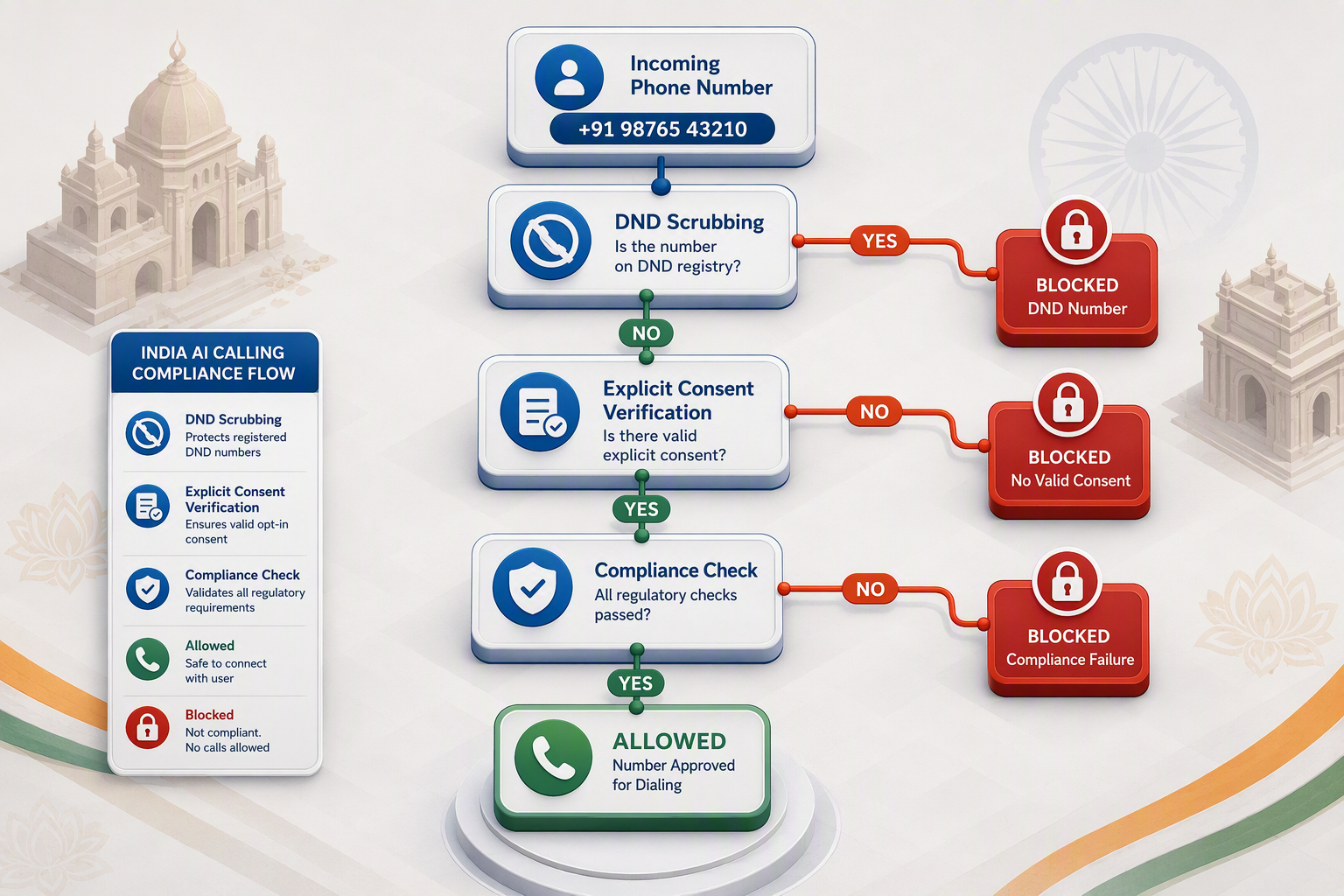
Any discussion of automated calling in India that skips compliance is incomplete. The regulatory framework is specific, enforced, and tightening with new technology. TRAI has proposed AI tools to detect and block spam calls and messages, signaling that the regulator is watching automated dialing traffic closely.
A legitimate deployment must scrub every outbound number against the DND registry before the first ring. This is not optional. The scrub must be embedded in the call initiation sequence, not a periodic batch that leaves a compliance gap.
Explicit consent capture is the second pillar. For outbound calls, consent must be recorded and provable. The AI agent's script should state the purpose of the call, identify the brand, and offer an opt-out mechanism. For inbound traffic, consent is inferred by the act of calling, but the recording retention policy still matters.
The practical safety valve is working only with tools that document their compliance posture explicitly. The article warns that missing compliance documentation is a red flag. Operators should demand to see how the tool handles DNC list integration and consent recording before running a single call.
Pricing Architecture: Decoding Per-Minute Costs, Wallet Models, and Hidden Drivers for Indian Operations
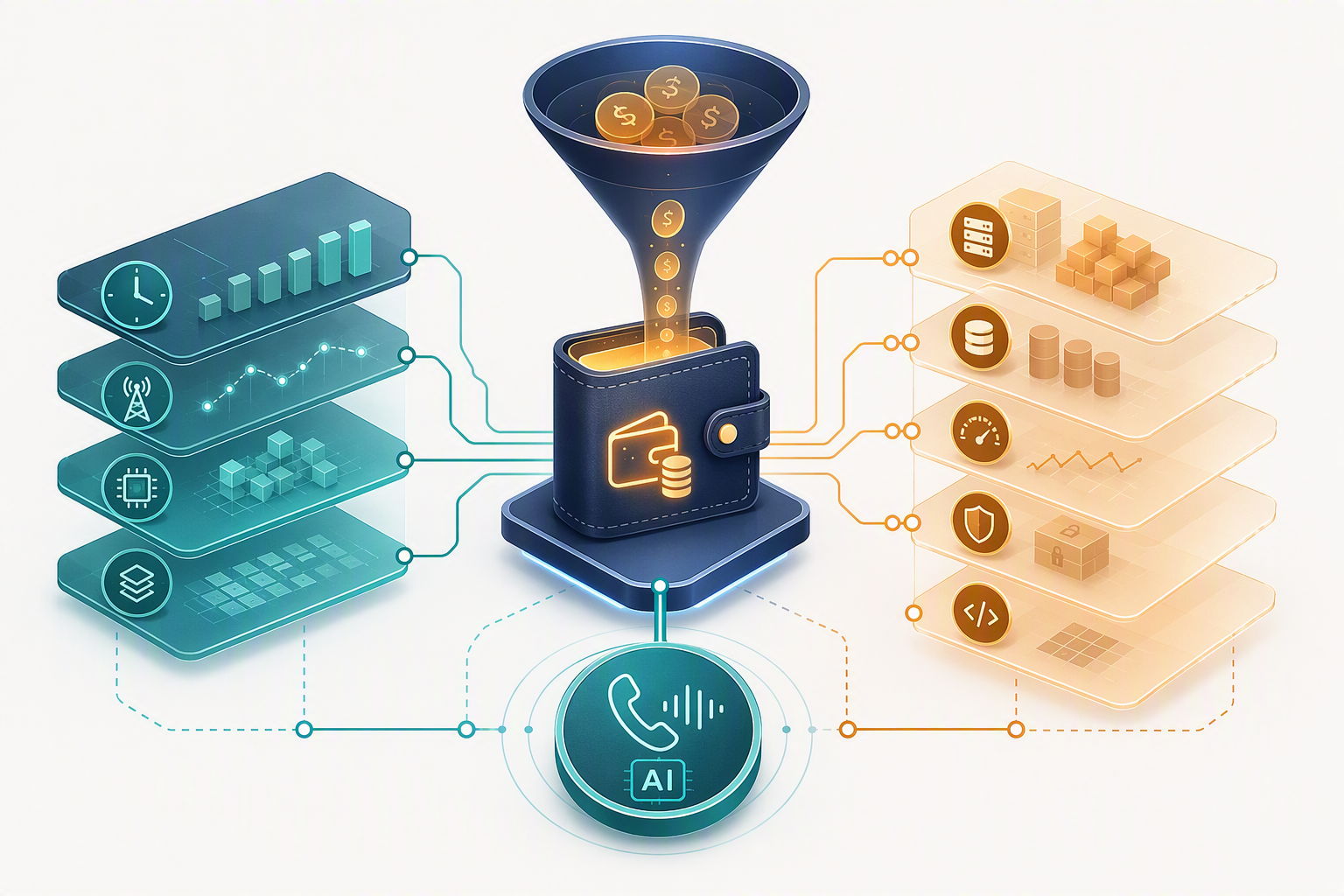
The headline rate is per minute, but the total cost has several contributing line items that procurement teams need to model. Here is a breakdown of the architecture, using published Indian pricing as a reference:
Cost Driver | Rate and Mechanism | What It Covers |
|---|---|---|
Two-Way Conversation Minutes | ₹5 to ₹4 per minute drawn from a prepaid wallet. Rate tier depends on committed volume. | The actual live dialogue between the AI agent and the prospect; billed for both inbound and outbound legs. |
One-Way Announcement Minutes | Approximately ₹1.3 per minute. | Pre-recorded or dynamically generated messages delivered without a conversation loop, such as payment reminders or event notifications. |
Phone Number Rental | Monthly recurring charge per number, separate from usage minutes. The exact fee varies by provider but is a fixed cost per active line. | Provisioning and maintaining the DID or mobile number the agent uses. Operators need one number per concurrent call identity. |
Wallet Top-Up Mechanics | Calls are billed per minute from a prepaid wallet. The wallet must carry a sufficient balance to cover peak call volume; an underfunded wallet stops calls. | Budget planning requires padding the wallet for call spikes. Recharge latency can cause service interruption if a top-up threshold is not set. |
Enterprise Volume Agreements | Some platforms, including EchoLeads, publish enterprise rates as low as ₹1.80 per minute with committed usage agreements. | Bulk committed minutes purchase the lowest per-minute rate but shift cost from variable to fixed-commitment. |
The key takeaway: platform rate alone is not the true total cost. Build a model that includes number rentals, a 10 to 15% wallet buffer for spikes, and the blended rate across two-way and one-way traffic.
The Autonomy Boundary: Knowing Exactly When AI Must Hand Off to a Human
A responsible deployment does not try to make the AI handle everything. The platform must know its limits and hand off cleanly. AI voice agents are explicitly designed for predefined qualification scripts; the moment a conversation drifts outside that boundary, the system must recognize the trigger and escalate. The three clear triggers are:
Complex objections: the script cannot resolve a nuanced or unexpected objection from the prospect.
Emotional escalation: the prospect's tone indicates distress, frustration, or anger during the conversation.
Sensitive data disclosure: the exchange involves personal data that falls outside the consent scope already captured.
EchoLeads allows businesses to configure handoff triggers based on conversation keywords, sentiment scores, or explicit prospect requests. The handoff itself must transfer the full call context, what was said, what triggered the escalation, and where the conversation stopped, directly into a live rep's queue with the CRM record attached. The human representative picks up the conversation as a continuation, not a restart.
Industry Playbooks: Vertical-by-Vertical Qualification for Maximum Conversion
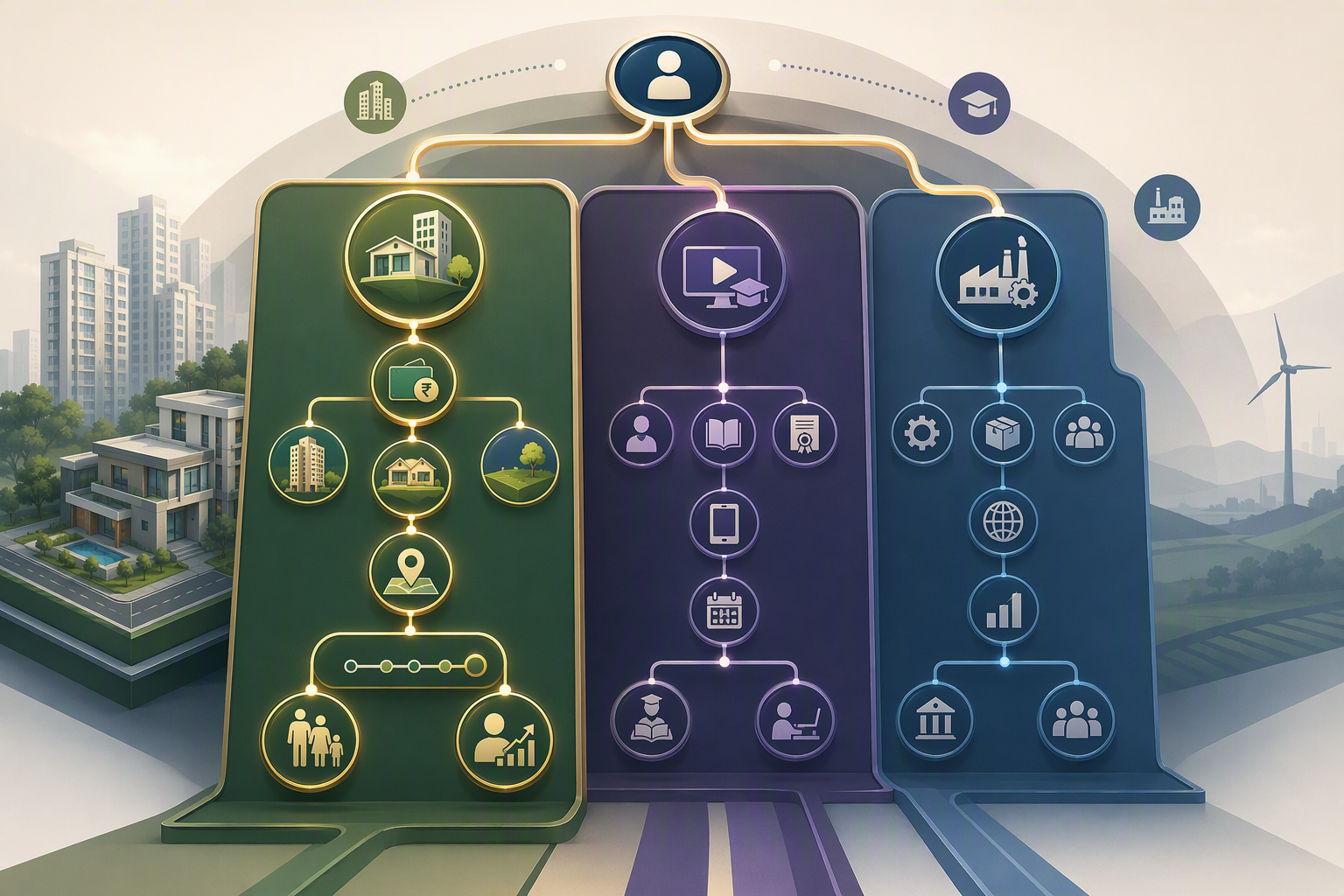
A generic qualification script produces generic conversion rates. Each vertical in India carries distinct buying signals, and the AI agent's question tree must mirror those signals. In real estate, the script must capture budget bracket, property type preference, location, possession timeline, and whether the prospect is an end-user or investor. Echoleads.ai's examples for real estate show that the questions are structured to segment high-intent buyers from casual browsers quickly, because a delay here means the lead goes cold.
In EdTech, the questions shift entirely. The agent asks about the learner's current grade or professional stage, the specific course or exam preparation interest, prior online learning experience, and the urgency of enrollment. The scoring model weights immediate intent more heavily than browsing behavior.
Financial services qualification requires an extra compliance gate. Before any deep discovery, the agent confirms that the conversation falls within the consent already documented. The qualification questions then probe: the specific product interest (loan, insurance, investment), the approximate asset or loan value, and the timeline for a decision. The script must build in an immediate handoff trigger the moment product advice crosses into regulated territory that requires a licensed human.
In healthcare, the sensitivity is highest. The agent qualifies on non-clinical variables: the type of facility or service needed, the insurance coverage status, and the preferred appointment window. Clinical questions are strictly out of scope and trigger a handoff by design. Intone's industry-specific voice agents cover financial services, insurance, healthcare, real estate, and education with vertical-specific workflows, and the pattern across all of them is the same: qualify against the dimensions that matter to that industry while clearly demarcating where the AI's role ends.
Conclusion
The reason companies are switching to always-on qualification is simple arithmetic. A lead contacted in five minutes converts at a materially higher rate than one contacted in five hours, and night-time staffing budgets cannot match AI throughput. The technology today combines natural-language call handling, live CRM syncing that writes qualification data during the conversation, and direct calendar booking that removes the scheduling back-and-forth lag. The guardrails that matter are Indian: DND scrubbing, consent capture, and clear human handoff triggers for the conversations where a script isn't enough. The next step is a structured vendor evaluation against these exact dimensions, starting with a trial call to see whether the AI sounds like a reason your prospect would actually book a meeting.
Frequently Asked Questions
What types of AI sales automation tools can qualify leads and book meetings 24/7 without human intervention?
AI voice agents are the primary tool. They handle natural-language phone conversations, run predefined qualification scripts, score interest against criteria in real time, and book meetings directly into a team's calendar, all without a human listening in.
How does an AI voice agent qualify a lead during a phone call and decide to book a meeting?
A complete AI qualification call follows four smooth steps:
- Discovery: the agent asks the discovery questions programmed into its script and evaluates responses against predefined criteria during the live call.
- Scoring: if the lead clears the scoring threshold based on the evaluation, the agent proceeds to the next step.
- Scheduling: the agent checks an open calendar slot and books the meeting in one step.
- Documentation: the agent writes the outcome, qualification status, meeting details, and call summary, directly to the CRM.
What are the critical compliance requirements for 24/7 outbound and inbound AI calling in India, including DND and consent?
Outbound calls require a real-time DND registry scrub before dialing, explicit and provable consent capture, and clear brand identification. TRAI's telemarketing regulations govern both outbound and inbound calling. Deployments must document their compliance posture; missing documentation is a critical red flag.
How does live CRM syncing during a call improve lead qualification accuracy and sales workflows?
Bidirectional sync reads contact history and lead status before the call and writes qualification tags, call summaries, and booking confirmations during it. The human rep receives a hot handoff with full context rather than a cold record requiring manual data entry.
What are the limitations of AI voice agents, and when must they hand off to a human representative?
AI agents are designed for predefined qualification scripts. They should hand off when a conversation hits complex objections the script cannot resolve, involves emotional escalation or sensitive data disclosure, or drifts into regulated territory requiring a licensed human. Handoffs should transfer full call context to the rep.
How are pricing models structured for 24/7 AI voice sales agents, and what drives the total cost beyond the per-minute rate?
Calls are billed per minute from a prepaid wallet, with several cost components to consider:
- Voice rates: two-way conversations run roughly ₹5 to ₹4 per minute, while one-way announcements cost around ₹1.3 per minute.
- Phone number rentals: monthly fees apply for each dedicated phone number used in the deployment.
- Wallet buffer: a reserve balance is needed to handle call spikes without service interruption.
- Blended traffic costs: total cost accounts for the mix of call types (two-way vs. one-way) across all traffic.