
67% of Lost Sales Happen Before the Conversation Even Starts, Your Team Is Chasing Ghosts, Not Prospects

Introduction
Your top rep just spent three hours on a follow-up call, a custom deck, and a demo. The prospect was enthusiastic, asked great questions, and promised to get back next week. That was a month ago, and the deal is now a cold spot in your CRM.
Across India, sales floors hum with this exact energy, high effort, low conversion, and a creeping suspicion that your team is busy but not productive. This isn't a motivation problem; it's a diagnosis problem. Your pipeline is clogged with unqualified leads, people who will never buy regardless of how charming or prepared your rep is.
Industry data points to a brutal reality: 67% of lost sales result from reps failing to qualify leads properly before investing serious time. In an Indian market where scale and speed are the currency of growth, letting your most expensive resource spend hours on dead-end conversations is self-sabotage. A platform like EchoLeads can deploy AI voice agents that answer an inbound lead within 3 seconds, score intent instantly, and let your human reps only talk to people who actually matter. This article unpacks why your pipeline is failing, how to spot unqualified leads in seconds, and how instant filtering gives you back the time you thought was gone.
Key Takeaways
Here are the concrete realities every Indian sales leader must confront about wasteful pipeline activity:
67% of losses come from the qualification gap: The majority of lost revenue tracks back to failing to filter leads before full-scale outreach, not a lack of skill in closing.
The MQL-to-SQL benchmark is stubbornly low at 13%: Unless you filter aggressively, only 13% of marketing qualified leads typically convert high enough to warrant a sales call, according to Salesforce data.
BANT fixes the gut-feel trap: Moving from
At a Glance
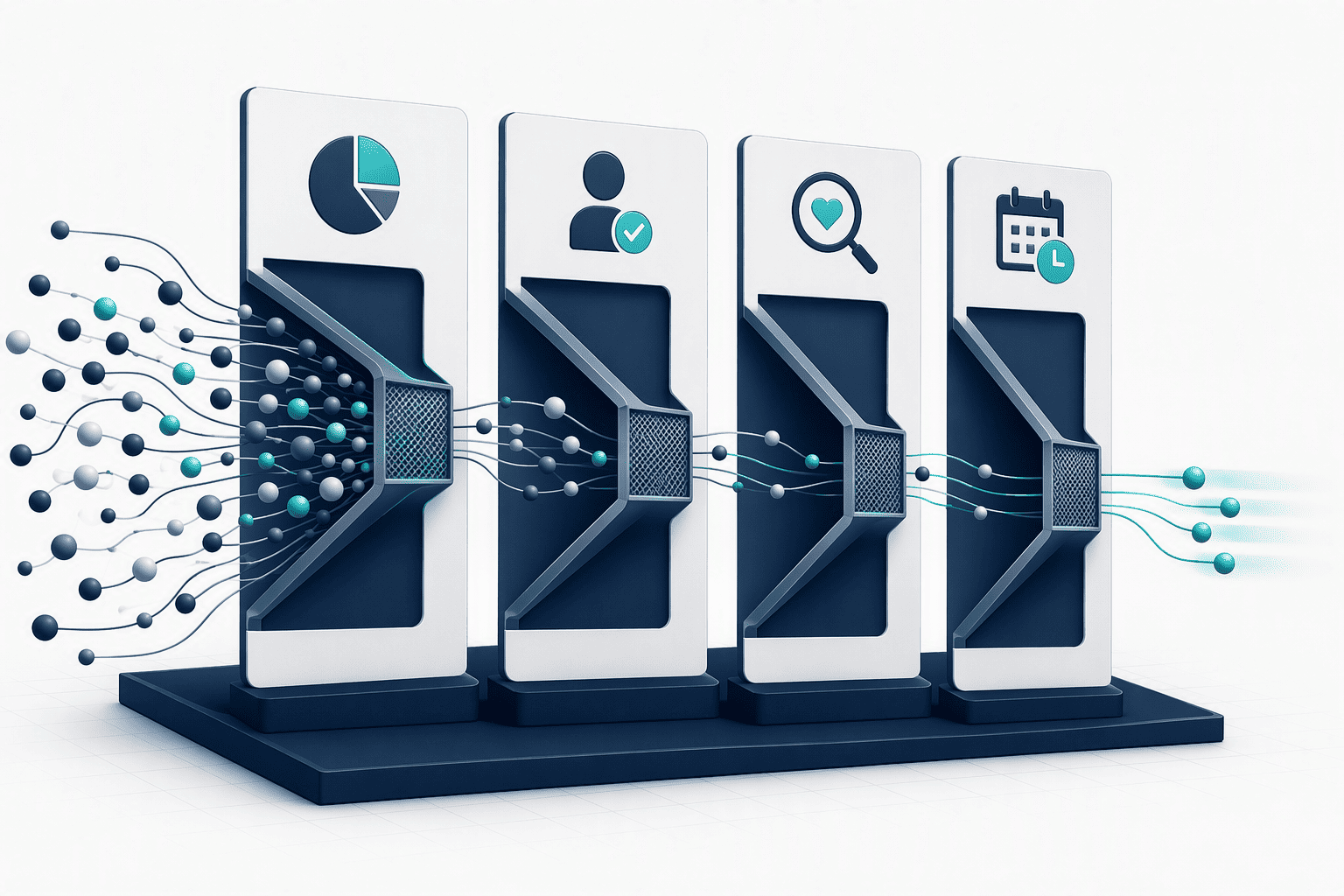
Here is how the options compare across the dimensions that matter most.
Qualification Criteria | Purpose | Common Misuse | How It Unclogs the Pipeline |
|---|---|---|---|
Budget | Confirms prospect has funds allocated | Assuming interest equals ability to pay | Filters out contacts who can't afford your solution regardless of enthusiasm |
Authority | Identifies decision-maker with purchasing power | Chatting with influencers who can't sign | Prevents presenting to gatekeepers who lack final approval |
Need | Validates a specific business problem your product solves | Overlapping general interest with urgent requirement | Eliminates curiosity seekers who have no real pain point |
Timing | Establishes a realistic purchase timeline | Accepting “someday” as a committed date | Flags leads who are months away from a decision, allowing focus on immediate opportunities |
Intent Scoring | Assigns a numerical value based on engagement signals | Relying on gut feel or misreading friendliness | Automatically ranks leads using actions like demo requests, pricing page visits, or specific queries, reducing manual guesswork |
The Real Cost of Unqualified Leads: Definition, BANT, and the Qualification Gap
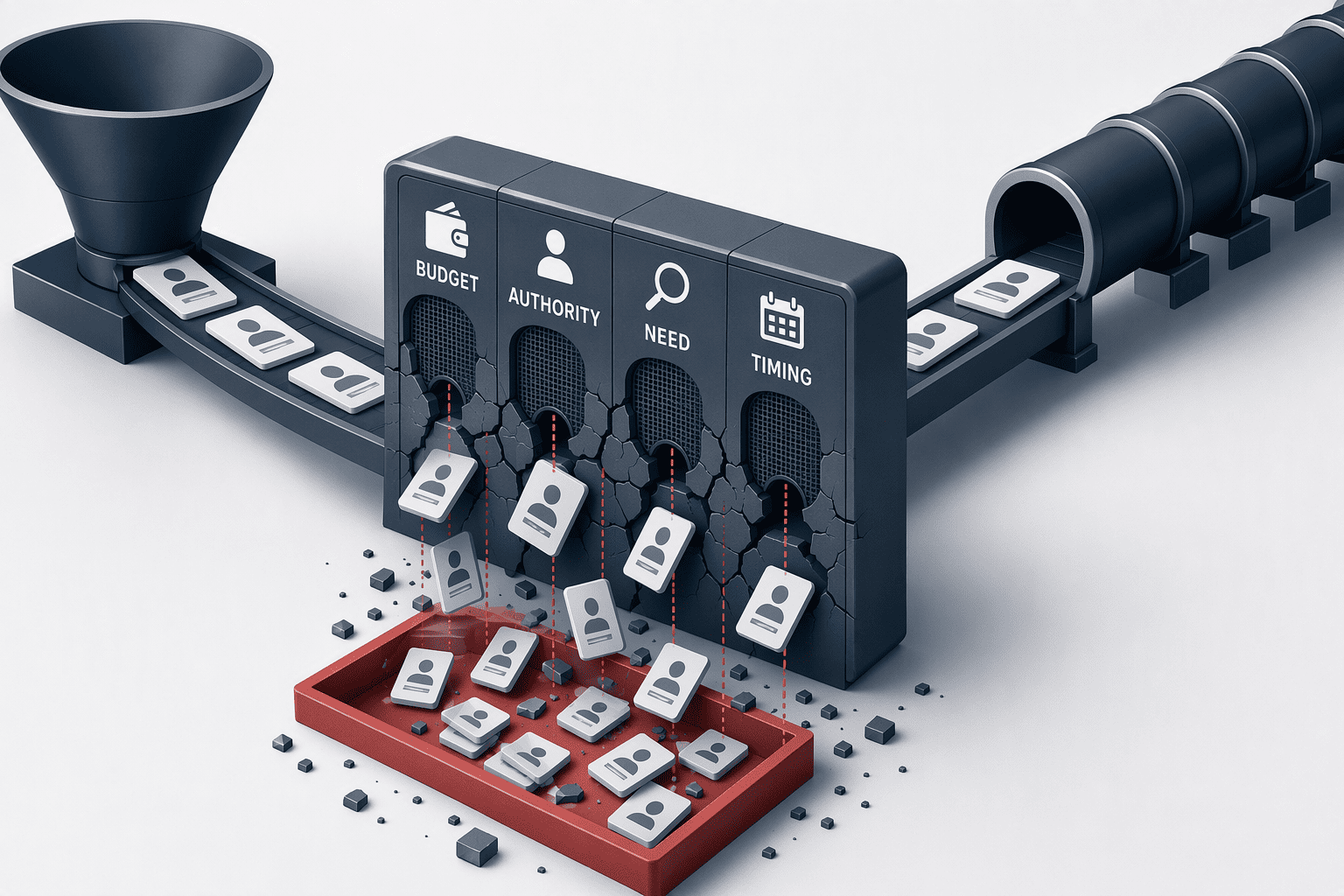
A sales team spending three hours a day chasing someone who will never buy is not just frustrated, it is burning money. An unqualified lead is a contact who has not demonstrated the core pillars of purchase intent: Budget, Authority, Need, and Timing (BANT). You are essentially paying a salary for noise. The data confirms the severity of this leak: 67% of lost sales happen because reps fail to qualify properly before outreach.
The gap usually appears right at the handoff between marketing and sales. Marketing might count a whitepaper download as a marketing qualified lead (MQL), meaning the prospect has shown interest. But a sales qualified lead (SQL) is someone ready for a direct conversation. If your team lacks a rigid scoring model to bridge these definitions, your pipeline fills with MQLs that are actually cold contacts. You feel busy, but your weighted pipeline value tells a different story.
Look at your conversion rates. If your team is struggling to close, compare your MQL-to-SQL rate against the benchmark standard of 13%. Falling below this often means reps are hand-holding prospects who were never a fit. The immediate cost is payroll allocated to dead ends; the long-term cost is missed revenue because top-tier accounts got neglect while you over-prepared for generic inquiries.
Why Indian Sales Pipelines Breed Unqualified Leads

Indian sales floors often worship activity over outcome. The pressure to hit dial targets creates an environment where reps chase volume instead of precision. This is where gut feel overtakes data. A rep gets excited because a prospect sounded friendly on a cold call, confusing politeness with purchase intent. But being liked is not a BANT criterion, and that friendly contact becomes a zombie deal clogging the CRM for months.
Another uniquely brutal drain is the over-customization trap. Teams in India frequently compete on service, leading to a culture of bespoke pitch decks for every inquiry. The problem is brutal efficiency: Sales reps in a SaaS startup spent hours on hyper-specific decks, only to find 80% of their content never came up in conversations. When you invest three hours building a presentation for a lead with no budget or authority, you have lost those hours forever.
The failure to use exit criteria compounds this. Reps often chase deals that are already dead, convincing themselves a prospect just needs one more follow-up. Without a tool to classify lead status precisely, the pipeline turns into a graveyard of
How AI Voice Agents Score and Filter Leads Instantly
Static web forms depend on a prospect's honesty. People lie, even on simple fields. Modern AI voice agents bypass that problem entirely by analyzing how a lead speaks during a live call.
These agents deploy instantly and answer inbound calls within 3 seconds. During that call, the AI runs a qualification script built on your BANT criteria. It picks up on behavioral signals, tone, pause length, and specific keyword triggers, then uses those signals to assign a score on a 0 to 100 scale.
Leads can be filtered by status chips automatically: new, working, qualified, unqualified, converted. When a lead hits a green threshold (say, 70+), the system applies a logic that a human often ignores. It checks for genuine budget signals.
You can configure a tool like EchoLeads to instantly triage this. If the AI detects a high score, it syncs CRM records during live calls and books an appointment directly into your Google Calendar. If the score is low, the AI handles the objection, gathers context, and silently files the record without hitting a rep's inbox.
The technical leap here is immediate data integrity. Because the tool carries the lead's details into the new account or opportunity directly, you eliminate the re-typing errors that corrupt databases.
The AI applies a customizable lead scoring system that a human SDR would often skip on a Monday morning. This separates the window shopper from the buyer in the first 30 seconds of contact, so your human team sees a pruned list of contacts genuinely ready for a sales conversation.
What to Look for in a Lead Filtering and Qualification Tool
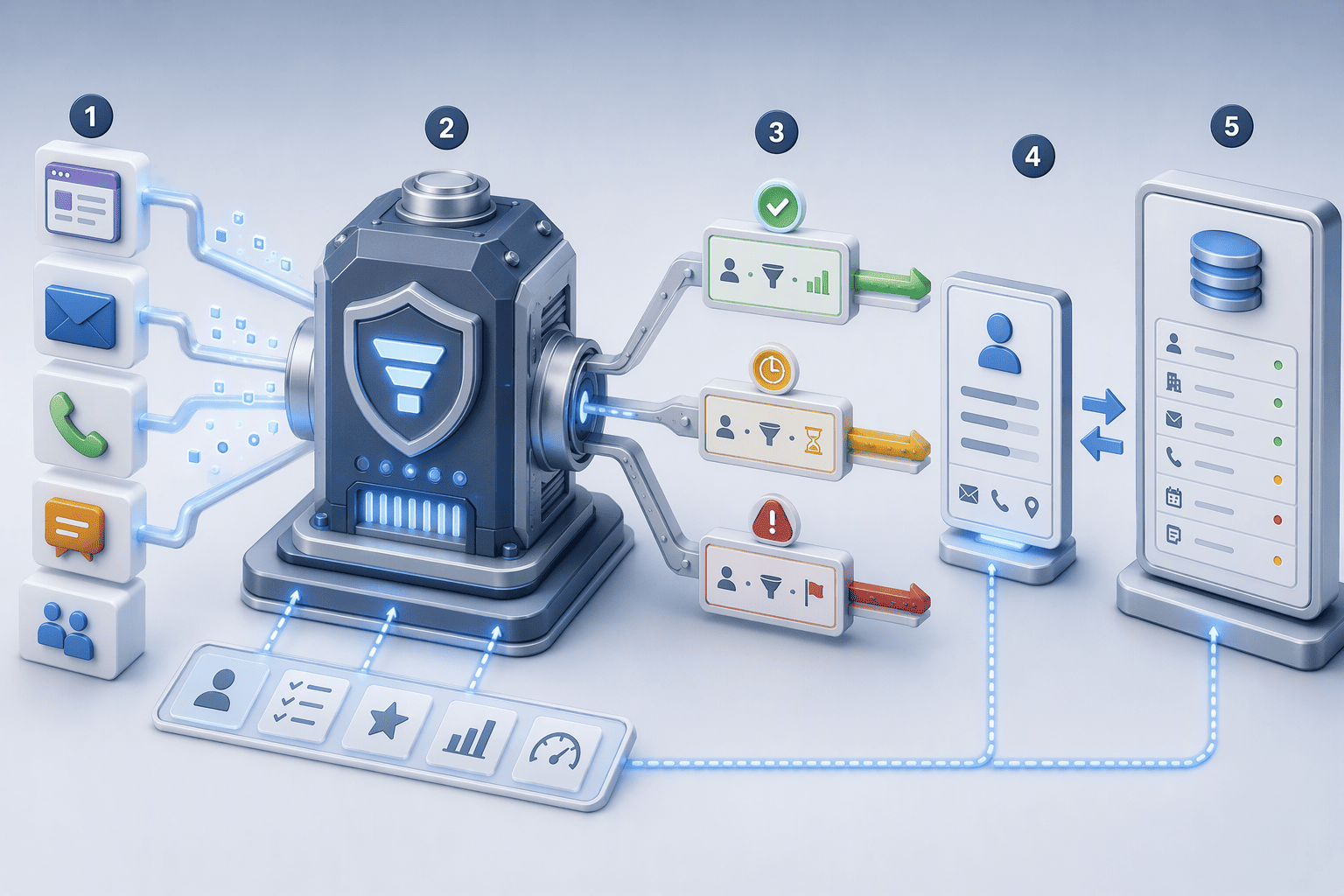
Do not buy a tool that just acts as a faster dialer. You need a filtering engine that acts as a gatekeeper. Look for these non-negotiable features:
Deep bidirectional CRM sync: Integrates bi-directionally with Salesforce, HubSpot, Pipedrive, or Zoho so you avoid a shadow database that creates compliance and data quality nightmares; the tool must push conversation summaries and scores directly into contact records without manual copy-pasting.
Configurable handoff triggers: Bases handoffs on conversation keywords, sentiment scores, or explicit prospect requests rather than bluntly forwarding every call, preventing angry contacts from being transferred to expensive closers.
Indian data compliance: Allows you to control which CRM fields it writes to and respects data deletion or anonymization protocols when records are no longer needed.
Transparent pricing aligned with scale: Avoids deceptive low per-minute rates by offering pay-as-you-go pricing (e.g., starting at ₹4/minute or lower enterprise agreements); a tool like EchoLeads handles hundreds of simultaneous calls without dropping response quality, and vendors must offer instant deployment rather than multi-week setups.
The Time and Cost Savings Indian Teams Report After Automation
Indian sales floors operating on thin margins see automation payback immediately in reclaimed hours and reduced operational overhead, with benefits extending far beyond payroll.
Discovery time eliminated: A typical SDR reclaims hours previously lost to discovery calls that went nowhere because AI filters out unqualified chatter before the handoff.
Meeting preparation waste stopped: Reps stop running generic product demos and stop spending two hours building hyper-specific unused decks for prospects who were never a fit.
24/7 coverage without overtime: AI voice agents operating autonomously eliminate the cost of paying overtime or night-shift allowances to cover inbound inquiries at odd hours.
Missed call cost slashed: The cost of a missed midnight call drops from a lost deal to an automated ₹4/minute conversation, converting after-hours inquiries instantly.
Software paid for by saved time: The sunk labor cost of preparing for dead prospects alone covers the automation subscription fee, turning wasted rep time into fruitful conversations that actually convert.
Churn reduction and morale recovery: Giving reps a pipeline where most conversations are with ready buyers reverses the burnout caused by constant rejection from unqualified leads, shifting the focus from the desperation of chasing dead deals to the satisfaction of consultative selling.
Handling Complex Calls: AI Triage and Human Handoff in Practice

AI qualification is not about removing humans; it is about saving them for the moments that count.
No tool should attempt to handle emotionally charged conversations or complex negotiations autonomously. The practical magic is in the triage.
In practice, an AI voice agent handles the initial greeting and BANT interrogation. When the prospect triggers a specific keyword or expresses a specific pain point, the agent triggers an automated assessment.
The transition must be smooth. If a caller says
Frequently Asked Questions
What exactly defines an unqualified lead versus a qualified one, and why do teams waste time on them?
An unqualified lead is a contact who hasn't demonstrated budget, authority, need, or timing (BANT). A qualified lead shows clear purchase intent aligned with your ideal customer profile. Teams waste time chasing them because 67% of lost sales result from failing to qualify properly before outreach, often getting excited by verbal promises rather than verified fit.
What are the biggest causes of poor lead qualification in sales pipelines in India?
The biggest causes of inefficiency in Indian pipelines are fourfold:
1. Relying on gut feel instead of data-driven scoring.
2. Misaligned definitions of a 'qualified lead' between marketing and sales.
3. Chasing dead deals without applying strict exit criteria.
4. Over-customizing early-stage pitches and neglecting structured follow-up cadences, which compounds inefficiency.
How can AI voice agents or automation tools instantly filter and qualify inbound leads at scale?
AI voice agents qualify leads through three key actions:
1. Instant scoring on a scale: Ingests behavioral signals like time-on-page and downloads to assign a lead score.
2. Real-time qualification: Asks qualifying questions during the live call and analyzes responses.
3. Smart routing: Only high-scoring leads get routed to human reps, while others receive automated nurturing; the Best AI Calling Agents apply customizable scoring with points decay for outdated interactions.
What should a business look for in a lead filtering tool to ensure CRM integration and data compliance?
When evaluating a tool, ensure it satisfies these requirements:
1. Native CRM integration: Controls field mapping and conversion workflows without data leakage.
2. Strict data-sync configuration: Lets you specify exactly which data syncs.
3. Customizable scoring rules: Applies your own qualification logic.
4. Local data protection compliance: Keeps sensitive customer information secure within your AI platform environment.
What concrete time and cost savings do Indian sales teams report after automating lead qualification?
Indian teams report eliminating hours of chatter with non-buyers, reducing time spent crafting hyper-specific pitch decks that never convert, and shifting focus strictly to fruitful conversations that progress. This moves reps away from dead prospects and toward high-intent buyers, directly lowering the cost per acquisition and shortening the sales cycle.
Related articles
How to Follow Up with Leads 24/7 When Your Sales Team Only Works Business Hours
Learn about sales automation that does round the clock follow ups while your team is only limited to business hours.
Why Your Indian Sales Team Can't Ignore Multi-Channel Automation Anymore
Learn why Indian sales teams can no longer ignore sales automation platform and how employing one can streamline lead qualification and conversion.
7 Platforms That Make Sales Calls and Book Meetings Automatically in 2026
Learn about the best AI calling agents that streamline sales automation enabling sales reps to handle large volumes of calls without missing a single lead.