
7 Platforms That Make Sales Calls and Book Meetings Automatically in 2026
Introduction
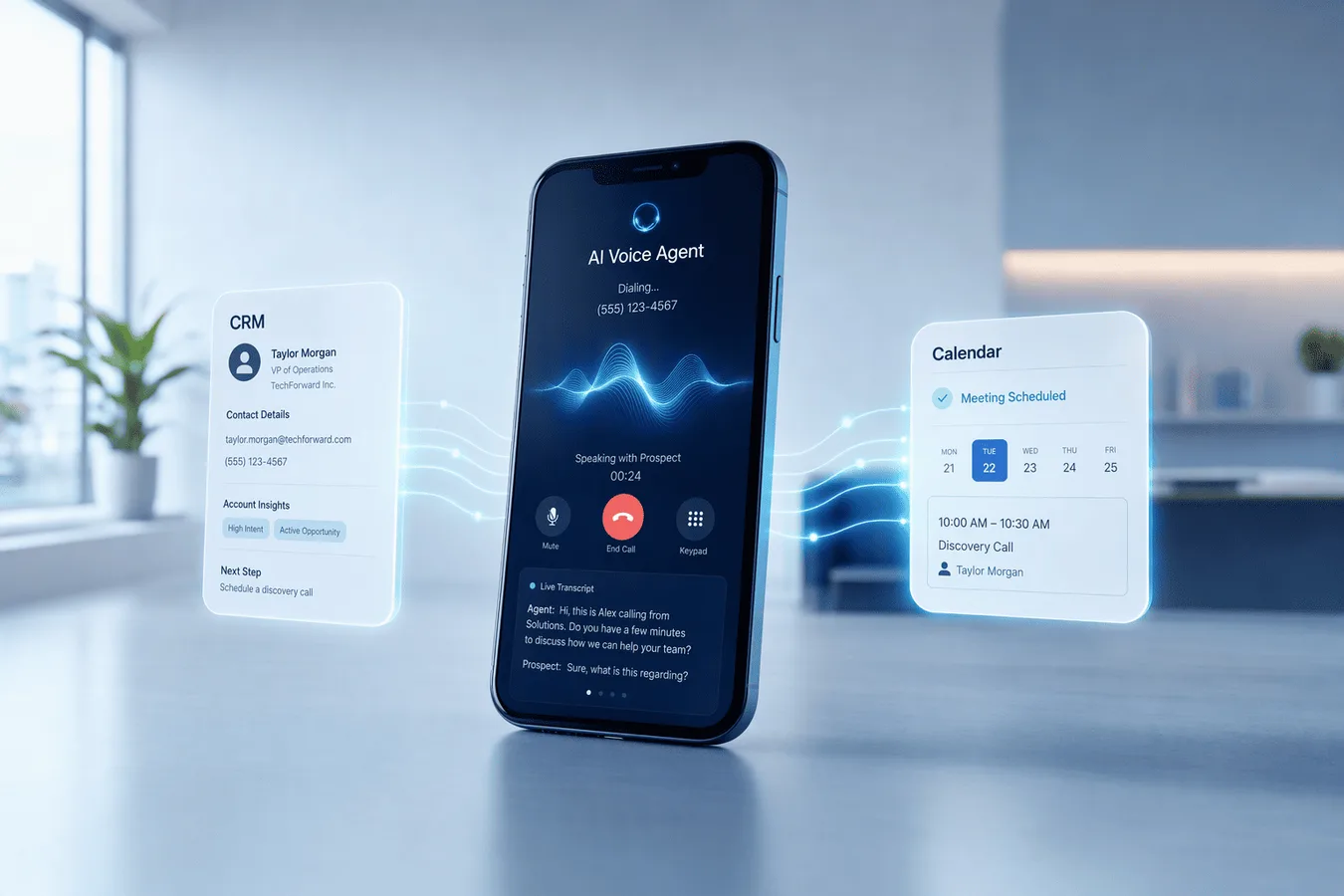
When your pipeline stalls because reps spend more time hunting down scattered phone numbers than actually speaking to prospects, the obvious question surfaces: Is there a platform that can just do the dialing and book the meeting for me? The answer in 2026 is yes. A mature category of AI voice agents handles the repetitive grind of outbound calling and calendar booking without requiring a headcount increase.
These are not simple robo-dialers. Modern AI sales calling platforms combine streaming speech-to-text engines with large language models that detect intent and retrieve product information in real time. The best systems achieve sub-700ms first response latency. In 2026 benchmarks, Salesforce SalesCopilot reached a 2.8-second mean response time while answering complex insurance questions, detecting questions at a 100% rate.
An AI voice agent can qualify a lead against your CRM fields, handle common objections, and trigger a Google Calendar or Outlook booking link. It cannot yet navigate a high-stakes negotiation that requires multi-party emotional nuance. What these platforms change is the hiring math: instead of onboarding a full-time SDR at ₹5,00,000 to ₹8,00,000 a year in India to manage a single line, a platform can run hundreds of simultaneous conversations for a few rupees a minute, absorbing the 25 to 65 seconds of dead air that a human rep needs to manually search a database.
Key Takeaways
Before picking a platform, here is what the numbers, infrastructure maps, and side-by-side tests actually showed.
Managed vs. build-your-own: A turnkey service runs telephony, CRM sync, and TRAI compliance for you. A developer-first platform hands you the AI model and expects your engineering team to wire everything else together.
Per-minute economics: Platform usage lands between $0.05 and $0.18 per minute; enterprise committed rates in India can push that far lower. Add telephony trunk costs on top. For comparison, a full-time SDR salary sits around $40,000 to $60,000 a year.
Volume is the multiplier: An AI agent can work through 10x the daily call volume of a human rep. Single-line breakeven is straightforward. The real payoff comes from running parallel campaigns against a lead database you never had the headcount to touch.
Compliance gap is a deployment blocker: In India, an outbound dialer without TRAI DND scrub integration and automatic consent recording is a legal problem, not a tool. Skip this and your outbound campaigns stop before they start.
Data hygiene is a hard prerequisite: Messy CRM product fields, outdated FAQs, or sloppy pricing tiers mean the AI voice agent delivers wrong answers faster than any human ever could. Cleaning and structuring your product database is the real setup cost.
Complex sale ceilings: Every platform we examined breaks when a call demands multi-step negotiation, emotional range, or a prospect who swings from angry to interested mid-sentence. Mandatory human handoff triggers are not optional.
1. EchoLeads: The All-in-One AI Sales Floor for Indian SMBs
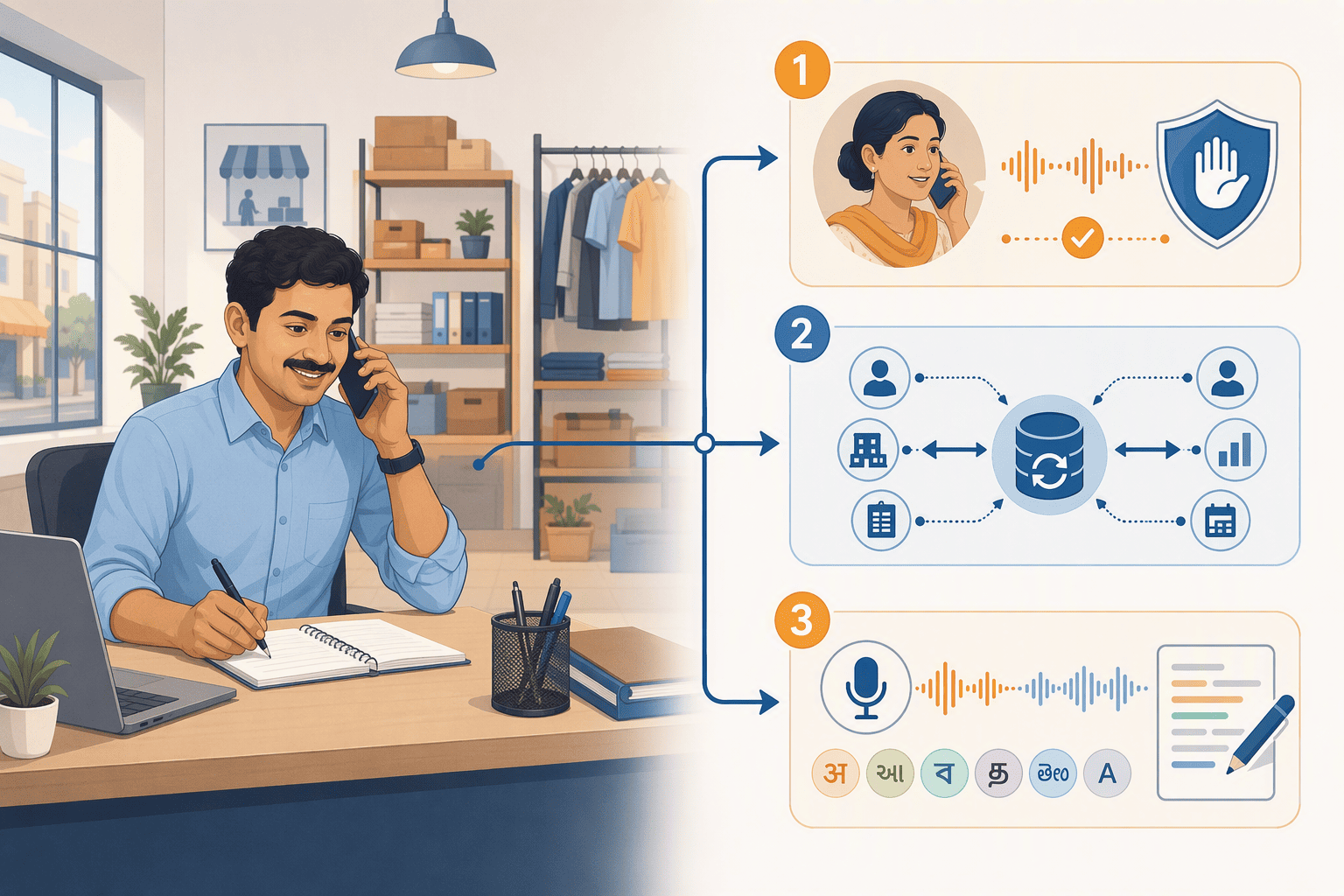
For an Indian business owner who wants a single vendor to own the telephony compliance headache, the bi-directional CRM sync, and the multilingual script refinement, EchoLeads is the top pragmatic choice. It strips out the engineering overhead that a do-it-yourself developer platform forces onto your team.
Purpose-built for Indian compliance: The platform directly addresses the TRAI DND regulatory environment. It incorporates consent recording and compliance workflows into its core dialing engine. You avoid the separate task of taping a third-party consent recorder onto a developer API.
Multilingual voice agents with CRM integration: Instead of generic accents, EchoLeads deploys AI voice agents for Indian use cases. While the agent is speaking to a prospect, it bi-directionally syncs records into Salesforce, HubSpot, Pipedrive, or Zoho. This means the meeting booked at the end of the call lands directly in the rep’s calendar without a manual import step.
Instant deployment and calendar booking: The platform delivers a pre-configured stack that can begin making calls immediately. When a prospect agrees to a meeting, the system books the appointment directly into Google Calendar, Outlook, or your CRM-native scheduler. Handoff triggers fire based on conversation keywords, sentiment drops, or an explicit request from the prospect.
2. Vapi: The Developer-First Platform for BYO Model Flexibility
Vapi earns the second spot for technical teams that already have strong preferences about which large language model powers their calls. Its core pitch is a bring-your-own-model architecture. You are not locked into a vendor’s proprietary AI brain; instead, you route your own LLM through Vapi’s voice orchestration layer, giving engineering total control over prompting logic, personality, and the RAG pipeline that feeds product information to the agent in real time.
A broad template library accelerates the initial build, but this is a platform for developers. To get the polished, low-latency experience of a managed competitor, you need to wire up your own telephony provider and tune the model yourself. Your per-minute platform cost sits in the $0.05 to $0.18 industry band, but you layer separate model inference and SIP trunking charges on top. For a startup with a dedicated AI engineer who considers model freedom a hard requirement, Vapi is the top technical canvas.
3. Retell AI: Sub-700ms Latency for the Most Human-Like Conversations

A robotic pause after the prospect says hello sinks an outbound sales call immediately. Retell AI engineered its first response latency under 700 milliseconds specifically to stop that hang-up from happening. The time from the end of the prospect's speech to the beginning of the AI's reply is the closest any platform has gotten to a human's conversational reaction time.
This speed relies on streaming speech-to-text that skips the wait for a complete sentence boundary. The system processes audio fragments the instant they arrive, converting raw sound into tokens and feeding them to the reasoning model without waiting. A human rep pulling up a live database during a call leaves the line silent for 25 to 65 seconds. Those are the seconds where a cold prospect decides to disconnect. Retell AI compresses that retrieval to under one second, which keeps the person on the line long enough for the value pitch.
Shortening that first pause changes how a lead judges the call. The first five seconds of a cold connection are brittle. A caller who answers immediately sounds prepared and attentive. If the latency edges above a second, the prospect's skepticism shoots up before they process the offer. Staying within Retell AI's sub-700ms window holds the interaction inside the range where the brain registers a natural conversation.
Choosing Retell AI means prioritizing call pickup and completion rates over no-code simplicity. The platform fits a team that tracks the link between response speed and call abandonment and wants to tune the AI's voice model for conversational stickiness. You trade a visual drag-and-drop builder for infrastructure that performs less like a bot and more like a sharp inside sales rep dialing from a quiet office.
4. Synthflow: The No-Code Powerhouse for Visual Workflow Builders
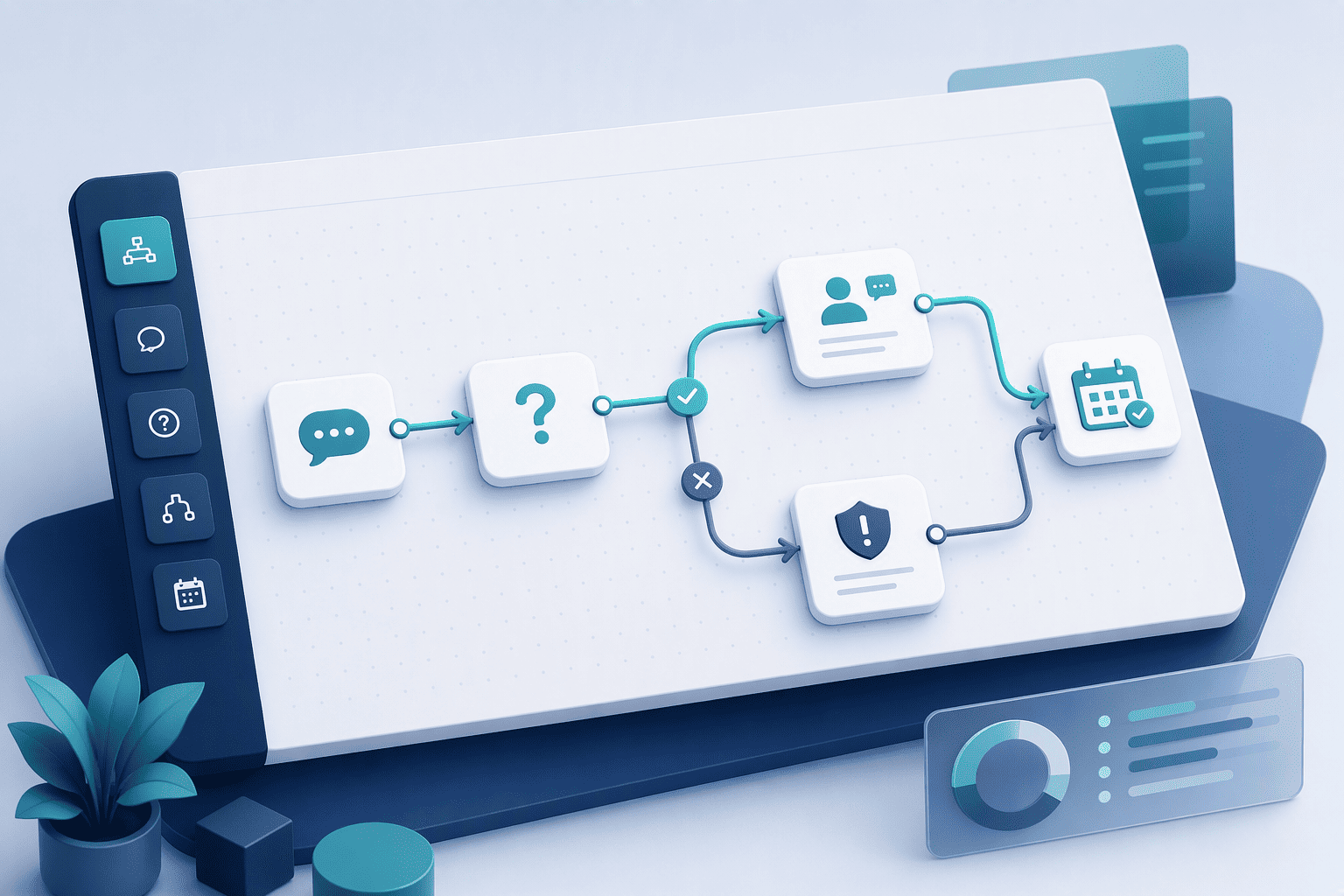
A sales manager who needs to map out a complete qualification script, including branching objection handlers and calendar booking triggers, will find Synthflow’s core differentiator compelling: a true no-code visual workflow builder. Instead of handing a JSON prompt tree to an engineer and waiting a week, you drag and drop blocks representing a greeting, a qualifier question, a standard objection reply, and a calendar booking step onto a canvas. You then publish, and the AI voice agent follows the exact visual logic you designed.
This eliminates the code barrier that Vapi or Retell AI impose. For a non-technical outbound team, Synthflow compresses the time from ‘call script in a Google Doc’ to ‘live AI dialer running the script’ into a single afternoon of dragging nodes.
5. Bland AI: The Enterprise-Scale Outbound Dialer for High Volume
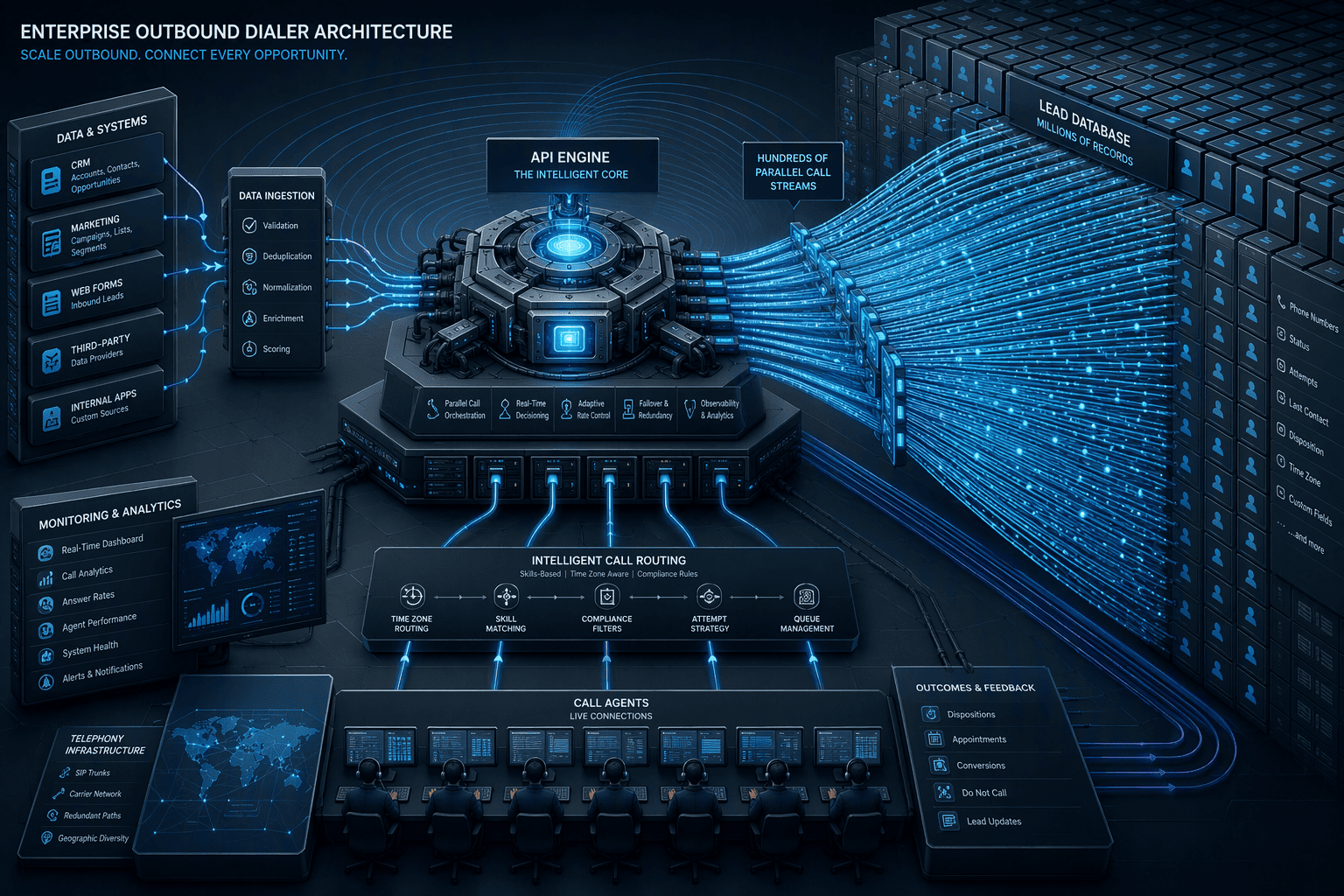
When your dialing need is measured in hundreds or thousands of concurrent lines, Bland AI operates as an enterprise outbound dialer built for raw infrastructure. It is an API-driven engine that programmatically spins up massive parallel calling capacity. You do not pick Bland AI for a visual builder or pre-trained local business scripts. You pick it when your telephony goal is brute-force volume, like hammering through a stale lead database of 100,000 records in a day.
This separates it from a local-business tool like Goodcall and the SMB-friendly visual focus of Synthflow. Bland AI requires developers to program the logic via API. The result is a call engine that can parallelize to a degree a single human-managed setup cannot touch.
6. Goodcall: The Instant-Deployment Agent for Local Businesses
A salon owner doesn't have a dev team. They have a chair, a phone that won't stop ringing, and a booking calendar they manage between appointments. Goodcall builds its agent for that reality. The platform ships pre-trained voice agents that understand local business conversations natively: appointment booking, hours checks, and service rescheduling. You switch it on and calls get answered inside a single business day.
Dimension | Goodcall (Local Business Focus) | Developer-First Platforms (e.g. Vapi) |
|---|---|---|
Setup Model | Instant-deployment pre-trained agents for common verticals. | Developer-built custom agents requiring full stack assembly. |
Typical User | Salon, restaurant, or local service owner with zero technical staff. | Engineering team with strong LLM and telephony integration skills. |
Primary Strength | Time-to-first-call measured in hours, not weeks. | Unlimited model customization and logic control. |
Example Use Case | AI agent that books a haircut appointment at a salon and confirms the time. | Custom AI SDR tuned on a specific enterprise product database with proprietary prompting. |
The table above draws the clearest line: Goodcall removes the integration work that developer platforms demand. There is no prompt engineering dashboard and no API assembly. The agent knows the standard questions a restaurant or salon fields, and it follows a conversation path that leads to a booked slot. For a business measuring launch speed in hours rather than months, that prebuilt intelligence matters more than raw customization.
7. Salesforce SalesCopilot: The CRM-Native Titan with a 2.8-Second Benchmark
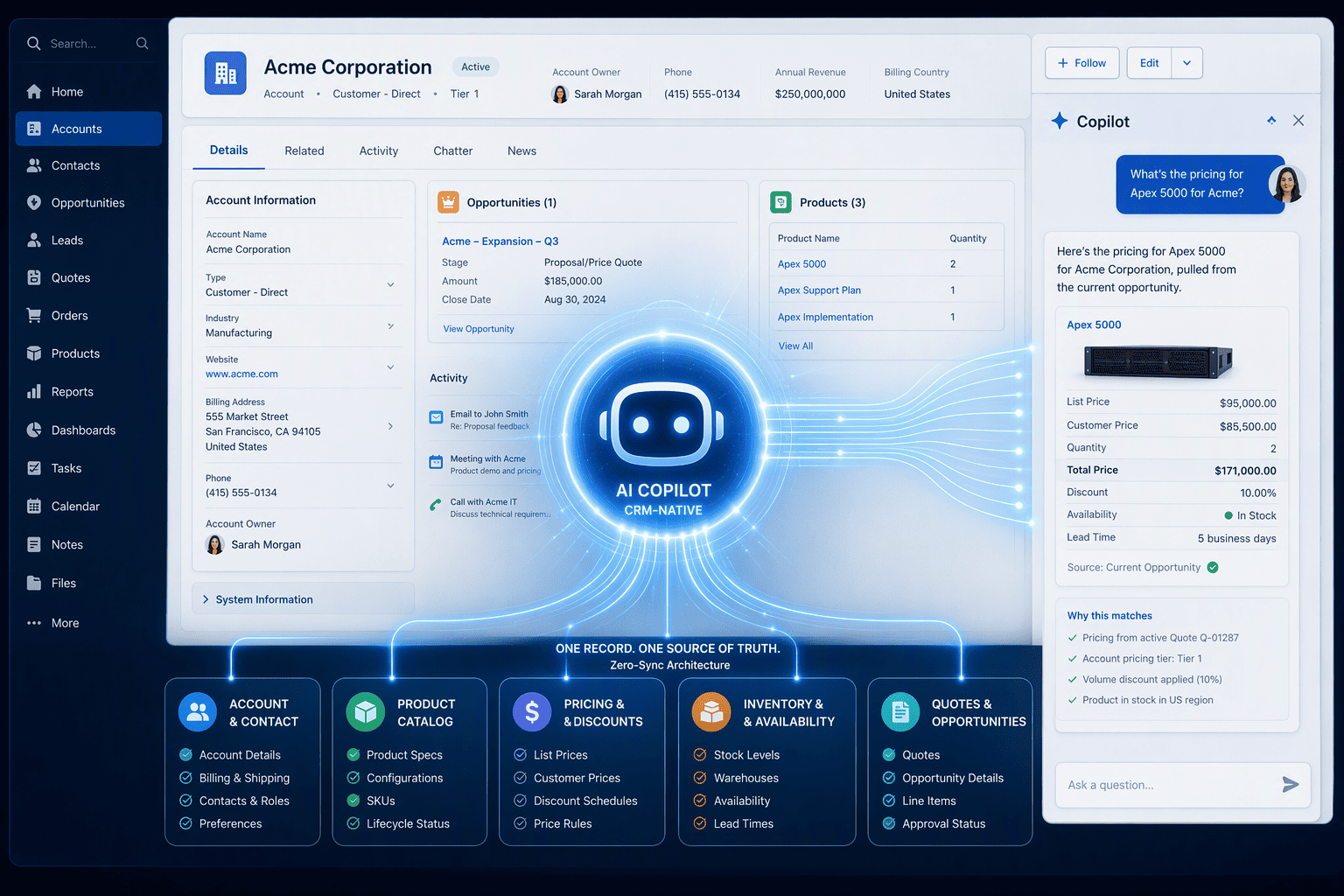
Salesforce SalesCopilot is not a third-party platform you bolt onto your stack. It lives directly inside Salesforce, making it the only CRM-native agent on this list. For an organization that already runs its entire revenue operation on Salesforce, this architectural decision eliminates the data-syncing gap that plagues external platforms. When SalesCopilot retrieves a product specification or a pricing detail, it is querying the exact same record a rep sees on their screen instantly.
Its benchmark specifications in 2026 set a high bar for accuracy and speed. SalesCopilot hit a 100% question detection rate at a mean response time of just 2.8 seconds. That means the system never missed identifying that a prospect just asked a question, and it delivered the answer in under three seconds. For an enterprise insurance scenario with 50 products spanning 10 categories and 2,490 FAQs, 290 coverage details, and 162 pricing tiers, this is a genuinely domain-complex demonstration.
The system’s secret is a retrieval loop that listens to the live call, detects the intent from streaming speech, and queries your structured Salesforce product database in real time. The research notes it is domain-agnostic: you can replace the insurance product database with your own Salesforce objects and the architecture adapts. This makes SalesCopilot the most relevant option for an enterprise sales org that wants guaranteed data fidelity, because there is no middle server that could desync between the agent’s answer and the latest update in the CRM.
There is a trade-off, obviously. This is not a standalone dialer; it is a feature tightly coupled to the Salesforce ecosystem. If your budget allows for the Salesforce license and you already manage your product catalog inside Sales Cloud, SalesCopilot is the most technically coherent SDR augmentation on the market. It handles the knowledge retrieval latency that kills live sales calls, the 25 to 65 seconds of silence that a human rep creates while searching, without ever leaving the CRM surface.
Conclusion
Each platform fits a specific use case. If you run an Indian SMB and need a compliant, managed stack on Indian telephony, start with EchoLeads. A technical founder who wants to bring a fine-tuned LLM gets more from Vapi or Retell AI.
Synthflow works for the sales manager who can map a flowchart but doesn't code. A local shop owner picks Goodcall for same-day setup.
A high-volume enterprise team feeds Bland AI a large lead list. A Salesforce-native org that needs to cut that 25-to-65-second lookup delay with the documented 2.8-second benchmark from the SalesCopilot research deploys Enterprise Sales Copilot (arxiv.org).
The prerequisites don't change no matter which tool you choose. Your CRM product data needs to be accurate and well-structured. Telephony compliance in India means TRAI DND checks and automatic consent recording are non-negotiable.
Your calendar API has to be reachable. Get those foundations right, and the platform books meetings. Skip them, and you've bought an expensive fast-talking voicemail machine.
Frequently Asked Questions
What does an AI sales call platform do, and how does it book meetings automatically?
An AI sales call platform uses a voice agent powered by large language models to perform several key functions:
- Outbound or inbound calling: places AI-driven outbound calls or handles incoming ones
- Prospect qualification: asks pre-configured questions to qualify leads
- Product information retrieval: pulls data from a connected CRM
- Meeting booking: triggers a calendar integration (e.g., Google Calendar or Outlook) to schedule the meeting without human intervention
How accurate and human-like are current AI voice agents for outbound sales in 2026?
Current agents are highly accurate for initial qualification, but they still face key limitations:
- High initial accuracy: top systems achieve 100% question detection rates
- Natural latency: platforms like Retell AI achieve sub-700ms response latency, making conversations feel natural
- Struggles with complex scenarios: they still falter on complex objection handling, emotional nuance, and multi-step negotiation, where they can sound mechanical or miss subtle cues
What are the real costs, ROI, and hidden requirements of AI calling software compared to hiring SDRs?
When evaluating an AI sales call platform, consider both the cost metrics and the hidden requirements:
- Platform costs: range from $0.05 to $0.18 per minute, with Indian enterprise rates dropping lower
- Cost comparison: compared to a full-time Indian SDR salary of $40,000 to $60,000 yearly per seat, an AI handles 10x more calls
- Hidden requirements: include a clean CRM, structured product data, TRAI DND compliance, and mandatory consent recording setup; skipping these kills the ROI
Which platforms offer automatic meeting booking, and how do their CRM integrations and pricing compare?
All top platforms offer CRM booking, but they differ significantly in setup and pricing:
- EchoLeads: provides a managed Indian stack with direct CRM booking
- Vapi and Retell AI: require developer work for integration
- Synthflow: provides drag-and-drop no-code booking logic
- Pricing: varies from pay-as-you-go per-minute rates like EchoLeads at ₹4/minute to enterprise committed rates as low as ₹1.80/minute at scale
What compliance rules (like TRAI DND, consent recording) must an AI sales calling platform follow in India?
In India, any commercial outbound dialer must integrate with the TRAI DND registry to scrub called numbers and prevent fines. Mandatory automatic consent recording at the start of each call is key. A compliant platform also handles secure data handling. Using a platform that skips these features is a significant legal risk.
Where do AI voice agents still fail, and when is a human sales rep absolutely necessary?
AI agents fail on emotionally charged calls, complex multi-step negotiations, and when the prospect's intent shifts unpredictably during the conversation. A human rep is necessary for high-stakes deals, handling angry customers, or any scenario requiring deep empathy and the ability to improvise outside a pre-defined script or knowledge base.
Related articles
How to Follow Up with Leads 24/7 When Your Sales Team Only Works Business Hours
Learn about sales automation that does round the clock follow ups while your team is only limited to business hours.
Why Your Indian Sales Team Can't Ignore Multi-Channel Automation Anymore
Learn why Indian sales teams can no longer ignore sales automation platform and how employing one can streamline lead qualification and conversion.
67% of Lost Sales Happen Before the Conversation Even Starts, Your Team Is Chasing Ghosts, Not Prospects
Learn how sales reps can avoid missing valuable leads by deploying sales automation platform and reduce the percentage of lost sales.