
Why Your Indian Sales Team Can't Ignore Multi-Channel Automation Anymore

Introduction
Your sales team starts the day switching between a dialer, two WhatsApp Business accounts, and Instagram DMs. One prospect sends a pricing query on WhatsApp while another follows up a phone call with an Instagram voice note. Meanwhile, your best agent spends twenty minutes re-asking qualifying questions the chatbot already collected.
This fragmented reality is where Indian sales leaders are losing lakhs in pipeline revenue. Over three billion people use WhatsApp monthly, and India is its single largest market. Instagram DM usage among Indian buyers has shifted from casual chat to a serious commerce channel.
Buyers expect an instant, coherent response regardless of where they reach you. Multi-channel sales automation platforms solve this: a unified command center that listens across voice, text, and the inboxes that influence Indian purchase decisions. We unpack the mechanics, the compliance machinery, and the hard limits you need to understand before choosing a platform.
Key Takeaways
The core insight is that raw automation speed means nothing without legal delivery. Here is what separates a viable Indian deployment from a regulatory disaster:
Hybrid human-AI handoff is non-negotiable: AI handles first-level qualification 24/7, but a smooth context transfer to a human agent for complex pricing or negative sentiment defines customer trust.
TRAI compliance is a hard gate, not a feature checkbox: Any platform without automated Distributed Ledger Technology (DLT) header and template registration, plus real-time scrubbing against the NCPR database, is operationally illegal for commercial messaging.
Speed-to-response directly drives conversion: Platforms that reduce first-response time on WhatsApp and Instagram queries see measurable lifts in conversation-to-conversion rates by capturing intent before competitors do.
Regional language AI models unlock the real market: Hindi and vernacular language support inside the AI agent is what separates a superficial presence from genuine engagement in non-metro and mass-market audiences.
True cost hides in compliance audit and handoff resources: Beyond per-minute voice charges or WhatsApp conversation fees, factor in compliance audit resources and the human capital needed for escalations when calculating total cost of ownership.
What Is a Multi-Channel Sales Automation Platform?
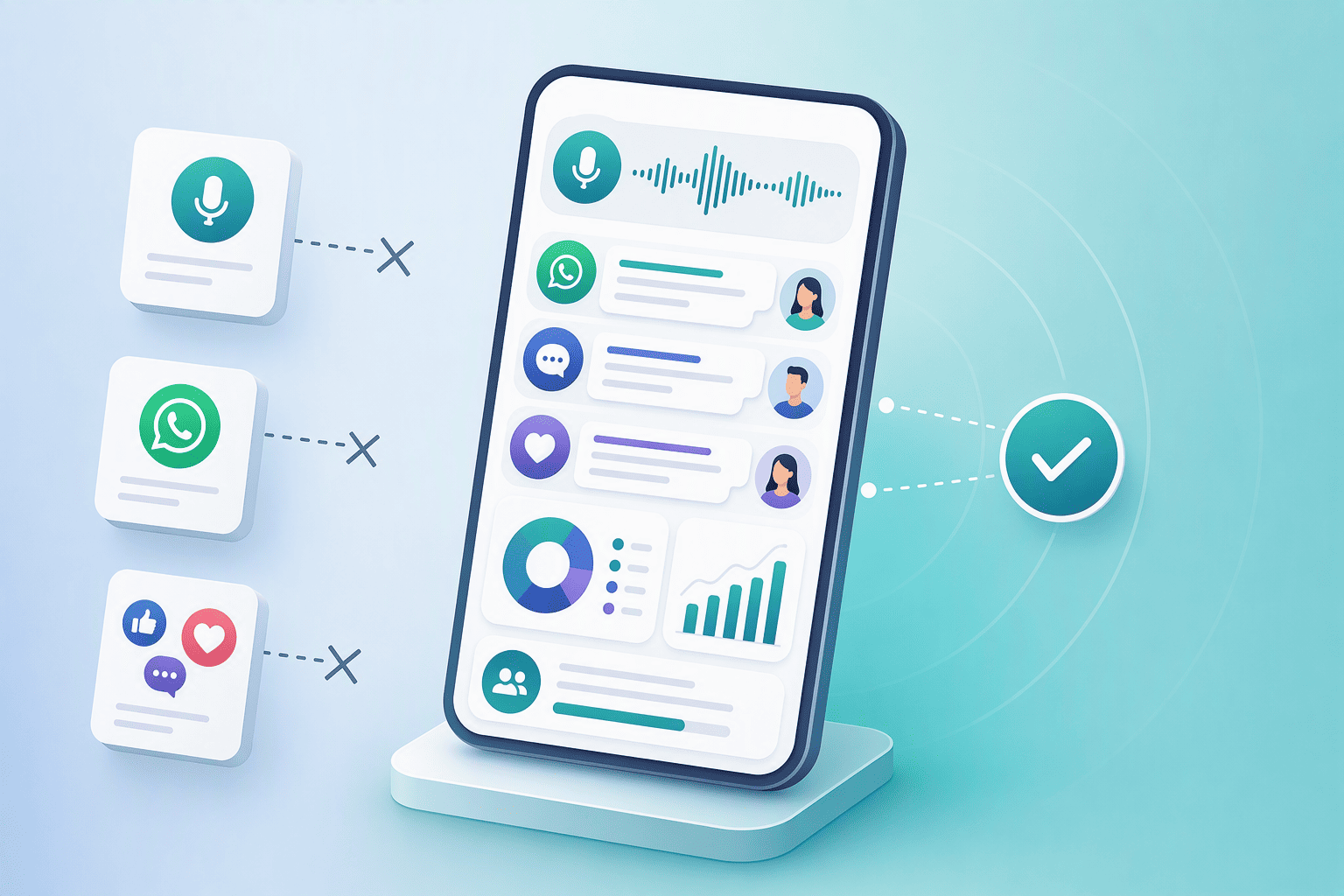
Think of it as the operating system for your entire sales conversation, not just one channel. It's the difference between having three separate, clunky phones versus a single smartphone that merges everything into one smooth stream.
Capability | Multi-Channel Sales Automation Platform | A Patchwork of Separate Tools |
|---|---|---|
Interface | A single, unified dashboard for all channels | Three or more separate logins (dialer, WhatsApp Business app, social media manager) |
Customer Conversation History | One centralized, cross-channel record showing every call, WhatsApp message, and Instagram DM | Three siloed histories with no link between a customer's phone call and their subsequent Instagram follow-up |
Channel Coverage | Native voice calling, WhatsApp messaging, and Instagram DM automation | Requires manual pairing of a standalone dialer with a mobile phone for WhatsApp and a separate social media tool for Instagram |
Data View | A single chronological view of the entire customer relationship | A fragmented view forcing you to manually piece context together before each interaction |
Core Function | Orchestrates outbound and inbound conversations across channels automatically | Executes isolated channel tasks without syncing context between them |
The Non-Negotiable Features for the Indian Market
The global feature checklist is misleading. In India, a platform's ability to send a message legally matters more than its AI's vocabulary. If a vendor cannot demonstrate automated DLT (Distributed Ledger Technology) registration, you are buying a liability, not a sales tool.
The Telecom Commercial Communications Customer Preference Regulations, 2018, mandate that any commercial communication uses a registered header and a pre-approved template, matched against subscriber consent. A platform built for the Indian market, such as Sinch Credence, automates this entire workflow, handling template submission directly via APIs. This eliminates the manual portal-upload nightmare where a single unregistered header can get the sender blacklisted. Alongside template governance, automated DND registry scrubbing against the NCPR database before every single message send is key. You cannot rely on a periodic bulk list clean; the scrubbing must be real-time, pre-send, and applied to WhatsApp, SMS, and voice campaign lists equally.
The next filter is consent management. Automation engines here must enforce double opt-in logging with timestamped evidence for every recipient across WhatsApp and voice, specifically to satisfy the consent trail demanded by TRAI and cellular operator audits. Without this automated evidence trail, an enterprise exposed to a random DND 3.0 complaint has no defense mechanism beyond manual record-keeping, which fails under scale and regulatory scrutiny.
And this is the capability that genuinely reaches the Indian buying public: regional language AI models. A conversational flow defaulting to English misses the majority of purchasers in Tier-2 and Tier-3 cities. A platform's natural language processing must switch seamlessly to Hindi, Tamil, or Telugu inside a voice call or a WhatsApp chat, maintaining the same qualification logic and sentiment tracking across the language barrier. This is not a translation plugin; it is a fundamentally different AI training requirement that few global platforms have invested in.
How Compliance with TRAI DND and Data Regulations Actually Works
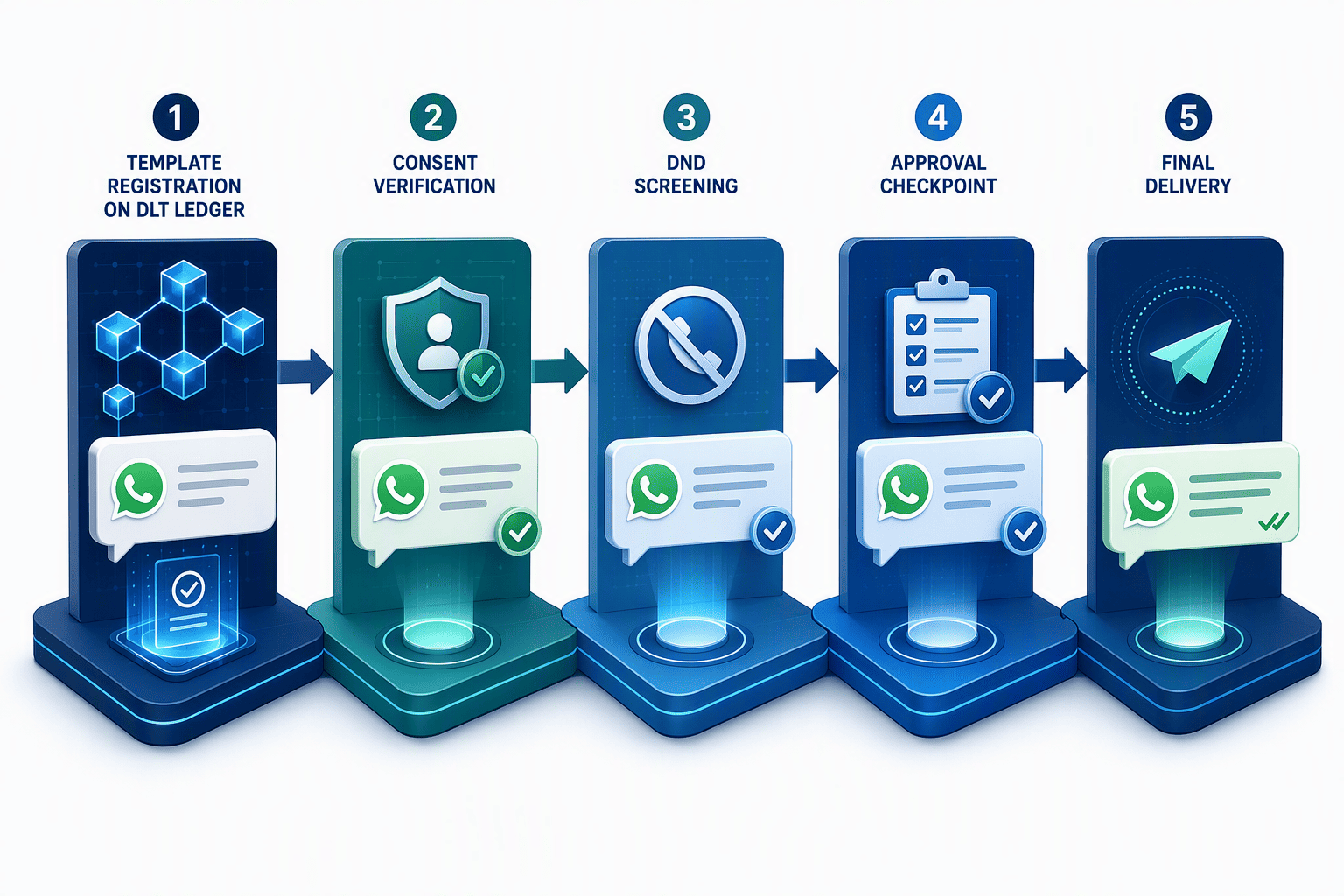
Behind every compliant WhatsApp template message sent in India, a rapid technical sequence enforced by the platform prevents a regulatory breach, and understanding this sequence is the difference between operational confidence and a spam classification. Here is what the platform orchestrates, step by step:
Header and template registration on the DLT portal: The platform first registers the sender ID and the exact message templates (with placeholders) onto the operator's DLT blockchain node via an API, using the distributed ledger technology mandated by the Telecom Regulatory Authority of India.
Real-time NCPR database scrubbing: Before a message is dispatched, the platform programmatically checks the recipient's number against the National Customer Preference Register (the DND database) to ensure the contact has not registered as blocked for that communication category.
Consent log verification: The system confirms a valid, timestamped consent record exists for that specific recipient, matching the communication's purpose to the opt-in scope. If no consent exists, the platform blocks the send.
5-paisa charge exemption verification: For transactional messages from government entities or specific service categories, the platform identifies the exclusion and applies the zero-rate exemption to avoid unnecessary telemarketer surcharges, a specific concession built into the regulation.
Intelligent spam detection and feedback loop: Post-send, the platform monitors the TRAI DND 3.0 app's crowdsourcing data ecosystem. Should a recipient flag a message as unsolicited spam, the platform integrates this complaint feedback to immediately suppress further communications to that user and flag the template for review.
The Real Mechanics of an AI Voice Agent Handoff
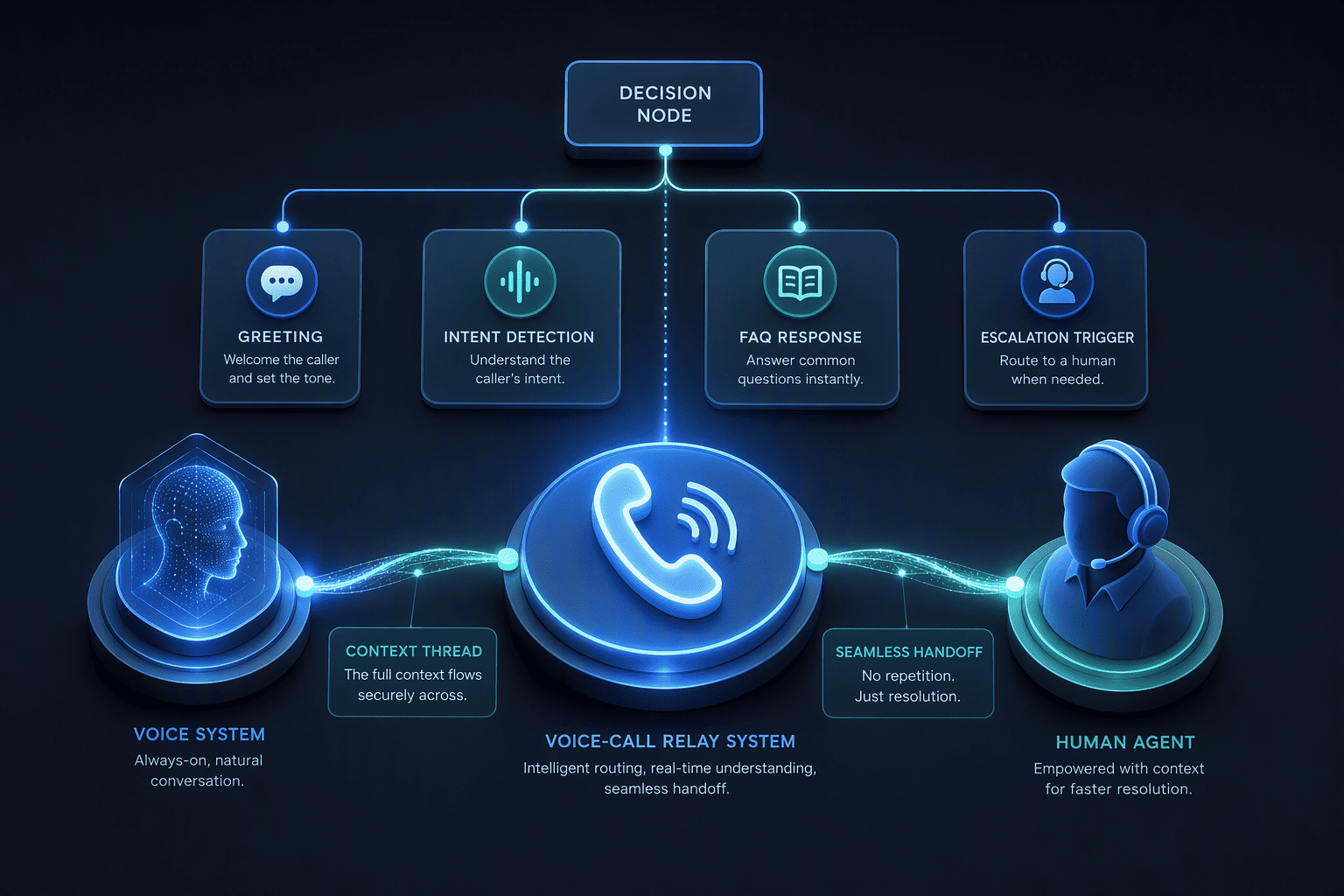
Most automation projects in India fail at the handoff. A voice bot that keeps running its script while a prospect gets audibly irritated does more damage than a missed call ever could. The transfer is not a blind route. It is an intelligence handshake.
The AI voice agent picks up first. It handles the greeting, figures out why the person is calling, and answers factual questions (pricing, document requirements, available slots) on its own, around the clock. Every inbound call gets answered within three seconds. Sentiment analysis runs in the background without adding any delay.
The trigger that activates the handoff is specific. The system listens for an explicit keyword ("talk to manager"), a sharp drop in the call's sentiment score, or a question that carries genuine complexity ("Can you calculate the exact interest based on my CIBIL and last three payslips?"). When one of those conditions fires, the platform does more than switch the audio stream.
It packages the full conversation transcript, a CRM profile that was pre-populated during the live call, and the AI-assigned intent tags and qualification score. EchoLeads lets you set these triggers around any conversation keyword or sentiment threshold you choose. When the human agent picks up, the screen already displays the prospect's history, the bot's exact last sentence, and the specific reason for the escalation.
The agent can open with "Thank you for that detail, I see we were discussing the processing fee waiver." The prospect never feels dumped. No repetition.
No starting from scratch. The AI handles the filtering and sorting. The human walks in as the closer, holding a brief that was assembled during the call.
A Practical ROI and TCO Framework for Indian Businesses
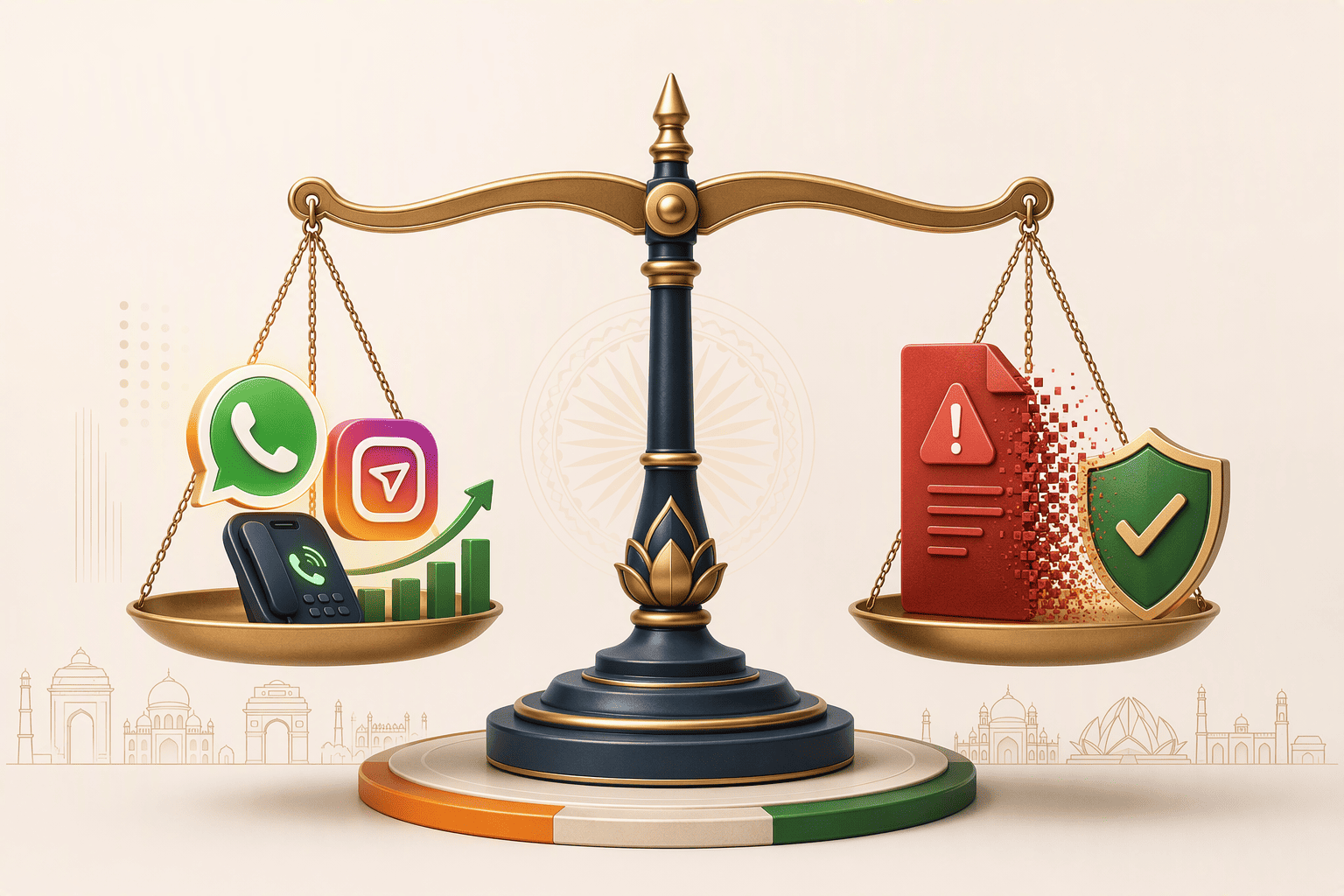
Calculating ROI for a multi-channel sales tool is not a generic SaaS exercise. You are measuring the cost of a missed Instagram message converted to a lead, set against the operational cost of regulatory fines you are preempting entirely. The primary ROI driver is the conversation-to-conversion rate lift you get from capturing inbound WhatsApp and DM queries with zero first-response delay. When an AI agent picks up a voice call in under three seconds or replies on WhatsApp immediately after a Facebook ad click, you compress a decision window that a manual team loses during chai breaks, overnight, or during peak volume spikes. Measure agent handle time reduction by comparing pre-platform call durations to post-platform calls where the AI has already completed KYC-style fact-finding, freeing the human agent's billable minute strictly for persuasion.
TCO, however, is not the ₹4 per minute pay-as-you-go voice rate or the WhatsApp conversation charge Meta bills. TCO is per-minute voice charges plus session-based WhatsApp fees plus the platform's per-agent licensing plus an internal compliance audit resource cost. For instance, a voice API cost priced at ₹1.80 per minute for committed enterprise usage, plus a per-agent seat fee for the unified dashboard, plus a fraction of a compliance officer's time spent on monthly DLT template reviews, constitutes your real run rate. The framework must contrast monthly TCO against the revenue generated by a single incremental conversion the automation captures that a manual team in a time zone-restricted operation would miss.
Ignore vendor ROI calculators that omit compliance labor. The math in India breaks if you have a regulatory blockage and a three-week header registration downtime. The financial model must treat 100% delivery capability as the baseline, not a variable.
The Hard Limits of Automating Conversations Across Channels
Multi-channel automation hits walls that no amount of engineering can tear down. These are not fixable bugs. They are structural boundaries set by platform policies and the realities of commercial negotiation. Automating across voice, WhatsApp, and Instagram means working inside distinct policy cages, each with a door that closes fast.
The WhatsApp Business Platform enforces a mandatory 24-hour customer service window. After a customer's last message, your AI can reply freely with any text, voice note, or document for exactly 24 hours. Once that clock runs out, the platform limits you to pre-approved message templates only. The conversation stops being a conversation. It becomes a template broadcast, and any automation that ignores this shift will get blocked.
Instagram DM automation runs blind. Voice and WhatsApp platforms feed delivery receipts, read confirmations, and response data into a CRM. Instagram's Graph API does not. Building a structured, deal-stage-based funnel inside Instagram DMs is nearly impossible without the detailed, programmable lead-scoring hooks other channels provide.
Pricing negotiations are where every channel hits the same ceiling. An AI voice agent can state a pre-set discount or recite a payment term. It cannot hear the pause that means hesitation, build a non-standard deal on the spot, or interpret why a buyer went silent after a 2% price-hike message on WhatsApp.
That silence carries information the machine misses. The answer is drawing clear lines around what automation handles. The 24-hour WhatsApp window must trigger a template-approval workflow, not a workaround.
Instagram DMs work best as a qualification and routing layer, connecting serious buyers to human agents. Price negotiation is a hard handoff trigger that carries the full CRM history forward. The machine's strength is the qualifying work before the ask.
The moment a conversation crosses these thresholds, even the most advanced AI agent has to step aside. Pushing automation past these boundaries kills deals instead of closing them.
Head-to-Head: A Buyer’s Comparison of Top Platforms
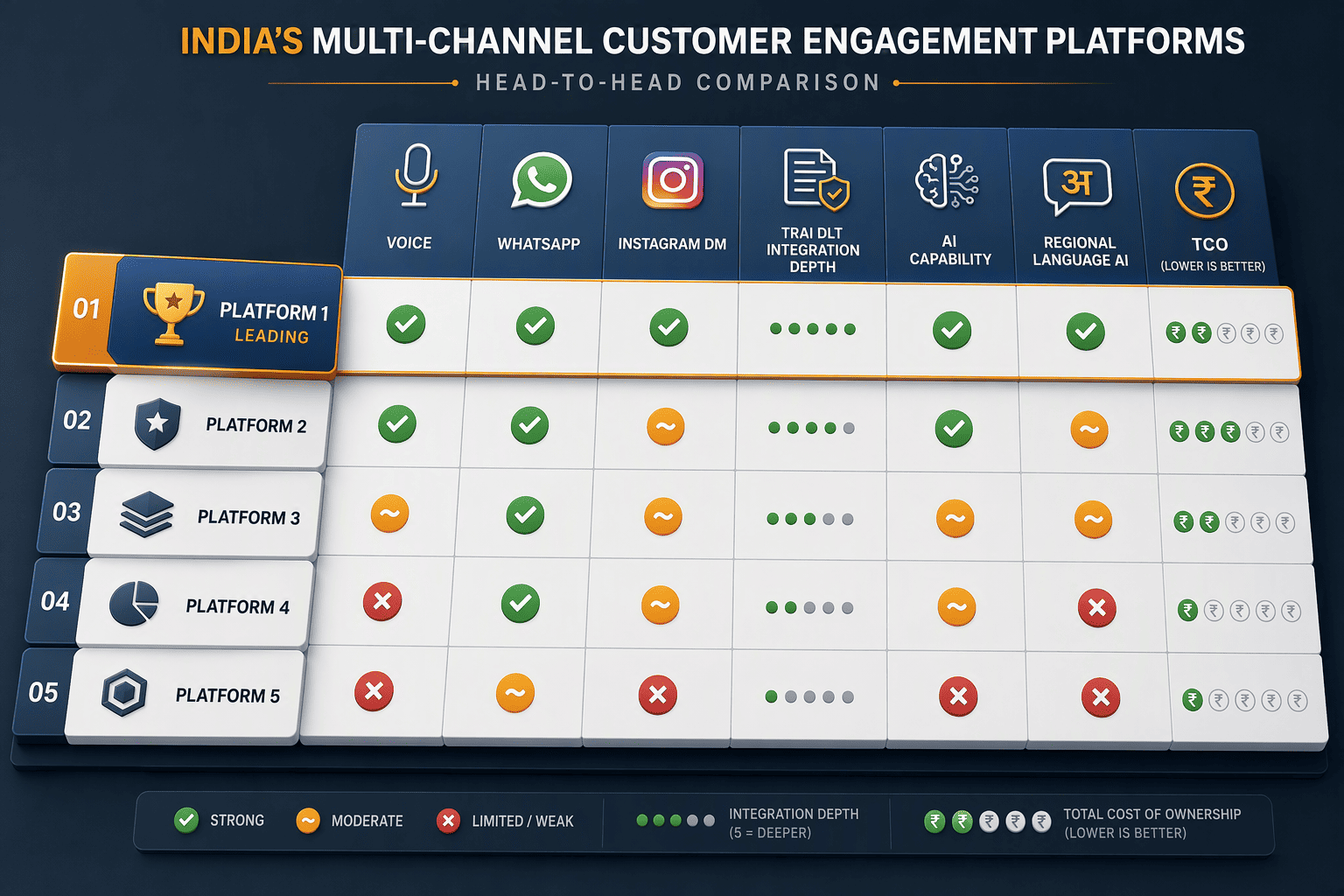
Choosing a multi-channel tool for India starts with a checklist: compliance, then channel connectivity, then AI. Skip any platform that cannot show you a working Indian telco integration. International case studies are noise if the product does not connect to the local operator network.
Platform | Voice, WhatsApp, Instagram DM Support | TRAI DLT Integration Depth | AI Agent Capability | Regional Language AI | TCO Indicator (Starting Point) |
|---|---|---|---|---|---|
Infobip | Full CPaaS coverage across voice, WhatsApp, and social messaging channels. | Native CPaaS-level DLT portal integration with template automation and analytics. | Conversational AI builder with intent-based flows triggered across supported channels. | Limited public details on Indian regional languages; primarily English and global languages. | Platform fee plus per-message and per-minute consumption costs, scaled to volume. |
Sinch Credence | Orchestrates SMS, Email, WhatsApp, browser push, and automated voice calls in one campaign builder. | On-premise deployment allows direct control, encryption at rest, PII masking, and adaptation to Indian operator compliance via dedicated API integrations. | Machine learning for contact channel and send-time optimization; no public explicit voice agent AI. | Multi-channel campaign support without published regional language voice models. | On-premise deployment incurs infrastructure costs on top of licensing and channel consumption. |
CloudTalk | Primarily a cloud call center with voice at its core, integrating with channels via CRM and helpdesk connectors. | DLT integration is not a native feature; relies on CRM or third-party middleware for Indian telecom compliance. | AI voice agents, conversation intelligence, IVR, and sentiment analysis for voice traffic. | Voice AI primarily trained on global languages; limited Indian regional language specifics. | Per-agent monthly licensing fee; voice usage costs vary by destination. |
QuickReply.ai | Designed for Indian e-commerce; WhatsApp and Instagram DM native, with voice handled via integrations. | Built around Indian DLT compliance, automated template approval, and opt-in management as a core product function. | AI-driven commerce conversations with catalog integration; limited open-ended negotiation AI. | Hindi, English, and other Indian regional language support built into the conversational flows. | Platform subscription based on interaction volume; tailored to mid-market and enterprise Indian businesses. |
The Indian market splits these platforms into two buckets. Global CPaaS providers like Infobip and Sinch give you infrastructure depth but need local configuration for vernacular AI. A native Indian platform like QuickReply.ai ships with regulatory compliance and Hindi support already in place, but it lacks the pure voice depth that CloudTalk offers.
Your shortlist follows your primary channel mix. A WhatsApp-commerce motion driven by Instagram DM discovery runs fastest on an Indian DLT-first architecture. That gets you to legal deployment sooner. If high-volume voice outreach is the core activity and WhatsApp is the secondary follow-up channel, start with a strong voice platform like CloudTalk and layer on an Indian compliance middleware. The integration complexity is the price you pay for that feature depth.
Conclusion
A multi-channel automation deployment in India succeeds or fails on the compliance middleware layer, not the conversational AI demo. The optimal approach selects a platform where TRAI-compliant messaging through DLT registration and automated NCPR scrubbing is the core engine, not a separate compliance add-on. Start your evaluation with a pilot focused narrowly on one channel's handoff process, tracking real conversation-to-conversion lift on WhatsApp or voice, before expanding to the full channel suite. That single-handoff pilot isolates the real hybrid value and exposes any regulatory fragility before you scale.
Frequently Asked Questions
What omnichannel sales automation tools integrate with channels like phone, WhatsApp, and Instagram DMs?
Platforms like Infobip provide native voice, WhatsApp, and social messaging integration. Sinch Credence orchestrates voice and WhatsApp in one campaign builder. QuickReply.ai specifically connects Indian e-commerce across WhatsApp and Instagram DMs, while CloudTalk provides strong voice AI and integrates with messaging via CRM.
What are the key features to look for in a multi-channel sales automation platform for the Indian market?
Non-negotiable features include automated DLT registration for sender headers and templates, real-time NCPR database scrubbing before each send, consent management with timestamp evidence, and regional language AI models for Hindi and other vernacular languages to reach India's full buyer base.
How do multi-channel sales automation tools handle compliance with India's telecom and data regulations?
They programmatically register headers and templates on operator DLT nodes, automate pre-send scrubbing against the NCPR DND registry, and maintain consent logs. They also monitor the TRAI DND 3.0 crowdsourcing feedback loop to immediately suppress any number that files a spam report.
How do you measure ROI and total cost of ownership for a multi-channel sales engagement tool?
Measure conversation-to-conversion rate lift, agent handle time reduction, and lead qualification cost. TCO combines platform licensing, per-minute voice charges, WhatsApp conversation fees, and the internal compliance labor cost for DLT template audits. A tool's ROI depends on its uninterrupted delivery capability.
What are the practical limitations or risks of automating sales conversations across different messaging and voice channels?
WhatsApp restricts you to pre-approved templates after a 24-hour window. Instagram DM lacks granular native CRM analytics for sales funnels. Across all channels, AI cannot handle nuanced price negotiations or detect unspoken buyer hesitation, requiring a hard handoff to a human agent for closing.
How does an AI voice agent work alongside human agents in a multi-channel sales setup?
The AI agent handles initial greeting, intent classification, and FAQs 24/7 while performing sentiment analysis. A trigger (negative sentiment, explicit request, or complex query) initiates a handoff, transferring the full transcript, CRM profile, and qualification tags to the human agent, who picks up the conversation without repetition.
Related articles
How to Follow Up with Leads 24/7 When Your Sales Team Only Works Business Hours
Learn about sales automation that does round the clock follow ups while your team is only limited to business hours.
7 Platforms That Make Sales Calls and Book Meetings Automatically in 2026
Learn about the best AI calling agents that streamline sales automation enabling sales reps to handle large volumes of calls without missing a single lead.
67% of Lost Sales Happen Before the Conversation Even Starts, Your Team Is Chasing Ghosts, Not Prospects
Learn how sales reps can avoid missing valuable leads by deploying sales automation platform and reduce the percentage of lost sales.