
How to Follow Up with Leads 24/7 When Your Sales Team Only Works Business Hours

Introduction
A hot lead submits a purchase enquiry at 11 PM on a Saturday. By the time your team picks it up on Monday morning, that prospect has already bought from a competitor who answered the phone. This is the silent revenue killer plaguing sales teams across India: 56% of new sales leads are submitted after business hours, yet human reps are home asleep. The result? A staggering conversion gap, worsened by the reality that only 2% of sales happen on the first contact, while 44% of salespeople give up after just one follow-up attempt.
Closing a deal demands persistence. Research confirms that 80% of sales require 5 to 12 follow-up touches to close. Asking a human rep to maintain that cadence overnight is economically impossible and leads to burnout. But leaving a fresh lead cold for even an hour is a gamble; 32% of customers aren't willing to wait at all. The solution isn't to staff a graveyard shift, but to deploy an autonomous AI voice agent that never sleeps, never tires, and converts interest into booked revenue around the clock.
Key Takeaways
This blueprint details a method for capturing and converting those missed after-hours leads using a 24/7 autonomous AI calling system. Here is what you need to know:
Economic urgency: Only about 37% of dealerships respond to after-hours leads within an hour, creating a massive edge for the first mover who can answer instantly at 2 AM.
True autonomy: An AI voice agent is not a chatbot or an IVR. It autonomously answers inbound calls, queries inventory data, handles objections, and books meetings directly into your calendar.
Compliance guardrails: Operating 24/7 in India requires strict adherence to TRAI's TCCCPR 2018 guidelines. A legitimate platform embeds DND scrubbing and consent recording into the call flow.
Intelligent handoff: The AI doesn't pretend to be human. It evaluates lead intent and instantly transfers complex negotiations to a human rep with a full CRM-logged summary.
Rapid deployment: Connecting an AI calling system to your existing CRM and calendar via API is a sprint, not a multi-quarter project. Businesses can go live in days.
Cost structure: Predictable per-minute subscription fees starting at pennies per minute replace the prohibitive fixed salary costs, idle time, training, and attrition of overnight staff.
Step 1: Understand What an AI Voice Agent Is and How It Operates Autonomously After Hours
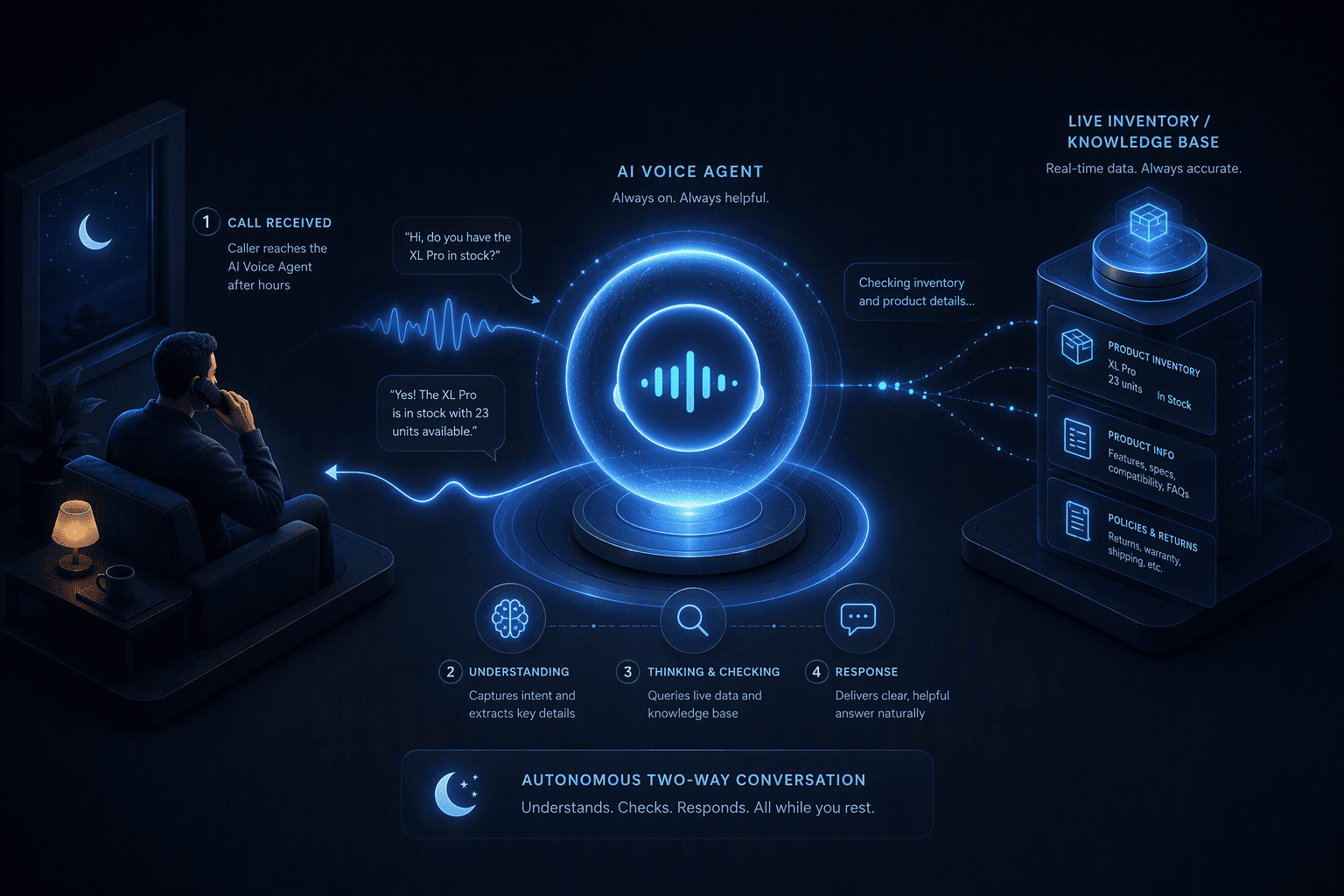
An AI voice agent is an autonomous software program designed to conduct natural, two-way spoken conversations over the phone without human intervention. This is distinct from a rule-based IVR that simply routes calls or a text-based chatbot that forces a prospect to type. When a lead calls your business at midnight, a genuine AI voice agent answers the phone instantly, understands spoken intent, queries your live inventory data or knowledge base, and speaks back with a natural, human-like tone. It doesn't just note a name and number; it closes the loop by booking a qualified appointment.
A core distinction is that these agents act as autonomous sales tools, not scripted bots. While a basic auto-attendant simply plays a recording, an AI voice agent interprets the conversation. It can negotiate next steps, answer specific product questions, and execute actions like sending a WhatsApp message or reserving a time slot directly on your Google Calendar. An instant response is critical; modern expectations mean that 60% of customers hang up after just one minute on hold.
Step 2: Master India's Regulatory Compliance for 24/7 Automated Sales Calls
Before you automate a single call, know this: if your AI dialer reaches someone who hasn't given you permission, their phone connection gets cut off on the first complaint. It's that simple. India's Telecom Regulatory Authority (TRAI) runs the Telecom Commercial Communications Customer Preference Regulations (TCCCPR) of 2018, and the rules leave almost no room for error.
Any consumer who receives an unwanted promotional call picks up the phone, dials the toll-free short code 1909, and files a complaint. The consequence is immediate. The subscriber's connection is liable for disconnection right away, and their number can be blacklisted for two years. For your business, this means a single misdial can trigger a cascade of compliance trouble you didn't see coming.
So how do you operate legally? Your AI voice agent has to scrub consent before every call. You need explicit, provable permission to contact anyone whose number sits in your database.
Indian consumers don't just passively hope the calls will stop. They actively manage their preferences through the National Customer Preference Register (NCPR), where they can block all commercial communications or selectively opt out of categories like real estate or automobiles.
They do it by dialing 1909, sending an SMS to 1909, or tapping through the TRAI DND 2.0 mobile app. It takes them seconds.
This doesn't make after-hours automation illegal. It makes the rules specific. You aren't blasting a purchased list of random numbers.
You're responding to inbound inquiries or contacting leads who filled out a form and agreed to hear from you. The difference matters. Your AI provider has to check DND registries programmatically, in real-time, and log that consent for every interaction.
And if a subscriber does receive something they didn't agree to, the clock starts ticking. They have three days from receiving that unsolicited commercial communication to forward it as an SMS to 1909 and lodge a formal complaint with their service provider. TRAI enforcement isn't theoretical.
The regulator has issued over 7 lakh notices and placed 5.6 lakh restrictions on spam telemarketers. That is a lot of disconnected lines. A non-compliant AI dialer doesn't just get a warning.
It gets its numbers taken offline permanently. You need a tool that embeds these guardrails natively, checking registries and logging consent as part of the call flow rather than as an afterthought. Platforms like EchoLeads.ai build this compliance architecture into the dialing engine, so the system operates as a lawful business process instead of a liability waiting to happen.
Step 3: Set Up Your AI Agent's Seamless Handoff Logic to Human Reps
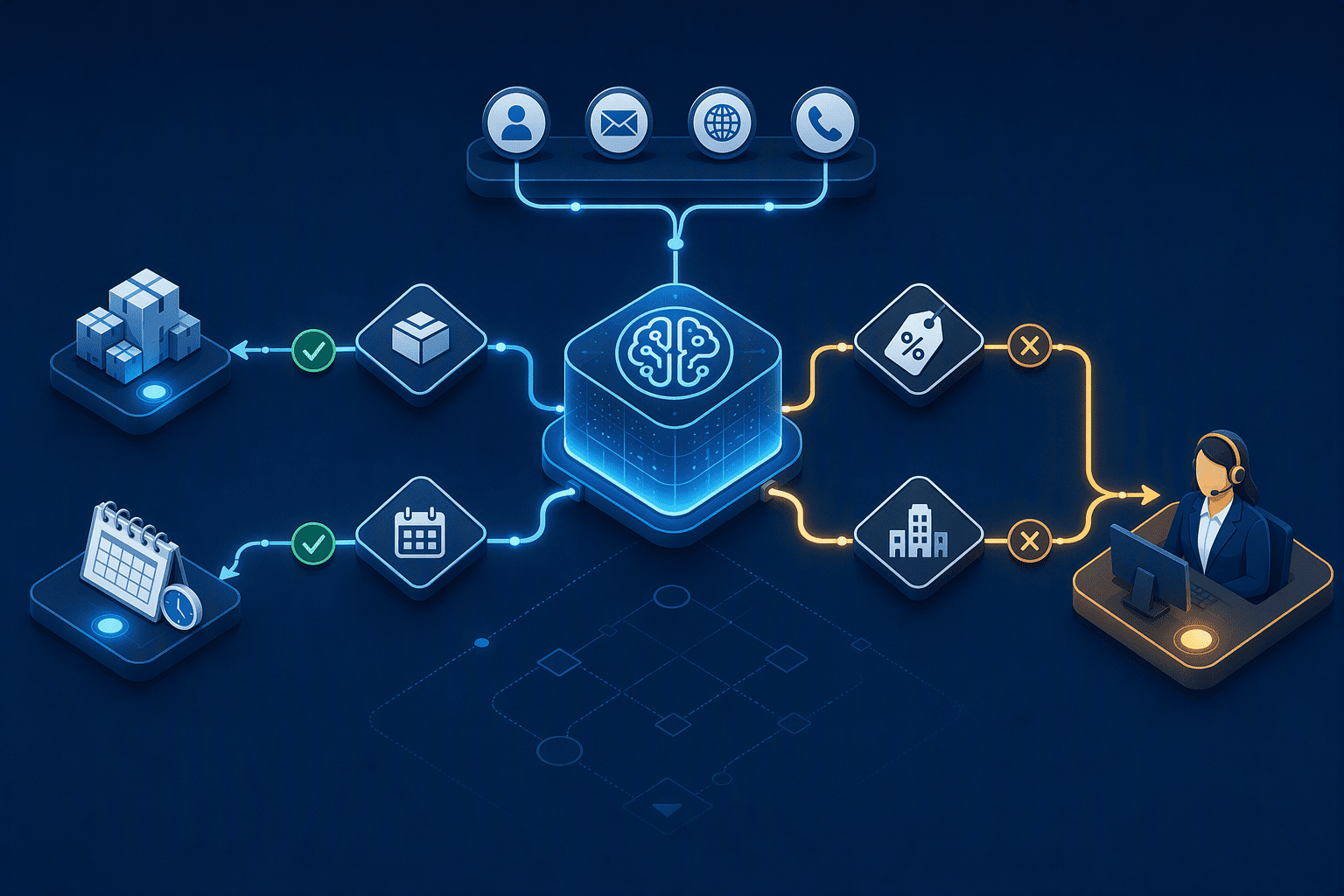
An autonomous AI isn't there to replace high-value human negotiation. It's there to triage. The architecture you need is a branching logic system that evaluates lead intent the moment a signal fires.
When a lead mentions a specific discount or a complex B2B integration, the AI must recognize this isn't a simple FAQ. You configure the agent with strict rules: it answers inventory questions and books appointments autonomously, but escalates on explicit phrases like 'talk to a manager' or when sentiment analysis detects rising confusion or anger.
This handoff logic is the safety net that protects revenue. Without it, a bot fumbles a technical objection, and you lose the deal. With it, the AI instantly triggers a warm transfer to a human rep. If it's 3 AM and no one is available, the AI captures all specific requirements and promises a callback first thing in the morning, setting a firm expectation. The transfer isn't a blind patch; the AI simultaneously syncs the CRM record via bi-directional integration.
This means the human agent who picks up the phone isn't starting cold. They see the entire interaction summary, the lead's contact info, and the specific objection that triggered the escalation. Platforms like EchoLeads let you configure these handoff triggers based on precise conversation keywords or explicit prospect requests, so complex scenarios get escalated correctly.
Transparency is maintained. The AI should never pretend to be a human. The call flow includes a clear declaration that the prospect is speaking with an automated assistant, building trust immediately.
This automation of the logging process cuts the manual data entry that bogs down sales teams. The system captures the discussion, categorizes the intent, and places the high-priority follow-up task in the right queue, so no lead dies with the bot and every handoff is rich with context.
Step 4: Implement and Go Live with a 24/7 AI Calling System in Days, Not Months
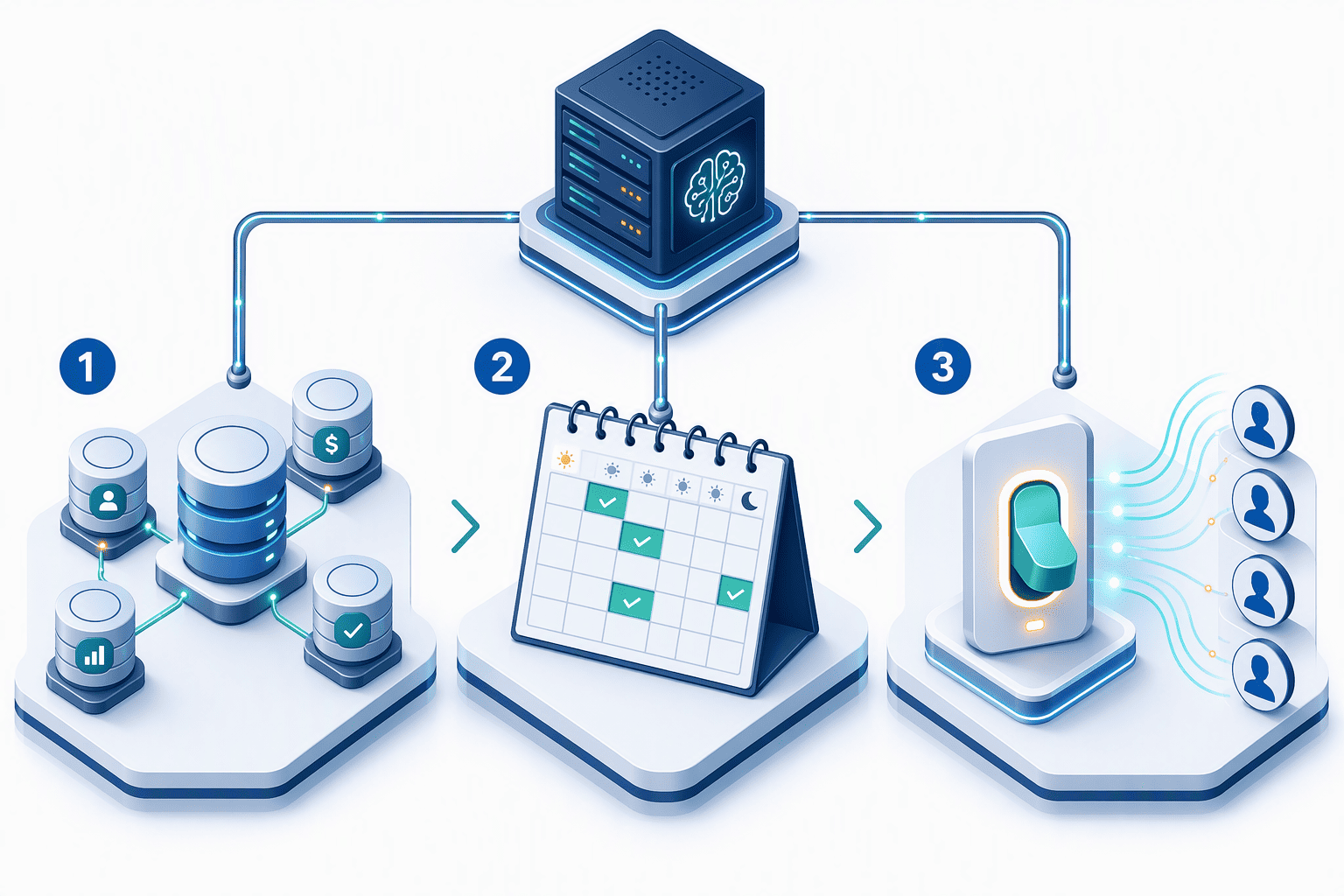
A lean deployment sequence transforms this from an IT headache into a same-week productivity upgrade. Here is the no-code operational path to flipping the switch:
Connect your CRM via API: Authenticate a bidirectional integration with your existing system. This syncs lead fields, ownership, and custom objects instantly.
Integrate your calendar: Authorize read/write access to Google Calendar, Outlook, or your native CRM scheduler. The AI books only into open time slots.
Configure voice persona: Select a natural Hindi or English voice, upload your FAQs, custom scripts, and define tone controls to match your brand identity.
Set operational boundaries: Define the specific geographic area codes, working hours for human team members, and the precise trigger phrases that cause an instant escalation.
Run a silent test flow: Feed the agent simulated inbound calls that test inventory queries, objection handling, and handoff triggers without impacting live customers.
Go live in 24/7 mode: Toggle the system to active. The agent begins answering inbound calls around the clock and logging all interactions back into your CRM records.
Step 5: Analyse the True Costs of AI After-Hours Follow-Up vs. Traditional Staffing
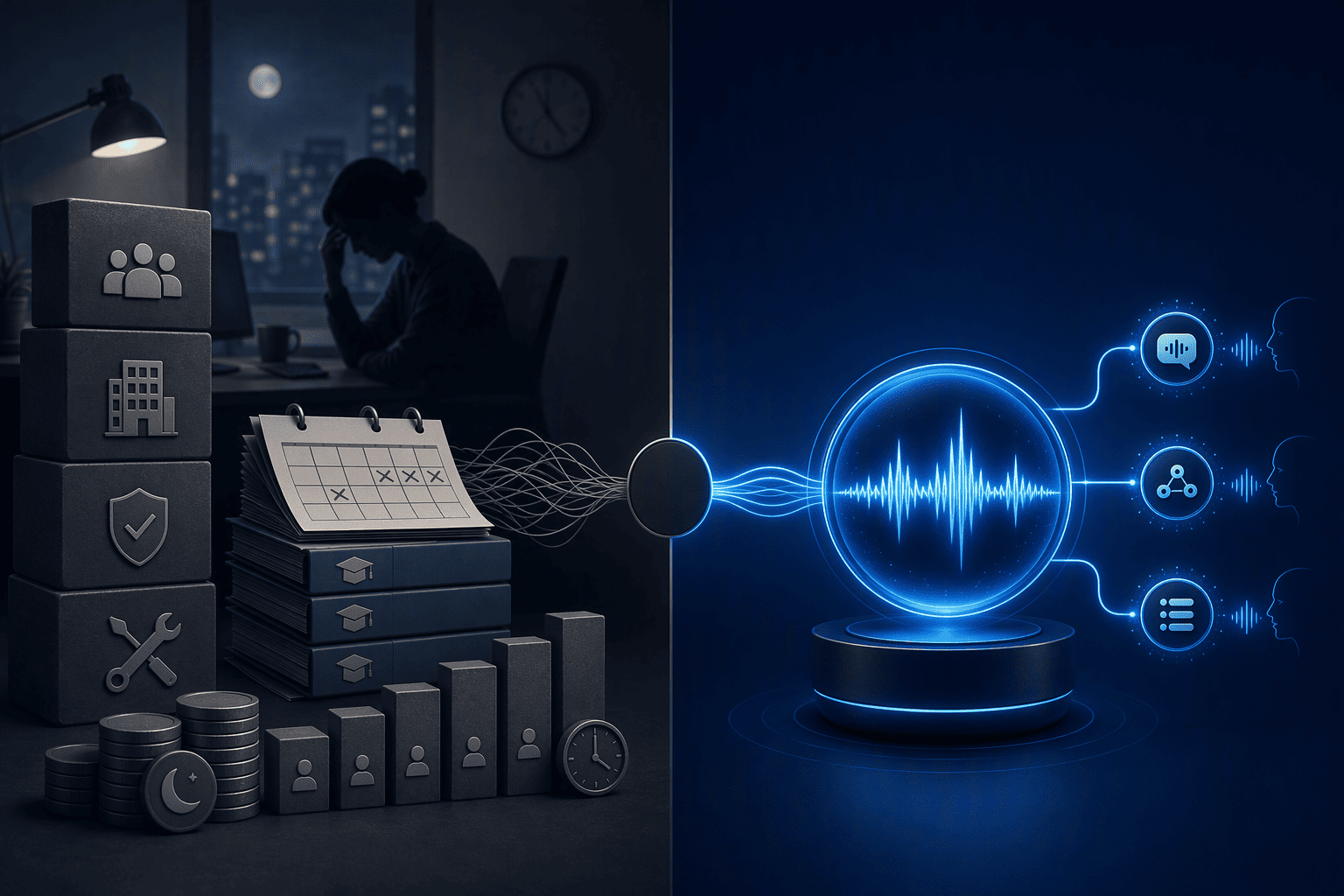
The financial difference between a graveyard shift and AI follow-up is not incremental. It is structural. An overnight team carries fixed salaries, shift loading, idle-time wages, provident fund, and the ongoing expense of training people who might answer three calls a night. An AI voice agent charges only when it speaks.
Compare the two models side by side.
Cost Dimension | Traditional Graveyard-Shift Staffing | AI Voice Agent Subscription |
|---|---|---|
Primary Cost Structure | High fixed monthly salary, plus overtime and benefits. | Variable, pay-as-you-go usage, starting at ₹4/minute. |
Scalability | Limited by a headcount cap; maximum 1 to 2 calls per rep. | Infinite concurrency; handles hundreds of simultaneous after-hours calls. |
Fatigue & Attrition | High. 44% of reps give up after one follow-up; 5 to 12 touches cause burnout. | Zero. Executes persistent 5 to 12 touch cadences to close 80% of sales without weariness. |
Idle Time Cost | Paid for 8 hours regardless of lead flow; zero calls still costs a full shift. | Zero base cost. You pay only for the minutes the AI spends speaking with a prospect. |
Response Latency | Variable; human may miss the call if busy, leading to a 60% hang-up rate within one minute. | Sub-3-second answer. Captures the lead when the intent is hottest. |
Human night teams also cap your throughput. A single rep handles one, maybe two conversations simultaneously. More volume means more hires, more payroll, more compliance. AI sidesteps that cap: one subscription spins up as many concurrent calls as you need. When the lead flow stops, so does your spending. When it spikes at 2 a.m., nobody has to wake up.
The productivity gap widens further across a full follow-up sequence. Research shows that 44% of sales reps quit after a single follow-up attempt, and even diligent reps burn out between the fifth and twelfth contact. AI does not get discouraged, skip a promised callback, or leave at shift change. It runs the full 5-to-12-touch cadence that closes 80% of sales without the friction of human fatigue.
Step 6: Integrate Your AI Voice Agent with Indian CRM and Calendar Systems to Book Meetings Automatically
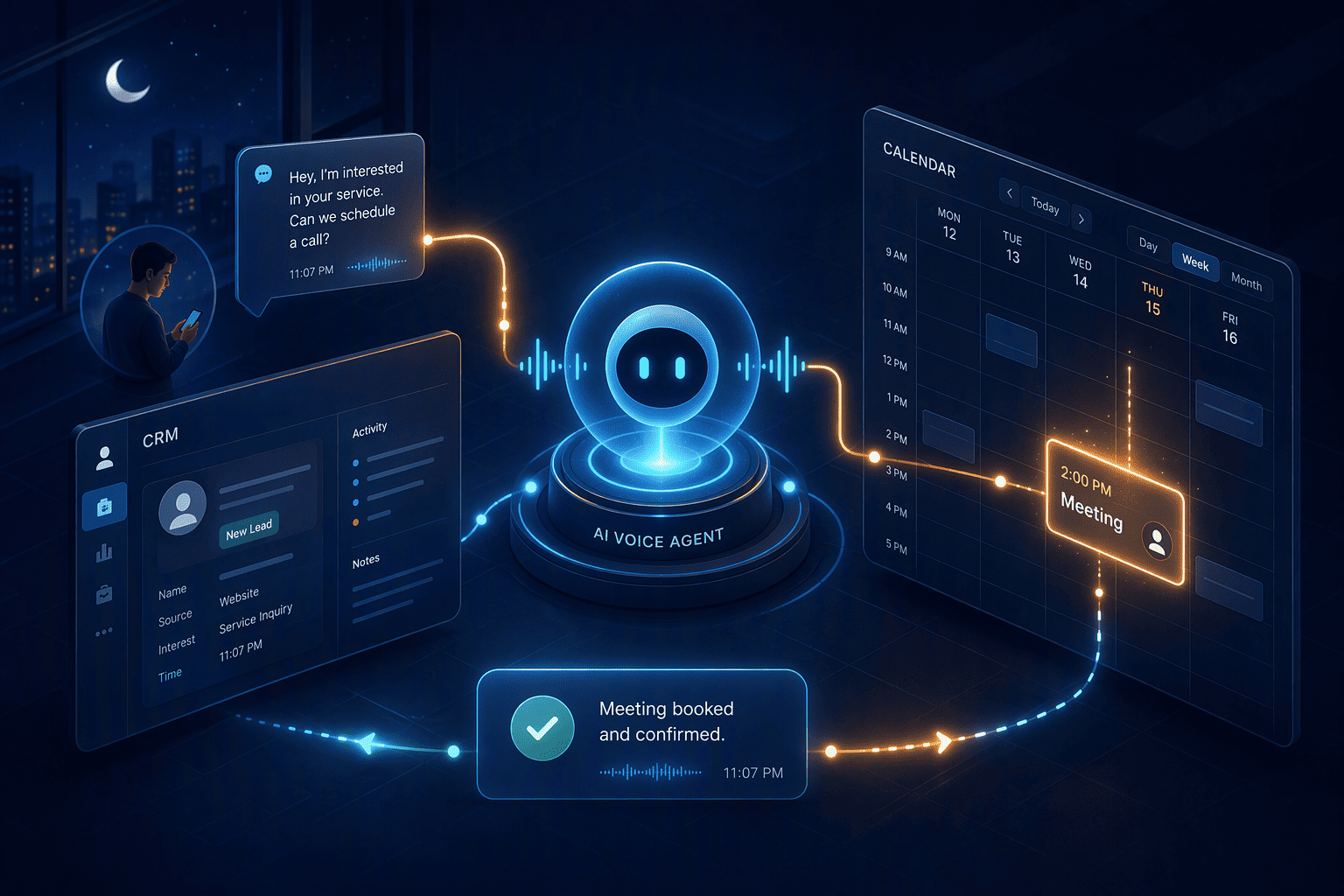
The revenue payoff starts the moment your AI agent stops talking and locks in the meeting. The integration is a real-time data loop. A lead calls at 10 p.m. Your AI hits the CRM API, pulls their purchase history and pipeline stage, then checks the assigned rep's calendar for actual open slots over the next few days. No email tag. No overnight delay.
That overnight delay matters more than most teams admit. The back-and-forth over email ("Does Thursday work? No?
How about Friday?") stretches what should be a 30-second decision into a multi-day thread. Every extra day between interest and appointment bleeds conversion rate.
Your AI skips the thread entirely and presents available times on the call. When the prospect says yes, the agent books it. Calendar event created, virtual meeting link attached or physical address confirmed, CRM record updated to 'Meeting Booked,' full transcript attached.
No manual entry required. For teams running Zoho, Salesforce, or HubSpot, EchoLeads syncs those records during a live call with a true bi-directional flow.
The rep walks in the next morning, opens their dialer, and sees qualified appointments booked overnight. They convert instead of chasing ghosts.
Conclusion
More than half your leads arrive when nobody is working. That 56% sits untouched for hours while intent cools and competitors who answer faster take the conversation.
An AI voice agent closes that gap. It calls within seconds, qualifies on the spot, and books the meeting while the buyer is still thinking about the problem. The same follow-up sequence that takes a human SDR three days to complete runs autonomously before breakfast.
Cost is no longer the barrier it was. Deploying a compliant voice agent today takes days, not quarters, and the monthly bill lands well below a single night-shift salary. The technology handles the 5 to 12 touches most deals require without fatigue, drift, or skipped steps.
The market has shifted from 'should we' to 'when.' A sales operation that stays silent for 12 hours every night is leaving revenue on the table. The question isn't whether to answer the phone at 2 AM. It's whether your competitor already does.
Frequently Asked Questions
What exactly is an AI voice agent and how does it handle sales calls autonomously outside business hours?
An AI voice agent is an autonomous software program that conducts natural spoken conversations over the phone without a human operator. Unlike a basic IVR, it interprets intent, queries inventory or knowledge bases, answers FAQs, and can book appointments directly into a calendar, providing a full sales interaction at any hour, even when the office is closed.
What specific regulatory compliance requirements (like DND or consent recording) apply to 24/7 automated sales calls in India?
Automated calls in India must comply with TRAI's TCCCPR 2018. The system must screen numbers against the NCPR/DND registry before dialing and record explicit consent. A subscriber has a 3-day window to complain about unsolicited commercial communication to 1909, and violations can lead to the disconnection of the telephone number and blacklisting of the user for two years.
How does an AI agent decide when to hand off a lead to a human versus handling it entirely on its own?
The agent uses configurable branching logic based on intent evaluation. It autonomously handles simple FAQs, pricing lookups, and appointment scheduling. It instantly escalates to a human via a warm transfer for complex negotiations, when it detects negative sentiment or confusion, or when a prospect explicitly requests a manager.
What is the real-world implementation process for a 24/7 AI calling system, and how quickly can a business go live?
A business can go live in days by connecting their existing CRM and calendar via API, selecting a voice persona, loading scripts, and testing the handoff logic. The process is primarily a no-code configuration involving these steps:
- Authenticate and integrate: Connect your existing CRM and calendar via API.
- Select a voice persona: Choose the AI's speaking style and tone.
- Load scripts: Upload knowledge base content and conversation scripts.
- Test handoff logic: Verify escalation triggers work as expected.
- Toggle on 24/7 operation: Enable round-the-clock autonomous call handling.
What are the true costs of deploying AI for after-hours lead follow-up compared to traditional staffing?
AI replaces the fixed, idle costs of graveyard-shift salaries, benefits, and training with a variable operational expense. You pay only for the minutes of conversation used, with rates starting significantly lower than a monthly employee salary. This eliminates burnout and attrition while providing unlimited concurrency to handle call spikes.
How do AI voice agents integrate with Indian businesses' existing CRMs and calendars to actually book meetings automatically?
Through bidirectional API integration with platforms like Zoho, Salesforce, or HubSpot, the agent provides several automated capabilities:
- Context retrieval: Accesses live CRM records to understand the lead's purchase history and pipeline stage.
- Calendar scanning: Checks the assigned rep's open slots before suggesting times on the call.
- Automated booking: Upon agreement, creates the calendar event with virtual meeting link or physical address.
- CRM update: Changes the record status to 'meeting booked' and logs the full call transcript for the human rep.
Related articles
Why Your Indian Sales Team Can't Ignore Multi-Channel Automation Anymore
Learn why Indian sales teams can no longer ignore sales automation platform and how employing one can streamline lead qualification and conversion.
7 Platforms That Make Sales Calls and Book Meetings Automatically in 2026
Learn about the best AI calling agents that streamline sales automation enabling sales reps to handle large volumes of calls without missing a single lead.
67% of Lost Sales Happen Before the Conversation Even Starts, Your Team Is Chasing Ghosts, Not Prospects
Learn how sales reps can avoid missing valuable leads by deploying sales automation platform and reduce the percentage of lost sales.