
How to Get WhatsApp Conversion Rates Above 45-60% (2026)
WhatsApp conversion rates measure the percentage of prospects who complete a desired action—such as booking a meeting or closing a sale—after engaging through WhatsApp messaging, with industry benchmarks ranging from 45% to 60% depending on funnel stage and vertical.
Key Takeaways
Breaking conversion into five measurable stages—opt-in, first response, qualification, booking, and show-up—reveals exactly where leads drop off and which automation fixes deliver the highest ROI.
According to Heyy.io [13], WhatsApp bots drive conversion rates of 45-60%, significantly outperforming email's typical 2-5% benchmark.
Instant AI-powered replies within the first five minutes prevent drop-off; studies show leads contacted within minutes are 100 times more likely to convert [10].
Automated qualification scripts and calendar integration remove friction at booking, while compliance safeguards, including opt-in consent and the 24-hour conversation window, protect your sender reputation.
Stage-level tracking allows you to diagnose whether your bottleneck is response speed, qualification logic, booking friction, or follow-up cadence, enabling targeted fixes rather than guesswork.
Introduction
Breaking conversion into five measurable stages, opt-in, first response, qualification, booking, and show-up, reveals exactly where leads drop off and which automation fixes deliver the highest ROI. Most businesses treat WhatsApp conversion as a single end-to-end metric, but that approach masks critical bottlenecks. A 50% aggregate conversion rate might hide a 90% opt-in rate paired with a 55% first-response rate, meaning your initial engagement is strong but your speed-to-lead is bleeding opportunities. According to Connverz [17], conversational commerce conversion rates hit 45-60%, far exceeding email's typical range. Yet many teams still struggle to reach these benchmarks because they lack stage-level visibility. This guide walks through each conversion stage, explains where automation delivers measurable lift, and shows how to measure progress without violating WhatsApp's compliance rules.
Understanding the 45-60% WhatsApp Conversion Benchmark: What It Really Measures
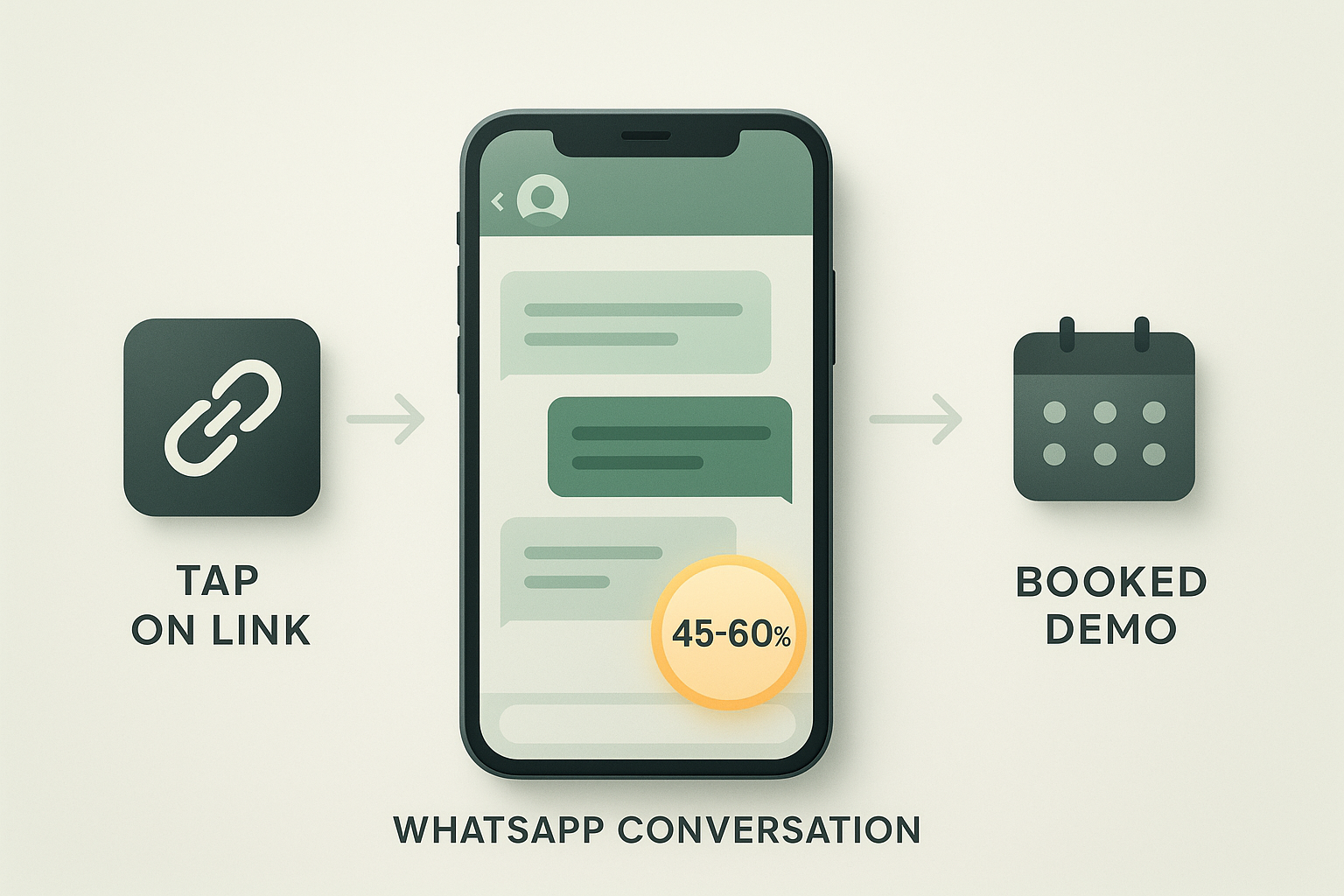
The 45-60% benchmark cited in industry reports typically refers to click-to-conversation or conversation-to-booking rates, not the full lead-to-close journey. According to Heyy.io [13], WhatsApp bots achieve conversion rates of 45-60% compared to email's 2-5%, but that statistic measures prospects who complete a specific micro-conversion, such as booking a demo or submitting qualification answers, not necessarily closing a sale. Connverz [17] reports that top performers see 55%+ click-through rates and 11.8% average conversion rates, with B2B averaging 6.3%. The gap between these numbers reflects different definitions: click-through measures engagement with a message link, while conversion measures completed transactions.
Why End-to-End Metrics Hide Critical Bottlenecks
Measuring only the first-message-to-close rate collapses five distinct conversion events into one number, making it impossible to diagnose where prospects disengage. A company with 40% end-to-end conversion might have 80% opt-in, 70% first-response, 60% qualification, 50% booking, and 80% show-up rates; each stage represents a different optimization lever. Without stage-level tracking, teams often over-invest in top-of-funnel campaigns when the real problem is slow human handoff or missing calendar integration. According to Patagon.ai [9], nearly 78% of customers buy from the first responder, and leads contacted within five minutes are 100 times more likely to convert than those reached after 10 minutes [10]. These findings underscore that response speed alone can determine whether a 45% conversion rate climbs to 65%.
Conversion Definition by Industry and Funnel Stage
B2B SaaS teams often define conversion as booked demo, while e-commerce measures completed purchase. Real estate and professional services track consultation bookings. Each definition changes which stages matter most: e-commerce may optimize checkout friction, while B2B focuses on qualification accuracy to avoid wasting sales hours on low-intent leads. MessageBot.in [12] reports that businesses using WhatsApp Business API see up to 5x higher lead generation, 45-60% higher conversion rates, a 14x increase in sales, and a 138% increase in leads. These aggregated statistics span multiple industries, so applying them requires clarifying which conversion event you are measuring and which stage improvements will move your specific metric.
The 5 Conversion Stages in WhatsApp Sales (And Where Most Funnels Break)
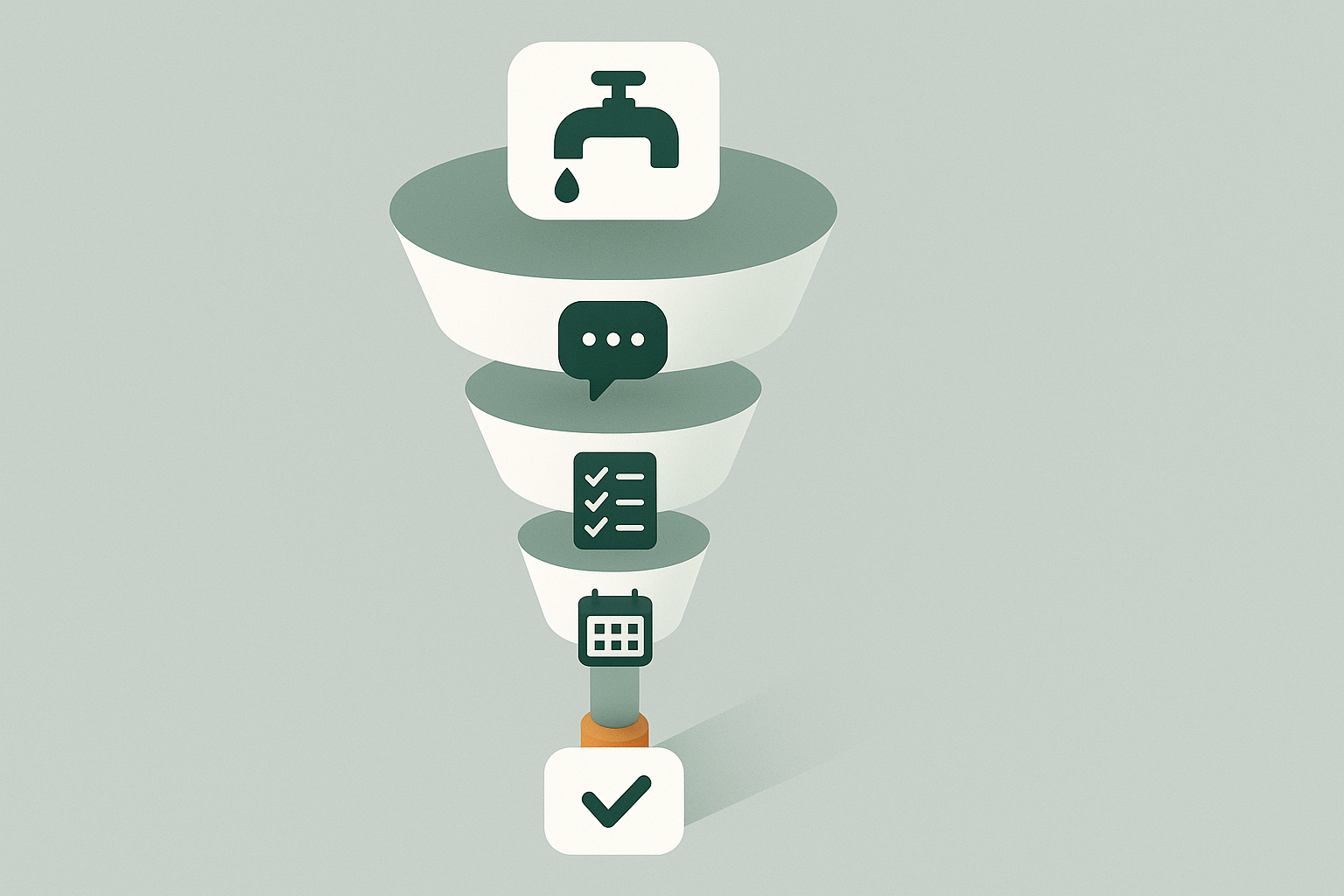
Every WhatsApp sales funnel passes through five measurable stages: opt-in, first response, qualification, booking, and show-up. Most drop-off happens at first response and booking because these stages introduce the longest delays and highest friction. According to Wati [1], automated lead nurturing can reduce sales cycles by up to 30%, but only when each stage is instrumented separately. Breaking the funnel into discrete events allows you to calculate stage-specific conversion rates and identify which automation investment delivers the highest marginal lift.
Stage 1: Opt-In Rate (Ad Click to WhatsApp Start)
Opt-in rate measures the percentage of prospects who click a WhatsApp link and initiate conversation. Strong opt-in rates exceed 70%, but weak call-to-action copy, unclear value proposition, or asking for a phone number before the WhatsApp link can depress this metric. According to Connverz [17], WhatsApp messages achieve a 97.8% delivery rate and 94.2% read rate within three minutes, meaning the channel itself is not the bottleneck, messaging and landing page design are. Prospects who opt in have already signaled high intent; losing them at this stage suggests friction in the sign-up flow.
Stage 2: First Response Rate (Message Sent to First Reply Received)
First response rate tracks how many opt-ins you successfully engage with an initial reply. Leads Loom [2] reports that AI handles 70-85% of incoming chats end-to-end, with a median auto-reply time under five seconds. This speed advantage directly impacts conversion: prospects contacted within the first few minutes convert at dramatically higher rates than those who wait hours for a human agent. Slow response is the single most common conversion killer in WhatsApp funnels, and automation offers the clearest path to fixing it.
Stage 3: Qualification Rate (First Reply to Qualified Lead)
Qualification rate measures how many responders meet your minimum criteria for sales follow-up. Manual qualification introduces delays and inconsistency; AI-driven qualification scripts can ask budget, timeline, and authority questions in natural conversation flow. Sales teams using AI agents for lead qualification and follow-ups report saving an average of two hours per day, representing up to an 80% reduction in repetitive workload. Qualification automation not only speeds the funnel but also prevents low-intent leads from consuming expensive human hours.
Stage 4: Booking Rate (Qualified Lead to Meeting Scheduled)
Booking rate measures how many qualified leads successfully schedule a meeting. Manual booking requires back-and-forth to find available slots; calendar integration removes this friction entirely. Whappy [3] syncs with Calendly to book meetings automatically when a slot is available, and Fuzen [11] integrates with Google Calendar, Zoom, and Calendly to handle booking without human intervention. Chat Architect [10] reports a 23% boost in conversion rates when helpdesk and WhatsApp integration reduce response delays, which suggests that eliminating manual scheduling steps drives measurable lift.
Stage 5: Show-Up Rate (Meeting Scheduled to Meeting Attended)
Show-up rate tracks how many booked meetings actually occur. No-shows typically result from forgotten appointments or changed priorities. Automated reminders sent 24 hours and one hour before the meeting significantly reduce no-show rates. Connverz [17] emphasizes that under-one-minute response time correlates with 58% overall conversion from chats and 127% sales growth in three months, suggesting that speed and follow-up consistency throughout the funnel, including post-booking reminders, compound into substantial revenue impact.
Stage 1: Opt-In Rate Optimization, Getting Contacts into Your WhatsApp Funnel
Opt-in rate improvements come from clearer value propositions, simpler click paths, and explicit consent messaging. WhatsApp Business API requires explicit opt-in consent before sending messages, platform policies [6]. Device Doctor India [7] reports that India has roughly 500 million WhatsApp users and more than 5 million businesses, with over 2 billion B2C WhatsApp messages sent daily. This scale makes opt-in quality critical: a poorly designed opt-in flow wastes ad spend and risks compliance violations.
Pre-Filled Message Links and Click-to-WhatsApp Ads
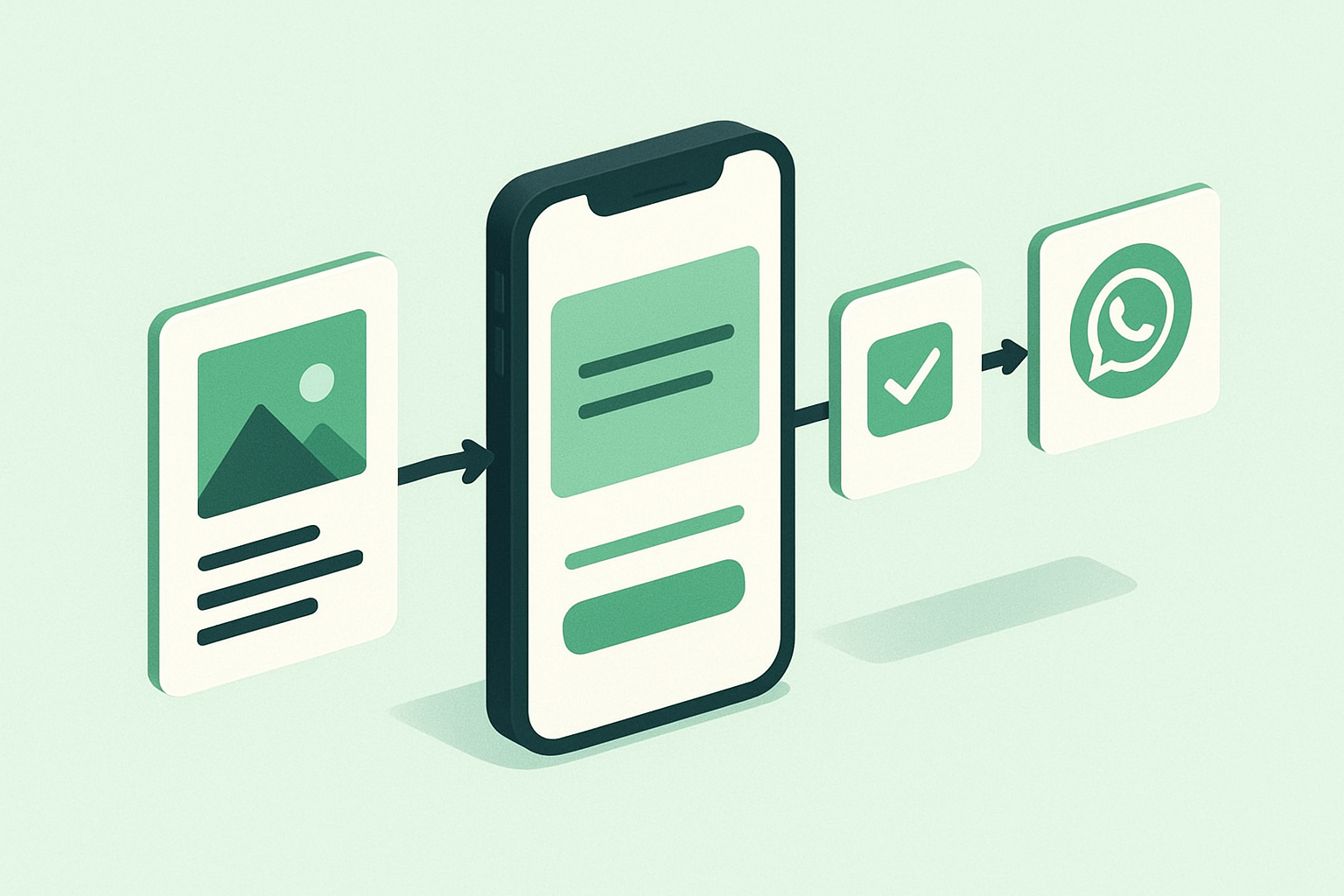
Pre-filled message links reduce friction by auto-populating the first message, so prospects only need to tap Send. Click-to-WhatsApp ads on Facebook and Instagram deliver higher opt-in rates than ads that route to landing pages because they eliminate an intermediate step. Quantique Minds [8] notes that WhatsApp achieves a 98% open rate, far exceeding email, which makes the channel itself highly effective once the prospect opts in.
Consent Language and Compliance Checkpoints
Explicit consent language, such as a checkbox or confirmation message stating that the user agrees to receive messages, is mandatory under India's Digital Personal Data Protection Act 2023 [16]. ComplyZero [15] emphasizes that every business using WhatsApp Business to communicate with customers is a Data Fiduciary under DPDP, and WhatsApp's end-to-end encryption does not satisfy compliance obligations on its own. Clear consent messaging protects your sender reputation and prevents account suspension.
Stage 2: First Response Speed & AI-Powered Instant Replies
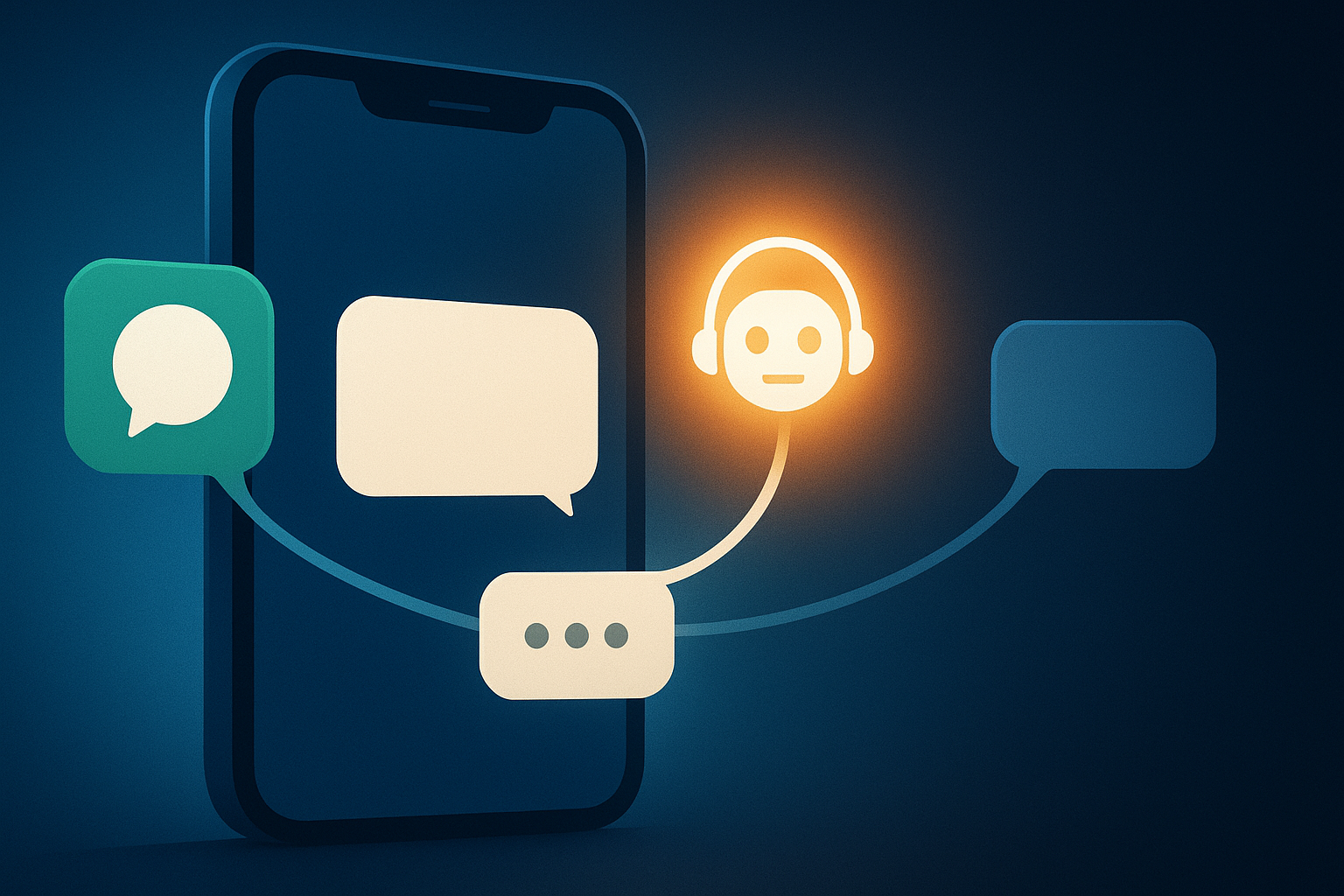
First response speed is the highest-use optimization point in most WhatsApp funnels. Patagon.ai [9] reports that nearly 78% of customers buy from the first responder, and leads contacted within five minutes are 100 times more likely to convert than those contacted after 10 minutes [10]. Human agents cannot sustain sub-five-minute response times around the clock; AI-powered instant replies solve this constraint. Interakt [5] states that chatbots manage routine questions at any hour and handle 80% of standard inquiries, freeing human agents to focus on high-value conversations.
Stage 3: Lead Qualification Automation, Filtering High-Intent Prospects
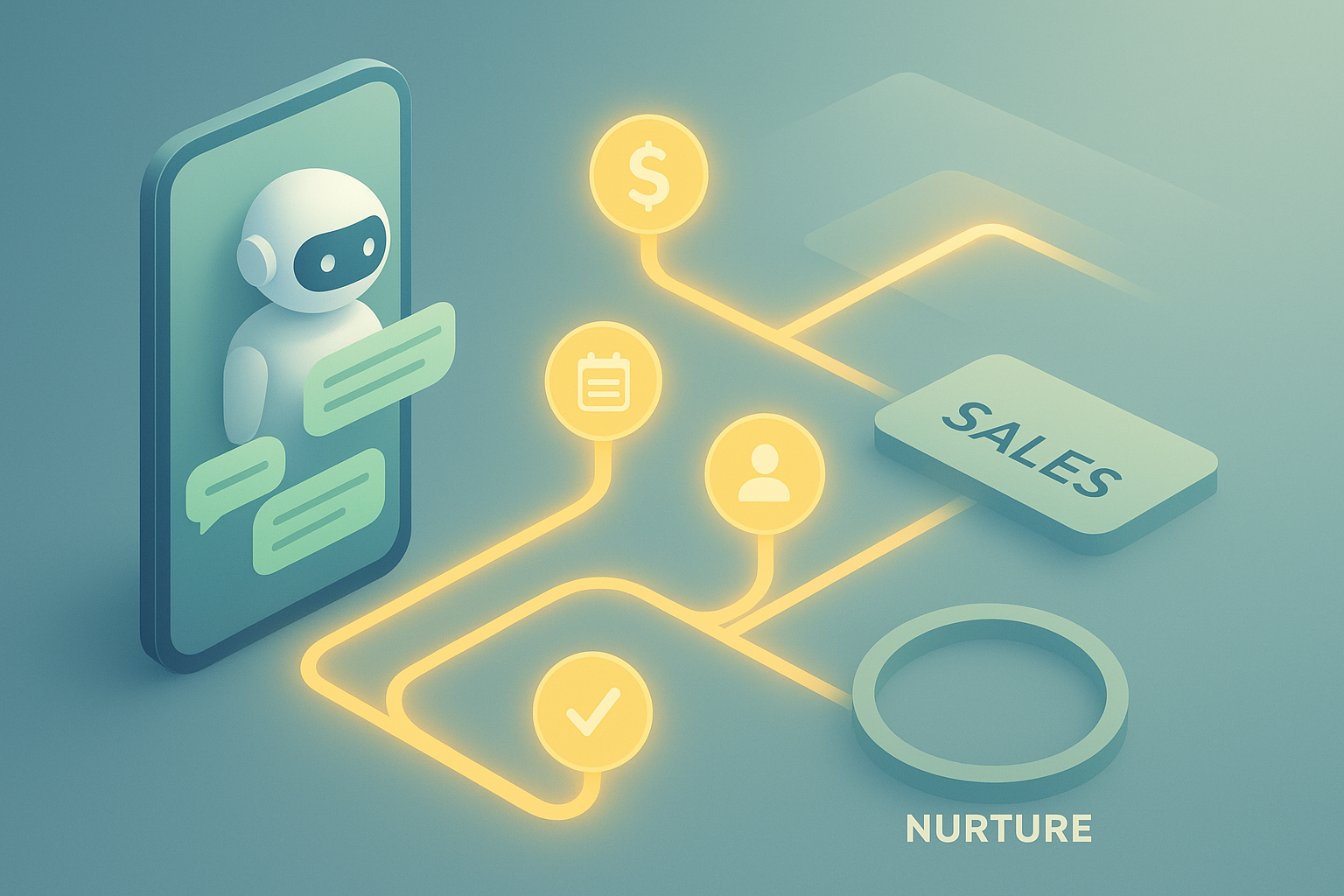
Qualification automation asks budget, timeline, authority, and need questions in conversational flow, then routes high-intent leads to sales and low-intent leads to nurture sequences. Chat Architect [11] notes that WhatsApp chatbots provide an automated, scalable, and personalized way to filter prospects, and Fuzen [11] captures every WhatsApp message as a lead and qualifies those leads with smart, human-like AI conversations. This filtering prevents sales teams from wasting time on unqualified inquiries while ensuring that serious buyers receive immediate attention.
Stage 4: Meeting Booking & Calendar Integration
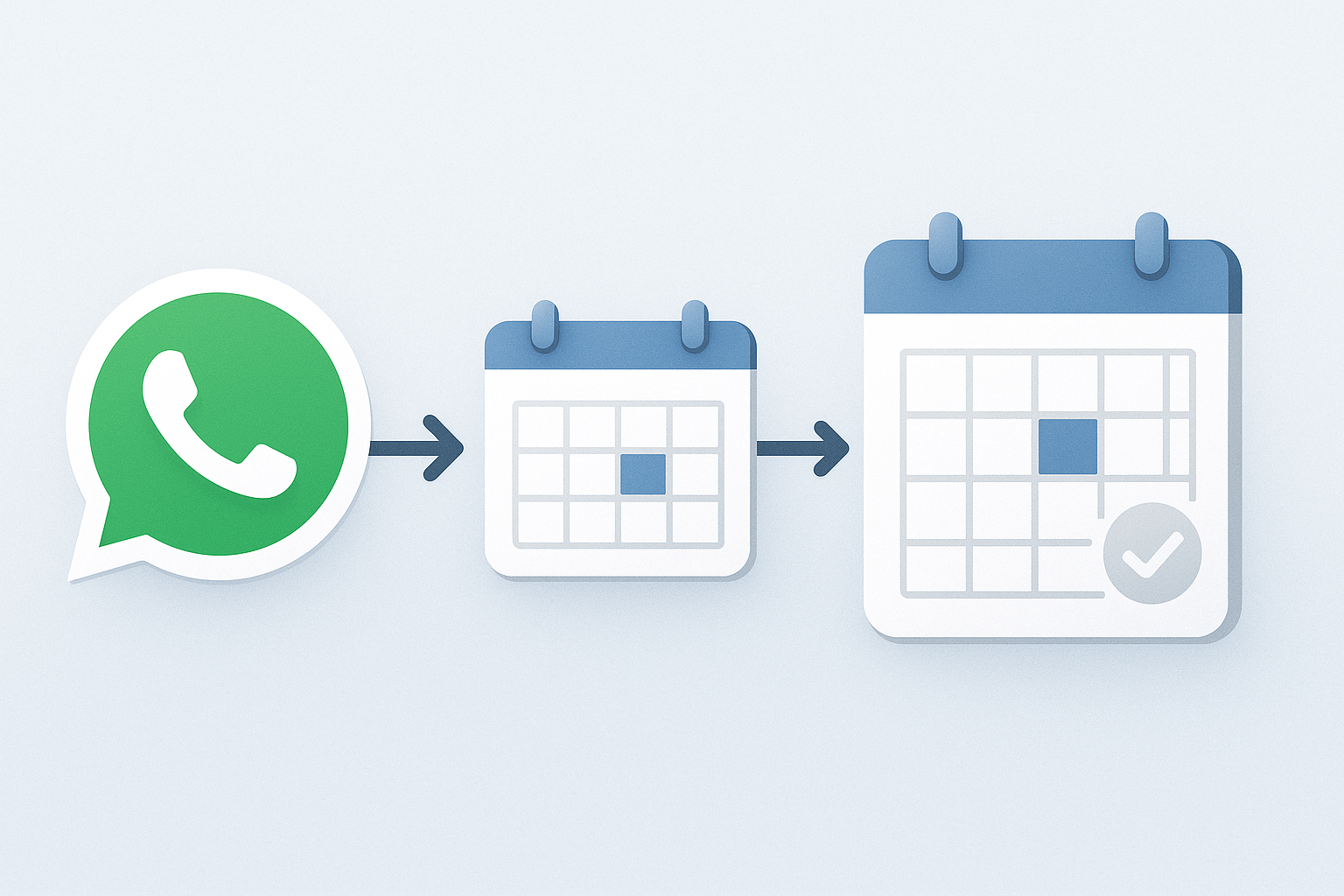
Calendar integration removes the manual back-and-forth that often kills bookings. Whappy [3] syncs with Calendly to book meetings when available, and Fuzen [11] integrates with Google Calendar, Zoom, and Calendly to handle booking without human intervention. Automated booking not only speeds the funnel but also reduces no-shows by sending confirmation and reminder messages immediately after scheduling.
Stage 5: Post-Booking Follow-Up & No-Show Prevention
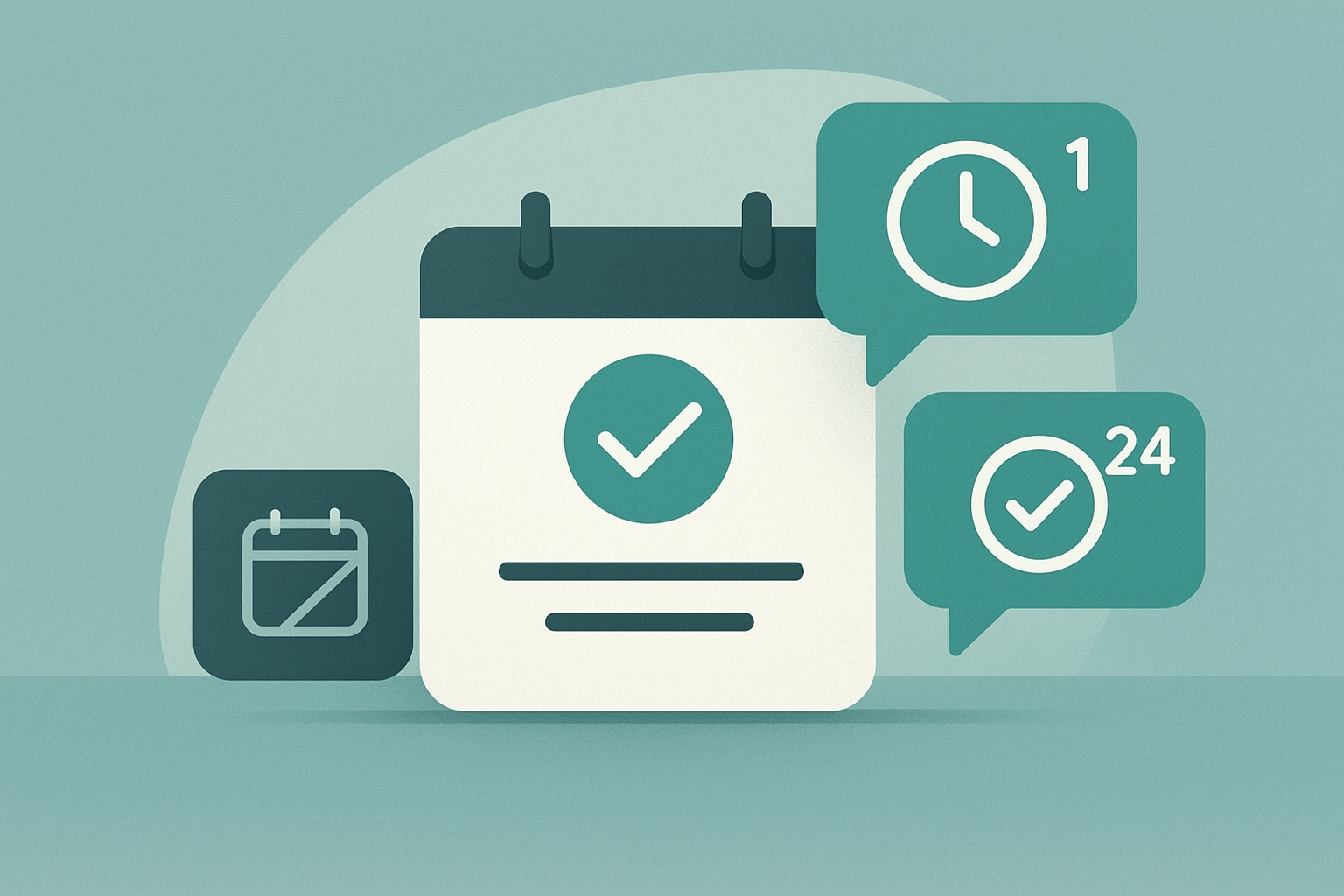
No-show rates often exceed 20% in unmanaged funnels, meaning one in five booked meetings never occurs. Automated reminders sent 24 hours and one hour before the meeting reduce no-show rates significantly. Connverz [17] reports that under-one-minute response time correlates with 58% overall conversion from chats and 127% sales growth in three months, suggesting that speed and follow-up consistency throughout the funnel, including post-booking reminders, compound into substantial revenue impact.
Measuring Your WhatsApp Conversion Rate by Stage (Actionable Metrics)
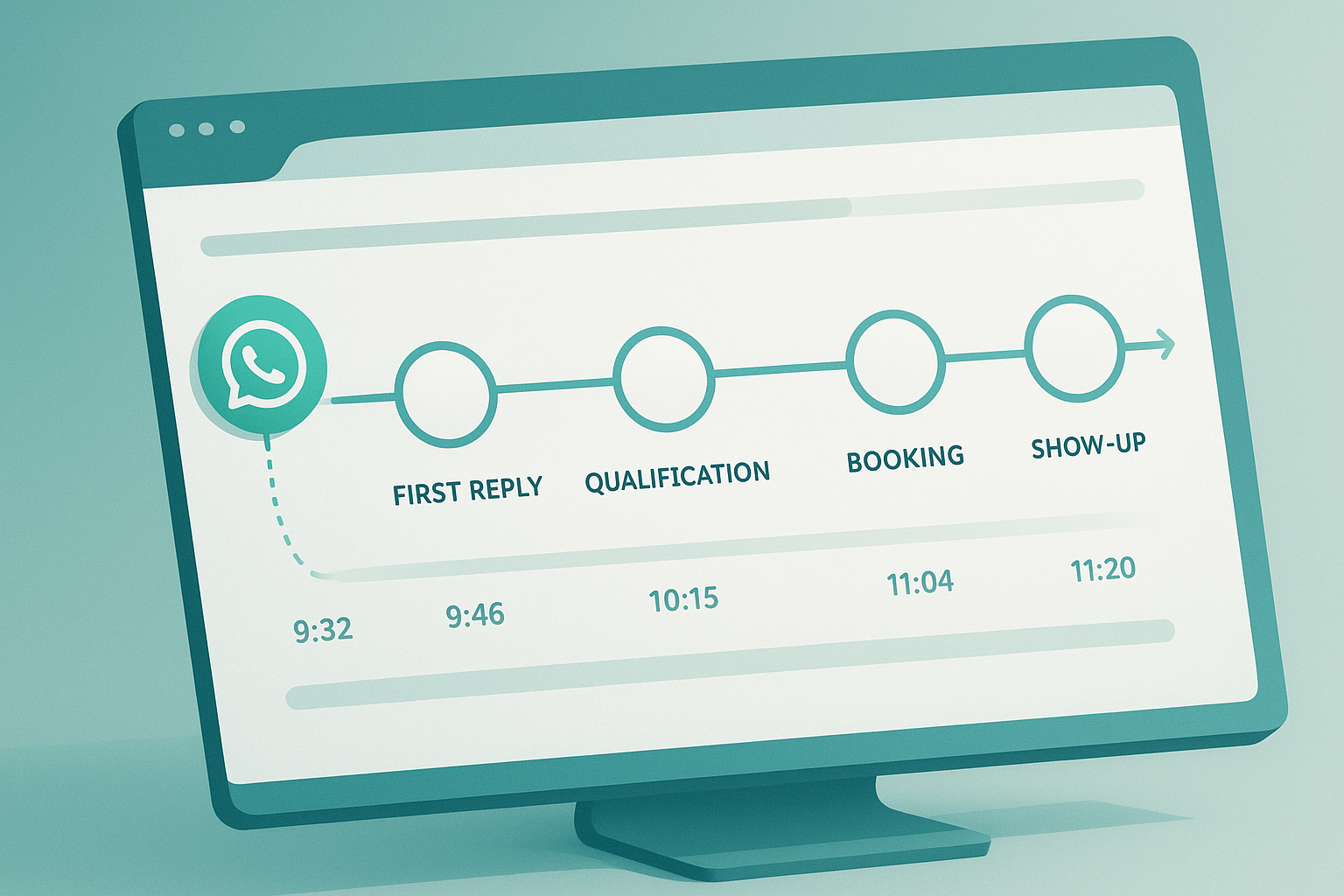
Stage-level tracking requires tagging each lead with timestamps for opt-in, first reply, qualification, booking, and show-up events. CRM integration synchronizes these events across systems, allowing you to calculate conversion rates for each stage and identify bottlenecks. MessageBot.in [12] describes WhatsApp Business API as an orchestrated communication layer that powers support automation, marketing, authenticated OTP messages, catalogue-based shopping, multi-agent workflows, and fully conversational customer journeys, which suggests that proper instrumentation unlocks deep funnel visibility.
CRM Integration for Bi-Directional Lead Sync and Stage Tracking
Bi-directional CRM sync ensures that WhatsApp conversations update lead records in real time and that CRM status changes trigger WhatsApp follow-ups. Wati [1] offers over 100 app integrations and strong analytics, and Uptail [4] mentions that Treble.ai has native HubSpot and Salesforce integrations. Proper integration eliminates manual data entry and ensures that stage timestamps are accurate and complete.
Stage-Specific Conversion Benchmarks and Drop-Off Diagnostics
Benchmarking each stage against industry norms reveals which areas need attention. According to Connverz [17], WhatsApp achieves a 32.4% average click-through rate, with top performers seeing 55%+, and 11.8% average conversion rates. If your opt-in rate is 75% but your first-response rate is 40%, the bottleneck is response speed, not top-of-funnel messaging. If qualification rate is strong but booking rate is weak, calendar integration or manual scheduling friction is the issue. This diagnostic precision allows targeted fixes rather than broad guesses.
Stage | Industry Benchmark | Common Bottleneck | Primary Fix |
|---|---|---|---|
Opt-In (Ad Click to WhatsApp Start) | 70-85% | Unclear value proposition or consent friction | Pre-filled message links and explicit consent language |
First Response (Message Sent to Reply Received) | 60-75% | Slow human response time | AI-powered instant replies (sub-5-second median) |
Qualification (First Reply to Qualified Lead) | 50-65% | Manual qualification delays or weak scripts | Conversational AI BANT capture with adaptive logic |
Booking (Qualified Lead to Meeting Scheduled) | 40-55% | Manual scheduling friction | Calendar integration with real-time availability |
Show-Up (Meeting Scheduled to Attended) | 75-85% | Forgotten appointments | Automated reminders at 24 hours and 1 hour before |
This Stage-Bottleneck Diagnostic Framework combines opt-in benchmarks from Connverz [17], first-response speed findings from Patagon.ai [9], qualification efficiency data from Alessandro Colford, booking lift from Chat Architect [10], and show-up improvements from Connverz [17] to create a unified diagnostic tool that reveals exactly where your funnel leaks revenue.
Where EchoLeads Fits in Stage-Level Automation
EchoLeads supports WhatsApp reminder sequences, SMS follow-ups, cross-channel re-engagement, CRM trigger campaigns, and behavioral workflows, which allows teams to automate follow-ups across the entire funnel without switching platforms. The platform provides instant calendar integration, instant meeting confirmation, smart reminders, and CRM system synchronization, addressing the booking and show-up stages where manual processes often fail.
Frequently Asked Questions
How can I get my WhatsApp conversion rates above the 45-60% industry benchmark?
Break your funnel into five stages, opt-in, first response, qualification, booking, and show-up, and measure conversion at each stage. Leads contacted within five minutes are 100 times more likely to convert [10], so implementing AI-powered instant replies at the first-response stage often delivers the highest ROI. Then optimize booking friction with calendar integration and reduce no-shows with automated reminders.
Is there a tool that can automatically qualify leads and book appointments through WhatsApp?
Yes. Whappy [3] qualifies and books appointments automatically, Fuzen [11] captures every WhatsApp message as a lead and qualifies those leads with smart AI conversations before booking automatically, and Wati [1] uses AI Conversational Layer and Inbound Intelligence Agents to qualify leads and accelerate pipelines.
Why do my WhatsApp Business messages take so long to get responses from leads?
Manual response workflows cannot sustain sub-five-minute reply times. Interakt [5] reports that chatbots handle 80% of standard inquiries at any hour, and Leads Loom [2] achieves median auto-reply times under five seconds with AI agents handling 70-85% of chats end-to-end. Switching from manual to AI-powered instant replies eliminates response delays and prevents drop-off during the critical first-contact window.
What is the WhatsApp Business API 24-hour conversation window rule?
WhatsApp allows businesses to send free-form messages only within 24 hours after a customer initiates or replies to a conversation. After 24 hours, businesses must use pre-approved message templates unless the customer sends another message. Helo.ai [14] explains opt-in requirements, template approval rules, and the 24-hour messaging window in detail, emphasizing that violating these rules risks account suspension.
How do I comply with India's DPDP Act when using WhatsApp Business?
Every business using WhatsApp Business to communicate with customers is a Data Fiduciary under the Digital Personal Data Protection Act 2023 [15]. You must obtain explicit consent before messaging, provide clear opt-out mechanisms, and document consent records.
What conversion rate should I expect from WhatsApp vs email marketing?
According to Heyy.io [13], WhatsApp bots achieve conversion rates of 45-60% compared to email's typical 2-5% benchmark. Connverz [17] reports that conversational commerce conversion rates hit 45-60%, far exceeding email. This advantage stems from WhatsApp's 98% open rate [8] and the immediacy of real-time conversation, which allows prospects to ask questions and receive instant answers within a single session.
When should I escalate a WhatsApp conversation to a human agent?
Escalate when a prospect mentions a competitor, asks about custom pricing or enterprise features, expresses frustration or confusion, or signals high intent with complex requirements. Interakt [5] notes that WhatsApp Business API allows several team members to view and tackle the same chat, which supports smooth handoff.
Related articles
6 Best AI Outbound Calling Solutions for Loan Verification
Compare AI outbound calling platforms that verify loan applications 24/7
5 Common Causes of Long Bank Loan Inquiry Call Wait Times
Why do bank customers complain about long wait times for loan inquiry calls? Learn the 5 Common Causes of Long Bank Loan Inquiry Call Wait Times.
4 Best AI Voice Lead Qualification Tools for Insurance
Compare AI voice platforms for insurance lead qualification through automated outbound calls.