
Best Automated Lead Callback and Booking Tools 2026
Traditional scheduling tools require leads to self-book appointments, creating friction and delays. Autonomous callback systems flip this model by initiating outbound calls and completing the booking cycle without human intervention.
Key Takeaways
Autonomous callback systems combine outbound AI voice agents, telephony infrastructure, and real-time calendar integration to book meetings without human involvement.
Full-autonomy platforms require bi-directional CRM sync, conversational intelligence, and intelligent escalation logic to handle standard workflows end-to-end.
TCPA compliance mandates prior express written consent, DNC scrubbing, and opt-out detection before automated systems contact consumer mobile phones.
AI voice agents respond to new leads within minutes, improving qualification rates by 7x compared to one-hour human response times.
Multi-channel platforms process concurrent booking requests across phone, WhatsApp, and web chat through a unified orchestration layer.
Several AI-powered platforms can automatically call leads back and book meetings without human intervention. These autonomous callback systems combine outbound AI voice agents, telephony infrastructure, and real-time calendar integration—capabilities that traditional self-serve scheduling tools lack.
What Autonomous Callback Systems Do Differently
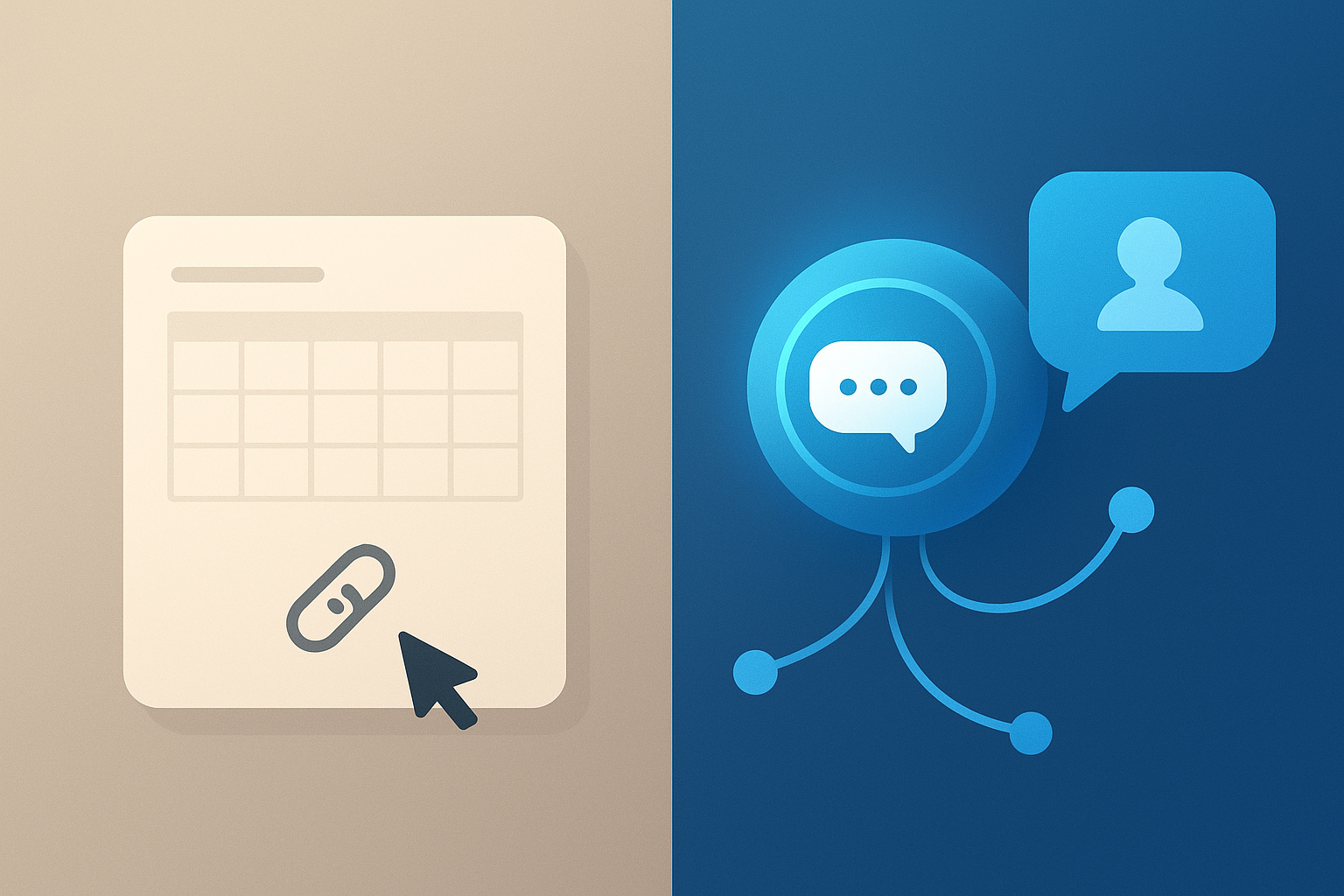
Conventional appointment schedulers like Calendly and Acuity offer embeddable widgets and booking pages, but they remain passive—prospects must visit a link and self-select a time[5]. Autonomous callback systems flip this model: they initiate outbound calls, engage leads in natural language conversations, qualify intent in real time, and book meetings during the call itself. Platforms such as Synthflow and Goodcall deploy conversational AI agents that handle objections, answer questions, and confirm availability—all before the prospect ever opens their calendar app.
The Three Core Requirements for Full Automation
To qualify as a fully autonomous callback-and-booking tool, a platform must deliver three mandatory capabilities. First, outbound calling infrastructure—the system must initiate voice calls to leads without requiring inbound contact. Second, conversational booking logic, natural language understanding that navigates timezone conflicts, reschedule requests, and multi-step qualification flows in real time. Third, automatic CRM and calendar synchronization, appointments booked during calls must instantly appear in Google Calendar, Outlook, or Salesforce with zero manual data entry[6]. Systems missing any of these three pillars fall short of true autonomy, requiring either human handoffs or prospect self-service steps that introduce friction and reduce conversion rates.
Understanding the workflow architecture reveals why only platforms with specific technical capabilities qualify as true autonomous booking systems.
Key Components of Autonomous Appointment Scheduling Systems
AI Voice Agent and Telephony Infrastructure
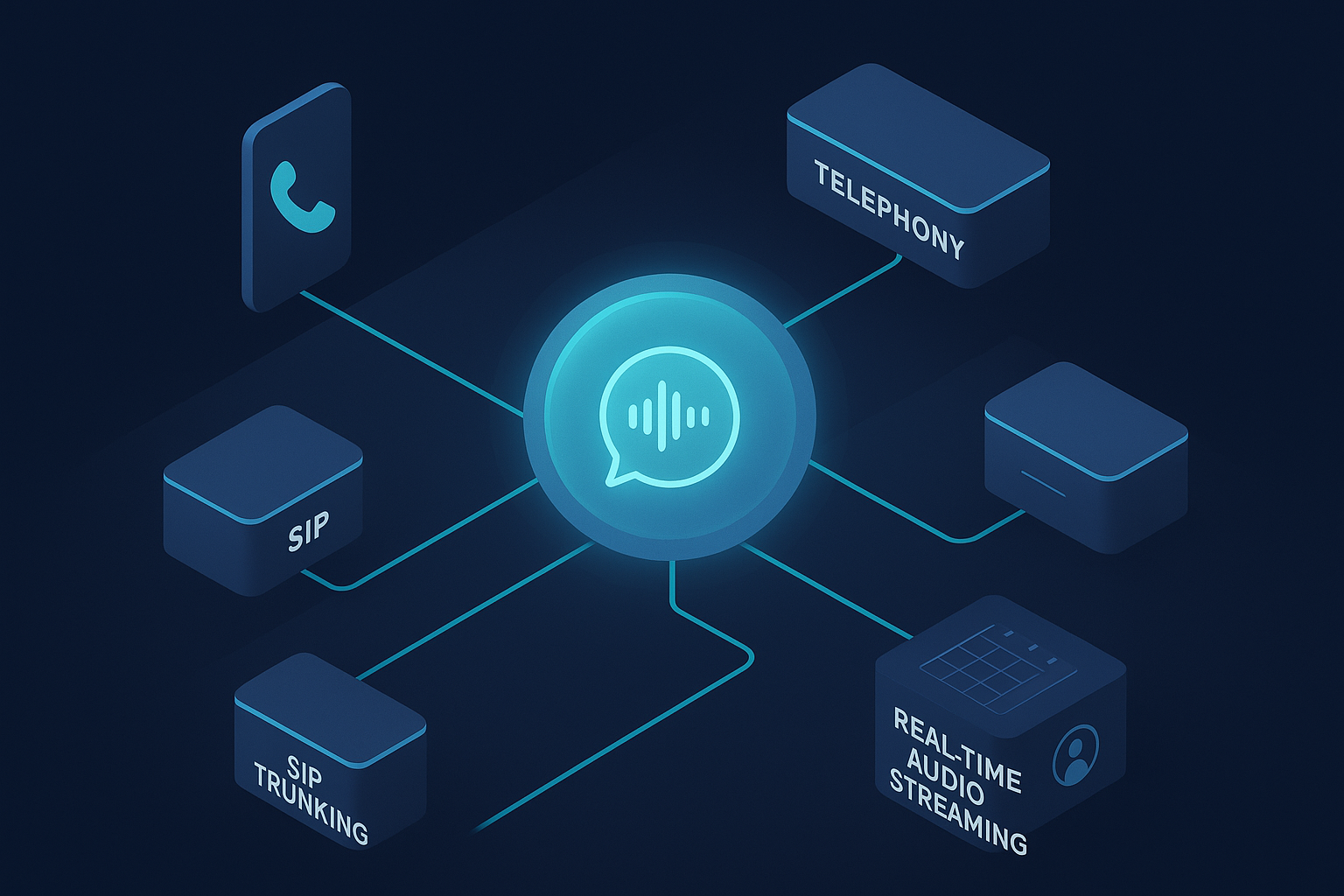
The foundation of automated callback systems is a conversational AI voice agent paired with enterprise telephony infrastructure. Modern platforms use natural language understanding engines that parse inbound requests, identify booking intent, and guide callers through multi-turn conversations, asking for preferred dates, qualifying urgency, and confirming details[1]. The telephony layer handles SIP trunking, call routing, and real-time audio streaming to the voice model. Leading solutions build in-house telephony stacks to control latency and call quality, ensuring sub-200ms response times that feel natural[1]. The agent must navigate interruptions, accents, and conversational detours while maintaining context across the entire call flow.
Real-Time CRM and Calendar Synchronization
Bi-directional integration with CRMs and calendaring systems defines production-ready automation. The voice agent queries live availability via API, books the slot atomically to prevent double-bookings, and writes call metadata, disposition, transcript, sentiment, back into the CRM record within seconds of hang-up. Timezone-aware booking logic and automated confirmation workflows ensure meeting data flows downstream into sales dashboards, pipeline reports, and follow-up sequences[1]. Without this closed-loop sync, the call remains an isolated event rather than a step in a unified lead lifecycle.
Intelligent Escalation and Human Handoff Logic
No AI handles every scenario autonomously. Best-in-class systems monitor qualitative triggers, elevated caller frustration detected via sentiment analysis, requests outside the agent's knowledge base, or compliance-sensitive topics, and seamlessly transfer the call to a human rep with full context. The handoff includes the conversation transcript, detected intent, and any partial data already collected, so the human picks up mid-stride rather than restarting. This hybrid model balances automation scale with the judgment and empathy only humans provide.
Three platforms deliver the complete autonomous booking stack, each optimized for different deployment priorities.
Comparing AI Voice Platforms for Autonomous Booking
Platform Capabilities and Pricing
Three platforms stand out for their ability to autonomously call leads and book meetings without requiring human intervention. Each offers distinct approaches to calendar integration, CRM sync, and pricing models.
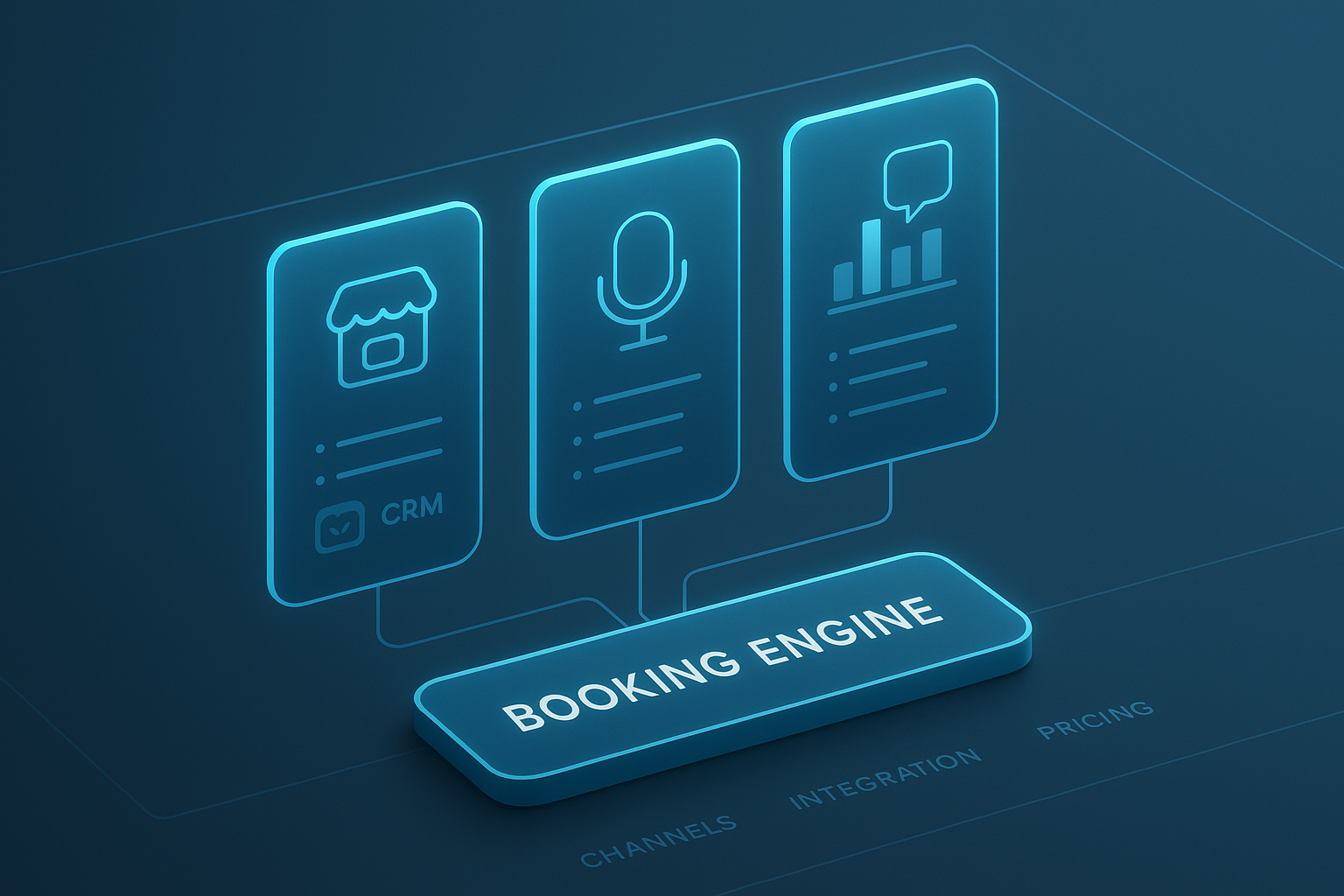
Platform | Core Capabilities | CRM Integration | Pricing | Limitations |
|---|---|---|---|---|
EchoLeads | Autonomous calling, WhatsApp, and web chat booking; timezone-aware scheduling; real-time availability checks | Bi-directional CRM sync with automated lead scoring | Flat-rate plans with no per-call fees | Designed for repetitive initial prospecting tasks, not complex sales conversations |
Synthflow | End-to-end voice AI with in-house telephony; enterprise deployment framework[2] | Calendar integration with enterprise-grade APIs | Enterprise pricing; contact sales required | Requires technical setup; primarily enterprise-focused |
Speaksify | AI voice agents for appointment booking across multiple channels | Standard calendar and CRM connections | Pricing not publicly disclosed | Limited public documentation on autonomous capabilities |
The platform processes thousands of concurrent booking requests across phone, WhatsApp, and web chat, making CRM synchronization a critical comparison dimension. It automatically schedules meetings in real time and handles bookings without manual intervention. Synthflow targets enterprise clients with proven deployment frameworks, while Speaksify offers voice-based scheduling with fewer publicly available technical details.
EchoLeads: Full-Autonomy Mode with Intelligent Escalation
How EchoLeads Handles Routine Bookings
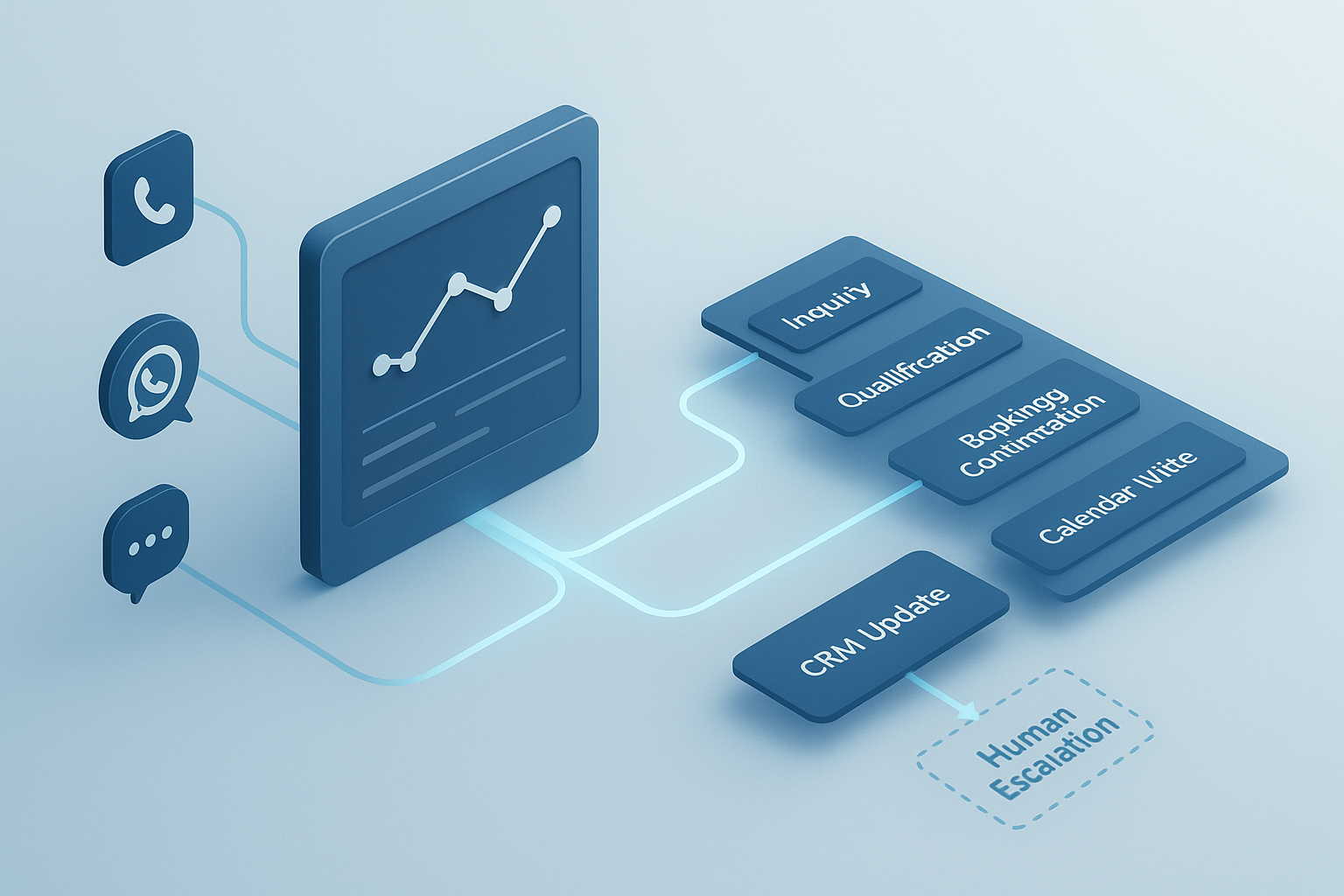
The platform operates in full-autonomy mode for standard appointment workflows, handling the complete booking cycle from initial inquiry responses to calendar confirmation and follow-up reminders without human intervention. The system executes booking confirmations, calendar writes, and CRM field updates before the call ends, eliminating manual coordination steps that slow competitor tools. It can simultaneously handle multiple conversations by deploying unlimited agents within one centralized dashboard, managing 5+ concurrent booking sessions without quality degradation. Agents operate across phone, WhatsApp, and web chat channels, routing each inquiry through adaptive qualification scripts before confirming appointments.
Strengths and Limitations
Strengths: The multi-channel architecture handles peak booking volumes without additional staffing, while bi-directional CRM sync ensures every scheduled appointment updates sales records in real time. The platform automates lead qualification tasks without human error, screening and routing prospects before human reps enter the conversation.
Limitations: The system includes intelligent escalation logic that transfers conversations to human agents when complexity, sentiment, or compliance risk exceeds safe autonomy thresholds. AI calling agents are designed to handle repetitive initial prospecting tasks, not replace human judgment in complex sales conversations. Organizations with intricate scheduling requirements, multi-party approval chains, custom negotiation workflows, or high-stakes enterprise deals, will still require human oversight for edge cases that fall outside standard booking parameters.
Best for: High-volume sales teams needing multi-channel booking automation with intelligent human fallback for complex scenarios.
Real-world booking conversations unfold across multiple conversational turns, requiring AI agents to parse intent, propose options, and confirm details dynamically.
What Happens When a Lead Calls: Real-Time Conversation Flow
Conversation-Driven Scheduling in Action
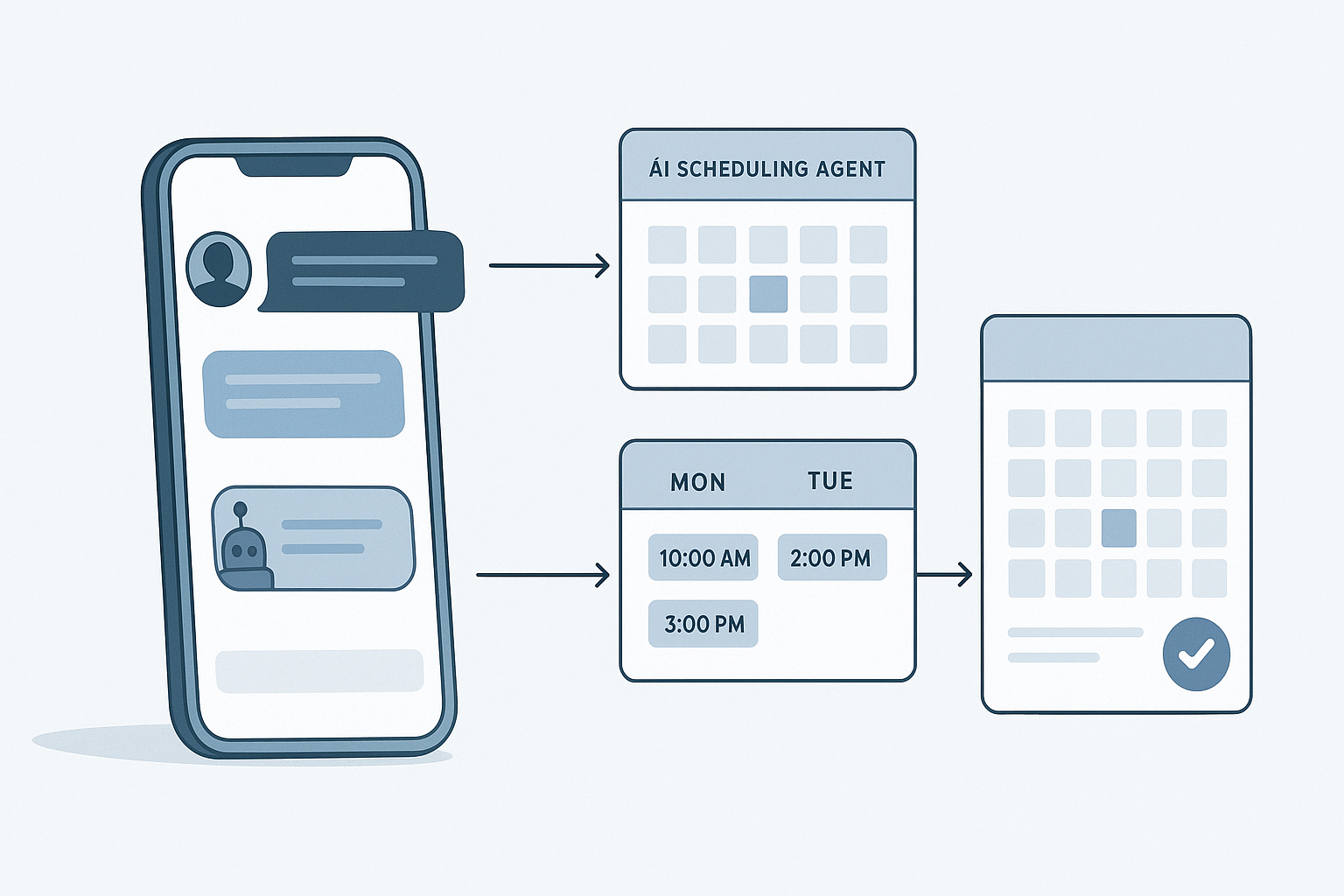
When a lead initiates or receives a call, AI agents parse availability requests in real time and propose meeting slots conversationally, no human required. EchoLeads AI agents directly schedule meetings into calendars through conversations alone, handling bookings automatically and mitigating manual scheduling bottlenecks entirely. The system integrates with calendar platforms to perform real-time availability checks and slot booking, then confirms the appointment on the call. This end-to-end flow removes back-and-forth email threads and accelerates pipeline velocity, leads move from inquiry to booked meeting within a single conversation.
Timezone Detection and Automatic Confirmation
After the lead agrees to a slot, the AI agent detects the lead's timezone and writes the appointment into the CRM with the correct local time. Platforms like Calendly and Acuity Scheduling include timezone-aware booking and automated confirmation calls, sending instant email or SMS confirmations and, if configured, placing a follow-up reminder call before the meeting. This post-call automation ensures both parties have synchronized calendars and reduces no-show rates, without a sales rep lifting a finger.
Autonomous calling platforms must navigate a complex regulatory landscape governing consumer contact and recording consent.
Compliance Requirements for Automated Calling Systems
Autonomous calling platforms operate under strict federal and state regulations governing consumer contact. Understanding these requirements is key for any business deploying AI-driven callback and booking tools.
TCPA and Do-Not-Call List Compliance
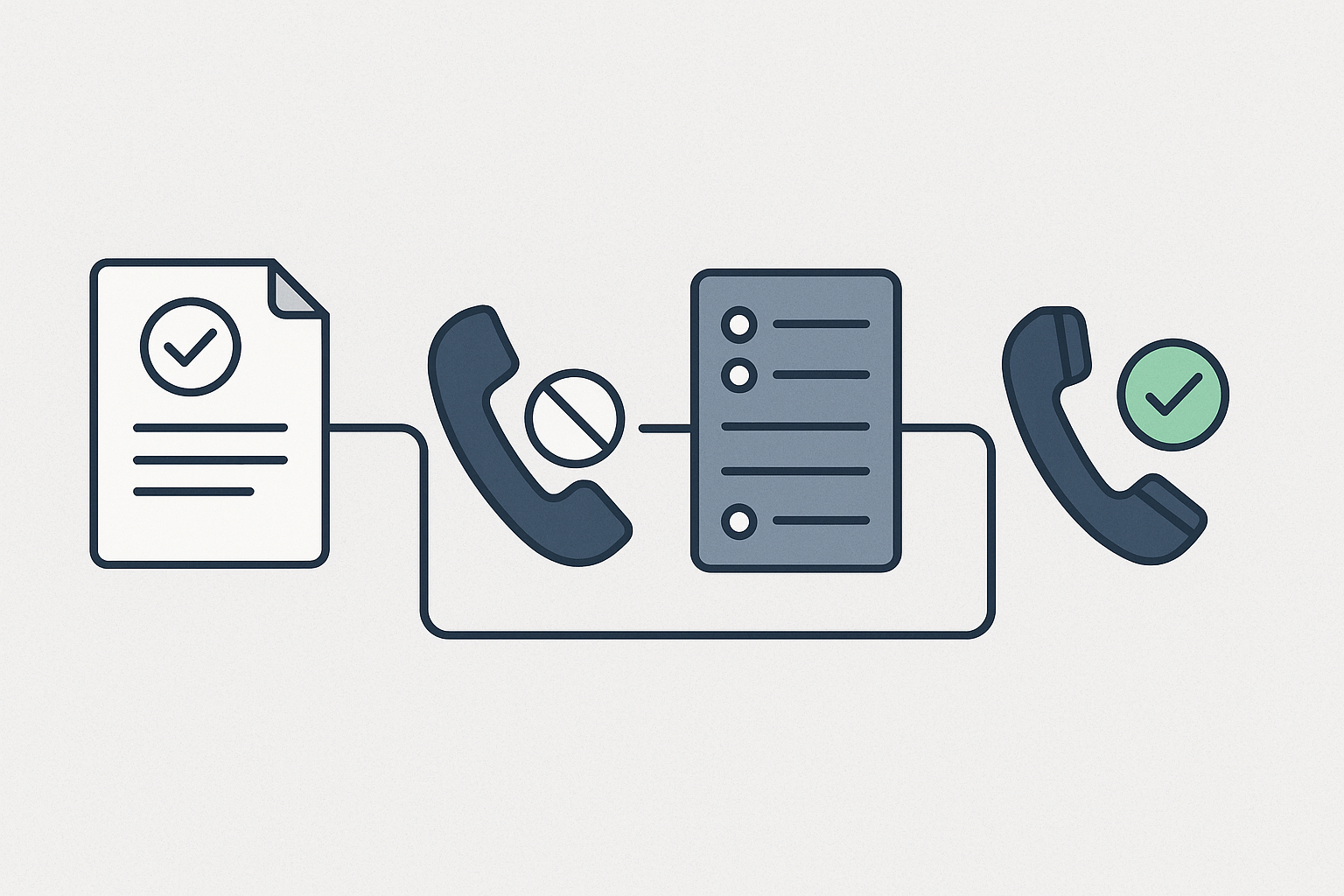
The Telephone Consumer Protection Act (TCPA) requires prior express written consent before automated systems contact consumer mobile phones. Platforms must integrate with the National Do-Not-Call Registry and scrub lead lists before dialing. AI calling software includes integration with DNC lists and workflows with TCPA compliance, ensuring legal outreach from the first call. The system also provides automatic opt-out handling to honor removal requests in real time.
State-Level Call Recording and Consent Laws
Beyond federal rules, states such as California, Florida, and Illinois enforce two-party consent laws that require disclosure before recording calls. Automated systems must announce recording status at the outset or risk substantial penalties. Businesses deploying AI calling agents should verify that their platform can adapt call scripts to state-specific disclosure requirements and log consent events for audit purposes.
Across industries, autonomous booking systems address recurring pain points: lead response delays, scheduling bottlenecks, and after-hours availability gaps.
Common Use Cases: From Lead Qualification to Demo Scheduling
Healthcare: Automated Surgery Scheduling and Patient Support
Healthcare providers face mounting pressure to deliver responsive, round-the-clock patient support without expanding administrative headcount[7]. Voice AI platforms now handle surgery scheduling, appointment confirmations, and pre-procedure reminders autonomously. A European ophthalmology group deployed AI voice agents and cut surgery scheduling time by 50% while enabling 24/7 voice support for patients[3]. The system pre-qualifies patients, gathers insurance details, and books appointments directly into electronic health records, removing the need for manual calendar coordination. Healthcare automation also handles post-appointment follow-ups, medication refill reminders, and symptom triage, ensuring continuity beyond the initial call.
Sales and Lead Generation: Speed-to-Lead Advantage
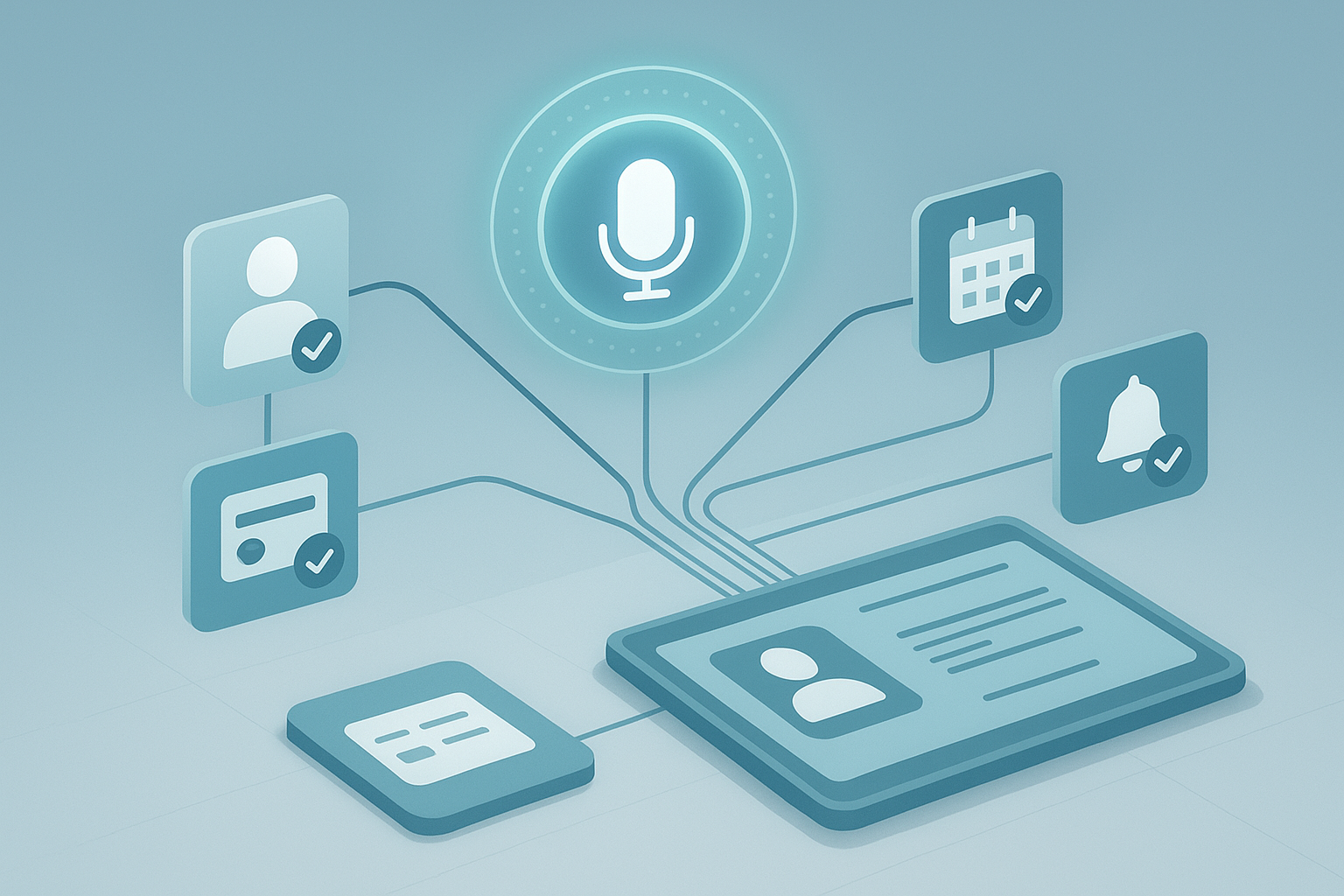
Conversion rates plummet when leads wait hours for human follow-up. Research shows that firms lose qualified opportunities when systems can't keep pace with inbound inquiry volume[4]. Autonomous callback tools close this gap by routing each lead through intelligent qualification scripts that adapt based on prospect responses, then scoring and routing high-intent prospects to human sales reps. Platforms automate demo bookings and qualify inbound leads, delivering structured product walkthroughs without manual follow-ups. The system handles repetitive initial prospecting tasks autonomously, though human judgment remains key for complex sales conversations.
Full-autonomy platforms like EchoLeads excel at high-volume routine bookings but require human fallback for complex or high-stakes conversations. Faster lead response within one hour dramatically improves qualification rates, making autonomous callbacks a competitive advantage despite upfront integration effort. As AI voice agents mature, expect tighter integration with enterprise CRMs, more nuanced sentiment detection for escalation, and broader adoption in compliance-sensitive industries like healthcare and financial services.
Compare solutions such as Synthflow, Goodcall, Speaksify, and Calendly based on your CRM platform, lead volume, and compliance requirements to find the best-fit autonomous booking solution. Prioritize platforms offering bi-directional CRM sync, intelligent escalation rules, and documented TCPA compliance workflows to ensure production-ready performance from day one.
Frequently Asked Questions
Can AI voice agents legally call leads without human supervision?
Yes, autonomous calling is legal when platforms maintain TCPA compliance through prior express written consent, DNC list scrubbing, and real-time opt-out detection. Several AI-powered systems now handle outbound callbacks autonomously while meeting federal and state regulations.
How do AI booking systems handle timezone differences automatically?
AI agents detect the caller's timezone from their location data and propose meeting slots in their local time. After the lead confirms a slot, the system writes the appointment to the CRM with the correct timezone offset and sends confirmation messages instantly.
What triggers an AI agent to escalate a call to a human?
Intelligent escalation logic transfers conversations when complexity, sentiment analysis, or compliance risk exceeds safe autonomy thresholds. AI confidence scores below preset accuracy levels also trigger handoffs, ensuring high-stakes or nuanced conversations receive human oversight before booking completion.
Do automated calling tools integrate with all CRM platforms?
Integration depth varies significantly. Five of ten reviewed platforms offer direct CRM connectors for major systems like Salesforce and HubSpot. Webhook-based custom integrations enable near-real-time updates for non-native CRMs, though setup complexity increases with custom implementations.
How quickly do autonomous callback systems respond to new leads?
AI systems can initiate callbacks within minutes of lead capture. Research shows companies responding within one hour are seven times more likely to qualify leads. Autonomous callbacks eliminate human response delays, delivering immediate engagement during peak interest windows.
Can AI voice agents handle multi-channel booking across phone and chat?
Yes, advanced platforms process concurrent booking requests across phone, WhatsApp, and web chat through a unified orchestration layer[2]. Multi-channel support requires synchronized calendar state management and consistent conversation context across every touchpoint to prevent double-booking and maintain coherent dialogues.
What industries benefit most from automated appointment booking?
Healthcare leads adoption, with voice AI platforms reducing surgery scheduling time by 50% and providing 24/7 patient support[3]. Sales organizations, service businesses with high appointment volume, and any industry where lead response speed directly impacts conversion rates see measurable ROI.
Related articles
6 Best AI Outbound Calling Solutions for Loan Verification
Compare AI outbound calling platforms that verify loan applications 24/7
5 Common Causes of Long Bank Loan Inquiry Call Wait Times
Why do bank customers complain about long wait times for loan inquiry calls? Learn the 5 Common Causes of Long Bank Loan Inquiry Call Wait Times.
4 Best AI Voice Lead Qualification Tools for Insurance
Compare AI voice platforms for insurance lead qualification through automated outbound calls.