
7 Best Automated Patient Reminder Systems for Indian Healthcare Providers in 2026
Introduction
A patient who does not show up costs more than an empty chair. For an Indian clinic, it is lost revenue, wasted staff time, and a care gap that another patient urgently needed. Globally, no-shows drain an estimated $150 billion from healthcare systems annually, but the problem hits hard in India, where dense patient volumes and manual front desks make follow-ups a daily scramble. Forgetfulness causes many missed visits: travel hurdles and what researchers call 'hospital anxiety' also keep patients away.
Automated communication tools that send appointment notifications can reduce missed visits significantly. A systematic review of 29 studies found that sending reminders cut non-attendance by 34% of the baseline no-show rate. OceanMD reported its reminders reduced no-shows from 10% to under 1%.
The Indian market needs more than generic SMS. It asks for local language support, WhatsApp reach, and tools that fit the resource limits of a single-doctor clinic as well as a multi-specialty hospital. Not every platform answers that brief. This article reviews 6 patient engagement platforms, including EchoLeads, to help Indian healthcare providers pick a system that handles the daily operational load and strengthens the patient relationship over time.
Key Takeaways
Each platform reviewed excels in a distinct operational context. Below is the at-a-glance logic to pick your best fit:
Best for scaling enterprises: KareXpert embeds AI-driven outreach inside a full hospital information system.
Best for solo clinics and budget-first setups: ClinicMaster delivers dependable SMS and voice reminders without software overhead.
Best for AI-led engagement on WhatsApp: EchoLeads automates two-way conversations, lead qualification, and document collection on India's dominant messaging channel.
Cost-justification benchmark: The average reminder cost across communication channels sits at €0.41. Even manual calls, which reduce no-shows by 39%, become viable when weighed against lost consultation revenue.
Channel effectiveness rule: Two-way, multi-channel reminders consistently outperform one-way blasts. A well-designed sequence, whether SMS, voice, or WhatsApp, cuts no-show rates dramatically.
1. EchoLeads: AI-First Engagement Platform with WhatsApp Qualification and Document Collection
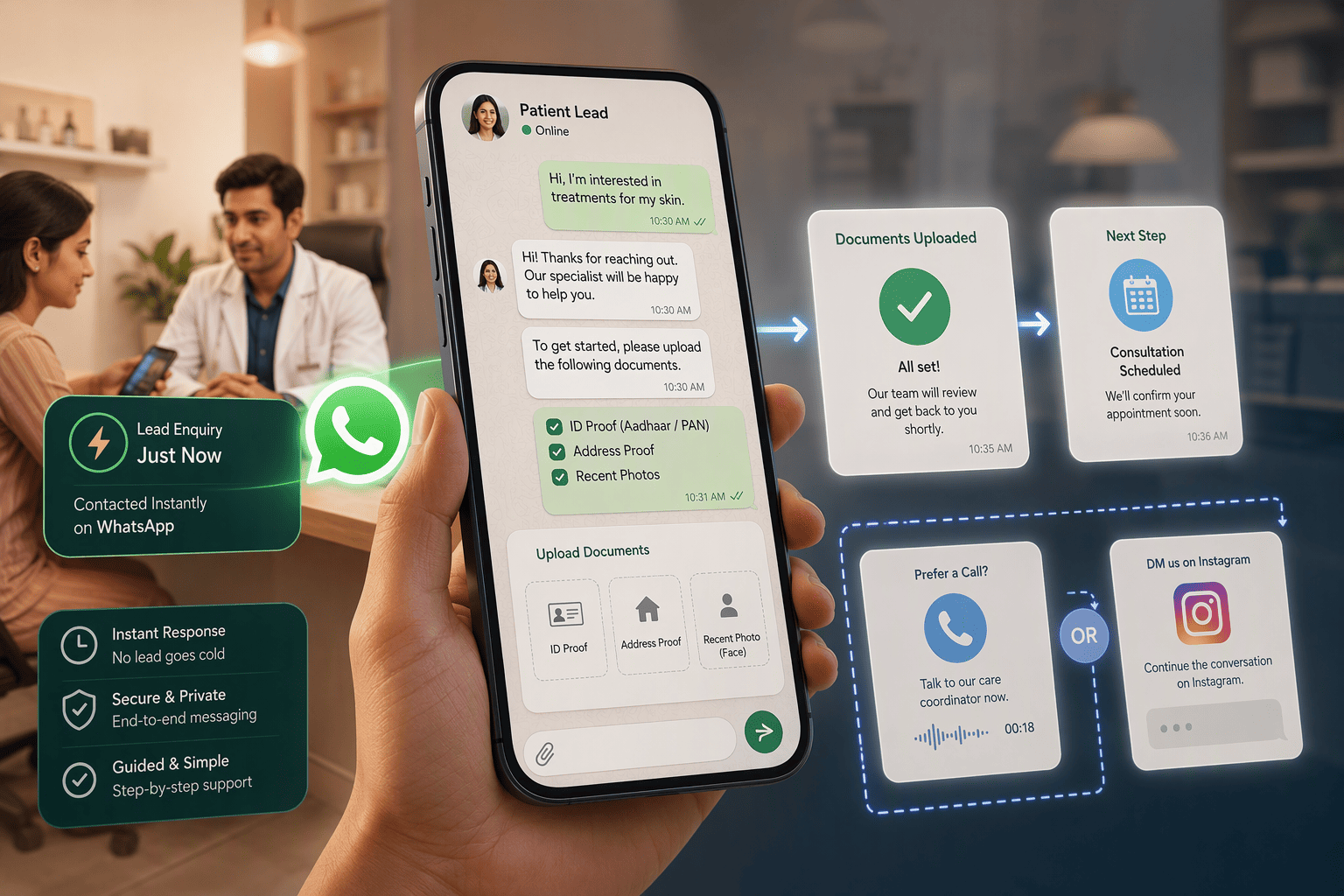
EchoLeads is built for Indian clinic workflows, and its bet is simple: most patient interactions happen on WhatsApp already, so that is where the platform operates. It is not a broadcast reminder tool with an AI label slapped on. It is a conversation engine. When a lead comes in or an existing patient triggers a workflow, EchoLeads initiates contact within 3 to 10 seconds over WhatsApp, Instagram DM, or a voice call. That window is intentional: speed captures intent before someone scrolls away.
Beyond speed, the platform runs structured qualification during the chat. For a diagnostic lab, it asks whether fasting was completed before a blood draw. For a specialist, it collects prior reports as photo attachments right inside the thread.
Voice agents go further by requesting supporting documents like earlier prescriptions or ID proof. This is the pre-visit paperwork that normally clogs front desks, handled before the patient walks in. The company says its infrastructure processes sensitive data through bank-level protected infrastructure with strict privacy controls, and it holds SOC 2 Type II and ISO 27001 certifications.
EchoLeads is strongest where clinics are actively converting digital leads or rescheduling high appointment volumes. It is not a static confirmation sender. It automates the qualification path and syncs outcomes into your CRM in both directions. Human oversight still has a hard stop: voice agents escalate when sentiment crosses safe autonomy thresholds. Emotionally charged conversations and medically sensitive disputes stay with people.
Pricing is not a public monthly plan. Clinics request a quote, which makes cost forecasting less straightforward. That fits the product's positioning as a workflow-deep tool rather than a plug-and-play SMS gateway.
2. Practo Ray: Full-Suite Practice Management with Integrated Multi-Channel Reminders
Practo Ray runs appointment reminders inside a practice management suite that most Indian clinics already recognise. If your clinic uses Practo for scheduling, billing, and electronic medical records, the reminder layer just works: SMS, email, and in-app push notifications fire from the same appointment diary. One login, no integration work, no separate tool to manage. The dashboard carries a patient from booking through billing to post-visit follow-up, which is where it claims its efficiency.
The integration comes with a hard limit. You commit to the Practo ecosystem, or you get no reminder functionality at all. For a provider who values operational simplicity over the freedom to swap components, that bargain often makes sense. A unified workflow avoids the data silos and manual reconciliation that eat into staff hours.
The reminders themselves are solid but not conversational. They send timed, templated pings rather than opening a dialogue. That fits a clinic with predictable appointment rhythms (dental check-ups, routine consultations) where the reminder needs to trigger a confirmation or reschedule, not to screen the visit reason. For richer engagement, you would layer a tool like EchoLeads on top.
3. DocEngage: HIPAA-Compliant, Customizable Workflow Automation for Indian Clinics
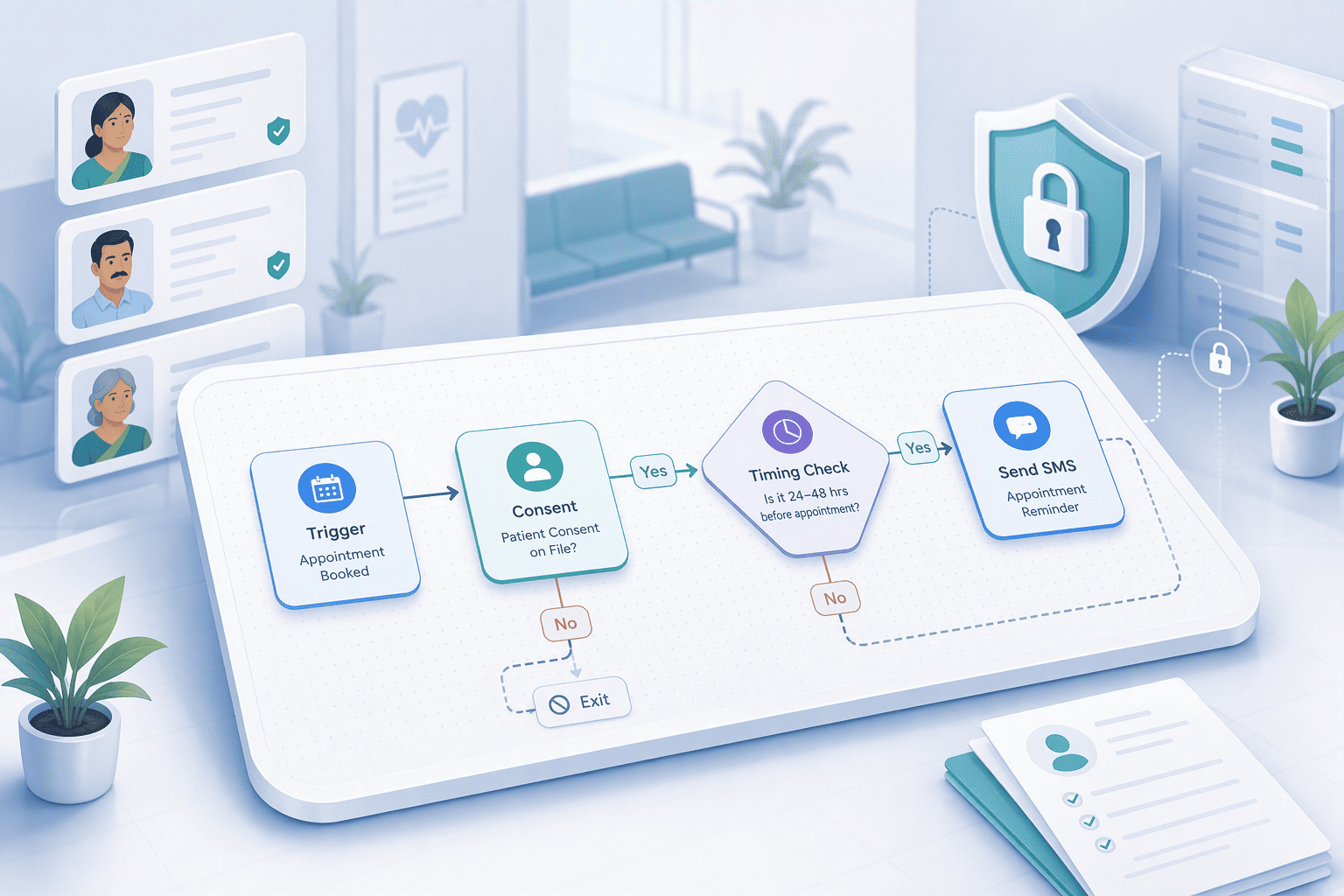
DocEngage addresses the compliance tension many mid-sized Indian clinics now face. India's Digital Personal Data Protection (DPDP) Act has raised the bar for consent and data minimization, and clinics handling international patients or clinical trial participants already contend with HIPAA expectations. DocEngage aligns its architecture with these standards and provides a visual workflow builder that lets clinics define reminder logic without coding. You can design a rule such as: send an SMS at 72 hours, an email at 24 hours, and trigger a personalized voice call only if the appointment is for a chronic care visit.
The platform configures different communication rhythms without losing governance. A clinic administrator can set distinct communication cadences for pediatric, geriatric, and diagnostic appointments, each with its own consent template. That matters at scale, where a single blunt reminder sequence irritates one demographic and fails to motivate another.
You need to verify the depth of the tool's DPDP compliance yourself. Across the sector, vendors often reference compliance without operational detail, and authoritative guidance for call recording requirements under evolving Indian law remains limited. Seek legal counsel on your specific use case.
For the clinic that has outgrown generic reminder modules but does not need a full hospital information system, DocEngage is a logical step up. It is a governance-aware platform for providers scaling from a single location to a chain, where the operational risk of a data breach compounds with every new facility.
4. KareXpert: AI-Driven Hospital Information System with Advanced Patient Outreach
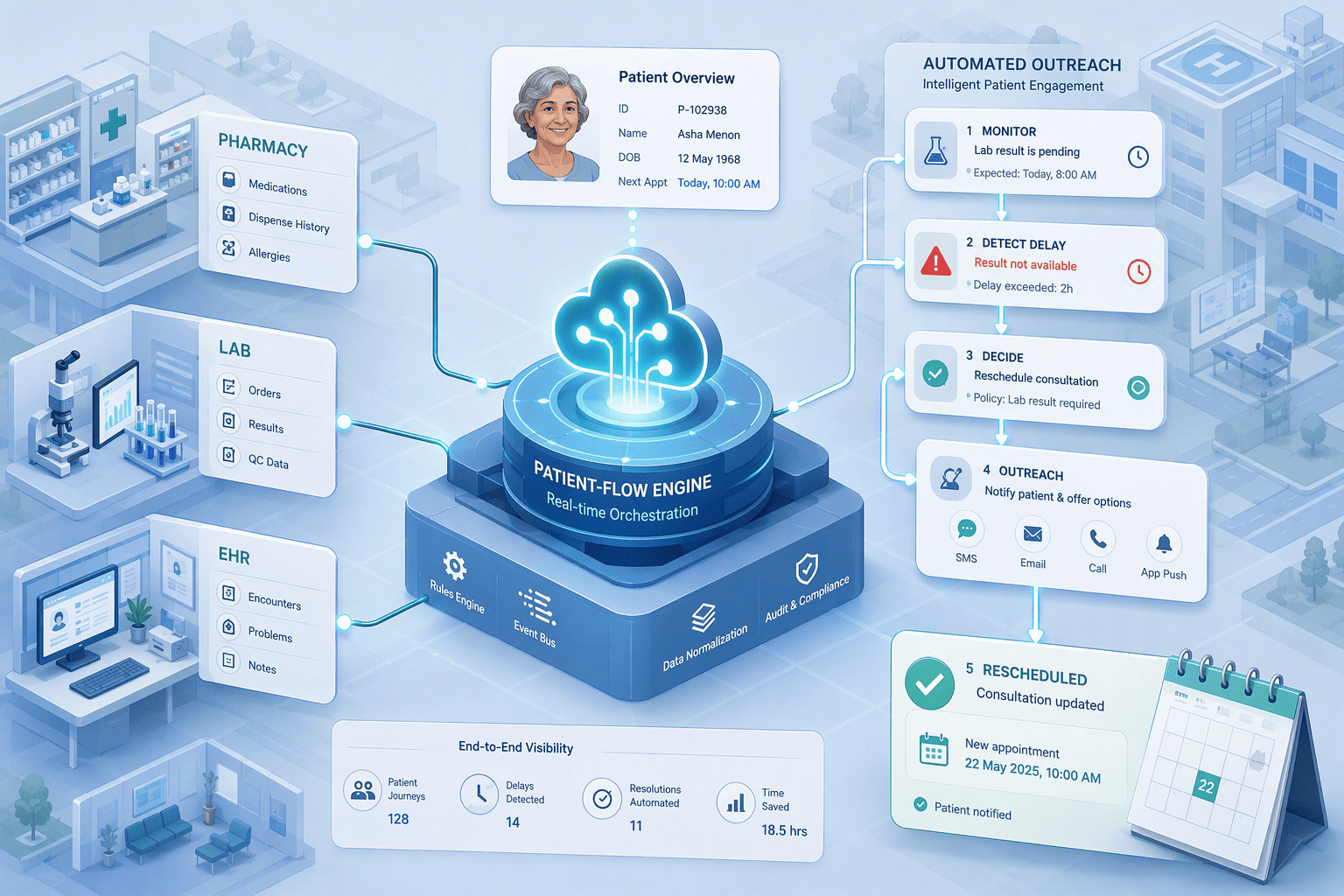
KareXpert bundles patient reminders inside a pre-built, cloud-based Hospital Information Management System (HIMS). The platform targets department-wide rollouts, not single-clinic add-ons. In a 100-bed hospital, its patient-flow engine reads data from the pharmacy, lab, and electronic health record and triggers outreach based on events, not just the calendar. When a lab result is delayed, the system can reschedule the review consultation and alert the patient in one move.
The architecture carries JCI and NHA compliance marks, which counts when a hospital is preparing for accreditation. Its AI layer analyzes past attendance patterns to flag patients with a higher chance of no-show and concentrates follow-up on those names. Communication resources go where retention risk is greatest, instead of being applied evenly across every booking.
This is not a single-physician product. The implementation asks for organizational change, IT bandwidth, and staff training that outweigh the cost of simpler reminder tools by a wide margin. For an administrator managing thousands of weekly appointments, however, the enterprise design turns patient communication from a pure expense into an operational lever that smooths patient flow.
You look at KareXpert when the goal is digitizing the hospital, not patching reminders. If the only problem is no-shows and current systems work otherwise, a focused engagement platform makes more sense. If you are rebuilding or freshly building a hospital technology stack, embedding AI-driven outreach at the base layer has strategic logic.
5. MediBuddy: Integrated Provider Platform with Insurance and Appointment Lifecycle
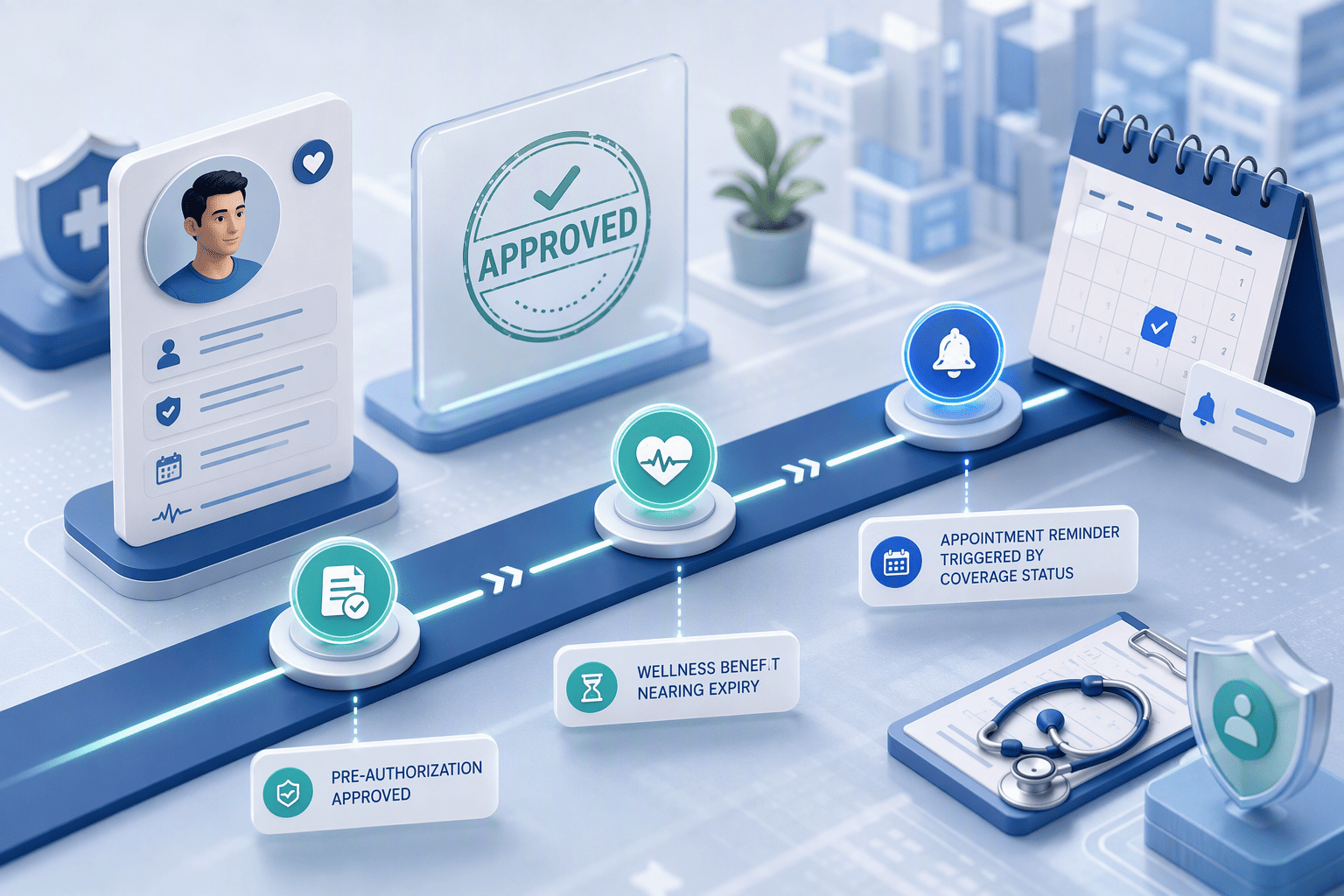
MediBuddy changes the reminder logic by anchoring it to the patient's insurance lifecycle. A typical reminder pings the patient at a set interval before the appointment. A MediBuddy reminder might trigger when a pre-authorization is approved, or when an unused wellness benefit is about to expire. The financial hook, a covered session or a completed cashless approval, changes the motivation calculus. This is a financial prompt linked to policy terms, not a generic nudge.
For corporate healthcare providers and clinics embedded in insurance networks, this integration closes the loop between booking, verification, and attendance. The platform manages the appointment lifecycle from eligibility check to post-consultation claim initiation. It removes the fragmentation that causes patients to abandon the process when they cannot confirm what their policy covers. When a patient knows the consultation is cashless and already approved, attendance becomes a default behavior, not a persuasion challenge.
The trade-off is platform dependency. A clinic must operate within MediBuddy's provider network and use its booking engine to access the insurance-aware reminder logic. For a cash-practice specialist or a high-end clinic that opts out of insurance panels, the core value proposition collapses. The system works for volume-driven, insurance-dependent specialties where appointment adherence tracks directly against reimbursement throughput.
6. ClinicMaster: Affordable SMS and Voice Solution for Small Clinics
ClinicMaster is designed for the solo practitioner who finds full-suite software overkill. It prioritizes dependable SMS and voice reminders at a price point built around individual clinic economics. The engine sends text notifications and also places automated voice calls, critically in local languages, to patients who do not need a smartphone or an internet connection to receive a reminder. In a country where feature phones remain prevalent among older and rural populations, a voice call in Telugu or Hindi reaches people an app push never will.
This simplicity directly addresses financial viability. With an industry benchmark cost of €0.41 per reminder across SMS, automated, and manual methods, an affordable voice solution becomes a strong return on investment even at modest patient volumes. Heidi Health reports that 15% of AI voice reminders prompt a return call, confirming that voice is not a closed channel; it invites the two-way interaction that the systematic review showed delivered the highest reduction in non-attendance.
Feature | ClinicMaster Positioning | Full-Suite Alternatives |
|---|---|---|
Primary channel | SMS and local-language voice calls | Multi-channel including email, push, and app |
Patient requirement | No internet or smartphone needed | Often requires app install or smartphone |
Pricing approach | Built for single-practitioner budgets | Often per-provider or enterprise-tier pricing |
Integration depth | Standalone reminder engine | Embedded in EMR, billing, and insurance modules |
Best suited for | Solo clinics, rural practice, budget-sensitive setups | Multi-location chains, hospitals, and tech-forward clinics |
ClinicMaster will not do lead qualification, AI chat, or insurance verification. But it will reduce no-shows for a practice that needs exactly that outcome without IT complexity. For such clinics, it is the right tool.
7. mFine Pulse: Clinic Management with AI Triage and Automated Follow-Ups
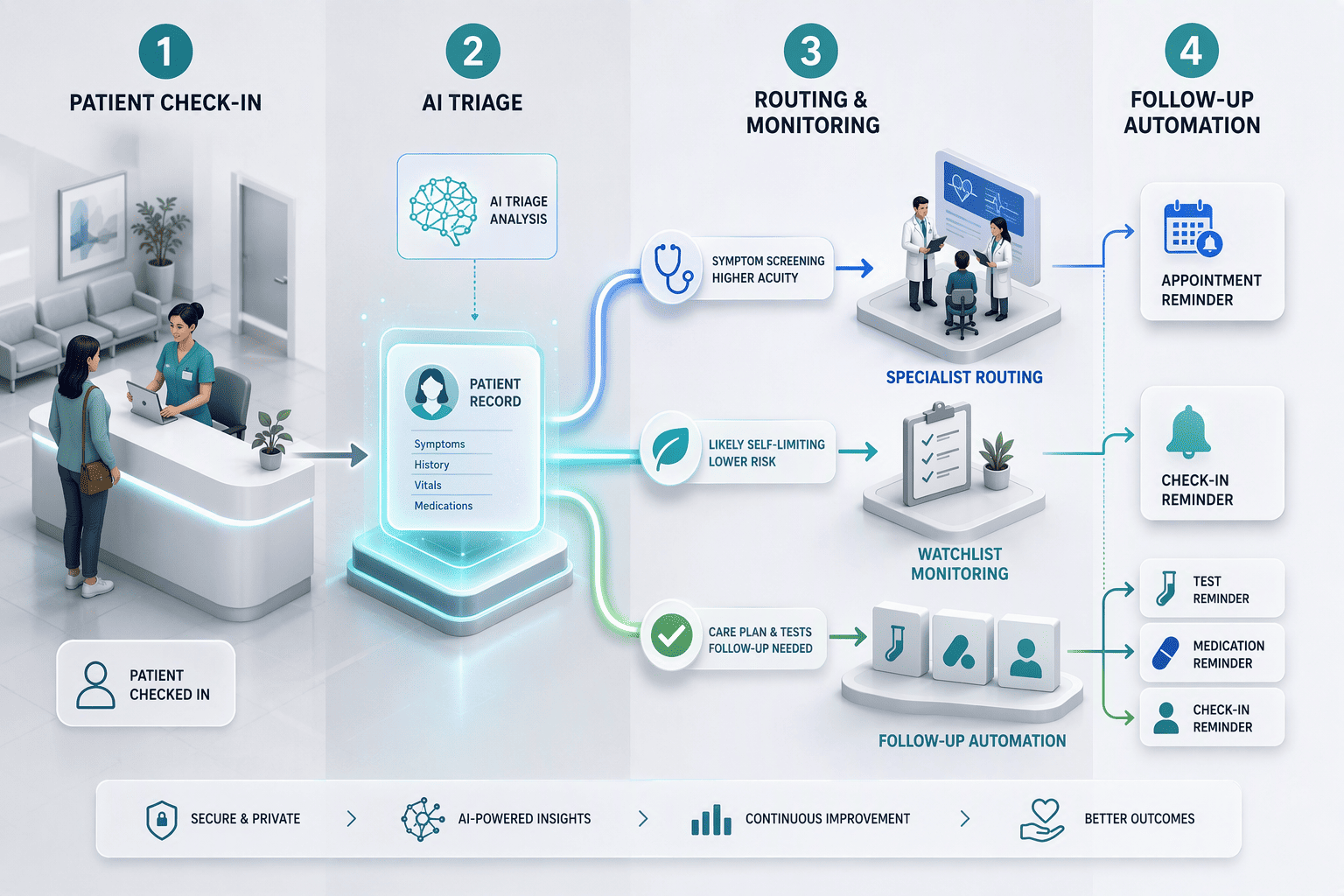
mFine Pulse positions its reminder system as a retention engine, not just an attendance tool. The platform's AI triage pre-qualifies appointment need before the slot is booked, routing acute issues to the right specialist and filtering self-limiting cases to a follow-up watchlist. From that point, an automated reminder workflow handles more than the next appointment; it manages test result nudges, medication adherence prompts, and wellness check-ins that keep the patient within the clinic's orbit over months, not days.
AI triage first, reminder second: A patient describing symptoms on the platform is routed to an appropriate care pathway before the reminder cadence begins, ensuring that the follow-up logic matches clinical acuity.
Test result integration: Automated prompts fire when lab reports are uploaded, closing the common gap between a completed test and the doctor's review.
Care continuity loops: Post-consultation nudges for medication, physiotherapy sessions, or repeat diagnostics turn a single visit into an ongoing relationship, improving patient lifetime value.
Scalable without call-center bloat: The automation handles follow-up volume without a linear increase in staffing, a critical cost advantage as a practice grows its patient base.
The model suits clinics that see appointment adherence as a subset of patient loyalty. If your practice already uses mFine for teleconsultation or clinic management, the reminder logic comes pre-integrated and contextually aware. If you only need basic reminders, the feature depth may exceed your requirements. But for providers building a branded patient experience around continuous care, an AI triage and follow-up loop is a structural advantage that a simple SMS gateway cannot replicate.
Conclusion
No-shows break a clinic's schedule and its revenue, but they are fixable. You don't need to accept empty slots as normal.
The systematic evidence is clear. A 2011 review in the Journal of Telemedicine and Telecare found that reminders reduce non-attendance by 34% compared to no reminder. Multi-channel delivery works better than betting on one medium, and the cost per message is tiny. A telephone reminder ran about €0.41 in the studies analysed there.
Your pick among these platforms comes down to your clinic's real constraints. A solo practitioner running a semi-urban practice where patients don't read English emails gets the most value from ClinicMaster's simple voice calls. A corporate OPD where insurance billing and multi-location routing dominate the workflow needs MediBuddy.
For a hospital building its digital stack from scratch and needing modules across the front desk, KareXpert should be on your shortlist.
If your patients live on WhatsApp and your staff burns hours every day manually calling to qualify and confirm, EchoLeads applies AI-native automation to the whole pre-visit sequence. Choose where the platform fits your integration depth, your compliance requirements under the DPDP Act, and the channel your patients actually use.
Frequently Asked Questions
What are the key features to look for in a patient reminder system for Indian clinics and hospitals?
Look for multi-channel delivery (SMS, voice, WhatsApp), two-way communication that lets patients confirm or reschedule, local language support, and integration with your existing scheduling or EMR system. For larger setups, workflow customization and compliance with data privacy laws like India's DPDP Act are key.
How do India's healthcare regulations and data privacy requirements affect automated patient communications?
India's Digital Personal Data Protection (DPDP) Act mandates consent and data minimization. Your reminder system must collect only necessary information, secure it, and obtain patient consent for communication. Implementation varies by vendor, so consult legal counsel on call recording and consent workflows specific to your jurisdiction.
How does WhatsApp Business API integration improve patient engagement and reminder effectiveness in India?
WhatsApp is India's dominant messaging platform. API integration transforms reminders from one-way text blasts into interactive, two-way conversations where patients can confirm, reschedule, upload documents, or ask questions directly. This conversational approach addresses the anxiety and barriers that cause no-shows, raising engagement rates significantly.
What are the cost implications and ROI of implementing an automated reminder system in an Indian healthcare setting?
The average reminder cost is approximately €0.41 across SMS, automated, and manual call methods. Weigh that against lost consultation revenue, practices lose 20% to 50% of potential revenue to no-shows and scheduling gaps. Even a modest reduction in missed appointments typically delivers a strong return on investment.
How do AI voice agents handle sensitive patient interactions and language diversity in the Indian context?
AI voice agents use natural language processing to deliver human-like conversations in multiple Indian languages, with fluidity, natural pauses, and voice switching. They must escalate when sentiment exceeds safe thresholds, and should not handle fraud, disputes, or emotionally charged conversations autonomously. Their strength is consistency, not unrestricted autonomy.
Are there hidden costs or limits in free or low-cost patient reminder platforms to watch out for?
Some platforms have hidden limits on free tiers. Here are the key restrictions to check:
- SMS quotas: caps on the number of messages included in the free plan
- Payment processing fees: additional charges that may not be disclosed upfront
- Mandatory seat minimums: forced minimum number of users, driving up cost
- Per-message costs at volume: verify SMS, WhatsApp, or voice rates as usage scales
- Premium channel surcharges: extra fees for channels like WhatsApp or voice calls
Related articles
How Hyderabad Hospitals Can Slash Missed Appointment Rates and Recover Lost Revenue
Learn how hospitals can avoid missed calls and streamline its front desk operations.
8 Most Affordable Appointment Scheduling Solutions for Small Clinics in Hyderabad (2026)
Learn about 8 affordable phone calling solutions for clinics and hospitals in hyderabad.
6 Best 24/7 AI Calling Tools for Patient Appointment Confirmations in 2026
Learn how AI Voice agent can help receptionists in hospitals and clinics in Hyderabad to handle mass volume of appointment requests.