
8 Most Affordable Appointment Scheduling Solutions for Small Clinics in Hyderabad (2026)
Introduction
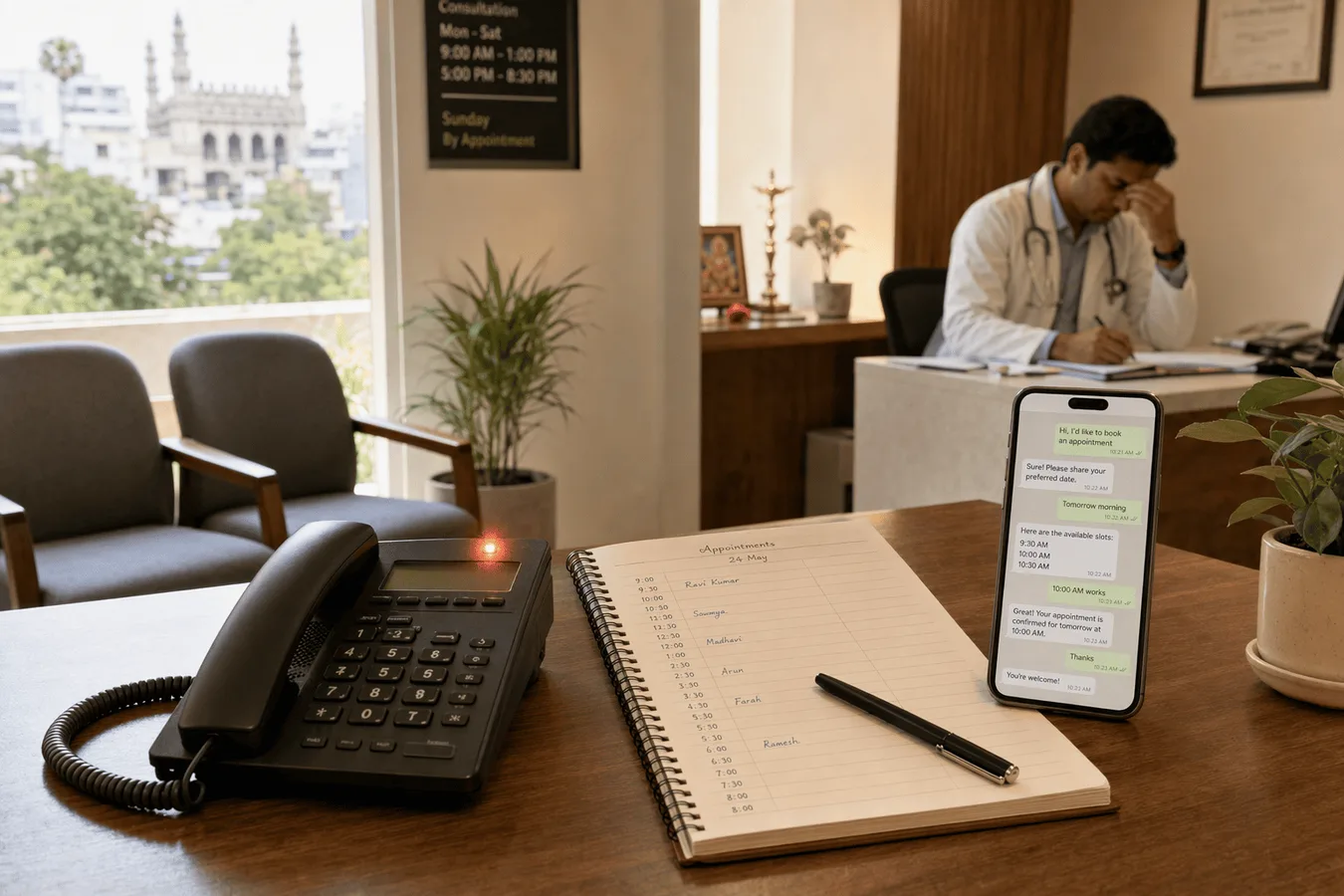
Your phone rings twelve times between two patients. You can't pick up because you're with someone. By the time you call back, the patient has booked with a clinic down the road. This invisible revenue drain is a daily reality for small clinics in Hyderabad, where the cost of a dedicated receptionist can eat deeply into razor-thin margins.
The shift toward digitization, fueled by initiatives like the Citizens Digital Health Profile in Telangana, is pushing clinics to modernize. But for most, a full-suite EMR makes no financial sense. The real demand is for a sharp, focused tool that handles the most painful part of the workflow: filling the appointment book without manual friction.
You need a solution that speaks your patients' language, literally. With a significant portion of Indian SMEs adopting digital tools, the trend is toward AI-driven engagement on platforms patients already use, like WhatsApp. This guide cuts through the noise, ranking seven specific tools from AI-first voice agents to zero-cost prescription platforms, based on the cash flow and operational reality a small clinic in Hyderabad faces in 2026.
Key Takeaways
Here is how the top solutions stack up based on the specific needs of a cost-conscious Hyderabad clinic:
Best Overall AI Solution: EchoLeads AI handles the core scheduling workflow with a voice agent and WhatsApp bot, targeting the missed-call problem directly.
Best Free Option: DocOn offers a zero-cost scheduling and prescription platform, covering the basics without touching your wallet.
Best for EMR Integration: Practo Ray bundles a powerful scheduling module with a full EMR and a patient discovery marketplace, though at a higher price.
Best for the DIY Practice: Zoho Bookings lets you build a custom booking flow within the familiar Zoho ecosystem, requiring a bit of setup but offering huge flexibility.
Must-Have Feature: A WhatsApp booking integration is non-negotiable in 2026; it's the primary channel where your patients are already asking for time slots.
1. EchoLeads AI, The Most Complete AI-First Scheduling Solution for Small Clinics
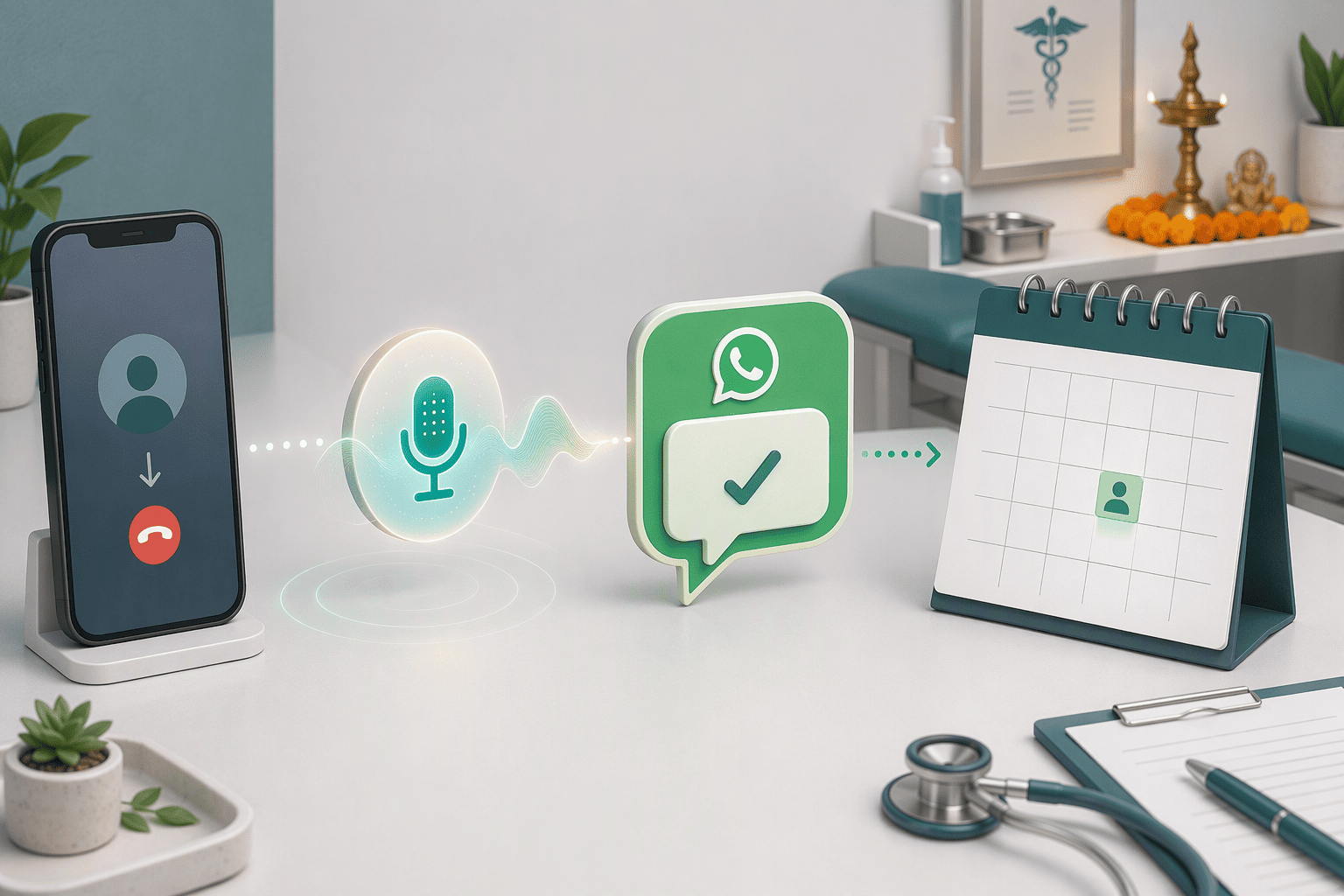
If converting the missed call into a booked appointment is the primary goal, an AI voice agent that answers instantly is the direct answer. EchoLeads AI is built specifically for this Indian business workflow, combining a AI calling agent with human-like fluidity and a WhatsApp chatbot for end-to-end booking.
The platform can initiate a response within seconds of a missed call or a form fill via WhatsApp or voice call. That directly addresses the main pain point: manual receptionist workload. The AI voice agent checks availability, books a slot, and requests basic patient details in Hindi or Telugu.
The company says its agents analyze tone and pacing to measure intent. Only sensitive or emotionally charged conversations get escalated to a human.
This keeps you from missing a booking opportunity. For a clinic comparing the cost to even a part-time receptionist in Hyderabad, the math shifts sharply toward automation that handles high-volume, repetitive scheduling tasks 24/7.
2. Turbodev, AI-Driven 24/7 Voice and Chat Booking at a Competitive Price
Turbodev is an AI receptionist that focuses on one thing: booking appointments. It skips the long feature list and gives clinics a straightforward way to capture and qualify leads around the clock.
Voice, SMS, and WhatsApp are all live, which matters because many Indian clinics get their best leads from WhatsApp ads on Facebook and Instagram. A patient sends a message at 11 pm and Turbodev replies, qualifies the need, and puts the appointment on the calendar. No human touches it.
The setup is no-code. You copy a snippet, paste it, and the assistant goes live. That speed appeals to smaller clinics that cannot wait weeks for a custom integration. You lose some of the deeper CRM syncing you get with EchoLeads AI, but you also skip the complexity. For a clinic that just wants every incoming patient message turned into a booked slot without extra software overhead, that trade-off makes sense.
Price is where Turbodev pushes hardest. It is a direct budget comparison to EchoLeads AI, built for the practitioner who pays out of pocket and watches every monthly subscription. The feature set is leaner, but it covers the core scheduling loop completely. If your clinic needs a 24/7 booking assistant for voice and chat and does not need bidirectional data flow with your practice management software, Turbodev hits the price point that gets a yes from a cost-conscious owner.
3. Practo Ray, Established EMR with Integrated Scheduling and Patient Reach
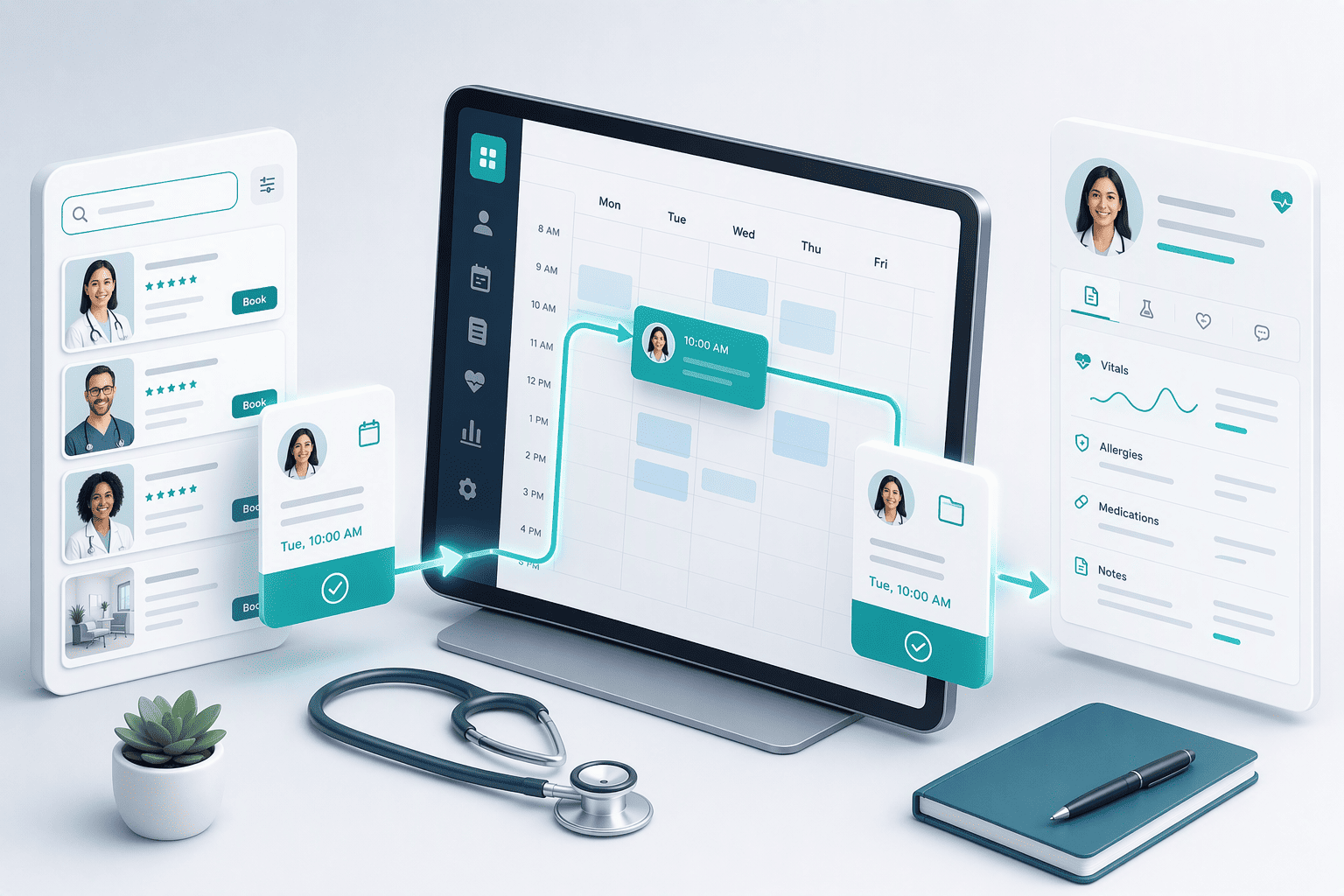
Practo Ray is a full-stack EMR that includes an integrated scheduling module for appointment management. The interface covers clinical workflows end to end, but what sets it apart for a small clinic is the direct link to the Practo marketplace, a platform where patients search for doctors and book appointments. That connection can push new patient bookings straight onto your calendar without any extra effort from your front desk.
The financial trade-off is clear. The monthly subscription costs more than standalone AI scheduling tools. In return, you get a well-known brand and a patient acquisition stream that a simple booking widget cannot replicate. For a very small, cost-conscious clinic, that price difference forces a hard decision: do you actually need a complete EMR overhaul, or do you just need a better way to handle incoming calls?
For a mid-sized clinic with multiple doctors, the value shifts. The unified system ties scheduling, patient records, and billing together so you stop re-entering the same data across separate tools. That time saving alone can justify the higher fee once you add up the hours your staff spends on manual data entry. If your clinic has moved past paper records and needs a full digital backbone instead of a lightweight booking add-on, Practo Ray makes more sense.
If filling empty appointment slots is your main headache and you can afford to invest in growth, the marketplace integration gives you a lever that most scheduling apps do not offer. It is an expensive one, but for the right clinic it pulls in patients you would not otherwise reach.
4. Clinicea, A Lightweight, Low-Cost EMR-Scheduler Combo
Clinicea is an EMR and scheduler built for clinics that want the basics done well, not a platform that tries to do everything. It skips the patient marketplace and the heavy hospital modules. Instead, you get SMS and email reminders, a customisable online booking page, and waitlist management.
This narrow focus works for general practitioners and physiotherapists who need clean digital records and automated patient communication. If you are not hunting for new patients through an app and just want your existing ones to show up on time, Clinicea fits. The starting price keeps the feature-per-rupee ratio tight. You pay for the scheduler, the reminders, and the EMR, and you are not subsidising patient acquisition tools you will never open.
For a clinic moving from a paper diary to a screen, the jump is direct. The reminder automation cuts down the empty slots that come from forgotten appointments, which is the immediate problem most small clinics need to solve first.
5. DocOn, A Free, Pharmacy-Backed Scheduling and Prescription Platform
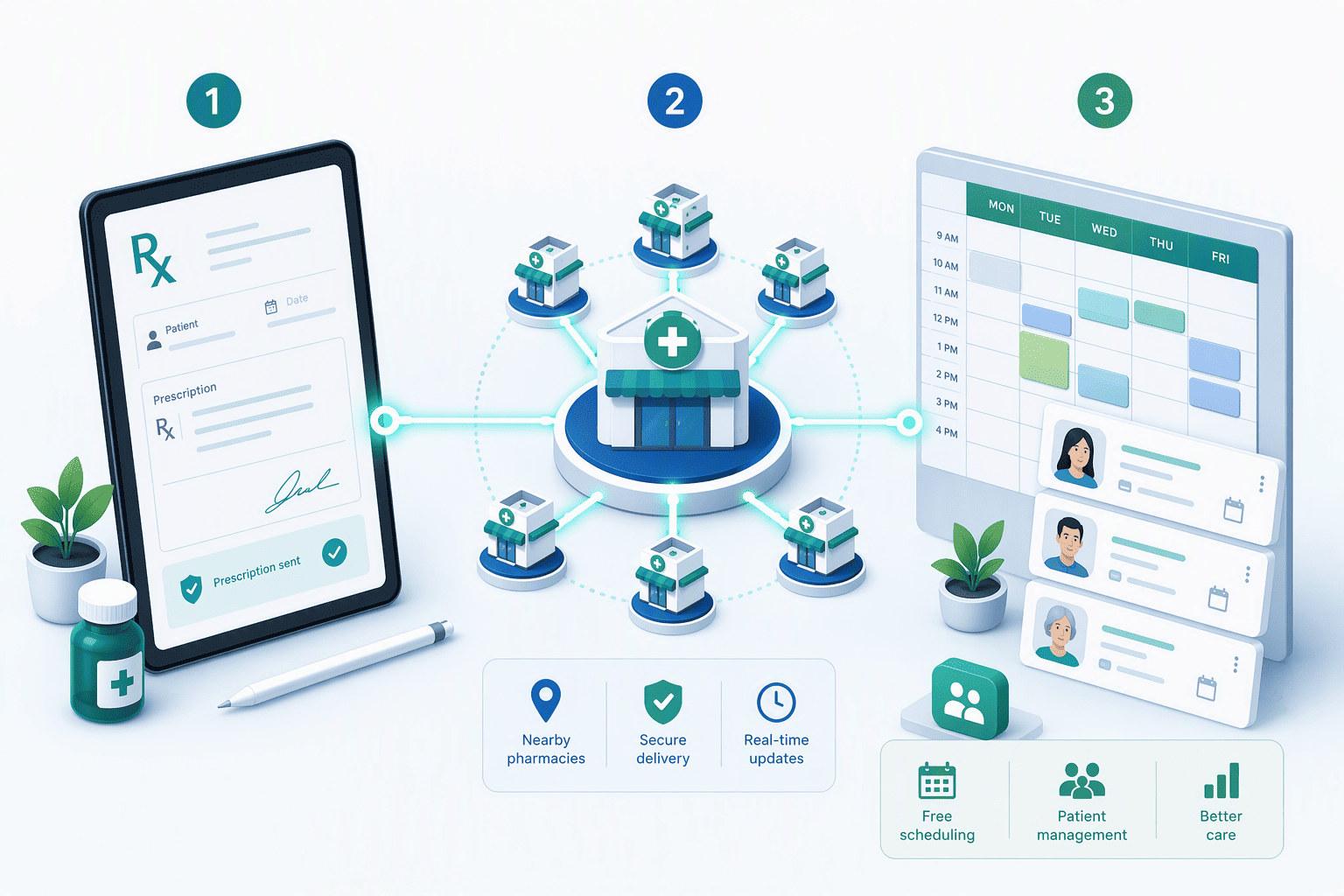
For a newly established clinic watching every rupee, DocOn's zero-cost model resets the expectations of what's possible. The platform delivers free scheduling, prescription writing, and patient management tools. Follow this workflow to understand how it changes the clinic's cost structure:
Sign Up and Digitize Prescriptions: Start by using the DocOn app to write digital prescriptions. This is the entry point that connects you to the network, replacing the paper pad at zero cost.
Enable the Free Scheduling Page: Activate the built-in appointment scheduler. Your patients can now see your available slots and book directly, removing the back-and-forth phone tag without any software subscription fee.
Understand the Integrated Pharmacy Model: DocOn monetizes through its pharmacy integration. The prescriptions you write can be fulfilled by partner pharmacies, and the platform earns a margin on that fulfillment, which is how your scheduling tool remains free.
Manage Your Patient Records: Use the platform to maintain digital patient records. The scheduling tool itself functions well for basic booking; it doesn't have the advanced AI voice capabilities of dedicated agents, but it covers the fundamental need to get a patient into your calendar.
The model is gaining acceptance among Hyderabad medical professionals because it trades the cost of software for a digital prescribing workflow. It is a practical choice for a clinic starting out, as long as you're comfortable with the platform's pharmacy-affiliated business model.
6. Halemind, Scalable Solution with Strong Data Compliance

For a clinic planning to scale or handling sensitive patient data, Halemind addresses a concern that many cloud-only tools skip: who actually owns the data and where it sits. Its on-premise deployment model is built with the requirements of India's upcoming DPDP Act in mind.
A security-conscious clinic owner gets physical control of the server instead of working within the shared responsibility model of public clouds. That architecture maps directly to stricter interpretations of healthcare data privacy in India, where keeping patient records on a third-party cloud can create legal grey areas that the new law is designed to close.
Total cost plays out differently here than with a pure SaaS subscription. You pay once for the license and infrastructure. Over three to five years, that upfront cost often ends up more predictable than monthly per-seat fees that climb every time you add a doctor or front-desk staff member.
Halemind bundles scheduling, EMR, and billing into a single package. The scheduling module works well, but the real reason clinics pick it is the compliance-first deployment. It is a long-term infrastructure decision, not a quick fix for a chaotic front desk.
7. Zoho Bookings, Flexible, No-Code Scheduler for the DIY Clinic
Zoho Bookings suits a doctor who wants to shape every step of the booking process without technical help. It is a configurable module inside the larger Zoho suite, built so a solo practitioner can set it up exactly the way the practice runs.
For a medical practice, the setup means designing a booking page that matches your clinic's look, mapping each doctor's available hours onto a calendar, and connecting a payment gateway to collect consultation fees before a slot locks in. What makes the tool stand out in 2026 is how cleanly it plugs into other systems. You can route bookings straight into Zoho's WhatsApp channel so patients get a confirmation the moment they book. There is no built-in EMR. The tool does one thing and does it directly.
The basic monthly fee for a single doctor stays low, but the bigger investment is your own time. You build the workflow from the ground up. It fits a practitioner who looks at the practice as a collection of processes to tighten, not just a patient list.
The trade-off is immediate: there are no AI voice agents here that pick up a call and book on the fly. That is not the space Zoho Bookings occupies. It works for the patient who arrives at your booking page, not the one who dials your number after a quick Google search.
If you like getting your hands on the settings yourself, this is where you start.
8. How to Evaluate and Implement an AI Scheduling Solution in 2026
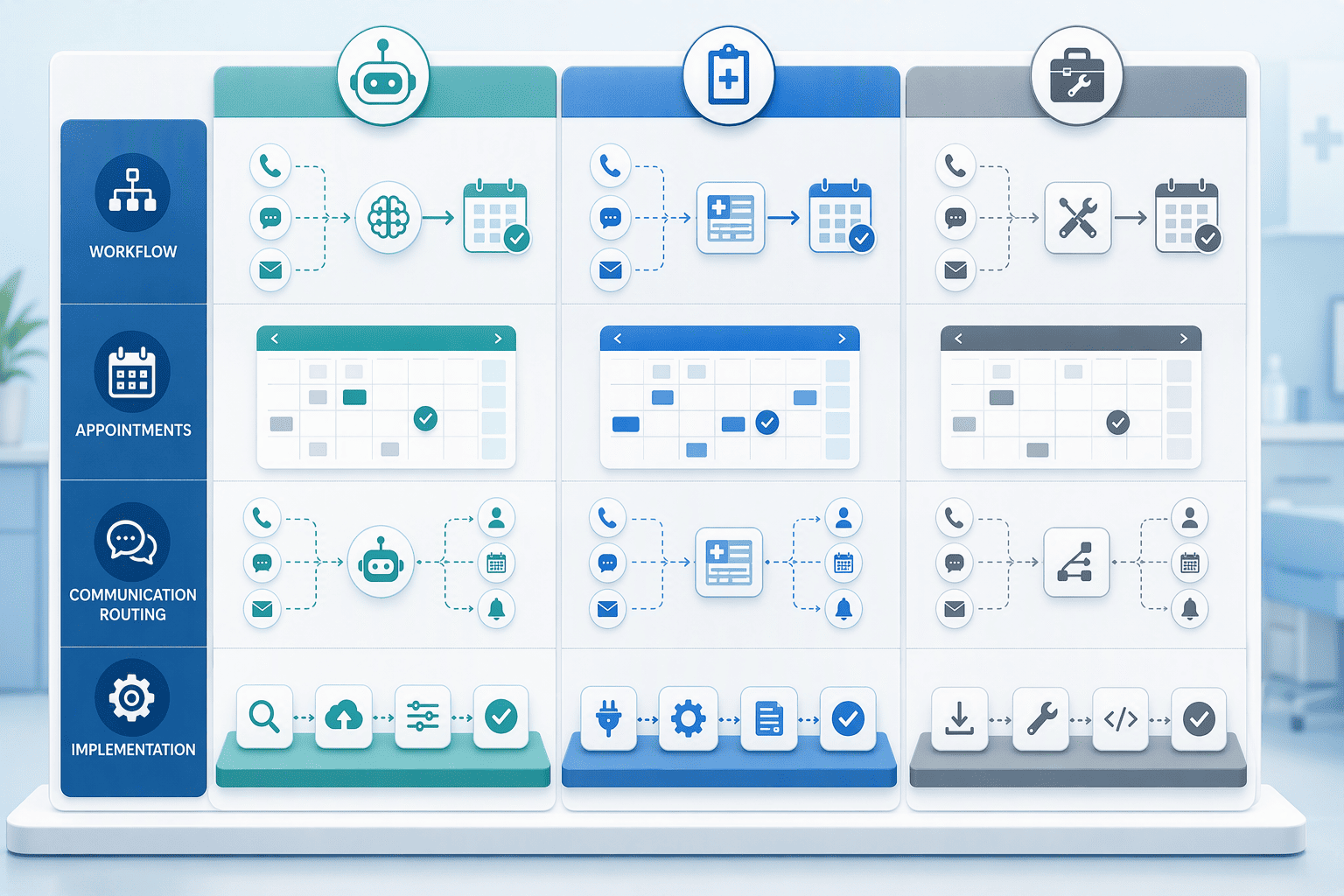
Moving from a list of tools to a working system in your clinic requires a clear evaluation framework. Match your specific needs against these critical dimensions before signing up for any trial.
Decision Dimension | AI-First Agent (e.g., EchoLeads, Turbodev) | EMR-Bundled Scheduler (e.g., Practo Ray, Clinicea) | DIY/Free Platform (e.g., Zoho, DocOn) |
|---|---|---|---|
Primary Goal | Answer 100% of missed calls; automate booking via voice/chat. | Consolidate scheduling into a full patient record system. | Create the lowest-cost or customized booking page. |
Best For | Clinics losing revenue to unattended calls; no dedicated receptionist. | Clinics ready to digitize all patient records and billing. | Solo, tech-comfortable doctors; extremely budget-constrained startups. |
Verify data storage locality and DPDP Act readiness. | Read the fine print on data usage; free models often use your data. | ||
Implementation | Follow a 14-day pilot; focus on patient acceptance of the AI voice. | Heavy; requires full data migration and staff training on the EMR. | Light for the tool, but setup time is personal; no EMR data migration. |
Typical Cost Impact | Shifts cost from salary to software subscription; ROI measured in reduced no-shows. | Higher fixed cost; value tied to operational efficiency and patient discovery. | Lowest direct cost; highest cost is practitioner's time in configuration. |
Conclusion
The most affordable solution is the one that loses the fewest patients. For the solo GP in Hyderabad whose phone keeps ringing to voicemail, an AI voice agent is a direct financial argument against missed revenue. A free scheduling tool isn't a win for a clinic that still keeps records on paper and needs an EMR backbone. Pick the top choice that fits your clinic profile and start a free trial. Run a pilot with your actual patients and let the software justify its cost inside your own workflow.
Frequently Asked Questions
What are the most affordable appointment scheduling solutions for small clinics in Hyderabad in 2026?
The spectrum ranges from free, pharmacy-backed platforms like DocOn to AI-driven voice agents like EchoLeads AI. Mid-range EMR combos like Clinicea offer a balance. The right pick depends on whether you value zero cost above all else or need AI to capture missed calls.
How do AI-powered scheduling solutions like EchoLeads AI and Turbodev compare for small clinic use cases?
EchoLeads AI emphasizes deep workflow automation, CRM sync, and voice agents with human-like speech for thorough scheduling. Turbodev offers a more no-code, straightforward AI receptionist focused aggressively on instant lead capture and booking at a competitive price, ideal for simple scheduling needs.
What WhatsApp-based appointment booking features are available for clinics in India?
AI agents from EchoLeads and Turbodev can initiate WhatsApp conversations and process bookings. Zoho Bookings integrates with the Zoho WhatsApp ecosystem for notifications. DocSandesh also provides dedicated WhatsApp automation for Indian clinics. Direct, two-way chat booking is now table stakes.
What compliance and consent requirements apply to automated booking systems in Telangana?
Several regulatory and technical requirements apply to AI voice agents in Indian healthcare:
- DPDP Act compliance: You must comply with the upcoming national DPDP Act for patient data privacy.
- State-level digital health initiative: The Telangana Digital Health Card initiative reflects state-level focus on digital health.
- Explicit consent for recording: An AI voice agent must secure explicit consent before recording calls.
- Data protection infrastructure: Platforms like EchoLeads state they process data through bank-level protected infrastructure.
How can small clinics in Hyderabad evaluate and implement an AI scheduling solution?
To evaluate the right tool for your clinic, follow a structured selection process:
1. Define your core need: Start by defining your core need: answering lost calls versus basic online booking.
2. Draft a budget: Draft a budget, then run a strict 14-day pilot with any paid tool.
3. Measure key outcomes during the pilot: During the pilot, measure patient acceptance of the AI voice agent and track the precise reduction in missed appointments, not just feature lists.
Related articles
How Hyderabad Hospitals Can Slash Missed Appointment Rates and Recover Lost Revenue
Learn how hospitals can avoid missed calls and streamline its front desk operations.
6 Best 24/7 AI Calling Tools for Patient Appointment Confirmations in 2026
Learn how AI Voice agent can help receptionists in hospitals and clinics in Hyderabad to handle mass volume of appointment requests.
7 Best Automated Patient Reminder Systems for Indian Healthcare Providers in 2026
Learn how AI Voice agents can streamline a hospital's front desk's operations to avoid delayed follow-ups and missed calls.