
How Hyderabad Hospitals Can Slash Missed Appointment Rates and Recover Lost Revenue
Introduction
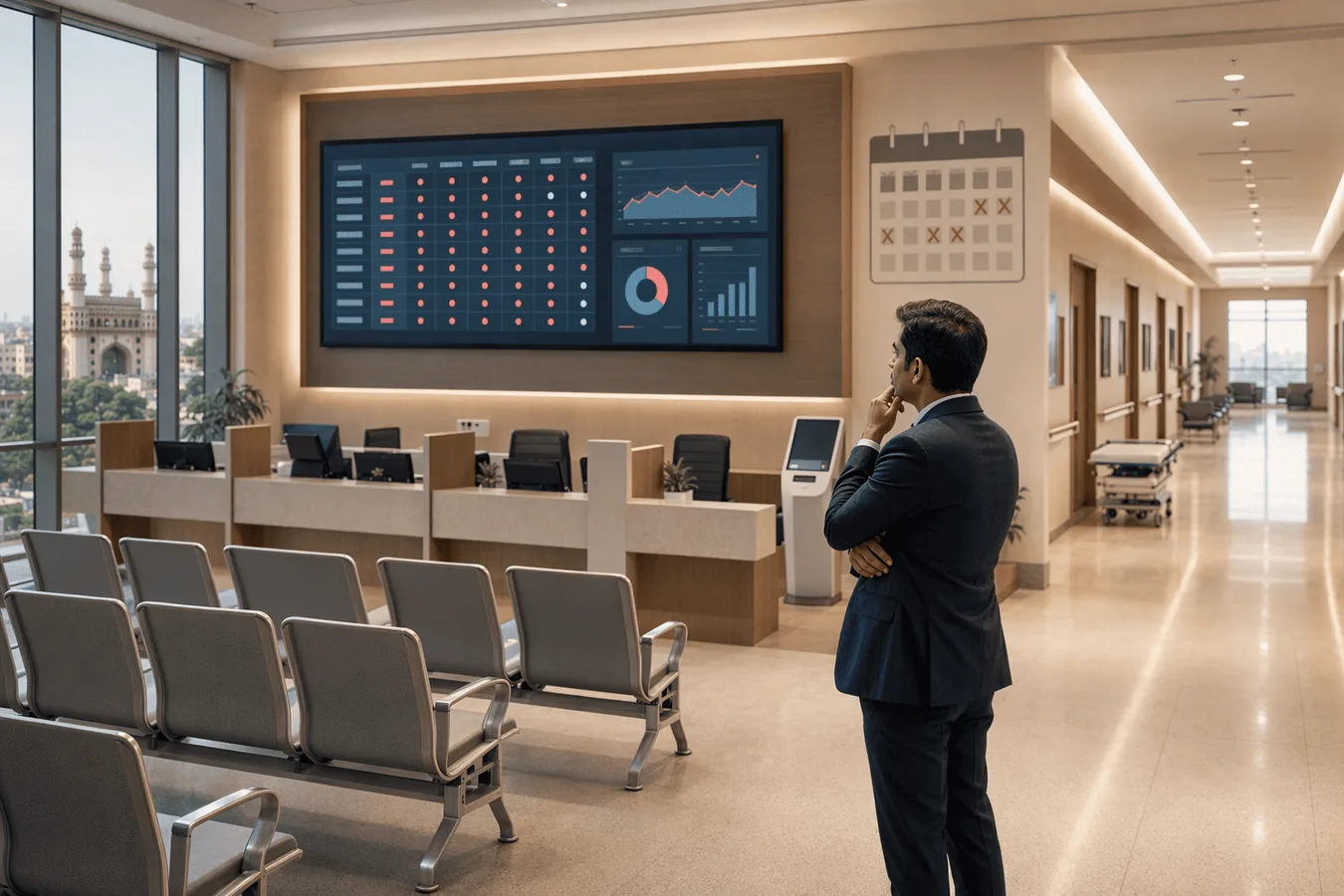
A mid-sized Hyderabad hospital with 1,200 monthly appointments and the typical Indian private-hospital no-show rate watches 384 slots vanish every month. That translates directly into more than ₹3 lakh in evaporated consultation revenue. Scale that to a 200-bed multi-specialty facility running 12,000 outpatient visits and the monthly leakage quietly exceeds ₹30 lakh. This is not a minor scheduling hiccup. It is a structural drain on operating margins and a direct contributor to patient care gaps in a city where a single missed cardiology slot can delay a high-risk patient by weeks.
A 2026 industry analysis pegs the median private-hospital no-show rate in India at 32%, a stark contrast to global benchmarks where a well-run single-specialty practice hovers around 6.81%. Hyderabad hospitals are competing with the best in the country on clinical outcomes. They cannot afford to lose a third of their outpatient capacity to a problem that is demonstrably fixable. The gap between the current state and peer-level performance represents millions in annual recoverable revenue plus the health impact of earlier interventions.
Fixing this requires moving past the generic, one-size-fits-all SMS reminder and toward a sequenced, data-driven model that respects how patients in Hyderabad actually communicate, book appointments, and decide whether to show up. The evidence is clear: combining machine-learning prediction with multilingual outreach can pull no-show rates down by double digits. This guide maps a practical six-step sequence, from diagnosing the exact Hyderabad-specific pain points to projecting the return on investment, so your operations team has an actionable blueprint rather than a list of generic best practices.
Key Takeaways
A technology-led, compliance-first strategy built on Hyderabad's communication patterns can transition a hospital from a high-drain no-show cycle to a manageable, revenue-positive booking model. Here are the hard numbers underpinning this pathway:
Diagnose with precision: Segment no-show data by Hyderabad pin code and specialty to surface hidden patterns, not just generic cause codes.
Deploy smart multilingual reminders: Commercial platforms employing WhatsApp-based, two-way Telugu/Hindi/Urdu messaging have demonstrated a 31% relative reduction in no-shows.
Integrate predictive AI and digital outreach: Peer-reviewed academic research shows that combining predictive modeling with focused SMS outreach cuts baseline no-shows from 32.1% down to a residual 18.5%.
Layer 24/7 voice AI: Three-window, voice-delivered reminder strategies that allow in-call rescheduling can capture 55% to 65% of potential no-shows, pushing aggregate rates as low as 12%.
Lock in DPDP Act compliance first: Position consent management and data localization not as a cost center but as a trust signal that differentiates your hospital in a privacy-sensitive market.
Step 1: Diagnose the Hyderabad-Specific Drivers of No-Shows with Data Analytics
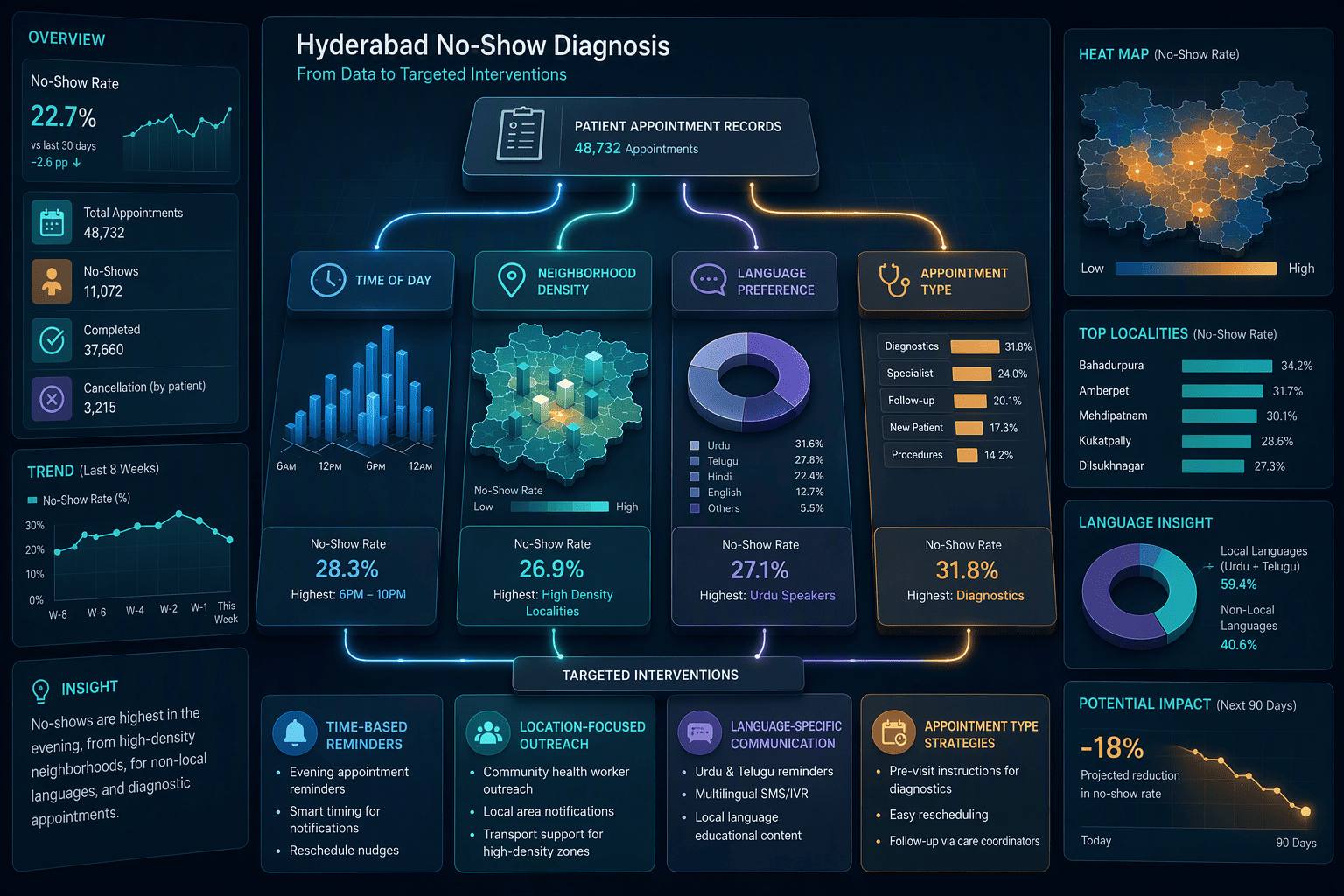
Your no-show rate is an aggregate number hiding a dozen distinct stories. To cut it, you must separate those stories by the variables that actually drive patient behavior in Hyderabad. A blanket 'patient forgot' label is useless for designing interventions. The following segmentation framework, powered by your hospital information system and enriched with external data, surfaces the patterns worth acting on.
Segmentation Dimension | Hyderabad-Specific Data Source/Phenomenon | Actionable Insight |
|---|---|---|
Pin Code & Traffic Density | TomTom Traffic Index (Hyderabad ranks high in Indian congestion); patient-reported locality data | High no-shows from Kukatpally ≠ high no-shows from Secunderabad. Distance is not raw kilometers; it is peak-hour travel time correlated with appointment slots. Flag patients whose travel time exceeds 45 minutes and offer preferential morning or late-evening slots. |
Specialty Type | Internal scheduling data benchmarked against global specialty no-show ranges, dermatology and pediatrics often run up to 30% | A dermatology follow-up for a cosmetic procedure has a different no-show profile than a neurology new-patient consult. Apply the ML-tested insight that digital interventions work especially well for patients aged 20 to 40 without chronic conditions by targeting that demographic segment first in high-volume specialties. |
Payer Type & Appointment Lead Time | Corporate insurance, government scheme (Aarogyasri), and cash-pay segments by days between booking and appointment | Government scheme patients may face authorization delays. Long-lead bookings (over 14 days) consistently no-show at higher rates. Adjust reminder cadence and, where permissible, use voice AI to flag authorization gaps well before the appointment date. |
Historical Engagement | CRM records of missed calls from the patient, previous cancellation patterns, language preference (Telugu, Hindi, Urdu, English) | A patient who initiates a missed call to the hospital is signaling a preference for voice-first, zero-cost interaction. Route this cohort into a missed-call back workflow rather than an SMS prompt. Train the predictive model using prior show/no-show labels as the dependent variable, following the evidence that the CatBoost model achieves 77% recall and a 75% F1 score on large outpatient datasets. |
Step 2: Deploy Automated, Multilingual Appointment Reminders on WhatsApp and SMS
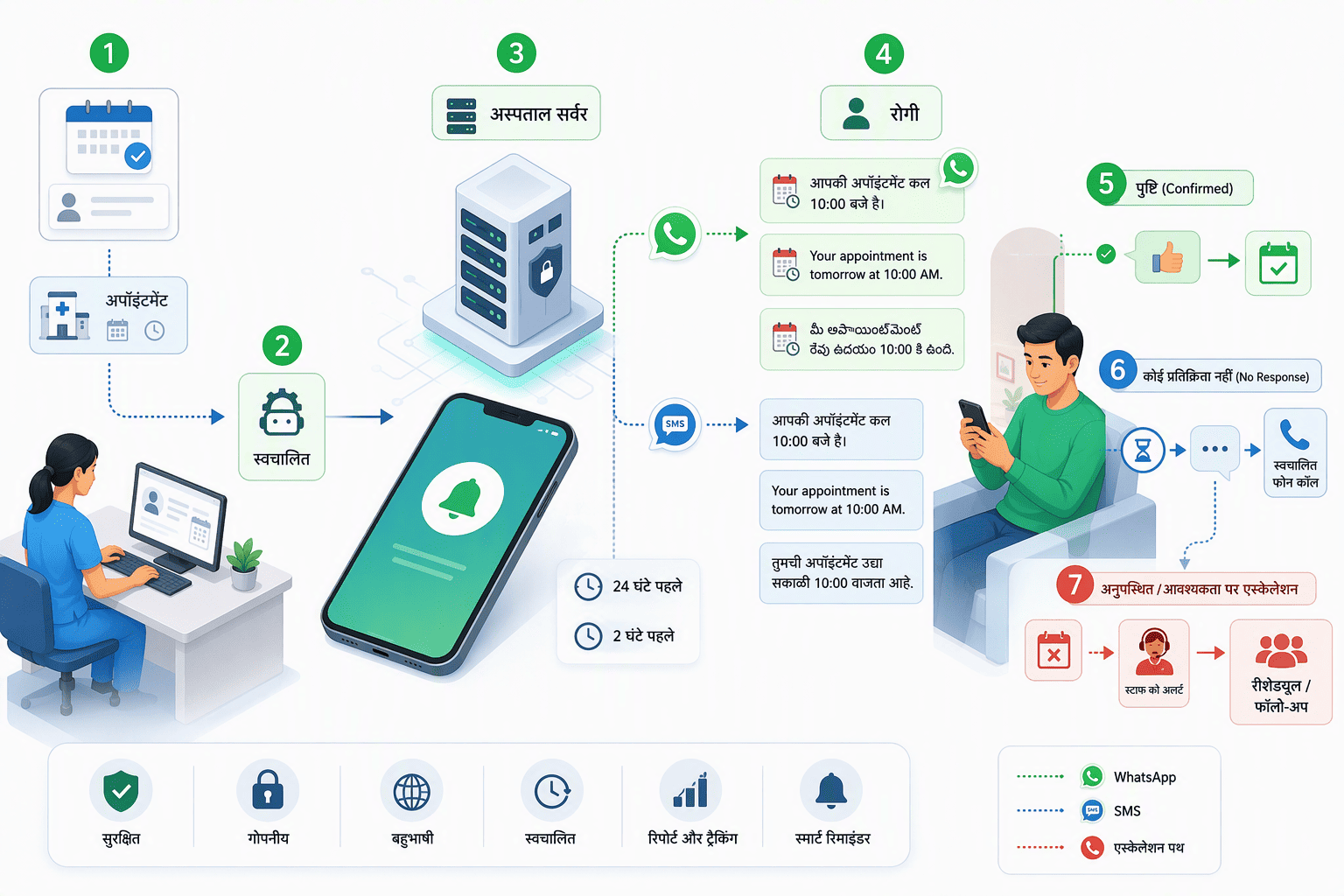
A plain English SMS sent 24 hours before an appointment is the status quo, and in India, its effective reach is shrinking fast. The combination of an 80% to 85% SMS transactional delivery rate and a 60% read rate means that fewer than half of your reminders are ever seen by the patient. IVR press-1-to-confirm systems fare even worse, with completion rates in the low teens. An effective Hyderabad strategy follows a sequenced, multilingual logic flow:
Set the language table: Configure your patient registration system to capture the patient's preferred language from a set that includes Telugu, Hindi, Urdu, and English. Route subsequent communications through that language stream. Deploying an AI agent with demonstrated Hindi-language naturalness and flexibility in voice switching during a conversation, similar to what AI calling solutions for Hyderabad offer, ensures that a Telugu-speaking patient receives a voice reminder in Telugu, not an accented Hindi message they will ignore.
Establish a three-window, two-channel cadence: Send a WhatsApp Business API message at 72 hours (confirmation and reschedule link), a voice-driven reminder at 24 hours (in-call confirmation or rescheduling in the patient's language), and a final SMS or voice call at 2 hours for high-risk appointment types. Production data from Indian hospital deployments shows that a single message in one window captures perhaps 15% of potential no-shows. Executing across all three windows with voice confirmation captures 55% to 65%.
Integrate two-way intelligence: Do not send a one-way blast. Enable patients to type 'R' to reschedule or speak a command. When a patient replies in Telugu, the system routes the reschedule intent to a live slot search and confirms the new time in the same thread. Platforms like TatkalDoctor report a 31% reduction in no-shows by moving from static SMS to interactive WhatsApp reminders. This is the difference between notifying a patient and actually rebooking them.
Stay TRAI DLT compliant from day one: All bulk messaging must flow through Distributed Ledger Technology (DLT) registered templates with your headers and consent records pre-approved by the operator. Work with a platform that embeds DLT scrubbing into its sending pipeline so that your critical oncology reminders do not get blackholed by operator filters for looking like marketing spam.
Step 3: Implement 24/7 AI Voice Agents for Booking, Rescheduling, and Missed-Call Recovery
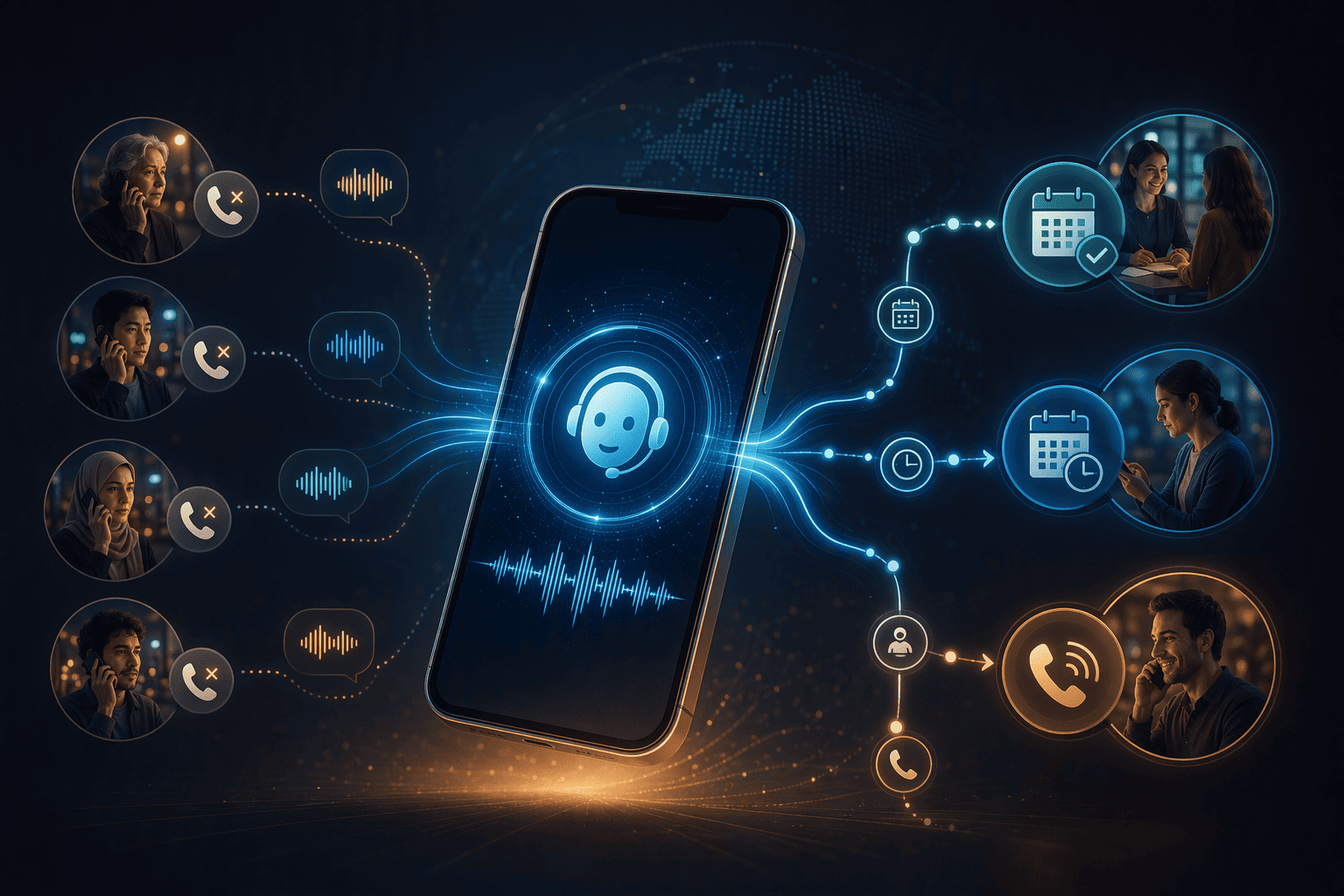
A patient calls at 9:47 PM, hears a ring, and hangs up. That missed call is not a failed interaction. It is a patient who wanted to engage on their own terms and preferred not to spend talk-time reaching a busy front desk during office hours. In Hyderabad, missed-call culture is a deliberate, well-understood signaling mechanism. Treating it as noise rather than signal leaves appointments on the table.
A multilingual voice AI agent deployed on a 24/7 basis closes that gap. The logic flow is straightforward and replicable. A patient's missed call to the hospital's dedicated line triggers an immediate outbound call back from the AI agent, ideally within seconds, using a human-like voice in the patient's preferred language.
The agent states the name of the hospital, verifies the caller's identity against a patient ID or phone number, and asks 'Would you like to book, confirm, or reschedule?' When the patient requests a cardiology consultation, the agent queries available slots in real time, proposes two options, and locks the confirmed appointment directly into the hospital's practice management system.
If the patient has an insurance authorization gap, the agent flags it with a note for the billing desk before the visit day. The entire transaction closes without a human staff member touching it.
This capability is not a theoretical research project. The deployment pattern of voice AI applied across the three reminder windows can pull a typical 32% no-show rate down to 12% or below. The model works on the same principle that drives outbound voice agents for Indian business workflows: initiate contact fast, qualify the intent through conversational branching, and escalate to a human only when sentiment or complexity exceeds safe thresholds, as you can find in AI voice agent systems tailored for Hyderabad.
Step 4: Secure Patient Trust with India-First Data Compliance (DPDP Act, Data Localisation)
When a hospital sends a WhatsApp reminder to a patient that includes their name, appointment time, and department, it is processing sensitive personal data. Under the Digital Personal Data Protection (DPDP) Act of 2023, the hospital is a data fiduciary with specific, non-negotiable obligations. Consent for this processing must be granular, informed, and revocable. A blanket consent form signed at the registration desk is not sufficient. The Notice of Consent must explicitly list that patient contact data will be processed through a third-party communication platform for appointment reminders, and the patient must be able to withdraw that consent through an equally accessible mechanism, such as a clearly labeled opt-out link within the WhatsApp thread itself.
The law imposes further constraints that directly affect technology purchasing decisions for Hyderabad hospitals. Health data is likely to be classified as sensitive personal data. The central government holds the power to mandate that such data be stored exclusively within India.
Even before a specific notification is issued, the prudent technical posture is to select communication platforms whose infrastructure guarantees data localization and whose terms of service clearly declare compliance with Indian data fiduciary obligations. A platform that processes data on servers in Singapore or Virginia is creating a latent legal exposure. Practical choices, such as ensuring your vendor offers bi-directional CRM synchronization with your on-premises or India-hosted EMR, directly reduce the risk of data scattering across geographies.
A scoping review of national and international healthcare AI ethics guidelines highlights a real, unresolved tension specific to the Indian market. The DPDP Act's broad exemptions for public health and research can create ambiguity for AI tools that are simultaneously optimizing operations and generating population-health insights. For a hospital using predictive no-show models, this is not an abstract debate. It is a concrete compliance question about whether the model's training data crosses the line from operational use into regulated research processing. Frame your compliance stance as a competitive trust signal: a patient who knows their Telugu voice call was neither recorded nor stored outside India, and that their consent will be re-sought before any secondary use, is a patient less likely to ghost the next appointment.
Step 5: Compare Indian AI Communication Platforms for Speed, Compliance, and Sentiment Safety
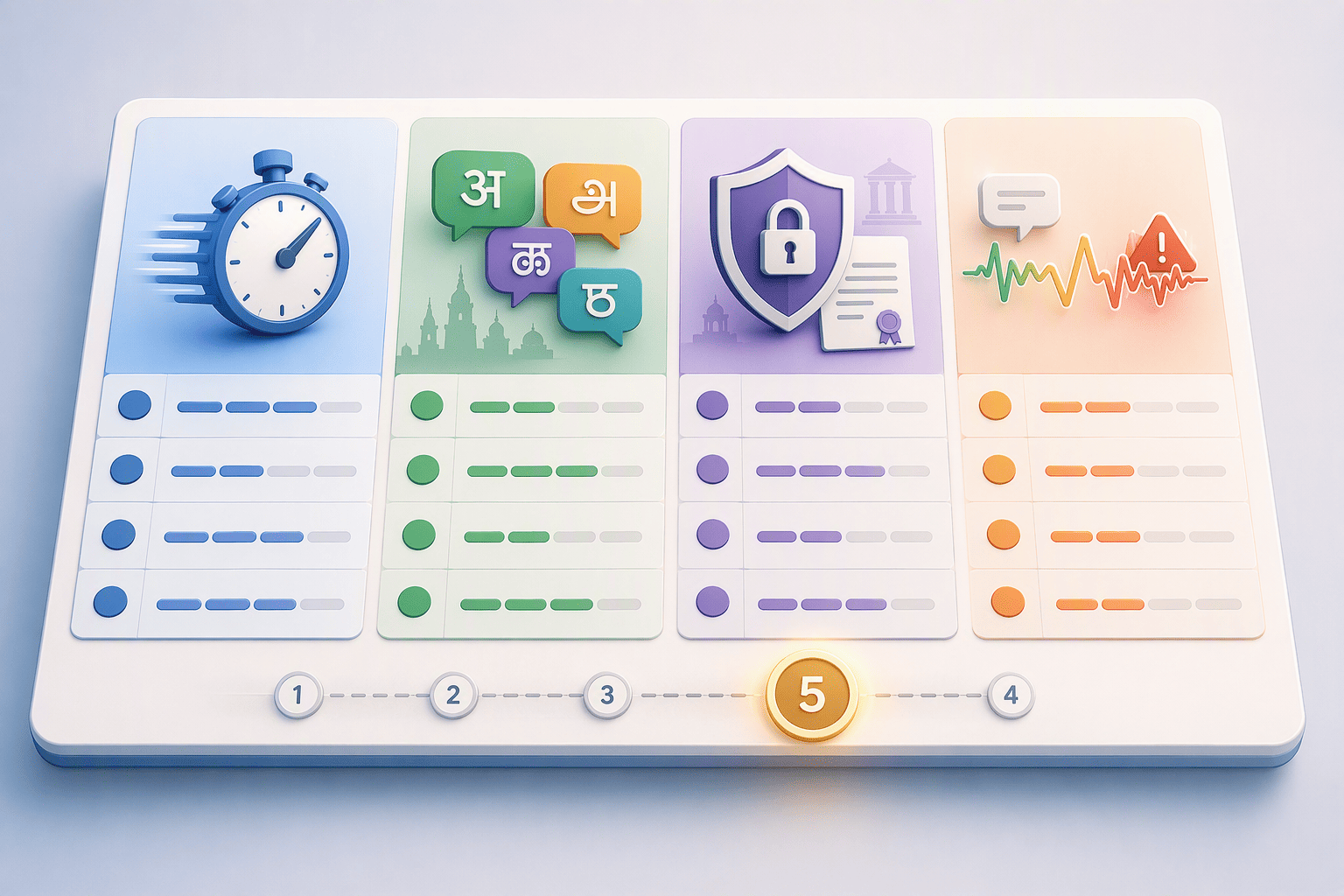
Selecting a platform means solving for four things at once:
Go-live speed: how fast the platform can be deployed and operational.
Local-language naturalness: how natural the Telugu, Urdu, or other local-language output sounds to a real patient.
DPDP Act compliance: whether the vendor can prove verifiable compliance with India's data protection law.
Sentiment-handling safety: whether the voice agent knows when a conversation is going wrong, detecting frustration, confusion, or distress, and hands off to a person before it burns the relationship.
No platform wins across all four dimensions. What works for a 200-bed hospital may be wrong for a 50-bed specialty clinic.
EchoLeads.ai builds its AI agents for lead engagement that spans voice, WhatsApp, and Instagram, with appointment booking woven through every channel. The platform syncs bi-directionally with the CRM, a detail that starts to matter when no-show data needs to flow back into Salesforce or Zoho and update the patient's engagement score. EchoLeads says it measures sentiment and intent by analyzing vocal tone, pacing, and hesitation.
In a healthcare context, that analysis is a safety mechanism. A sharp, distressed signal from the caller should trigger an immediate escalation to a human registrar, not the next step in the booking script. The principle is simple: voice agents should not autonomously run fraud calls, disputes, or emotionally charged conversations. TatkalDoctor stays closer to a healthcare-specific pitch with fewer promises. It runs smart WhatsApp reminders and voice booking, and it publishes numbers: a 31% relative reduction in no-shows and a 30% overall drop from its clinic deployments. Caller.Digital goes deeper on the delivery problem itself. It maps the Indian messaging landscape, zeros in on SMS failure rates, and lays out a three-window voice-driven model that projects a reduction to 12% no-shows. The analysis makes a concrete operational case for voice-first infrastructure over SMS-heavy approaches. The decision turns on two criteria. First, ask the vendor for verifiable proof of DPDP Act compliance tied to your exact workflow. A platform that cannot show a consent management pipeline and data residency guarantees aligned with the Health Ministry's upcoming notifications is not production-ready for a hospital in Hyderabad. Second, test the platform's Telugu and Urdu voice models with non-native speakers. If the accent or idiom drifts even a little, elderly patients from rural Telangana will tag the call as spam and hang up. A system that zero percent of your target patients will talk to is a clinical failure, no matter how well it is automated.
Step 6: Measure and Project the Dual Impact: Revenue Recovery and Operational Efficiency
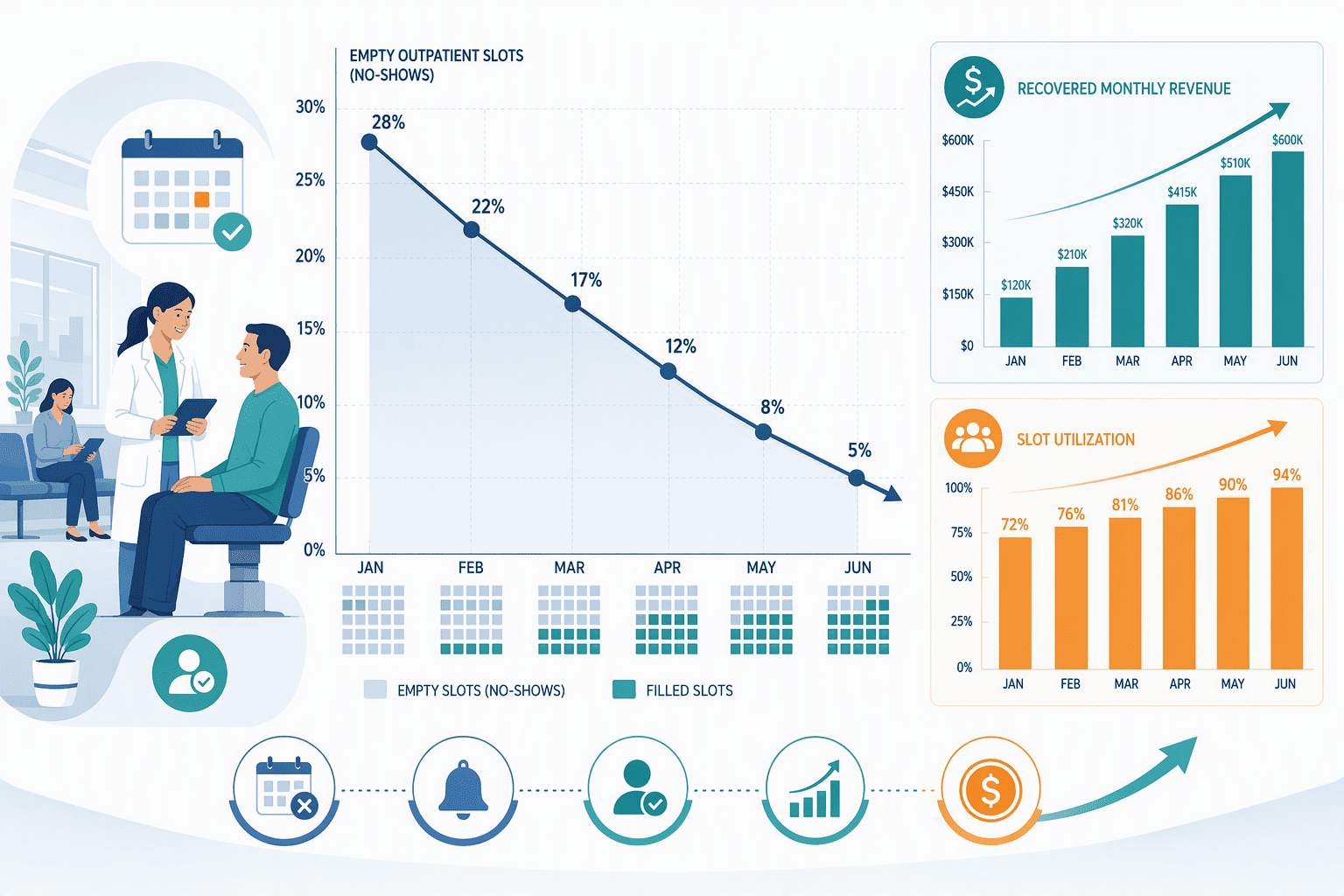
A 32% no-show rate across 12,000 monthly outpatient slots leaves 3,840 empty chairs every month. At a conservative average consultation fee of ₹800, that is roughly ₹30.7 lakh in direct monthly revenue the hospital never sees.
Now apply the compound effect of the three interventions. Predictive stratification flags the highest-risk patients and routes them into a specialized workflow. Smart multilingual WhatsApp reminders, which have independently demonstrated a 31% relative reduction, go to the broader population.
A three-window voice AI sequence then captures 55% to 65% of the remaining potential no-shows. Conservative modeling takes the aggregate no-show rate from 32% down to the 12% to 14% range. At 12%, the hospital loses 1,440 slots instead of 3,840.
That recovers 2,400 consultations. The math is straightforward: a monthly recovery of ₹19.2 lakh in direct consultation revenue, not counting the downstream value of diagnostics, pharmacy, and follow-up procedures. The same model reclaims a large amount of wasted registrar and nursing capacity.
Staff hours shift from dialing reminder calls to managing complex patient needs. For front-desk teams in busy city hospitals, this directly eases the burnout-driven attrition that makes retention a constant battle.
Conclusion
A Hyderabad hospital's no-show problem is not a simple attendance issue that a louder reminder can fix. It is a systems challenge that requires matching the signal to the right channel, the channel to the right language, and the data to a rigorous compliance framework. The sequence is self-reinforcing: segment the data to understand who is missing and why, deploy multilingual reminders on the platforms patients actually use, and close the gap with 24/7 voice AI that treats every missed call as an imminent booking. Backstopping this with DPDP Act-mandated consent management makes the solution legally durable and positions your institution as a trustworthy steward of patient data. The math, a 32% drain dropping into the low teens translating to over ₹19 lakh in monthly direct recovery for a large facility, makes the return too concrete to ignore.
Frequently Asked Questions
What are the primary causes of patient no-shows in Indian hospitals, particularly in Hyderabad?
No-show causes in Hyderabad are highly localized. They include:
- Traffic congestion: extreme traffic turns a 10-kilometer drive into a 90-minute ordeal, leading patients to skip appointments rather than arrive late.
- Inadequate multilingual reminders: reminders that do not reach patients in their preferred language.
- Long booking-to-appointment lead times: extended delays between scheduling and the appointment date.
- Insurance authorization gaps: issues with schemes like Aarogyasri blocking attendance.
- Ineffective communication channels: SMS reminders that fewer than half of patients actually read.
What proven strategies and communication technologies can hospitals use to reduce missed appointment rates?
The strongest evidence supports combining predictive analytics with digital outreach. Peer-reviewed research demonstrates that coupling machine-learning models with SMS interventions cuts no-show rates from 32.1% to 18.5%. Commercially, hospitals achieve deeper cuts by layering three-window, multilingual voice AI and WhatsApp reminders that allow patients to confirm or reschedule in their native language.
How can AI-powered WhatsApp and voice agents automate appointment reminders and rescheduling in Telangana?
A multilingual AI agent sends a WhatsApp message in Telugu, Hindi, Urdu, or English at 72 hours, then a voice call at 24 hours. The patient can speak or type to confirm, cancel, or reschedule. The agent queries live slot availability from the hospital information system and updates the appointment in real time, completing transactions outside office hours without staff intervention.
What are the specific legal and data-privacy considerations for deploying automated patient communication in India?
Under the DPDP Act 2023, patient contact data is sensitive personal information requiring granular, notice-based consent. Hospitals must declare a lawful purpose, enable easy consent withdrawal, and likely localize health data within India. Any AI communication platform must demonstrate a verifiable consent management pipeline and Indian data residency to avoid regulatory exposure.
How do different AI communication platforms compare for healthcare appointment management in the Indian market?
Platforms differ on three key axes:
- DPDP compliance maturity: ability to demonstrate verifiable compliance with India's data protection law.
- Telugu/Urdu speech accuracy: how accurately the platform handles local-language speech recognition and output.
- Sentiment-handling safety: whether the agent can detect and escalate conversations going wrong.
TatkalDoctor publishes specific no-show reduction metrics (31%). EchoLeads emphasizes CRM integration and vocal sentiment analysis for safe escalation. Caller.Digital provides the operational logic for a voice-first, three-window model. No provider publishes Kannada or Telugu-specific accuracy benchmarks, requiring direct testing.
What measurable impact can AI-driven patient engagement have on hospital revenue and operational efficiency?
A combined ML-prediction, multilingual reminder, and voice AI strategy can pull a typical 32% no-show rate down to the 12% to 14% range. For a 200-bed hospital with 12,000 monthly appointments, this shift recovers approximately 2,400 consultations each month. At a conservative ₹800 consultation fee, that translates to a direct monthly revenue recovery exceeding ₹19 lakh, before factoring in downstream diagnostic and pharmacy revenue.
Related articles
8 Most Affordable Appointment Scheduling Solutions for Small Clinics in Hyderabad (2026)
Learn about 8 affordable phone calling solutions for clinics and hospitals in hyderabad.
6 Best 24/7 AI Calling Tools for Patient Appointment Confirmations in 2026
Learn how AI Voice agent can help receptionists in hospitals and clinics in Hyderabad to handle mass volume of appointment requests.
7 Best Automated Patient Reminder Systems for Indian Healthcare Providers in 2026
Learn how AI Voice agents can streamline a hospital's front desk's operations to avoid delayed follow-ups and missed calls.