
Book More Appointments Without Hiring a Single New SDR: A 6-Step Hybrid Playbook

Introduction
Your sales team finally cracked the top of the funnel. Leads are flowing in, but you are staring at a silent calendar because half of them never show up. The immediate, painful reflex is to hire more SDRs to chase confirmations. That linear math, more headcount equals more attended meetings, broke down long ago. In reality, piling on salary costs without a process fix just burns your budget faster.
You are trapped between a no-show rate that hovers around 23% without solid reminders, and the impossibility of paying ₹50,000+ monthly per SDR just to call and nudge. A landmark randomized trial published in the American Journal of Medicine established this brutal baseline well: when no reminders were sent, the no-show rate was 23.1%. You are bleeding pipeline value before a conversation even starts.
Now layer in the regulatory weight of operating in India. Since the Digital Personal Data Protection (DPDP) Act, 2023 came into effect, you cannot simply blast out generic WhatsApp pings to unverified numbers. Every automated touchpoint requires explicit, granular consent. Getting it wrong risks fines or having your communications blocked by telecom providers enforcing TRAI regulations.
This guide pulls you out of that hiring reflex. It outlines a hybrid, six-step framework that combines AI voice agents, deep CRM automation, and strict compliance guardrails. The goal is not just more bookings. It is a higher show rate at a fraction of the human cost. Tools like EchoLeads provide the technical context, but the method here is universal: automate the repetitive, predict the risky, and reserve your human SDRs for the moments that actually close revenue.
Key Takeaways
A six-step process shifts appointment volume from a headcount problem to a technology and precision problem. Here is the math and the method in brief:
Cost asymmetry: AI voice agents operate at pay-as-you-go rates of ₹5 to 15 per minute, a stark contrast to a fully loaded SDR's monthly salary of ₹50,000 to 1,00,000, removing the linear cost barrier to scaling outreach.
Reminder efficacy is solved: Moving from zero reminders to automated multi-channel nudges can already slash no-shows from a baseline of 23.1% down to 17.3% without a single human finger lifting a phone.
Precision beats volume: A hybrid model where human SDRs only call high-risk, algorithmically flagged leads can push no-show rates dramatically lower, with some studies seeing live staff confirmations achieve 13.6%.
Human judgment stays premium: By automating triage with sentiment and keyword triggers, you stop wasting SDR time on low-intent leads and let your AI handle the high-volume, repetitive qualification grind 24/7.
Compliance is automation fuel: The DPDP Act and TRAI regulations demand consent records and DND scrubbing. Modern platforms turn this into an automatic digital ledger, not a manual paperwork exercise.
Step 1: Audit your current booking-to-no-show funnel to identify leakage points
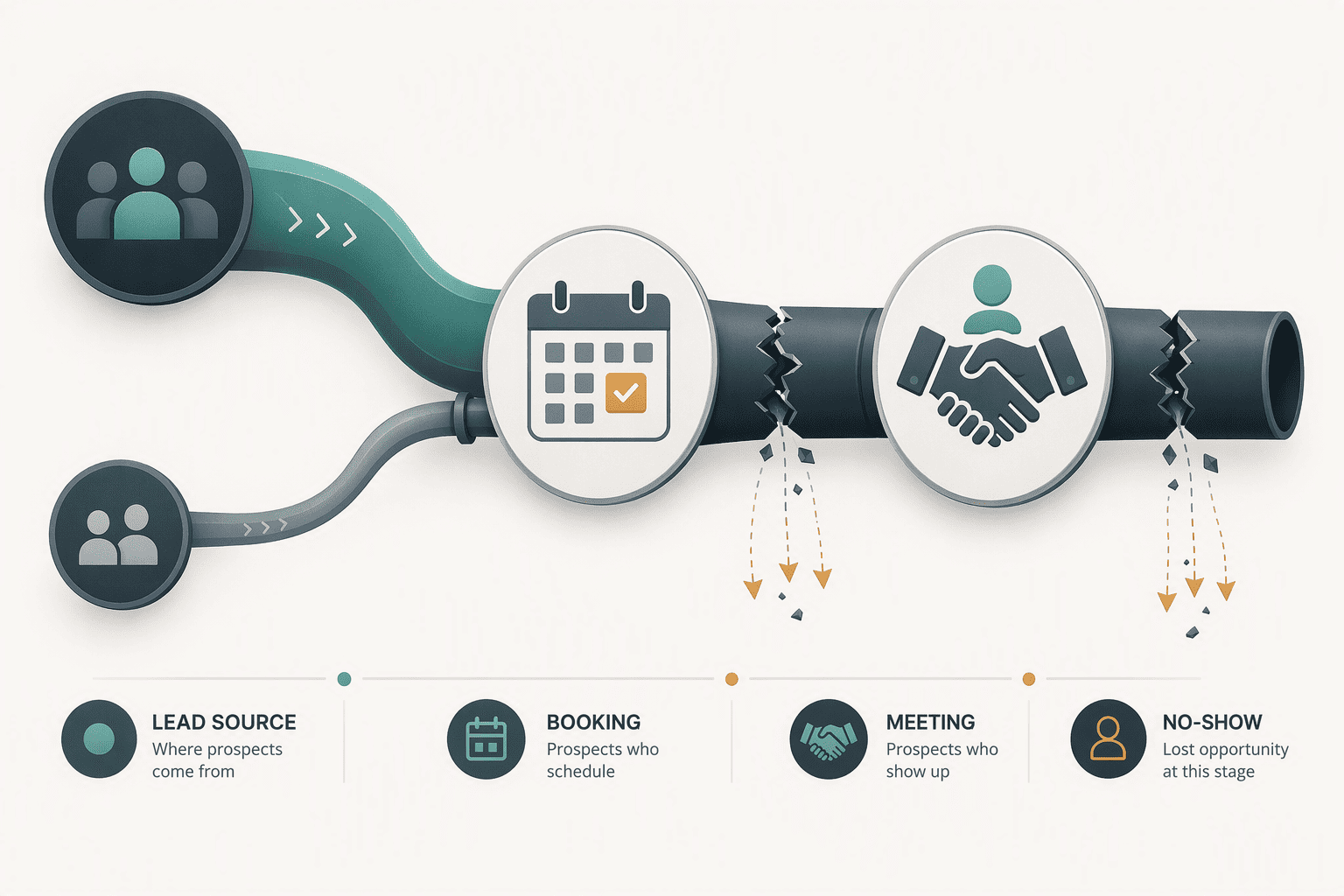
You cannot automate a process you cannot see. Before plugging in any AI agent or automated workflow, map exactly where appointments die. Most teams discover that the problem is not purely volume; it is structural leakage at specific, identifiable stages between the booking click and the handshake.
Source-attribution analysis: Isolate your appointment setters' lead sources. If leads from third-party aggregators ghost at double the rate of organic website demo requests, you have a sorting problem, not a reminder problem.
Time-to-appointment correlation: Plot your lead time on a scatter graph against the no-show outcome. Appointments booked far in advance almost universally decay; identify the exact day-mark where attendance probability begins its sharpest drop-off.
Confirmation gap measurement: Check the discrepancy between a slot filling the calendar and a slot reaching "confirmed" status. A funnel with a 23.1% no-show baseline implies that unconfirmed slots are essentially lost revenue already logged, and you must flag automation to target this specific gap.
Channel response audit: Audit response rates across your existing reminders. If your email open rates are strong but SMS click-throughs are abysmal, your upcoming automation engine needs to allocate budget and logic toward the channels your specific Indian audience actually uses, likely WhatsApp.
Step 2: Deploy AI voice agents for instant inbound query handling and autonomous outbound qualification
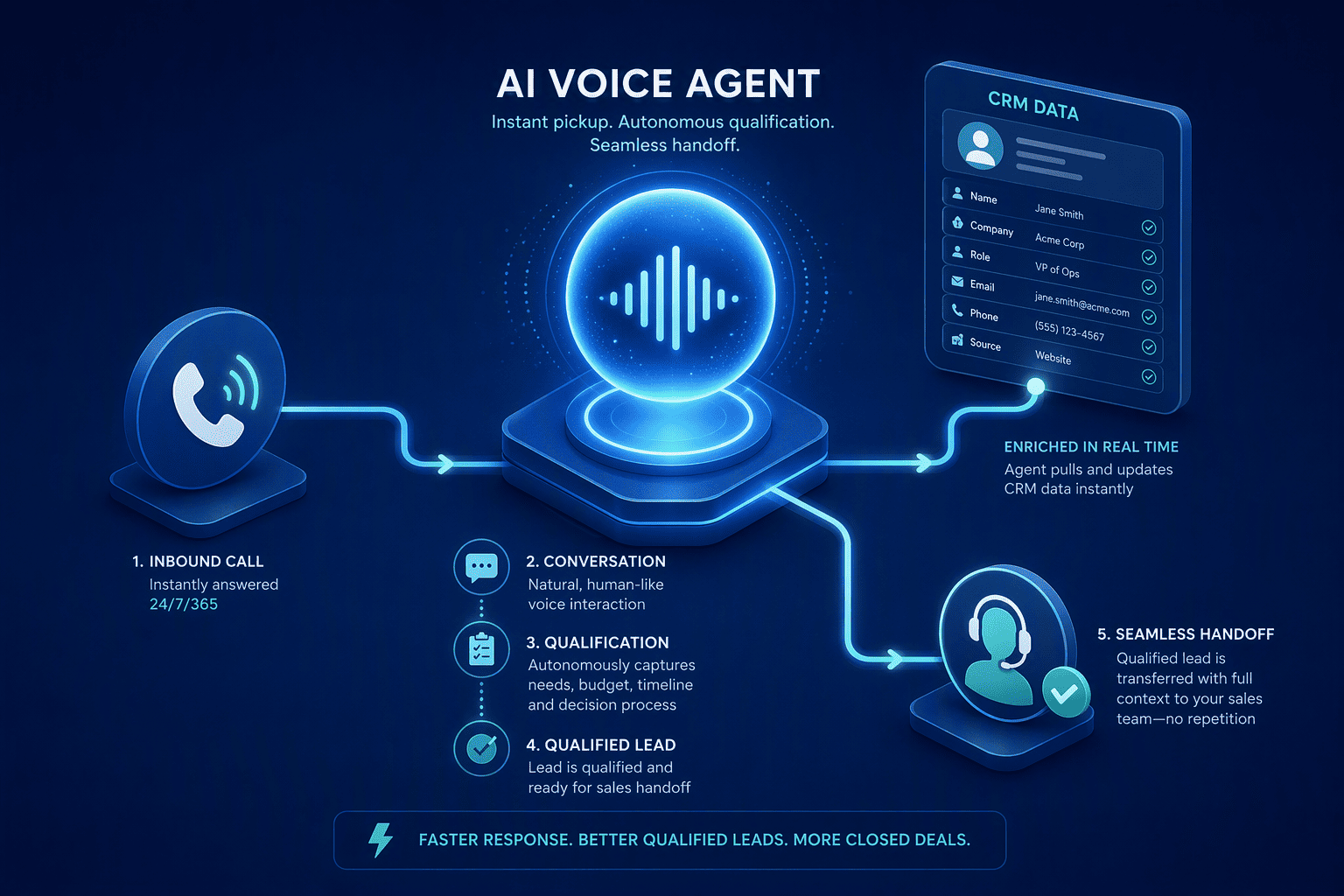
Volume-intensive qualification dialing is the easiest task to remove from a skilled SDR's plate. Indian buyers often abandon a sales process if they hear a ring-back tone instead of an instant voice. An AI voice agent answers within 3 seconds every time, pulling prospect data from your CRM during the live call. This immediate pickup stops you from losing a hot inbound lead to a competitor with a faster dialer.
From a cost perspective, replacing the variable cost of headcount with a utility-priced AI agent changes unit economics. Running autonomous outbound qualification on a per-minute cost of ₹5 to 15 decouples reach from payroll. An SDR drawing a ₹50,000 monthly salary simply cannot place the volume of simultaneous calls that an AI orchestrator can, especially during after-hours bursts when decision makers are free. You reclaim that capacity and apply it later to high-value closing only.
Step 3: Implement bi-directional CRM sync for personalized, multi-channel automated reminders
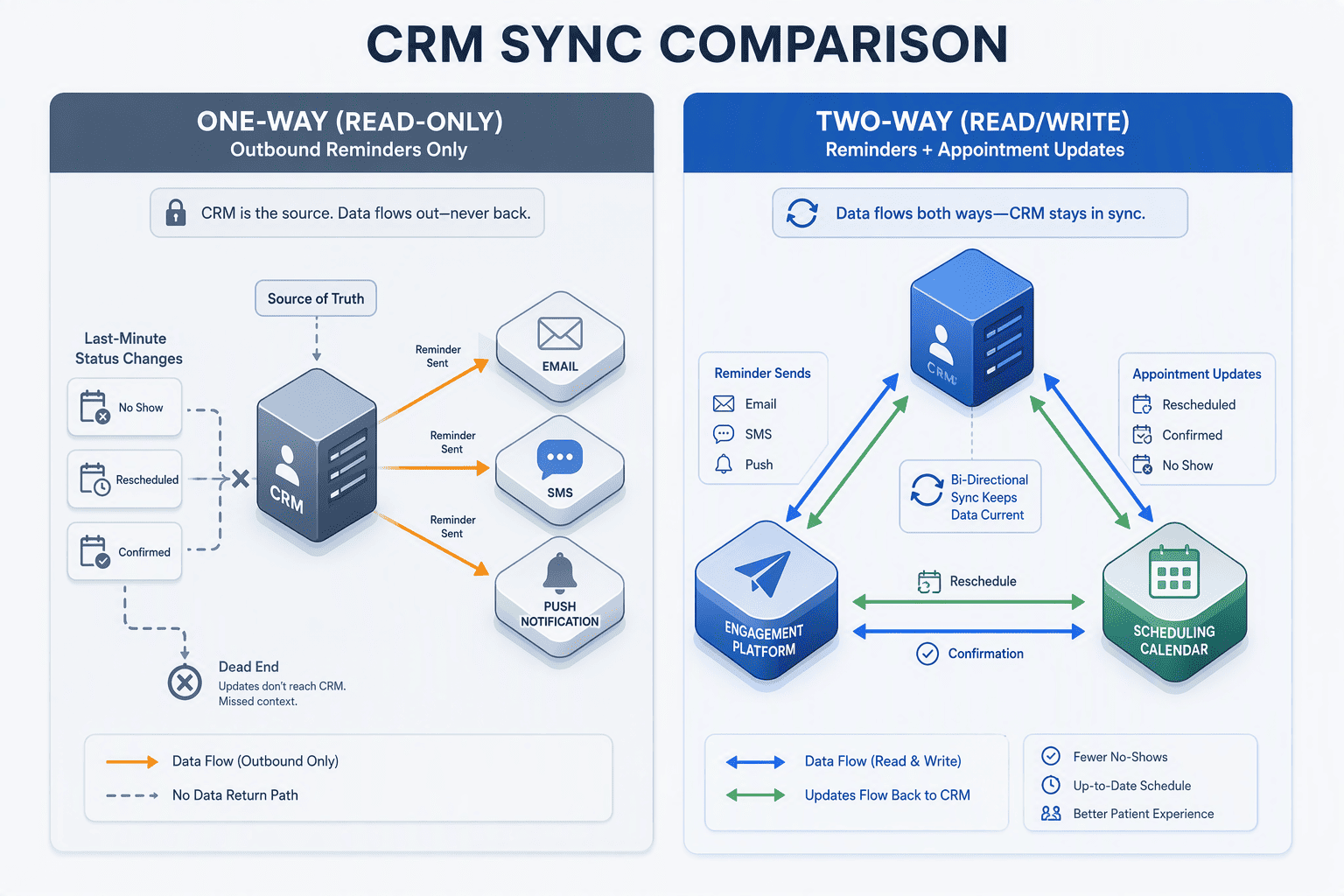
A disconnected CRM turns your reminder engine into a spam cannon. To achieve the kind of no-show reduction the data proves possible, your engagement platform must talk back to your system of record. The table below contrasts the operational reality of one-way versus two-way syncs for appointment booking:
Feature | One-Way Sync (Read Only) | Bi-Directional Sync (Read & Write) |
|---|---|---|
Reminder Accuracy | Sends reminders often missing last-minute reschedules. | Updates the reminder trigger instantly when a prospect moves a slot in the CRM. |
Personalization Depth | Inserts a generic name field; no context on product interest. | Injects appointment type, lead source, and prior AI conversation notes into the WhatsApp template. |
Manual Agent Workload | High; human reps must manually mark confirmations. | Null; the system captures a WhatsApp reply and writes the "Confirmed" status back to the native CRM record. |
Platform Compatibility | Works with basic webhooks. | Requires native integration with tools like Salesforce or HubSpot, and you need adequate permissions to add the "Modified By" field in Zoho CRM to ensure sync integrity. |
With this plumbing installed, your automated reminders, whether via email, SMS, or WhatsApp, become personal. That personalization matters. Historical trial data shows that a generic, untargeted automated blast still leaves you with a significant leak rate, whereas a structured flow drops that number toward that proven 17.3%. A platform like EchoLeads can execute that CRM bi-directional sync live, booking appointments directly into Google Calendar or Outlook while simultaneously logging the activity, which closes the feedback loop that manual logging breaks.
Step 4: Build a predictive risk-scoring model to target high-risk no-shows with human SDR outreach
Once you have automated the routine, your SDR team looks completely different. They stop being dialer farm operators and become a SWAT team for specific, at-risk appointments. The mechanics start with a scoring model: an algorithm that consumes the lead source, the number of days until the appointment, and demographic or firmographic signals to output a simple risk score.
This already works. A 2022 trial using a predictive AI algorithm to flag high-risk patients found that the targeted intervention produced a no-show rate of 33%, which outperformed the 36% rate for those only receiving standard automated reminders on the platform. The most important secondary effect was how it shrank disparities, with the initiative notably improving access for Black patients by focusing outreach where it had the highest lift.Read the study The point for an Indian sales leader is straightforward: you apply the exact same logic to your enterprise prospects. If a lead booked 14 days ago, came from a cold list, and has ignored two WhatsApp nudges, the model flags it. Instead of every SDR making blind "just checking in" calls, they receive a curated list of these high-risk flags.
The math on human intervention here is tight for a reason. That live staff call achieved the absolute best-case scenario of 13.6% in the outpatient setting, and achieving something close to that in B2B sales requires that you reserve that expensive human voice for the moments where a deal slipping away is too costly to risk. Your SDR no longer calls 100 random registrants; they call the 15 that a predictive engine has identified as probable ghosts, converting a mass volume game into a precision retention game.
Step 5: Engineer keyword and sentiment-based handoff triggers to replace manual SDR triage
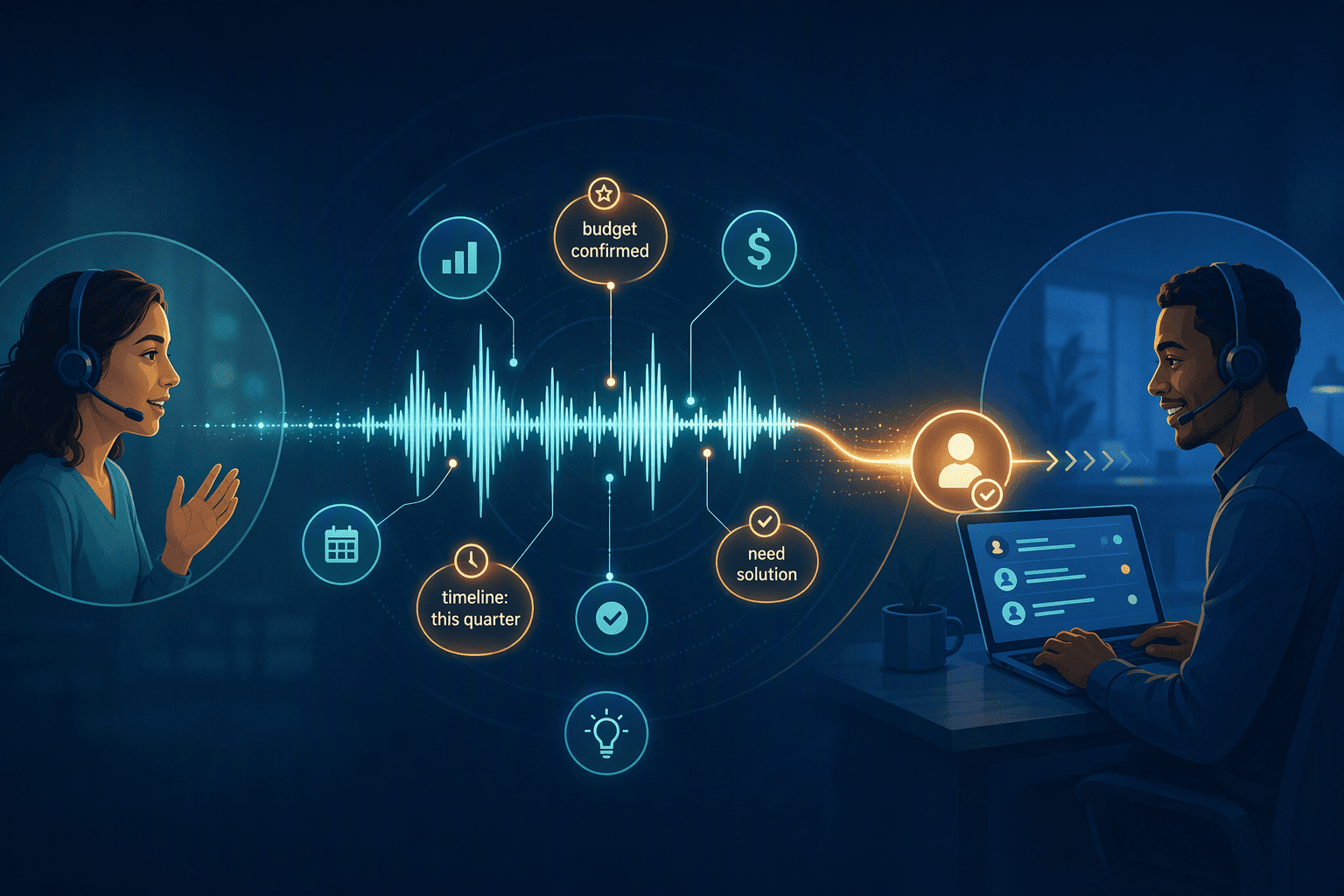
Manual triage burns SDR hours on work a machine can do faster. An SDR who replays a call recording just to decide whether a lead is warm is processing signals that software can catch live. Every minute spent reviewing a recording is a minute not spent talking to someone ready to buy.
The fix is a logic layer that watches the conversation as it happens. The AI agent listens for specific keywords a prospect says out loud: "pricing," "today," a competitor's name, anything that signals immediate intent. It also tracks sentiment scores.
When the score tips into negative territory because a prospect sounds frustrated or urgent, that is a second trigger. When either trigger fires, the system does an instant, silent handoff. An SDR gets the full context of the call so far and steps in right then.
No callbacks, no "someone will reach out." The prospect moves from an AI conversation to a human one without a gap.
This changes the SDR's job from sorting recordings to taking live transfers at the moment intent is highest. The lead never lands in a voicemail queue because a rep was busy triaging something else.
Step 6: Layer in DPDP Act and TRAI compliance for data-handling and consent management
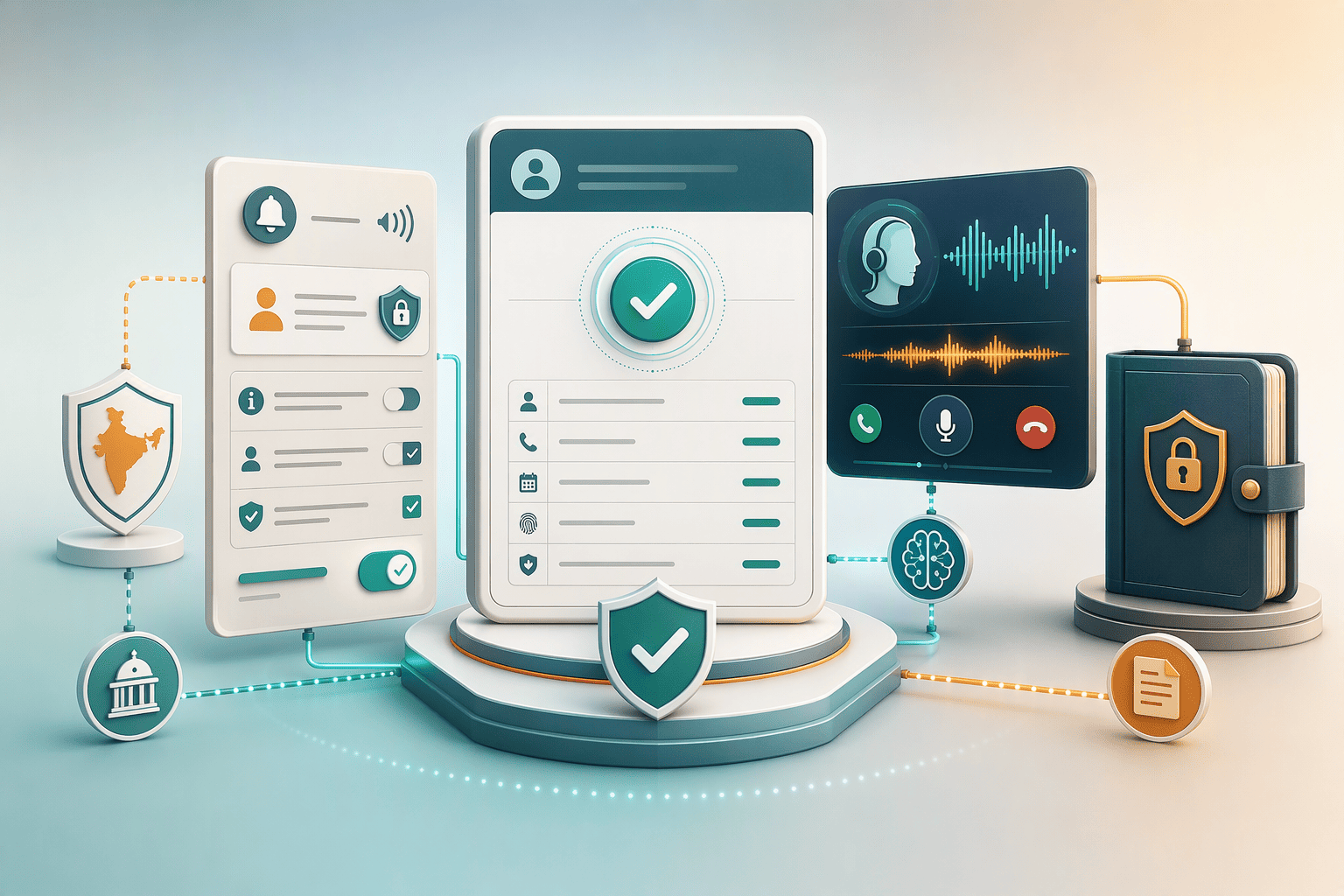
In the Indian market, all the automation in the world is worthless if it results in a blocked sender ID or a legal notice. The DPDP Act, 2023 requires explicit notice and consent before you process personal data for outreach. Your digital consent records are the legal foundation of your booking engine.
You must log and embed consent capture into the initial interaction, whether on a web form or during the greeting of an AI voice call. The AI should articulate the purpose of data usage and record the explicit affirmative consent. This is not a one-and-done checkbox.
Your bi-directional CRM sync must maintain a living ledger of consent status across channels, because a prospect can consent to WhatsApp reminders but refuse email promotions. A violation here is not a minor procedural error; it is a breach that erodes the trust you are trying to automate. A compliance-first platform turns this into an immutable digital log that replaces the fragile human memory of who said yes to what.
Beyond consent, you have to contend with TRAI's commercial communication regulations. Scrubbing your call lists against the DND registry is not optional. If an AI voice agent is dialing outbound at scale, the calling software must automatically filter registered numbers before the first ring.
This technical hygiene prevents the high-volume noise that triggers carrier blocks. When you adopt tools like EchoLeads, the heavy lifting of compliance, consent recording, DND scrubbing, and data anonymization, must be built into the platform, not left as a policy document in a drawer. The data-handling clause is critical here: you should only retain data for as long as it serves the booking purpose, and your system should delete or anonymize it when that timeline expires, keeping you lean and audit-ready.
Conclusion
Scaling appointments without scaling headcount strips the process down to its core: separate the repetitive from the relational. AI voice agents handle the high-volume qualification and reminders, so you absorb spikes in demand without inflating your payroll. Automated reminders push no-shows down to a 17.3% floor, which turns into your new baseline.
Layer your human SDRs onto the high-risk appointments flagged by predictive scoring, and you push performance below 13.6%.Source That is the zone you want.
The unified result is a booking operation where your cost per attended meeting drops as your total volume climbs.
Frequently Asked Questions
What AI-driven channels can automate prospect engagement and booking without additional sales headcount?
AI voice agents and multi-channel messaging bots are the primary channels. Voice agents handle autonomous outbound qualification calls at scale, instantly answering inbound queries. Simultaneously, automated, personalized reminders sent via WhatsApp, SMS, and email remove the manual burden of chasing confirmations from SDRs.
How do AI voice agents qualify leads and book appointments autonomously, and where do they fit versus traditional SDR workflows?
AI voice agents and traditional SDRs serve distinct roles in the sales funnel:
- AI voice agents: Navigate a qualification script, answer FAQs, and check calendar availability in real time to book a slot. They fit the high-volume, low-complexity phase of the funnel.
- Traditional SDRs: Reserved for high-value, complex negotiations or emotionally nuanced conversations that the AI explicitly hands off.
What specific strategies and technologies can cut no-show rates and improve calendar conversion for Indian businesses?
A layered approach drives attendance rates down:
- Automated multi-channel reminders: Use bi-directional CRM sync to trigger personalized notifications. Studies show this alone can drop no-shows from 23.1% to 17.3%.
- Predictive risk-scoring model: Layer in an algorithm that alerts a human SDR to call only the highest-risk prospects, pushing no-show rates further toward 13.6%.
What compliance and data-handling requirements must Indian B2B companies address when adopting AI for customer outreach and appointment scheduling?
Companies must meet two key regulatory requirements:
- DPDP Act, 2023 compliance: Mandates explicit, granular consent for data processing and outreach. Record consent, link it to the CRM record, and delete data when no longer needed.
- TRAI regulations adherence: Scrub call lists against the DND registry to avoid carrier blocks and legal penalties.
How do pay-as-you-go AI voice agent costs in India compare to the fully loaded cost of an additional SDR hire?
There is a stark cost asymmetry. AI voice agents in India typically operate on a pay-as-you-go model of ₹5 to 15 per minute of talk time. A fully loaded SDR, by contrast, represents a fixed monthly overhead of ₹50,000 to ₹1,00,000, making AI the variable cost solution for scaling outreach volume.
Related articles
8 Best Tools to Qualify Leads Automatically Over the Phone in 2026
Compare 8 tools that can automatically qualify leads, reducing tedious work for your sales reps.
Why Do My Sales Reps Miss Hot Leads During After-Hours Calls?
Learn how you can still take calls after working hours without hiring additional sales reps.
Which AI Platforms Run Outbound Lead Qualification Calls 24/7 Without a Human Team?
Lear how certain AI platforms can automate lead qualification 24/7 without a human team.