
7 Best Affordable Outbound Calling Software for Small B2B Teams in 2026

Introduction
Your sales team is ten people, maybe fewer. You have built a tight list of accounts but half of your budget is already gone on CRM seats and lead data. Now you need a dialer.
Every per-user price tag you see feels like a tax on growth, and the thought of wrestling with a complex integration makes you want to stick with spreadsheets.
The right outbound calling software can 10x your conversations without a 10x cost. This article cuts through the noise with a curated list of tools evaluated on the metrics that matter most to a sub-10-person B2B team: transparent cost, CRM sync depth, compliance handling for the Indian market, and AI features that actually save time.
Key Takeaways
Before diving deep, here is your cheat sheet for the best affordable outbound calling software picks in 2026, matching a primary strength to a team profile.
Pure cost savings: Ringee’s flat-rate team pricing of $20/month and $0.012/min usage model slashes costs for a 12-person team by over $4,000 annually compared to standard per-seat tools.
AI innovation: EchoLeads deploys AI voice agents that answer in 3 seconds and sync conversations bi-directionally with your CRM, qualifying leads while your team focuses on closing.
CRM-native calling: Fastcall offers a true zero-integration dialer inside Salesforce, turning a complex SDK setup into a click-to-call reality.
Balanced SMB suite: JustCall and CloudTalk provide mature workflow automation and analytics at competitive starting prices around $29 and ~₹1,660 per user monthly, respectively.
1. EchoLeads: The Hyderabad-Built AI Voice Agent with 3-Second Answer and Bi-Directional CRM Sync
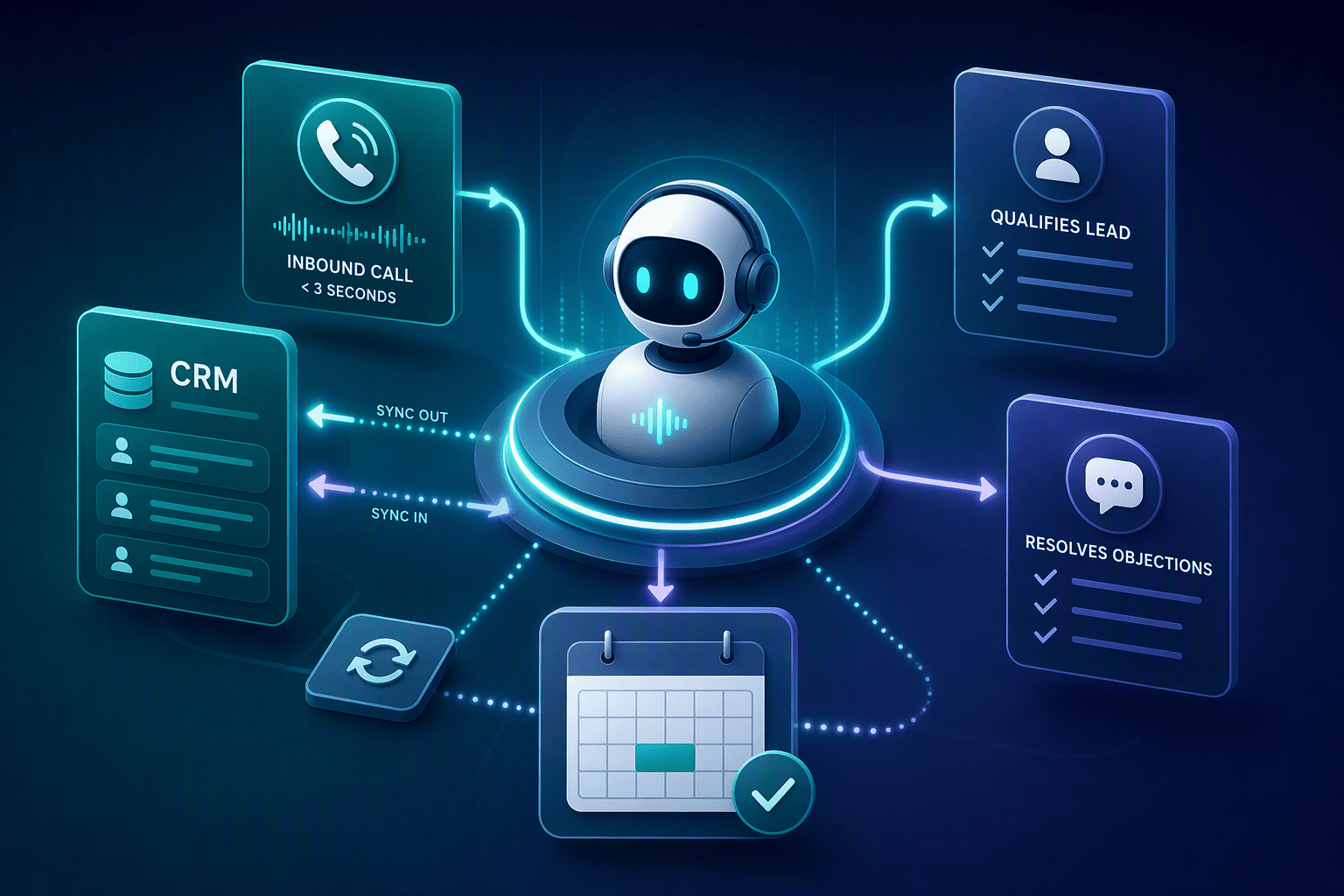
For small B2B teams in India ready to hand qualification over to an AI agent, EchoLeads deploys AI voice agents that answer inbound calls within 3 seconds and sync data bi-directionally with Salesforce, HubSpot, Pipedrive, and Zoho. This is not a click-to-call dialer for your reps. It is an autonomous agent that qualifies leads, handles objections, and books appointments directly into Google Calendar or Outlook while your team stays focused on high-intent conversations.
Key capabilities include customizable voice scripts, real-time sentiment analysis, and handoff triggers that escalate only when a conversation hits a configured complexity threshold, such as a specific keyword or a drop in sentiment score. The company offers pay-as-you-go rates starting at ₹4/minute, making the model accessible for teams that want to automate outreach without committing to a large seat-based license.
2. Ringee: The Open-Source Contender with Flat-Rate Team Pricing and Pay-Per-Use Minutes
The math behind Ringee is what makes it the top pick for a budget-first team. A 12-person team pays a flat $20 per month subscription compared to roughly $360 per month on a typical $30-per-seat tool, saving about $4,080 per year. That gap grows with every rep you add because the base cost stays flat at $20 for the entire team.
Ringee’s consumption model adds a per-minute rate from $0.012 with no long-term lock-in. You pay only for the talk time you use, which aligns your cost directly with your team’s activity.
The platform is open source under the MIT license, meaning a technically curious founder or a part-time developer can extend it without waiting for a vendor’s roadmap. AI extensibility comes via built-in hooks for Claude, ChatGPT, and a CLI interface.
Ringee is described as low-cost, pay-as-you-go outbound calling software designed explicitly for freelancers, SDR teams, recruiters, agencies, and startups. For a small B2B team that wants radical cost visibility and the freedom to tinker, it rewrites the economics of outbound calling.
3. JustCall: The Comprehensive SMB Suite Focused on Workflow Automation
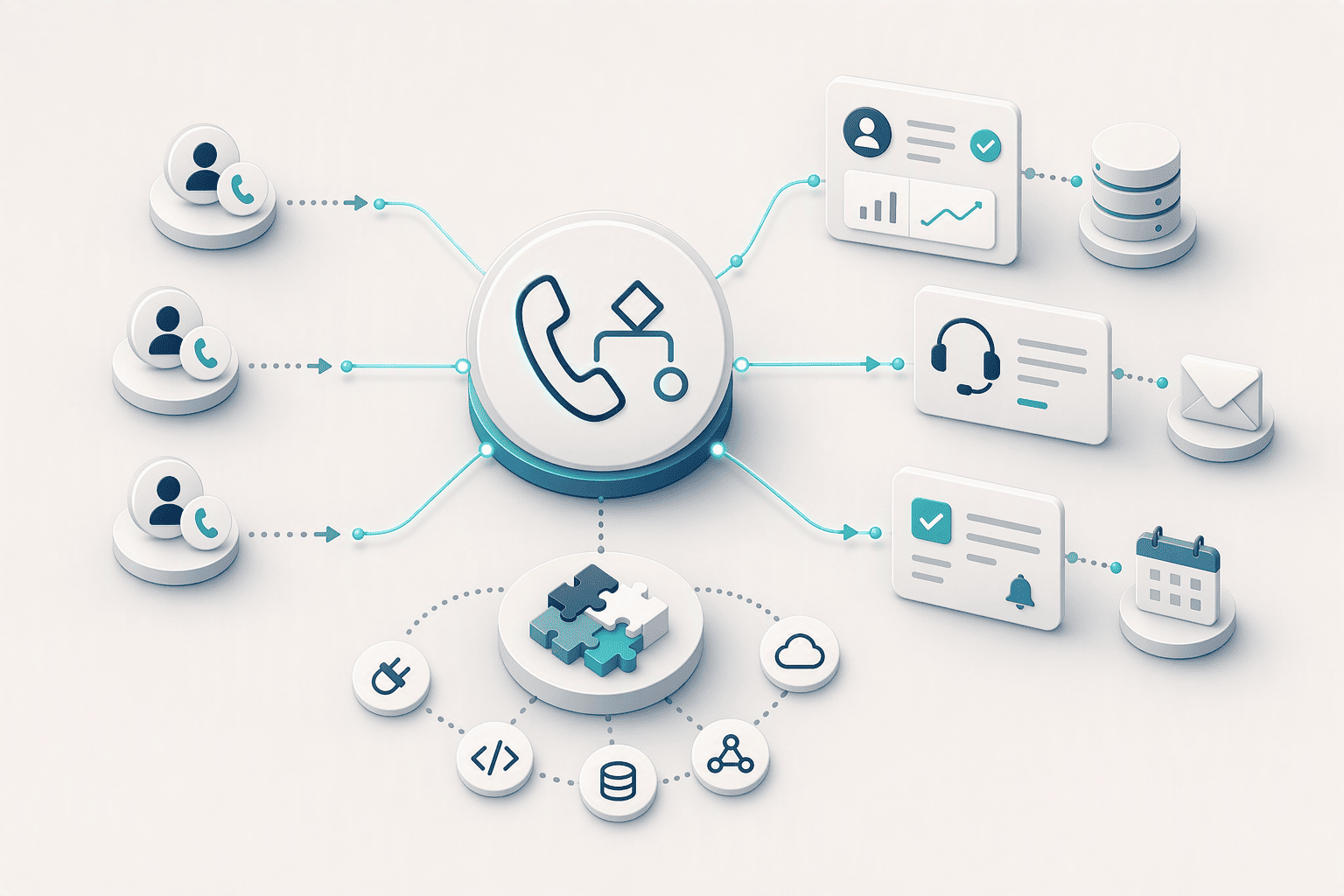
JustCall is the logical next step for a team that has grown past a simple dialer and needs a full communication suite. Published plans start at $29 per user/month, which is right at the industry benchmark the Ringee comparison uses. You are paying for breadth here.
Its core strength is workflow automation combined with an integration marketplace that covers CRMs, helpdesks, and productivity tools. The platform automates call logging and lead creation inside HubSpot. It uses the Calling SDK so calls appear in the Call Index Page, where your reps take real-time notes.
What you gain is a single pane of glass for calling, SMS, and basic campaign analytics. The trade-off is that you pay per user. JustCall fits teams that use all the channels more than teams that only need a dialer.
4. Aircall: The Enterprise-Ready Option Prioritizing Crystal-Clear Call Quality and Deep Integrations
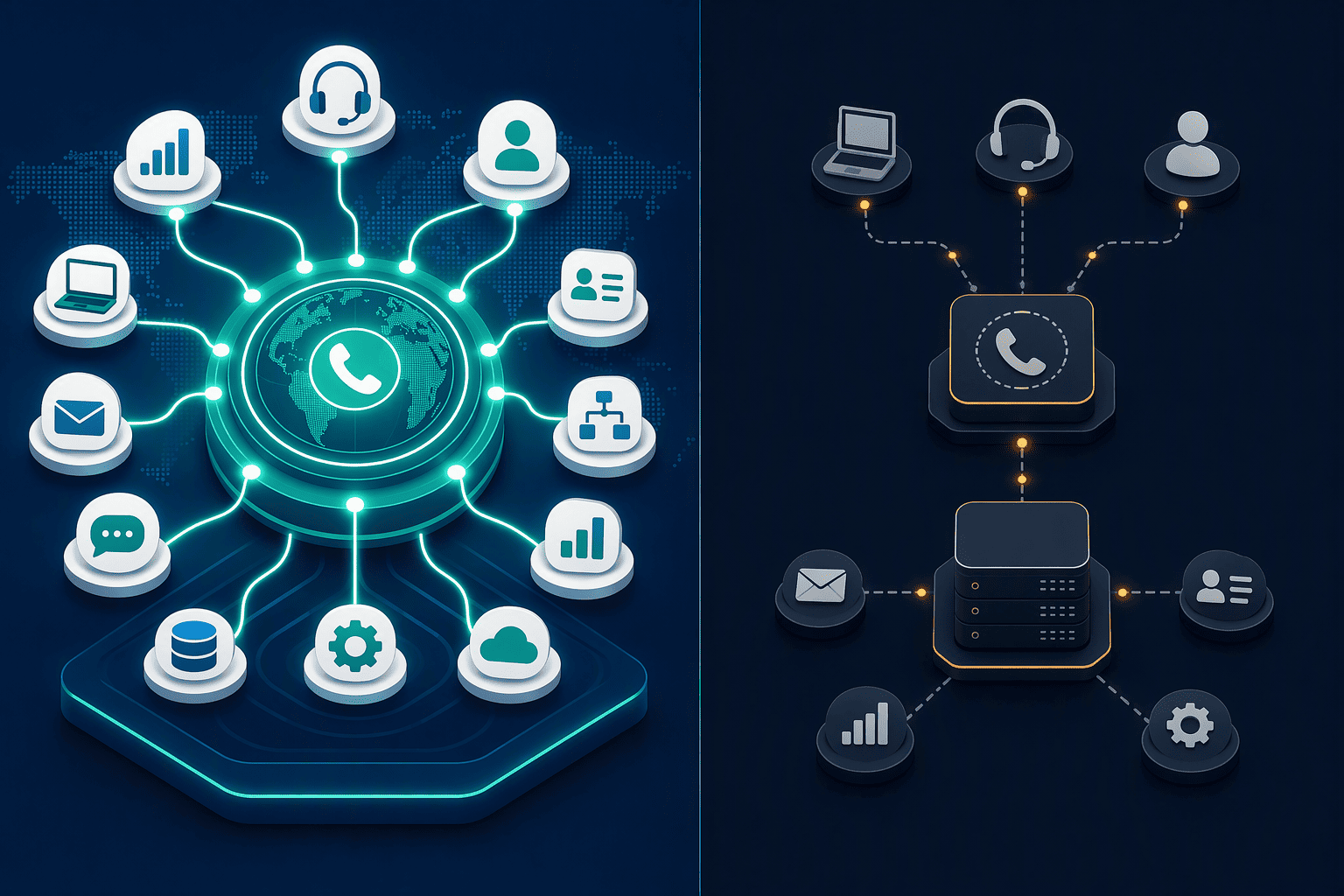
A small team that must sound like a large one weighs these dimensions carefully.
Aircall built its name on purpose-built voice infrastructure and more than 100 native integrations that log calls, contacts, and dispositions automatically.
Dimension | Aircall | Typical Third-Party Dialer via HubSpot SDK |
|---|---|---|
Call quality architecture | Purpose-built global voice infrastructure; optimized for clarity and uptime. | Dependent on the app’s own telephony backend; quality varies by provider. |
CRM integration depth | Over 100 native, maintained integrations that log calls, contacts, and dispositions automatically. | Requires developer configuration of `supportsInboundCalling` and `usesCallingWindow` fields; multi-step technical setup. |
Setup complexity | Managed deployment with admin console; non-developer setup. | Requires developer resources to configure Calling Extension settings and SDK events. |
Pricing model | Custom per-user pricing; positioned above SMB-only tools. | Varies; often per-user or consumption-based with upfront developer cost. |
Aircall fits a sub-10-person team scaling quickly into mid-market, where a dropped call on a high-value prospect is a cost the business won’t absorb. It makes less sense for a team running high-volume cold calls on tight margins.
5. CloudTalk: The Balanced Dialer for Insight-Driven Teams With Smart Analytics

CloudTalk appeals to the sales leader who runs weekly coaching sessions off the back of call data. Its analytics suite, real-time dashboards, and smart dialer features like the call flow designer turn outbound calling into a measurable system. Published plans start at €19 per user/month annually.
Real-time wallboards: Display team and individual performance metrics live, which is surprisingly useful for a small team sitting in the same room or on a shared Slack channel.
Smart dialer with call flow designer: Lets you build branching call scripts and set up lead prioritization rules so your team always dials the next-best lead.
Call recording and tagging: Enables granular quality assurance and makes it easy to pull examples for weekly training without digging through raw recordings.
HubSpot and Salesforce integrations: Log calls and dispositions automatically, drawing on the same Calling SDK standards that keep activity records clean and centrally audit-ready.
6. Fastcall: The Native Salesforce App for Zero-Integration Calling Inside the World's #1 CRM
If your small team lives inside Salesforce, Fastcall removes the biggest friction point in outbound calling: the integration itself. It is a native Salesforce app, not a third-party dialer that needs to be connected. Click-to-call, automatic activity logging, and screen pops with relevant records happen without leaving the Salesforce interface.
The alternative is a multi-step technical exercise that eats into your team's selling time. To get a third-party dialer logging calls correctly inside HubSpot, a developer must configure the Calling SDK, set `supportsInboundCalling` and `usesCallingWindow` fields based on a chosen UI approach, and manage user availability through `initialized`, `userAvailable`, or `userUnavailable` events. Fastcall skips that work for Salesforce-centric teams. A rep's existing CRM workspace becomes their dialer, no extra config required.
7. MyOperator: The India-Centric Platform Simplifying DND Management and Local Support
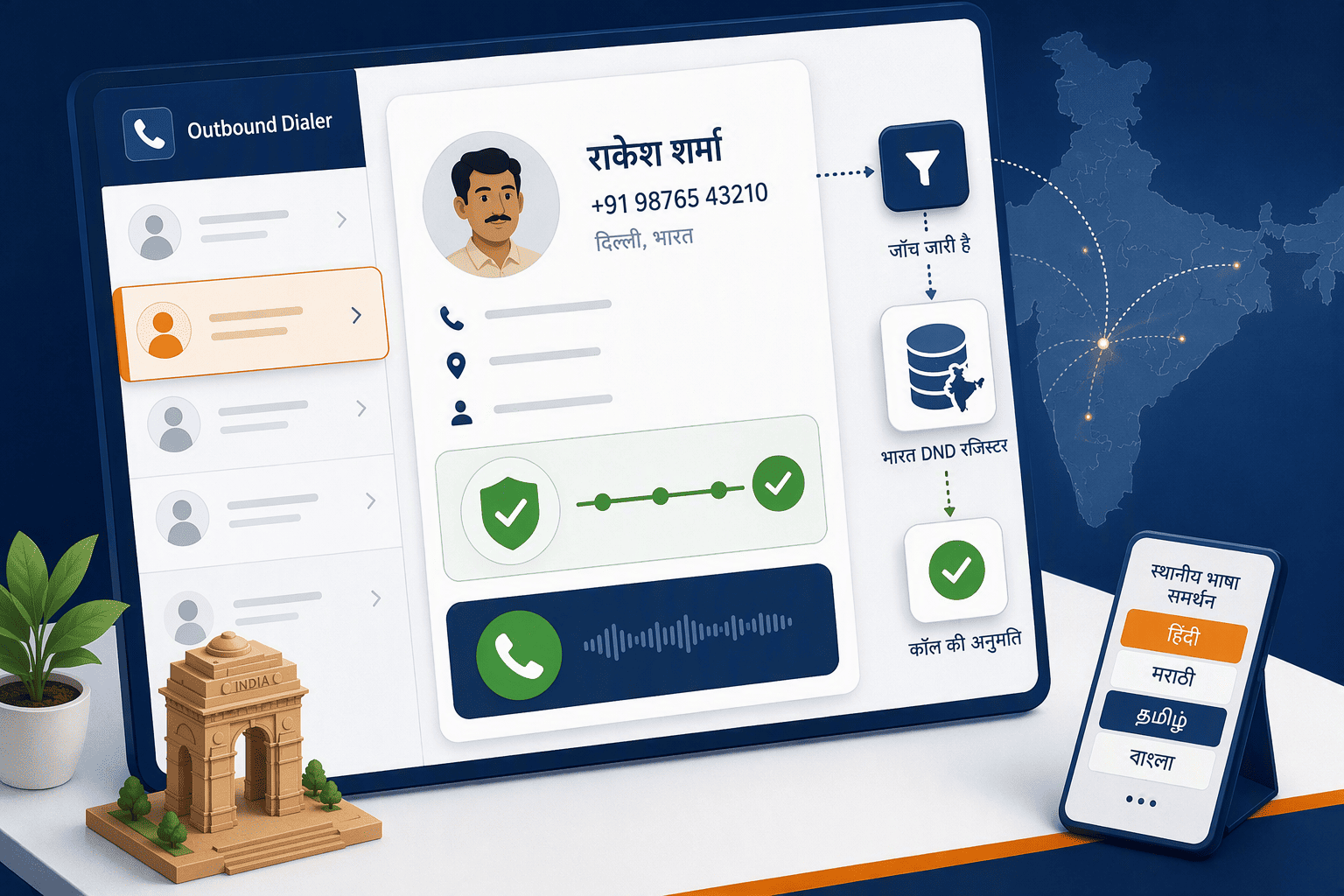
Outbound calling in India without a DND compliance strategy is a legal and reputational risk. India’s DND registry mandates that you scrub every contact list against the national database before dialing a single number. Doing this manually is error-prone and slow. MyOperator builds this scrubbing directly into the dialer workflow, so a rep cannot call a DND-registered number by accident.
Beyond compliance, the platform is built on Indian infrastructure and offers local-language support, which is valuable for a team whose own customers prefer Hindi, Telugu, or Tamil-speaking representatives. The combination of built-in DND management and local support resolves two operational headaches a generic North American or European dialer will not touch. For a B2B team dialing exclusively within India, that localized design can mean the difference between a smooth operation and a series of regulatory complaints.
Conclusion
The best outbound calling software for your sub-10-person B2B team is the one that removes your biggest constraint first. If budget pressure is the problem, Ringee's flat-rate model is the clear winner. If your team runs on Salesforce, Fastcall's zero-integration approach will save hours of developer time. For an India-based team ready to let AI handle qualification, EchoLeads offers a viable pay-as-you-go AI agent. Start a trial, run a pilot on one campaign, and measure call connection rates and CRM data quality before committing to a full rollout.
Frequently Asked Questions
What is outbound calling software and what core features should a small B2B team look for?
Outbound calling software is a tool that lets sales teams make calls over the internet, automatically log them in a CRM, and manage call workflows. Small B2B teams should prioritize CRM integration depth, transparent per-minute or flat-rate pricing, local compliance tools like DND scrubbing, and analytics that help coach reps.
What are the typical costs for outbound calling software in India, and how does per-minute pricing compare?
Costs vary widely. Ringee offers a flat $20 per team per month plus $0.012 per minute. JustCall starts around $29 per user per month. EchoLeads operates on pure consumption with pay-as-you-go rates starting at ₹4 per minute, and CloudTalk begins at approximately ₹1,660 per user monthly on an annual plan.
Which outbound calling platforms integrate best with popular CRMs like Salesforce and HubSpot?
Fastcall integrates natively with Salesforce, meaning no separate integration setup is required. EchoLeads offers bi-directional sync with Salesforce, HubSpot, Pipedrive, and Zoho. Most other platforms, like JustCall and CloudTalk, use the HubSpot Calling SDK or equivalent APIs to log calls and sync records.
What are the key compliance requirements (like TCPA and DNC) for outbound calling in India?
In India, the primary compliance obligation is scrubbing contact lists against the National Do Not Call (DNC) registry before making promotional calls. Platforms like MyOperator automate this within the dialer. Always ensure your provider supports consent recording and DND list integration to avoid regulatory penalties.
How do AI-powered voice agents compare to traditional auto-dialers for sales outreach?
A traditional auto-dialer automates the dialing and connects a human rep to a live answer. An AI voice agent, like EchoLeads’ platform, conducts the entire qualification conversation autonomously, handles objections, and books appointments, escalating to a human only when a conversation hits a configured complexity threshold.
What is the typical setup process and deployment time for a cloud-based outbound calling system?
Setup time ranges from instant to several days. Platforms with native CRM apps, like Fastcall for Salesforce, activate immediately. Tools requiring Calling SDK configuration need developer time to set up event handling and UI fields. Cloud-based platforms like EchoLeads offer instant deployment with no hardware requirement.
Related articles
How to Follow Up with Leads 24/7 When Your Sales Team Only Works Business Hours
Learn about sales automation that does round the clock follow ups while your team is only limited to business hours.
Why Your Indian Sales Team Can't Ignore Multi-Channel Automation Anymore
Learn why Indian sales teams can no longer ignore sales automation platform and how employing one can streamline lead qualification and conversion.
7 Platforms That Make Sales Calls and Book Meetings Automatically in 2026
Learn about the best AI calling agents that streamline sales automation enabling sales reps to handle large volumes of calls without missing a single lead.