
How Mumbai Developers Handle Inquiries with AI Voice Agents
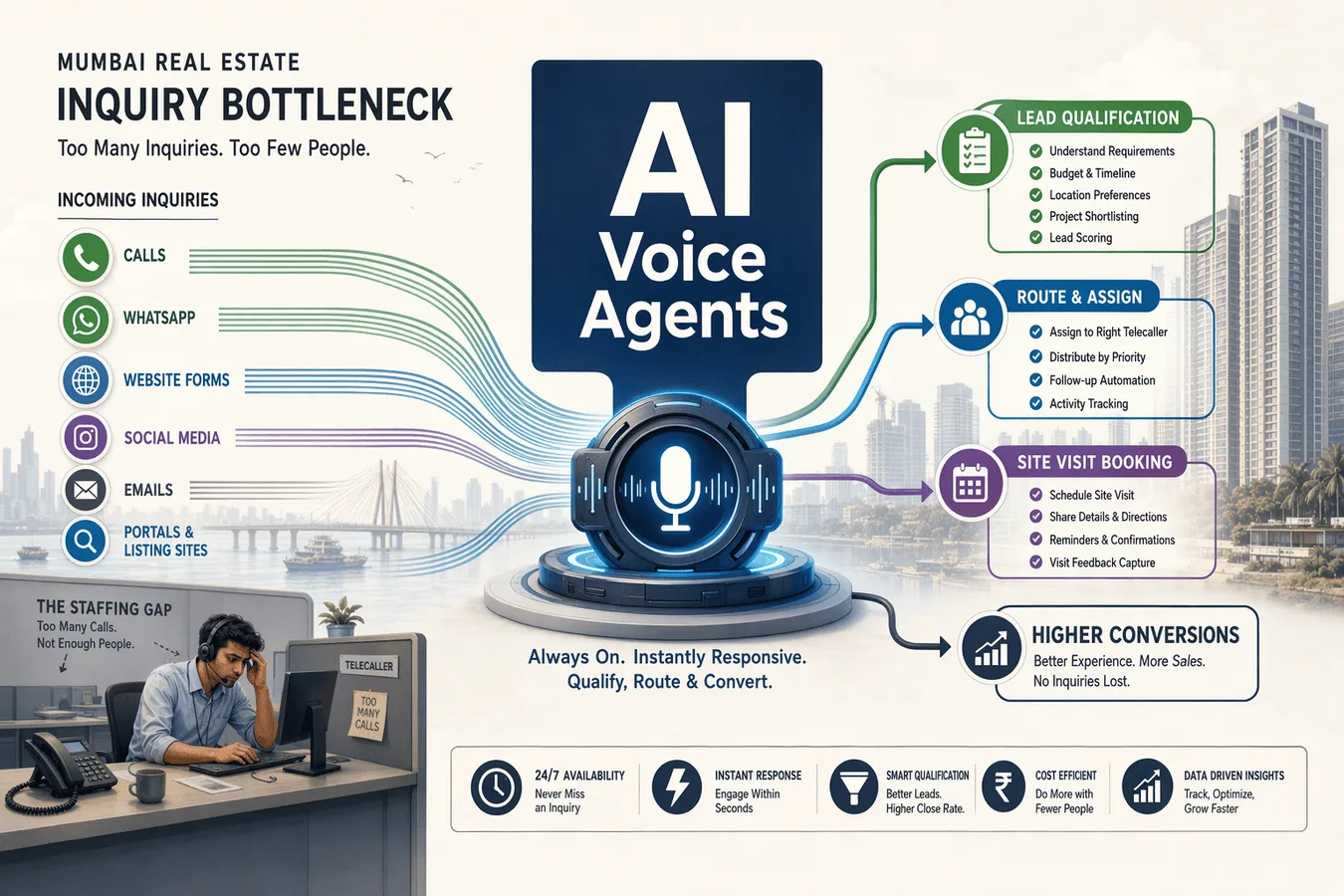
Mumbai real estate developers face a persistent challenge: property inquiries surge after business hours and on weekends, yet telecallers operate only during office hours. This availability gap causes lead leakage and revenue loss.
AI voice agents solve this bottleneck by automating inquiry capture, lead qualification, site visit booking, and CRM handoff—operating 24/7 across WhatsApp, website, and phone channels.
Key Takeaways
AI voice agents provide 24/7 property inquiry handling across WhatsApp, website chat, and inbound calls—eliminating the availability gap that causes lead leakage outside business hours
The four-stage workflow—capture, qualify, book, route—automates lead intake through conversational scripts in Hindi, Marathi, and English with automatic language detection
Site visit booking integrates directly with Google Calendar and Outlook to verify availability, offer slots, and send automated SMS or WhatsApp confirmations with reschedule links
High-intent leads route to sales teams via bi-directional CRM sync that writes qualification scores, conversation transcripts, and next-action flags to Salesforce or Zoho in real time
Developers track four core KPIs, qualification rate, booking conversion rate, average handle time, and escalation rate, through real-time dashboards segmented by language, channel, and sales rep
Mumbai developers can handle thousands of property inquiries without hiring more telecallers by deploying AI voice agents that operate 24/7 and respond within seconds, solving the availability gap that causes most lead leakage. Yet most developers still rely on human telecallers constrained by office hours, creating three structural bottlenecks.
The Working-Hour Call Miss Problem
Buyers browse properties after 6 PM and on weekends, but telecallers operate 9 to 6 on weekdays. This mismatch creates inquiry-to-response gaps of 12+ hours. When a lead arrives at 8 PM, the buyer has often contacted three other projects by morning. Real estate CRM platforms track these misses, but telecaller availability remains the binding constraint.
Telecaller Capacity Constraints
Hiring more telecallers increases fixed costs without solving the 24/7 coverage gap. A telecaller handles 40 to 60 calls per day; scaling to 200 inquiries daily requires 4 to 5 hires plus overhead. Yet night and weekend inquiries still go unanswered, and multi-language support (Marathi, Hindi, English) multiplies staffing needs further.
Lead Leakage Across Channels
Inquiries arrive via WhatsApp, website chat, and phone calls, but manual routing causes delays. A lead captured on a property portal at 11 PM sits unqualified until the next business day. Without structured follow-up cadences, only 10 to 15% of teams attempt more than two follow-ups, yet most bookings happen after Day 7. This process gap, not team effort, drives conversion loss.
To address the telecaller capacity constraint, Mumbai developers deploy AI voice agents that execute a standardized four-stage workflow for every property inquiry.
How AI Voice Agents Handle Property Inquiries (The Four-Stage Workflow)
The End-to-End Workflow Overview
AI voice agents execute property inquiry workflows through four distinct stages:
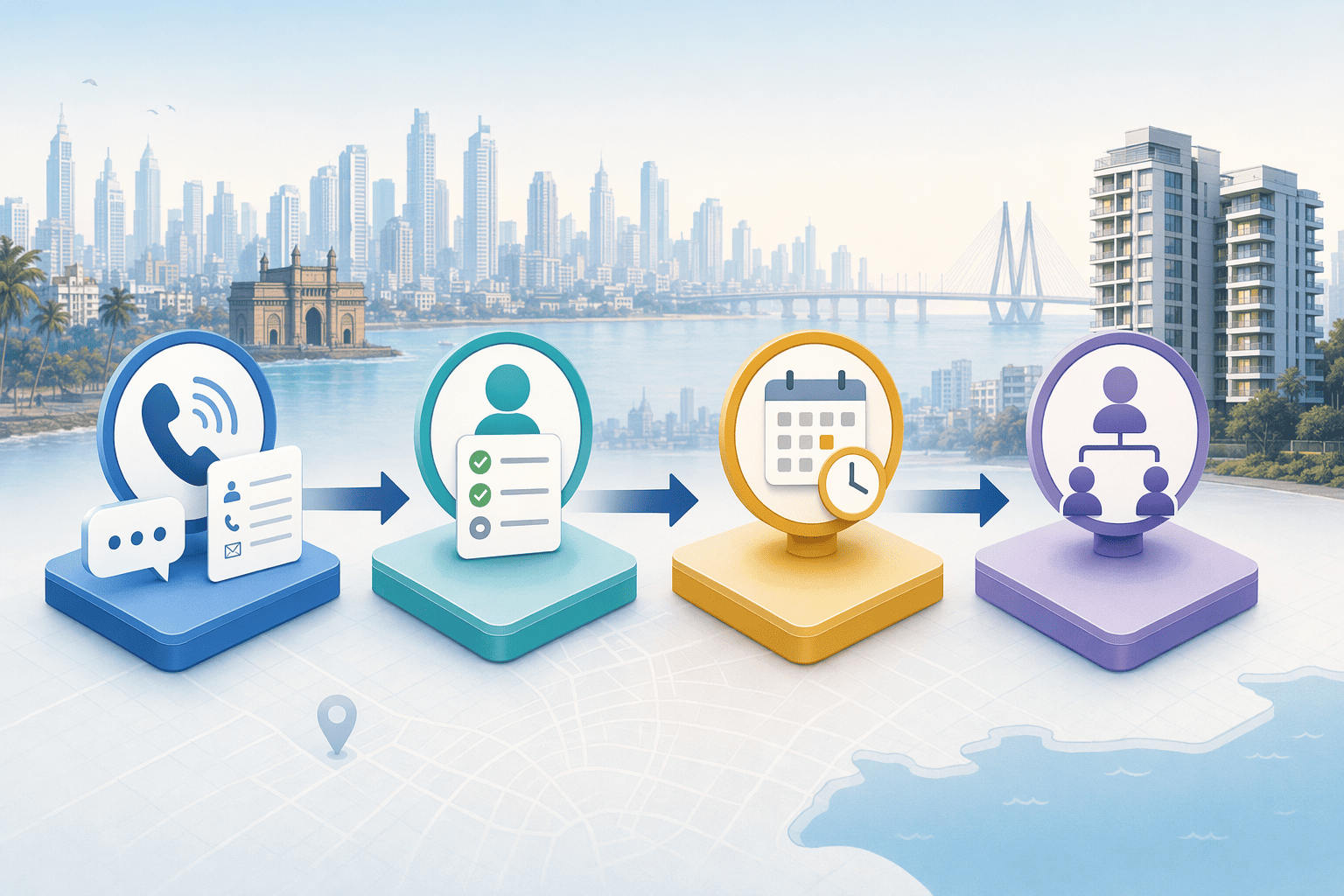
Capture, The system answers inbound calls or initiates outbound contact within seconds of a lead registering interest through ads, website forms, or walk-in inquiries.
Qualify, Natural language processing collects structured data on budget, location preference, configuration, timeline, and buying authority during a conversational interaction.
Book, The agent checks calendar availability in real time and schedules site visits, callback appointments, or demo walkthroughs without requiring human intervention.
Route, High-intent leads are escalated to human sales teams with full conversation context, while lower-priority inquiries enter automated follow-up sequences.
Why This Workflow Matters for Mumbai Developers
This four-stage framework directly addresses the operational constraints outlined earlier: the system provides 24/7 availability for capture and qualification, eliminates the capacity bottleneck through concurrent processing, and prevents channel leakage by routing leads to the appropriate next step without manual handoffs. Platforms process thousands of concurrent booking requests across phone, WhatsApp, and web chat, removing the structural dependency on telecaller headcount that creates inquiry backlogs.
Platform Agnostic vs Vendor-Specific Implementations
The capture-qualify-book-route workflow is a category standard, platforms like EchoLeads, AI YUKT, and Botsense implement it with varying feature depth and pricing models. Real estate implementations differ in how many concurrent calls they support, which CRM systems they integrate with natively, and whether booking logic handles round-robin distribution or fixed-assignment routing, but the underlying workflow architecture remains consistent across vendors.
The first stage of the workflow establishes a unified intake layer that routes inquiries from all channels to a single AI agent.
Step 1: Capture Inquiries Across Channels (WhatsApp, Website, Calls)
WhatsApp Business API Integration
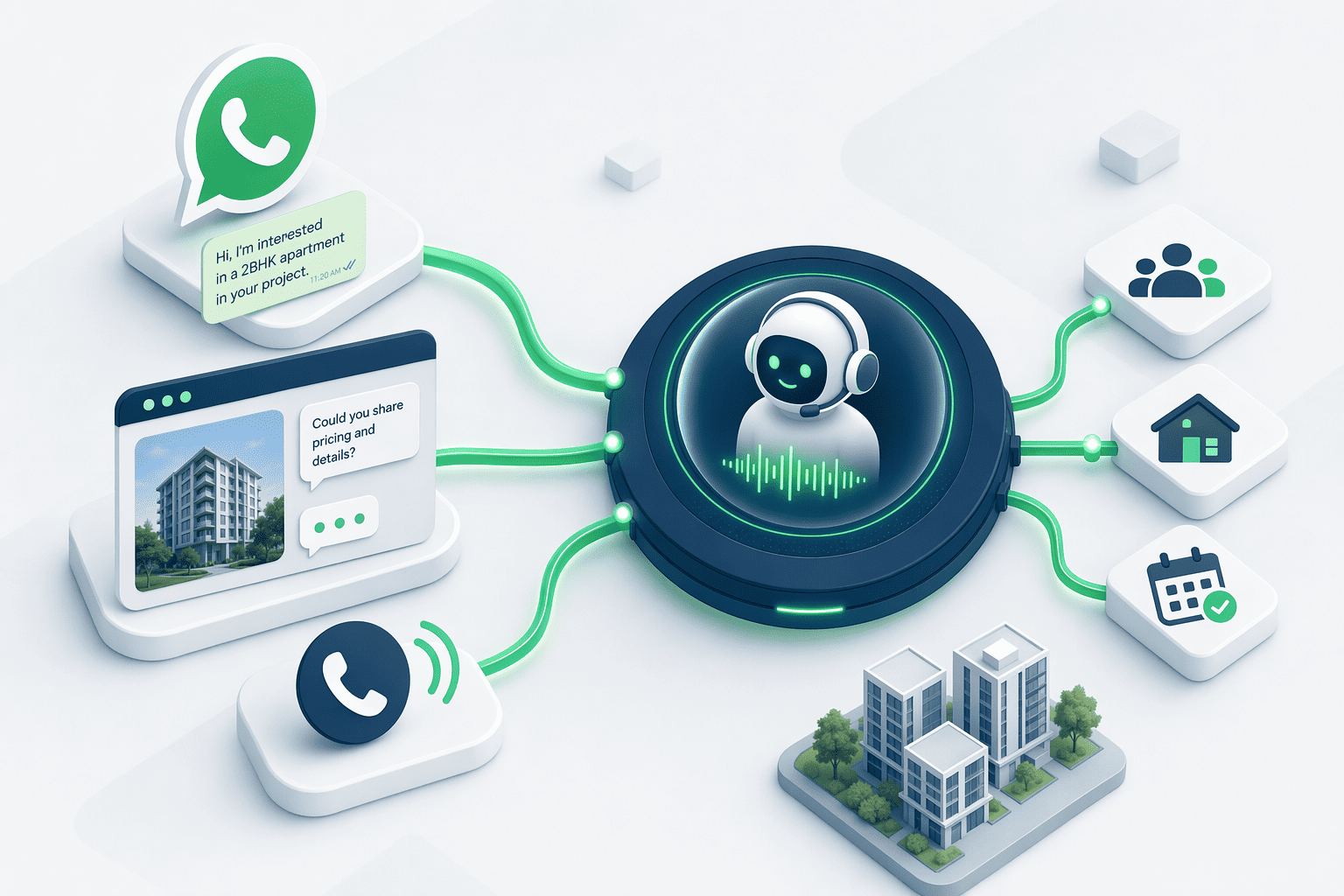
AI voice agents connect to WhatsApp Business API to receive property inquiries as inbound messages. Setup requires a Meta-approved API provider; once configured, the agent responds with conversational scripts that qualify budget, location, and timeline within seconds.
Website Chat and Telephony Capture
Website chat widgets and inbound phone calls route to the same AI agent, ensuring consistent qualification logic regardless of channel. This unified intake eliminates manual channel-switching, leads from website forms, telephony, and messaging all flow into one workflow.
No-Code Setup and API Configuration
Platforms like EchoLeads provide no-code connectors for WhatsApp, website embed scripts, and telephony APIs, no engineering required. Setup typically completes in hours, not weeks, allowing developers to deploy multi-channel inquiry capture without custom integration work.
Once the inquiry is captured, the agent moves to qualification, extracting budget, timeline, location preference, and property type through natural-language conversation.
Step 2: Qualify Leads with Conversational AI Scripts
The Four Qualification Questions
AI agents extract four core qualification fields that determine whether a lead routes to sales or nurture:

Budget range, the buyer's comfortable investment level (e.g., ₹50 lakh, ₹1 crore).
Purchase timeline, when the buyer plans to close (within 3 months, 6 months, next year).
Preferred location or neighborhood, specific areas like Andheri, Bandra, Thane.
Property type, configuration (1BHK, 2BHK, 3BHK) or commercial vs. Residential.
Conversational Script Design
Instead of rigid IVR menus, agents use natural-language prompts, "What's your comfortable budget for a 2BHK in Andheri?", that let buyers respond in their own words. The platform calls every new lead within seconds of inquiry and qualifies the lead using conversational intelligence, adapting follow-up questions based on each answer. Research shows leads contacted within 5 minutes are 9 times more likely to convert.
Qualification Scoring and CRM Handoff
Once the conversation completes, the agent assigns a qualification score based on budget alignment, timeline urgency, and location fit. EchoLeads retains the conversation history and escalates transcripts and context to a human sales representative when needed, and businesses can configure handoff triggers based on conversation keywords, sentiment scores, or explicit prospect requests. The transcript, score, and next-action flag, schedule site visit, re-engage in 30 days, route to high-value queue, flow into the CRM automatically, giving sales teams full visibility without manual logging.
Qualified leads progress to the booking stage, where the agent checks calendar availability and schedules site visits without human intervention.
Step 3: Automate Site Visit Booking and Calendar Sync
Calendar Integration Mechanics
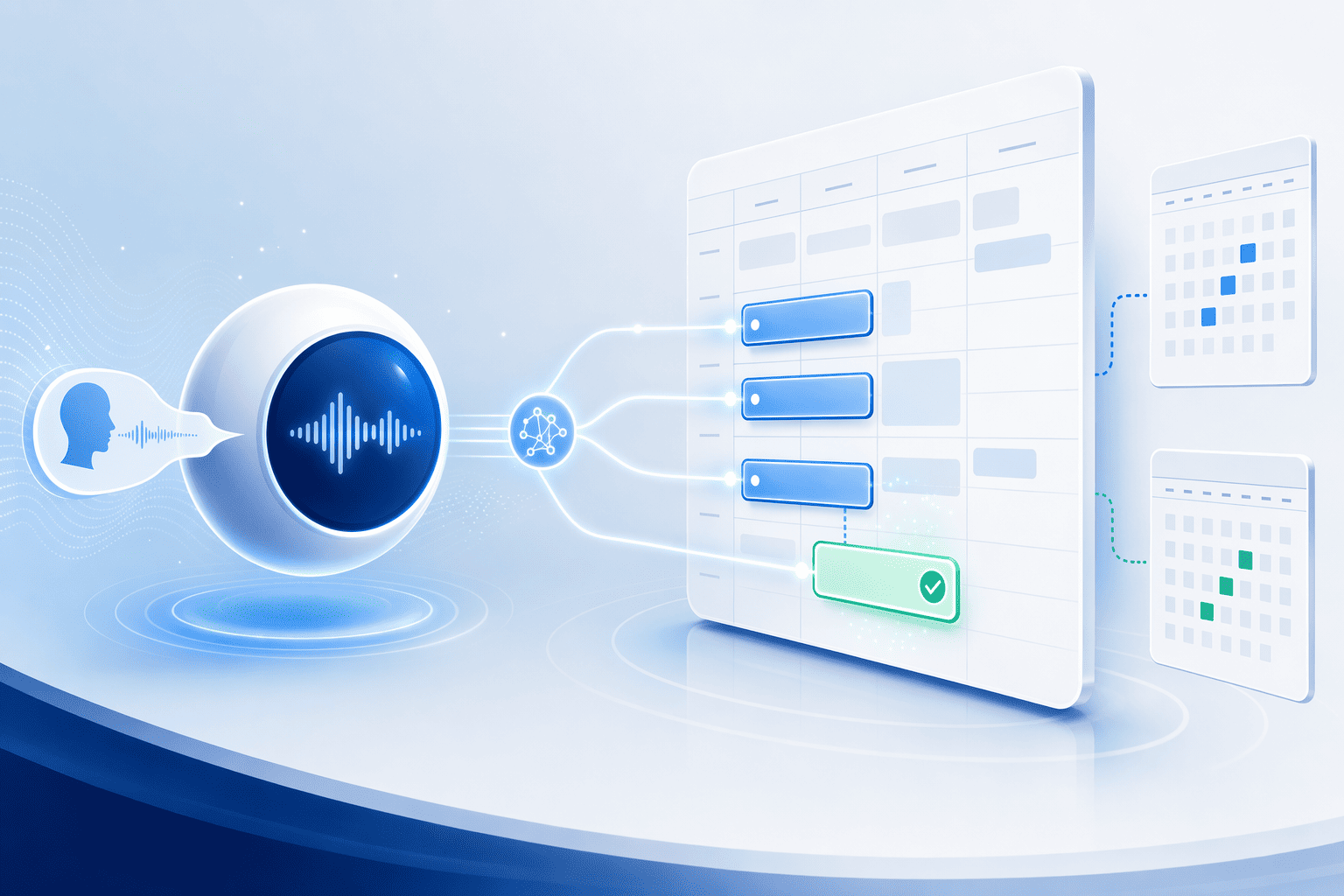
AI calling platforms connect directly to Google Calendar, Outlook, or CRM-based schedulers to verify slot availability in real time. When a buyer expresses interest, the agent queries the sales rep's calendar, identifies open time blocks, and offers 2 to 3 options during the conversation. This eliminates the phone-tag cycle that causes millions of dollars in marketing spend to generate leads that slip away because scheduling is too slow and cumbersome.
SMS and WhatsApp Confirmation Workflow
Once the buyer selects a slot, the agent sends an automated confirmation via SMS or WhatsApp containing date, time, location, sales rep contact, and a one-click reschedule link. EchoLeads processes concurrent booking requests across phone, WhatsApp, and web chat with bi-directional CRM sync, ensuring the sales team sees every confirmed visit instantly.
Handling Reschedules and No-Shows
The agent monitors reschedule requests through the confirmation link or follow-up messages. When a buyer misses a visit, the system triggers a WhatsApp check-in within 30 minutes, offers alternative slots, and flags repeated no-shows for human review. This automated follow-up recovers interest that manual processes lose.
The final stage routes high-intent leads to sales teams through automated CRM handoff, ensuring no qualified inquiry waits for manual follow-up.
Step 4: Route High-Intent Leads to Sales Teams
Qualification Score Thresholds
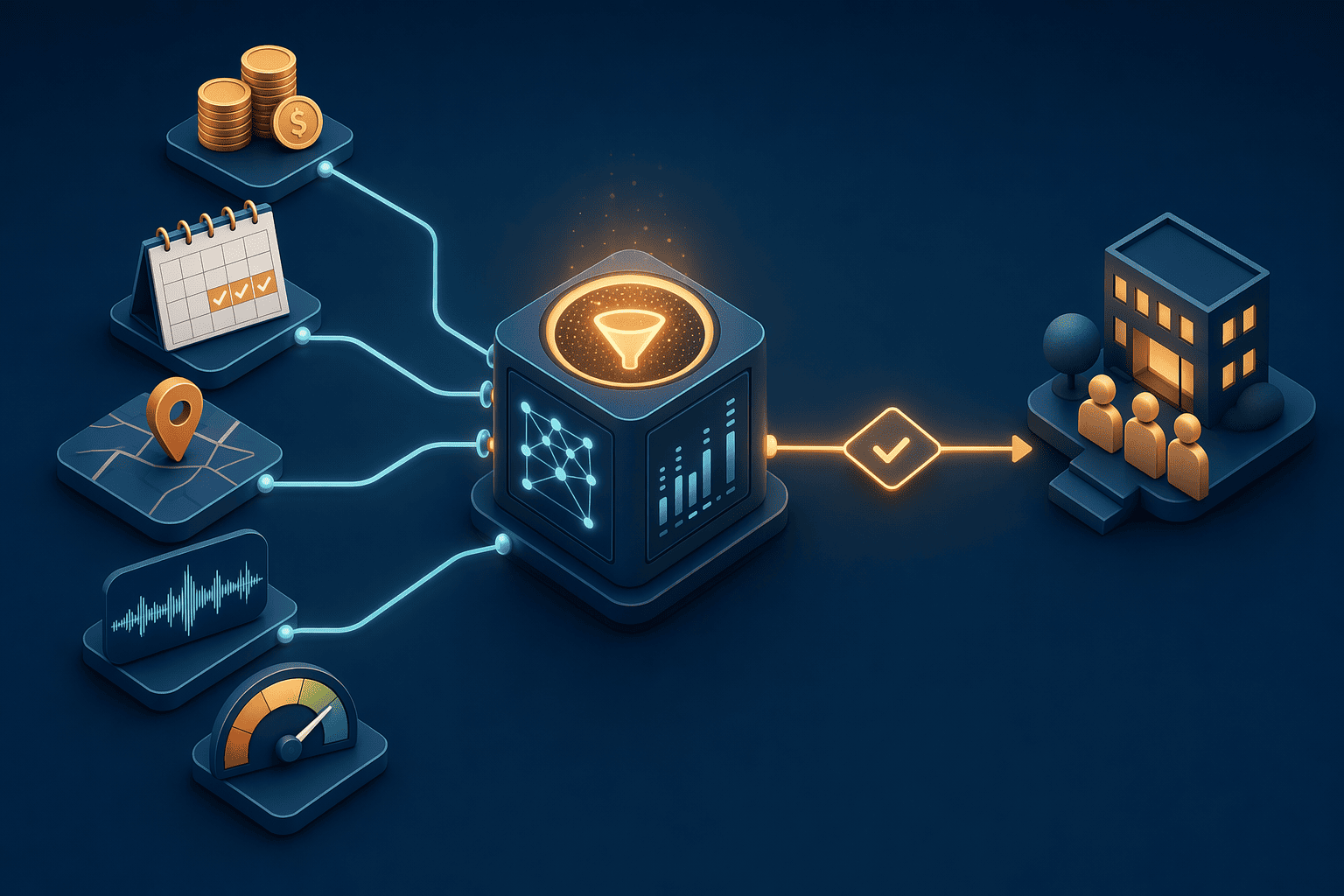
High-intent leads are identified by specific BANT criteria: budget confirmed, timeline under three months, and a site visit booked. A Mumbai luxury developer qualified leads in four conversational questions before routing to specialists. EchoLeads' smart lead scoring evaluates tone, urgency, keyword usage, and sentiment during live calls, assigning scores that map directly to routing rules.
CRM Handoff Workflow
EchoLeads writes qualification scores, conversation transcripts, and next-action flags to Salesforce or Zoho in real time through bi-directional sync. When a lead crosses the high-intent threshold, the CRM assigns ownership to the appropriate sales rep and triggers a notification with full conversation context. The rep sees budget, timeline, and preferred properties before the first human call. Mumbai agencies using Realatic use auto-capture from 99acres and MagicBricks, routing leads across Andheri, Bandra, and Thane.
Human Escalation Triggers
AI agents escalate to sales teams when:
Complex objections or multi-property comparisons arise
Emotional tone or sentiment scores exceed safe thresholds
Identity verification fails or document screening requires human review
Buyer requests explicit handoff to a specialist
Voice agents handle intake and qualification workflows, not final approval decisions, agents don't replace human judgment.
Mumbai's diverse buyer base requires agents to handle conversations in multiple languages, switching seamlessly between Hindi, Marathi, and English.
Multi-Language Support: Configuring Hindi, Marathi, and English
Language Configuration Steps
To handle Mumbai's multi-language buyer base, where customers may switch between Marathi, Hindi, Gujarati, and English mid-conversation, developers configure AI voice agents in four steps:
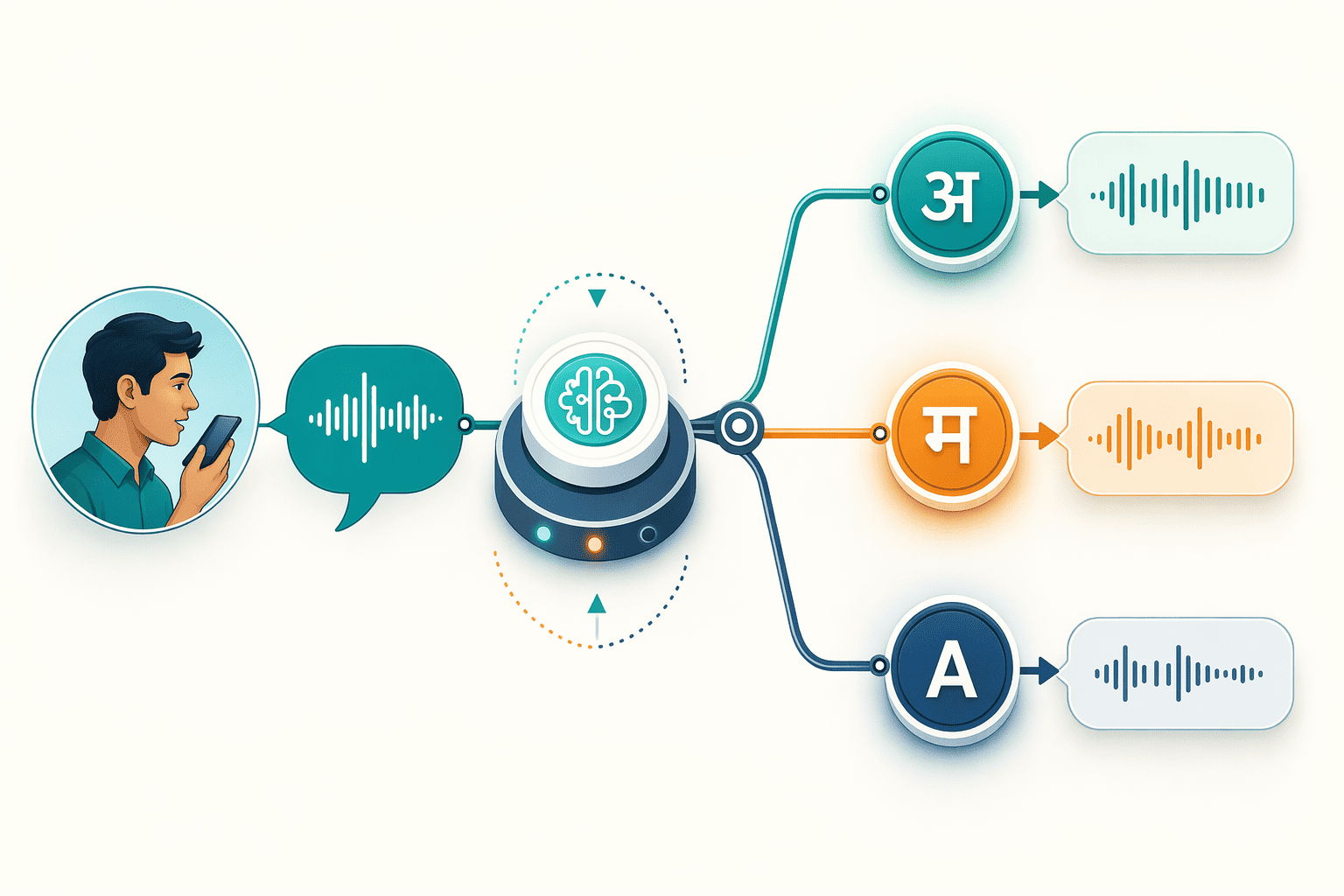
Set language detection rules: configure the agent to recognize Hindi, Marathi, and English input by voice signature or buyer profile metadata.
Script Hindi/Marathi prompts: draft conversation scripts for each language, ensuring property-specific vocabulary (budget, location, configuration) translates accurately.
Test with real buyer inquiries: run pilot tests using actual inbound leads to surface dialect errors before full deployment.
Configure fallback to human agents: define triggers (code-switching mid-sentence, unrecognized dialect) that escalate to live telecallers.
EchoLeads supports Hindi, Marathi, and English with automatic language detection as part of its 70+ language portfolio, but like all vendors, published dialect accuracy benchmarks are unavailable; pilot testing is required.
Dialect Accuracy and Vendor Benchmarks
Published accuracy benchmarks for Hindi and Marathi dialects are scarce across the industry. ASR error rates above 10% destroy conversion, yet no platform publishes region-specific dialect performance. Developers should run pilot campaigns with 50-100 real inquiries to measure hang-up rates and qualification accuracy before scaling.
Fallback to Human Agents
Language complexity triggers human escalation when the AI detects code-switching (Hindi to English mid-sentence), unrecognized regional phrases, or repeated clarification requests. Configure fallback rules to route these calls to bilingual telecallers within 5 seconds to preserve buyer engagement.
Measuring Success: KPIs for AI Calling Agent Performance
Core Performance Metrics
Mumbai developers track four primary KPIs to measure AI agent effectiveness:
Qualification rate, percentage of inbound calls where the agent successfully captures budget, location, and timeline requirements
Booking conversion rate, proportion of qualified leads who agree to a site visit or callback appointment
Average handle time, how quickly the agent completes a qualification workflow without rushing the prospect
Escalation rate, frequency with which conversations require human intervention due to complex objections or buyer intent signals
Real-Time Insights Dashboards
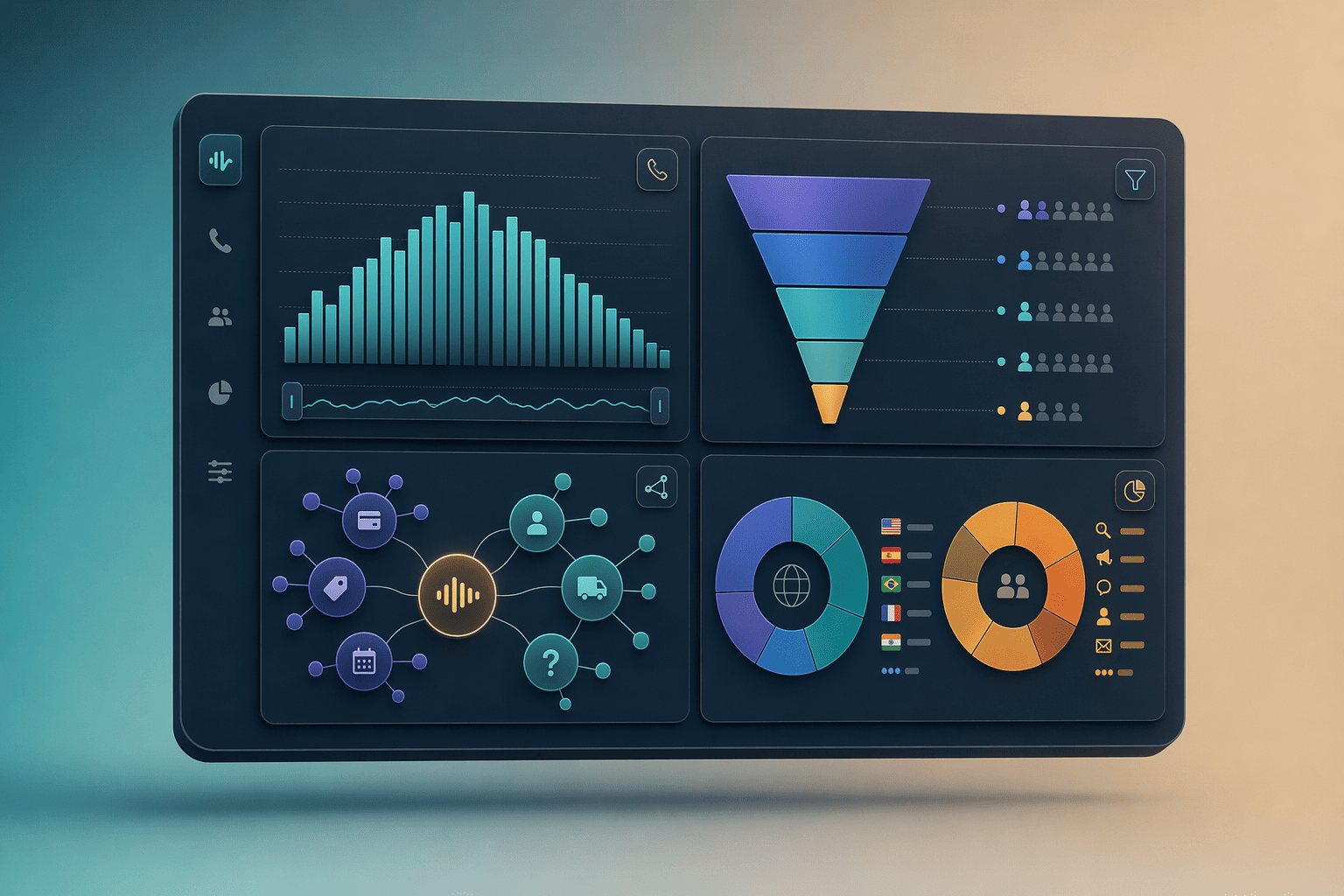
EchoLeads provides detailed analytics on conversation flow, objection patterns, and conversion drop-off points, with real-time insights delivered in a single automated dashboard. Sales managers monitor call volume spikes during campaign launches and drill down by language, property type, or lead source to identify bottlenecks in the qualification workflow.
Benchmarking and Continuous Improvement
Developers use KPI trends to refine scripts, adjust qualification thresholds, and optimize escalation triggers. When booking conversion dips below baseline, teams review conversation transcripts to identify friction points, perhaps budget questions arrive too early, or site-visit confirmation language feels abrupt. Iterative script adjustments informed by live analytics improve conversion rates by 10 to 15% over 30-day cycles.
Conclusion
Usage-based pricing models suit variable inquiry volumes better than flat-rate plans, but require baseline call volume estimates to budget accurately. Multi-language accuracy for Hindi and Marathi varies by vendor, and no platform publishes dialect-specific benchmarks, pilot testing with real buyer inquiries is required regardless of vendor.
As AI voice engines improve multi-language accuracy and CRM platforms add native AI agent connectors, the setup overhead for real estate developers will drop further. 2026 will see more mid-market developers adopting AI calling agents as a standard lead intake layer, not an experimental add-on.
Explore EchoLeads's pre-built conversational scripts and CRM integration options for Mumbai real estate developers, see deployment examples and multi-language configuration guides to accelerate your pilot.
Frequently Asked Questions
How much does an AI voice agent cost for real estate in Mumbai?
Usage-based pricing models charge per conversation or per minute rather than flat-rate or per-seat fees, making them suitable for variable inquiry volumes. Platforms like EchoLeads typically integrate with Google Calendar, Outlook, or CRM-based schedulers, but baseline call volume estimates are required to budget accurately.
Can AI voice agents handle Hindi and Marathi property inquiries?
Yes, platforms support Hindi, Marathi, and English with automatic language detection across 70+ languages. However, published dialect accuracy benchmarks are unavailable industry-wide, so pilot testing with real buyer inquiries is required to validate performance for Mumbai's linguistic variations.
When do AI agents escalate property inquiries to human sales teams?
Agents escalate when they encounter complex questions beyond their script, detect emotional tone requiring empathy, fail identity verification, or face multi-product comparisons. Escalation ensures human judgment handles nuanced situations while agents manage intake and qualification at scale.
How do AI voice agents integrate with real estate CRMs?
Bi-directional CRM sync writes qualification scores, conversation transcripts, and next-action flags to Salesforce or Zoho in real time. Sales reps see full conversation context before the first call, eliminating information loss during handoff and accelerating follow-up.
Do AI voice agents work 24/7 or only during business hours?
AI agents operate 24/7, responding to inquiries within seconds regardless of time or day. This solves the availability gap caused by buyers browsing properties after 6 PM and on weekends when telecallers are unavailable.
Can AI agents book site visits automatically?
Yes, agents check calendar availability in real time, offer 2 to 3 open slots during conversation, and send automated SMS or WhatsApp confirmations. The confirmation includes date, time, location, sales rep contact, and a one-click reschedule link.
What KPIs should developers track for AI voice agent performance?
Track four core metrics: qualification rate (percentage of inquiries converted to qualified leads), booking conversion rate (qualified leads who schedule site visits), average handle time, and escalation rate. Real-time dashboards segment these by language, channel, and sales rep for continuous optimization.
Related articles
6 Best AI Outbound Calling Solutions for Loan Verification
Compare AI outbound calling platforms that verify loan applications 24/7
5 Common Causes of Long Bank Loan Inquiry Call Wait Times
Why do bank customers complain about long wait times for loan inquiry calls? Learn the 5 Common Causes of Long Bank Loan Inquiry Call Wait Times.
4 Best AI Voice Lead Qualification Tools for Insurance
Compare AI voice platforms for insurance lead qualification through automated outbound calls.