
Automated Lead Qualification Software Over the Phone: Setup Guide (2026)
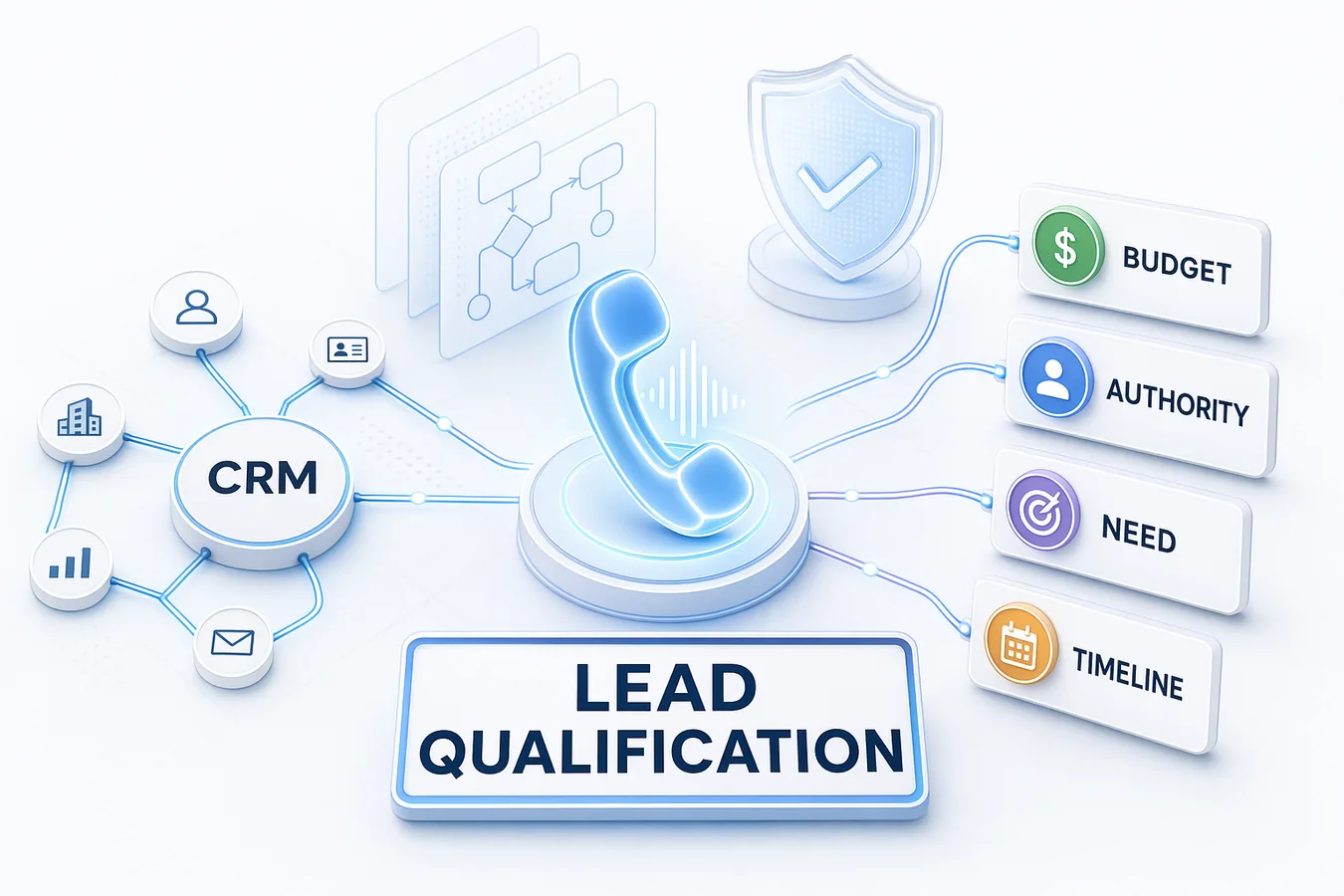
AI voice agents now qualify leads autonomously over the phone, capturing budget, authority, need, and timeline data while you sleep. Implementation success hinges on script design, CRM integration depth, and compliance-aware workflows—not just platform selection.
Key Takeaways
Automated phone qualification uses AI voice agents to ask structured questions, capture responses in real time, and update your CRM—operating 24/7 with sub-second latency
Qualification scripts require conditional logic that adapts questions based on prior CRM data and real-time answers to avoid redundant asks and improve completion rates
CRM integration paths include native connectors for major platforms, Zapier for 6000+ apps, and custom APIs—ensuring qualification data flows directly into pipeline records
Human handoff rules escalate high-intent conversations when speech confidence drops or prospects request pricing, preventing AI from handling judgment-call scenarios alone
TCPA compliance demands prior express written consent for outbound mobile calls; two-party consent states require recording disclosure before capturing audio
How Automated Phone Lead Qualification Works
Yes—AI voice agents qualify leads over the phone by asking structured questions, capturing responses in real time, and routing prospects to sales teams or calendar systems based on their answers. These agents handle the full qualification cycle autonomously, from initial contact through CRM update.
The Three-Phase Workflow: Call, Qualify, Route
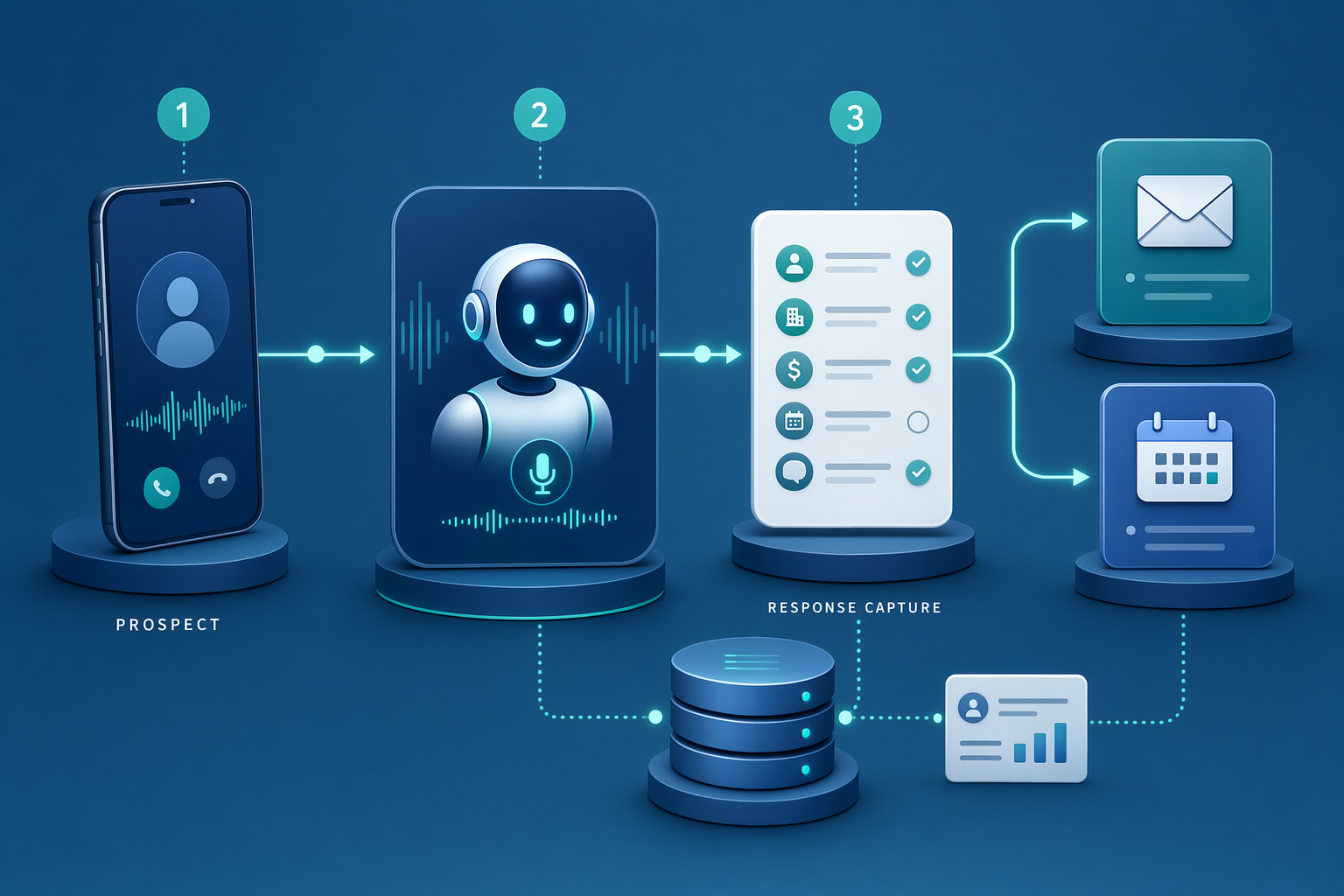
Automated phone qualification follows a three-step process that mirrors proven phone qualification methodology but executes without human intervention:
Call initiation: When a lead submits a form, clicks an ad, or triggers an inbound inquiry, the AI places an outbound call or answers the inbound within seconds, no queue, no hold music.
Qualification script: The agent asks budget, timeline, decision-making authority, and specific need questions tailored to your sales process. Leads are scored automatically based on their answers, identifying hot prospects versus nurture candidates in real time.
CRM/calendar routing: High-scoring leads are routed to your best salespeople with conversation context already logged; meeting-ready prospects trigger calendar invites; lower-priority leads enter follow-up sequences, all without manual handoff.
Speed-to-Lead: Why Automated Calling Outperforms Human Follow-Up
The qualification workflow above matters because speed determines conversion. Every inquiry gets a call back within 60 seconds when automated, compare that to the 4 to 6 hour average human response time in India's sales teams, where leads go cold while waiting for a rep to dial.
Research shows that waiting 30 minutes instead of 5 minutes drops conversion probability by up to 100×, automated calling eliminates that gap entirely. Systems like voice bots that respond within seconds deliver 3 to 5× improvement in lead-to-meeting conversion by ensuring no inquiry sits unattended while human reps finish other calls or work through a queue.
Once you understand the three-step qualification workflow, the next critical decision is what questions to ask, and in what order.
Designing Your Qualification Script and Call Flow
Thirty to sixty percent of inbound calls are missed or poorly handled, often because qualification questions are inconsistent or asked too late in the conversation. A structured script ensures every lead is evaluated against the same criteria, budget, authority, need, and timeline[1], so your team focuses only on high-quality prospects[1].
Mapping Qualification Questions to Your Sales Process
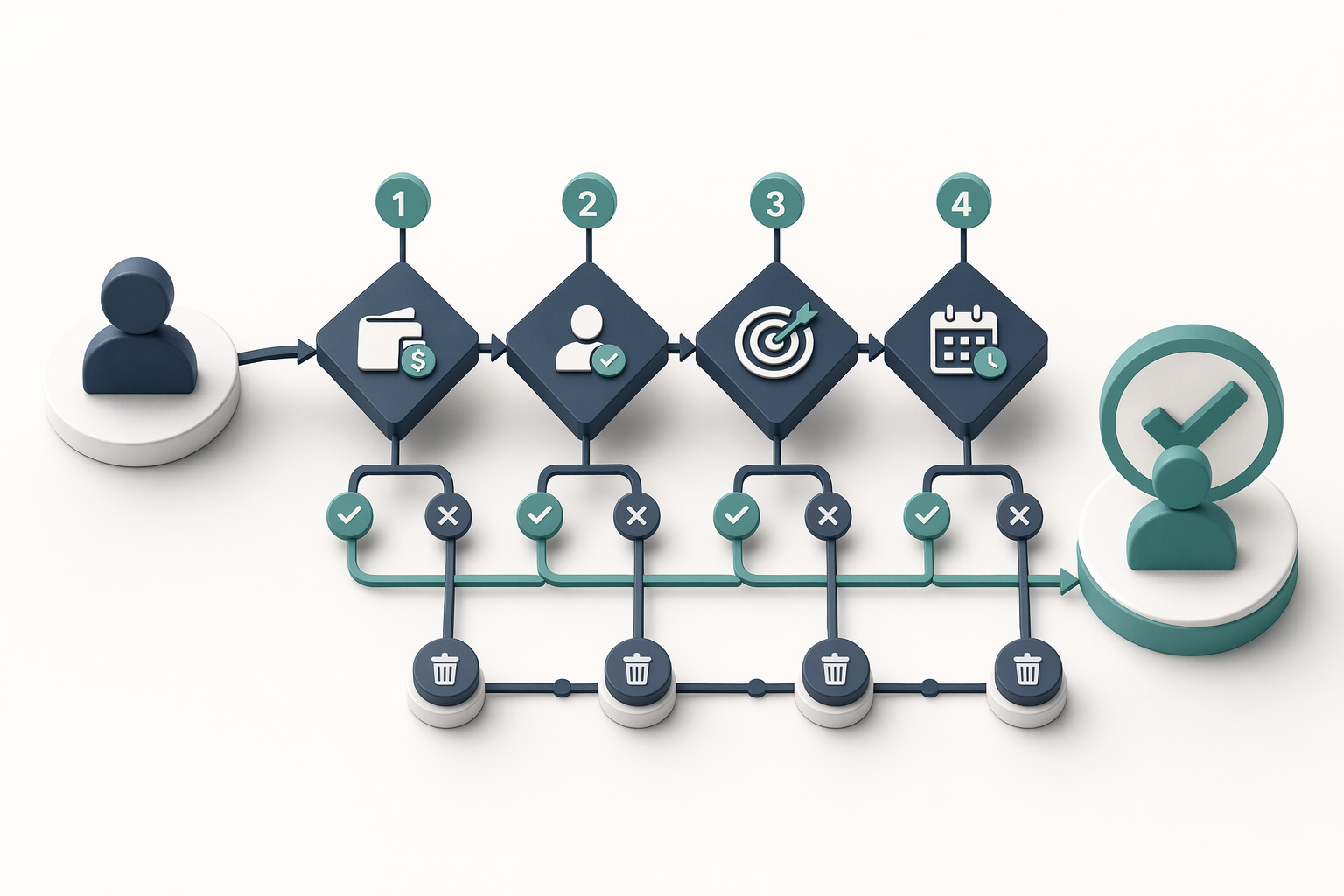
Start by identifying which qualification criteria map to which questions. For example, if your sales process requires a budget range, ask "What budget have you set aside for [category] this quarter?" To verify authority, ask "Are you the decision-maker for [category] purchases?" For need, ask "What specific challenge are you trying to solve?" For timeline, ask "When do you need a solution in place?" This one-to-one mapping ensures no criterion is skipped and every answer is captured into your CRM[1].
Conditional Logic and Adaptive Branching
AI voice agents can pull prior CRM data, lead source, past interaction history, or company size, to adapt the opening question or skip redundant asks. For instance, if the CRM shows the lead downloaded a pricing guide last week, the script can skip the budget-awareness question and jump straight to timeline. Use conditional logic to branch on each response: a "yes" to authority moves to timeline; a "no" triggers a question about who should be included in the next call.
Sample Qualification Call Flow with Prompts
Below is a 4-question script with branching paths for yes/no/maybe responses:
Budget: "Have you allocated a budget for [category] this quarter?" → Yes: proceed to Q2. No: "Would you like to explore financing options?" → Maybe: "I'll send you a pricing overview, when can I follow up?"
Authority: "Are you the final decision-maker for this purchase?" → Yes: proceed to Q3. No: "Who else should we include in the conversation?" → Maybe: "Let's schedule a call with your team next week."
Need: "What specific challenge are you trying to solve with [category]?" → Clear need: proceed to Q4. Unclear need: "Let me share a use-case guide, can we reconnect in three days?"
Timeline: "When do you need a solution in place?" → Within 30 days: book a demo immediately. 31 to 90 days: schedule a follow-up. 90+ days: enroll in a nurture sequence.
This flow ensures every lead is evaluated in seconds[1] and tagged with a priority score, so your sales team can focus on prospects ready to convert.
A well-designed script is useless if qualification data never reaches your sales team. Integration architecture determines whether AI insights drive action or sit stranded in call logs.
Integrating AI Voice Agents with Your CRM and Calendar
CRM Write-Back: Automatic Contact Creation and Field Updates
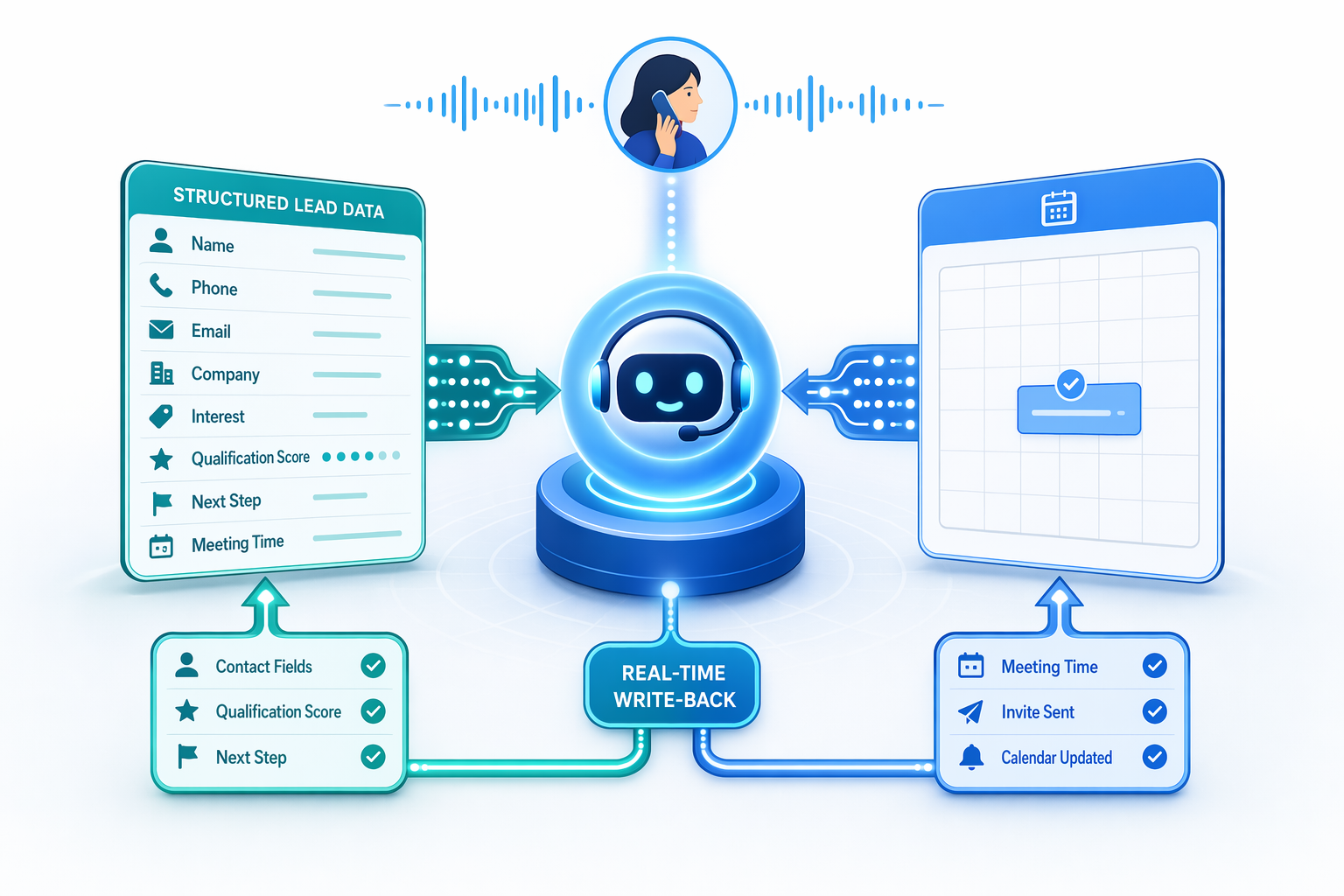
AI voice agents that qualify leads over the phone must write results back into your CRM, otherwise qualification data sits stranded in call transcripts. Platforms like Synthflow and VoiceInfra automate contact creation and field updates in Freshworks CRM during the call, eliminating manual data entry. EchoLeads provides autonomous CRM updates, synchronizing qualification scores, next steps, and opportunity stages based on prospect responses. This write-back layer transforms call outcomes into actionable pipeline records the moment the conversation ends.
Calendar Sync and Autonomous Meeting Booking
AI agents that handle simultaneous calling need real-time calendar visibility to book meetings without back-and-forth emails. EchoLeads integrates bi-directionally with Google Calendar, Outlook, and CRM-based schedulers, querying open slots and writing confirmed appointments during the conversation. The platform provides instant calendar integration, meeting confirmation, and CRM synchronization, reducing scheduling friction from days to seconds.
Integration Setup: Zapier, Native Connectors, and API Options
Three paths connect voice AI to your CRM: no-code platforms like Zapier support 6000+ apps for less-common CRMs; native integrations (Freshworks, HubSpot, Salesforce, Zoho) offer tighter field-mapping and lower latency; custom API builds suit enterprises with proprietary systems. Choose Zapier for speed and breadth, native connectors for simplicity and reliability, or APIs when compliance or data-residency requirements demand it.
Not every conversation belongs in the automation lane. Clear escalation rules ensure high-intent prospects reach human reps while routine qualification stays automated.
Setting Human Handoff and Escalation Rules
When to Escalate: High-Intent Signals and Sensitive Conversations
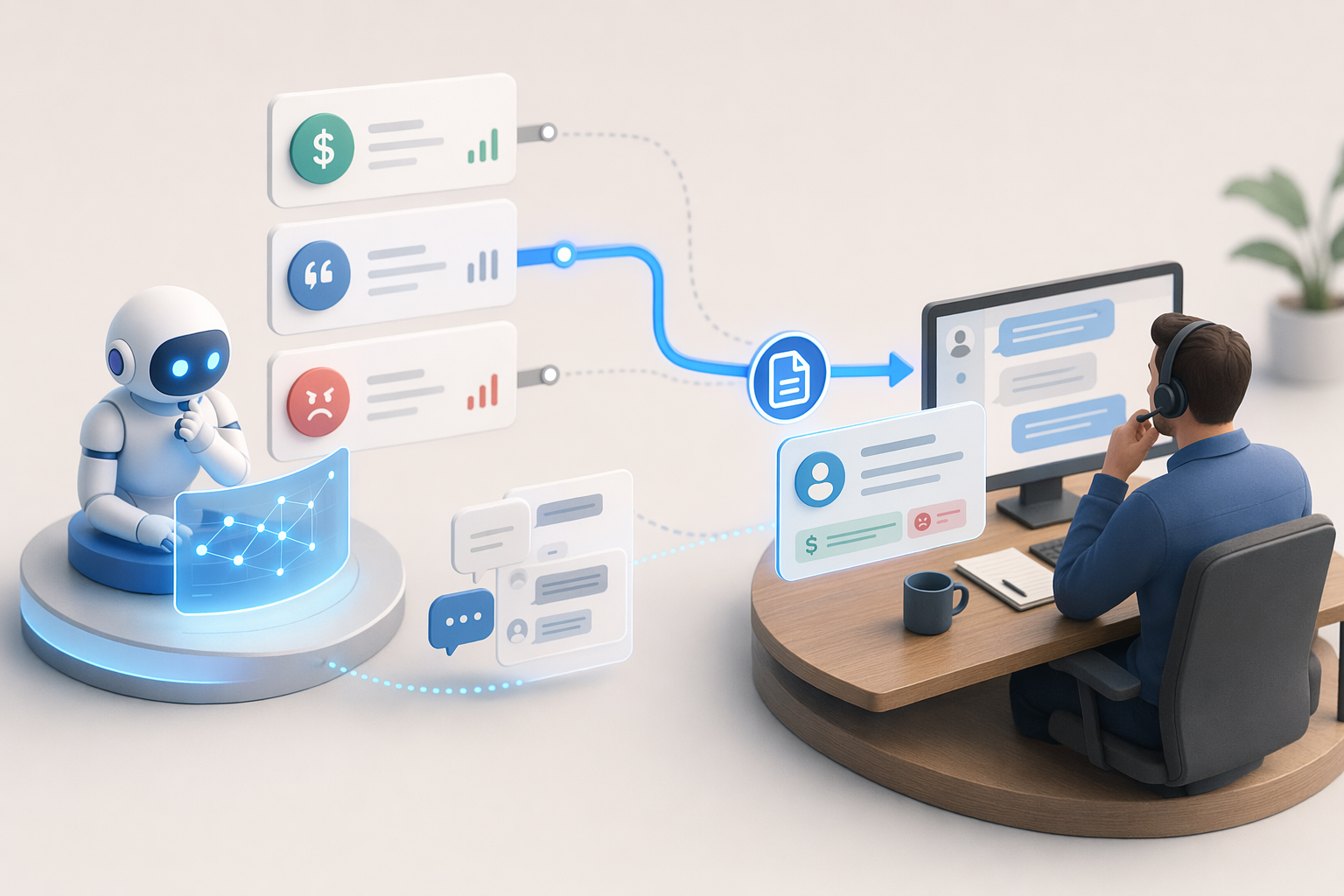
AI agents handle repetitive prospecting calls, but not every conversation belongs in the automation lane. Platforms escalate to human reps when prospects request pricing details, mention contract negotiation, or express frustration, high-intent signals that require judgment calls AI cannot safely make. EchoLeads configures handoff triggers based on conversation keywords, sentiment scores, or explicit prospect requests, routing qualified leads to human agents with full conversation context. Escalation is required for sensitive or complex discussions, not optional, the platform recognizes when complexity or compliance risk exceeds safe autonomy thresholds.
Confidence Thresholds and Review Queues
When speech-to-text confidence falls below a platform-defined threshold or the AI's response doesn't match expected qualification patterns, the lead moves into a human review queue before CRM commit. This quality gate prevents low-confidence transcriptions from polluting your pipeline with incorrect data. The handoff workflow varies: some platforms transfer the call live when a prospect says "I want to speak to a person," while others create a callback task for the next available rep. Integration depth matters here, platforms with 200+ tool integrations can route escalations through Slack, Teams, or CRM notification workflows, not just email alerts.
Before launching outbound campaigns, compliance requirements define what's legally permissible. Federal and state regulations create guardrails that every platform must respect.
Compliance Requirements for Automated Calling (TCPA, DNC, Recording Consent)
Automated lead qualification calls require strict adherence to federal and state regulations. Platforms like voicebot campaign systems enable businesses to reach hundreds or thousands of customers, but each call must comply with consent and opt-out rules before launching.
TCPA Compliance: Opt-In Consent vs. DNC-Only
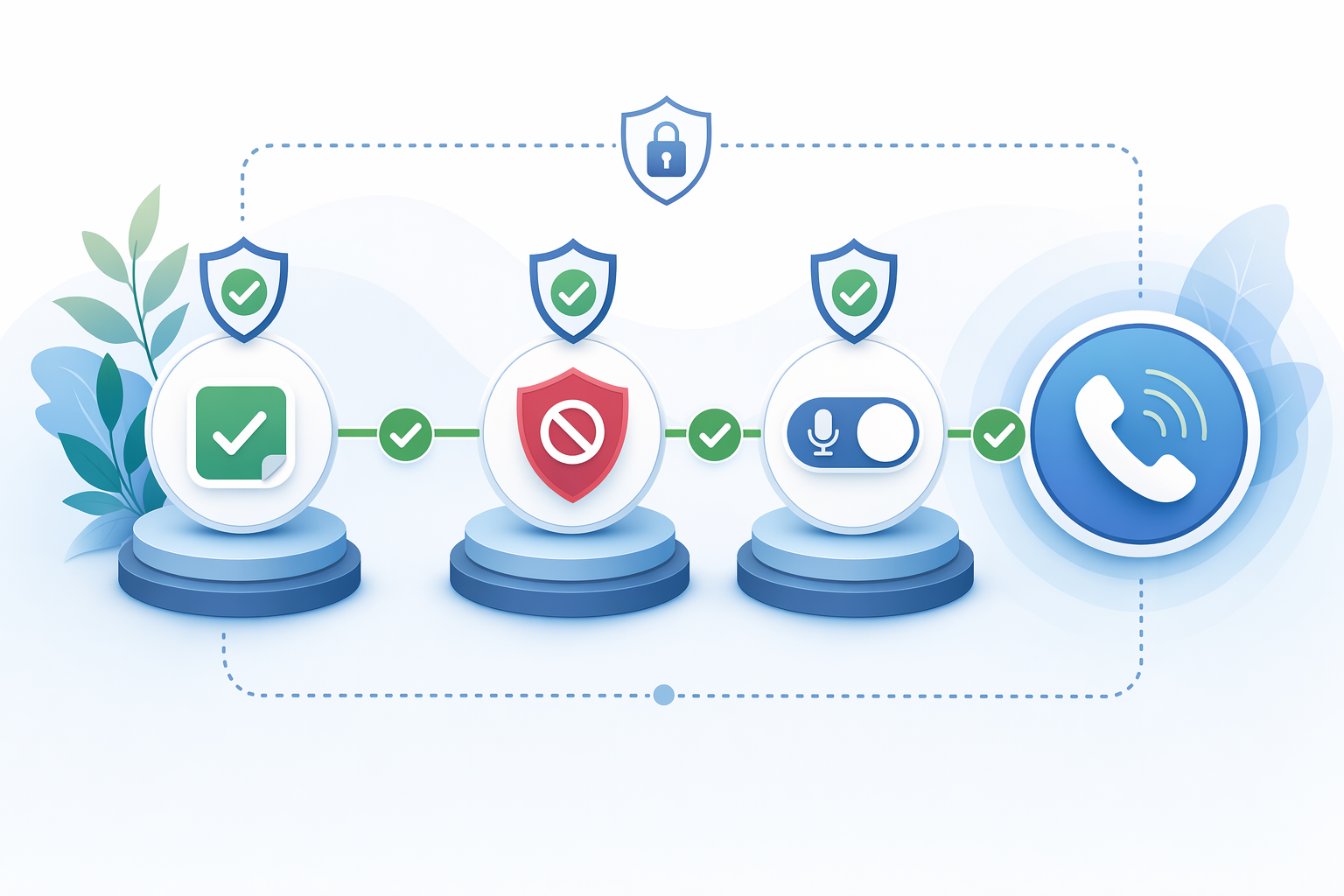
Outbound marketing calls to mobile numbers require prior express written consent under TCPA. Calls to existing business-relationship customers may only require DNC scrubbing, but the distinction hinges on context, consult legal counsel before launching campaigns. Platforms that include workflows with TCPA compliance help enforce these rules automatically.
Recording Consent and State-Specific Laws
Two-party consent states (California, Florida, Illinois, among others) require all parties to consent before recording. Automated systems must disclose recording at the call's start. Failure to disclose violates state wiretap statutes and exposes businesses to statutory damages.
DNC List Management and Scrubbing Workflows
Integrate national and state DNC lists into your call workflow before each campaign launch. Purpose-built platforms provide DNC integration and automatic opt-out handling, whereas generic automation tools often overlook these requirements. Verify scrubbing frequency, monthly updates are standard, and log all opt-out requests to demonstrate compliance during audits.
With compliance boundaries clear, platform selection comes down to four technical capabilities that separate production-ready tools from pilot experiments.
Comparing AI Voice Platforms for Lead Qualification
Evaluation Framework: Response Latency, CRM Sync, 24/7 Coverage, Language Support
When choosing an AI voice platform for automated lead qualification, four capabilities matter most: sub-second response latency (platforms like UnleashX deliver sub-700ms latency [1] and 98% human-like conversations), real-time CRM synchronization, always-on availability, and multilingual support. Together these dimensions determine whether a platform merely logs calls or autonomously qualifies, scores, and routes prospects without human bottlenecks.

Platform Comparison: EchoLeads, ElevenLabs, CloudTalk, RingCentral
Platform | Qualification Features | Pricing | CRM Integrations | 24/7 Operation | Languages | Compliance |
|---|---|---|---|---|---|---|
EchoLeads | Real-time scoring, autonomous booking, human escalation | Contact for pricing | Salesforce, HubSpot, Zoho bi-directional sync | Yes, 24/7 agents | 70+ languages | TCPA/DNC/GDPR |
ElevenLabs | Real-time qualification, CRM sync, agent routing | Not publicly disclosed | Major CRMs via API | Yes | Multilingual | GDPR |
CloudTalk | Call routing, basic scoring | Not publicly disclosed | Salesforce, HubSpot | Business hours by default | 40+ | GDPR |
RingCentral | IVR-based screening, manual routing | Not publicly disclosed | Salesforce, Zendesk | Business hours + on-demand | Limited | HIPAA, GDPR |
EchoLeads Strengths: Autonomous 24/7 operation across phone, WhatsApp, and Instagram; bi-directional CRM sync with Salesforce, HubSpot, Pipedrive, and Zoho updates records during live calls; built-in TCPA, DNC, and GDPR compliance controls. Limitations: Not designed to replace human judgment in complex sales conversations; escalates high-buying-intent prospects and complex objections to human reps rather than handling every scenario autonomously. Explore more at the EchoLeads AI platform page.
Cost : AI vs. Human Reps
AI phone bots complete lead qualification tasks in seconds [1] using predefined criteria, budget, authority, need, and timeline [1], capturing data directly into CRM platforms and ensuring sales teams focus only on high-quality prospects [1]. This eliminates per-rep payroll and training overhead. Human SDRs bring empathy and creativity but incur recurring costs; automated platforms operate around the clock without fatigue, yielding lower cost-per-qualified-lead when repetitive screening dominates the workflow.
Conclusion
Platforms with native CRM connectors like ElevenLabs and EchoLeads reduce setup friction but may lock you into specific CRM ecosystems, while Zapier-based integrations offer broader app coverage at the cost of additional middleware complexity. 24/7 autonomous operation maximizes lead coverage but requires confidence thresholds and human review queues to catch edge cases, full autonomy doesn't mean zero oversight.
As AI voice latency drops below 500ms and multilingual support expands to 50+ languages, the compliance and handoff-workflow gaps will become the primary differentiators among platforms, technical capability is converging, but legal and operational rigor is not.
Start by auditing your current lead response time and CRM update lag, then compare platforms on the four readiness criteria: response latency, CRM sync, 24/7 coverage, and language support. Or explore EchoLeads's compliance-ready AI platform for autonomous qualification with built-in handoff rules and TCPA/DNC compliance.
Frequently Asked Questions
Does automated phone lead qualification require prior consent or just DNC compliance?
Outbound marketing calls to mobile numbers require prior express written consent under TCPA [2]. Calls to existing business-relationship customers may only need DNC scrubbing, but the distinction depends on context, consult legal counsel before launching campaigns to ensure compliance with federal and state rules.
What happens if a prospect asks to speak to a human during an AI qualification call?
Two handoff patterns exist: live transfer if a rep is available, or callback task creation if reps are offline. When speech-to-text confidence falls below platform thresholds or prospects request pricing details, the lead moves into a human review queue, high-intent signals require judgment calls AI cannot safely handle alone.
How accurate are AI voice agents at qualifying leads compared to human SDRs?
Accuracy is script-dependent: well-designed scripts with conditional logic produce consistent qualification, while human reps vary by experience and training. Thirty to sixty percent of inbound calls are missed or poorly handled by humans, demonstrating AI's consistency advantage when scripts are properly designed and maintained.
Can AI voice agents integrate with any CRM, or only specific platforms?
Three integration paths exist: native connectors for major CRMs like HubSpot, Salesforce, and Zoho; Zapier for 6000+ apps; and custom API builds for proprietary systems. Most platforms support at least Zapier, so CRM lock-in is rare, check your platform's connector library before committing.
How do I measure whether my qualification script is working?
Track three metrics: qualification completion rate (percentage of calls reaching the final question), false-positive rate (percentage of qualified leads that don't convert), and handoff rate (percentage escalated to humans). Iterate the script based on which questions produce the most handoffs or drop-offs to optimize conversion.
Do AI voice platforms support languages other than English?
Yes, platforms like Ringg support 20+ languages, and QuensultingAI offers multi-language capabilities. Language coverage varies by platform, so verify whether your target languages are supported natively or require custom training before selecting a vendor for non-English qualification workflows.
Is automated calling legal for outbound sales in my industry?
Industry-specific rules apply: regulated sectors like insurance require additional compliance monitoring, while B2B calling to existing customers is generally lower-risk [2]. Verify TCPA, DNC, and industry-specific regulations before launching outbound campaigns, automated calling is compliant-only, not universally legal across all contexts.
Related articles
How to Increase Sales Team Capacity Without Hiring More Reps (2026)
Learn how AI voice automation expands lead-handling capacity without hiring.
Why Sales Reps Miss Follow-Up Calls with Leads: 4 Root Causes & How AI Automation Fixes Them
Discover the 4 systemic workflow failures causing missed follow-up calls and how AI automation eliminates manual overloa.
Outbound Sales Calls Low Conversion Rate: 4 Operational Bottlenecks and How AI Voice Automation Fixes Them
Outbound sales calls take too long and barely convert.