
Outbound Sales Calls Low Conversion Rate: 4 Operational Bottlenecks and How AI Voice Automation Fixes Them
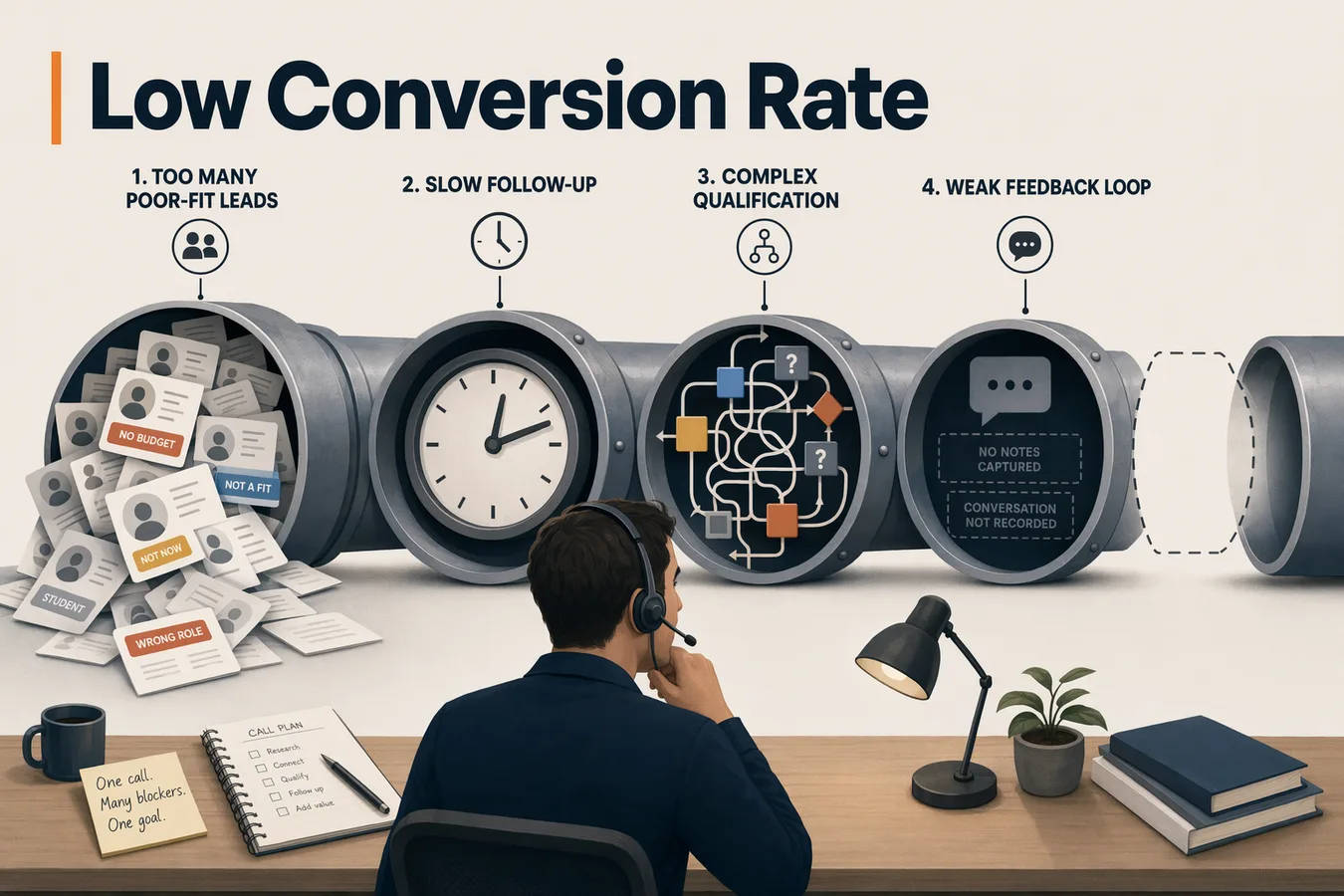
Outbound sales calls consume hours of rep time yet deliver conversion rates below 4%. The problem isn't effort—it's structural friction in qualification, follow-up timing, list targeting, and conversation intelligence.
Key Takeaways
Manual qualification scripts force reps through 8–12 linear questions regardless of prospect fit, stretching calls to 8+ minutes and driving disengagement
Follow-up delays beyond five minutes reduce conversion rates by up to 8x, while most reps require 6–10 contact attempts to reach decision-makers
Poor list targeting sends reps into disconnected numbers and wrong authority levels, wasting minutes per call before qualification even begins
AI voice automation compresses qualification to 90 seconds through adaptive branching logic, operates 24/7 for sub-5-minute follow-up, and routes high-intent prospects to human agents for closing
Why Outbound Sales Calls Take Too Long: 4 Operational Bottlenecks
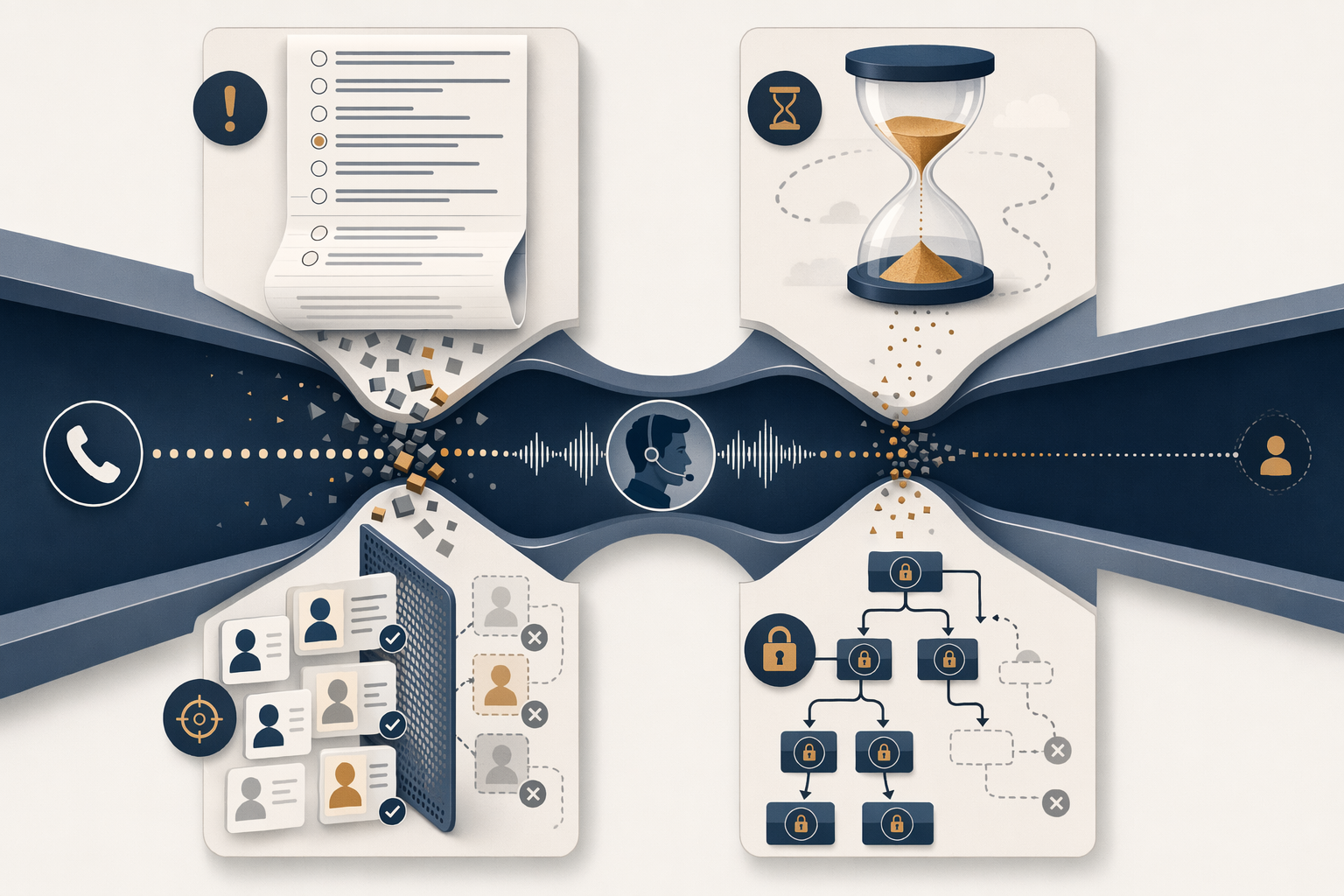
Outbound sales calls take forever and barely convert because of four compounding friction points: (1) manual qualification scripts that ask 8–12 linear questions instead of adapting to prospect signals, (2) follow-up timing gaps that let high-intent leads cool between touches, (3) poor list targeting that forces reps to disqualify unfit prospects on every call, and (4) static scripts that cannot branch mid-conversation when a prospect reveals buying intent or objections early.
The Manual Qualification Overload Problem
Sequential discovery scripts force reps to run through all qualification questions in a fixed order, budget, authority, need, timeline, location, use case, even when a prospect signals disinterest or clear fit after the first two questions. This inflates call duration from a theoretical 90-second adaptive interaction to 8+ minutes of scripted interrogation. When the rep must ask the prospect to do 75%+ of the talking by design, every question extends the call. Reps cannot skip ahead when signals emerge because the script does not branch, qualification becomes a linear checklist rather than a dynamic conversation.
Follow-Up Timing Gaps That Lose High-Intent Prospects
When a prospect shows interest on the initial call but the rep cannot book a meeting immediately, the delay between first touch and follow-up becomes a conversion leak. Conversion rates jump more than 8x when companies respond to leads under 5 minutes, yet manual workflows leave high-intent prospects waiting hours or days for the next scheduled touchpoint. The prospect moves on, loses urgency, or engages with a faster competitor. Multi-channel coordination failures compound the gap, if the initial call is followed by an email three days later instead of a same-day voicemail or SMS, the prospect's buying window closes.
Poor List Targeting Forces Reps to Qualify Unfit Leads
Broad or unverified prospect lists inflate call volume by requiring reps to disqualify on every conversation. When the average cold call connect rate is 2% to 3%, and most connected prospects are out of ICP, reps burn time on calls that cannot convert. Each disqualification still consumes 3 to 5 minutes of qualification questions before the rep realizes the prospect is not a fit. Unverified direct-dial numbers and unscored leads amplify the problem, reps cannot triage low-intent contacts before dialing, so every call becomes a qualification lottery rather than a targeted outreach.
No Conversation Intelligence to Adapt Script Mid-Call
Static scripts cannot adjust based on prospect signals during the conversation. If a prospect mentions budget constraints in the first 30 seconds, the rep still asks the full qualification sequence rather than pivoting to a lower-tier offer or rescheduling for when budget opens. If a prospect reveals they are already evaluating competitors, the script does not adapt to differentiation positioning, the rep continues with generic discovery questions. This forces reps to ask irrelevant questions even when the prospect has already indicated fit or disinterest, extending call time without improving conversion. Without real-time branching logic, every call follows the same path regardless of the prospect's responses.
The first bottleneck, manual qualification overload, creates a compounding drag that undermines even the most skilled reps.
How Manual Qualification Overload Kills Conversion Rates
The Sequential Discovery Question Trap
Most sales teams deploy a rigid checklist, company size, industry, budget, decision-making authority, timeline, current challenges, previous attempts, regardless of how the prospect responds. This sequential discovery script forces every prospect through the same eight-to-twelve question gauntlet, even when early signals reveal misalignment. Reps ask about implementation timelines before confirming budget exists; they probe for decision-maker access while the prospect describes a hard blocker two questions ago. The prospect experiences the call as scripted interrogation rather than adaptive conversation, and engagement drops sharply.

Why Prospects Disengage During Long Qualification
Average conversion rates hover around 2 to 4%, and 82% of B2B decision-makers report sales reps feel unprepared. Qualification drag is structural, not skill-based: when the rep talks 75 percent of the call to complete the checklist, the prospect disengages before qualification finishes. Platforms that use adaptive logic, like EchoLeads, ask follow-up questions based on prior answers, cutting qualification time and surfacing disqualifiers early. Linear scripts extend call duration, increase prospect fatigue, and push conversion downward, a workflow issue masquerading as a rep competency gap.
Even when qualification succeeds, the window for follow-up closes fast, and most teams miss it entirely.
The Follow-Up Timing Gap That Loses High-Intent Prospects
Why the First 5 Minutes Matter More Than Call Volume
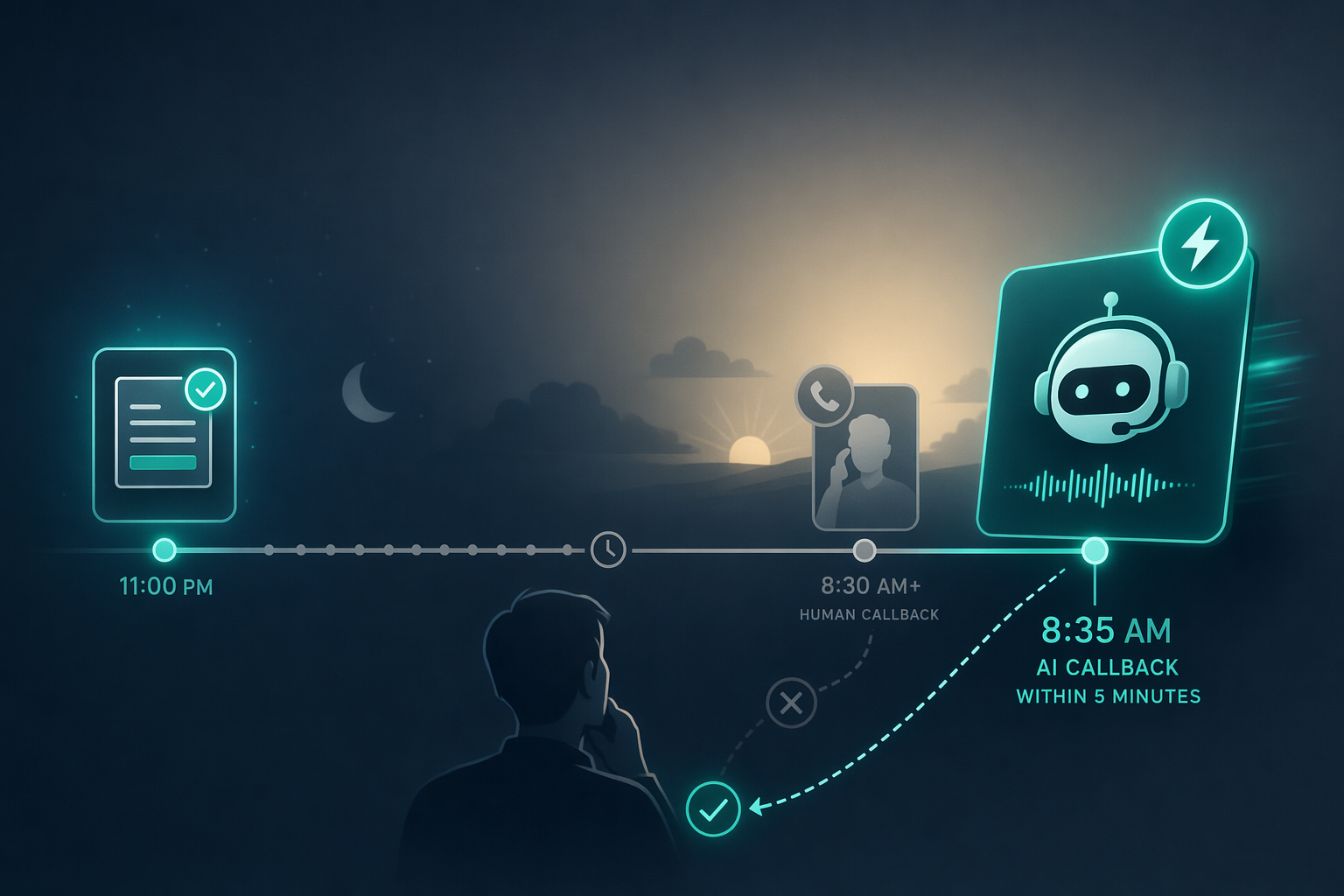
Industry research shows responding within five minutes of initial contact dramatically improves conversion rates compared to longer delays. When human schedulers handle follow-up, bottlenecks emerge: calendars need checking, stakeholders require alignment, and working hours constrain availability. A prospect who fills a form at 11 PM waits until morning, by which time competitors may have responded. Platforms offering AI cold-calling agents eliminate these delays through 24/7 operation, contacting leads in 10 to 20 seconds regardless of timezone or business hours.
The Compounding Effect of Follow-Up Delays Across 6-10 Attempts
Reaching a prospect typically requires 6 to 10 contact attempts [1]. Each delay multiplies: a one-hour response lag per attempt stretches a qualification cycle across days or weeks. By the time the sixth attempt occurs, the prospect's urgency has faded or they've engaged a competitor. Decision framework: if your team cannot respond within five minutes during business hours, instant follow-up automation becomes the structural fix, converting timing from a bottleneck into a competitive advantage.
Before qualification or follow-up can occur, reps must reach a live decision-maker, and low-quality targeting ensures most calls never get there.
Why Poor List Targeting Makes Every Call Longer (and Less Productive)
The Hidden Cost of Unverified Direct Dials
Low-quality contact data, wrong numbers, disconnected lines, generic switchboards, forces sales reps to waste minutes navigating gatekeepers or re-prospecting before they ever reach a decision-maker. Verified direct-dial numbers increase connection rates by up to 40% [1], cutting the time-per-successful-contact dramatically. Without verification upstream, reps burn 6 to 10 attempts per prospect [1], inflating call volume by 40 to 60% to achieve the same meeting quota. The efficiency bottleneck isn't rep execution, it's the integrity of the list itself.

How Broad ICP Definitions Force Manual Disqualification
Loose targeting criteria create a pipeline full of prospects who fail qualification on the first call, no budget, wrong authority level, misaligned timeline. EchoLeads' B2B lead generation automation uses predefined ICP logic, buying signals, and flexible questioning to qualify leads before they consume rep time. Every unqualified call that should never have happened is a 5 to 8 minute inefficiency multiplied across hundreds of monthly touches. Pre-call filtering, not just calling automation, is what collapses time-to-meeting.
AI voice automation directly addresses these four structural inefficiencies by replacing linear processes with adaptive, scalable workflows.
How AI Voice Automation Compresses Call Duration While Improving Meeting Rates
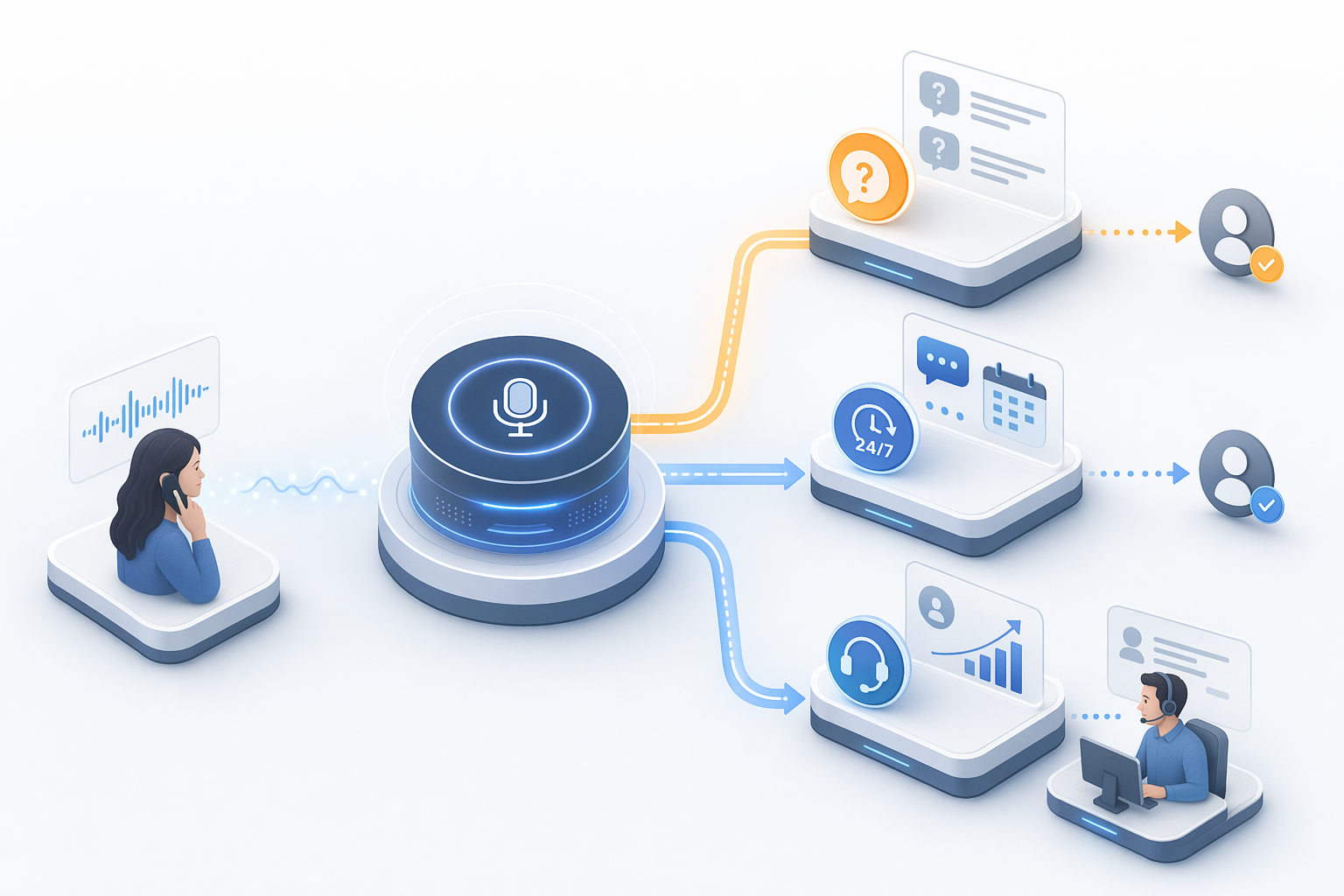
AI voice automation addresses the structural inefficiencies diagnosed earlier by replacing linear discovery questions with adaptive branching logic, eliminating human scheduling delays through 24/7 autonomous follow-up, and routing high-intent prospects to human reps based on real-time conversation signals. These three capabilities compress qualification time while increasing meeting conversion.
Adaptive Qualification Scripting vs. Linear Discovery Questions
AI calling agents use dynamic branching logic to ask only relevant questions based on prospect responses, compressing 8-minute manual qualification calls into 90-second adaptive interactions. When a prospect confirms budget authority, the agent skips unneeded stakeholder-mapping questions and moves directly to timeline and meeting scheduling. This category-level efficiency is available across platforms including EchoLeads, Koncert, and NexaCognition. AI voice agents for lead generation route qualified prospects to human sales reps after adaptive scoring, ensuring automation flows into qualification, routing, and booking without manual handoff.
24/7 Autonomous Follow-Up Eliminating Delay-Driven Drop-Off
Voice AI platforms operate outside business hours and eliminate human scheduling bottlenecks to deliver sub-5-minute follow-up at scale. Enterprise appointment booking agents handle calls automatically and book appointments 24/7 [F1-2, F1-5], converting missed calls into booked meetings without human intervention. This continuous operation removes the delay-driven drop-off that occurs when prospects wait hours or days for human callbacks, a structural advantage across AI calling platforms.
Intelligent Routing Based on Prospect Responses
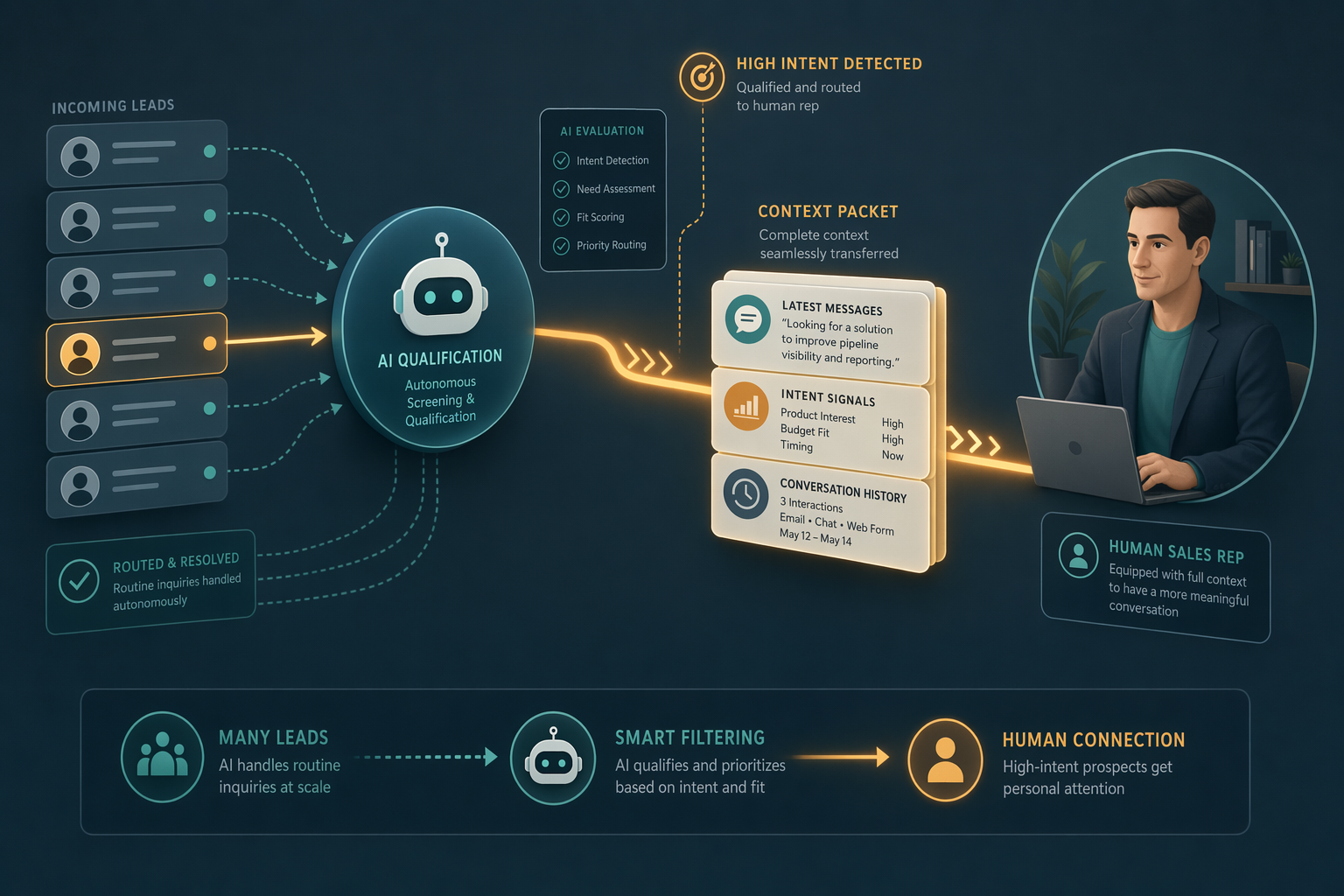
Conversation intelligence adapts script mid-call and routes high-intent prospects to human reps for escalation based on buying signals, budget confirmation, decision-maker access, near-term timelines. EchoLeads supports real-time qualification, CRM sync, and human agent routing, allowing AI agents to update records and trigger workflows during live calls. This intelligent handoff ensures human reps receive pre-qualified leads with full conversation context, maximizing meeting-to-close conversion while the AI handles routine discovery at scale.
Deploying autonomous qualification introduces new operational requirements, human escalation thresholds, compliance filtering, and post-meeting CRM workflows.
What to Expect When You Deploy Autonomous Lead Qualification
Human Escalation Model for High-Intent Prospects Post-Qualification
AI qualifies routine conversations autonomously, but high-value deals and complex objections require human judgment. When intent signals become obvious, systems like EchoLeads escalate qualified leads to human agents with full conversation context and history. Survey data shows 45.7% of outbound friction ties to conversations that never happen, making escalation protocols critical, the system must route high-buying-intent prospects promptly, not let them expire in a queue. Sensitive conversations, high-value pipeline, and unresolved objections trigger immediate human handoff; routine qualification remains autonomous; mid-tier complexity lets the AI attempt resolution before escalating.
Compliance-Safe Autonomy Thresholds (TCPA, DNC, TRAI)
Automated calling without regulation-aware filtering exposes teams to statutory penalties. A 10,000-call campaign placed to an unscrubbed list can produce 100 potentially non-compliant calls; at ₹25,000 per upheld complaint, that creates ₹25 lakh exposure on a single campaign. Platforms must integrate DNC lists and TCPA compliance workflows before the call goes out. For India-specific deployments in Hyderabad and Mumbai, TRAI DND filtering is non-negotiable [3], the registry refreshes daily, and category-level preferences must be respected alongside full-DND blocks.
Post-Qualification Workflow: CRM Sync and Nurture Sequences
Booking the meeting is not the finish line, the system must sync qualification data to the CRM, trigger nurture sequences, and assign follow-up tasks. EchoLeads automates broadcast channels, segmented messaging, and sequence-based lead nurturing, detecting buying signals or opt-out triggers to adjust sequences without human intervention. After qualification, the workflow should update contact details, opportunity stages, and next steps in the CRM, then route the prospect into the appropriate nurture track, competitors stop at "books meeting," ignoring the operational handoff that determines whether the booked slot converts.
Conclusion
Generic appointment-booking AI agents handle scheduling automatically but lack the adaptive qualification intelligence needed to compress discovery calls, EchoLeads focuses on intelligent pre-meeting qualification that routes high-intent prospects to human reps rather than just calendar automation. API-driven voice platforms suit engineering teams with resources to build custom call flows, while marketing-led sales teams benefit from pre-built adaptive scripts and CRM integrations that deploy without technical lift.
As AI voice agents gain real-time conversation intelligence and multi-language support, the bottleneck will shift from call execution to upstream targeting, teams that combine AI qualification with precise ICP definition and verified contact data will outpace competitors still treating automation as a call-time-only play.
Start by auditing your current outbound bottleneck using the 4-factor Friction Index (targeting, response latency, qualification efficiency, compliance load), then deploy EchoLeads' AI voice agent to compress qualification time and eliminate follow-up delays while maintaining human escalation for complex deals.
Frequently Asked Questions
How much time does AI voice automation actually save per outbound call?
AI calling agents use dynamic branching logic to compress 8-minute manual qualification calls into 90-second adaptive interactions [2]. When a prospect confirms budget authority, the agent skips unneeded stakeholder-mapping questions. Time savings compound across hundreds of daily calls, though individual call duration varies by prospect signal and complexity.
What conversion rate improvement should I expect from switching to AI outbound calling?
Responding within five minutes can improve conversion rates up to 8x compared to longer delays [1]. Intelligent routing delivers 40 to 60% meeting-booking improvement in general industry patterns. Results depend on upstream list quality and ICP targeting, loose criteria create pipelines full of prospects who fail qualification on budget, authority, or timeline regardless of AI speed.
Does AI voice automation replace my sales reps or just assist them?
AI handles routine qualification autonomously and routes high-intent prospects to human reps for closing conversations [2]. The workflow: AI qualifies, books meetings, and hands off warm leads based on buying signals, budget confirmation, decision-maker access, near-term timelines. Reps focus on escalation and complex objections rather than manual discovery.
How does AI voice automation stay compliant with TCPA and TRAI DND regulations?
A 10,000-call campaign on an unscrubbed list can produce 100 non-compliant calls; at ₹25,000 per upheld complaint, that creates ₹25 lakh exposure [6, 7, 8]. Automated list filtering (DND scrubbing) and regulation-aware timing reduce risk. Compliance requires configuration, automated calling without filtering exposes teams to statutory penalties.
What happens after an AI voice agent books a meeting—does it sync to my CRM?
Booking the meeting is not the finish line, the system must sync qualification data to the CRM, trigger nurture sequences for no-shows or reschedules, and assign follow-up tasks [6, 7, 8]. Platforms that automate this full workflow eliminate the manual handoff gap that causes qualified prospects to fall through before the scheduled meeting.
How much does AI voice automation cost compared to hiring more SDRs?
Outbound calling software typically costs $15, $47 per user per month, while manual calling operations run $38,400+ per year. Automation costs 10 to 20% of a full-time SDR salary while handling 3 to 5x the daily call volume. Frame as a capacity multiplier, AI handles routine qualification at scale, letting reps focus on high-value conversations.
Can AI voice agents adapt their script mid-call based on prospect responses?
AI uses adaptive branching logic to ask only relevant follow-up questions based on prior answers, compressing calls from 8 minutes to 90 seconds [2]. When a prospect confirms budget authority, the agent skips stakeholder-mapping questions and moves directly to scheduling. This contrasts with linear manual scripts that force reps through all questions regardless of fit.
Related articles
How to Increase Sales Team Capacity Without Hiring More Reps (2026)
Learn how AI voice automation expands lead-handling capacity without hiring.
Why Sales Reps Miss Follow-Up Calls with Leads: 4 Root Causes & How AI Automation Fixes Them
Discover the 4 systemic workflow failures causing missed follow-up calls and how AI automation eliminates manual overloa.
Automated Lead Qualification Software Over the Phone: Setup Guide (2026)
AI voice agents qualify leads over the phone autonomously.