
How to Increase Sales Team Capacity Without Hiring More Reps (2026)
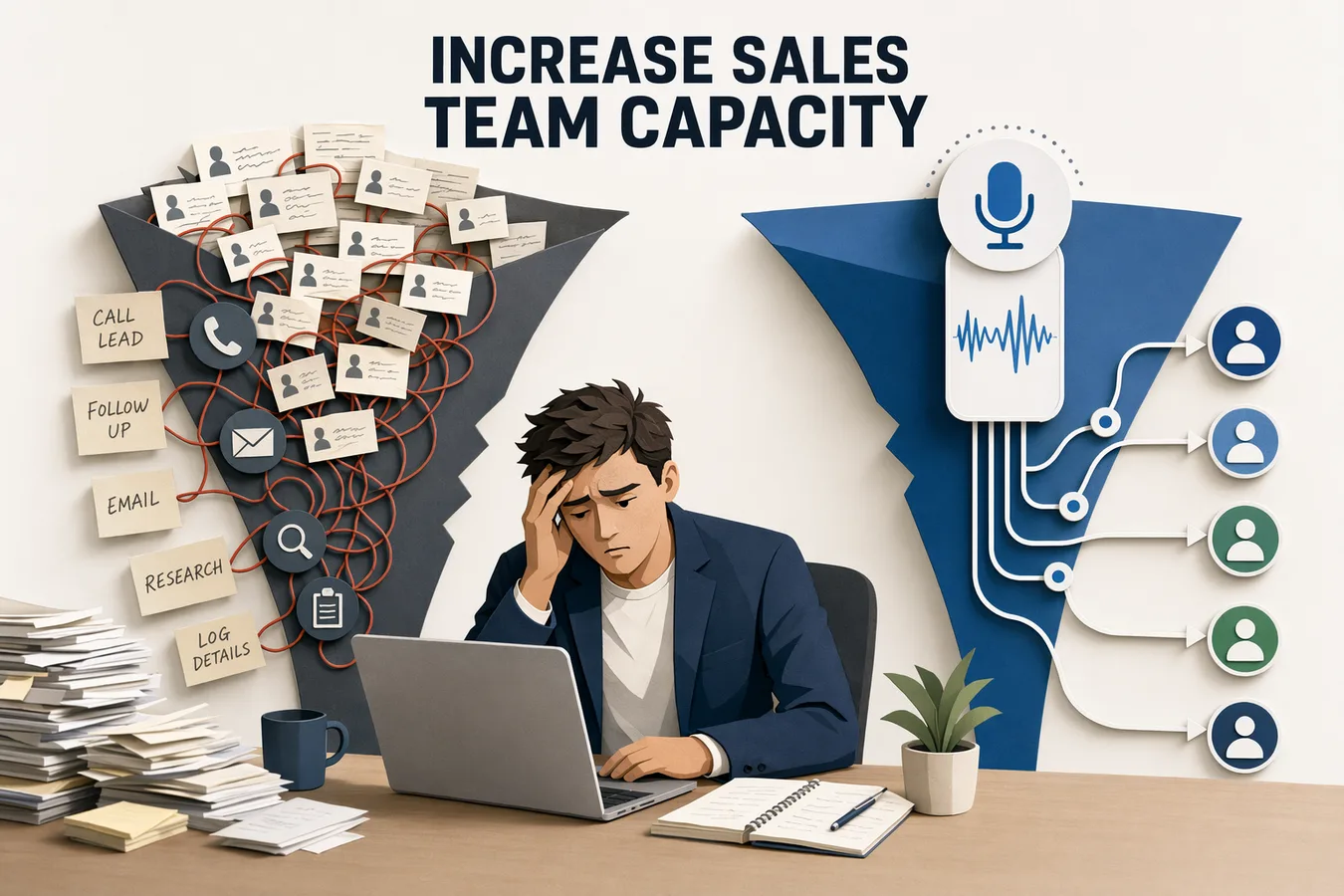
Rising lead volumes force most sales leaders to choose between hiring more reps or letting opportunities slip. But capacity isn't constrained by headcount—it's constrained by how reps spend their time.
Key Takeaways
Sales reps spend only 30% of their time selling; 68% report that admin tasks consume the majority of their workday, making incremental hiring ineffective at scale
AI voice agents automate lead qualification and appointment scheduling at volume, compressing time-to-contact from hours to seconds while maintaining 24/7 coverage
ROI calculation must include platform fees, telephony costs, CRM integration timelines, and escalation labor—not just connected-minute pricing
Effective handoff workflows require tuned qualification thresholds to prevent low-intent leads from flooding human reps and negating automation gains
TCPA compliance, CRM-native integrations, and audit log retention are non-negotiable deployment requirements that separate production-ready platforms from pilot-stage tools
Adding more sales reps to handle higher lead volumes rarely solves the core problem—because capacity isn't constrained by call volume, it's constrained by how much time reps spend *not* selling. Voice AI automation reclaims that time by handling initial triage, qualification, and scheduling autonomously, so existing headcount can focus on closing high-intent prospects rather than chasing every inbound inquiry.
The Real Bottleneck: Administrative Burden, Not Call Volume
Sales reps spend only 30% of their time selling during an average week[1], with 68% reporting that note-taking and data input consume the majority of their workday[1]. That means the typical rep is already operating at a fraction of revenue-generating capacity—not because they lack leads, but because administrative overhead (CRM updates, manual qualification notes, follow-up scheduling) occupies 10-20 hours per week[1]. Hiring a second or third rep simply replicates this inefficiency: more headcount processing the same low-value tasks at the same constrained pace.
The solution is structural, not incremental. Automation handles the repetitive qualification layer—asking budget, timeline, and requirement questions; scoring intent; syncing CRM summaries, so human reps receive only warm, sales-ready leads. This shifts the constraint from *how many reps you have* to *how efficiently each rep's selling time is deployed*.
Speed-to-Contact as the Core Capacity Lever
Lead-handling capacity is pipeline velocity (speed to qualify) multiplied by rep focus (time on high-intent prospects), not raw call volume. A human team that takes 6-24 hours to return an inquiry loses prospects to competitors who respond in minutes. Voice AI systems that call every lead within 2 minutes of inquiry compress the qualification cycle from days to minutes, triaging intent before the prospect goes cold.
This speed advantage scales instantly: automation can process hundreds of simultaneous conversations with zero marginal cost per lead, while a manual team's throughput is capped by available headcount. The three-layer capacity framework, pipeline triage (automated first-touch), automation (qualification and scheduling), and rep productivity (human time reserved for closing), structures the rest of this guide's approach to scaling without hiring.
Understanding why hiring doesn't solve capacity constraints is only the first step. Next, we need a structural framework for expanding throughput without adding bodies.
The Three Layers of Lead-Handling Capacity
Scaling sales team capacity without hiring requires a three-layer framework: triage, automation, and productivity. Each layer solves a distinct bottleneck in the lead-handling process, transforming how teams engage prospects and allocate time.

Layer 1: Pipeline Triage, Disqualifying Low-Intent Leads Before Human Contact
Triage logic filters out unqualified leads before rep time is spent. AI qualification systems evaluate budget, decision-making authority, urgency, and timeline before scoring and routing prospects to sales reps. This reduces friction in the sales enablement process, accelerating pipeline velocity by focusing initial contact on leads that meet your ideal customer profile criteria.
Layer 2: Process Automation, AI Handles Qualification and Scheduling at Scale
Automation executes qualification and booking workflows without human intervention. Platforms like EchoLeads handle initial engagement, smart qualification, and calendar scheduling autonomously, supporting simultaneous multi-prospect engagement without SDR overhead. Voice and messaging agents manage hundreds of concurrent conversations, improving how existing teams operate at scale.
Layer 3: Rep Productivity, Human Focus on High-Intent Prospects Only
Automation reclaims rep time for complex objections and high-value conversations. AI agents route only high-intent prospects to human sales reps, ensuring human effort concentrates on leads ready to buy. This layer eliminates low-value activities, freeing reps to close deals rather than chase unqualified contacts.
With the three-layer framework defined, the next question becomes practical: how do AI voice agents execute triage and automation workflows in a way that preserves deal quality?
How AI Voice Agents Automate Lead Qualification at Scale
Qualification Logic: What AI Agents Ask and Why
AI voice agents triage inbound and outbound leads by running structured question flows that mirror your ideal customer profile. The agent asks about budget, decision-making authority, timeline, and specific needs, then scores the conversation in real time. EchoLeads' smart lead scoring evaluates tone, urgency, keyword usage, and sentiment during live calls to assign each prospect a qualification grade. High-scoring leads, those with budget, authority, and near-term need, route directly to a sales rep with full conversation context. Mid-tier prospects enter nurture sequences. Low-fit leads receive polite disqualification messages, freeing reps from dead-end follow-up.
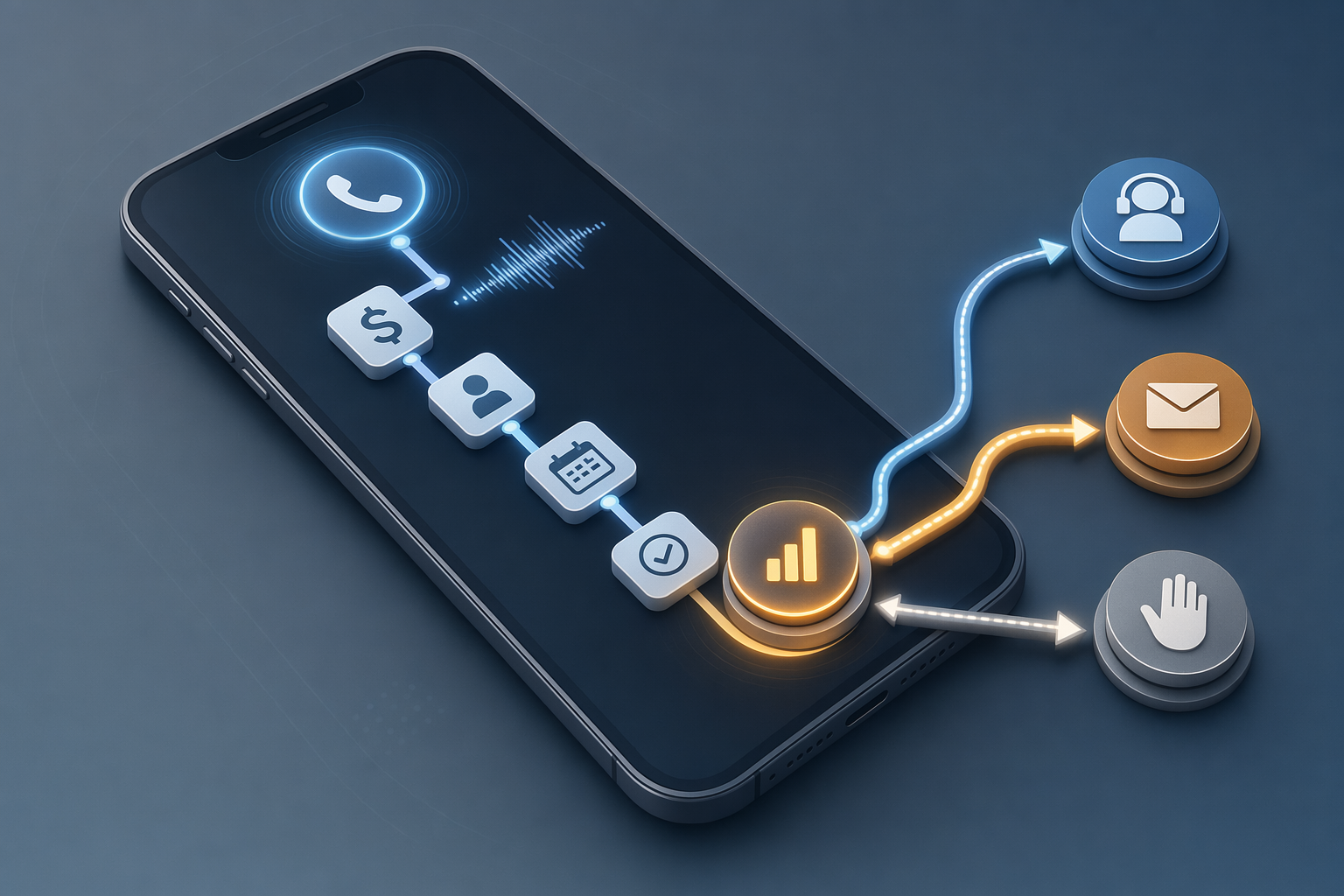
This approach balances automation coverage with human judgment: the AI handles repetitive first-touch qualification [2], but complex objections or ambiguous buying signals still escalate to human reps. Qualification thresholds must be tuned to your industry and deal complexity, enterprise B2B software sales require deeper discovery than e-commerce cart inquiries, so the scoring rubric should reflect those differences.
24/7 Coverage and Instant Response
AI voice agents never sleep, calls placed at midnight or weekends receive the same instant pickup as business-hour inquiries. Round-the-clock availability prevents after-hours lead decay: prospects who submit a contact form at 9 PM expect a callback within minutes, not the next business day. Research shows leads contacted within five minutes are dramatically more likely to convert than those reached an hour later [2]. Voice agents operationalize that speed at scale, one agent can handle hundreds of simultaneous calls without wait queues or voicemail.
The capacity advantage compounds across time zones: a single AI deployment serves prospects in New York, London, and Singapore without hiring regional SDR teams. Early-adopting sales teams report 3 to 5× more conversations per rep per day and 40 to 60% reductions in cost per qualified lead [2], because the AI absorbs first-touch volume while human reps focus on high-intent closing conversations.
Appointment Scheduling and CRM Sync
Qualification without scheduling wastes the triage work, if the AI scores a lead as high-intent but leaves booking to a manual follow-up email, conversion rates plummet. Modern voice agents close the loop by checking calendar availability, proposing time slots, and confirming appointments directly in the conversation [3]. Platforms report 90%+ booking success rates when the agent handles scheduling autonomously, versus sub-50% when prospects receive a "someone will contact you" message.
CRM integration ensures every qualified conversation updates the sales pipeline in real time: the agent logs the lead score, appointment details, and conversation transcript into Salesforce, HubSpot, or your CRM of record without manual data entry [3]. EchoLeads syncs CRM records during live calls, so reps see up-to-date intent scores and next steps the moment they pick up a warm transfer. Deployment timelines for CRM-connected voice agents now average 48 to 72 hours rather than weeks, signaling that the technology has matured past custom-integration complexity into plug-and-play automation.
Automation at scale delivers value only when high-intent leads reach human reps without friction. The handoff design determines whether capacity gains translate into closed deals.
Designing Human Handoff Workflows That Preserve Deal Quality
Qualification Thresholds: When AI Passes to Live Reps
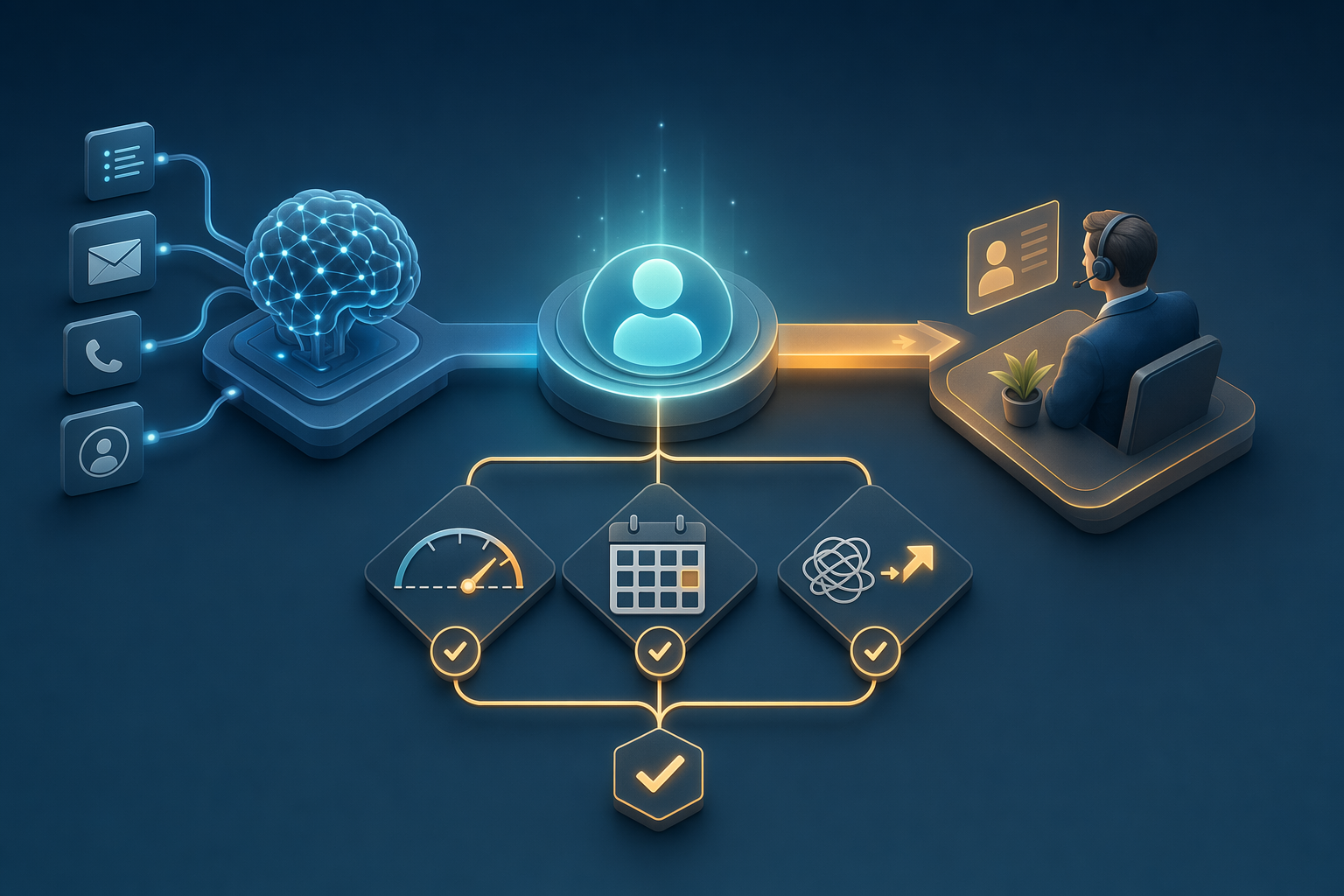
Effective handoff design starts with explicit qualification thresholds. Automated systems score leads based on fit and buying intent [4], then escalate when specific conditions are met: budget confirmed above a defined floor, timeline indicating urgency within the current quarter, or a complex objection the AI cannot resolve. EchoLeads allows businesses to configure handoff triggers based on conversation keywords, sentiment scores, or explicit prospect requests, ensuring high-buying-intent prospects reach human agents without delay.
CRM Field Triggers and Routing Rules
Once qualification criteria are met, CRM field updates trigger automated routing. Tools sync data and trigger workflows [4] that assign leads to the appropriate rep based on territory, product line, or deal size. The EchoLeads AI platform demonstrates bi-directional CRM sync as a deployment-readiness feature, updating contact details, qualification scores, next steps, and opportunity stages in real time so routing logic can execute immediately.
Preventing False-Positive Escalations That Waste Rep Time
Overly aggressive handoff rules flood reps with low-intent leads, negating the capacity gain from automation. Sales reps waste time chasing unqualified prospects [5] when thresholds are set too low. Tuning the threshold, raising the minimum score or requiring multiple intent signals before escalation, preserves rep focus on genuine opportunities while keeping the pipeline moving.
Once handoff workflows are tuned, the next decision is financial: does AI voice automation deliver a lower cost per qualified lead than hiring more SDRs?
Calculating ROI: Cost vs. Cost
AI Connected-Minute Pricing vs. SDR Fully-Loaded Cost
AI voice platforms charge per connected minute: Bland AI, Retell AI, Air AI, and Synthflow each range from approximately $0.05 to $0.15 per minute depending on volume commitments. EchoLeads offers pay-as-you-go rates starting at ₹4/minute (~$0.048/min) and enterprise rates as low as ₹1.80/minute (~$0.022/min) with committed usage agreements [2fc68f49-04c0-4045-9220-9d84ac486d0d, 40f398c1-a14a-4b44-b9a9-9a3bbba34b40]. A five-minute qualification call costs $0.11, $0.75 depending on platform and tier. In contrast, a full-time SDR's fully-loaded cost, including $50,000, $70,000 base salary, benefits, laptop, CRM licenses, training, and management overhead, typically reaches $85,000, $100,000 annually. Reps spend less than half their time actually selling [2], so the effective cost per qualification conversation is significantly higher when factoring in administrative work and downtime.

Hidden Costs: Telephony Carrier Charges, CRM Integration, Human Escalation Labor
Platform fees are only part of total cost. Telephony carrier charges (typically $0.01, $0.03 per minute for outbound PSTN), CRM middleware or native integration setup ($200, $2,000 one-time plus monthly SaaS fees), and human escalation labor (when AI routes high-intent leads to closers) add 20 to 40% to the per-lead cost. For example, a $0.05/min platform fee may become $0.08/min effective cost after carrier and integration expenses. The true affordability metric is total cost per qualified lead, not the advertised platform rate, including middleware, carrier, and escalation costs.
Revenue Impact of Speed-to-Contact
AI voice agents respond within seconds of form submission, compared to hours or days for manual follow-up. Leads contacted within five minutes convert at dramatically higher rates than those reached later [2]. Early-adopting sales teams report 40 to 60% reductions in cost per qualified lead [2] by reallocating human reps to high-value closing work while AI handles first-touch qualification at scale. The revenue lift from faster contact often exceeds the cost savings, making the ROI calculation a story of capacity expansion rather than simple cost substitution.
ROI models mean nothing if deployment stalls due to legal or technical constraints. Compliance and integration architecture determine whether voice automation goes live in weeks or months.
Compliance and Setup Requirements for Voice Automation
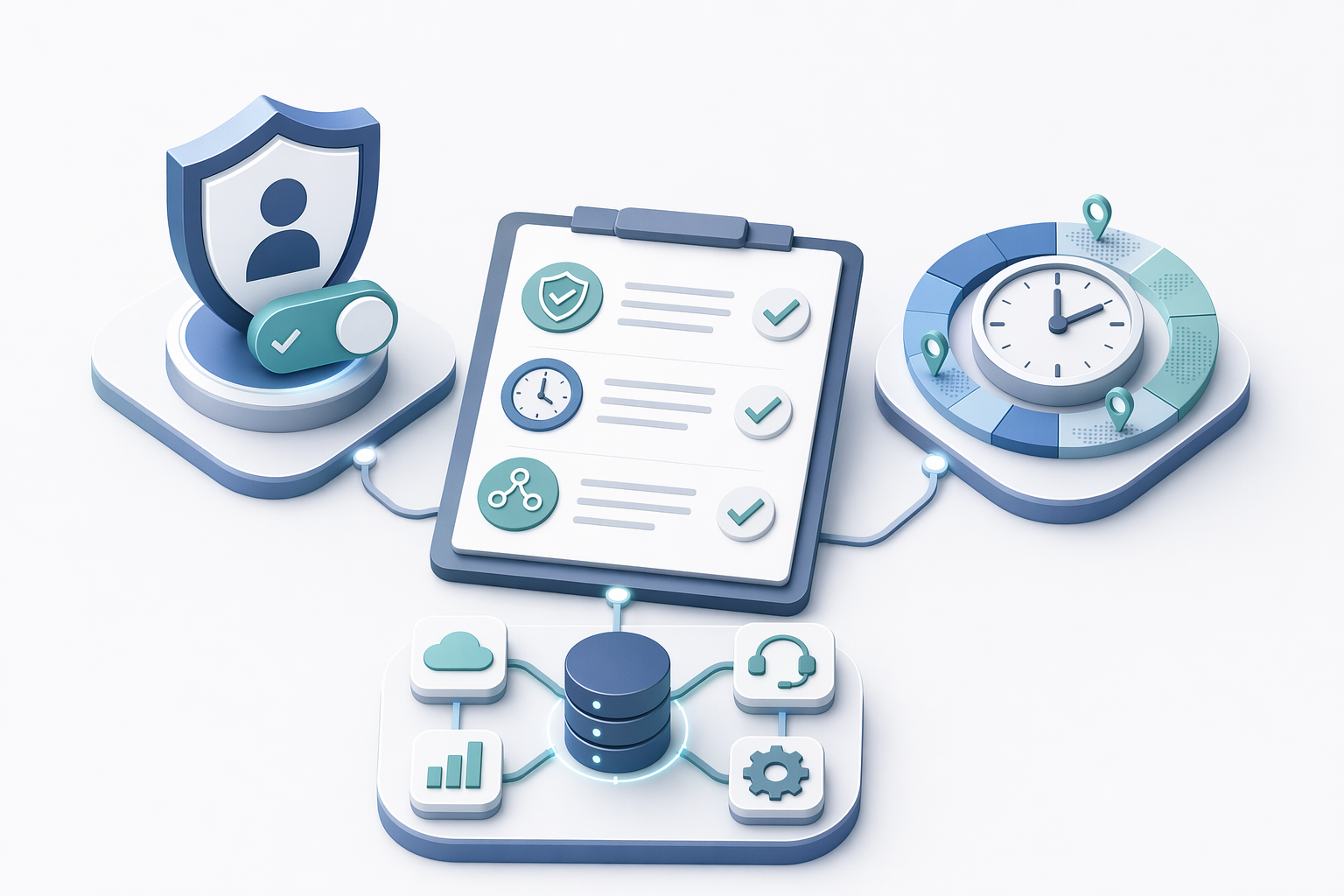
Deploying AI calling systems for sales requires more than feature selection, legal compliance and integration architecture determine whether deployment takes weeks or months. Below are the four non-negotiable criteria that separate production-ready platforms from pilot-stage tools:
TCPA Consent Workflows and Calling Windows
Automated calling requires prior express written consent under TCPA regulations. Platforms must enforce time-zone-aware calling windows (typically 8 AM to 9 PM local time) to prevent legal exposure. Enterprise-ready voice AI platforms embed opt-in verification and window enforcement into the workflow. EchoLeads implements an automated opt-in system and message monitoring safeguards while operating 24/7 across multiple time zones, ensuring compliant outreach without manual intervention. Teams using regional language support can configure consent collection in local dialects, reducing opt-out rates and regulatory risk.
Audit Logs and Call Recording for Compliance Documentation
Regulated industries require timestamped transcripts and interaction logs for dispute resolution and audits. EchoLeads maintains structured compliance workflows with audit trails for every interaction, capturing consent timestamps, call duration, and qualification outcomes. This level of documentation supports both internal review and regulatory inquiries without post-call reconstruction, reducing legal risk and enabling performance analysis.
CRM Integration Architecture: API-Native vs. Middleware
Deployment speed hinges on CRM architecture. API-native integrations sync call outcomes in real time, CRM-synced intent scores go live in 48 hours with pre-built connectors. Custom middleware extends timelines to 6 to 8 weeks and introduces sync latency. EchoLeads integrates directly with major CRM platforms and syncs call results directly into your CRM system, enabling multilingual teams to deploy qualification workflows in 72 hours using pre-configured industry templates.
API-native integrations for Salesforce and HubSpot deploy in two weeks with zero middleware maintenance, while custom CRM connectors extend timelines to six to eight weeks and add ongoing overhead. AI voice agents excel at high-volume triage and instant response but escalate complex objections to human reps, the capacity gain comes from reclaiming the 68% of rep time spent on admin work[1], not eliminating judgment.
As AI voice agents incorporate multi-language support and real-time sentiment analysis, lead qualification will shift from scripted Q&A to adaptive conversation flows that adjust tone and question depth based on prospect engagement, making the human handoff threshold even more critical to tune.
Explore EchoLeads's CRM-integrated voice AI platform to see how compliance-first deployment and bi-directional Salesforce/HubSpot sync can expand your lead-handling capacity in under two weeks.
Frequently Asked Questions
Can AI voice agents completely replace human sales reps?
No, AI voice agents augment reps by automating qualification and scheduling, but high-intent prospects and complex objections escalate to humans. Automation reclaims the 68% of rep time spent on admin tasks[1], concentrating human effort on leads ready to buy and conversations requiring judgment.
How long does it take to deploy an AI voice agent for lead qualification?
CRM-native integrations sync data in real time[2][3] and deploy in approximately two weeks, while custom CRM connectors can extend timelines to six to eight weeks due to middleware dependencies. Fast-deployment platforms advertise 48-hour go-live windows when using pre-built Salesforce or HubSpot connectors.
What is the cost difference between AI voice agents and hiring more SDRs?
AI connected-minute pricing typically ranges from $0.05 to $0.15 per minute, which often yields a lower cost per qualified lead than SDR fully-loaded costs (salary, benefits, tools). However, total ROI must include CRM integration, telephony, and escalation labor[2]. Instant response compresses conversion timelines significantly.
Do AI voice agents work with my existing CRM?
API-native integrations for Salesforce, HubSpot, and Zoho enable bi-directional sync without middleware, allowing deployment in under two weeks. Custom CRMs may require middleware that extends timelines to six to eight weeks. Pre-built connectors eliminate ongoing integration maintenance overhead.
What compliance requirements apply to AI outbound calling?
TCPA requires prior express written consent for automated calls. Additional non-negotiables include Do Not Call registry compliance, time-zone-aware calling windows, and audit log retention for dispute resolution. Platform selection must prioritize compliance infrastructure to avoid legal exposure and fines.
How do I prevent AI agents from escalating too many low-intent leads to my reps?
Tune qualification thresholds, such as confirmed budget, urgent timeline, and decision-making authority, to your industry and deal complexity[2][3]. Overly aggressive handoff rules flood reps with low-intent leads, negating automation gains. Real-time lead scoring filters false positives before escalation.
Can AI voice agents handle appointment scheduling in addition to qualification?
Yes, modern voice agents check calendar availability, propose time slots, and confirm appointments directly during the qualification call. Qualification without scheduling leaves coordination burden on reps, reducing conversion rates[2][3]. Paired workflows ensure qualified leads move immediately to booked meetings, maximizing throughput.
Related articles
Why Sales Reps Miss Follow-Up Calls with Leads: 4 Root Causes & How AI Automation Fixes Them
Discover the 4 systemic workflow failures causing missed follow-up calls and how AI automation eliminates manual overloa.
Automated Lead Qualification Software Over the Phone: Setup Guide (2026)
AI voice agents qualify leads over the phone autonomously.
Outbound Sales Calls Low Conversion Rate: 4 Operational Bottlenecks and How AI Voice Automation Fixes Them
Outbound sales calls take too long and barely convert.