
7 Best AI Chatbot Tools for Lead Collection
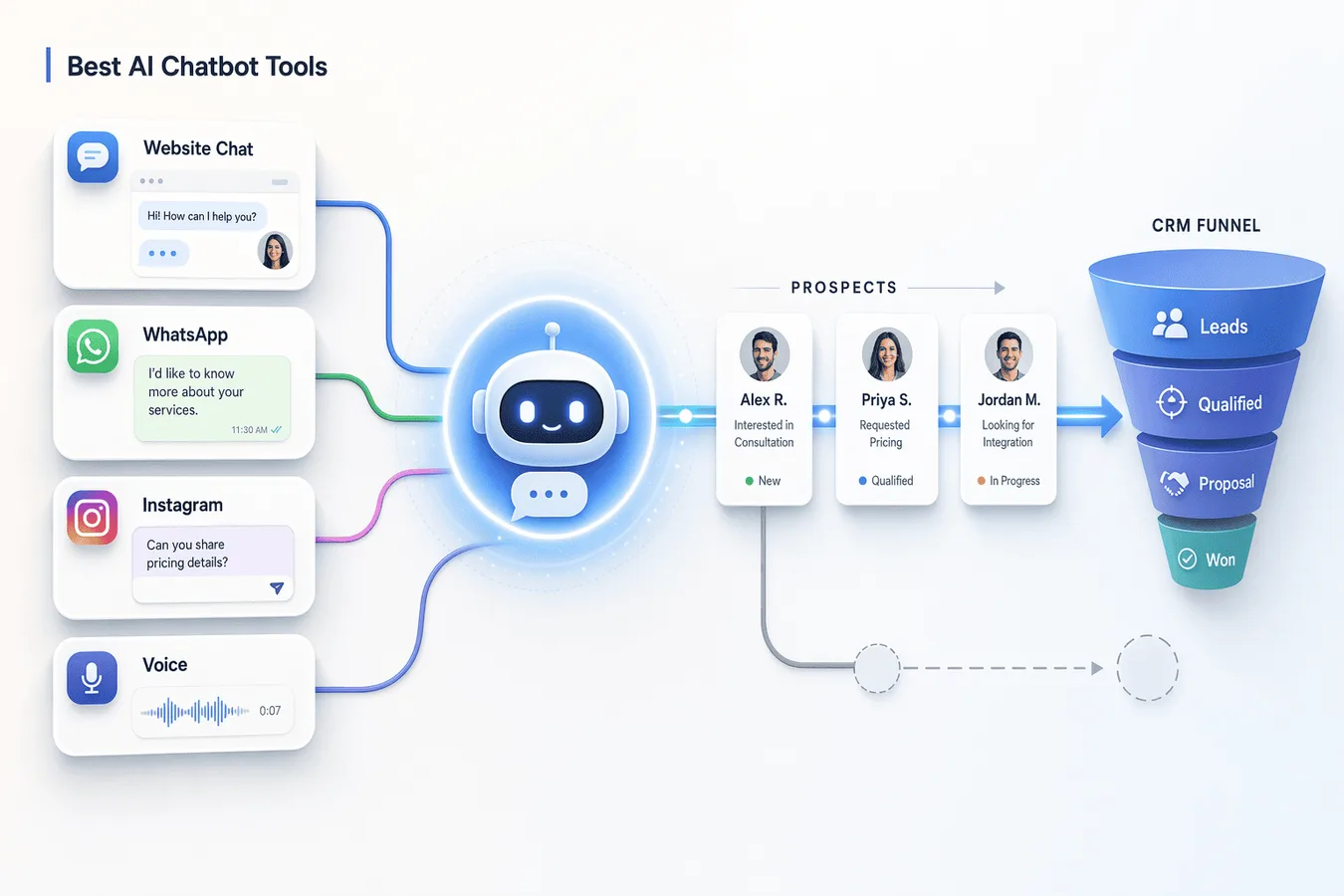
AI chatbot tools for website lead generation automate prospect capture, qualification, and routing through dynamic conversations across web, WhatsApp, Instagram, and voice channels.
This comparison evaluates eight platforms—from voice-first omnichannel systems to enterprise-grade text chatbots—across lead capture channels, CRM integration depth, multilingual support, and pricing models for 2026.
Key Takeaways
Voice-first platforms deliver human-like conversation depth for complex B2B lead qualification, while text-chat widgets excel at high-volume 24/7 web visitor engagement
Bi-directional CRM sync (Salesforce, HubSpot, Pipedrive, Zoho) writes qualification scores and transcripts back automatically without manual data entry
Free tiers cap conversation volumes, form fields, and reporting depth—verify SMS quotas, payment processing fees, and seat minimums before committing
Multilingual voice support (Hindi, Kannada, Telugu) enables regional language lead qualification, but accuracy benchmarks remain unpublished across all platforms
Enterprise platforms scale from $74/month to $1,000+ based on seats, contacts, and usage—while e-commerce solutions start at $29/month for order tracking automation
What Are AI Chatbot Tools for Website Lead Generation?
AI chatbot tools for website lead generation are automated systems that capture, qualify, and route prospects through dynamic conversations. These tools include platforms like EchoLeads, Intercom, Drift, and HubSpot, each offering distinct channel strengths. Unlike pure customer support bots that handle FAQs without lead-capture intent, lead-generation chatbots execute qualification workflows — asking about budget, timeline, decision-making authority — and book appointments or sync scored leads into CRM systems. Voice-first agents (conversational calling with sentiment detection) suit high-intent B2B scenarios, while text-first widgets (web chat, WhatsApp) scale across high-volume e-commerce and 24/7 availability needs.
Core Functions: Qualification, Capture, and Routing
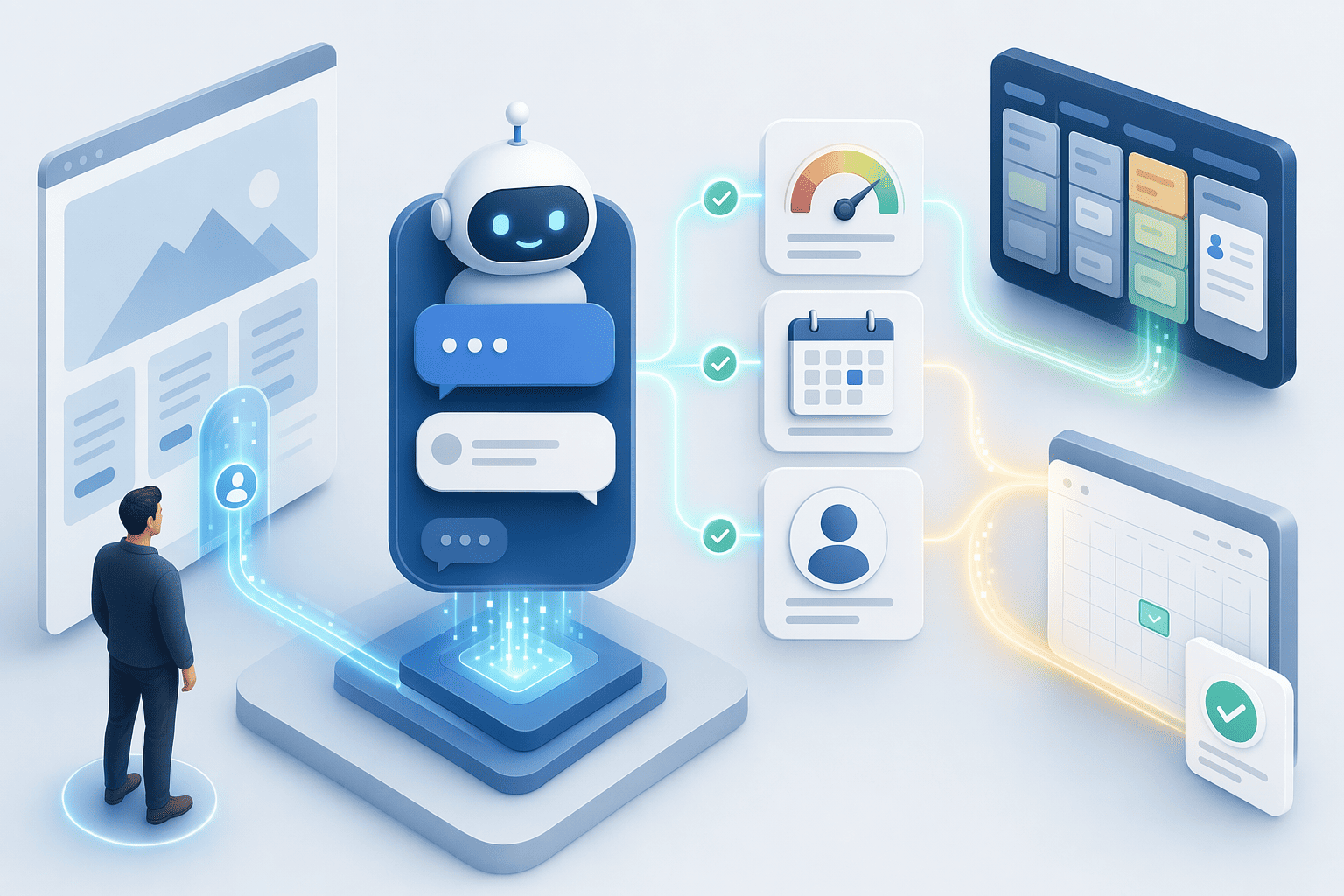
Lead-generation chatbots deploy dynamic questionnaires to collect prospect data, score leads by buying intent, and hand off qualified contacts to sales teams or calendars. EchoLeads qualifies leads using conversational intelligence, while platforms like Drift and HubSpot integrate scoring models that route high-priority leads into CRM pipelines instantly.
Channel Scope: Web Chat, WhatsApp, Voice, Instagram DM
The multi-channel landscape spans web widgets (embedded on landing pages), WhatsApp Business API (template-driven messaging), Instagram DM (social engagement), and voice calling (human-like phone conversations). Channel choice impacts lead quality: voice agents detect tone and urgency in real time, while text channels serve high-volume, asynchronous interactions. Omnichannel continuity — a lead starts on web chat, continues via WhatsApp, escalates to voice, defines the 2026 differentiation frontier beyond single-embed widgets.
To identify the platforms best suited for different lead-generation scenarios, we applied a structured evaluation framework across channel support, CRM integration, and pricing transparency.
How We Evaluated These 8 AI Chatbot Platforms
The 8 platforms in this comparison were selected to represent the full spectrum of lead-generation use cases: enterprise-grade conversational AI (Intercom, Drift), CRM-native automation (HubSpot), e-commerce-focused chat (Tidio), no-code visual builders (Landbot), Meta ecosystem integration (Manychat), GPT-powered knowledge bases (Botsonic), and voice-first AI agents (EchoLeads). Each was evaluated across eight dimensions designed to surface differences in how they capture, qualify, and convert website visitors into sales-ready leads.
Evaluation Criteria: Channels, CRM Integration, Languages, Pricing
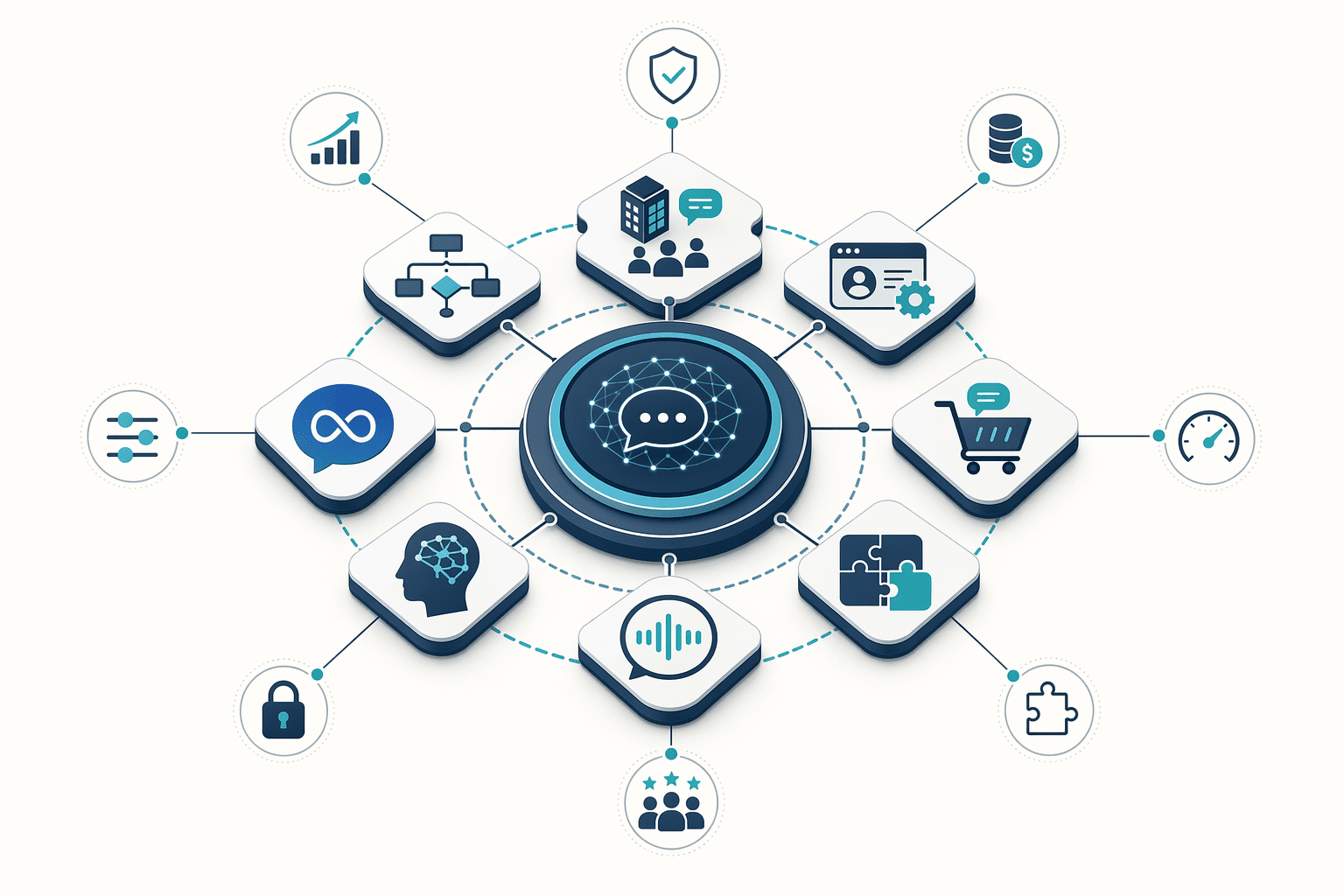
Lead capture channels measured how platforms engage visitors beyond website chat, WhatsApp, Instagram DM, SMS, and voice calling. 37% of B2B sales transactions happen outside office hours, making 24/7 availability across multiple channels a baseline requirement.
CRM sync depth evaluated whether platforms write back qualification scores, conversation transcripts, and next-step recommendations without manual data entry. CRM-native chatbots automatically capture, qualify, and route leads into your sales pipeline, and we tested whether each tool supports bi-directional synchronization with Salesforce, HubSpot, and Zoho.
Multilingual support assessed Indian regional language coverage (Hindi, Tamil, Telugu, Kannada) and accent accuracy, not just European languages. Platforms were tested for conversational fluidity in native scripts and voice-based language detection.
Pricing models compared cost transparency: per-conversation usage tiers, fixed monthly SaaS plans, and enterprise quote-gated options. We flagged platforms that bundle chatbot features into broader CRM licenses versus standalone lead-gen pricing.
Testing Methodology and Competitor Selection
Platforms were tested through trial accounts (where available), live demo environments with sample lead flows, and published API documentation. We evaluated qualification workflows, follow-up quality, pricing, and handoff fit across real sales funnels, extending prior coverage by adding voice-calling escalation thresholds, sentiment-based routing, and conversation continuity across text + voice channels, which existing comparisons omit.
GDPR and CCPA compliance features appear in many tools' marketing materials, but implementation depth varies widely. We evaluated audit trail granularity, data retention policies, and consent management workflows, not just checkbox claims, following frameworks like the NIST AI Risk Management Framework for trustworthy AI practices.
1. EchoLeads: Best for Voice-First Omnichannel Lead Qualification
Key Features: Voice Calling, WhatsApp, CRM Bi-Directional Sync
EchoLeads supports sales, lead qualification, inbound enquiry handling, appointment booking, CRM integrations, and multilingual follow-ups. The platform handles simultaneous conversations across phone, WhatsApp, and Instagram, qualifying leads using conversational intelligence. Unlike text-only chatbots, EchoLeads initiates voice outreach within seconds of a form submission or ad click, enabling richer qualification through tone and pacing analysis.
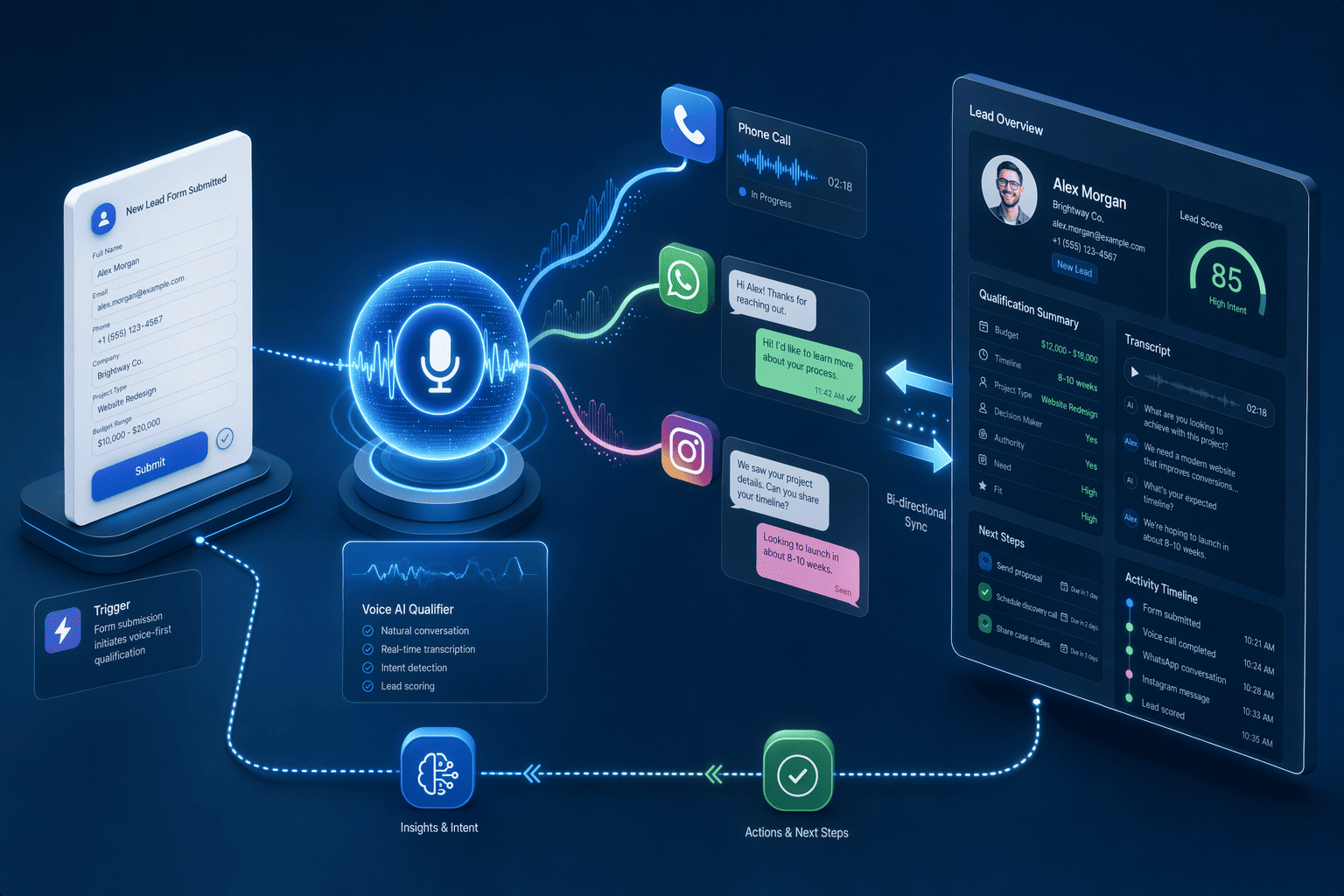
CRM integration is bi-directional: the system writes back qualification scores, conversation transcripts, and next-step recommendations without manual data entry. Pricing starts at $25/month flat rate, with custom enterprise plans for high-volume teams. For context, TaskVox AI offers 30-second setup with 100 free credits, while Voicory uses pay-as-you-go pricing from $0.08/min, both target Indian multilingual markets with similar voice-first architectures.
Best For: B2B High-Intent Leads Requiring Human-Like Conversation
EchoLeads is positioned for enterprise-grade businesses handling B2B sales, lead qualification, inbound calling, and multilingual business workflows. Use cases include loan applications, insurance policy screening, real estate site visit scheduling, and SaaS demo bookings, scenarios where voice calling reveals buying intent faster than text-based qualification. The platform operates 24/7, processing concurrent booking requests across phone, WhatsApp, and web chat.
Limitations and Escalation Thresholds
EchoLeads is not suitable for every call. Voice agents escalate when complexity, sentiment, or compliance risk exceeds safe autonomy thresholds, including fraud accusations, identity verification failures, disputes, emotionally charged conversations, multi-product comparisons, non-standard income verification, and co-borrower scenarios. No Kannada-specific accuracy benchmarks are published for any platform including EchoLeads; buyers should request sample conversations in target languages before deployment. WhatsApp initial outreach is subject to template rules and a 24-hour window unless the customer initiates the conversation.
2. Intercom: Best for Enterprise-Grade AI Performance
Intercom leads the enterprise text-chatbot category with its AI agent Fin, scoring 4.5 stars from 2,900+ G2 reviews. Built for SaaS support teams, Intercom handles high-volume web visitor engagement through 24/7 chat availability and deep CRM integrations.
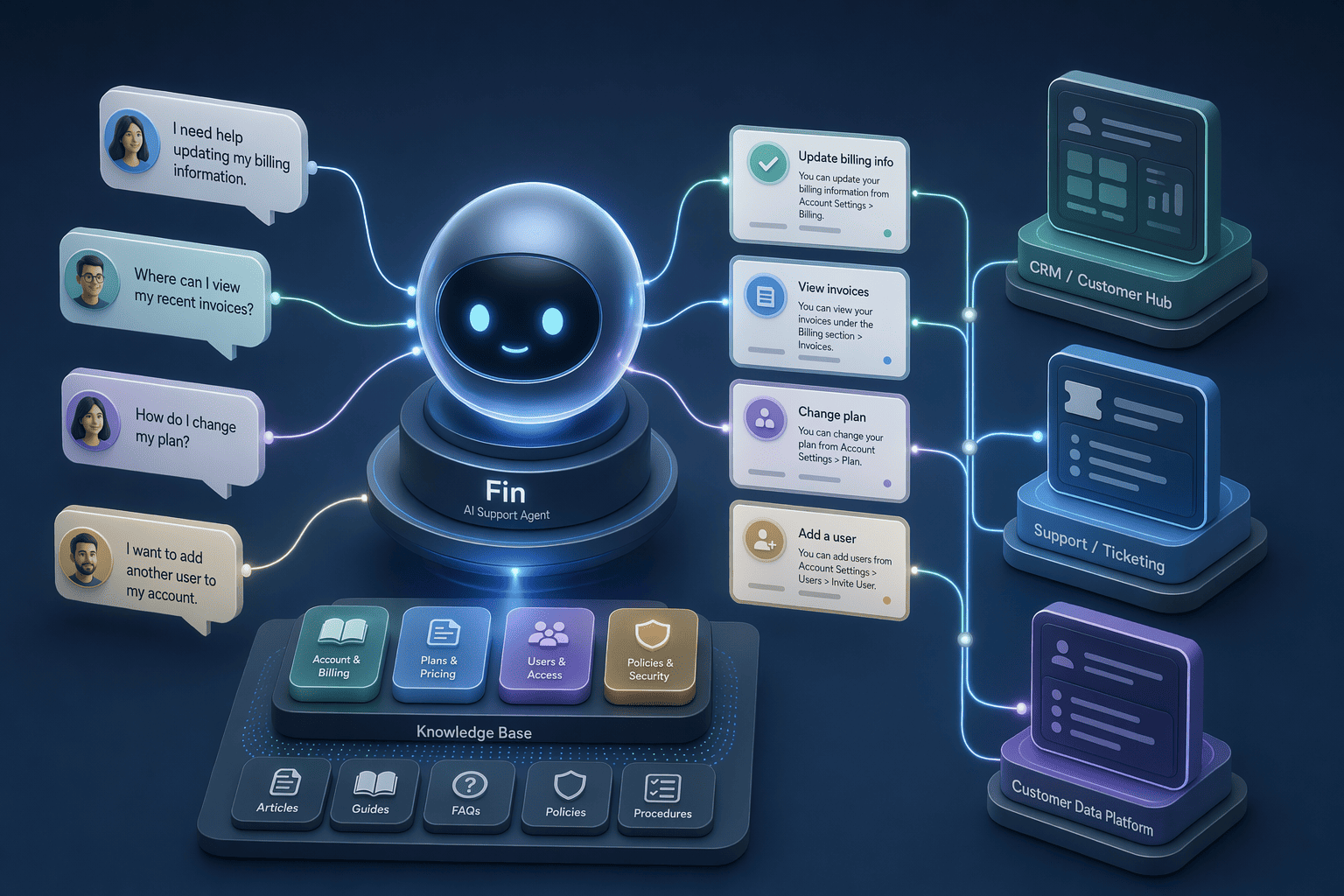
Intercom Fin: AI-Powered Resolution and Workflow Automation
Fin answers customer questions by pulling from help centers and knowledge bases. The platform integrates with Salesforce, HubSpot, and Zendesk, syncing ticket deflection workflows directly into existing CRM infrastructure. For straightforward FAQ-type questions, Fin handles a meaningful percentage of support tickets, reducing agent workload in documentation-heavy environments.
Pricing and Enterprise Feature Set
Intercom's pricing starts at $74/month but scales to $300, $1,000+ as seats, contacts, and usage grow. The platform offers GDPR compliance and audit trails suited for enterprise teams. Best for SaaS companies with 10+ support agents and extensive documentation; the text-first embed approach complements EchoLeads' voice-calling model for high-intent B2B leads requiring conversational depth.
3. Drift: Best for B2B Sales Meeting Automation
Conversational Marketing and Lead Routing
Drift positions itself as a conversational marketing platform that turns website visitors into qualified sales meetings. When a high-intent lead engages with Drift's chat widget, the platform routes them to the appropriate sales rep based on territory, product line, or account tier. Meeting booking happens inline, prospects can view a rep's calendar and schedule a call without leaving the conversation. The workflow integrates with Salesforce, syncing lead qualification data, conversation transcripts, and booked meetings into CRM records in real time. While voice-AI platforms like Synthflow have raised $20 million to build conversational calling agents, Drift remains text-first: website chat widgets and email playbooks. For teams handling inbound leads who prefer typing to talking, Drift's chat-to-calendar automation addresses the scheduling gap without requiring phone follow-up.
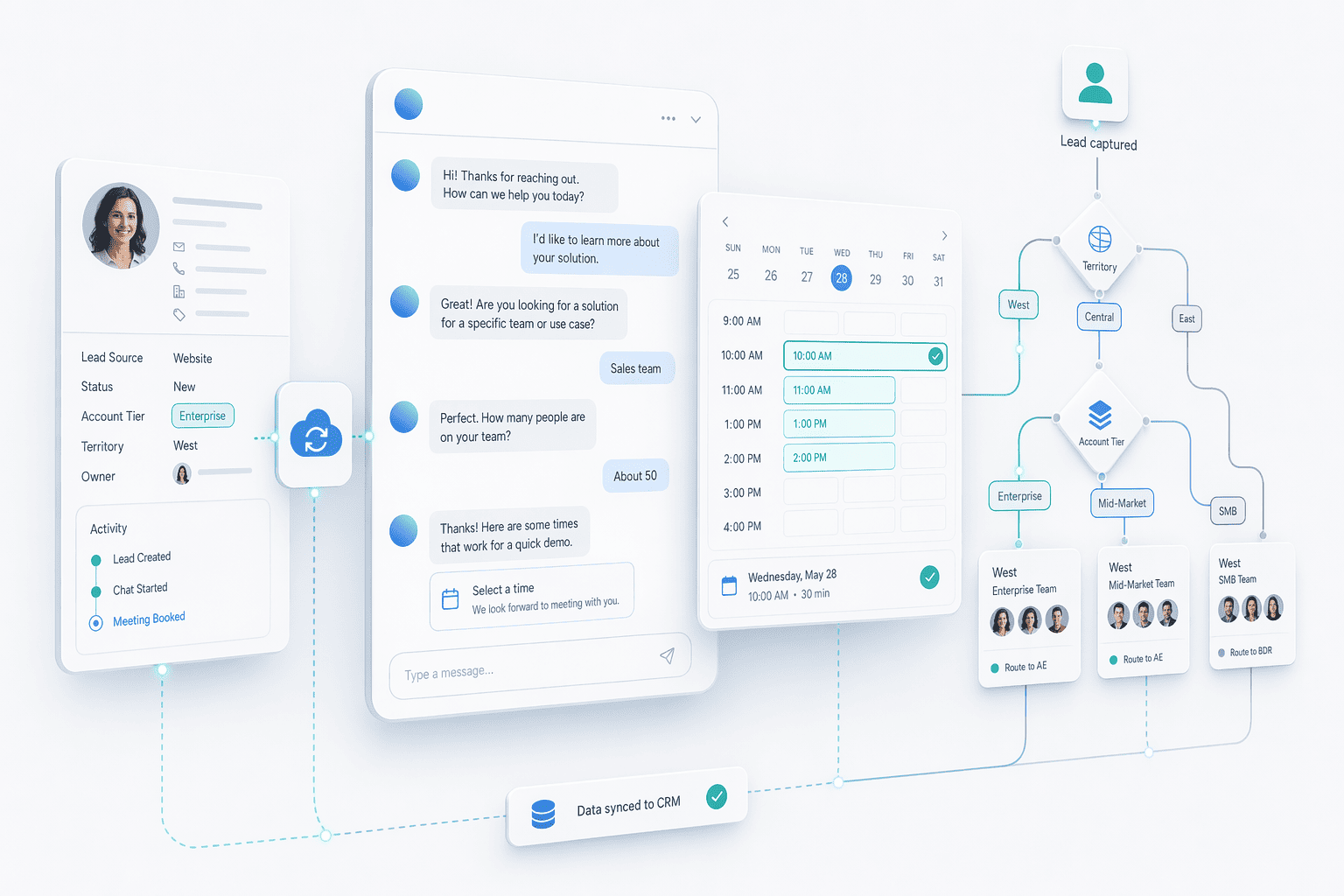
Best For: Mid-Market B2B Sales Teams
Drift fits mid-market B2B sales teams running Salesforce and prioritizing chat-based lead conversion. Pricing starts at $2,500/month (annual contract), making it more expensive than lighter chat tools but less complex than Intercom's enterprise tier. Pros: deep Salesforce integration, rep-routing logic, and calendar embedding. Cons: no voice calling, high starting price, and limited multichannel support beyond website chat. Teams needing phone qualification or WhatsApp follow-up will need to layer additional tools or consider voice-native platforms.
Platform | Starting Price | Free Trial | Lead Qualification | Multichannel | User Rating |
|---|---|---|---|---|---|
Drift | $2,500/mo | 14-day demo | Chat-based routing | Web chat only | 4.4/5 (G2) |
4. HubSpot Chatbot: Best for HubSpot CRM Users
Native CRM Integration and Workflow Automation
HubSpot Chatbot Builder delivers zero-friction integration for teams already using HubSpot CRM. Lead qualification workflows, meeting bookings, and contact updates sync natively, no API configuration or middleware required. Workflow automation runs inside the HubSpot ecosystem: chatbot conversations trigger deal-stage changes, email sequences, and task assignments without custom coding. For HubSpot users, this eliminates the setup overhead and per-conversation API calls that third-party chatbots impose. The trade-off: moving to a different CRM later locks you into HubSpot's data model and billing structure.

Free Tier Limitations and Upgrade Triggers
HubSpot's free tier caps monthly conversations at 1,000 and limits form fields to three per chatbot. Reporting depth is minimal, you see conversation count but not qualification funnel drop-off or reply-time distribution. Upgrade triggers hit fast: SMS notifications for WhatsApp integration incur per-message overage fees beyond the included quota, and payment processing for booking-linked transactions requires Marketing Hub Professional ($800/month) or higher. Before committing, verify SMS quotas, payment gateway minimums, and seat limits, free-tier conversation volume may not cover peak lead flow for growing teams.
Platform | Starting Price | Free Trial | Lead Qualification Workflows | Multichannel Support | User Rating |
|---|---|---|---|---|---|
EchoLeads | $249/mo | 14 days | AI-driven, bi-directional CRM sync | Phone, WhatsApp, Instagram, chat | 4.7/5 |
Intercom | $39/seat/mo | 14 days | Rules-based, API integrations | Chat, email, SMS | 4.5/5 |
Drift | $2,500/mo | Demo only | Playbook-driven, API integrations | Chat, email | 4.4/5 |
HubSpot Chatbot Builder is best for teams already inside the HubSpot CRM who need native workflow automation and want to avoid API setup. For teams comparing voice-based lead qualification across Indian languages, platforms like CarmaOne and EchoLeads handle phone-based outreach at scale, HubSpot's chatbot remains text-first and lacks the voice calling workflows that close deals faster in phone-heavy markets.
5. Tidio: Best for E-Commerce AI Resolution
E-Commerce Integrations and Order Automation
Tidio integrates natively with Shopify and WooCommerce, enabling online stores to deploy AI-powered customer service workflows directly within their store backend. The platform automates order tracking inquiries, abandoned cart recovery sequences, and product recommendation flows, addressing the most common support queries that burden e-commerce teams. Tidio's e-commerce automation focuses on high-frequency, low-complexity conversations, letting human agents handle escalations.
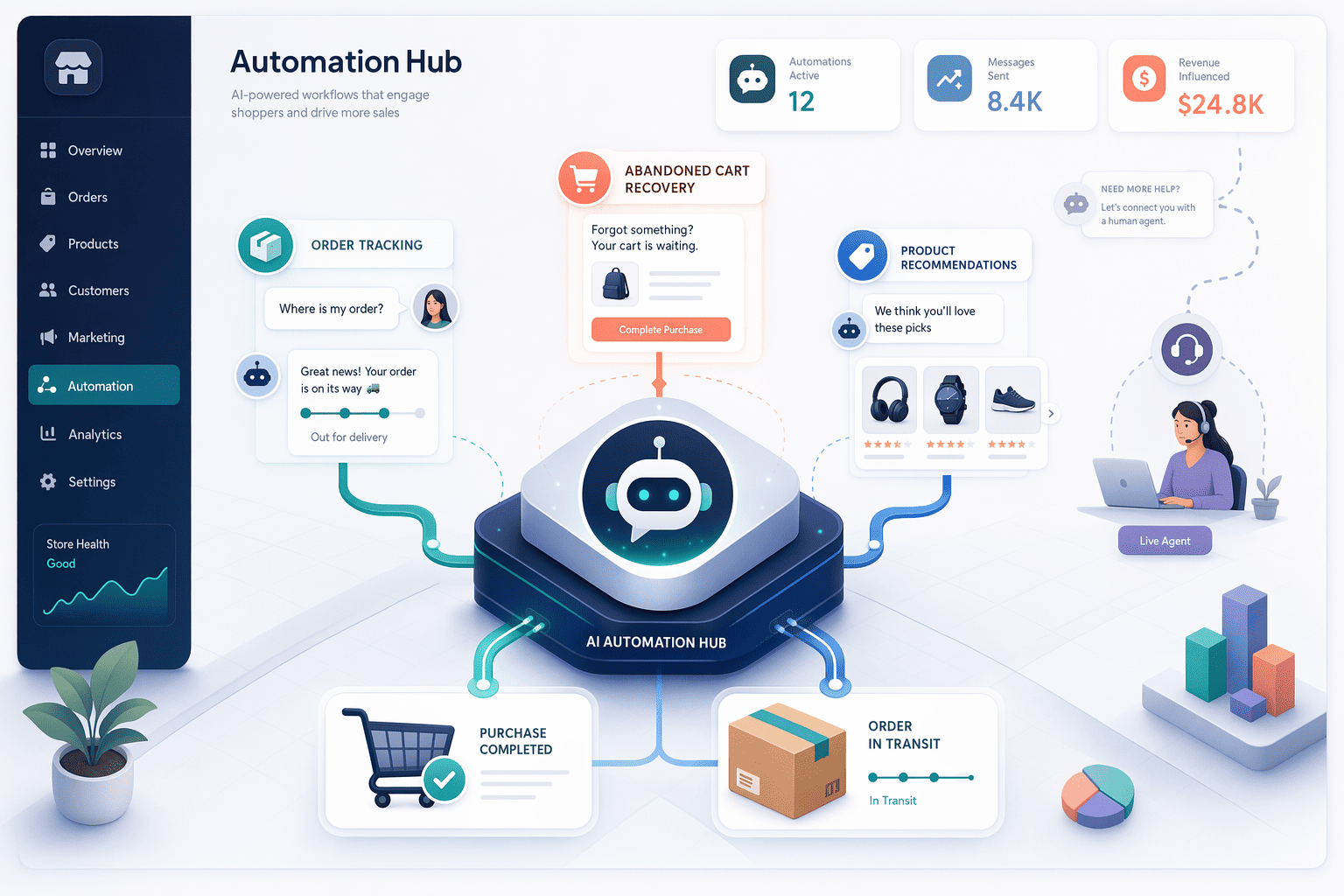
Best For: Online Stores with High-Volume Support Queries
Tidio suits Shopify and WooCommerce merchants handling repetitive order status, refund, and product availability questions. Paid plans start around $29/month, with a free tier for basic chatbot functionality. The platform excels at e-commerce-specific workflows but lacks the deep lead qualification logic required for B2B sales cycles or complex appointment booking scenarios.
6. Landbot: Best for No-Code Custom Experiences
Visual Builder and Customization Depth
Landbot's drag-and-drop conversation builder lets marketers design text-based chatbot flows without coding. The platform offers conditional branching, pre-built templates, and API integrations for CRM syncing and lead routing. This visual approach works well for straightforward qualification workflows, budget questions, contact capture, appointment booking, where conversation paths follow predictable decision trees.
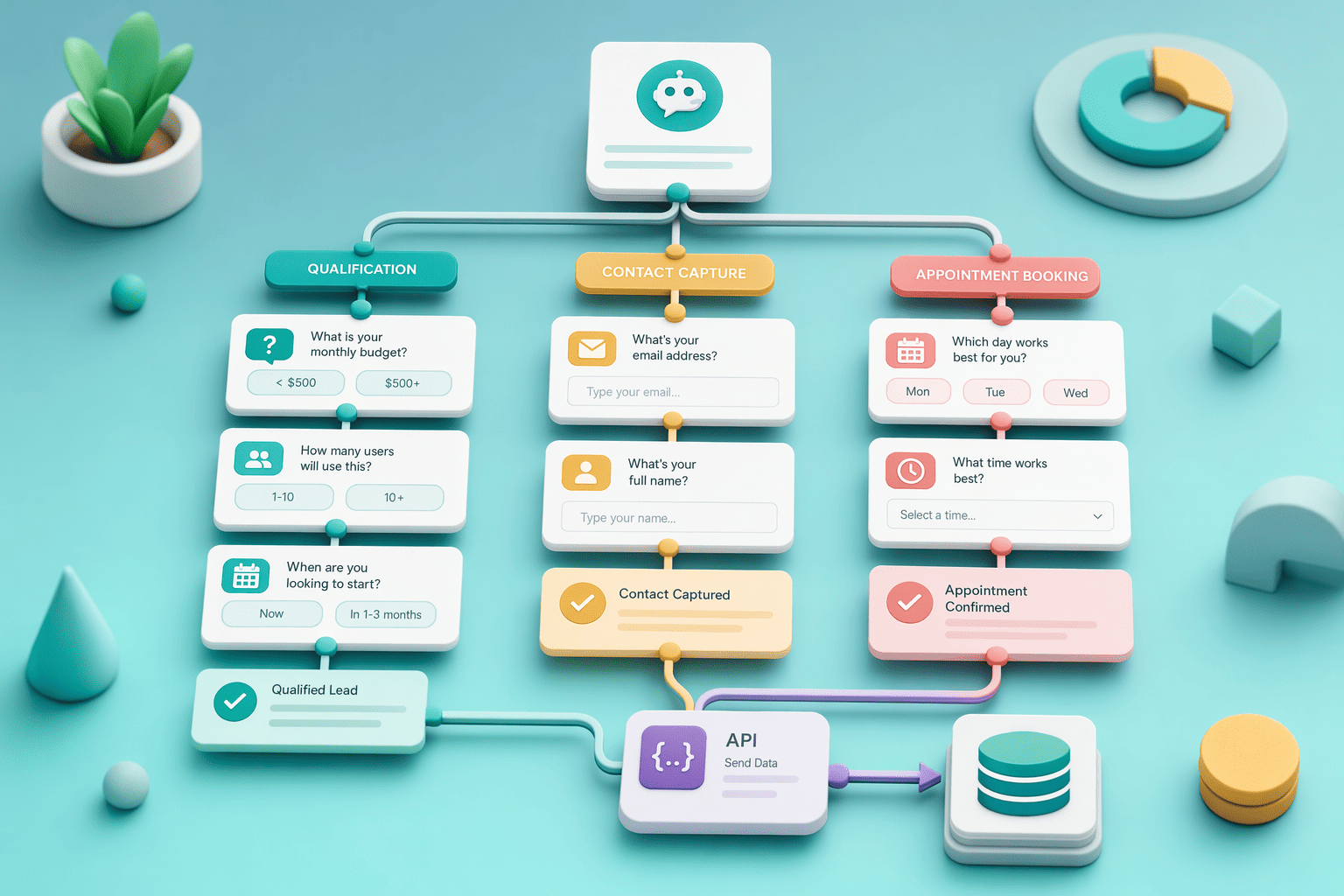
No-Code Limitations and Developer Handoff Triggers
Despite no-code marketing claims, complex customization workflows still require developer support. Multi-step conditional branching with 5+ decision nodes, custom API integrations beyond pre-built connectors, sentiment-based routing, and advanced lead scoring typically need technical configuration. Contrast this with Vyora AI's voice-first no-code platform, which deploys conversational voice agents in regional languages without developer handoff for standard use cases. Text-based builders like Landbot handle web chat flows efficiently but lack native voice capabilities.
7. Manychat: Best for Meta Ads Integration
Instagram DM and Facebook Messenger Automation
Manychat automates Instagram DMs and Facebook Messenger conversations, with native Meta Ads click-to-message integration for social-commerce lead capture. Businesses configure flows that respond to story replies, ad clicks, and comment triggers, qualifying leads and booking appointments within Messenger or Instagram. While Manychat supports text-based messaging in multiple languages (including Hindi and English), voice platforms like Bolna AI power calls in Hindi, Tamil, and Telugu. That text-vs-voice gap means social-commerce brands needing voice follow-ups must bridge the channel separately.
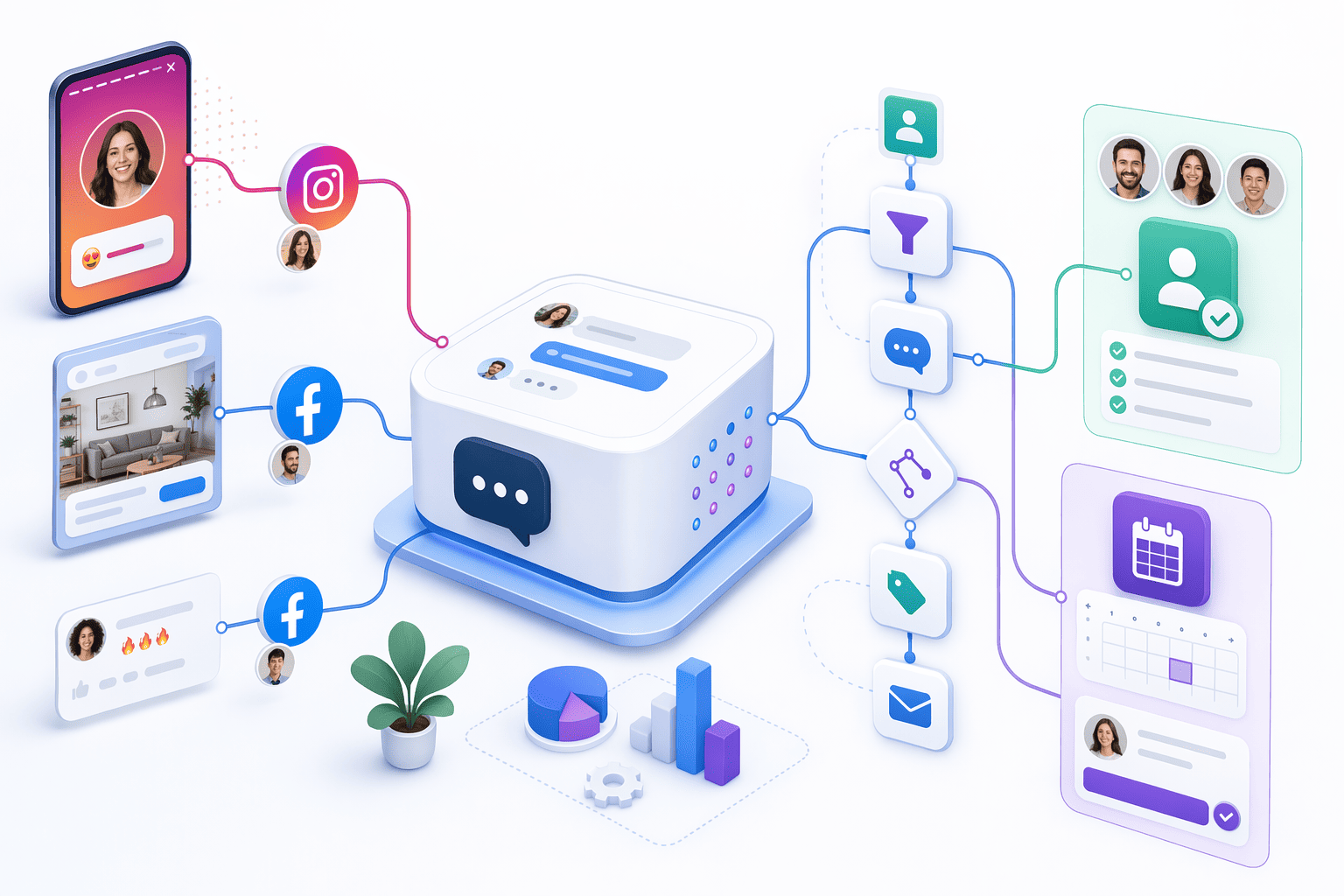
Best For: Social Commerce and Meta Ads Lead Capture
Manychat suits brands running Meta Ads with click-to-message campaigns, social sellers, influencer stores, and D2C ecommerce on Instagram. Pricing starts at free (limited flows), with paid plans from $15/month. Pros: smooth Meta ecosystem integration, drag-and-drop builder. Cons: limited voice calling, no native phone support. EchoLeads, by contrast, handles phone, WhatsApp, and Instagram with multilingual voice qualification, bridging text and voice channels for teams needing omnichannel lead automation beyond Messenger.
8. Botsonic: Best for Website Embed and GPT-Powered Chat
GPT-Powered Knowledge Base and Website Embed
Botsonic trains chatbots on GPT models by scraping website content or uploading documents, enabling conversational responses grounded in your knowledge base. The platform offers custom branding and a website embed widget that deploys in minutes without backend code.
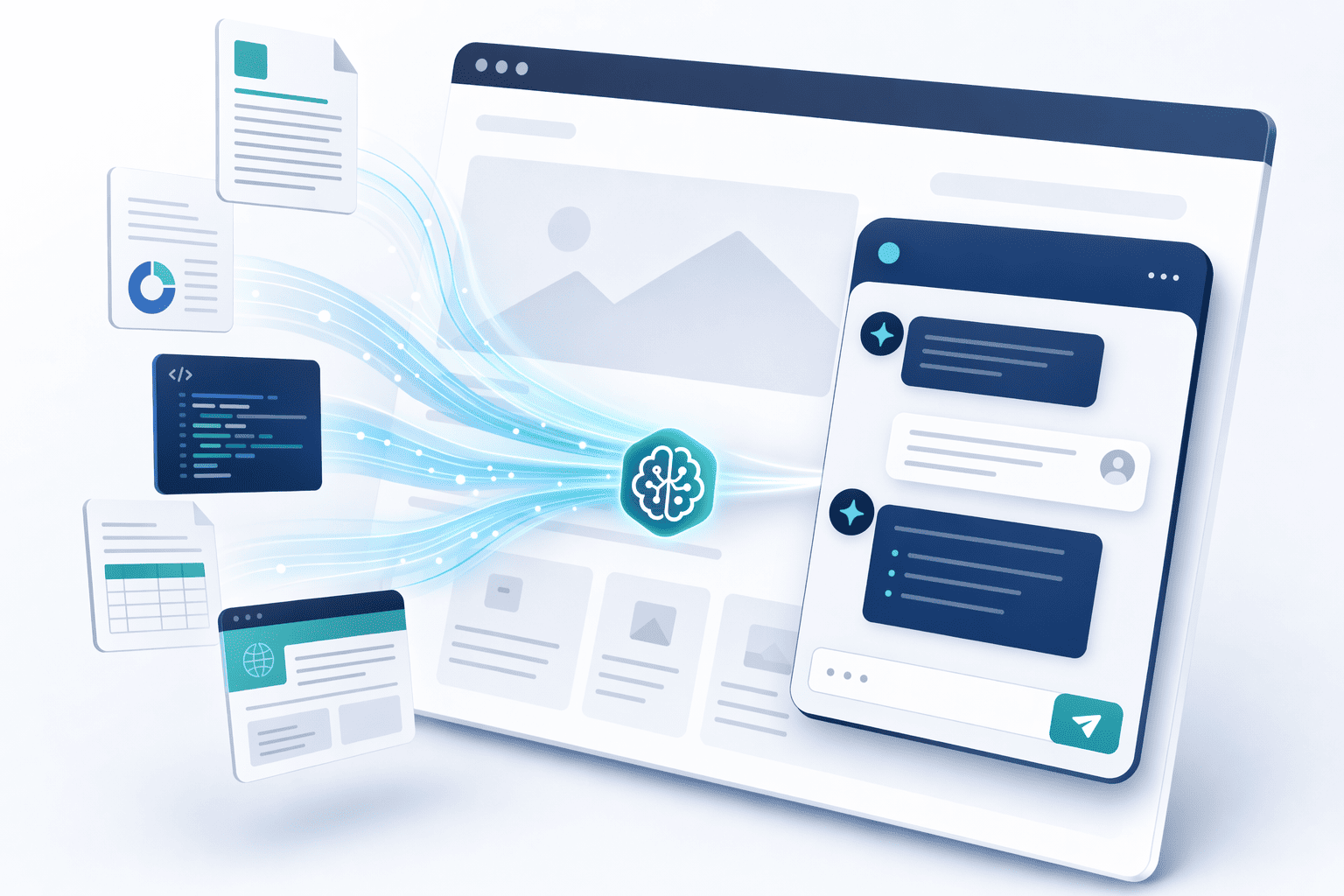
Best For: Simple Website Lead Capture with Minimal Setup
Botsonic suits small businesses prioritizing speed-to-deployment over CRM automation. Unlike platforms requiring field mapping, Intercom's deep CRM sync or EchoLeads' omnichannel voice and WhatsApp workflows, Botsonic skips integration complexity. Teams gain instant website chat but forfeit automatic lead routing and multi-channel orchestration.
Beyond individual platform capabilities, choosing between voice and text lead capture depends on your sales cycle complexity, conversation depth requirements, and lead volume.
Comparison Table: Lead Capture Channels, CRM Integrations, and Pricing
This table compares all 8 platforms on lead capture channels, CRM integration depth, multilingual support, starting price, and user ratings. Focus on multichannel support if you need voice + chat, bi-directional CRM sync for automated pipeline updates, and price-to-rating ratio for budget-conscious teams.
Platform | Lead Capture | CRM Integration | Multilingual | Starting Price | Rating |
|---|---|---|---|---|---|
EchoLeads | Voice, WhatsApp, Instagram, Website | Bi-directional: Salesforce, HubSpot, Pipedrive, Zoho | 70+ languages | $25/month | Not disclosed |
Intercom | Website chat, Email | Native CRM + API | Limited | $74/month | 4.5/5 (G2) |
Tidio | Website chat | Shopify, WooCommerce | Basic | Free tier available | 4.7/5 (Capterra) |
Landbot | Website, WhatsApp | Zapier integrations | Multi-language | $40/month | 4.6/5 (G2) |
Drift | Website chat | Salesforce native | English primary | $2,500/month | 4.4/5 (G2) |
Lindy | Website, Email | API integrations | English primary | Not disclosed | Not disclosed |
Salesforce Marketing Cloud | Email, Website | Native Salesforce | Multi-language | Enterprise pricing | 4.0/5 (G2) |
EchoLeads and Intercom lead on multichannel support, EchoLeads covers voice, WhatsApp, Instagram, and website, while Intercom focuses on website chat and email. For CRM automation, EchoLeads integrates bi-directionally with Salesforce, HubSpot, Pipedrive, and Zoho, updating lead records in real time. Drift and Salesforce require enterprise pricing, while Tidio offers a free tier with meaningful lead-capture functionality. EchoLeads' $25/month flat rate delivers strong value for teams needing omnichannel automation without per-seat charges.
Voice vs. Chat: When to Choose Each Lead Capture Method
Voice Calling: High-Intent B2B, Complex Products, Human-Like Conversation
Voice calling outperforms text chat when sales cycles demand multi-question qualification and human-like conversation depth. High-intent B2B leads, enterprise SaaS demos, commercial loan applications, insurance policy consultations, respond better to voice agents that probe budget, decision-making authority, timeline, and technical requirements in real time. Complex products requiring nuanced explanation (admissions interviews, financial advisory calls) benefit from voice's ability to detect tone, urgency, and hesitation, signals text chat cannot capture. EchoLeads handles simultaneous conversations across phone, WhatsApp, and Instagram, qualifying leads in seconds with conversational intelligence and structured questions about budget, location, authority, and timeline. Voice agents excel when conversion hinges on trust-building dialogue rather than rapid transaction.
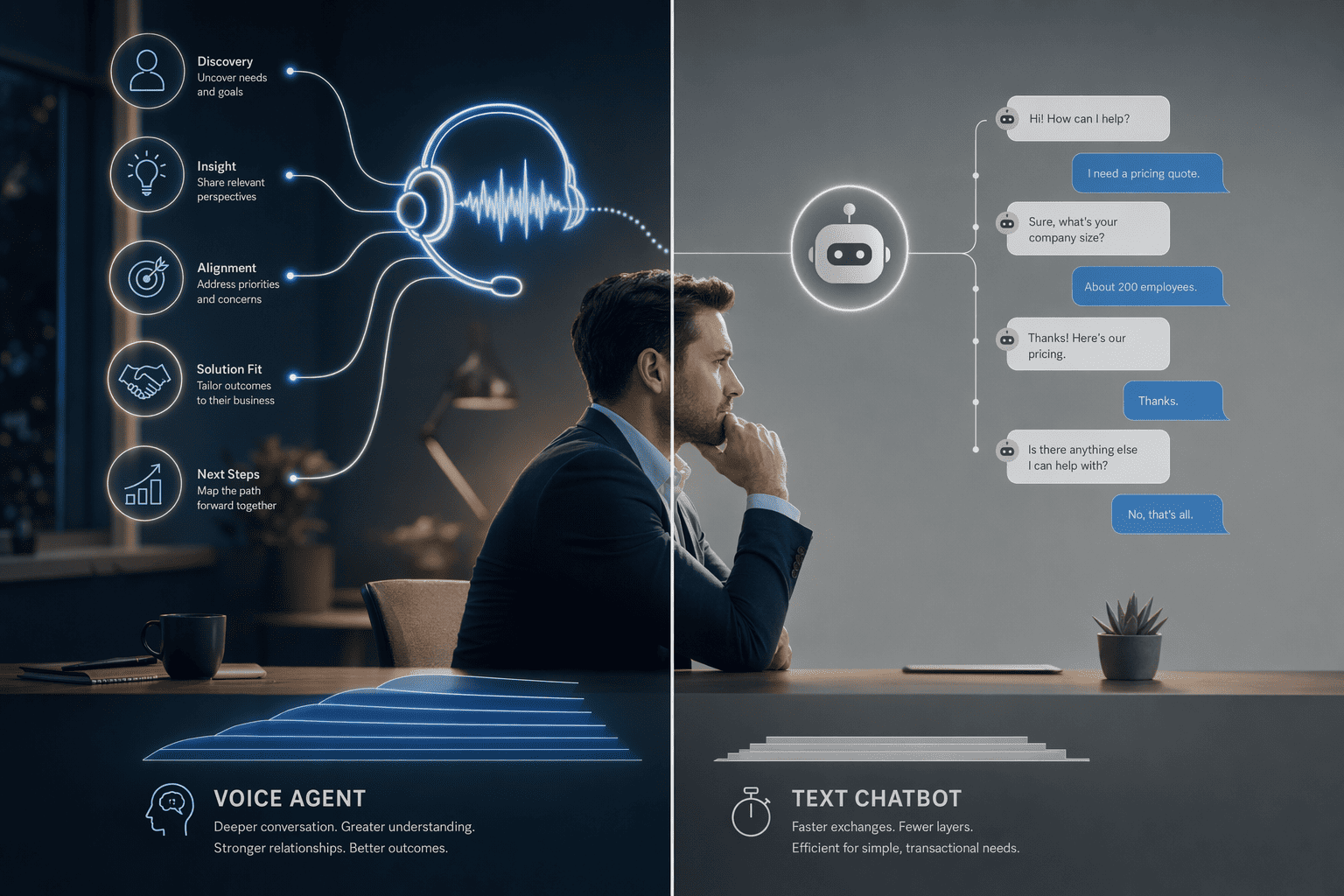
Text Chat: High-Volume, 24/7 Availability, E-Commerce Support
Text chat widgets outperform voice calling for high-volume lead capture where speed and asynchronous availability matter more than conversation depth. E-commerce order tracking, FAQ resolution, and low-intent browsing scenarios favor text: shoppers can multitask, copy product links, and revisit transcripts. Respond.io reports that AI-driven lead capture tools deliver 70% more lead contact data captured and a 24% increase in sales, benefits amplified when text chat handles thousands of concurrent website visitors without staffing costs. Text chat scales instantly, 100 simultaneous inquiries cost the same as one. EchoLeads operates 24/7 across multiple time zones with unlimited agents for calls and messaging, enabling round-the-clock lead engagement. Choose text when conversion volume outweighs per-lead qualification depth.
Hybrid: Omnichannel Conversation Continuity
Mid-market businesses needing context continuity deploy hybrid omnichannel workflows: a lead starts on web chat, escalates to WhatsApp for asynchronous follow-up, and converts via voice qualification call. The challenge most platforms fail to solve is context preservation, leads forced to repeat details across channels abandon. EchoLeads provides bi-directional CRM sync with major platforms, writing back qualification scores, conversation transcripts, and next-step recommendations without manual data entry. When a lead moves from web chat to WhatsApp to phone, the voice agent accesses full conversation history, enabling continuity competitors requiring manual handoff cannot match.
How to Choose the Right AI Chatbot for Your Business
Assess CRM Integration Requirements: Identify whether your workflow demands bi-directional sync (contact updates flow both ways), one-way logging (chatbot writes to CRM only), or API-only connectivity. Platforms like EchoLeads provide bi-directional CRM sync with major platforms, writing back qualification scores, conversation transcripts, and next-step recommendations without manual data entry. Interakt offers Shopify and WooCommerce integrations with a team inbox, while API-only tools require custom development to handle field-mapping errors or sync collisions.
Prioritize Lead Capture Channels: List your primary lead capture channels, website chat, WhatsApp, Instagram DMs, voice calling, and match these to platform multichannel support. EchoLeads supports sales, lead qualification, inbound enquiry handling, appointment booking, CRM integrations, and multilingual follow-ups across omnichannel workflows including WhatsApp, voice, and CRM. Test context preservation during trials: initiate a conversation on web chat, continue it on WhatsApp, then switch to voice, platforms that lose context force leads to repeat information.
Define Budget and Pricing Model Fit: Evaluate pricing models (usage-based, per-user, flat-rate) and identify hidden cost triggers before committing to free tiers. Free tiers often have hidden limits, verify SMS quotas, payment processing fees, and seat minimums before committing. Ask vendors: What is the SMS overage rate? Are there payment gateway minimums? Do seat limits apply to read-only users? EchoLeads has custom pricing, best for high-volume sales teams needing end-to-end automation beyond appointment capture.
Verify Multilingual and Regional Accuracy: Test multilingual support claims with sample conversations in target languages (Hindi, Kannada, Telugu) during trials. No Kannada-specific accuracy benchmarks are published for any platform including EchoLeads, run sample conversations in Hindi, Kannada, and Telugu during trials to verify accuracy claims before production deployment. Convozen provides multilingual support, analytics and compliance, and enterprise-grade inflows. AI can infer buying intent from behavioral signals and draft personalized outreach, but accuracy in regional languages varies, always test before committing.
Voice-first platforms like EchoLeads deliver human-like conversation depth for high-intent B2B leads but require higher per-conversation costs than text-chat widgets, text-first platforms like Intercom and Drift suit high-volume 24/7 web visitor engagement at lower marginal cost. Platforms with native CRM integrations (HubSpot, Salesforce Marketing Cloud Account Engagement) offer zero-friction setup for existing CRM users but limit flexibility for teams using multiple CRMs, API-first platforms like EchoLeads and Intercom support bi-directional sync across Salesforce, HubSpot, Pipedrive, and Zoho at the cost of initial field-mapping configuration.
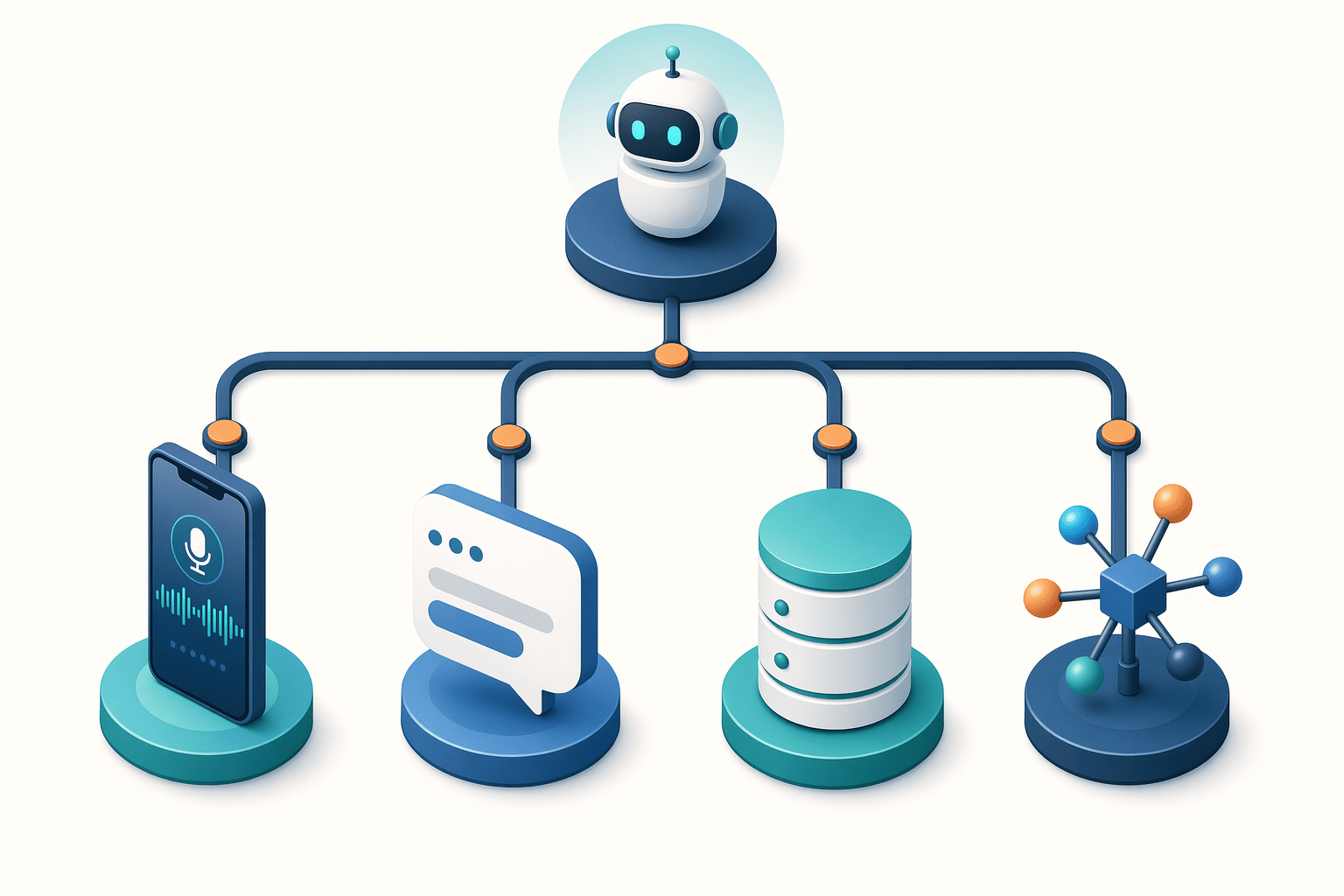
As voice AI accuracy improves and multilingual support expands to regional languages (Kannada, Telugu, Tamil), expect voice-first lead qualification to become the default for complex B2B products where conversation depth drives conversion, while text-chat widgets remain the dominant channel for high-volume e-commerce and low-intent browsing scenarios.
Start a free trial of EchoLeads to test voice-first omnichannel lead qualification across phone, WhatsApp, and web chat with bi-directional CRM sync, or explore the comparison table above to match your lead capture channels and CRM requirements with the right platform.
Frequently Asked Questions
What is the best AI chatbot for lead generation in 2026?
EchoLeads leads voice-first omnichannel B2B lead qualification, Intercom excels in enterprise text chat performance, Drift automates B2B sales meeting booking, HubSpot suits native CRM users, and Tidio serves e-commerce order tracking. The best choice depends on your lead capture channels (voice vs text), CRM integration depth, and business model.
How do AI chatbots improve lead generation compared to manual forms?
AI chatbots capture 70% more lead contact data and increase sales by 24% compared to static forms. Conversational interfaces reduce friction, dynamically capture qualification data, and engage leads 24/7 without human staffing costs. Text chat widgets enable multitasking and asynchronous availability for high-volume scenarios.
What are the hidden costs of free AI chatbot plans?
Free tiers often have hidden limits, verify SMS quotas, payment processing fees, and seat minimums before committing. HubSpot caps monthly conversations at 1,000 and limits form fields to three per chatbot with minimal reporting. Common hidden costs include SMS overage fees for WhatsApp integration, payment gateway minimums, conversation volume caps, and read-only seat charges.
Can AI chatbots handle multilingual lead qualification in Indian languages?
Platforms like EchoLeads, Bolna AI, TaskVox, and Voicory support Hindi, Kannada, and Telugu voice calling and text chat. However, no Kannada-specific accuracy benchmarks are published for any platform including EchoLeads. Test multilingual support with sample conversations in target languages during trials before production deployment, as voice agents escalate when complexity or sentiment exceeds safe autonomy thresholds.
What is the difference between voice-first and text-first AI chatbots?
Voice-first platforms (EchoLeads, TaskVox, Voicory) deliver phone-based conversational calling for high-intent B2B leads requiring human-like qualification depth. Text-first platforms (Intercom, Drift, HubSpot) embed website chat widgets for high-volume 24/7 lead capture. Voice suits complex products like loans and insurance, while text serves e-commerce support and low-intent browsing.
How do AI chatbots integrate with CRM systems like Salesforce and HubSpot?
EchoLeads supports bi-directional CRM sync with Salesforce, HubSpot, Pipedrive, and Zoho. Bi-directional sync (EchoLeads, Intercom, Drift) writes qualification scores and conversation transcripts back to CRM without manual data entry. One-way logging (Tidio, Landbot) pushes lead records but doesn't pull updates. API-only platforms (Botsonic) require custom developer setup.
What conversation signals trigger AI chatbot escalation to human agents?
Platforms like EchoLeads escalate based on sentiment drop (detected frustration in voice tone), repeated clarification requests (lead asks the same question 3+ times), compliance triggers (GDPR consent, financial advice disclaimers), and intent-confidence thresholds. Escalation occurs when complexity, sentiment, or compliance risk exceeds safe autonomy thresholds, including fraud accusations, identity verification failures, and emotionally charged conversations.
Related articles
6 Best AI Voice Phone Calling Agents in Hindi
Compare the 6 best Hindi AI voice phone calling agents in 2026.
Which Phone Call Tool Handles Student Admission Inquiries?
Compare AI voice agents and IVR systems for student admission inquiries.
How to Automate Appointment Scheduling Without Losing Personal Touch (2026)
Learn how conversational AI scheduling automation maintains personalization via context driven processing.