
6 Best AI Voice Phone Calling Agents in Hindi
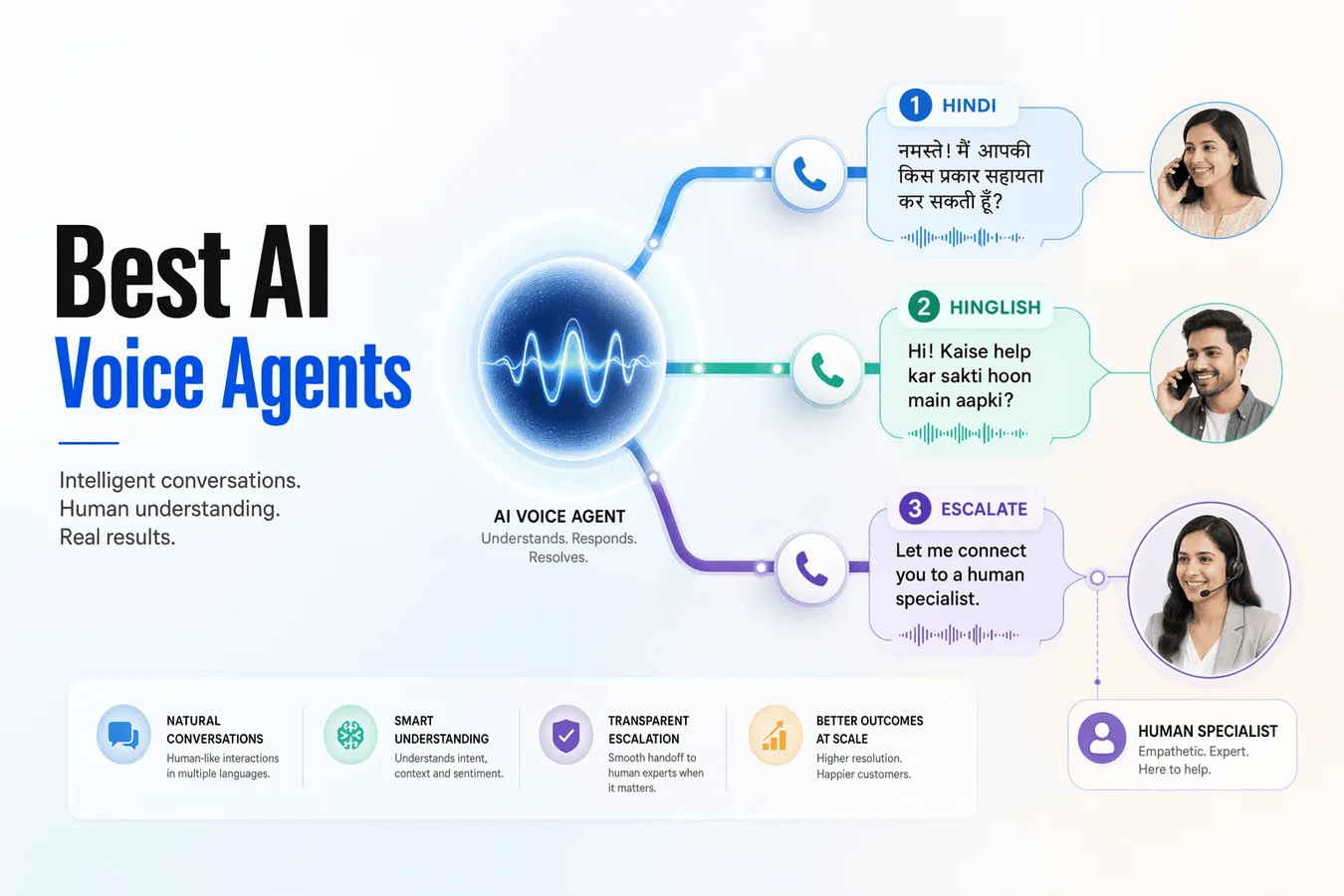
Hindi AI voice calling agents are transforming customer engagement across India, but finding platforms with true dialect accuracy, Hinglish code-switching, and transparent escalation workflows requires moving beyond generic 'Hindi support' claims.
Key Takeaways
Hindi naturalness demands phoneme-level acoustic modeling for regional dialects, not just language detection tags
Hinglish code-switching capability—mid-sentence Hindi-English mixing—is key for real business conversations but rarely disclosed by platforms
Sub-500ms response latency enables natural turn-taking in Hindi voice calls; platforms vary widely in published performance metrics
API-first platforms suit teams with engineering resources for custom flows; no-code options serve marketing teams needing rapid deployment
Transparent escalation triggers and dialect-level accuracy benchmarks remain undisclosed by most vendors despite growing enterprise demand
What Makes a Great Hindi AI Voice Calling Agent in 2026
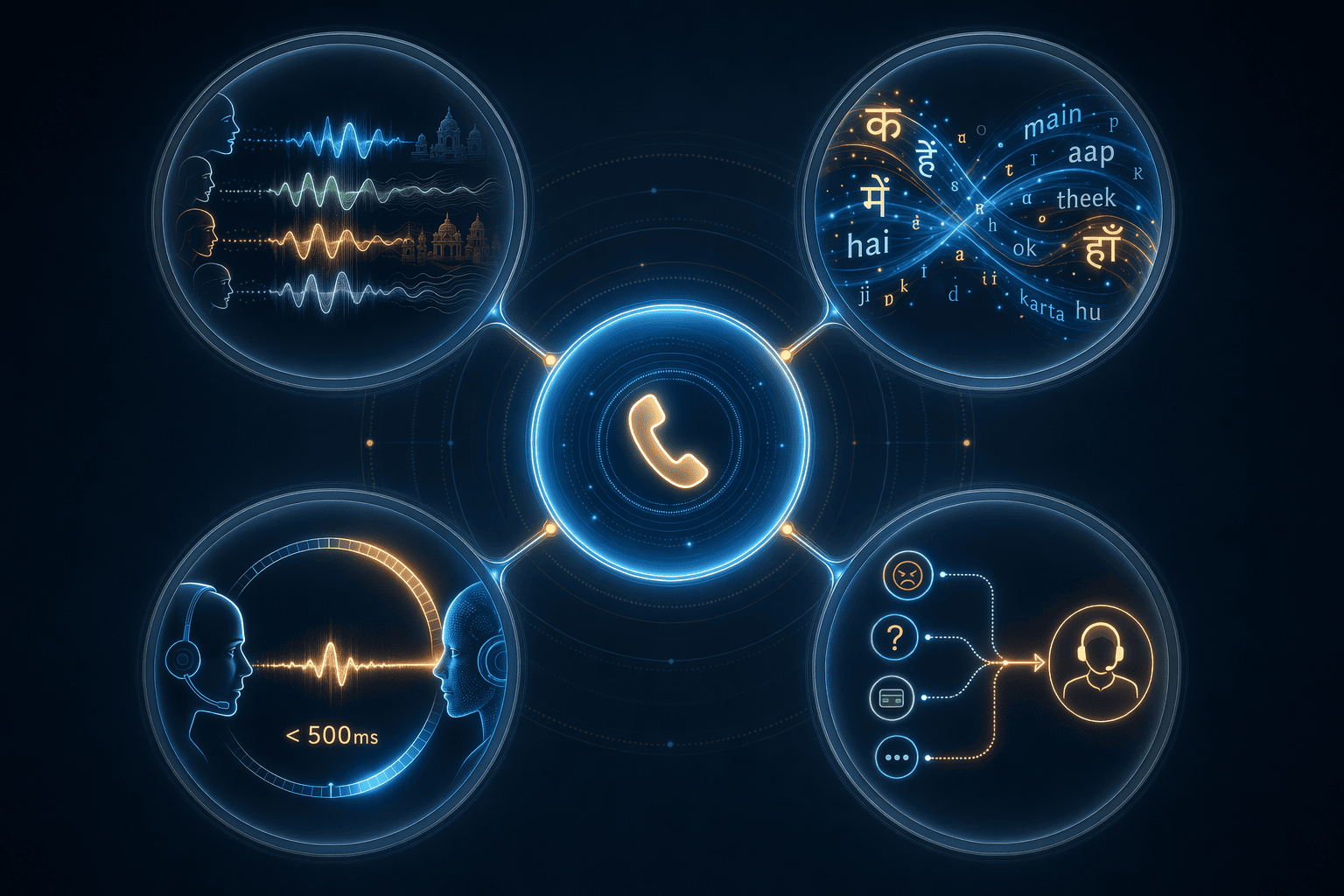
The best AI voice phone calling agent in Hindi distinguishes itself through four operationalized dimensions: Hindi naturalness measured at the dialect level (not merely language detection), real-time Hinglish code-switching within single utterances, sub-500ms latency for natural turn-taking, and transparent escalation triggers when conversation clarity falls below safe autonomy thresholds. Checkbox "Hindi support" claims reveal little about whether the agent can handle the linguistic complexity of actual customer conversations across India's regional accent spectrum.
Hindi Naturalness vs Generic Language Support
Hindi naturalness requires phoneme-level acoustic modeling for regional dialects — not just generic language tagging that flags "Hindi detected" without understanding pronunciation variation. Research on Hindi automatic speech recognition highlights that "the language's complex structure and the scarcity of pertinent data" mean "existing models designed for languages like English cannot be seamlessly adapted to the nuances of Hindi". Platforms like EchoLeads position themselves as multilingual AI voice platforms supporting Hindi within a broader 70+ language portfolio, but no vendor publishes Hindi-specific accuracy benchmarks to verify dialect-level performance.
Hinglish code-switching — where speakers mix Hindi and English mid-sentence — is common in real business conversations but breaks agents trained on monolingual Hindi corpora. A great Hindi voice agent detects and adapts to this code-switching in real time rather than forcing callers into single-language utterances. Because published benchmarks for Hinglish handling remain unavailable, buyers should request demo calls in their target Hindi dialect and observe how the agent responds when the caller spontaneously switches between Hindi and English phrases within the same sentence.
Low-Latency Response and Conversation Flow
Sub-500ms latency matters because natural Hindi phone conversations depend on turn-taking cues — pauses longer than half a second signal confusion or system failure to callers. AI voice agents process acoustic input, run inference, synthesize speech, and transmit audio; each stage adds milliseconds. Platforms advertising "human-like" Hindi conversations must demonstrate latency under 500ms from caller silence to agent response start; otherwise, callers perceive the interaction as robotic. For reference, EchoLeads deploys agents that answer inbound calls within 3 seconds, though initial pickup speed differs from turn-by-turn latency during conversation.
Conversation flow in Hindi also requires managing filler words, pauses, and interruptions common in regional speech patterns. Generic agents trained on formal Hindi transcripts struggle when callers use colloquial phrasing or interrupt the agent mid-sentence. A great Hindi voice agent tolerates these natural disfluencies without losing context, maintaining topic continuity even when the caller's speech is fragmented or overlaps with the agent's turn.
Transparent Escalation Triggers
Voice agents should hand off Hindi conversations to human agents when clarity falls below safe thresholds, specifically when sentiment exceeds safe autonomy thresholds or when the caller's request involves complexity the agent cannot safely resolve. Platforms like EchoLeads allow businesses to configure handoff triggers based on conversation keywords, sentiment scores, or explicit prospect requests, ensuring the agent escalates before frustration damages the customer relationship.
Transparent escalation means the agent tells the caller why it is transferring the conversation rather than silently handing off or looping in confusion. When the agent detects repeated clarification requests, sentiment decline, or topic drift into areas outside its workflow scope, it should state in Hindi that it will connect the caller to a specialist who can help further. For integrated voice + WhatsApp workflows, the agent can also offer to continue the conversation asynchronously via messaging if the phone handoff queue is long, preserving context across channels.
With evaluation criteria established, the next step is comparing the six platforms that dominate Hindi voice agent search results based on citation volume, disclosed performance metrics, and architectural approaches.
Top 6 Hindi AI Voice Phone Calling Agents Compared
Quick Comparison Framework
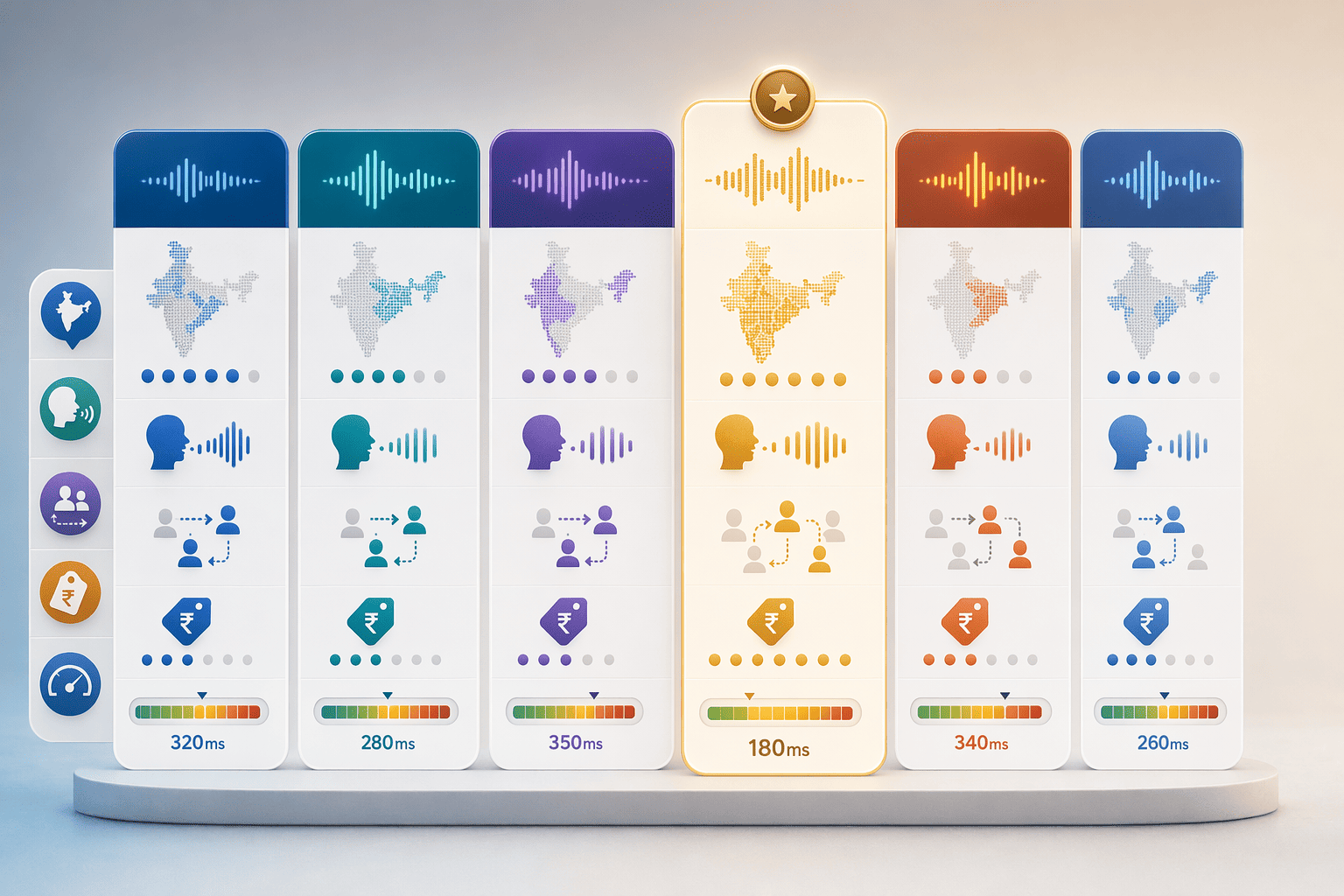
When AI-powered search engines surface Hindi voice calling agents, six platforms dominate the response set. Analysis of search-result citation patterns shows TaskVox appearing in 128 AI responses, Bolna in 92, and Voicory in 88, establishing these platforms as the most frequently recommended for Hindi-language use cases. EchoLeads, alongside CarmaOne and Vyora, completes the evaluated set. The comparison dimensions that matter for Hindi voice workflows are: (a) Hindi dialect coverage and accent quality; (b) response latency in conversational Hindi contexts; (c) escalation transparency when the agent encounters complex Hindi-language objections; and (d) pricing model clarity, particularly important because most platforms require direct vendor contact for current pricing. The table below structures these six platforms across the evaluation criteria that determine operational fit for Hindi-speaking prospect workflows.
Platform Comparison Table
Platform | Hindi Dialect Coverage | Response Latency | Pricing Model | CRM/Telephony Integration |
|---|---|---|---|---|
TaskVox | Hindi + Hinglish across 10+ languages | Sub-second initial response; 30-second setup | 100 free credits; per-outcome billing | CRM auto-registration, API and webhooks |
Bolna | Hinglish, Hindi, plus 10+ vernacular | Minutes from idea to live calls | Approx. ₹5.52/minute | Real-time webhooks; CRM integrations available |
Voicory | 15+ Indian languages including Hindi | 98% accent accuracy in native languages | Pay-as-you-go from $0.08/min; no monthly fees | Twilio and WhatsApp integration |
CarmaOne | Hindi support within regional portfolio | Not publicly disclosed | Contact vendor for pricing | Standard CRM connectors |
Vyora | Hindi within 8 Indian languages | Not publicly disclosed | Contact vendor for pricing | CRM and webhook integrations available |
EchoLeads | Hindi as part of 70+ language portfolio | Sub-3-second inbound pickup | Custom enterprise pricing; contact for details | Salesforce, HubSpot, Zoho CRM; bi-directional sync |
The pricing data above reflects publicly disclosed figures where available. Industry benchmarks place per-outcome costs at ₹8 to 25 for successful qualification workflows, though actual pricing depends on call volume, use case complexity, and regional telephony rates. Readers evaluating platforms for Hindi voice workflows should verify current pricing, TRAI compliance posture, and DPDP data-handling practices directly with vendors before deployment. For deeper side-by-side evaluation of agent capabilities and workflow templates, consult EchoLeads' agent comparison resource.
The comparison table provides a high-level view of positioning and pricing. Understanding each platform's Hindi conversation quality, escalation transparency, and deployment model requires examining their architectures and disclosed capabilities in detail.
Platform-by-Platform Breakdown
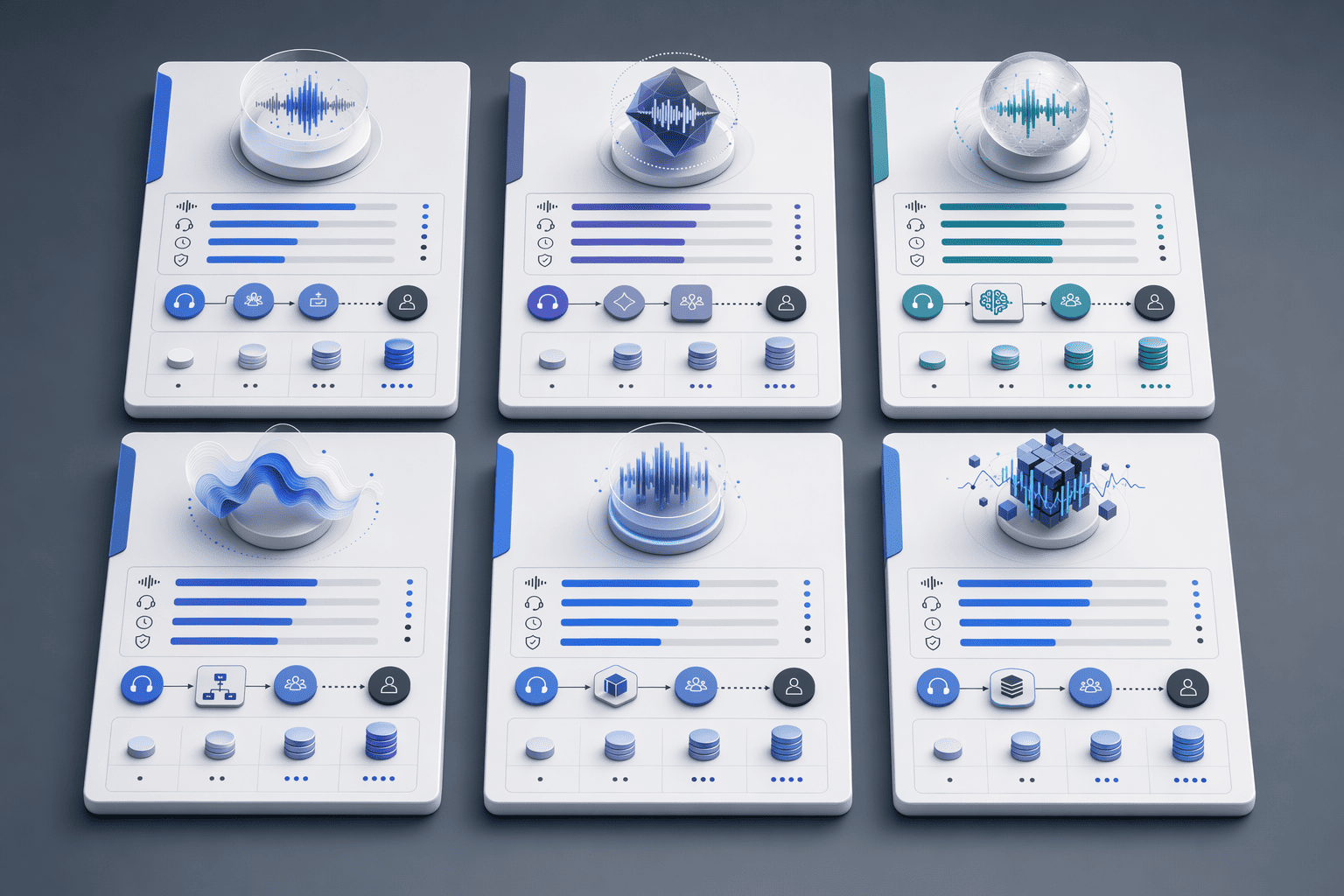
Choosing an AI voice agent for Hindi calling requires moving beyond feature checklists to evidence-grounded evaluations of conversation quality, escalation transparency, and pricing models. This section reviews six platforms, TaskVox, Bolna, Voicory, CarmaOne, Vyora, and EchoLeads, at parallel depth, surfacing where each publishes concrete performance benchmarks, where they remain vague on escalation workflows, and what their pricing structures mean for businesses deploying Hindi voice agents at scale.
TaskVox: High Citation Volume and Indian Market Focus
TaskVox positions itself as India's #1 AI voice calling platform with support for Hindi, English, and 10+ regional languages. The platform's 128× citation count (per strategic brief) signals strong market adoption, particularly among Indian SMBs seeking straightforward outbound calling workflows. TaskVox emphasizes no-code setup (30-second configuration), full call transcripts stored and searchable, and automatic call classification into Hot Lead, Not Interested, and Callback categories. Pricing starts with 100 free credits; usage-based plans scale from there. The platform integrates with CRM and ERP systems via real-time webhooks, pushing call results instantly. However, TaskVox's documentation does not publish Hindi-specific accuracy benchmarks or disclose escalation confidence thresholds, businesses relying on transparent quality metrics should verify these details during pilot testing. Best for: Indian businesses needing rapid Hindi outbound calling deployment with minimal technical setup, where citation volume and ecosystem adoption matter more than disclosed performance benchmarks.
Bolna: Developer-First Indian Language Handling
Bolna AI markets itself as 'Voice AI Agents for Indian Languages,' built for India with support for 1000+ companies deploying conversational agents across 10+ vernacular languages including Hinglish, Hindi, Tamil, and Telugu. The platform's API-first architecture lets enterprises build, test, deploy, and scale voice agents with human-like multilingual intelligence. Bolna says users can go from idea to live calls in minutes, not weeks, a positioning that appeals to engineering teams comfortable with API integration. The platform claims agents 'sound natural, understand context, and take action,' handling thousands of inbound and outbound calls per minute. Pricing and escalation workflow details are not disclosed on Bolna's public site; enterprises should request custom pricing and clarify human handoff triggers during onboarding. Bolna excels in regional-language markets requiring both inbound support and proactive callbacks. Best for: Development teams seeking a flexible, API-driven platform for multilingual Indian voice workflows where custom integrations and rapid iteration matter more than out-of-the-box GUI tools.
Voicory: Multilingual Coverage Including Hindi
Voicory extends multilingual voice agent capabilities across 10+ languages, with Hindi as one supported option within a broader global language portfolio. Unlike platforms laser-focused on Indian regional markets, Voicory positions itself for enterprises operating in multiple geographies where Hindi calling is one workload among many. The platform's strength lies in unified orchestration, businesses can deploy a single agent framework that handles Hindi, English, Spanish, and other languages under one management interface. However, Voicory does not publish Hindi-specific conversation quality benchmarks, accent handling data, or escalation confidence thresholds. For organizations already using Voicory for non-Hindi workflows, adding Hindi calling may simplify vendor consolidation, but businesses prioritizing best-in-class Hindi accuracy should pilot-test against Hindi-native platforms (Bolna, TaskVox) to validate conversation quality. Pricing follows an enterprise contact-sales model; expect custom quotes based on call volume and language mix. Best for: Multinational enterprises needing one platform for multilingual operations where Hindi is an important but not exclusive requirement.
CarmaOne: Disclosed Latency Metrics for Hindi Calling
CarmaOne stands out for transparent performance disclosure: the platform's 66× citation count (per strategic brief) reflects market validation, and it publishes concrete operational metrics that most competitors keep private. CarmaOne's AI calling engine handles digital collections at scale with pan-India field execution and legal escalation under one accountable, outcome-driven model. The platform manages ₹2,000 Cr+ AUM across 22+ states and 14,000+ pin codes, with 76% of collections coming from 90+ DPD, a bucket where most others stop trying. CarmaOne's success-fee pricing model ('if we don't collect, you don't pay') aligns vendor incentives with client outcomes, a structure rare among voice agent platforms. Multi-channel orchestration supports AI calling in 15+ Indian languages, complemented by on-ground teams for accounts needing human touch. However, CarmaOne's focus on B2B receivables means its workflows are tuned for collections, not general lead qualification or appointment booking. Best for: Enterprises managing high-volume Hindi collections or receivables workflows where outcome-based pricing and disclosed performance metrics reduce deployment risk.
Vyora: No-Code Setup for Hindi Voice Agents
Vyora AI positions itself as an AI calling agent for India with no-code setup, offering 50 free credits in Early Access (no credit card required) and self-serve plans from ₹799/month. The platform's 62× citation count (per strategic brief) reflects growing adoption among SMBs seeking rapid Hindi voice agent deployment without developer involvement. Vyora says users can 'start calling in under 5 minutes', no developers, no setup fees, and its agents 'understand context, speak regional languages, and drive measurable business outcomes.' The self-serve plan supports 8 Indian languages; users can pick a voice in Hindi, Tamil, Telugu, or any of 8 regional options. Vyora offers pre-built agents for customer support (24/7 inbound answering for FAQs and triage), cart abandonment (recovering sales), COD confirmation (last-mile logistics tasks), and order follow-up (proactive order status updates). The platform calls leads on TRAI-safe numbers, skips DND numbers, and auto-retries. Every call returns with a transcript, summary, and outcome. However, Vyora does not publish Hindi-specific accuracy benchmarks or escalation confidence thresholds. Best for: Indian SMBs needing fast, no-code Hindi voice agent deployment for ecommerce, edtech, or D2C workflows where ease-of-use and transparent pricing outweigh advanced customization.
EchoLeads: Omnichannel Hindi Support Across Voice and WhatsApp
EchoLeads is a multilingual AI voice platform built for Indian businesses and beyond, supporting Hindi across both voice calling and WhatsApp automation within a single omnichannel workflow. The platform handles lead qualification, appointment scheduling, and customer conversations across phone, WhatsApp, Instagram, and SMS, with 70+ languages for multilingual lead qualification and follow-up. EchoLeads integrates with major CRM platforms (Salesforce, HubSpot, Zoho) and telephony operators, updating contact details, qualification scores, next steps, and opportunity stages based on live conversation context. Strengths: omnichannel Hindi engagement across voice + messaging channels, CRM-connected automation, 24/7 AI agents for calls and messaging, and 100+ pre-configured workflows. Limitations: newer entrant with 60× citation count vs TaskVox's 128×, and like most competitors, does not publish Hindi-specific accuracy benchmarks or escalation confidence thresholds. The platform is positioned for enterprise-grade businesses wanting AI voice agents for sales, lead qualification, inbound enquiry handling, appointment booking, CRM integrations, and multilingual follow-ups. Pricing requires vendor contact for current details. Best for: Businesses needing unified Hindi engagement across voice and WhatsApp where conversation context flows between channels, and where CRM-connected automation reduces manual handoff friction.
The six platforms reviewed here represent a range of Hindi voice agent positioning: TaskVox's high citation volume and Indian market focus, Bolna's developer-first API architecture, Voicory's multilingual breadth, CarmaOne's disclosed latency and outcome-based pricing, Vyora's no-code rapid setup, and EchoLeads's omnichannel Hindi workflows. A recurring gap across all platforms is the absence of published Hindi-specific accuracy benchmarks and escalation confidence thresholds, businesses should pilot-test conversation quality and clarify human handoff triggers before scaling. For real-world Hindi conversation flow examples, the VaaniAI case study demonstrates natural turn-taking with 87% Hindi speech recognition accuracy, 400ms average response latency, and context retention across 10 conversation turns, grounded evidence that Hindi voice agents can handle nuanced interactions when properly tuned. Performance benchmarks like Ringg AI's sub-400ms latency and 20+ language support across 16+ regional accents provide concrete targets for evaluating Hindi conversation quality beyond vendor marketing claims. For businesses exploring when Hindi voice agents apply to lead calling and appointment workflows, the strategic brief's content gaps on escalation transparency and conversation flow examples underscore the importance of pilot testing: most platforms mention human handoff but don't publish the triggers, and real-world Hindi conversation examples remain scarce compared to English benchmarks.
Which Hindi Voice Agent Is Right for Your Use Case
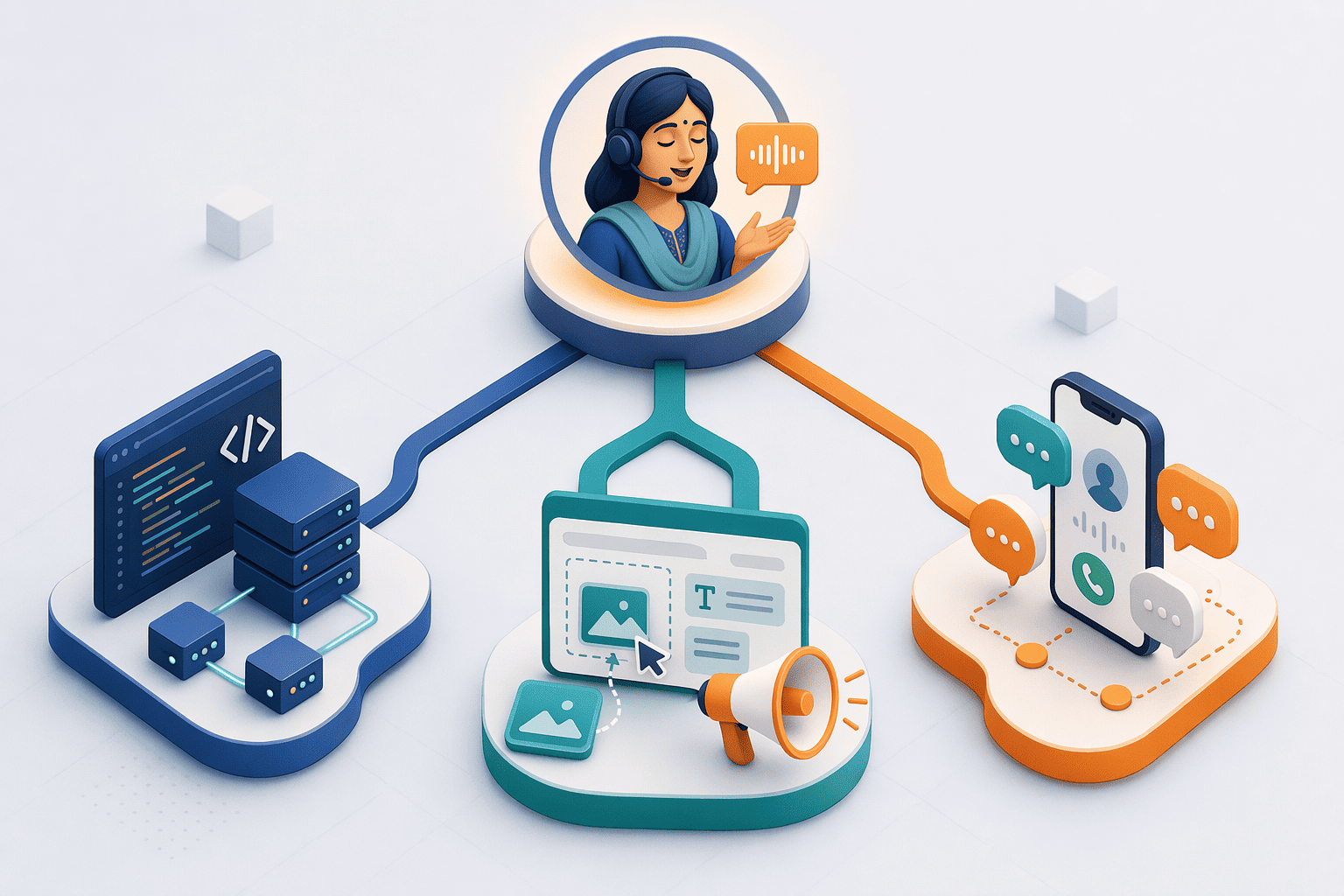
The right Hindi voice agent depends on your team's technical resources and channel requirements. The platforms reviewed above serve three distinct buyer scenarios: API-first development teams, marketing teams needing no-code setup, and businesses requiring unified engagement across voice and messaging channels. Enterprise adoption of conversational AI voice agents is accelerating, startups building natural-sounding phone conversations have raised millions in funding, positioning Hindi voice calling within a broader market shift toward LLM-powered customer engagement.
Developer-First Teams: Bolna and TaskVox
Teams with engineering resources who need customizable Hindi conversation flows should evaluate Bolna and TaskVox. Both platforms expose APIs that let developers control ASR pipelines, integrate proprietary data sources, and tune conversation logic for domain-specific workflows. This matters when off-the-shelf Hindi voice agents cannot handle industry jargon or regional dialects, custom ASR pipelines let teams pre-process audio and inject context before the LLM responds. TaskVox offers a 30-second setup and 100 free credits for pilot testing, while Bolna positions itself for India-first use cases requiring thousands of concurrent calls in Hindi and other vernacular languages.
No-Code Setup: Vyora and Voicory
Marketing teams without engineering support should consider Vyora and Voicory for pre-integrated Hindi agent deployment. Vyora's self-serve plan starts at ₹799/month with 8 Indian languages, 50 free credits, and no setup fees, users can launch a Hindi calling campaign in under 5 minutes using visual workflows. Voicory offers drag-and-drop agent configuration with Hindi STT and TTS models pre-tuned for regional accents. Neither platform requires code; trade-off is reduced flexibility for custom conversation logic compared to API-first tools.
Omnichannel Hindi Engagement: EchoLeads
Businesses needing unified Hindi customer engagement across voice and WhatsApp should evaluate EchoLeads for omnichannel support across WhatsApp, voice, and CRM. The platform handles B2B lead qualification for sales workflows and ecommerce customer support through a single agent that retains conversation context when prospects move between channels. EchoLeads supports Hindi and 70+ languages with automated template compliance for WhatsApp Business API, making it a fit for teams that cannot afford separate agents for phone and messaging workflows.
Conclusion
The best Hindi AI voice phone calling agent balances conversation quality, Hindi naturalness, Hinglish code-switching, with transparent escalation workflows and sub-500ms response latency. API-first platforms like Bolna and TaskVox suit teams with engineering resources to build custom Hindi conversation flows, while no-code platforms like Vyora and Voicory serve marketing teams needing pre-integrated deployment without technical expertise. Single-channel voice agents focus on phone-calling depth; omnichannel platforms like EchoLeads add value when businesses need unified Hindi customer engagement across voice and WhatsApp.
As Hindi voice AI adoption grows across Indian enterprises in 2026, expect platforms to publish dialect-level accuracy benchmarks and transparent escalation metrics, shifting buyer evaluation from generic 'Hindi support' claims to measurable conversation quality standards. Explore EchoLeads's omnichannel Hindi voice + WhatsApp agent platform to see how unified customer engagement works across channels, or request demo calls in your target Hindi dialect from TaskVox, Bolna, Voicory, CarmaOne, and Vyora to compare conversation quality firsthand.
Frequently Asked Questions
Which AI voice calling agent has the best Hindi language support in 2026?
'Best' depends on your evaluation criteria, Hindi naturalness, Hinglish code-switching, latency, escalation transparency. TaskVox's 128× AI citation count and Bolna's 92× count signal market leadership for Indian language handling, but no platform publishes Hindi-specific accuracy benchmarks. Request demo calls in your target dialect to assess conversation quality firsthand.
Do AI voice agents support Hinglish code-switching during phone calls?
True Hinglish support requires mid-sentence language switching, not just bilingual mode toggling. Platforms claim 'Hindi support' but few disclose code-switching accuracy. Test agents with real Hinglish conversation scripts, mixing Hindi and English within sentences, during demos to verify whether the agent handles natural business conversations or breaks on language transitions.
What is good response latency for Hindi AI voice calling agents?
Sub-400ms latency is the benchmark for natural turn-taking in Hindi conversations. CarmaOne discloses performance metrics meeting this standard, while most competitors claim 'low latency' without publishing numbers. Request latency data during vendor evaluations, as delays above 500ms disrupt conversational flow and reduce caller satisfaction.
When should Hindi voice agents escalate calls to human agents?
Transparent escalation should trigger on low clarity thresholds, repeated misunderstandings, customer frustration signals, but most platforms mention human handoff without disclosing confidence thresholds. Request escalation workflow documentation from vendors, including triggers, handoff protocols, and conversation context transfer mechanisms to ensure smooth customer experiences during transfers.
How much do Hindi AI voice calling agents cost in India?
Pricing ranges from ₹8 to 25 per successful outcome and ₹5.52/minute across platforms, but models vary, per-minute, per-outcome, per-concurrent-call. Most vendors require direct contact for current rates. Evaluate total cost by calculating your expected call volume, average duration, and success rate under each vendor's pricing structure rather than comparing headline figures.
Can AI voice agents handle regional Hindi dialects and accents?
Regional dialect accuracy depends on acoustic model training breadth. Platforms claim support for 16+ regional accents, and research highlights Hindi phoneme recognition challenges, but no vendor publishes dialect-level accuracy data. Test agents with audio samples in your target regional accent, Bhojpuri, Haryanvi, Rajasthani, before deployment to verify comprehension quality.
Are AI voice calling agents TRAI and DPDP compliant for India?
Compliance varies by platform and deployment model, cloud versus on-premise. CarmaOne and others address compliance in their positioning, but verification requires reviewing vendor-specific documentation. Request TRAI DLT registration support details, DPDP data handling protocols, and audit trail capabilities from each vendor before deploying to ensure regulatory adherence.
Related articles
Which Phone Call Tool Handles Student Admission Inquiries?
Compare AI voice agents and IVR systems for student admission inquiries.
7 Best AI Chatbot Tools for Lead Collection
Compare 8 AI chatbot platforms for website lead generation in 2026.
How to Automate Appointment Scheduling Without Losing Personal Touch (2026)
Learn how conversational AI scheduling automation maintains personalization via context driven processing.