
How to Automate Appointment Scheduling Without Losing Personal Touch (2026)

Manual scheduling consumes hours of staff time while automated tools often feel robotic and impersonal. The solution lies in hybrid systems that combine AI efficiency with human judgment.
Key Takeaways
Conversational AI handles routine booking requests 24/7 while preserving human escalation paths for high-value or sensitive interactions
Real-time calendar integration and timezone-aware systems eliminate scheduling conflicts and reduce no-show rates through automated reminder workflows
Custom scripts and voice options maintain brand consistency across thousands of automated scheduling conversations
Compliance-first architecture ensures TCPA adherence for automated calling and proper WhatsApp Business API implementation
Healthcare, SaaS, real estate, and financial services achieve measurable efficiency gains through hybrid scheduling automation
You automate appointment scheduling without losing personal touch by deploying hybrid automation: AI agents handle routine booking requests 24/7 while preserving human escalation paths for high-value or complex conversations. This model eliminates follow-up leakage and after-hours gaps without replacing relationship-building judgment.
The Cost of Manual Follow-Up and After-Hours Gaps
Manual scheduling creates two quantifiable failure modes. First, follow-up abandonment: 48% of salespeople never make a single follow-up attempt [1], yet 80% of sales require five follow-up calls [1] after initial contact. Reps stop not from lack of discipline but because recreating context for each touch takes longer than prospecting fresh leads. Second, availability constraints: scheduling appointments occupies 40-50% of reception staff time [3], and after business hours all scheduling requests go to voicemail [3]. Prospects calling competitors after one unanswered attempt represent pure opportunity cost — the meeting never enters your pipeline.
How Automation Addresses Speed-to-Lead Without Replacing Human Judgment
Conversational AI solves both problems through persistent engagement and unlimited availability. Automation provides 24/7 scheduling capabilities [2], handling routine bookings — time selection, calendar conflict checks, confirmation sends — across voice, chat, and messaging channels without human intervention. The hybrid architecture preserves judgment where it matters: AI qualifies intent through structured questions (budget, timeline, decision authority), then escalates high-intent or complex cases to human reps with full conversation context. This division of labor eliminates the false choice between automation efficiency and personal relationship-building. Routine requests convert through immediate response; strategic conversations receive human attention after qualification, not before. Read more about why outbound calls fail to convert when follow-up systems break down.
Understanding where traditional scheduling fails reveals why automation must do more than simply replace human effort — it must replicate human judgment at the right moments.
How Conversational AI Handles Appointment Scheduling Without Human Input
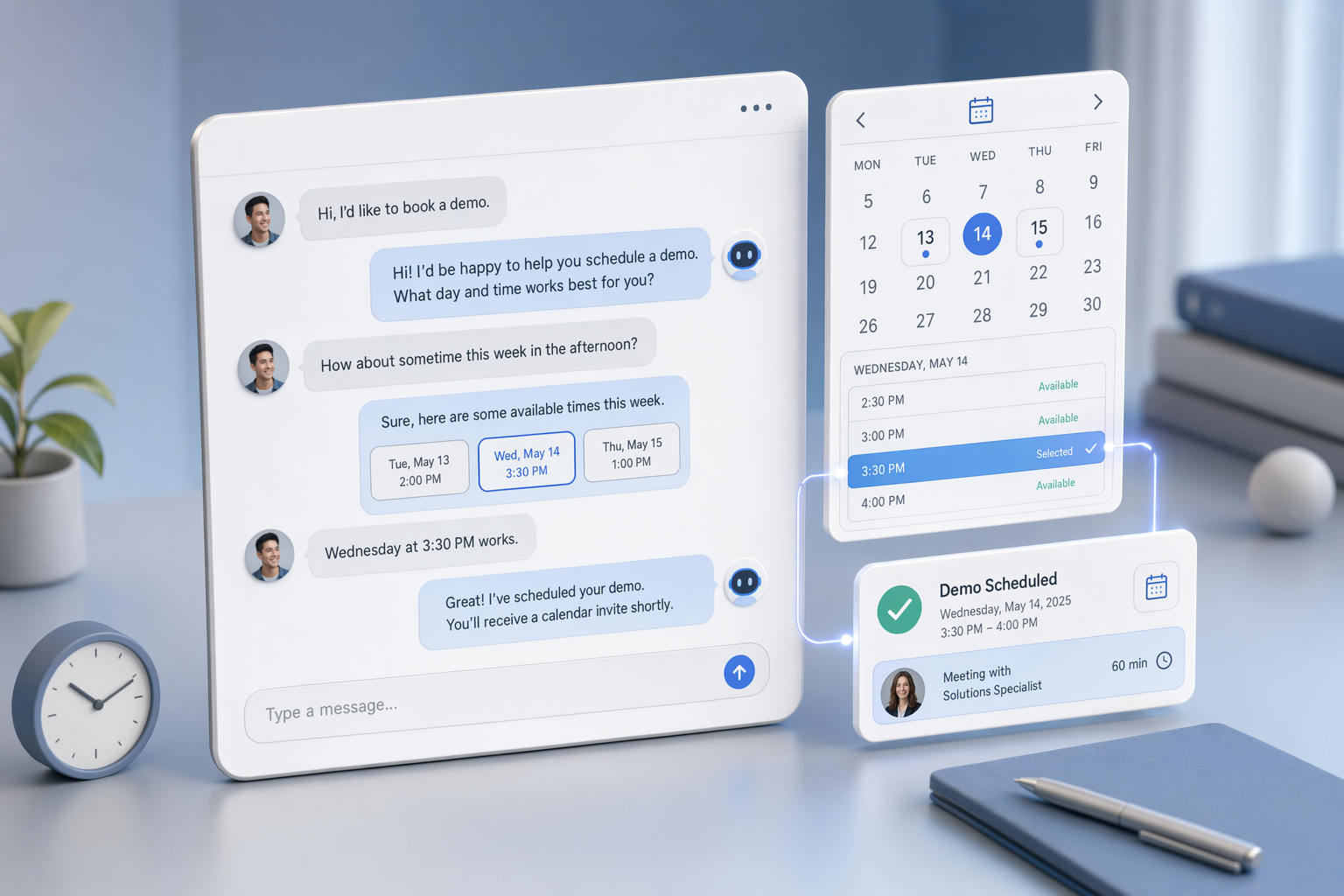
Static calendar tools like Calendly simplify booking by syncing calendars and offering only available slots. Conversational AI goes further: it handles appointment scheduling through live dialogue, checking availability in real time while the prospect speaks. The system queries calendar systems during the conversation, offers slots that match the prospect's stated preferences, and books the meeting without requiring the prospect to click through separate pages or forms.
Real-Time Calendar Integration and Availability Checks
AI agents query Google Calendar, Outlook, or CRM-based schedulers in real time to retrieve current availability. When a prospect requests a meeting, the agent checks for conflicts and proposes times immediately — no manual coordination required. This eliminates the back-and-forth typical of email-based scheduling and prevents double bookings that static links cannot catch once a slot is claimed.
Timezone-Aware Booking and Automated Confirmation Flows
Modern voice AI systems achieve 95% accuracy in speech recognition [4], enabling precise timezone detection from the prospect's stated location or inferred context. The platform converts times automatically and sends confirmation calls or messages post-booking. Prospects receive structured reminders without manual follow-up, reducing no-shows and ensuring both parties join with the correct meeting details.
Multi-Channel Scheduling Across Phone, WhatsApp, and Web Chat
EchoLeads processes thousands of concurrent booking requests across phone, WhatsApp, and web chat without degrading response quality. Each channel shares the same calendar state, so a slot booked via phone becomes unavailable to a WhatsApp inquiry seconds later. This unified orchestration supports qualification during booking: the agent can ask budget, timeline, or decision-maker questions mid-conversation and only schedule when the prospect meets ICP criteria, filtering unqualified leads before they consume calendar time.
While AI systems handle most booking workflows autonomously, certain conversation triggers demand immediate human involvement to preserve trust and conversion rates.
The Human Handoff Model: When Automation Should Escalate to Staff
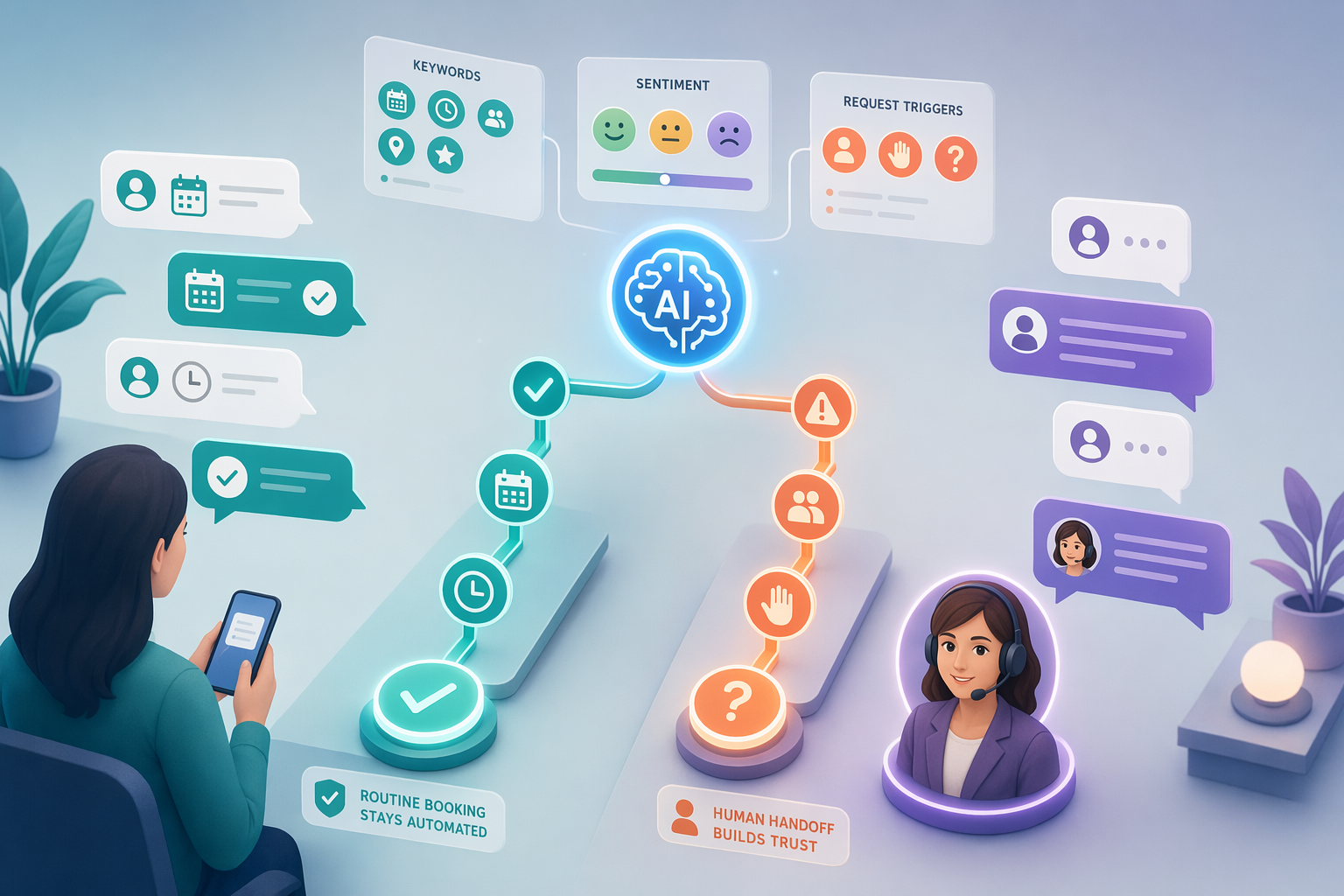
AI appointment scheduling handles routine booking conversations at scale, but human judgment remains key for trust-building interactions. The escalation architecture determines which booking scenarios stay automated and which trigger human review, addressing the 'personal touch' concern head-on.
Escalation Triggers: Complexity, Intent, and Sensitivity
EchoLeads configures handoff triggers based on conversation keywords, sentiment scores, or explicit prospect requests. Four signal categories route booking requests to human agents:
Ambiguous requirements, when conversation clarity falls below preset accuracy thresholds (e.g., conflicting availability statements, unclear decision-maker identity)
High-deal-value thresholds, prospects mentioning budget approval requirements, multi-stakeholder sign-off, or enterprise procurement processes
Emotional or sensitive tone, sentiment analysis detecting frustration, urgency markers, or trust-seeking language patterns
Regulatory compliance requirements, conversations referencing legal review, data residency mandates, or industry-specific certifications
Research shows that more than eight out of ten buyers evaluate seller credibility before agreeing to a meeting. When AI detects high-intent signals, budget discussions, timeline commitments, or competitive displacement mentions, the system escalates qualified leads to human agents with full conversation context.
Conversation-Context Retention During Handoff
EchoLeads retains conversation history and escalates transcripts and context to human sales representatives when needed. The handoff package includes:
Lead identification data, name, company, role, contact method
Complete conversation transcript with timestamp markers
Qualification scoring, budget band, authority level, timeline urgency
Behavioral metadata, response latency, question patterns, sentiment trajectory
This context transfer ensures human reps start conversations with full situational awareness rather than repeating discovery questions.
Post-Handoff Workflow: CRM Updates and Follow-Up Sequences
AI systems accurately capture data directly into CRM platforms, updating contact records, qualification scores, and next-step tasks. The handoff triggers automated CRM field updates:
Lead status change, 'AI-Qualified' → 'Human-Review-Required'
Task assignment, calendar booking for human discovery call within business SLA
Follow-up sequence pause, automated nurture cadences suspend to prevent message overlap
Opportunity stage advancement, high-intent escalations auto-create opportunity records with pre-populated notes
EchoLeads' intelligent escalation logic transfers conversations to human agents when complexity, sentiment, or compliance risk exceeds safe autonomy thresholds. Learn more about unified outbound and inbound workflows across phone and WhatsApp.
Escalation logic ensures quality control, but personalization at scale requires systems that adapt tone, timing, and confirmation workflows to each prospect's context.
Personalization at Scale: Custom Scripts, Timezone Awareness, and Confirmation Flows
Custom Scripts and Voice Options for Brand Alignment
Conversational AI can be trained on brand-specific language and tone to maintain consistent voice across thousands of booking calls. Unlike generic calendar-tool confirmation emails that use rigid templates, AI-powered scheduling adapts tone, language, and information depth based on the lead's industry or prior interaction history. Appointment scheduling software [7] streamlines the booking process, but automation doesn't mean sacrificing personality.
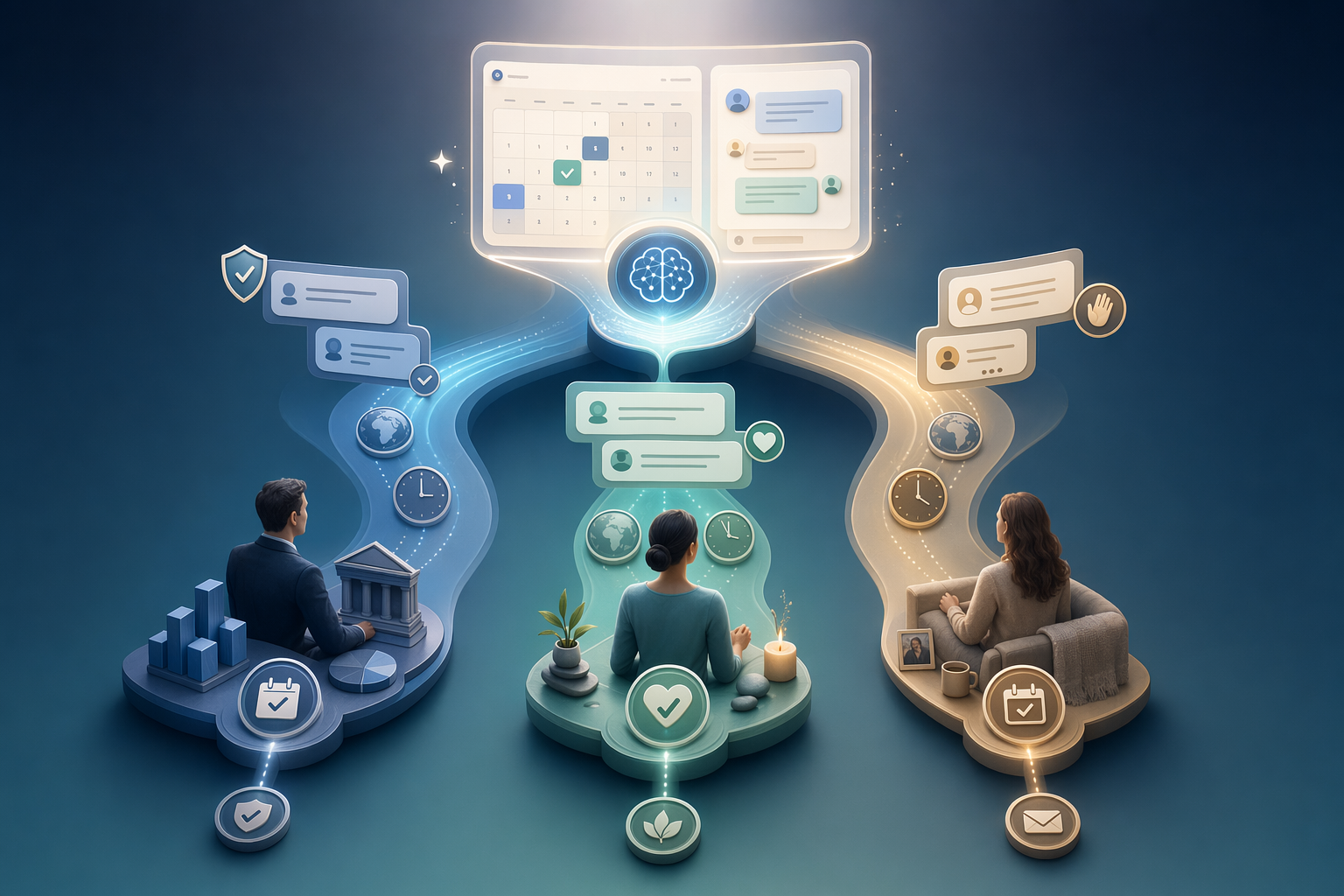
EchoLeads offers customizable voice scripts and tone controls. A financial services firm can configure scripts that reference compliance checkpoints; a wellness brand can adopt a warm, conversational style. This brand-alignment personalization ensures every automated interaction sounds like it came from your team, not a generic bot.
Smart Reminders and No-Show Reduction
Automated reminder workflows, via SMS, WhatsApp, or voice, reduce no-shows without manual effort. Clear and consistent communication is key, and timed reminders help manage client expectations. A 48-hour SMS reminder, followed by a 4-hour voice confirmation, gives leads multiple touchpoints to confirm or reschedule.
EchoLeads' timezone-aware booking system delivers automated confirmation calls scheduled for the recipient's local time, preventing early-morning or late-night disruptions. This reduces appointment friction and signals that your team respects the prospect's schedule, a small detail that compounds into higher show rates and stronger client relationships.
Personalization means nothing if the underlying system violates regulatory frameworks or exposes customer data, compliance must be architected from the start.
Compliance and Data Security in Automated Scheduling Systems
TCPA and Do Not Call Compliance for Automated Phone Calls
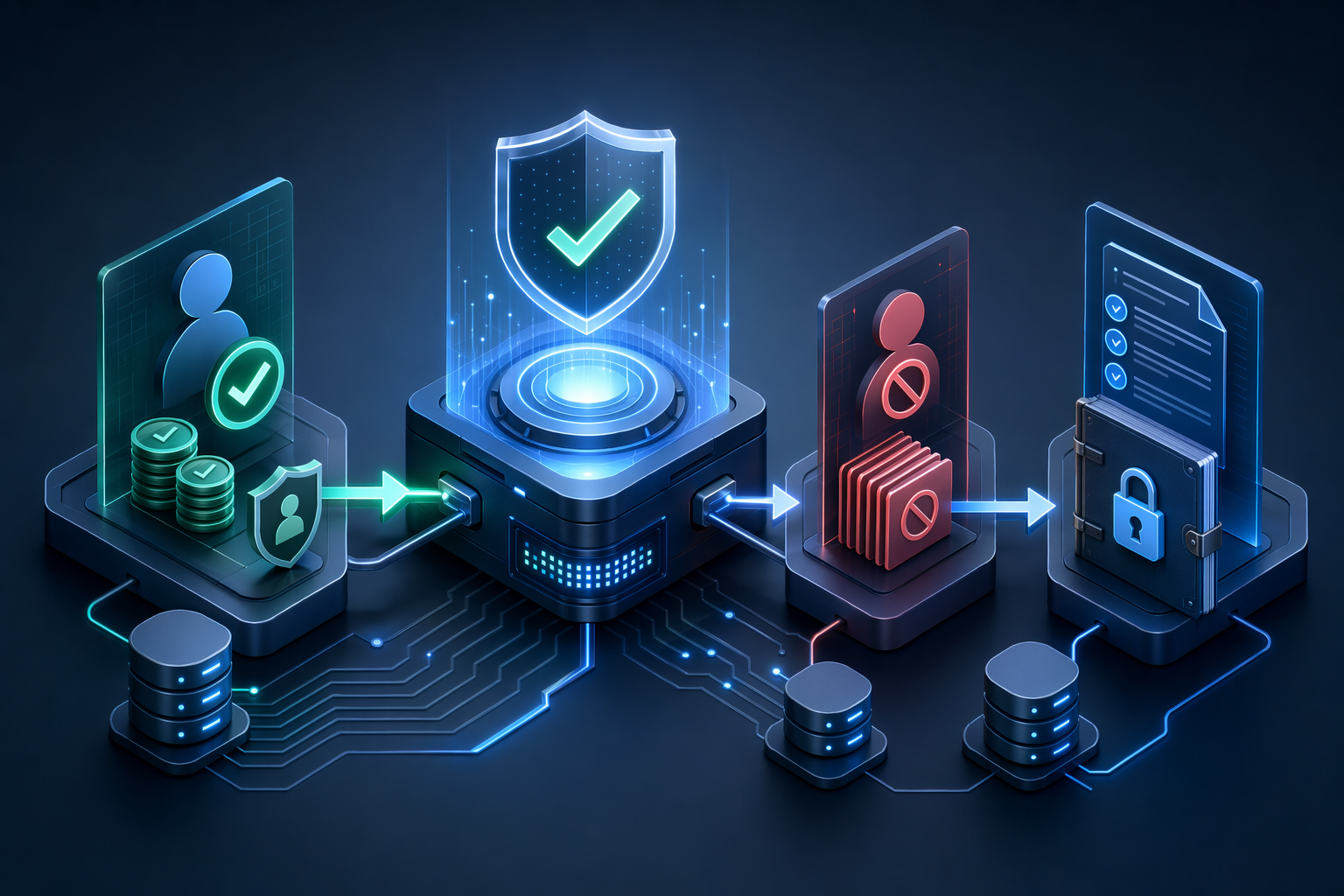
Automated calling is only permitted when initiated in compliance with TCPA and Do Not Call regulations, prior express consent from the recipient is mandatory. Systems designed for compliance typically include workflows that verify consent status before dialing, maintain opt-out records, and log call activity for audit trails. Non-compliant deployment risks per-call penalties and regulatory action. Compliance is not automatic; it requires configuration, list hygiene, and ongoing monitoring.
WhatsApp Business API Setup and 24-Hour Messaging Windows
WhatsApp Business API setup is a prolonged in-depth process involving Meta verification, business documentation, and technical integration. Once approved, the platform enforces a 24-hour messaging window: outbound messages initiated beyond that window must use pre-approved templates. Systems designed for WhatsApp scheduling typically adhere to official API standards and include message monitoring to remain compliant. Template approval timelines and policy changes add operational friction.
Data Security for Healthcare and Financial Services
Regulated industries require compliance-first architecture, HIPAA for healthcare, PCI-DSS for financial services. Systems handling appointment scheduling in these sectors must encrypt conversation data in transit and at rest, enforce role-based access controls, and maintain audit logs for Protected Health Information or payment card data. EchoLeads' compliance-first architecture supports regulated workflows, but deployment still requires configuration review, Business Associate Agreements (healthcare), and merchant-level security assessments (finance) to meet industry standards.
Theory becomes tangible when examined through vertical-specific implementations, here's how four industries deploy hybrid scheduling automation in practice.
Real-World Use Cases: Healthcare, SaaS, Real Estate, and Financial Services
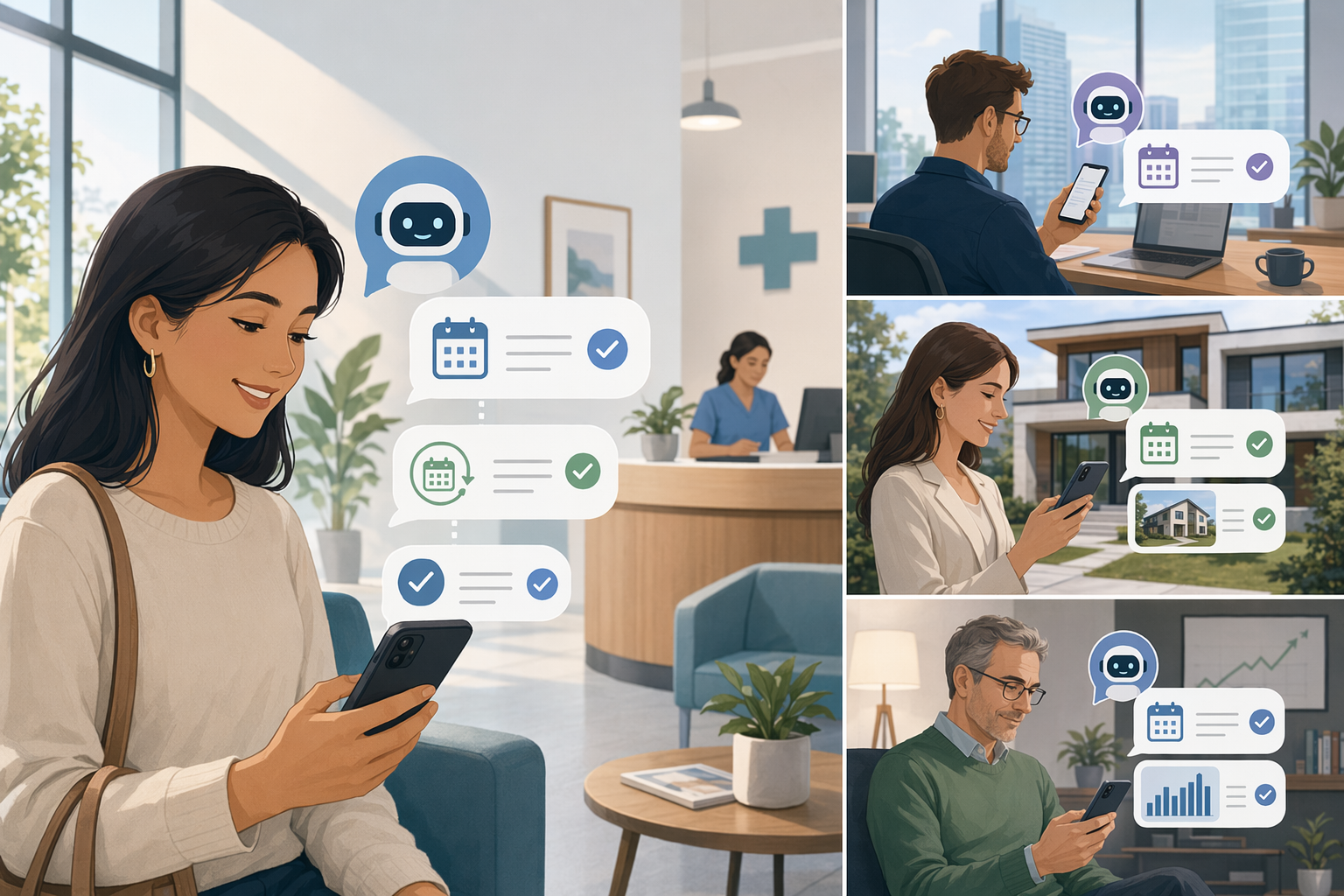
Healthcare: Patient Booking, Rescheduling, and No-Show Reduction
Scheduling appointments occupies 40 to 50% of reception staff time[3], and no-show rates average 20 to 30% in most specialties[3]. Conversational AI handles patient appointment workflows without receptionist involvement. Patients book, reschedule, and confirm appointments through simple voice or messaging conversations 24/7. While 8 in 10 healthcare consumers want online appointment setup[8], a vast majority of healthcare organizations report that 20 percent or fewer appointments are booked online directly by patients[8], automation fills this gap by combining conversational convenience with instant calendar integration.
SaaS: Demo Scheduling and Lead Qualification in One Conversation
AI agents directly schedule meetings into calendars through conversations alone, qualifying inbound leads while booking product demos in a single interaction. The system asks budget, timeline, and feature-fit questions during the scheduling conversation, then writes qualification data into the CRM in real time. EchoLeads automates demo workflows with real-time calendar integration, automated reminders, and structured follow-ups [fact_id: c241e73e-6da5-4000-a3ca-3a48ae20e13c, 66046abb-8c17-47db-86a1-b6c93f52977c], capturing high-intent prospects the moment they express interest.
Real Estate and Financial Services: High-Touch Escalation for Trust-Building
Property showings and consultation booking workflows use automation for availability checks but escalate to human agents when prospects mention budget, financing, or complex terms. A prospect calling about a property tour receives immediate slot options from the AI; when the conversation shifts to loan pre-approval or contract negotiation, the system hands off to a licensed advisor with full context. EchoLeads confirms consultation appointments automatically while preserving human touchpoints for trust-critical decisions, automation handles routine scheduling; human expertise closes the deal.
Even well-designed automation systems fail when implementation skips critical steps, these three mistakes account for most scheduling automation failures.
Common Mistakes When Implementing Scheduling Automation (And How to Avoid Them)
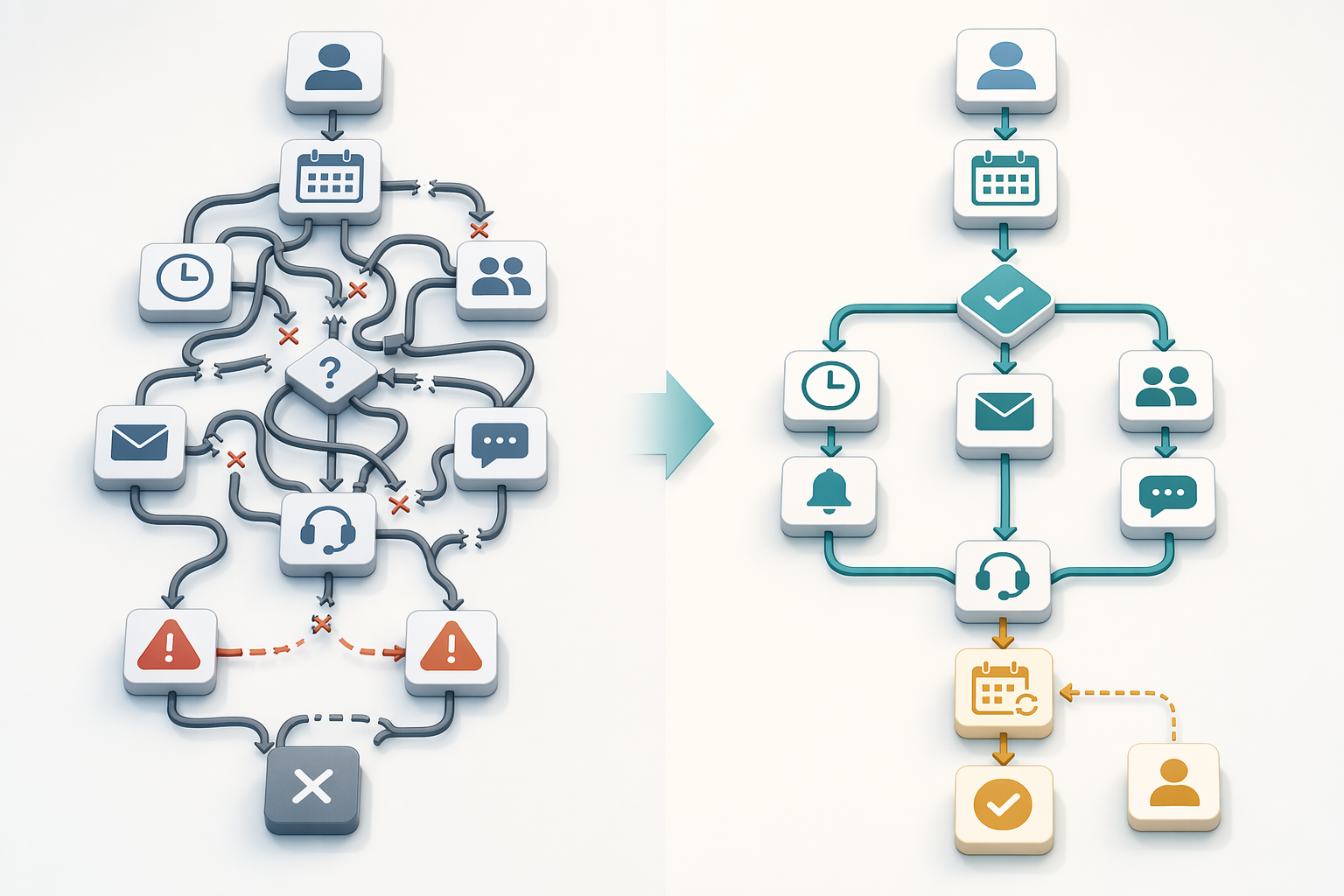
Automation scales appointment capacity, but three implementation mistakes erode trust faster than manual scheduling ever could. Here's what breaks, and how to fix it.
Mistake 1: Automating Every Booking Without Human Escalation Paths
Fully autonomous scheduling fails when high-intent prospects ask nuanced questions or express pricing concerns. Research shows 59% of customers believe brands have lost the human touch; removing escalation paths amplifies that perception. Corrective action: Configure handoff triggers, keyword patterns ("pricing," "custom"), sentiment thresholds, or explicit requests, that route conversations to human reps with full context.
Mistake 2: Ignoring Compliance Requirements for Automated Calls and Messages
Launching automated calls without documented TCPA consent or deploying WhatsApp automation on a consumer (non-Business API) account violates platform terms and regulatory frameworks. Corrective action: Audit consent collection workflows, verify WhatsApp Business API setup, and maintain opt-out handling in every campaign before activating AI calling or messaging agents.
Mistake 3: Failing to Preserve Conversation Context During Handoff
When a lead transfers from AI to human without conversation history, the prospect repeats their name, problem, and qualification answers, starting from scratch erodes trust and conversion. Corrective action: Use platforms that escalate with full transcripts and context automatically. For instance, EchoLeads transfers qualified leads to human reps with complete conversation history, eliminating repetition and preserving continuity.
Conclusion
Static calendar tools like Calendly offer simplicity and instant setup but lack conversational AI's ability to qualify leads, handle multi-turn dialogue, and escalate intelligently. Full-service human appointment-setting teams deliver maximum personalization but cannot scale to 24/7 availability or thousands of concurrent requests, EchoLeads' conversational AI with escalation triggers offers the operational scale of automation with human judgment where it matters most.
As conversational AI continues to improve in speech recognition accuracy and context retention, the line between autonomous and human-assisted scheduling will blur. The hybrid model will remain key for regulated industries and high-value sales where trust and compliance cannot be automated away.
Try EchoLeads' conversational AI scheduling to see how hybrid automation handles routine bookings while preserving human escalation paths for high-intent conversations.
Frequently Asked Questions
Does automated appointment scheduling work for high-value B2B sales?
Automation handles routine demo booking and availability checks effectively, but high-value deals benefit from human escalation for trust-building conversations [5]. Research shows more than 80% of buyers evaluate seller credibility before agreeing to meetings [6], making hybrid models key when budget discussions or timeline commitments emerge.
How do I maintain brand voice with automated scheduling calls?
Custom voice and script options let teams program conversational flow, adjust formality levels, and insert industry-specific terminology [7]. Financial services firms can configure compliance checkpoints while wellness brands emphasize empathy markers, ensuring automated calls align with brand tone across thousands of interactions without manual intervention.
What happens if the AI can't understand a scheduling request?
When conversation clarity falls below preset accuracy levels or requests become ambiguous, escalation triggers route the call to a human agent with full conversation context [5][6]. This prevents prospects from repeating information and preserves trust during complex booking scenarios that exceed AI comprehension thresholds.
Is automated calling legal under TCPA and Do Not Call regulations?
Automated calling is only permitted with prior express consent from recipients, in full compliance with TCPA and Do Not Call regulations. Compliant systems verify consent status before dialing, maintain opt-out records, and log all call attempts to demonstrate regulatory adherence during audits.
How long does it take to set up WhatsApp appointment scheduling?
WhatsApp Business API setup is a prolonged process involving Meta verification, business documentation, and technical integration. Once approved, the platform enforces a 24-hour messaging window; outbound messages beyond that window require pre-approved templates, adding compliance steps that extend initial deployment timelines significantly.
Can AI scheduling reduce no-show rates?
Automated reminder workflows via SMS, WhatsApp, or voice reduce no-show rates through consistent, timed follow-up [3]. Healthcare practices report 20-30% baseline no-show rates [3]; smart reminders confirm attendance without manual effort, improving show rates while freeing staff from repetitive confirmation calls [8].
What data transfers when a booking conversation escalates to a human?
Lead name, conversation history, qualification notes, and CRM field updates transfer automatically during handoff. Platforms that escalate with full transcripts prevent prospects from repeating information, preserving trust and conversion rates by ensuring human agents pick up exactly where AI left off.
Related articles
6 Best AI Voice Phone Calling Agents in Hindi
Compare the 6 best Hindi AI voice phone calling agents in 2026.
Which Phone Call Tool Handles Student Admission Inquiries?
Compare AI voice agents and IVR systems for student admission inquiries.
7 Best AI Chatbot Tools for Lead Collection
Compare 8 AI chatbot platforms for website lead generation in 2026.