
How Small Agencies Scale Cold Calling Without Hiring More Sales Reps (2026)
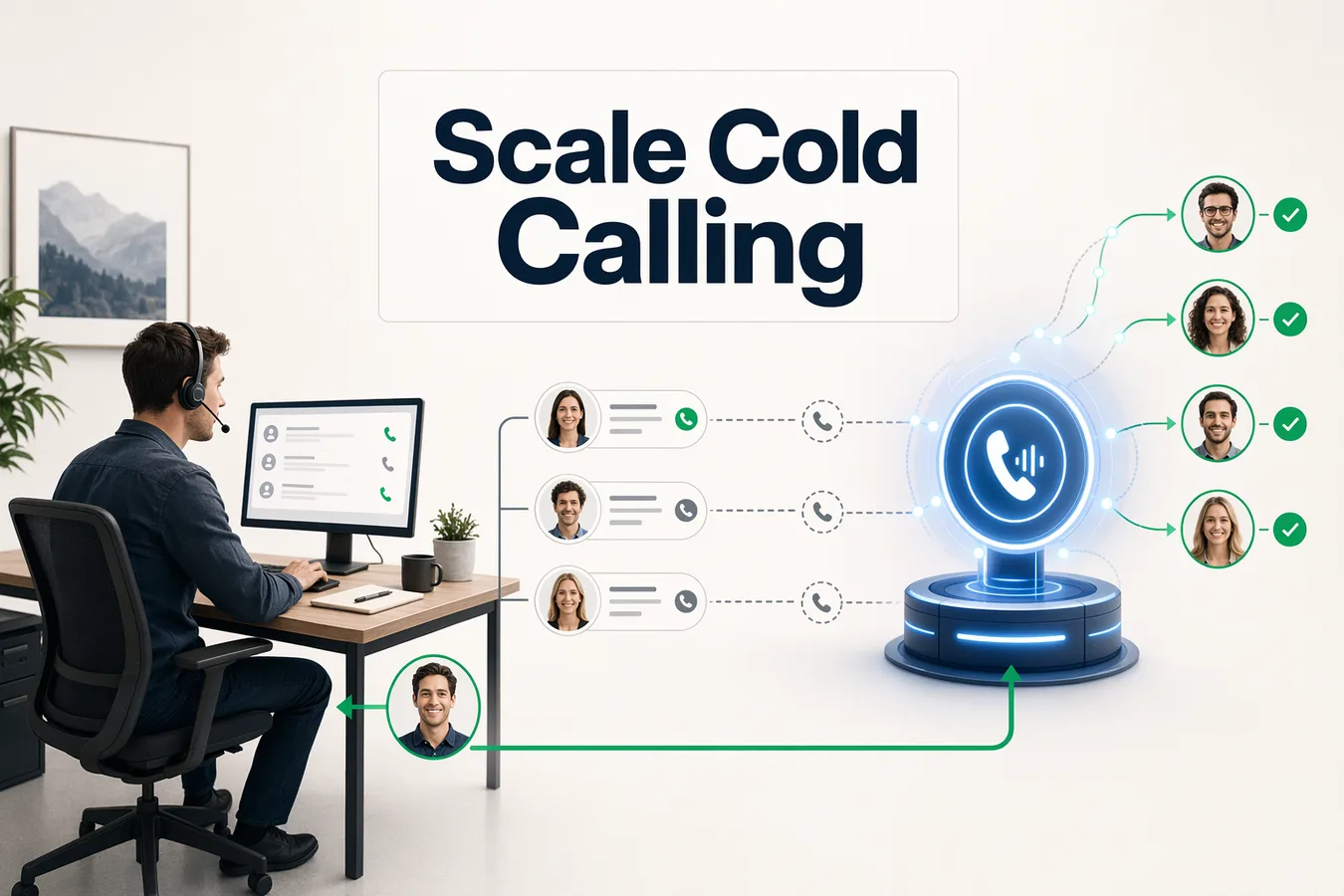
Small agencies face a persistent growth ceiling: one SDR dials 50 prospects per day, conversion plateaus, and hiring more reps means months of recruiting, onboarding, and salary burn before productivity begins.
AI voice agents break this pattern by handling initial prospecting and qualification 24/7, routing high-intent leads to human reps in real time, and scaling outbound capacity without adding headcount.
Key Takeaways
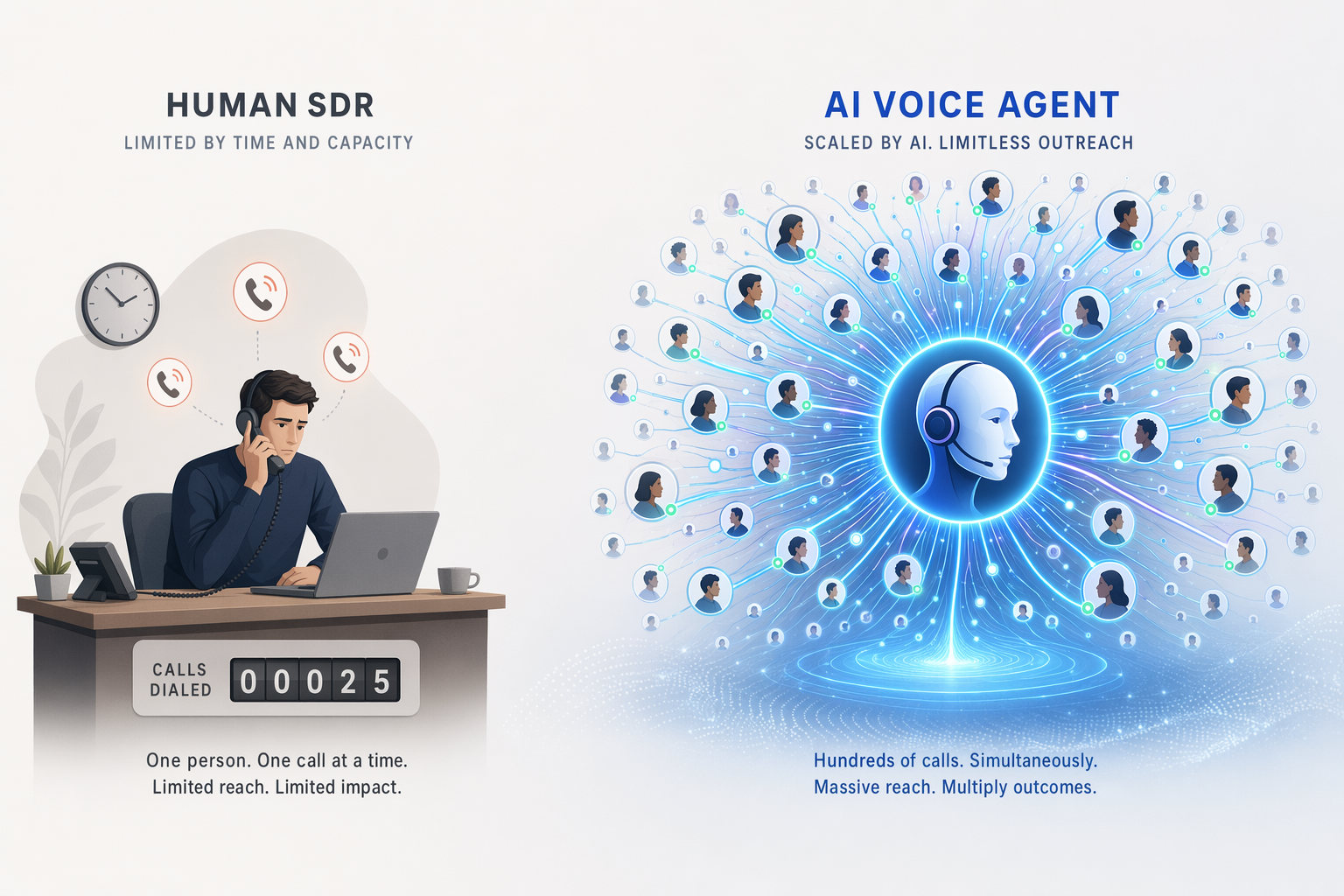
AI voice agents operate 24/7, handling hundreds of simultaneous cold calls while human SDRs remain limited to 50–80 dials per eight-hour shift
Agencies define qualification thresholds (budget, timeline, authority, need) that trigger instant handoff from AI to human reps, preventing lost opportunities
Real-time CRM sync updates lead records the moment buying intent surfaces, alerting reps to high-priority conversations within seconds
Deploying AI voice automation takes 30 days from script setup to full volume ramp, delivering 3× capacity expansion at 30–40% of SDR hiring costs
TCPA compliance workflows and DNC scrubbing must be integrated before launch to prevent costly violations and legal exposure
Why Traditional Cold Calling Fails to Scale for Small Agencies
Small agencies scale cold calling without adding headcount by deploying AI voice agents that operate 24/7, handle hundreds of simultaneous conversations, and qualify leads in seconds —eliminating the manual capacity ceiling that caps human SDRs at ~50 dials per day.
The 50-Dial-Per-Day Ceiling and Missed-Call Leakage
A human SDR makes 50–80 dials in an eight-hour shift, constrained by fatigue, meal breaks, and the 9-to-5 availability window. Each missed call or slow response compounds: 78% of leads are lost when response time exceeds five minutes [1] [1], and even 2–3 missed calls can lose 2 appointments instantly [7] in high-volume pipelines. Manual follow-up backlogs mean cold leads slip through, unanswered voicemails pile up, and after-hours inquiries wait until the next business day—by which time the prospect has moved on.
AI voice agents eliminate this leakage by answering every inbound call within seconds, initiating outbound sequences around the clock, and routing qualified prospects to human reps with full conversation context. The platform handles initial prospecting, qualification, and appointment booking without human intervention, then escalates high-intent leads to human sales reps for closing conversations.
Why Hiring More SDRs Doesn't Solve the Capacity Problem
Doubling headcount doubles cost but rarely doubles output. Each SDR costs $38,400 per year [2] [2] in base salary alone, plus onboarding overhead, ramp time, and inconsistent execution, new hires take 3 to 6 months to reach full productivity, and turnover resets the clock. Variable quality compounds the problem: one rep nails the qualification script while another skips critical discovery questions, fragmenting pipeline data and creating qualification drift.
AI voice agents bypass hiring friction entirely. Deployment takes days rather than months, every conversation follows the same qualification logic, and capacity scales instantly, one platform handles hundreds of simultaneous calls with zero incremental headcount cost.
Understanding these capacity constraints reveals why traditional hiring cannot solve the scaling problem, but also clarifies which tasks AI voice agents are purpose-built to eliminate.
How AI Voice Agents Handle Initial Prospecting Without Human Reps
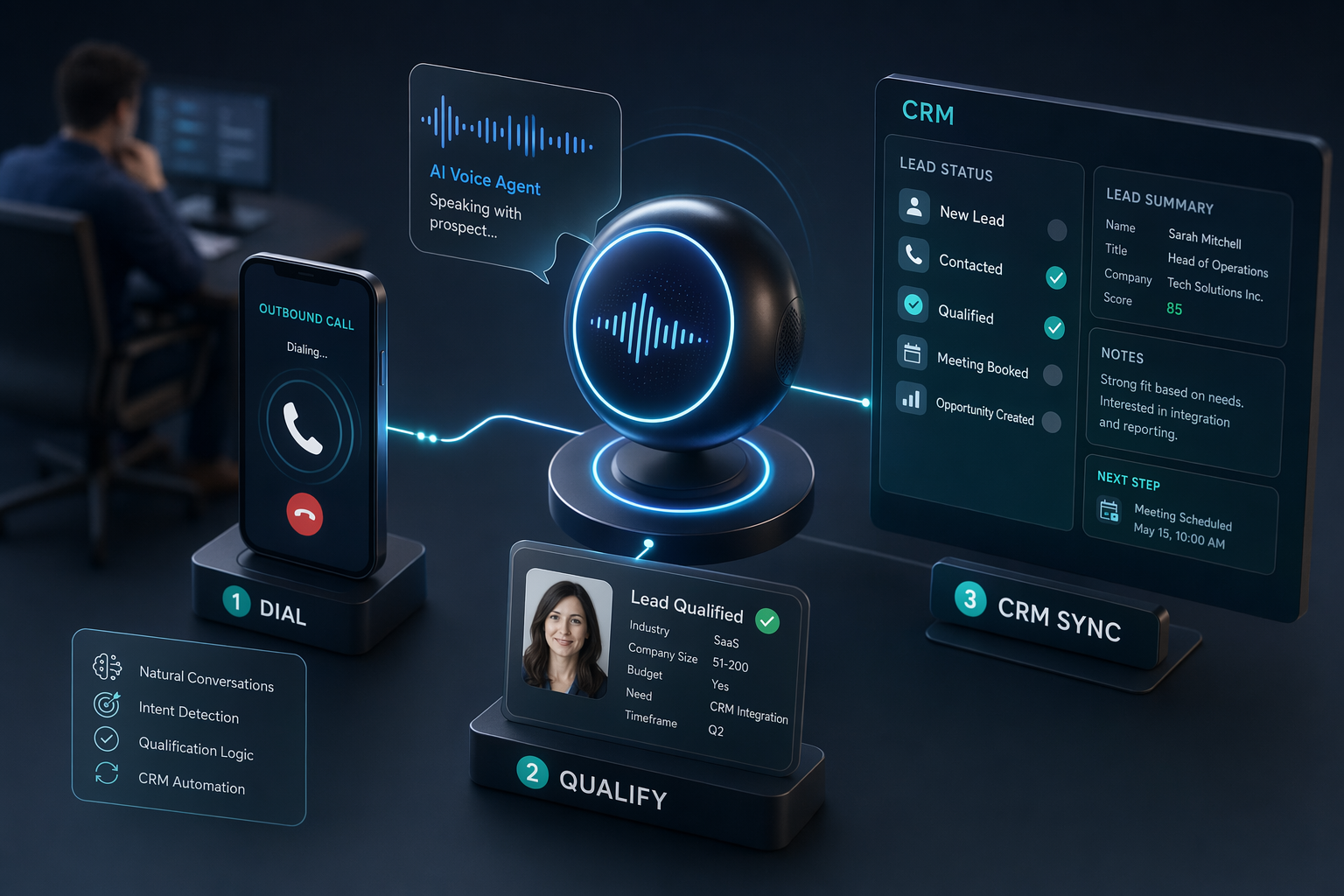
AI voice agents operate as autonomous SDRs, placing outbound calls around the clock without requiring human intervention for routine prospecting tasks. Unlike traditional call-center models that demand hiring and training, platforms like EchoLeads execute smart outbound AI calling campaigns continuously. These systems dial leads, hold human-like conversations, and update CRM automatically [3], preserving human reps for high-stakes negotiations where empathy and strategic advice matter most.
24/7 Outbound Dialing and Instant Lead Qualification
AI voice agents qualify leads in real time by scoring prospect intent during the call itself, not after a manual review. EchoLeads' platform handles first-touch qualification autonomously, asking structured questions about budget, timeline, and decision-making authority to route only high-intent prospects to human sales teams. The lead-to-response window has shrunk from hours to seconds [4], making 24/7 coverage key for agencies that cannot afford to miss after-hours inquiries.
Appointment Booking and CRM Sync Without Manual Data Entry
Once a lead qualifies, AI voice agents book meetings directly into calendars and synchronize outcomes into CRM platforms automatically. EchoLeads performs appointment scheduling and CRM updates autonomously, eliminating manual data entry that typically consumes 40% of a sales rep's day. This hybrid model, AI handling qualification and booking, humans closing, lets small agencies scale outbound volume without proportional headcount increases, while still ensuring complex objections or sensitive conversations escalate to a human agent.
With autonomous prospecting mechanics established, the next step is mapping your existing cold calling workflow to identify where AI should execute and where human judgment must take over.
Step 1: Map Your Cold Calling Workflow (Lead Source to Close)
Document Every Touchpoint from Lead Capture to Closed Deal
Before automating, list every step in your current cold calling workflow. Research on multi-channel marketing shows that firms invest substantial portions of their marketing budgets on lead generation and conversion, but the arrangement is often inefficient due to the multi-channel attribution problem [5]. Map your workflow as follows:
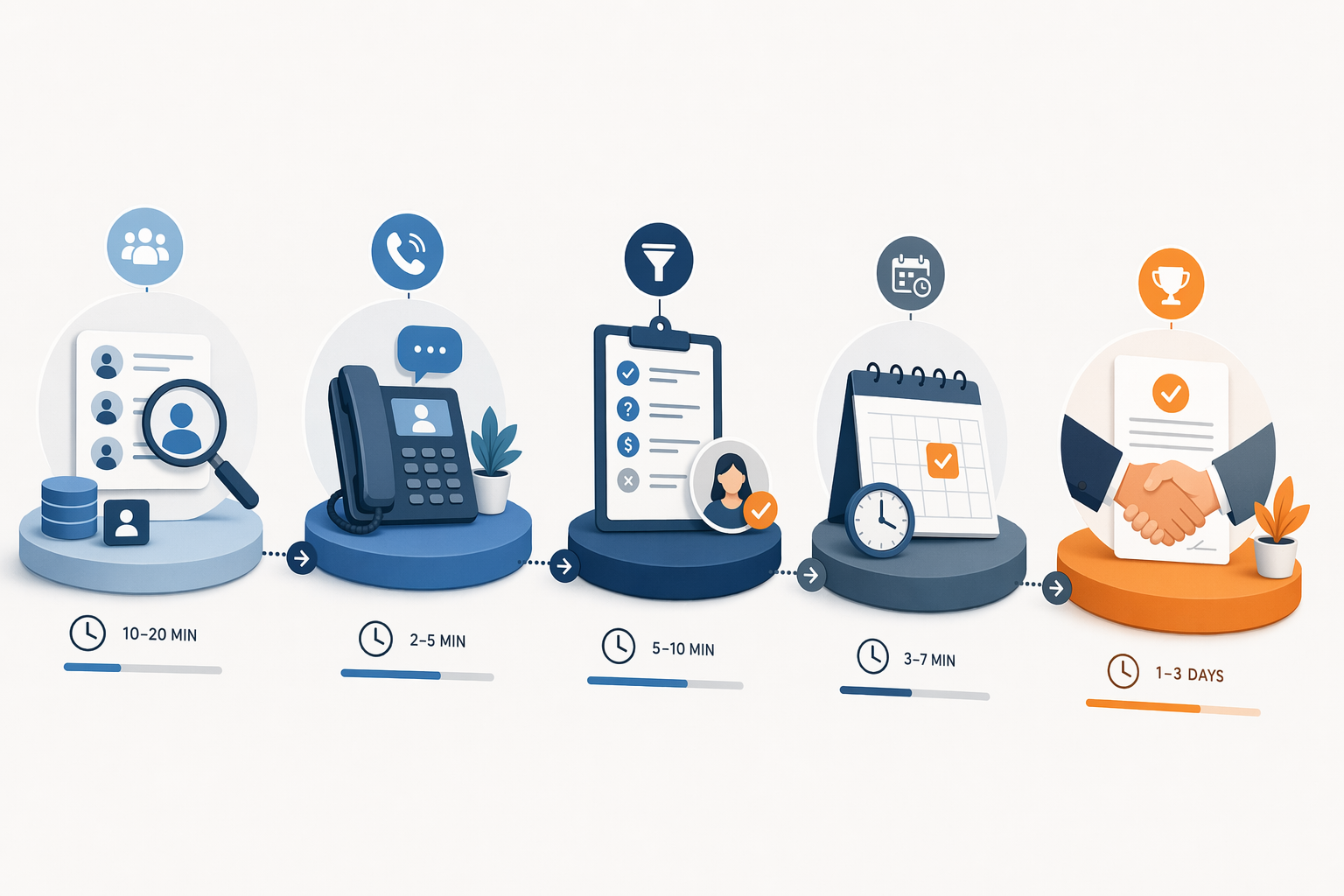
List every touchpoint: lead source, initial contact, follow-up sequence, qualification criteria, demo or appointment booking, and close.
Note average time per step to identify where reps spend the most minutes.
Flag steps with inconsistent execution across reps, these are prime automation candidates.
Identify steps requiring human judgment (complex objections, pricing negotiations) that should remain manual.
Identify Manual Bottlenecks and Repetitive Tasks
One EchoLeads customer discovered that 60% of cold calling time was consumed by initial contact attempts, a purely repetitive task. Mapping the workflow revealed that automation should flow into lead qualification, routing, booking, and follow-up after the call completes. The common mistake: automating the entire workflow without defining human handoff triggers. When prospects ask edge-case questions (pricing exceptions, custom contract terms), a fully automated system breaks. Build handoff rules into your map from the start.
Workflow mapping exposes repetitive steps; handoff logic determines when AI agents must escalate to human reps to preserve conversion quality.
Step 2: Define AI vs. Human Handoff Triggers for Qualification
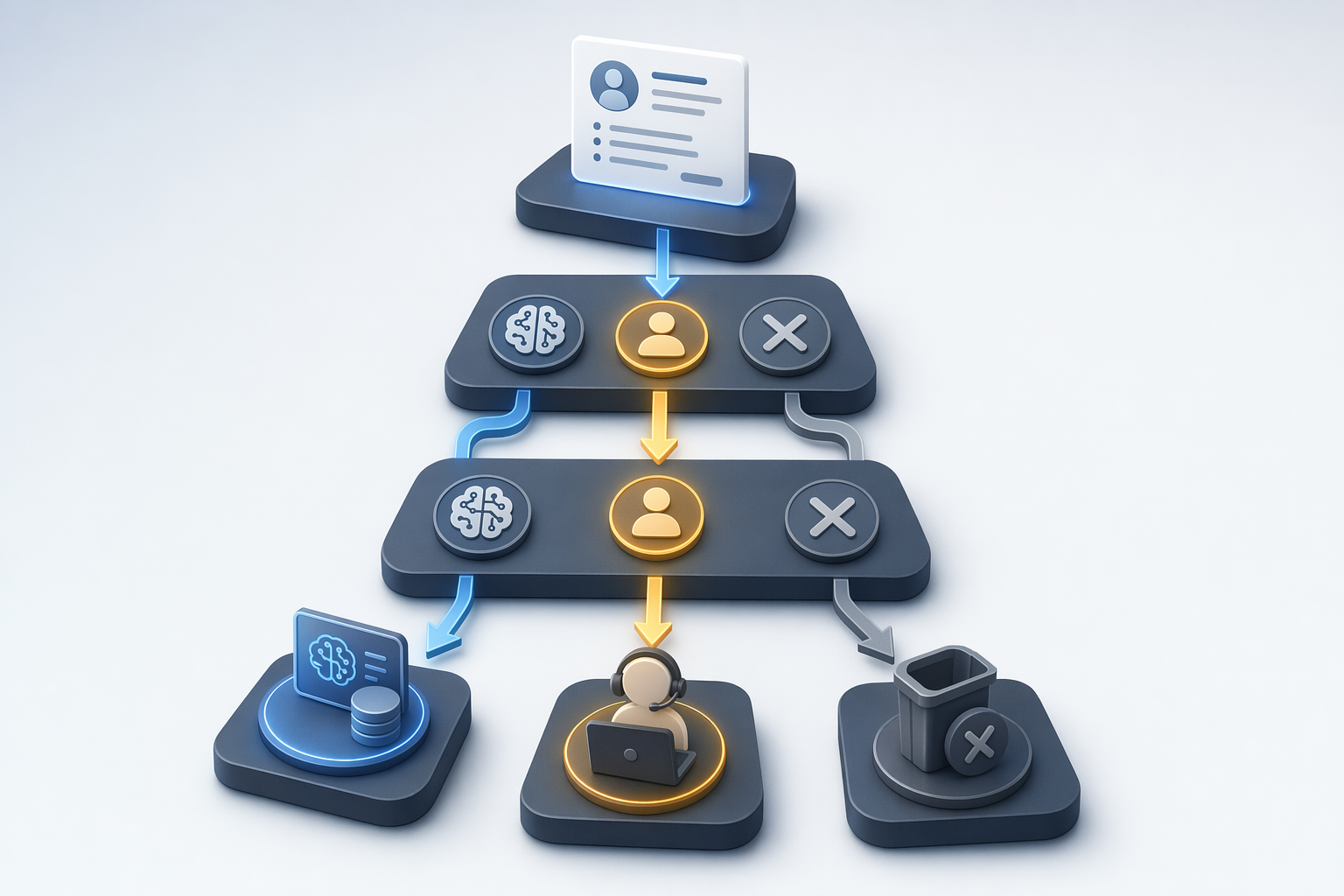
Scaling cold calling with AI voice agents depends on defining the exact moment an AI agent should transfer a qualified lead to a human rep. Without clear handoff logic, agencies risk losing high-intent prospects to endless AI loops or overwhelming reps with unqualified calls. Research on lead management systems confirms that structured qualification criteria improve inside sales performance [6], but most platforms omit the decision framework for *when* to escalate. Below is a three-tier model agencies can implement immediately.
Set Qualification Thresholds That Trigger Human Escalation
Define lead scoring criteria across four dimensions: budget alignment, timeline urgency, decision-making authority, and ICP match. Assign point values (e.g., 0 to 10 per dimension) and set cumulative thresholds for each tier:
Tier 1 (0 to 20 points): Low-intent leads remain in AI nurture sequences with periodic check-ins but no immediate human contact.
Tier 2 (21 to 35 points): Medium-intent leads with standard objections (pricing questions, timeline concerns) receive AI follow-up plus a manual review flag for reps to audit within 24 hours.
Tier 3 (36+ points): High-intent leads or any prospect explicitly requesting human assistance trigger immediate transfer to a live rep with full conversation context.
EchoLeads lets agencies configure these handoff triggers using conversation keywords, sentiment scores, or explicit prospect requests, removing the need for custom code. When the AI detects urgency language ("need this by Q2") or budget confirmation ("we have $X approved"), the system auto-scores the lead and routes accordingly.
Map Objection Types and Edge Cases to Human Reps
Not every objection belongs in an AI script. Classify objections into *standard* (handled by AI with pre-built responses) and *complex* (requiring human nuance). Standard objections include feature comparisons, basic ROI questions, and timeline clarifications. Complex objections, pricing negotiation outside published tiers, technical deep-dives into API architecture, contract term modifications, must route to a human immediately, regardless of lead score.
EchoLeads' escalation logic transfers conversations to human agents when complexity, sentiment, or compliance risk exceeds safe autonomy thresholds. For example, if a prospect raises data residency requirements or asks about custom SLAs, the AI hands off with a transcript and flagged keywords rather than improvising an answer. This mapping protects deal velocity while keeping the AI focused on repetitive qualification tasks it handles best.
With qualification triggers configured, the next stage is deploying AI voice agents to execute outbound prospecting at scale around the clock.
Step 3: Deploy 24/7 Voice Automation for Outbound Prospecting
Once your agency has built a qualified lead pipeline and mapped handoff triggers, deploy AI voice agents to execute outbound calling at scale without adding headcount. This step transforms prospecting from a capacity-constrained function, limited by how many reps you employ, into a software-powered workflow that runs continuously across time zones.
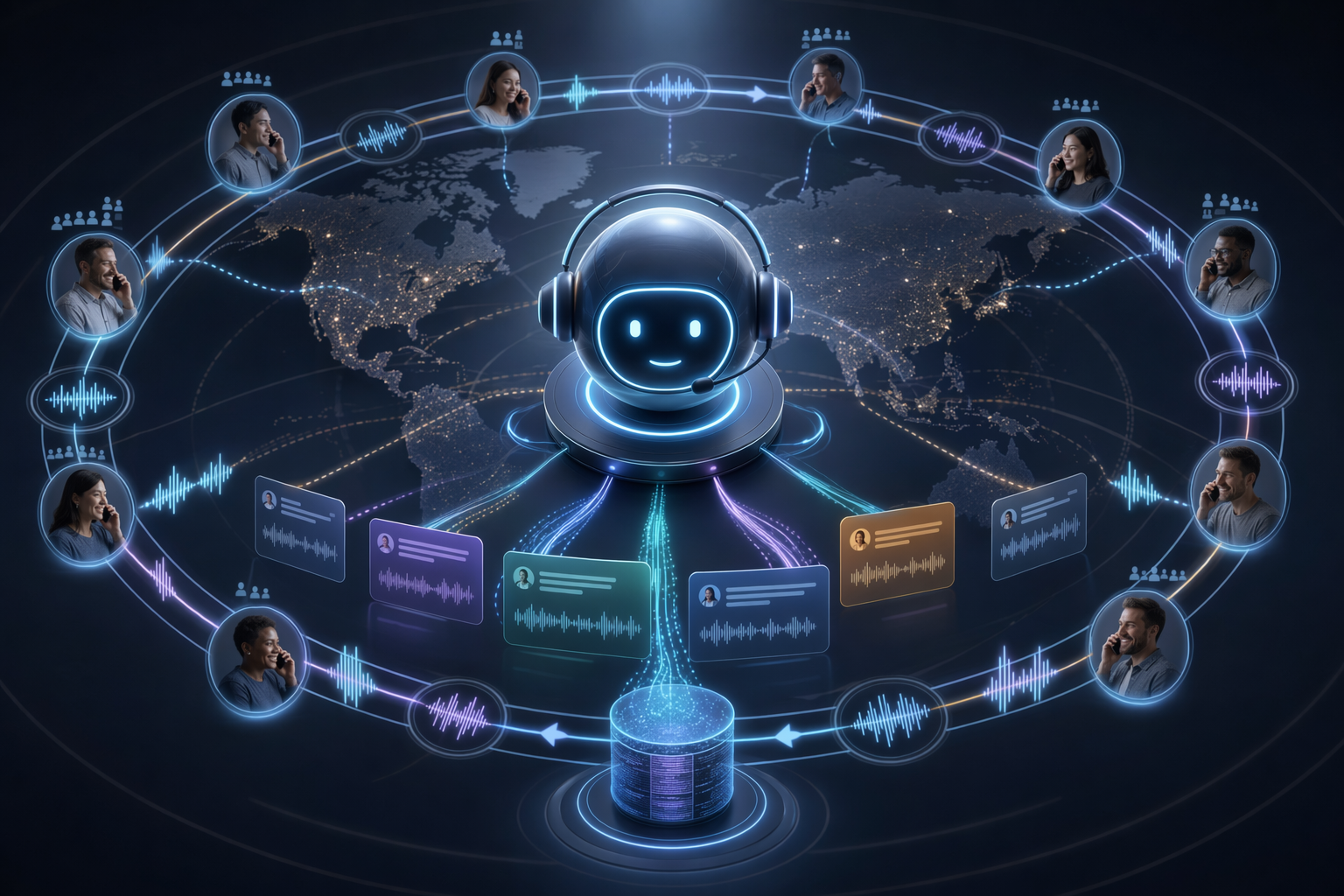
Configure Call Scripts and Qualification Questions
Build your AI voice agent scripts from successful human rep conversations, not from generic templates. Review call transcripts where reps booked meetings or advanced deals, then extract the opening hooks, qualification questions, and objection responses that actually worked. Structure these elements into a conversational flow the AI will follow during live calls.
Map qualification questions directly to the handoff triggers you defined in Step 2. If your trigger is "prospect confirms budget above $X," script the AI to ask about budget allocation during the call. If the trigger is "decision-maker identified," configure questions that surface who owns purchasing authority. After deployment, monitor call performance, review transcripts and analytics, and adjust scripts based on conversion data.
Anti-pattern to avoid: Deploying AI voice agents with off-the-shelf scripts that don't reflect your agency's specific value proposition produces low qualification rates because the AI cannot differentiate your offering or probe for agency-relevant buying signals. Generic scripts convert poorly and waste prospect attention.
Set Call Volume, Hours, and Timezone Parameters
Configure daily call limits, acceptable calling hours, and timezone targeting to comply with regulations and prevent prospect fatigue. Campaign settings include call schedule, retry attempts, and campaign objectives. Set workflows with TCPA compliance and ensure timezone-aware booking so calls reach prospects during business hours in their local market.
When evaluating AI voice platforms, agencies should assess capacity based on their target volume, not on maximum capacity claims. One platform reports support for 10,000+ concurrent calls and 20+ languages, but a small agency making 200 calls per day gains no practical benefit from infrastructure built for enterprise-scale concurrency. Choose platforms whose pricing and configuration tools align with your actual prospecting volume and growth trajectory, then scale infrastructure as call volume increases.
Automation expands dial capacity, but conversion depends on routing qualified leads to human reps the moment buying intent surfaces, no delays, no manual handoffs.
Step 4: Route High-Intent Leads to Human Sales Reps in Real Time
Connect AI Voice Platform to CRM for Instant Lead Updates
Real-time CRM sync ensures that every qualification event during an AI voice call instantly updates the lead record, so human reps see buying intent the moment it surfaces. Without this connection, qualified leads sit in a queue instead of reaching your sales team.
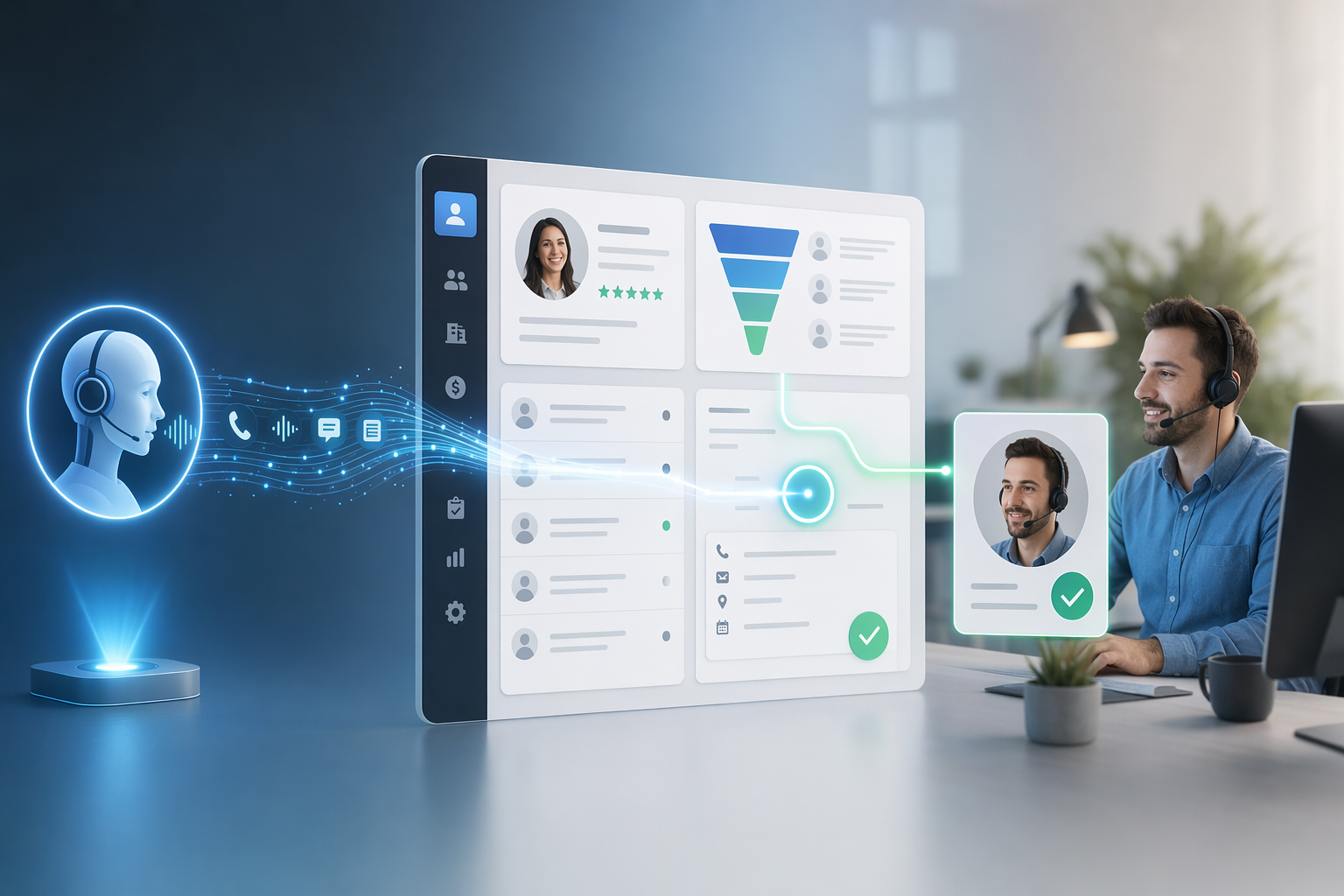
Connect your AI voice platform to your CRM via API or native integration, most platforms support HubSpot, Salesforce, and Pipedrive out of the box.
Map qualification fields from call transcripts (budget range, decision timeline, location) to CRM lead properties so every answer flows directly into the record.
Set assignment rules based on handoff triggers, for example, when the AI detects high intent ("I want a demo this week"), route the lead to the on-call rep's queue.
Enable automatic status updates so the CRM stage moves from "New" to "Qualified" without manual entry.
Platforms like EchoLeads offer pre-built CRM integrations that sync call results directly into your system, eliminating the need for custom development.
Set Up Real-Time Alerts and Assignment Rules for Human Reps
Once the CRM connection is live, configure instant alerts so reps know within seconds when a high-intent lead is ready for human conversation. The lead-to-response window has shrunk from hours to seconds[4], delays at this stage destroy conversion.
Configure Slack or SMS alerts in your CRM workflow automation, when a lead hits "Qualified" status, send a notification to the assigned rep or a shared channel.
Use round-robin or geo-based assignment rules to distribute leads fairly across your team, for example, route East Coast prospects to reps in that timezone.
Set up fallback routing so leads aren't orphaned if the primary rep is unavailable, escalate to a backup after 60 seconds of no response.
This handoff architecture ensures that every qualified lead lands in front of a human rep while the prospect's intent is still warm, turning AI qualification into immediate pipeline velocity.
Real-time routing mechanics prove the concept; a worked deployment timeline shows how agencies execute the entire workflow in 30 days without adding SDR headcount.
How Small Agencies Use EchoLeads to Scale Cold Calling 3× in 30 Days
Most small agencies face the same scaling trap: one SDR dials 50 prospects per day, conversion stalls, and adding headcount means months of hiring, onboarding, and salary burn. EchoLeads breaks that cycle by deploying autonomous AI calling agents that operate 24/7, qualify leads using structured questions, and sync results directly into CRM systems, turning one-rep capacity into three-rep output without hiring. Below is the 30-day path agencies follow to triple cold calling volume, plus a side-by-side cost comparison showing why AI voice platforms deliver equivalent capacity at a fraction of traditional SDR expense.

Real-World Timeline: From Deployment to 3× Capacity in 30 Days
Week 1: Script setup and CRM integration. Configure qualification questions (budget, timeline, authority), map CRM fields (lead status, next-step notes), and purchase a dedicated phone number. EchoLeads' platform connects to Salesforce, HubSpot, or Zoho in under 30 minutes.
Week 2: Initial testing with 50 calls/day. Launch a pilot campaign mirroring your existing SDR's daily volume. Monitor live transcripts, adjust script branching for common objections, and validate that qualified appointments land in your calendar without manual entry.
Week 3: Volume ramp to 200 calls/day. Scale the agent to handle simultaneous conversations, covering early-morning, lunch-hour, and evening time zones your single SDR couldn't reach. Qualified appointment rate typically holds at 10 to 12% as the AI applies the same ICP logic to every call.
Week 4: Handoff tuning and rep training. Configure escalation triggers so high-intent leads transfer to your human closer with full conversation context. Train reps to pick up mid-conversation when the AI flags buying signals, ensuring smooth human handoff for deal closure.
One EchoLeads customer, a three-person marketing agency in Austin, deployed this exact timeline in February 2025. Their sole SDR was dialing 50 prospects per day with a 12% qualified appointment rate (6 meetings/day). After 30 days running the AI agent in parallel, total daily dials rose to 150 (50 human + 100 AI), holding the same 12% conversion and delivering 18 meetings per day, a clean 3× capacity expansion with zero new hires.
Cost Comparison: AI Voice Platform vs. Hiring Additional SDRs
Traditional scaling means hiring two additional SDRs at $38,400 per year each [2], $76,800 in annual salary alone, plus 4 to 6 weeks onboarding before they hit dial targets. AI voice platforms operate at a fraction of that cost with zero ramp time. The table below compares five platforms on pricing, daily call capacity, concurrent call handling, core AI actions (qualification, booking, CRM sync), integrations, and call recording, the features agencies need to replace or augment SDR headcount.
Platform | Pricing (monthly) | Calls per day | Concurrent calls | AI actions | Integrations | Call recording |
|---|---|---|---|---|---|---|
EchoLeads | $249 flat-rate | Unlimited | Hundreds simultaneous | Qualify, book, CRM sync | Salesforce, HubSpot, Zoho | Yes, automatic |
OutCallerAI | Per-minute usage | Scales with usage | Not disclosed | Outbound qualification | CRM integrations | Yes |
Pod | Contact for pricing | Custom limits | Not disclosed | Lead qualification | Major CRMs | Yes |
Edesy | Tiered plans | Varies by tier | Multi-line support | Qualify, route | CRM, telephony | Yes |
CloudTalk | From $25/user/month | Unlimited | Limited by licenses | Call routing, basic automation | 100+ integrations | Yes, cloud storage |
EchoLeads' flat $249/month delivers the same daily output as two full-time SDRs ($6,400/month in salary) at 4% of the cost, with no onboarding delay and 24/7 coverage. Per-minute platforms like OutCallerAI scale flexibly but can exceed flat-rate costs at high volume; tiered solutions like Edesy and Pod suit agencies that want custom concurrency limits. For most small agencies chasing 3× capacity in 30 days, flat-rate unlimited calling plus automatic CRM sync offers the fastest path to measurable expansion, no hiring, no training, no salary overhead.
Scaling cold calling with AI voice agents delivers measurable ROI, but only when agencies build a compliance foundation that prevents TCPA violations and state-level recording penalties.
Compliance Requirements: TCPA, DNC, and Call Recording Rules
TCPA Consent and Do-Not-Call List Management
Before launching automated cold calling campaigns, small agencies must establish a compliance foundation that prevents costly TCPA violations. The Telephone Consumer Protection Act requires prior express written consent for automated calls to mobile numbers, and federal and state Do-Not-Call registries prohibit calls to opted-out consumers. Platforms like CloudTalk's AI voice agent deployment emphasize that compliance is a pre-launch requirement, not an optional add-on, because a single non-compliant call can trigger fines up to $1,500 per violation.
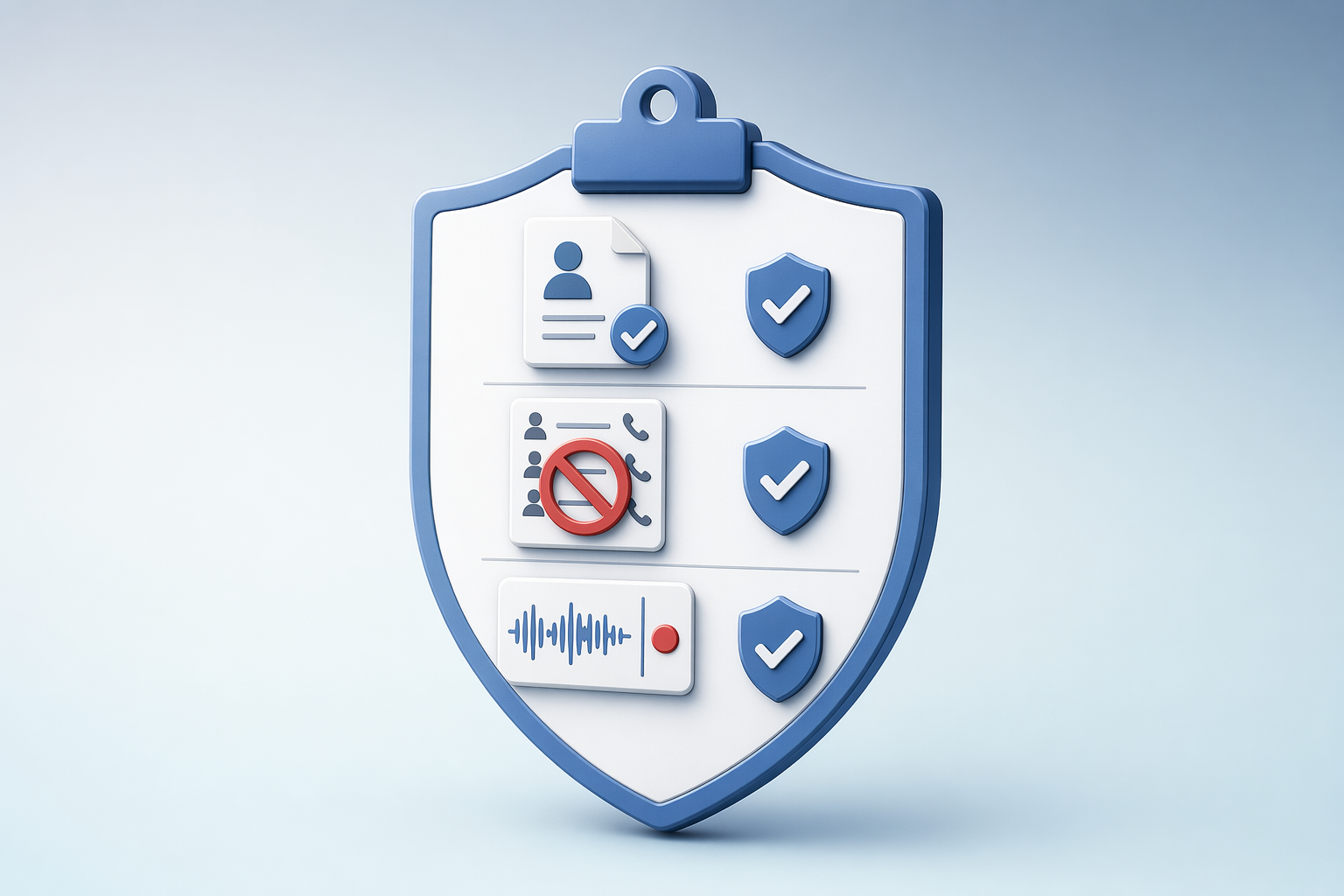
EchoLeads integrates TCPA compliance workflows and DNC list scrubbing directly into its cold-calling agent, automatically blocking numbers on federal and state registries before dialing. The platform also captures and logs lead consent and handles automatic opt-out requests, ensuring agencies maintain compliant call lists without manual intervention.
Call Recording Disclosure and State-Specific Rules
Eleven U.S. States require two-party consent for call recording, meaning both caller and recipient must be notified before the call is recorded. Automated calling systems must play a disclosure message at the start of each call, for example, "This call may be recorded for quality and training purposes", and maintain thorough interaction records to satisfy audit requirements. Regulated industries like healthcare adopt similar disclosure practices to comply with HIPAA and state privacy laws, as seen in Voiceoc's AI appointment scheduling assistant, which integrates consent notifications at booking to protect patient data.
Manual cold calling preserves full human control over every conversation but caps at 50 dials per day per rep. AI voice agents expand capacity to 200+ dials per day while routing edge cases and high-intent leads to human reps for closing, delivering 3× reach without adding headcount.
As AI voice platforms add multilingual support and vertical-specific qualification logic, small agencies will shift from competing on rep headcount to competing on workflow architecture, the winners will be those who define handoff triggers and compliance workflows first.
Deploy EchoLeads' AI cold calling agent to start scaling your outbound prospecting capacity 24/7 without hiring more sales reps. The platform provides the execution layer for autonomous calling, qualification, and CRM routing described in this article.
Frequently Asked Questions
Can AI voice agents fully replace human sales reps for cold calling?
No, AI voice agents handle initial prospecting and qualification 24/7, but high-intent conversations and closing require human sales reps [6]. Without clear handoff logic, agencies risk losing high-intent prospects to endless AI loops or overwhelming reps with unqualified calls.
How do small agencies define when AI should hand off a lead to a human rep?
Agencies set qualification thresholds across budget, timeline, authority, and need, plus objection types that trigger immediate human escalation [5]. Mapping the workflow reveals that 60% of cold calling time is consumed by initial contact attempts, purely repetitive tasks ideal for automation.
What compliance requirements apply to automated cold calling?
Agencies must obtain prior express written consent for automated calls to mobile numbers, scrub call lists against federal and state Do-Not-Call registries, and configure call recording disclosures. Eleven U.S. States require two-party consent before recording calls.
How much does it cost to scale cold calling with AI voice agents vs. Hiring more SDRs?
Hiring an SDR costs approximately $38,400 per year plus 4 to 6 weeks onboarding before hitting dial targets [2]. AI voice platforms deliver equivalent capacity at 30 to 40% of the cost with zero ramp time, eliminating months of recruiting and training delays.
Can AI voice agents handle objections during cold calls?
AI voice agents handle standard objections like timing and budget concerns with scripted responses, but complex objections, pricing negotiation, technical deep-dives, trigger human escalation [6]. Agencies define objection-type mapping to ensure high-intent conversations route to qualified reps immediately.
How long does it take to deploy AI voice automation for cold calling?
A realistic deployment takes 30 days: Week 1 for script setup and CRM integration, Week 2 for initial testing, Week 3 for volume ramp, Week 4 for handoff tuning [5]. Mapping the workflow first reveals that 60% of cold calling time is repetitive contact attempts.
Do AI voice agents work with existing CRM systems?
Yes, AI voice platforms integrate with CRMs like HubSpot, Salesforce, and Pipedrive to update lead records and trigger real-time alerts when high-intent leads are qualified [3, 4, 5]. Unlike traditional call centers, platforms execute autonomous prospecting without hiring and training overhead.
Related articles
How to Increase Sales Team Capacity Without Hiring More Reps (2026)
Learn how AI voice automation expands lead-handling capacity without hiring.
Why Sales Reps Miss Follow-Up Calls with Leads: 4 Root Causes & How AI Automation Fixes Them
Discover the 4 systemic workflow failures causing missed follow-up calls and how AI automation eliminates manual overloa.
Automated Lead Qualification Software Over the Phone: Setup Guide (2026)
AI voice agents qualify leads over the phone autonomously.