
6 Best Tools That Qualify and Schedule Meetings with Inbound Leads Automatically in 2026
Introduction
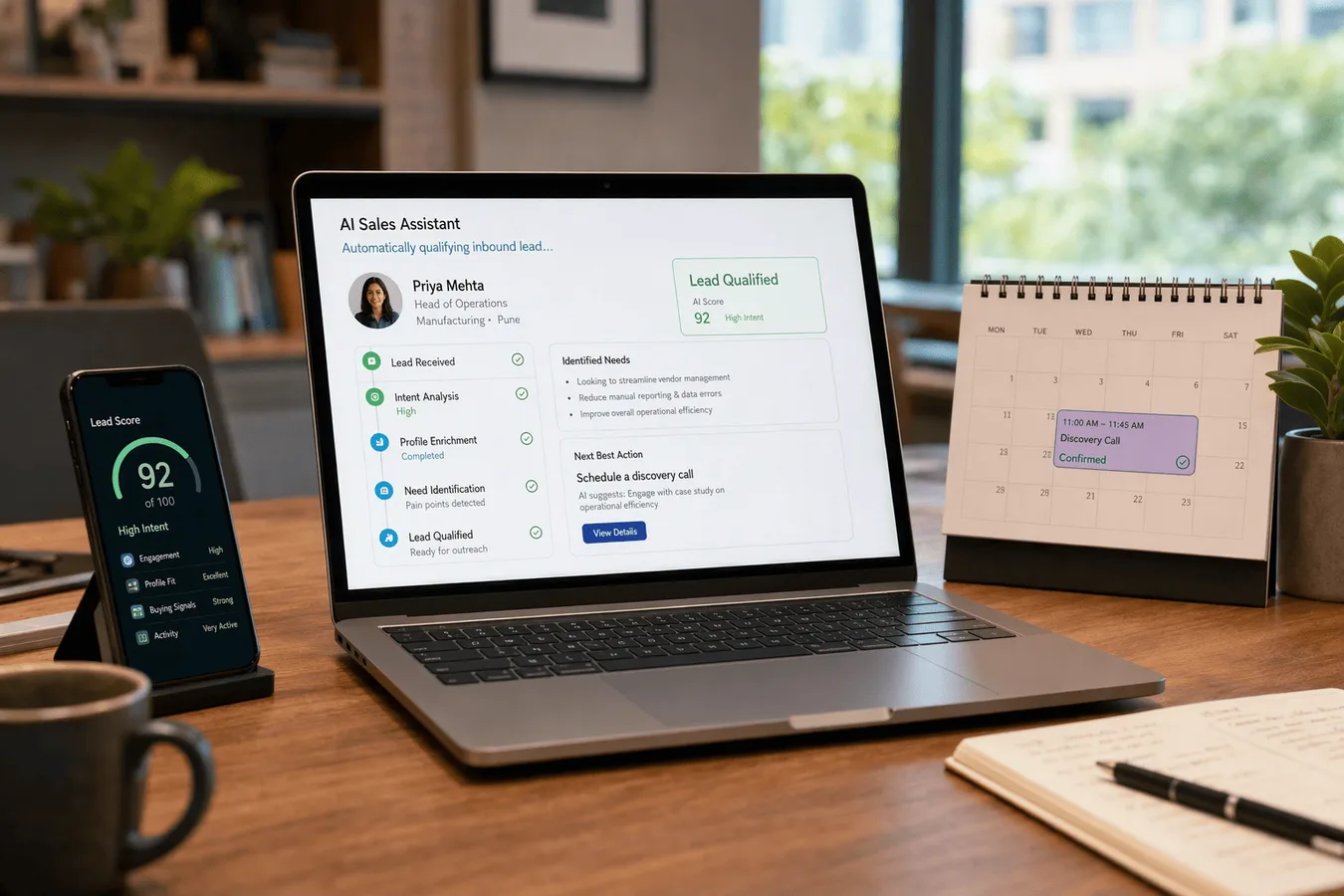
Your highest-intent leads wait an average of 42 seconds on an unanswered call before hanging up permanently. In B2B sales, that silence is expensive. The real friction is not generating leads. It is the manual, error-prone work that happens the moment a lead responds: deciding if they are worth a meeting, finding a slot, and booking it. Indian sales teams lose up to 2 days per week on manual admin tasks, burning rep capacity on scheduling instead of closing.
The fix is now mature. Automated meeting scheduler tools can now handle the full inbound workflow without a human touch. An AI sales assistant greets the lead via web chat or phone, asks qualifying questions on budget, authority, and timeline, scores the response, checks a live calendar via scheduling APIs, and books the appointment instantly. For Indian B2B teams, this shifts the role of a rep from a reactive gatekeeper to a prepared closer. This article examines seven inbound lead qualification software options purpose-fit for the speed and compliance demands of the Indian market.
Key Takeaways
Here are the core insights for selecting an AI meeting scheduler in India:
Speed wins trust A sub-3-second voice agent response prevents lead drop-off and mirrors an alert human receptionist, keeping high-intent prospects engaged.
CRM ecosystem vs. flexibility Deeply integrated tools like HubSpot Meetings slice manual data entry completely, while open-source platforms like Cal.com offer greater customization control.
Compliance is non-negotiable India's TRAI consent recording rules and the DPDP Act 2023 require strict data localization. Not every global tool is compliant out of the box.
Voice AI is only half the picture The ideal setup is a hybrid model. An AI voice agent handles initial qualification and booking, then hands off complex or premium leads to a human rep using sentiment triggers.
Vertical-specific logic matters Education and financial services firms need scheduling tools with pre-built compliance guardrails and sector-specific lead scoring models.
1. EchoLeads: A Sub-3-Second AI Voice Agent Purpose-Built for Indian B2B Teams
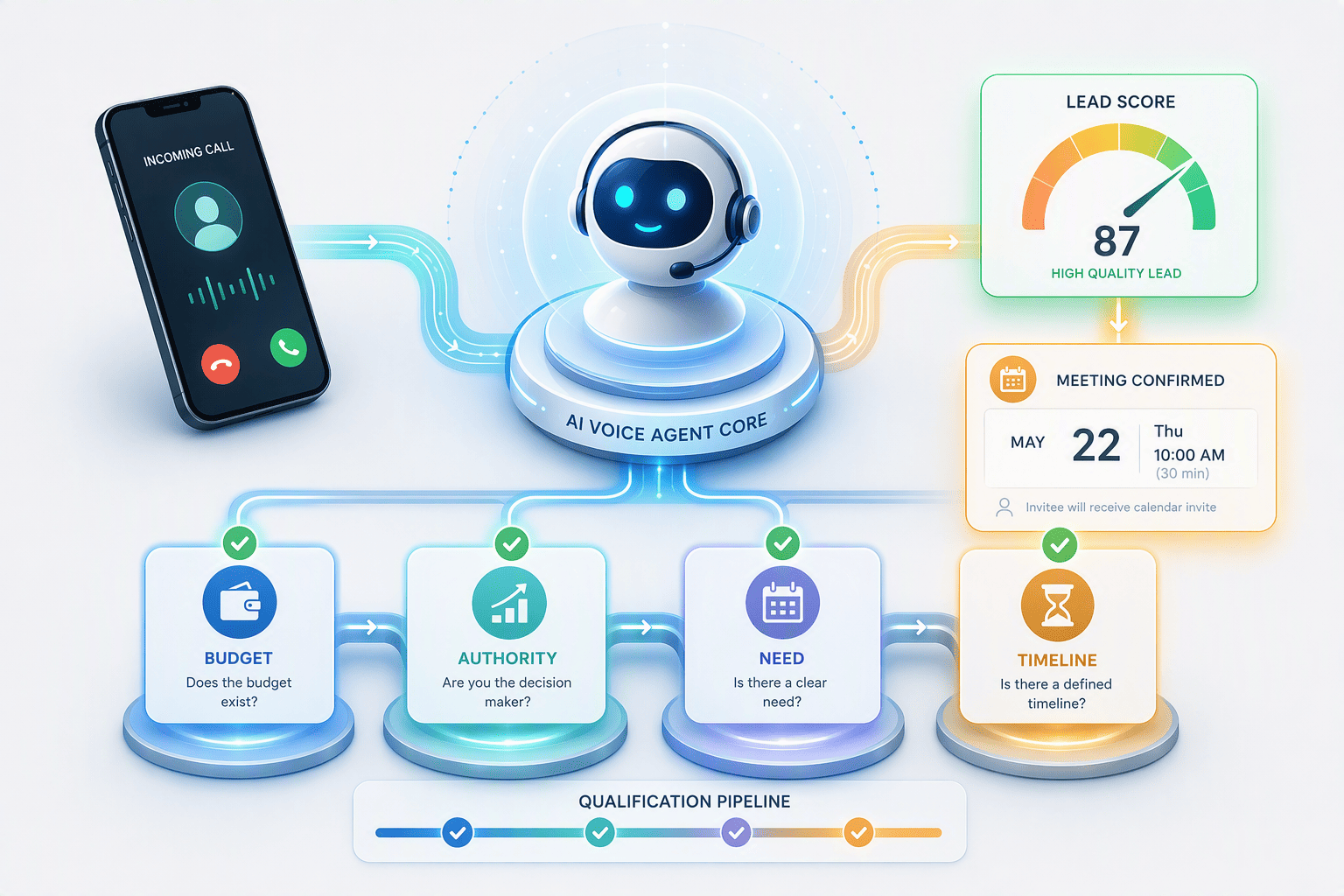
EchoLeads is an AI voice agent that picks up inbound calls before the third ring. It skips the dead air that sends Indian buyers away and gets straight to a qualification script built around BANT: budget, authority, need, and timeline. The agent scores the lead while the call is still in progress, pings Google Calendar, Outlook, or your CRM scheduler, and books the meeting. No human touches the process.
The system is built in Hyderabad and tuned for the way Indians actually speak. It handles accent variation, Hindi-English code-switching, and the noisy mobile lines common across Tier 2 and Tier 3 cities. The pricing starts at ₹4 per minute on a pay-as-you-go plan.
Teams with predictable volume can lock in rates as low as ₹1.80 per minute with a usage commitment, which comes in cheaper than keeping a full-time receptionist on payroll. EchoLeads connects with the scheduling tools most Indian B2B teams already use. A 2026 review of AI calling agents listed it among the platforms that can check real-time calendar availability and confirm a slot without an SDR stepping in.
The same roundup noted the sub-3-second pickup window as the design choice that keeps lead drop-off low on mobile-first inbound traffic. The tool fits teams that run paid ad campaigns and need every call answered. It also fits field-sales orgs that route evening and weekend calls from regional languages.
The enterprise tier includes dedicated number provisioning and priority latency routing for call centers handling north of a thousand calls a day. For teams still testing the model, the pay-as-you-go plan starts without a minimum commitment, so you turn it on for a campaign, measure the meeting-booked rate, and decide if the volume justifies a locked rate.
2. HubSpot Meetings: The Power of a Unified CRM-Scheduling Ecosystem
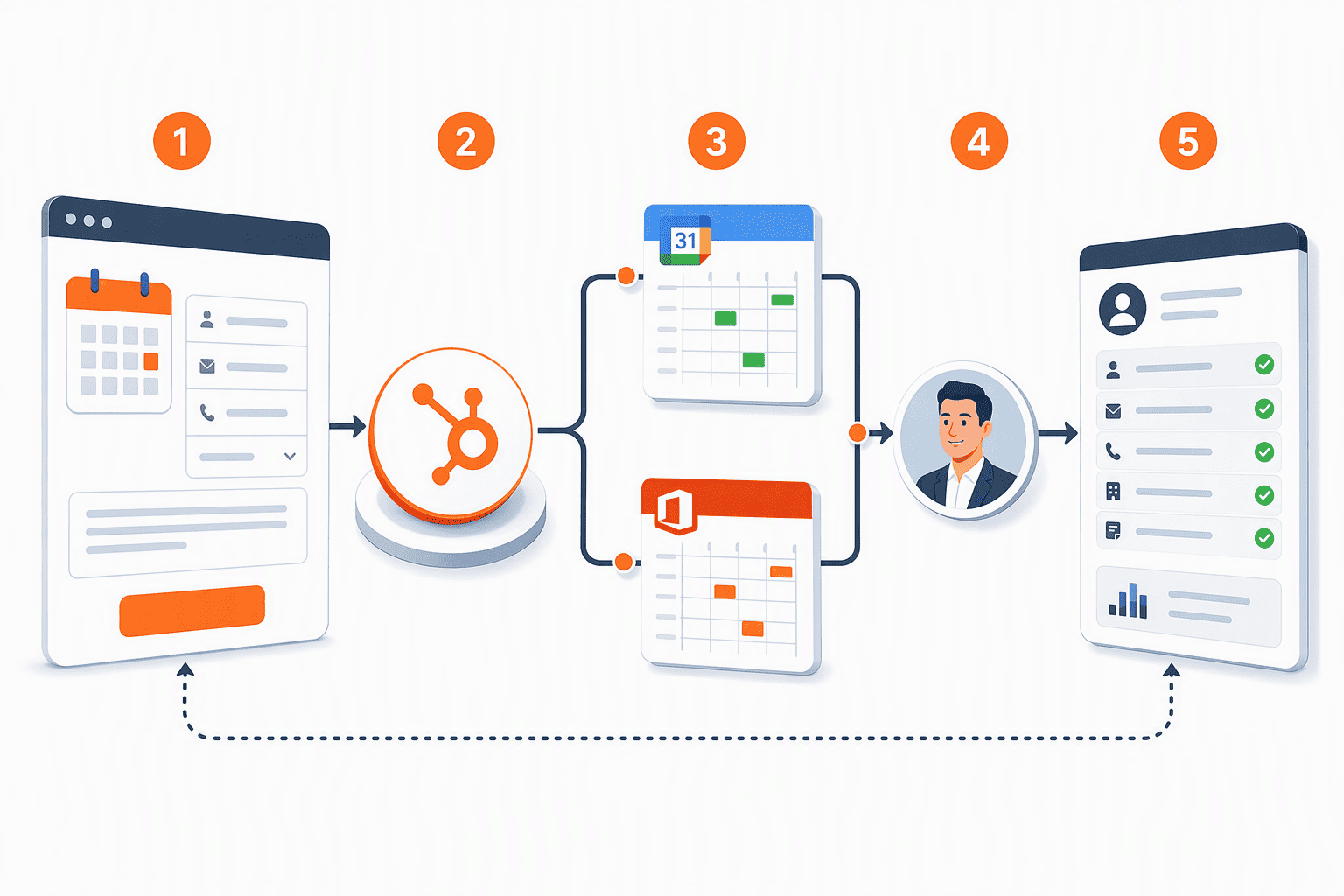
HubSpot Meetings syncs in real-time with Google and Office 365 calendars, ensuring prospects see only genuinely available slots and reducing embarrassing double-books. The tool embeds a scoring layer into the booking form, routing the right leads to the right reps based on territory and expertise.
The real advantage is unity. When a prospect books, the full contact record, source, and qualification tags are populated inside HubSpot CRM instantly. There is no manual entry. Its built-in AI assistant compiles prospect context pre-meeting and drafts follow-up emails automatically, closing the loop between booking and prep.
The tool saves a team already running its pipeline on HubSpot from needing a separate scheduling tool:
No tool-switching: It acts as a missing tab within HubSpot, not a separate application.
Time recovered: Avoiding tool-switching saves reps a significant chunk of the hours spent coordinating meetings each week.
Digital-only focus: While the digital scheduling experience is polished, it lacks a native AI voice agent to field phone calls or handle verbal qualification, leaving a gap for phone-heavy inbound models.
For a purely digital lead flow, it is a precise, zero-friction machine. For a phone-heavy inbound model, it leaves a gap you will need to fill with a separate voice tool.
3. Cal.com / Cal.ai: Open-Source Scheduling with a Flexible AI Layer
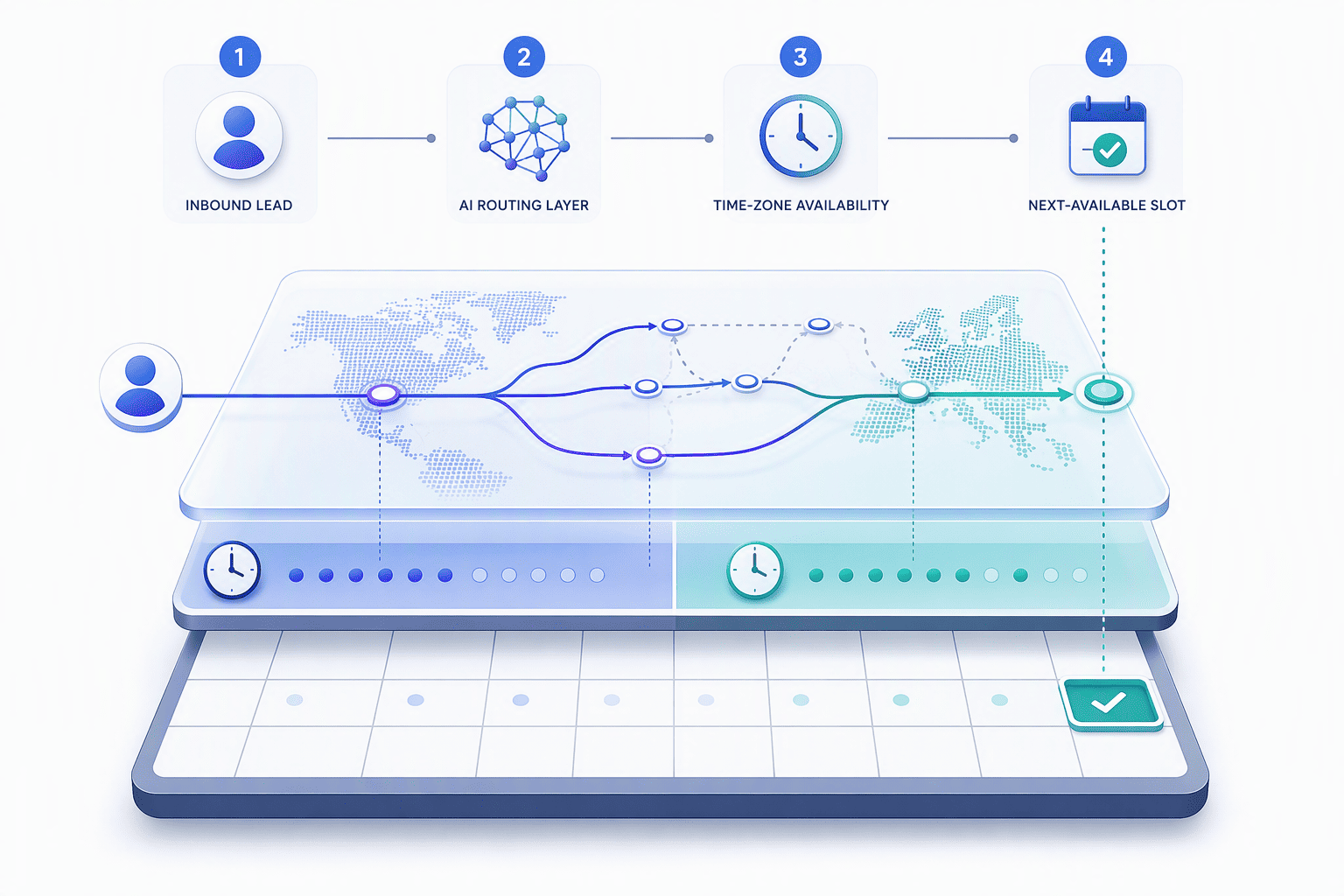
Cal.com gives you the open-source scheduling foundation. Cal.ai places an AI agent on top that books appointments without any human in the loop. The result is a stack you can bend to almost any routing rule or integration requirement.
Indian IT services teams that schedule across US and European time zones get the most out of the routing engine. You can send a lead to the next-available rep in a specific geography, skip unavailable slots, and keep the entire flow inside a self-hosted calendar the client never sees.
The AI receptionist pathway greets inbound leads, asks a set of qualifying questions, and then books the meeting based on the answers it collects through chat or voice. The agent can score leads before committing a human's time. A high-potential inquiry lands on a senior rep's calendar right away; a low-fit submission gets pushed to an email nurture track without occupying anyone's afternoon.
Developer-led teams gravitate toward the composable architecture:
Data ownership: You own the data, the logic, and where the application runs.
No vendor lock-in: That control removes the lock-in baked into closed scheduling ecosystems and lets you swap any piece later.
Compliance responsibility: Indian businesses must independently verify their deployment against TRAI consent recording rules, as flexibility means compliance is your job, not a check-box inside a settings panel.
4. Zoho Bookings: The Native Choice for India’s CRM Dominant Businesses
Zoho Bookings is the scheduling module built into Zoho One, a suite with deep penetration across Indian enterprises. If your sales team already uses Zoho CRM and Zoho Desk, Bookings slots in as the scheduling layer without added connectors. A lead's stage, source, and previous support tickets can determine meeting type and rep assignment on the spot.
Ecosystem lock-in as an advantage: Zoho Bookings reads lead data directly from Zoho CRM. Rep assignments, routing logic, and follow-up sequences all pull from the same records your team already maintains.
Data residency alignment: Zoho runs data centers in India. That infrastructure choice cuts down the friction of data localization compliance, though every tool still needs its own DPDP Act 2023 review.
Trigger-based booking flows: Zoho's workflow engine launches meeting bookings after a form submission without third-party middleware. The audit trail stays inside one system, and the booking flow is faster for it.
5. Salesforce Scheduler (Einstein): Enterprise Muscle with Qualification Guardrails
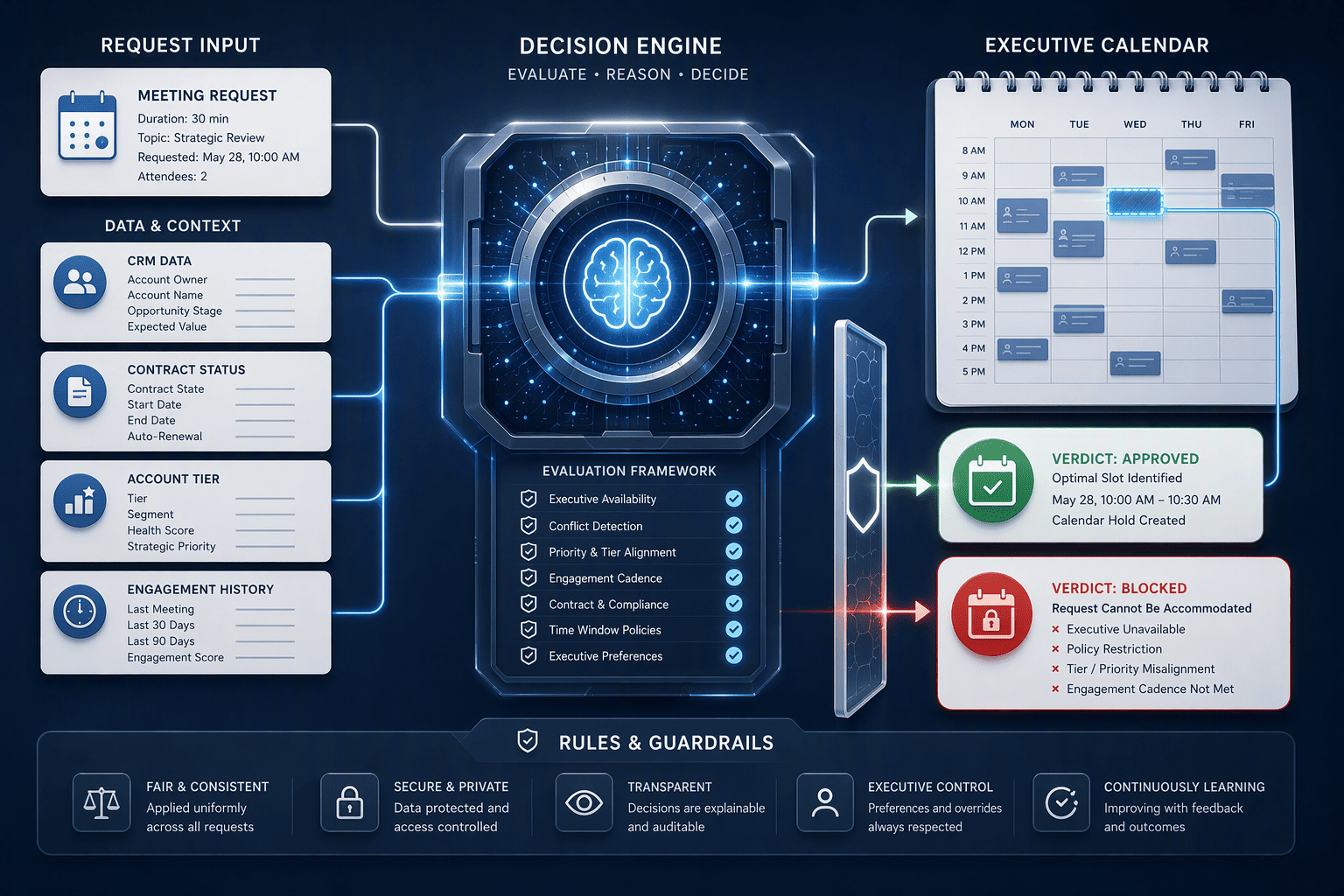
Salesforce Scheduler treats lead qualification as a rules-and-compliance problem. Its Einstein engine looks at CRM data fields, contract status, account tier, and engagement history before it decides whether to book a meeting. If a deal is worth less than a threshold you set, the system will not let it take a senior VP's calendar slot reserved for enterprise renewals. It imposes business guardrails that go beyond checking a calendar.
Its real advantage is handling messy workflow logic. Large financial services or tech firms with layered sales processes can encode territory rules, product-line expertise matching, and deal-level risk scoring directly into the scheduler. A head of revenue operations can set exactly who gets access to which meeting slot, and under what conditions.
This is not a voice-first product. The default interaction happens through screens, on a web form or an authenticated portal. For inbound qualification that runs on structured data, Einstein's logic layer is hard to beat. If the lead comes in over a phone call, you need an external agent platform connected to it. The value here is deep CRM logic enforcement, not conversational speed.
6. LeadSquared Lapps: High-Velocity Automation for India's Education and Financial Services Sectors
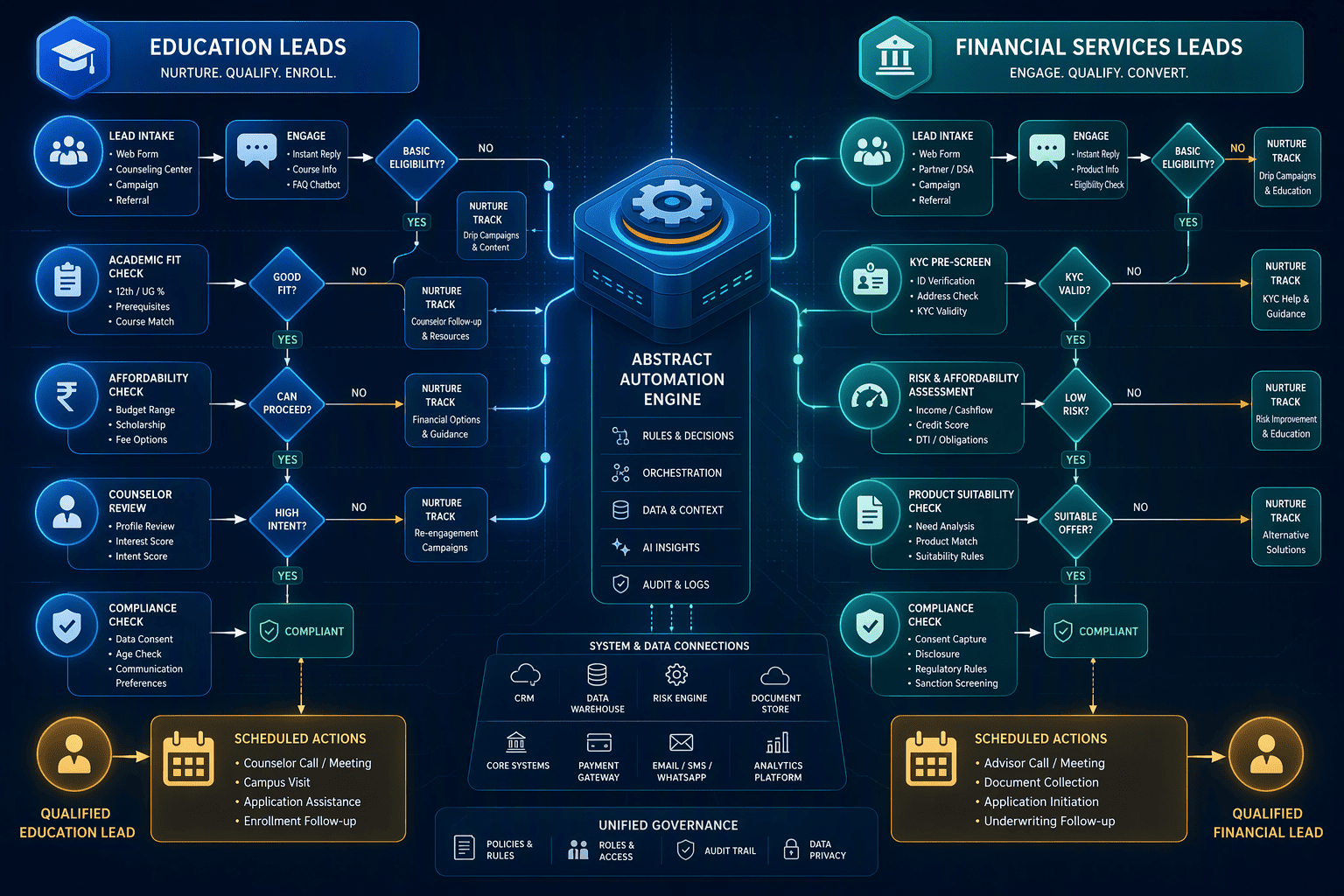
LeadSquared Lapps, combining its Marketing Automation and Sales Execution modules, is built for the specific velocity and compliance demands of India's education and financial services lead engines. It does not offer a voice agent natively, but its chat-based qualification and API-driven scheduling flow are built around sector-specific rules.
Dimension | Education Sector Fit | Financial Services Sector Fit |
|---|---|---|
Lead qualification logic | Scores inquiries based on course interest, city, and entrance exam scores instantly. | Triggers qualification based on income bracket, CIBIL score range, and product interest. |
Compliance trigger | Routes consent capture before scheduling a campus visit call. | Enforces mandatory KYC-consent checkpoints within the booking flow. |
Scheduling API action | Books a slot directly into a counselor's Zoho Bookings or Google Calendar via API. | Books a slot with the loan officer tied to the specific branch pincode in the CRM. |
Inbound channel | Automates scheduling from the web chat widget on landing pages. | Triggers instant meeting booking from a form fill on a loan product page. |
The value is pre-configured logic, not raw infrastructure, giving these high-volume Indian sectors a compliance-first speed advantage.
Conclusion
Your next inbound lead can have a booked meeting in under three seconds.
The only real fork is whether your flow is voice-heavy or digital, and how tightly your scheduler needs to enforce sector-specific rules.
For the volume and accent complexity of Indian phone leads, EchoLeads fields a sub-3-second AI voice agent that qualifies and books instantly. HubSpot and Salesforce give you CRM-led precision for digital inbound.
The strongest setup is almost always a hybrid: let the AI agent handle midnight calls and first qualification, and route premium leads to your best closers. That gets your team back the two days a week they lose to manual admin right now.
Frequently Asked Questions
How do automated lead qualification and scheduling tools work step-by-step?
An AI agent greets the lead via phone, chat, or email. It asks qualifying questions (budget, timeline, need) to score the lead. It then checks real-time calendar availability through integrated APIs and automatically books the appointment with the appropriate rep, updating the CRM.
Which tools offer AI-powered inbound lead qualification and meeting scheduling in India?
Specialized tools include EchoLeads for instant voice agent qualification. Suite-based options include Zoho Bookings for Zoho CRM users on Indian data centers, HubSpot Meetings for digital-first teams, and Cal.com for teams needing an open-source voice AI scheduler that they can customize.
What are the key features to look for in an AI scheduling agent for Indian businesses?
Look for sub-3-second response times for voice calls, strong handling of Indian accents, compliance with TRAI consent recording and DPDP Act data residency rules, CRM integration for automated two-way sync, and a clear handoff mechanism to a human rep for complex queries.
What regulatory and compliance factors must Indian companies consider for AI voice agents?
AI voice agents must comply with TRAI rules on recording consent and explicit opt-out mechanisms. Data handling must meet DPDP Act 2023 standards for data localization. Companies must ensure their platform provides a clear audit trail and stores data on servers compliant with Indian law.
How does an AI voice agent compare to a human receptionist for lead management?
An AI voice agent offers 24/7 availability, zero hold times, consistent qualification scripts, and no fatigue, handling hundreds of calls simultaneously. It lacks human empathy for nuanced objections. The most effective model is a hybrid handover for complex inquiries or premium leads.
What measurable outcomes can businesses expect from automating inbound lead scheduling?
Teams can recover up to 2 days per week lost to manual admin tasks. Response time drops to near-instant, increasing lead capture rates. Scheduling errors like double-books are virtually eliminated, and sales reps spend significantly more time selling instead of coordinating meetings.
Related articles
Your Website Leads Are Cooling in 42 Hours, Here’s How to Respond in Seconds Without Hiring Anyone
Websites leads go cold after 24 hours, learn how AI voice agents can instantly respond and engage with them.
After-Hours Leads Don't Wait: AI Voice Agents Can Now Close Them for You at 3 AM
Learn about how AI voice agents can be deployed to close leads even at 3 AM
Why Inbound Leads Go Cold Before Your Sales Team Can Follow Up, and How to Win the 100x Window
Learn why inbound leads go cold and how businesses can employ AI voice agents to automate lead engagement even after working hours.