
Why Inbound Leads Go Cold Before Your Sales Team Can Follow Up, and How to Win the 100x Window
Introduction
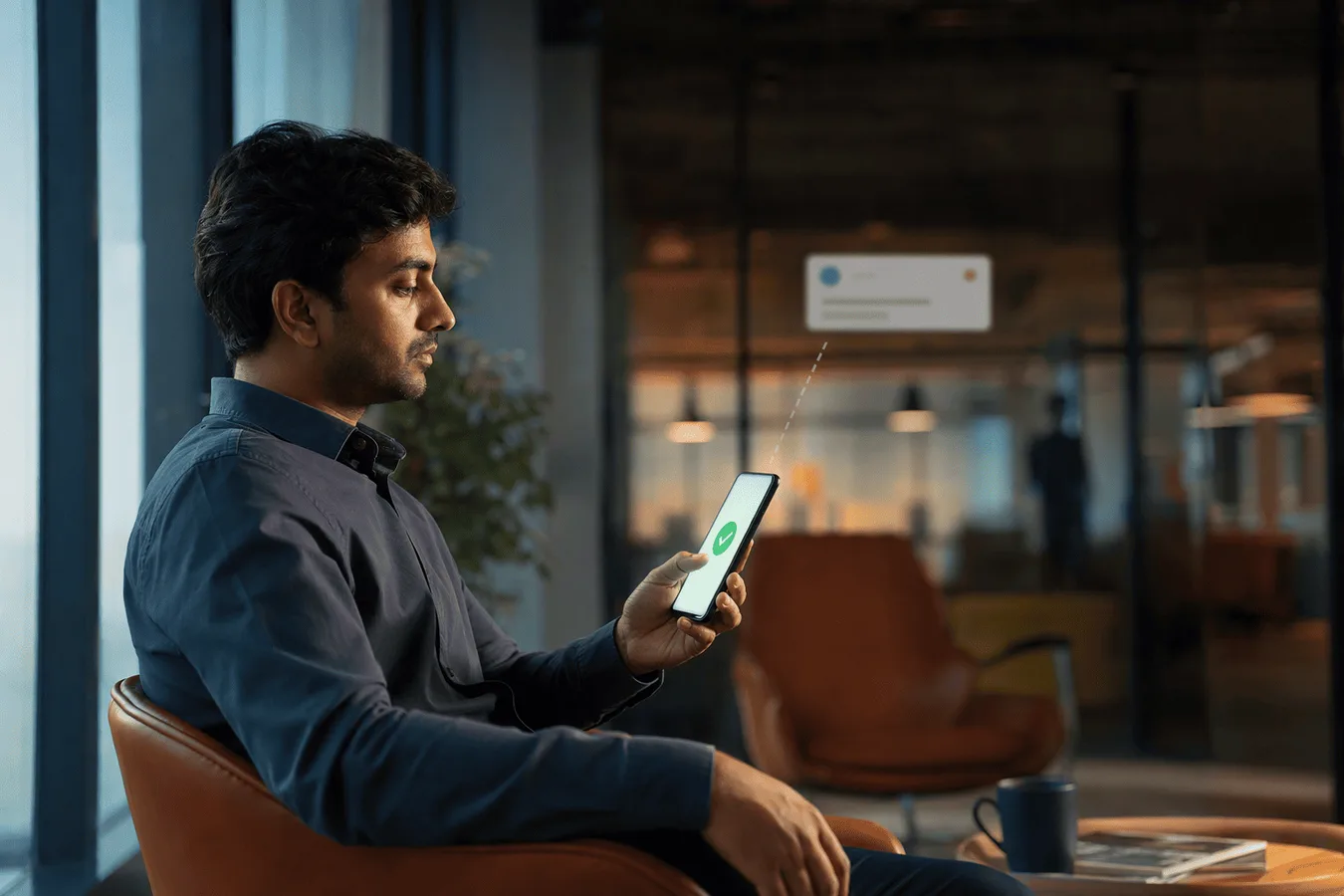
A qualified prospect fills out your form, phone in hand, literally waiting to buy. Twenty minutes later, an SDR finally sees the notification and dials. Silence.
The lead vanished. This collapse is not a sales skill problem.
It's a physics problem. Inbound intent is radioactive, decaying faster than any human team can consistently catch it, especially in India's mobile-first market where alternatives are a thumb-swipe away.
This article dissects why the traditional "follow-up" model is structurally broken. We trace the exact operational failures that create a 30-minute chasm between a hand-raise and a human response, and map it against the brutal economics that make manual calling unsustainable. The core finding is stark: within the first five minutes, you command a window of roughly 100x greater contact success than at the half-hour mark.
You'll see how AI-driven instant engagement closes that gap by picking up the call within three seconds, qualifying the prospect, and booking the meeting, all before your competitor's form notification even lights up Slack. Crucially, we ground this in India's specific reality, showing how a platform like EchoLeads navigates TRAI compliance by design, enabling lawful, instant inbound handling that never trips spam regulations.
Key Takeaways
Here are the core operational truths about converting inbound leads before they freeze over:
Response time dictates your conversion ceiling: Contacting a lead within five minutes yields a roughly 100x higher connection rate than waiting 30 minutes. After that window, you’ve effectively lost them.
Manual routing is the silent pipeline killer: The 30-minute gap isn’t negligence; it's the predictable latency of Slack-to-CRM handoffs. Your team never had a fair fight.
Human teams cannot scale to peak demand: Call volume surges of 300% to 400% during demand spikes crush agent capacity, creating 45-minute wait times that cold leads simply won’t tolerate.
AI delivers sub-60-second qualification: AI voice agents are the only financially viable layer to capture peak buyer intent instantly, 24/7, without burning your cost-per-lead economics.
CRM sync prevents the data dead-end: Instant engagement is worthless if the insight stays siloed. Bidirectional sync ensures the AI logs the full conversation, appointment, and audit trail directly into your CRM automatically.
TRAI compliance is a design feature, not a roadblock: For inbound calls, consent is implied, making instant AI handling entirely lawful; compliant architecture simply scrubs outbound campaigns against DND registries.
The 100x Window: Why Speed Defines Inbound Lead Conversion in India
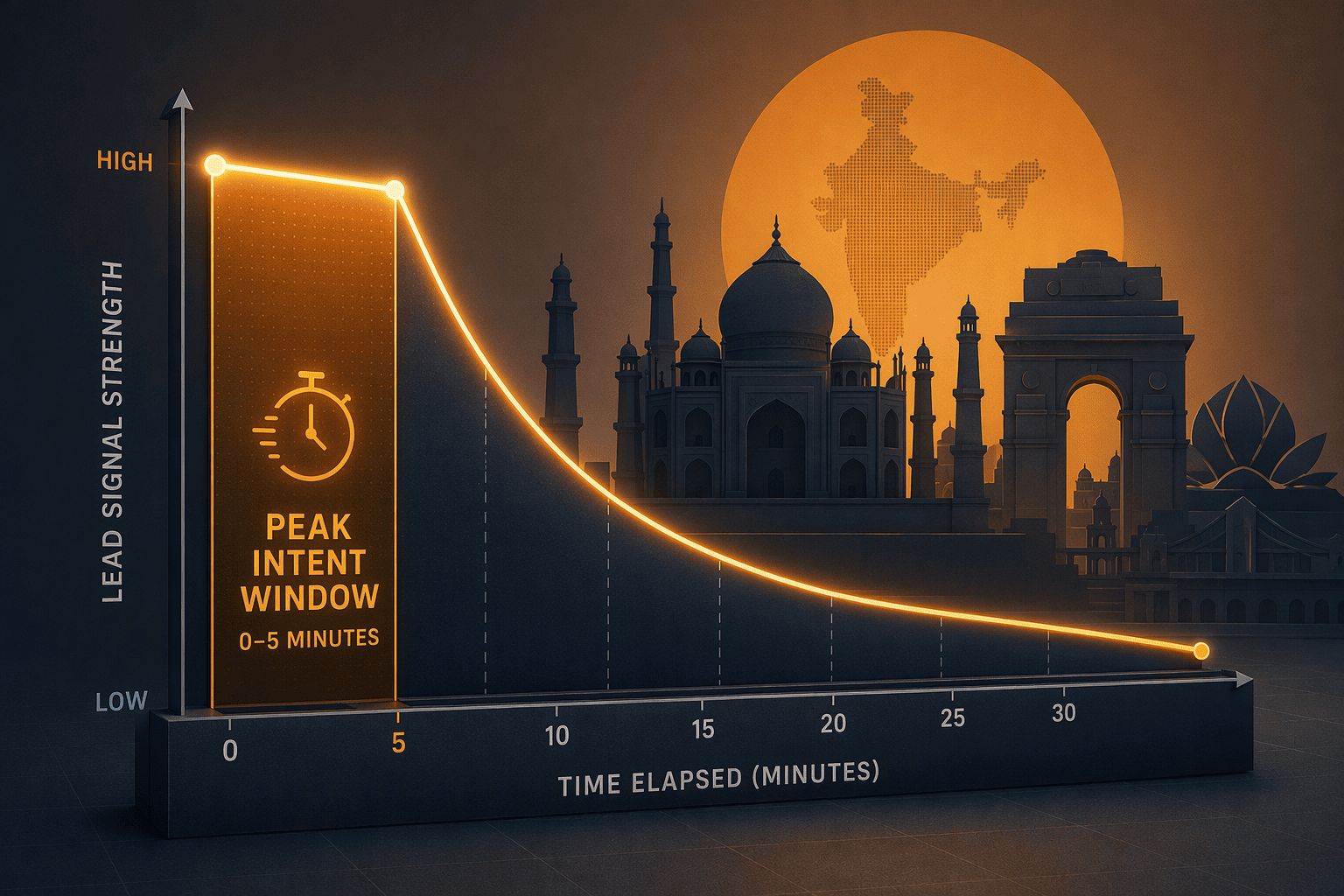
“Peak buyer intent” is not a marketing metaphor. It is a fleeting neurochemical state. When a prospect submits a form or initiates a call, they are in a narrow tunnel of focused need.
The quantitative cost of missing that tunnel is brutal. Responding within five minutes increases your odds of connecting by over 100x compared to waiting half an hour. Those first five minutes are where the entire game of inbound conversion is played.
By the 30-minute mark, decay is catastrophic. Conversion rates drop by 8 times when follow-up is delayed by just five minutes. Across industries, the grim reality is that the median B2B team does not respond for 42 hours. In that delay, your value proposition collapses into a commodity. The prospect, now distracted by a competitor’s retargeting ad or a push notification, has reconstructed their mental priority list, and you are at the bottom.
This decay accelerates dramatically in the Indian market. India’s consumer base is mobile-dominant and operates on a zero-latency expectation curve. A lag in response doesn’t merely signal inconvenience; it signals operational fragility.
The prospect who filled your form is also comparing your trustworthiness in real-time. A platform like EchoLeads, which deploys AI voice agents that answer inbound calls within 3 seconds, does not just improve speed statistics. It validates to the Indian buyer that your business is credible, strong, and worthy of their data, converting the instant response into a trust signal as much as a sales action.
What’s Breaking Your Follow-Up: The Operational Causes of Cold Leads
The common narrative blames lazy reps. The data blames broken pipes. A big reason response times lag is manual lead routing, where a lead hits Slack or Salesforce and an SDR picks it up 30 minutes later. This is not an employee problem; it’s a systemic 30-minute chasm baked into the handoff between your marketing automation and your sales activity. The buyer left the site long before the tab opened.
The capacity math fails next when human agents face demand spikes. During insurance storms or viral campaigns, call volumes surge 300% to 400%, spawning 45-plus minute wait times. A human team simply cannot flex its headcount in minutes, and it shouldn't try.
The economics make manual scaling a trap. A live agent interaction clocks an average of 3.35 minutes and burns a cost of $7 to $12 per call. For a volume of inbound leads that includes a massive fraction of tire-kickers, you are bleeding money to filter noise. Voice AI flips this cost model to roughly $0.40 per call. The cost isn't just monetary; with agent turnover exceeding 15% annually and hiring timelines stretching beyond six months, the human-only model can't even staff itself, let alone answer calls instantly.
Unsurprisingly, 79% of marketing leads never convert and roughly 30% of leads are never contacted at all. The silent majority of your leads are not
How AI-Powered Instant Engagement Captures Peak Buyer Intent
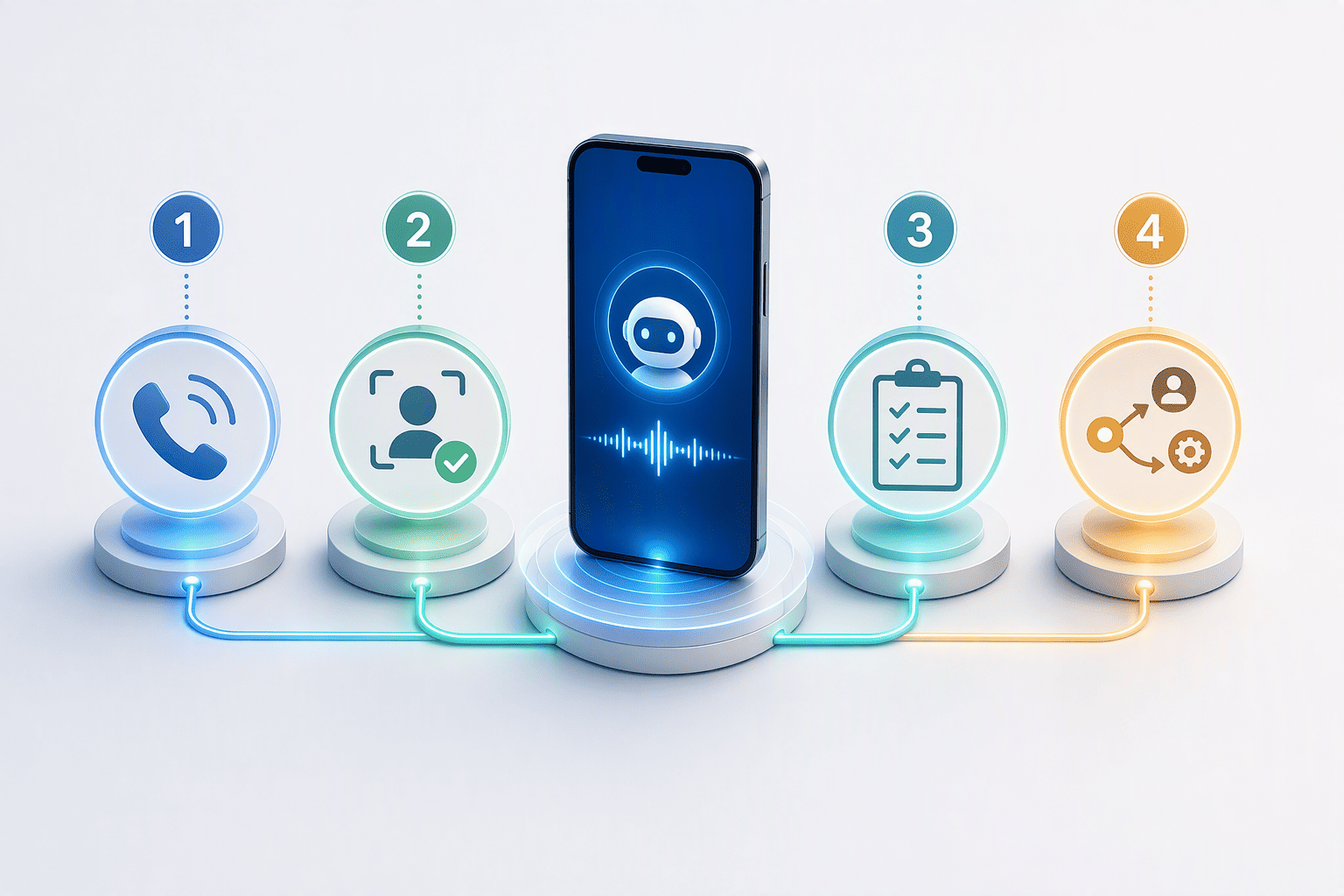
You solve the 100x window not by hiring faster, but by removing the human from the first touch entirely. An AI voice agent acts as your instant response layer, a fix the data demands. Here is the operational flow:
Zero-second pickup: The AI agent answers the inbound call within three seconds, catching the buyer before intent fades. No hold music. No ring-back anxiety.
Sub-60-second qualification: Using a natural, customizable voice script, the AI verifies the lead's identity and intent. It asks the qualifying questions your top SDR asks, filtering out the noise against your ICP definitions in under a minute while the prospect is still focused.
Instant appointment booking: On successful qualification, the AI books the meeting directly into your Google Calendar, Outlook, or CRM-based scheduler in real time. Platforms like EchoLeads book appointments directly into your team's calendar, removing the friction of the follow-up email entirely.
Infinite parallel capacity: Unlike a human pod that collapses under a call spike, AI handling is elastic. An EchoLeads AI voice agent can handle hundreds of simultaneous calls, maintaining sub-second response latency across every single one, at a pay-as-you-go rate starting at just ₹4 per minute. You scale your pipeline without scaling headcount costs.
Indian Consumer Expectations in 2026: Data on Response Speed and Credibility
In India's hyper-competitive 2026 market, speed is a direct proxy for credibility. The data points driving this shift paint a clear picture of a zero-tolerance consumer:
Instant acknowledgment is the baseline: Indian buyers navigating mobile-first interfaces equate form submission with an immediate response. Any lag in acknowledgment is psychologically processed not as a delay but as a rejection, pushing them straight to the next search result.
The 5-minute rule has collapsed: The old five-minute benchmark for lead response is gone. According to the 2026 Speed to Lead Benchmark from Ascero AI, 78% of B2B buyers now expect a callback or reply within one minute of inquiry submission.
Credibility decays by the second: A lead contacted 30 minutes after form-fill converts 62% worse than one contacted in under a minute, per Ascero AI's 2026 research. Each additional minute of silence erodes the trust a brand's response time just built.
Mobile-first India amplifies impatience: With UPI and instant everything setting the pace, Indian consumers bring the same expectations to business interactions. A form on a smartphone that does not trigger a callback within seconds feels broken.
Revenue bleeds where speed is missing: Net Partners Marketing's Lead Response Time 2026 report maps a direct line from speed to close rate: firms that respond in under one minute close 391% more leads than those that wait beyond five minutes.
AI is the only viable bridge: Human teams cannot scale to sub-one-minute response across high-volume Indian campaigns. AI voice agents, picking up calls instantly and qualifying leads 24/7, have become the default infrastructure for businesses that treat speed as the first credibility signal.
Bidirectional CRM Sync: Plugging the Lead Leakage Between Platforms
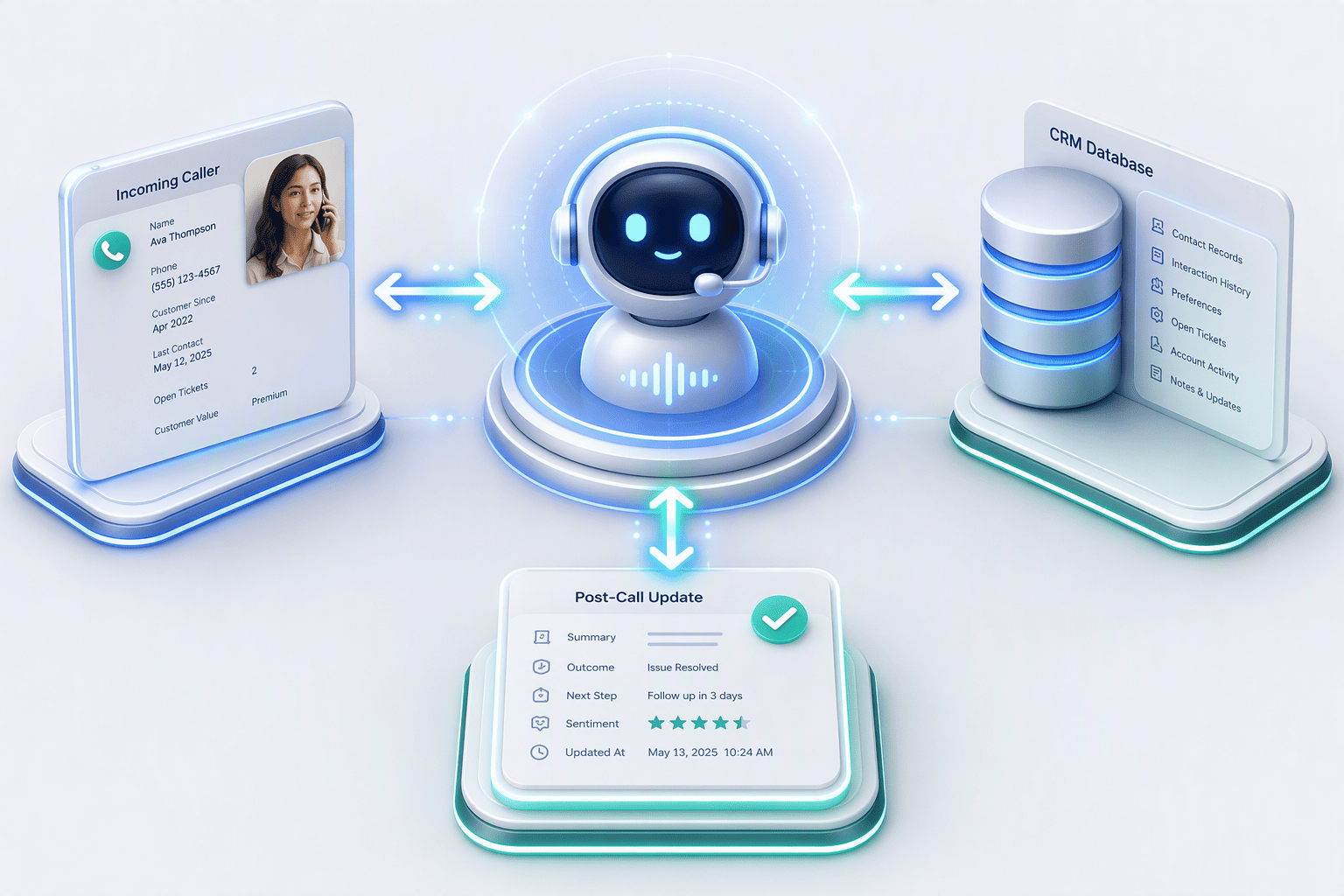
A fast answer means nothing when the data from that call sits in a walled-off log. The real conversion engine is bidirectional CRM synchronization, which treats your AI voice agent as a connected node inside your existing sales stack. The AI pulls up your customer records right when the prospect answers, so it can greet them by name and validate their details against your database in real time. Once the conversation wraps, the agent syncs CRM records during live calls, pushing the full transcript, a structured summary of qualification answers, the confirmed meeting slot, and a complete timeline back into the system without a human touching a keyboard.
Platforms like EchoLeads plug this bi-directionally into Salesforce, HubSpot, Pipedrive, and Zoho. That closes the last leak in the chain. A fast AI frontend paired with a disconnected backend forces your ops staff to retype call notes, and that gap is where pipeline visibility breaks. With live sync, your deal stages stay current as soon as the call ends, and marketing can finally trace attribution through a voice channel that used to be a black box.
Sentiment-Triggered Handoff: Rescuing Frustrated Leads Before They Go Cold
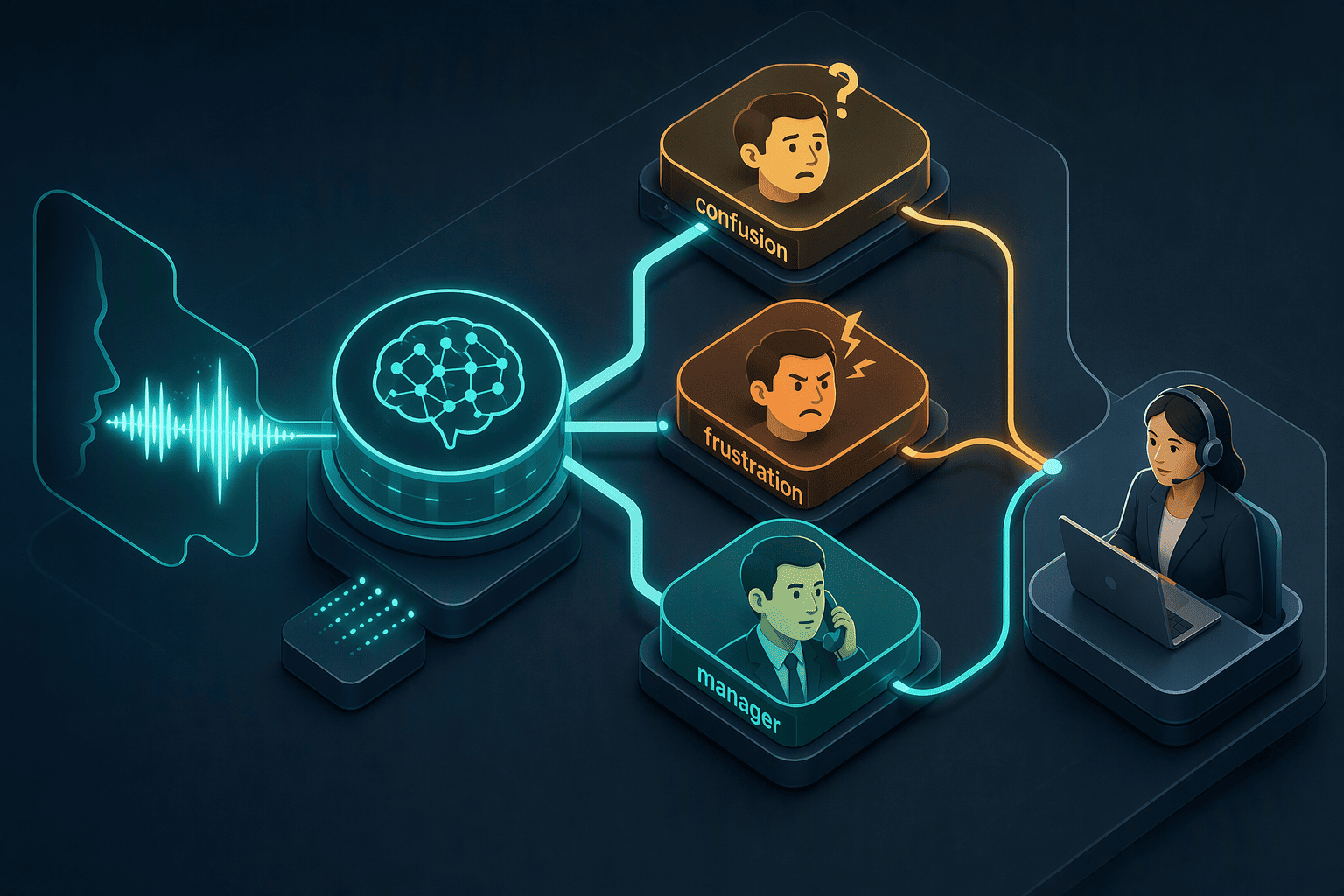
Not every lead is ready for a machine, and a bot that can't recognize this will turn a warm inquiry stone-cold permanently. Advanced AI voice agents are intelligent triage systems that run real-time sentiment analysis. The engine continuously scans the prospect's speech for confusion, frustration, or an explicit demand like "Get me your manager."
This is where basic automation fails. A simple chatbot ignores these signals and pushes a dead-end script, losing the prospect to anger. A sentiment-aware AI recognizes the temperature drop and acts on it immediately.
This is a "warm handoff," a feature offered by platforms like EchoLeads, which lets you configure handoff triggers based on conversation keywords, sentiment scores, or explicit prospect requests. When the threshold is met, the AI does not drop the call. It connects to a prioritized human agent who receives the full conversation context and customer data screen, so the lead does not have to repeat themselves. You rescue a frustrated, high-intent buyer in the exact moment they were about to walk away.
Compliance by Design: Navigating TRAI Regulations for AI Calling in India
The most significant hesitation Indian businesses have about AI calling is legal exposure under TRAI. This fear disappears when you correctly separate the inbound call from an outbound campaign. The following table clarifies the operational and regulatory stance:
Feature | Inbound AI Handling | Outbound AI Handling |
|---|---|---|
Primary TRAI Risk | Low (Spam regulation focuses on unsolicited contact) | High (Requires explicit consent and DND scrubbing) |
Consent Mechanism | Implied consent (prospect initiates the call) | Requires documented opt-in and consent recording |
DND Registry Action | Not applicable for incoming calls | Must scrub against DND lists in real-time pre-dial |
Operational Mode | Instant answer, 24/7 qualification | Controlled cadence, within allowed frequency caps |
Compliance Strategy | Architecture ensures no "outbound" spam behavior | Integrates DND check API, consent database lookups |
For inbound, where your primary leak exists, the path is clear. Because the prospect initiates contact, an AI answering the phone instantly is compliant and does not violate spam rules. For any outbound component, a platform's architecture must be designed to enforce consent and DND checks by default to avoid the heavy penalties associated with unsolicited commercial communication.
Building Your Instant-Response Playbook: Automating the Inbound Workflow
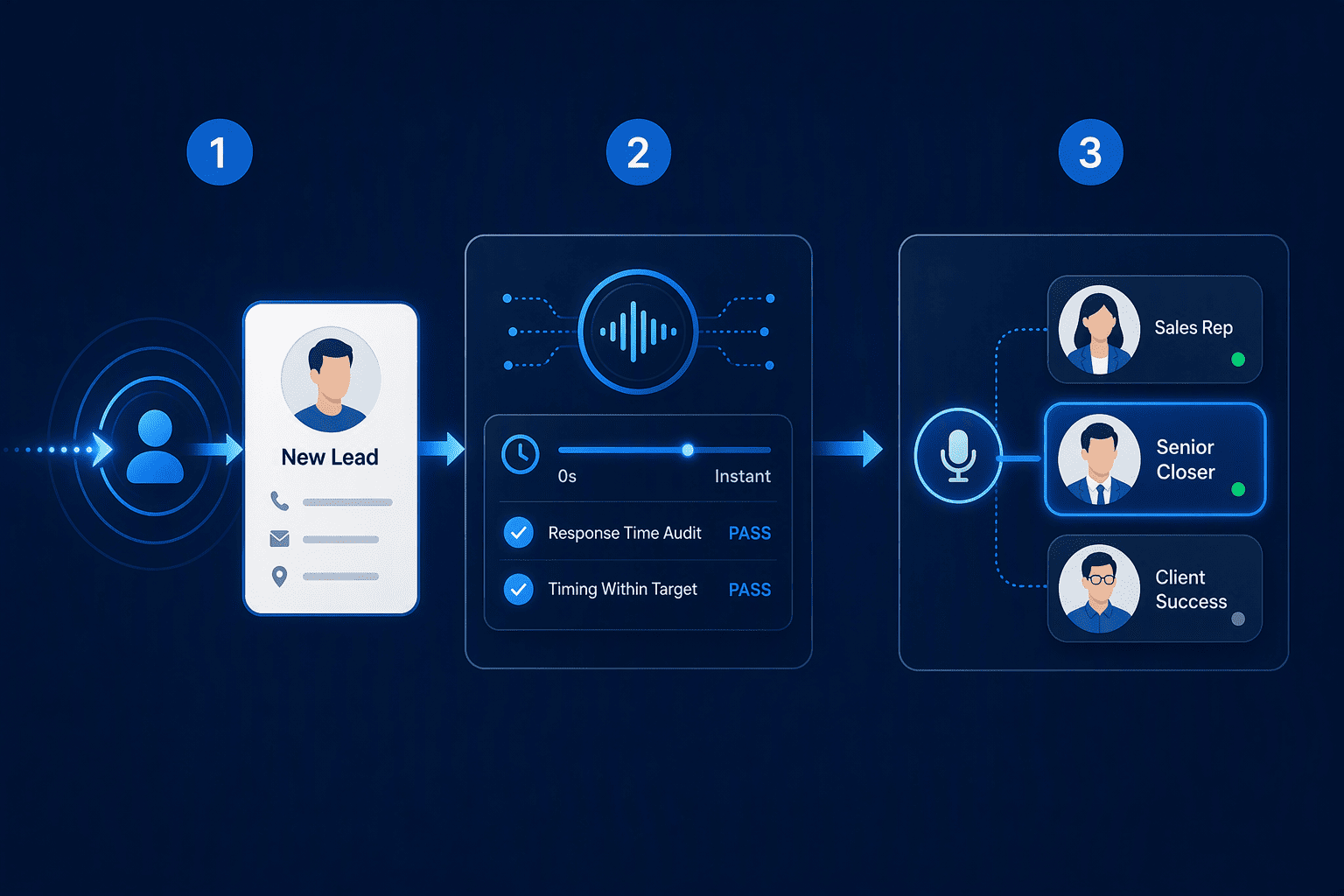
Transitioning from losing leads to the 100x window requires treating speed not as a goal but as an automated system. Execute these three steps:
Audit current response metrics: Measure the exact median time between a lead form hitting your MAP and the first human dial-out across different campaigns and times of day. Map the precise routing logic to identify where a lead waits in a round-robin queue or gets stuck in a silent SFDC assignment rule.
Deploy a CRM-integrated voice AI: Select a system offering bidirectional sync with your core platforms, enabling the AI to personalize calls using live customer data and to write back full call context and appointments automatically. Use a tool like EchoLeads to deploy instantly and configure the initial qualification script to mirror your top-performing human rep, with a clear exit condition for sentiment-based live handoff.
Layer in compliance controls: Configure the system to scrub the contact list against the DND registry through the platform's native integration before any outbound dial is attempted. After the integration passes testing with live inbound volume, track the conversion delta, the measurable lift in qualified meetings booked attributable to switching from a 42-hour manual delay to sub-60-second automated engagement.
Conclusion
Inbound leads go cold because buyer intent decays fast, and manual sales processes were not built to catch it. The numbers are blunt: your odds of making contact drop by a factor of 100 if you wait. Nearly a third of leads, about 30%, never hear from anyone at all. Across the industry, the median response time sits at 42 hours, a lag that tells a prospect they do not matter.
AI is not a faster dialer. It is the only way to fix the physics of intent decay at scale, engaging, qualifying, and converting conversations your current pipeline has already lost. Recovering that revenue starts at the response layer. A platform with instant engagement, bidirectional CRM sync, and compliance built into the architecture turns a lead form from a dead end into a live booking channel.
Frequently Asked Questions
How significantly does slow lead response time impact conversion rates in India?
Impact is catastrophic. Responding within five minutes yields a roughly 100x higher contact rate than at 30 minutes. In India’s mobile-first market, a delay signals poor operational credibility, leading buyers to instantly switch to a competitor. Conversion rates drop by 8 times within those first five delayed minutes.
What are the primary operational reasons sales teams fail to follow up with inbound leads quickly?
The core failure is manual lead routing latency, where a lead waits 30 minutes or more in a queue before an SDR sees it in Slack or email. This is compounded by three systemic issues:
- Demand-surge inflexibility: Human teams are overwhelmed during volume spikes, with call volumes surging 300% to 400% and wait times often exceeding 45 minutes.
- Economic unsustainability: Manual scaling is a trap, a live agent call averages 3.35 minutes and costs $7 to $12, whereas Voice AI flips this to roughly $0.40 per call.
- Staffing scarcity: Agent turnover exceeds 15% annually and hiring timelines stretch beyond six months, making the human-only model unable to staff itself for 24/7 coverage.
What does 2026 data say about Indian consumer expectations for response speed?
2026 Indian consumers operating in a zero-latency mobile environment view instant acknowledgment as a basic trust signal. Any response lag is interpreted as operational weakness. They expect an immediate answer to a form or call, and will abandon a brand that does not provide it in real-time.
How does immediate AI-powered engagement prevent inbound leads from going cold?
An AI voice agent answers within three seconds, capturing the prospect during their moment of peak purchase intent. It instantly qualifies the lead, answers questions, and books a meeting within 60 seconds, all without a human, preventing the psychological distraction and interest decay that kills conversion.
How can businesses integrate instant AI call handling with their existing CRM systems?
Integration occurs through bidirectional sync. The AI voice agent pulls live customer data for personalized greetings and, post-call, logs the full conversation transcript, qualification data, and booked appointment into platforms like Salesforce or HubSpot automatically, without human data entry.
What specific compliance rules (like TRAI regulations) affect automated outbound and inbound calling in India?
For inbound calls, consent is implied, making instant AI answering fully compliant and outside spam regulations. For outbound, an AI system must scrub contacts against TRAI’s DND registry and enforce explicit opt-in consent documentation to avoid penalties under automated calling rules.
Related articles
Your Website Leads Are Cooling in 42 Hours, Here’s How to Respond in Seconds Without Hiring Anyone
Websites leads go cold after 24 hours, learn how AI voice agents can instantly respond and engage with them.
After-Hours Leads Don't Wait: AI Voice Agents Can Now Close Them for You at 3 AM
Learn about how AI voice agents can be deployed to close leads even at 3 AM
7 Best Lead Response Automation Tools for Small B2B Sales Teams in India in 2026
Compare 7 best lead response agents based on their USPs and best use case fit.