
After-Hours Leads Don't Wait: AI Voice Agents Can Now Close Them for You at 3 AM

Introduction
A hot lead calls your Bengaluru office at 9:45 PM. The phone rings out. By 9 AM the next morning, that prospect has already booked a competitor.
This is not a hypothetical scenario for Indian SaaS and service firms. It is a recurring revenue hemorrhage. The math is brutal: an inbound lead that goes unanswered is typically a dead lead within 60 minutes.
The problem compounds across India's time zones and work schedules, where a missed call at night from a Hindi-speaking lead means a permanently lost opportunity. The solution that has matured from novelty to necessity is the AI voice agent, a conversational AI system that answers live calls, qualifies intent in Hinglish and 22+ Indian languages, and books meetings into your CRM while your team sleeps. Vendors like Rootle are now driving 3x higher conversion rates with native language interactions, turning missed calls into pipeline. This guide walks you through the practical reality of deploying after-hours voice AI in India: costs, compliance, integration timelines, and when the bot must step aside for a human.
Key Takeaways
Here are the five critical realities for any Indian business evaluating after-hours voice AI in 2026:
24/7 qualification is table stakes: AI voice agents now resolve 78% of after-hours queries without a human agent, booking appointments and updating CRM records in real time.
Integration is fast where it matters: A code-free connection can go live in as little as two hours, while a deep bi-directional sync with Salesforce or HubSpot takes under two weeks.
Indian language ROI is decisive: Supporting Hinglish code-switching and regional languages delivers a 3x conversion lift over English-only flows, with over 90% of India's internet users preferring native language content.
You can start for ₹4,999/month: Subscription plans with included minutes start near ₹4,999, with enterprise committed-usage rates falling to ₹1.80 per minute. Always factor in telephony carriage costs below the platform fee.
Human handoff is mandatory for certain triggers: Compliance-heavy financial disputes, deep emotional distress, and complex multi-step troubleshooting require a warm transfer with full call context. The bot is a filter, not a complete replacement.
What Is an AI Voice Agent for After-Hours Lead Handling?
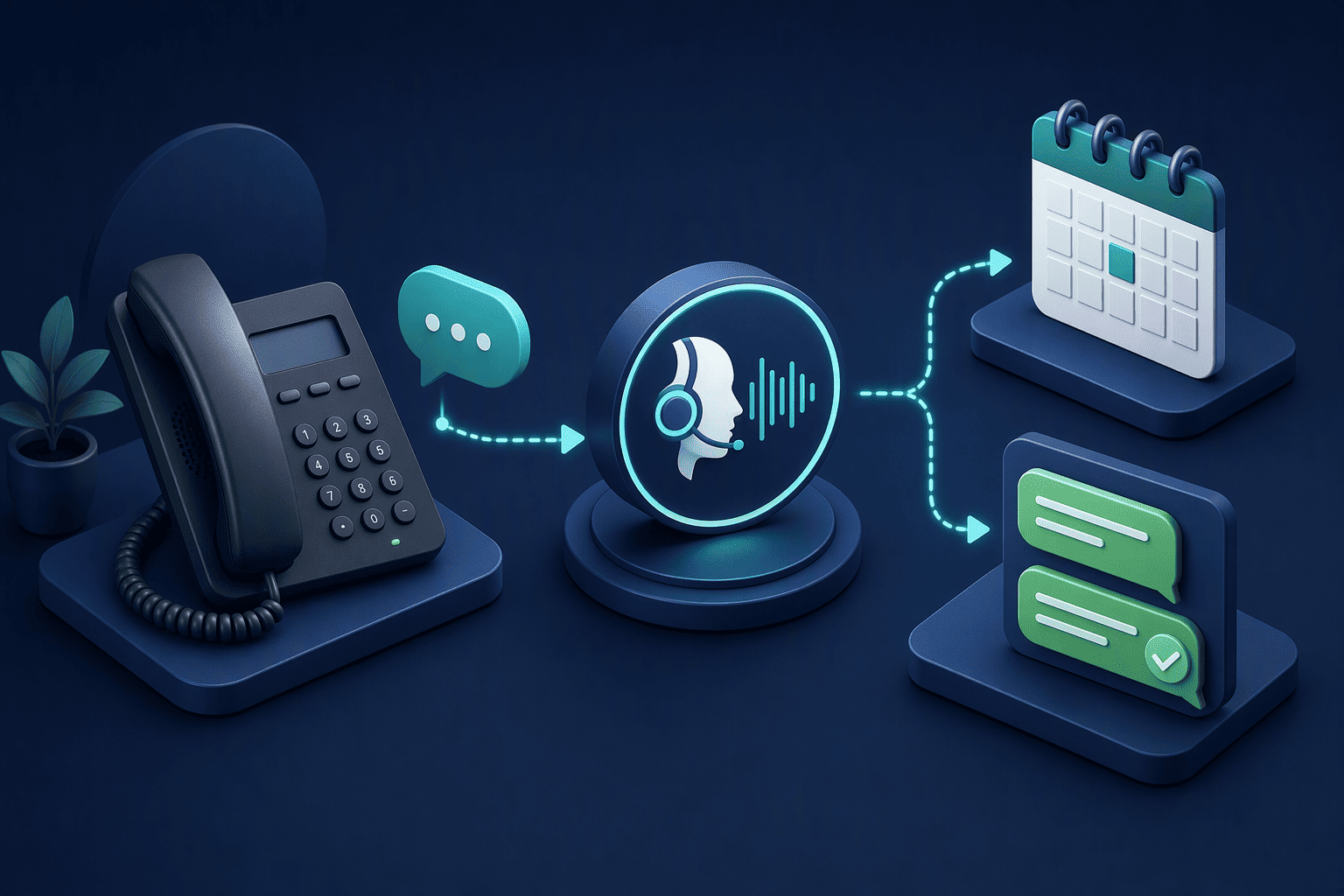
An AI voice agent is a conversational AI system that picks up your business phone line live, uses natural language processing (NLP) to hear and understand a caller's spoken query, qualifies their intent, and executes an action, like booking a meeting or sending a WhatsApp confirmation, without a human agent on the line. It is designed to sound natural and handle a complete conversation, not just route a call like an old-school IVR. Rootle describes this as action-oriented conversation: the bot asks qualifying questions, listens to answers, and completes a discrete task within the call.
This is distinct from a chatbot or a simple auto-attendant. An AI voice agent manages turn-taking, interruption, and contextual follow-up questions in real time over a voice channel. For businesses, think of it as a junior SDR who never sleeps, never takes a chai break, and can scale to hundreds of simultaneous calls, yet speaks politely and consistently in the brand's approved vocabulary. It turns a
How Automated Voice Systems Connect with Your CRM and Calendar
The real value of an after-hours voice agent is not just answering, it is closing the loop in your revenue tech stack. When a prospect calls at midnight, the AI checks your team's collective calendar via a direct API, finds an open slot on Tuesday at 11 AM, and books it. Simultaneously, it pushes the full call transcript, a lead score, and a recording link into a new or existing CRM contact record. EchoLeads, for instance, syncs bi-directionally with Salesforce, HubSpot, Pipedrive, and Zoho, writing field data back into those records while the call is still live.
The integration spectrum splits into three distinct experiences:
Code-free configuration: Vendors like OttrCall offer a 2-hour setup for standard CRM connections, where the agent asks a pre-set qualification script and books appointments without any engineering support. This works for simpler workflows but often writes data to a limited number of standard fields.
Deep custom implementation: Platforms like Rootle frame it as under two weeks, where the AI maps qualification answers to your bespoke lead scoring model, triggers internal Slack notifications, and respects complex routing rules, such as assigning leads to a specific sales rep based on the caller's detected language or geographic STD code.
Cost consideration: The platform subscription fee is not the total cost, telephony carriage rates (the actual phone number and per-minute call forwarding cost) sit below the AI platform and accrue separately with your telephony provider.
Must-Have Features for After-Hours Voice AI in India
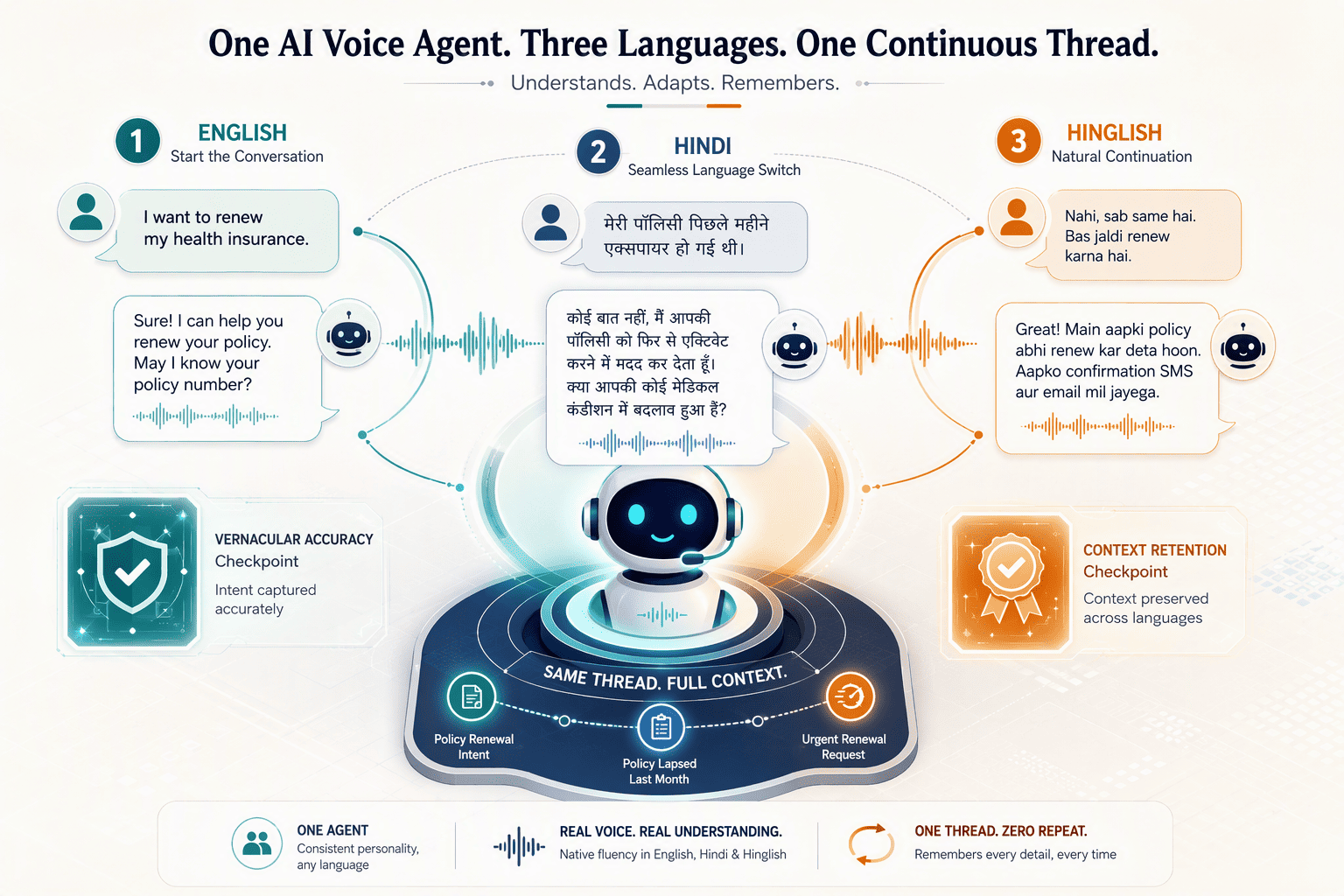
For an Indian buyer, language handling is the first filter, not a nice-to-have. The requirement is not just multilingual, it is code-switching. A customer might open with a greeting in English, describe the problem in Hindi, and then ask about price in Hinglish. An AI voice agent must follow this fluidity without dropping context. Rootle reports 95%+ intent accuracy for vernacular code-switching across 22+ Indian languages, which is the target benchmark. If a vendor cannot demonstrate accurate handling of a Hinglish conversation, where a caller says "Mera campaign ka budget hai twenty thousand, but mujhe reporting dashboard chahiye", the system will frustrate more leads than it qualifies.
Beyond language, action completion separates a gimmick from a tool. An after-hours agent must complete a discrete task by the end of the call. The minimum viable feature set includes:
Real-time calendar booking: The agent checks availability in real time, proposes two options, and confirms the appointment before hanging up.
Immediate confirmation delivery: It should send an email, WhatsApp message, or SMS with the meeting link, EchoLeads books into Google Calendar and Outlook, with confirmation hitting the lead's phone seconds after the call ends.
Low-latency response: Any pause longer than two seconds in conversational flow breaks trust, EchoLeads targets an initial pickup window of three seconds, moving from ringing to qualifying at near-human speed.
Knowledge base retrieval: The agent must pull specific, approved answers about your product (e.g., pricing tiers, service area coverage, warranty terms) from a pre-loaded document set to prevent hallucinating a ₹50,000 discount or promising next-day delivery in an unserved city.
Post-call analytics: Show query categories, conversion rates by language, and dropout points, creating a closed feedback loop you can manage rather than a black box.
India-Specific Compliance: Data Residency, Anonymization, and Language Laws
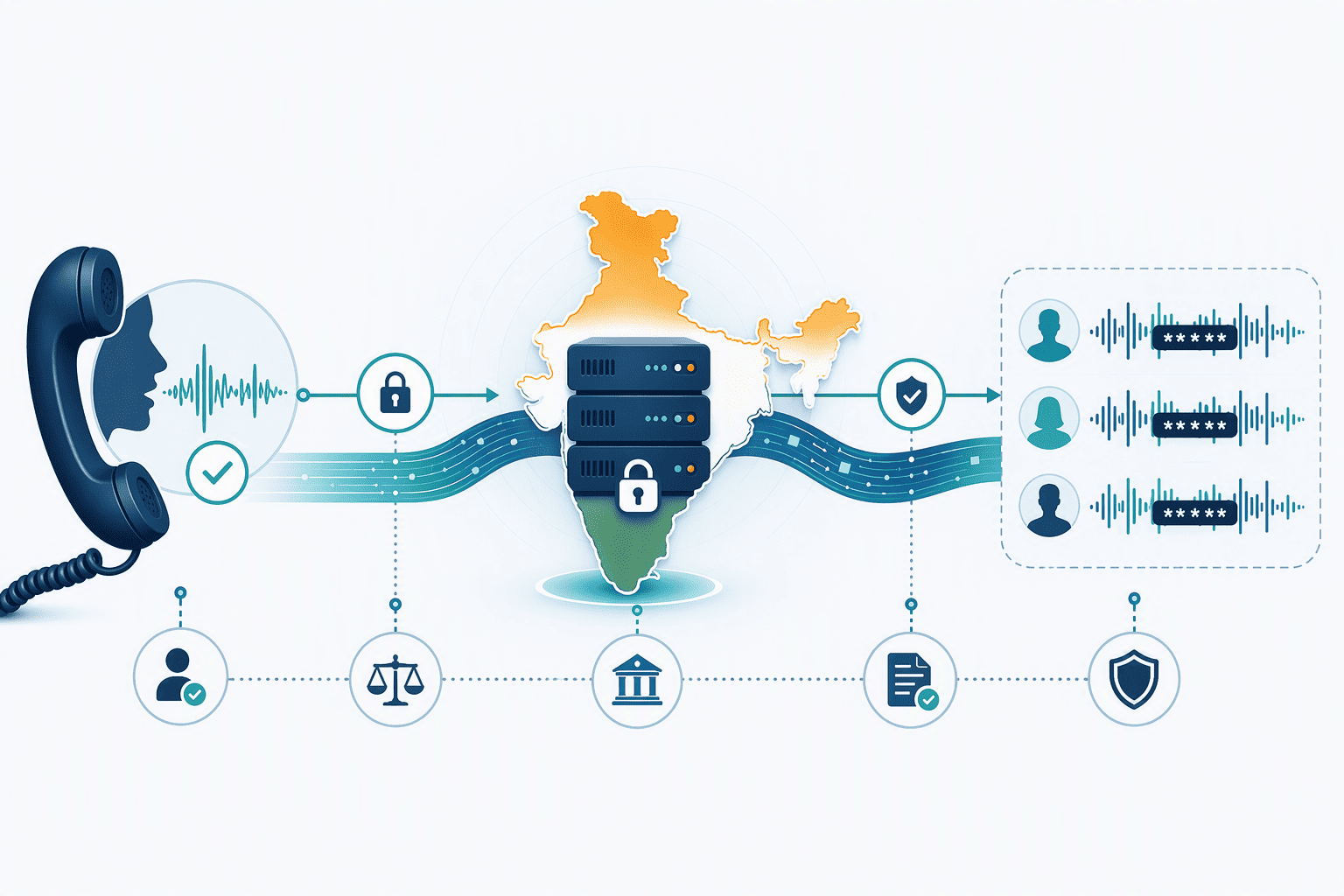
India's Digital Personal Data Protection (DPDP) Act now frames the compliance requirements for any AI system capturing and processing voice data from Indian residents. Three principles matter most to your legal and procurement teams. First, explicit consent for call recording must be captured at the start of the conversation, typically with a clear verbal prompt.
A silent recording is a regulatory liability. Second, the DPDP Act is moving toward data localization expectations, meaning voice data and call metadata should be stored on cloud infrastructure within India, a constraint that some global VPN-routed AI platforms cannot meet. Standard patterns involve AWS Mumbai or Hyderabad regions, with all transcription and NLP processing happening within country borders.
Third, secure data lifecycle management is required. Providers should offer deletion or anonymization of call recordings when the data is no longer needed for a defined business purpose. EchoLeads for example permits records to be deleted or anonymized post-use, which directly supports data minimization clauses in your privacy policy.
The technical burden is significant. Supporting 22 Indian languages and their phonetic variations makes model training and accuracy testing far more complex than an English-only deployment. A vendor that supports only Hindi and English is leaving revenue on the table in Tamil Nadu, Karnataka, and Maharashtra. The cost of this gap is measurable: given that over 90% of India's internet users prefer native language content, any voice strategy that ignores vernacular is structurally incomplete.
What an AI Voice Agent Actually Costs in India
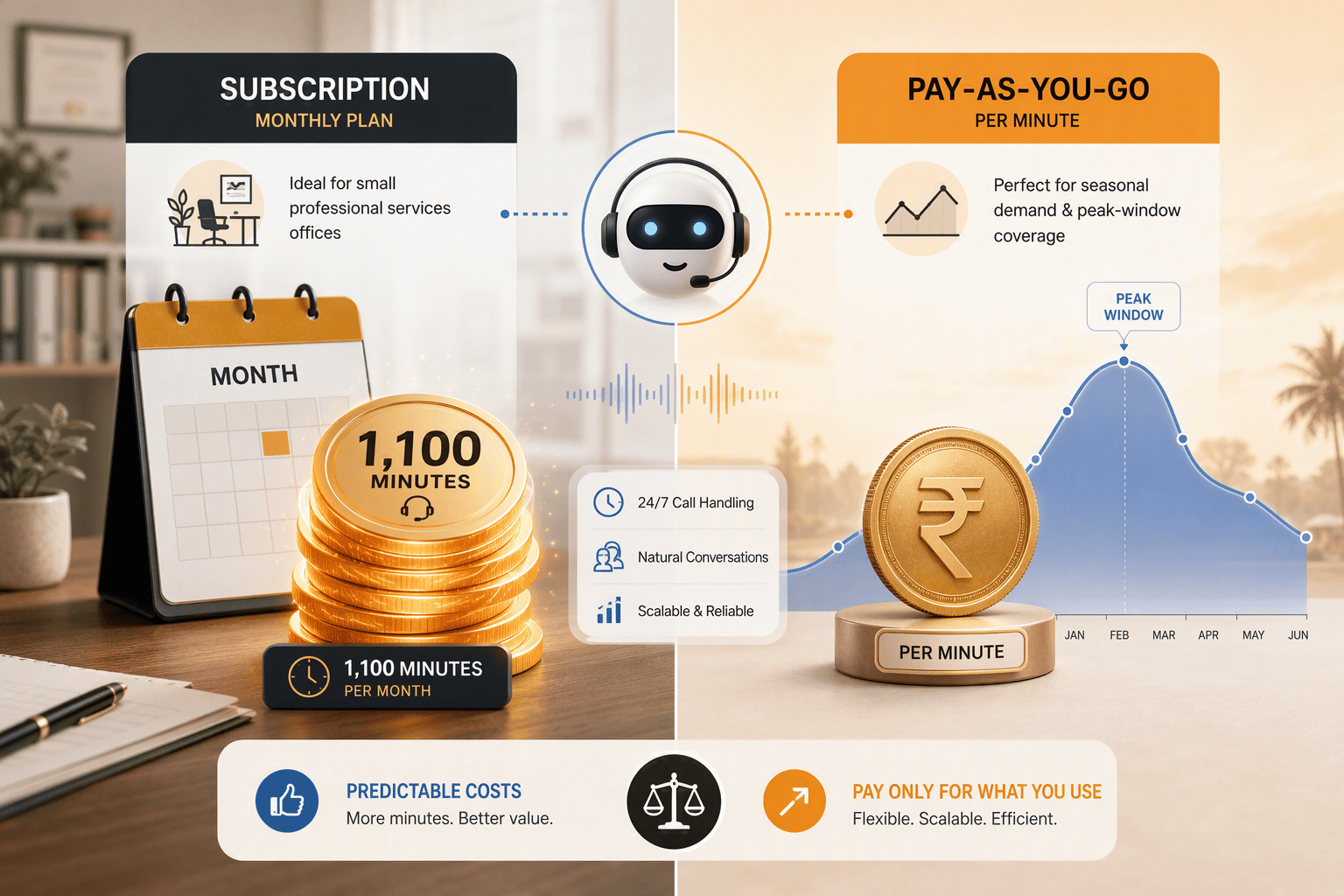
Indian pricing has bifurcated into a clear range:
Low-end subscription: Starts at ₹4,999 per month for approximately 1,100 minutes of talk time on platforms like Symphonic AI, enough for a small professional services firm averaging 35 short qualification calls per night.
Pay-as-you-go: Begins around ₹4 per minute with no monthly commitment, ideal for seasonal businesses that need coverage only during peak sales windows, EchoLeads offers this starting at ₹4/minute, with flexibility to pause in low-demand periods.
Enterprise volume: Committed agreements can drive per-minute rates down to ₹1.80.
Fully loaded cost include telephony carriage: The AI platform fee covers processing only, you pay a separate per-minute charge to your telephony provider for every connected minute, and for toll-free numbers, you absorb inbound leg charges, turning a ₹4 platform minute into ₹5.50 with carriage.
Hidden cost of time to value: A custom deployment requiring 40 to 60 internal hours for CRM field mapping, script localization, and compliance review costs nearly nothing in soft costs for a code-free setup (2 hours live) but handles fewer edge cases, match implementation complexity to lead value (e.g., a real estate developer selling ₹2 crore properties justifies deep integration; a yoga studio booking ₹500 trial classes does not).
When AI Voice Agents Should Step Aside: Handoff Triggers and Human Escalation
An AI voice agent works as a filter. It is not a universal closer. Some situations need a live human, and the transfer must be immediate, with full context preserved.
Configure these five escalation protocols in your deployment:
Sentiment-driven distress: The agent picks up anger, tears, or extreme frustration from voice tone and word choice. Pushing the automated script further erodes brand trust.
Explicit handoff request: The prospect asks to speak with a person, often using language like "boss se baat karwao" or "get me your manager." The bot honors this immediately, without pushback.
Compliance or financial disputes: Billing errors, unauthorized charges, or DNC-list removal requests. These carry regulatory exposure under India's consumer protection frameworks and need a trained compliance officer.
Complex multi-step problem-solving: A query the knowledge base cannot resolve in two turns, or one that needs account records from a disconnected legacy system.
High-stakes custom pricing: For B2B deals where discount authority sits with a specific sales director based on procurement variables the bot cannot assess.
Handoff quality sets the tone for the escalation. A warm transfer must pass the full call transcript, the caller's identity, and the reason for escalation to the human agent. EchoLeads lets businesses configure handoff triggers based on conversation keywords, sentiment scores, or explicit requests, so the live agent picks up with the caller's name and the exact conversation point where the transfer happened. Without this context, the lead repeats their entire story, which adds a second source of churn.
Comparing EchoLeads with Other After-Hours Voice Solutions
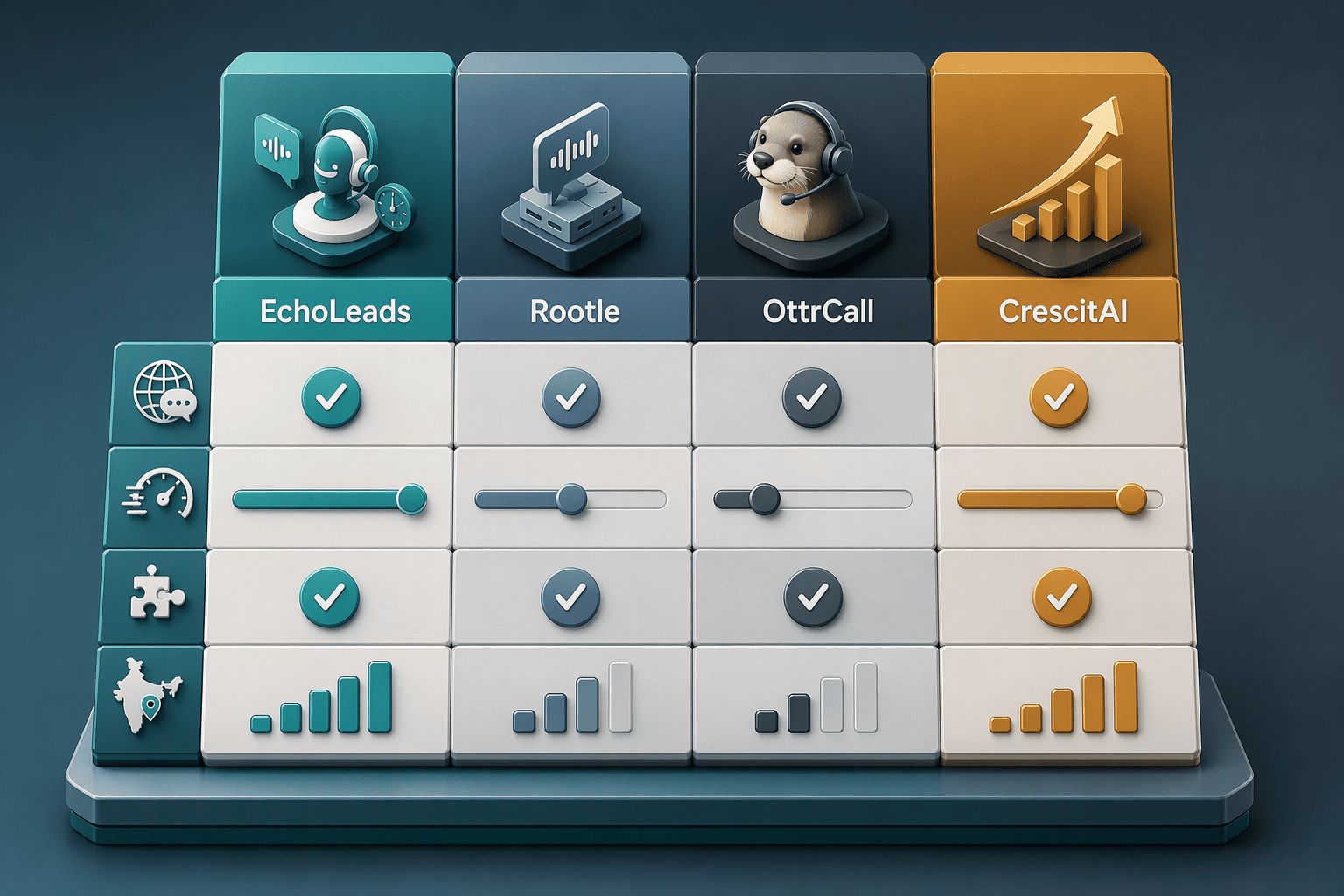
The Indian after-hours voice AI market in 2026 splits across vernacular-first platforms, rapid-deployment tools, and North American imports. Here is a direct feature comparison for an Indian buyer evaluating EchoLeads against referenced competitors. CrescitAI's US/Canada focus limits its relevance for India despite capable NLP.
Feature | EchoLeads | Rootle | OttrCall | CrescitAI |
|---|---|---|---|---|
Indian Language Support | Configurable voice scripts for multilingual use; handles high-call concurrency | 22+ languages with Hinglish code-switching; 95% intent accuracy | Not specified | Multiple languages, US/Canada focused |
CRM Integration Depth | Bi-directional sync with Salesforce, HubSpot, Pipedrive, Zoho; records update during live calls | CRM integration within 2 weeks; calendar-aware booking | Code-free setup in 2 hours; sends confirmations post-call | Integration claimed |
Pricing Transparency | Pay-as-you-go at ₹4/min; committed enterprise at ₹1.80/min | 100 free calls, then custom pricing | Flat pricing, no hidden fees | Not disclosed |
After-Hours Specific Feature | 3-second answer window; keyword and sentiment-based handoff triggers; WhatsApp Agent available | 78% after-hours resolution rate (financial services case study) | 24x7 availability; completes post-call actions | Never-miss-a-call guarantee; instant call answering |
Conclusion
AI voice agents for after-hours leads now work as operational tools in India, not lab experiments. You can start for about ₹4,999 a month. The leading vendors deliver 95% vernacular accuracy, and verified deployments resolve 78% of after-hours calls without human backup. The return shows up in booked revenue, not slide-deck efficiency metrics.
Pick a vendor first for its language ability and TRAI compliance posture. Those are the gates. Everything else is fine-tuning.
Start small. Route one phone line, pick one high-value use case, and track the conversion delta on calls answered after 8 PM against the prior month's numbers. That single data point overrules any comparison chart.
Frequently Asked Questions
What is an AI voice agent for after-hours lead handling and how does it work?
An AI voice agent is a conversational AI system that answers live phone calls, uses natural language processing (NLP) to understand the caller's spoken query, qualifies their intent through a scripted conversation, and completes a task like booking an appointment or sending a WhatsApp confirmation, all without a human. It operates 24/7, handling hundreds of simultaneous calls.
How does automated voice call handling integrate with CRM and calendar tools?
The agent connects via API to check real-time calendar availability, books a slot, and pushes call transcripts, lead scores, and recordings into the CRM record. Integrations range from code-free 2-hour setups for simple workflows to 2-week deep implementations mapping data to custom fields in Salesforce, HubSpot, or Zoho.
What are the key features to look for when evaluating an after-hours voice AI solution?
Non-negotiables are multilingual code-switching, particularly Hinglish, direct calendar booking, immediate confirmation via email or WhatsApp, low response latency under 2 to 3 seconds, knowledge base retrieval to prevent AI hallucinations, and post-call analytics showing conversion rates by language and query type.
How much does an AI voice agent cost for handling calls in India, and what pricing models exist?
Plans start near ₹4,999/month for roughly 1,100 minutes. Pay-as-you-go rates begin at ₹4 per minute. Enterprise committed-usage agreements can reach ₹1.80 per minute. The platform rate is separate from telephony carriage charges for the phone line, which must be factored into the fully loaded cost.
What compliance and data security considerations apply to AI voice agents handling inbound calls in India?
Compliance with the DPDP Act requires explicit verbal consent for call recording, data storage localized in Indian cloud regions, and a deletion or anonymization policy for records when no longer needed. Providers should support consent banners as a call prefix and offer contractual commitments on data residency.
What are the limitations or situations where an AI voice agent is not suitable for handling a lead call?
An agent should not handle calls involving deep emotional distress, financial disputes with regulatory exposure, explicit DNC-list removal requests, or complex multi-step technical troubleshooting. These triggers must initiate a warm transfer passing the full transcript and caller identity to a live agent with no loss of context.
Related articles
Your Website Leads Are Cooling in 42 Hours, Here’s How to Respond in Seconds Without Hiring Anyone
Websites leads go cold after 24 hours, learn how AI voice agents can instantly respond and engage with them.
Why Inbound Leads Go Cold Before Your Sales Team Can Follow Up, and How to Win the 100x Window
Learn why inbound leads go cold and how businesses can employ AI voice agents to automate lead engagement even after working hours.
7 Best Lead Response Automation Tools for Small B2B Sales Teams in India in 2026
Compare 7 best lead response agents based on their USPs and best use case fit.