
Your Website Leads Are Cooling in 42 Hours, Here’s How to Respond in Seconds Without Hiring Anyone

Introduction
A prospect fills out your form on a Tuesday afternoon. By the time your team calls back Thursday morning, they have already signed with a competitor who picked up on the first ring. Across industries, the average website lead response time is a glacial 42 hours. Slow follow-up is the single quietest pipeline killer in your business.
Calling a lead within five minutes, however, increases the odds of conversion by 9x. That stat, drawn from foundational research by InsideSales, frames the entire problem. You know speed matters. You also know you cannot afford three new full-time hires to sit by the phone.
The fix is an integrated stack where an AI voice agent, synced to a smart CRM, answers every inbound lead within three seconds, books the meeting immediately, and kicks off a personalized follow-up sequence. This seven-step guide gives you the exact plan to stand that system up without adding a single seat to your payroll.
Key Takeaways
A step-by-step blueprint for turning website form fills into booked meetings within seconds, using AI automation that runs 24/7.
Measure your gap first: Pull your current average response time and map it against the 42-hour industry mean to calculate exactly how many conversions you are losing.
Deploy an AI voice agent: A large language model-powered caller answers instantly, qualifies the prospect conversationally, and operates around the clock for a fraction of a human's salary.
Sync your CRM in real time: Bi-directional integration with tools like Salesforce or HubSpot updates lead records the moment a call ends so no manual data entry creates lag.
Fire multi-channel triggers: The instant a lead converts, the system launches coordinated SMS, email, and WhatsApp sequences personalized with that lead's data.
Route only what matters: Smart routing uses lead score and sentiment analysis to hand off only the highest-intent, human-ready conversations to your existing team.
Let AI book the meeting: Chat and voice agents integrate directly with Google Calendar and Outlook to offer slots and lock in appointments even at 2 a.m.
Lock in compliance architechture from day one: Distinguish inbound AI response (exempt) from outbound auto-dialing (requires prior consent and DNC scrubbing) and build consent records into the workflow.
Step 1: Calculate Your Current Response Gap and Conversion Loss
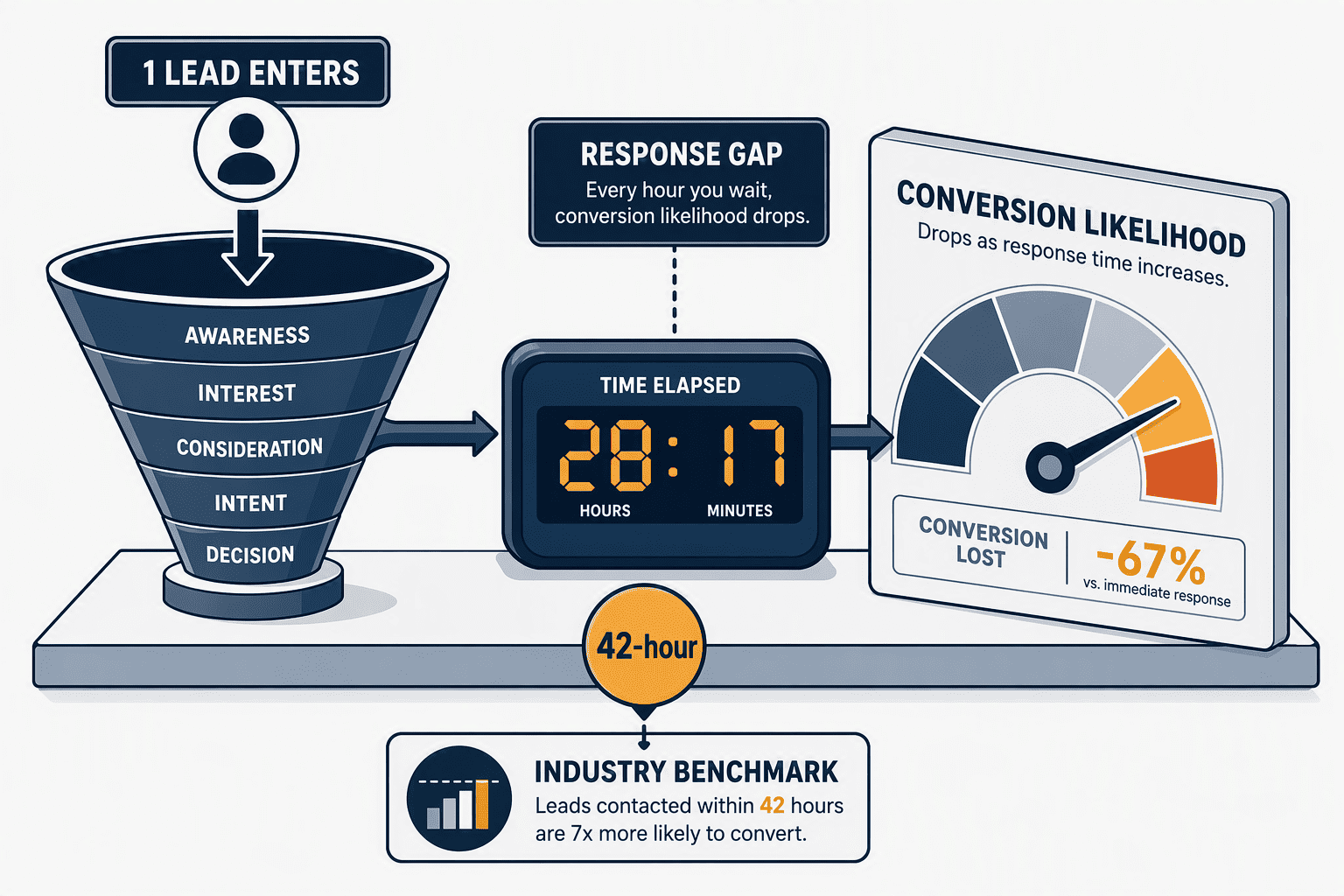
You cannot fix what you do not measure. Start by pulling the average elapsed time between a website form submission and the first human or automated touchpoint in your current CRM. Most B2B teams learn their number sits shockingly close to the 42-hour cross-industry average documented in response-time studies. Knowing your own baseline is the business case.
Run the loss calculation. Take your monthly inbound lead volume and multiply it by your current average close rate. Now apply the conversion lift that a sub-five-minute callback delivers: roughly a 9x improvement in contact-to-qualification odds. The simple math surfaces the real rupee figure you are leaving on the table every single month. That number makes the investment decision automatic.
Step 2: Deploy an AI Voice Agent for Sub-3-Second Inbound Lead Response
The technology that replaces the idle first ring is a conversational AI voice agent. Tools like Nextiva's XBert agent answer inbound calls almost silently fast, qualify the prospect with a natural back-and-forth, and detect sentiment to decide whether to keep talking or escalate to a human. You can deploy a platform like EchoLeads, for instance, to have an agent picking up within 3 seconds, 24 hours a day.
This is not an expensive headcount swap. Deploying a functional AI voice agent platform runs roughly ₹8,000 to ₹42,000 per month per seat in India. Compare that to the ₹2,90,000 to ₹4,60,000 monthly fully-loaded cost of a full-time inside sales rep. The math holds even when you factor in hidden cost categories that Bland.ai's enterprise pricing analysis found can multiply a deal's real cost by 30 to 60 percent, because you are still paying a sliver of the human equivalent for 24/7 coverage that never calls in sick.
Step 3: Select and Integrate an AI-Powered CRM with Bi-Directional Sync
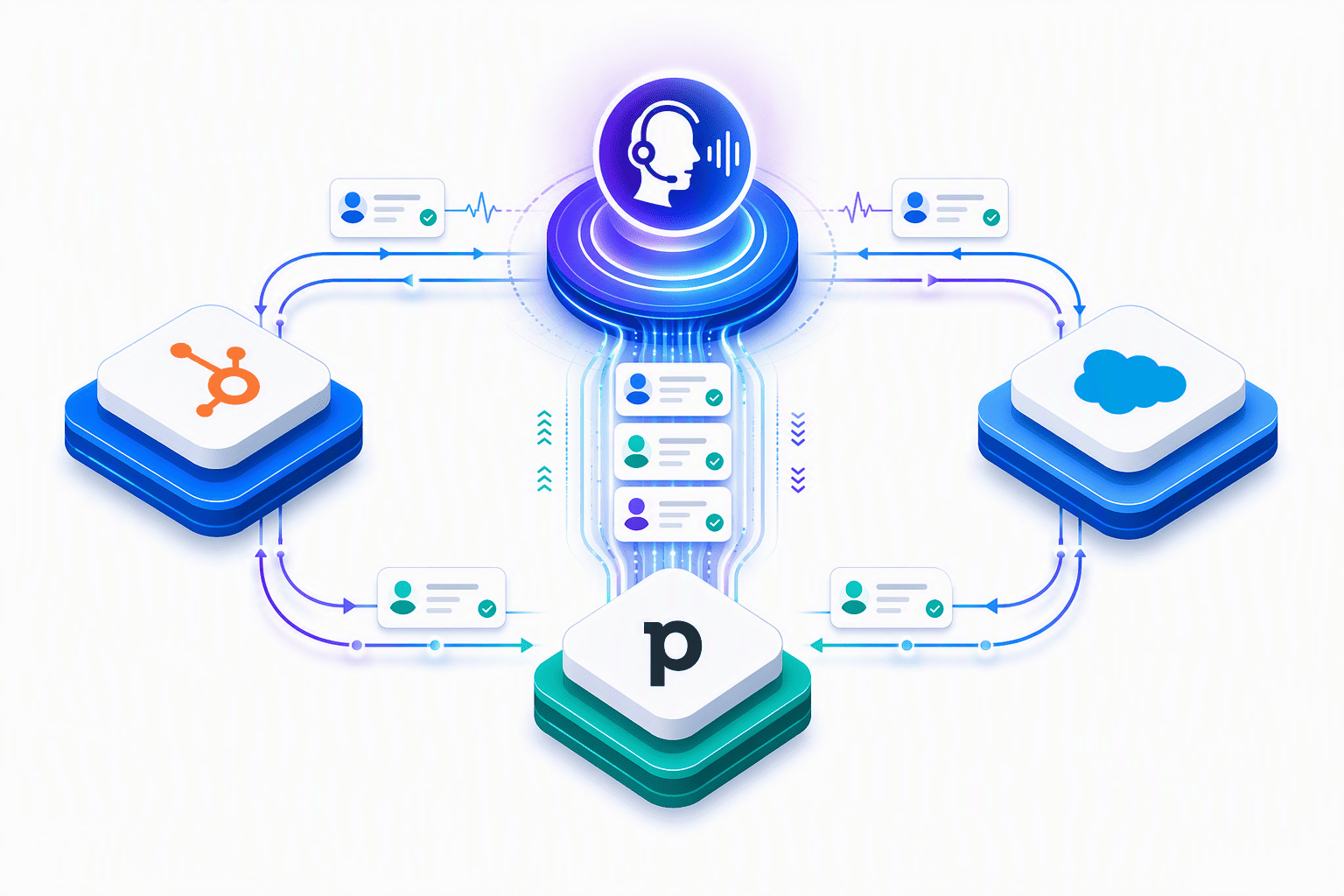
Your CRM must update in real time, or that lightning-fast call means nothing when the lead record sits in a manual-entry queue.
Feature | HubSpot Sales Hub | Salesforce Sales Cloud | Pipedrive |
|---|---|---|---|
Native AI Score | Predictive lead scoring and conversation intelligence baked into Enterprise tier | Einstein GPT for auto-generating follow-up emails and summarizing calls | AI-powered sales assistant that analyzes deal health and suggests next actions |
Latency / Sync Method | Near real-time webhooks (100 calls/second burst) with deduplication by email domain | Streaming API (PushTopic/CDC) and 99.99% uptime SLA for real-time replication | Real-time REST API webhooks with instant notification triggers on record creation |
Field Mapping Complexity | Proprietary sync engine auto-maps 80% of standard contact/company fields; custom field mapping requires Operations Hub | Schema builder with intelligent default mapping; full-custom mapping requires Apex triggers for complex transforms | Visual drag-and-drop field mapping through native Marketplace sync tools; complex object mapping needs third-party tools like Outfunnel |
Call Outcome Logging | Out-of-the-box engagement type ("Call") with automated call-to-contact association via API | Task and Event objects with customizable call disposition fields; Voice Call object links directly to Lead/Contact timeline | Dedicated "Call Log" activity with built-in outcome reason codes (e.g., "Voicemail", "Connected") |
Price for Real-Time Sync Tier | From $50/user/month (Sales Hub Professional) plus $90/month for the Custom Behavioral Events required for call-object sync | From $165/user/month (Enterprise) to access real-time Streaming API triggers | From $49.90/user/month (Professional); webhooks and Smart Docs workflow included at this tier |
No AI voice platform natively talks to your CRM out of the box. You must build the integration through the platform's native connectors, a direct REST API integration, or an iPaaS middleware layer like Zapier or Make. The first sync determines your data strategy. Decide if new inbound calls create a Lead or a Contact directly, set an owner routing rule, and enforce a strict unique identifier matching logic based on phone number. Then, trigger post-call enrichment workflows on a successful record update event, not just on the call-disposition timestamp.
Step 4: Implement Trigger-Based Instant Multi-Channel Automations
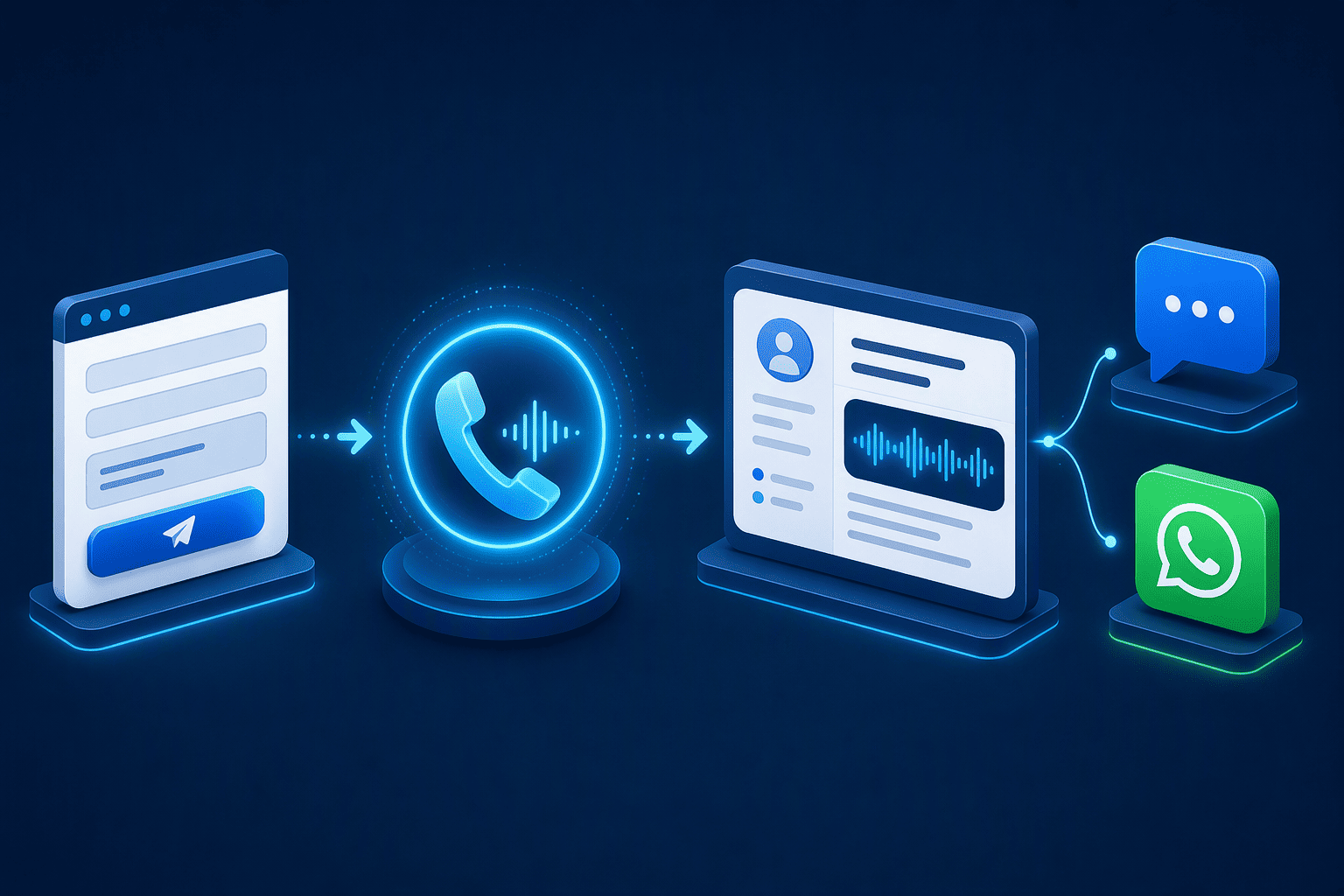
Speed creates a window. Personalization opens it. A website form submission is your primary trigger. One event kicks off an instant, orchestrated sequence.
AI voice call: The form fill triggers the AI voice agent to call within three seconds.
CRM update: When that call ends, the CRM record updates with the transcript and outcome tags.
SMS and WhatsApp: That CRM update fires a personalized message using the prospect's name and the specific discussion point from the call.
Email with booking link: An email lands in their inbox seconds later, recapping the conversation and containing a direct calendar booking link, because the AI agent detected clear intent to buy a specific product tier, the email template swaps to feature that exact tier's case study.
Multi-channel orchestration: Configure these flows inside platforms like Instantly.ai for sequenced touches, using a solution like EchoLeads that combines the voice call and multi-channel orchestration in one trigger-rule engine. A simple rule governs everything here: no channel fires unless the CRM record confirms the previous step completed.
Step 5: Configure Smart Lead Routing and Sentiment-Based Handoff Triggers
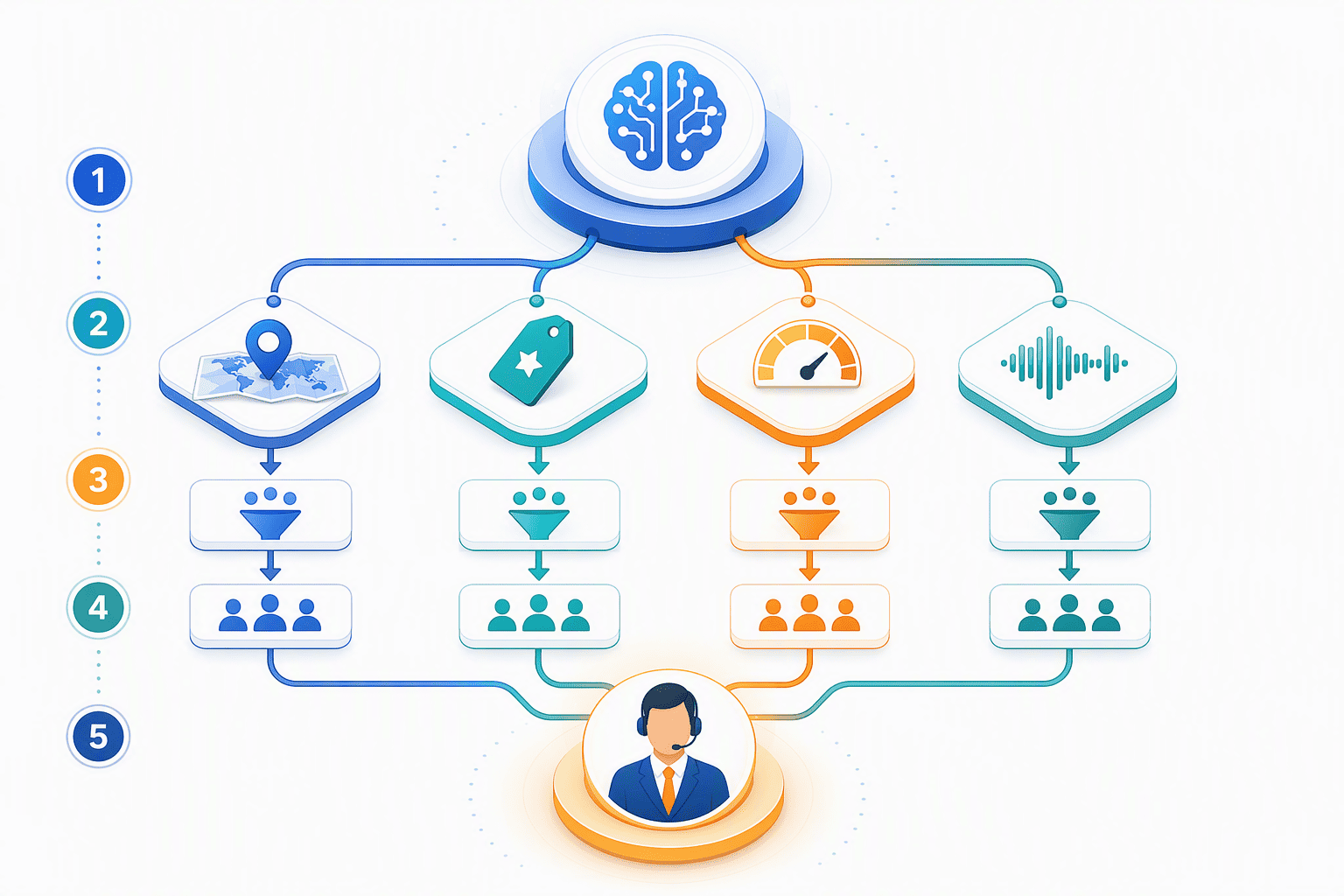
Your human reps are your most expensive and most potent resource. Smart routing makes sure they only speak to leads who absolutely need them. Configure these rules in order.
Define explicit routing keys. Categorize by product interest (pulled from the form), geography (from the phone country code), and firmographic data your CRM already holds. A Bangalore-based SaaS trial lead should never ring a rep covering Mumbai enterprise hardware.
Assign a lead score threshold. A simple cumulative model works: +10 points for a form fill on the pricing page, +20 for a C-level title, +30 for an existing open opportunity. Hold any lead below 40 points in the AI-only nurture queue without human handoff.
Deploy sentiment analysis as a safety net. Even a low-scored lead who explicitly says “connect me to a manager now” or whose detected frustration score spikes must escalate immediately. Modern LLM-powered voice agents flag these turns of phrase mid-call and trigger a real-time handoff.
Set a concurrency cap. Route only as many simultaneous handoffs as your human team has available reps. All other calls stay with the AI agent, which books a callback in the rep’s calendar instead of dumping the lead into a hold queue.
Step 6: Embed Conversational AI for 24/7 Meeting Scheduling
A qualified lead who says “yes, I want to talk” at 2 a.m. on a Saturday must land directly on your rep’s calendar, not in a follow-up queue that fires Monday morning. Integration is the whole ballgame.
Your AI voice agent and on-site chatbot must both have write-access to your live availability. A platform like EchoLeads, as one option, connects directly to Google Calendar, Outlook, or your CRM scheduler, so when the AI agent suggests Tuesday at 10 a.m., that slot genuinely exists and blocks instantly upon confirmation.
The chatbot follows the same logic. When a prospect types “book a demo” on your pricing page at midnight, the conversational AI surfaces the same live calendar, lets them select a time, and sends both parties an immediate confirmation. No human sends a follow-up email the next morning asking “what time works for you?” because the meeting is already locked, and the deal’s momentum is preserved.
This direct-booking loop is where the cold math of speed becomes revenue. The longer the gap between a verbal “yes” and the scheduled meeting, the higher the no-show rate. Eliminating that gap completely through conversational scheduling closes the loop that a fast phone call alone never could.
Step 7: Harden Your System for TCPA, DNC, and Indian Compliance
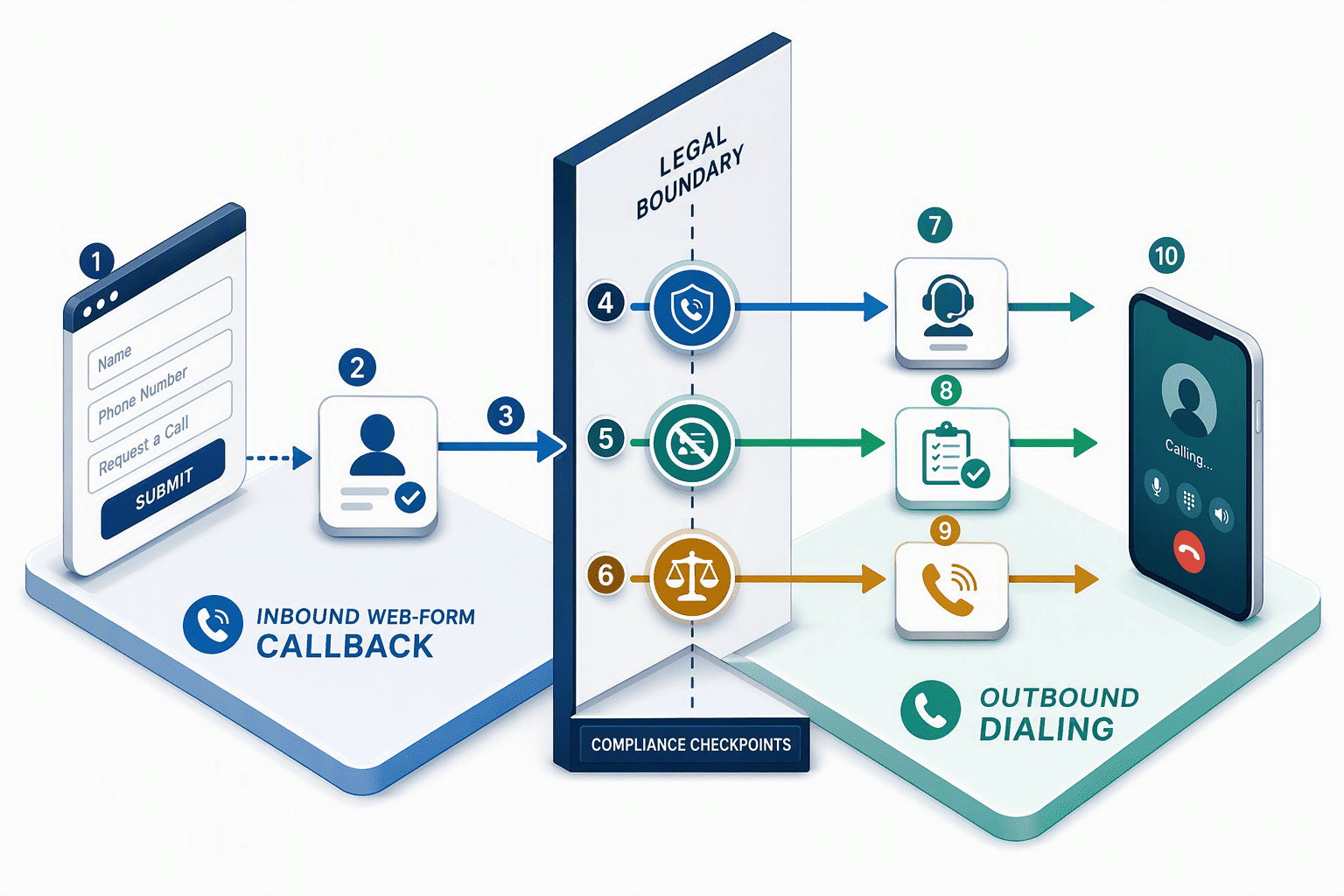
One compliance slip wipes out every efficiency you’ve built. The line that matters most is simple: responding to an inbound request is not the same as dialing outbound on your own initiative under Indian regulation. Follow these three compliance rules to keep your stack lawful as you scale:
Inbound callback is exempt: When someone fills in your web form and your AI agent calls them back right away, that’s an inbound-initiated response. TRAI’s Unsolicited Commercial Communication rules target outbound dialing, so this immediate callback to a consumer who just opted in sits outside the most restrictive auto-dialing prohibitions.
Outbound sequences need consent gates: Any outbound cold-calling sequence you set up must clear the DNC registry, use only registered headers and sender IDs through DLT platforms, and keep verifiable consent records. Don’t read the inbound exemption as blanket permission for every automated call.
Split architecture keeps you compliant: Require consent capture at the moment of web form submission with an explicit, unchecked opt-in box. Log that consent alongside a timestamp and IP address inside your CRM record. Before any purely outbound AI-drilled sequence dials, scrub the number against the national DNC list. That split architecture, inbound AI instant response on one side, consent-gated outbound sequences on the other, is what keeps your stack lawful as you scale.
Conclusion
A single AI voice agent handling 200 to 300 calls per day replaces the output of roughly 2 to 3 full-time inside sales staff, operating at a cost of ₹8,000 to ₹42,000 a month against a combined salary bill that would exceed ₹8.7 lakhs. That math is not theoretical. It is available today. Follow these seven steps sequentially: measure your gap, deploy the AI agent, tightly sync your CRM, fire your multi-channel triggers, route intelligently on sentiment and score, connect direct booking to real calendars, and lock in compliance from day one. Every minute you delay, the next form fill you get just ticks another mark on your competitor's scoreboard.
Frequently Asked Questions
What is the average response time for website leads, and how does it affect conversion rates?
The average response time across industries is 42 hours. Contacting a lead within the first 5 minutes increases conversion odds by roughly 9x, as documented in InsideSales.com response-time research.
What AI tools can instantly engage website leads via phone or messaging without human agents?
AI voice agents like Nextiva's XBert and platforms such as EchoLeads use large language models to answer inbound calls within seconds, qualify prospects conversationally, and operate continuously. They integrate SMS, WhatsApp, and email into automated sequences.
How do AI voice agents handle complex queries or emotional situations where human judgment is needed?
Modern agents detect sentiment and recognize specific escalation phrases. When a prospect shows frustration, urgency, or explicitly asks for a manager, the system flags the signal mid-call and instantly transfers the conversation to an available human rep.
What compliance rules (like TCPA and DNC) apply to automated outbound and inbound calling in India?
TRAI regulations focus mainly on outbound unsolicited calls, requiring DNC registry scrubbing and prior consent. Inbound AI calls responding to a recent web form fill are considered consumer-initiated and are broadly exempt from the strictest automated dialing prohibitions.
How does EchoLeads integrate with CRMs like Salesforce and HubSpot to update lead records instantly?
EchoLeads connects bi-directionally with Salesforce and HubSpot (among other CRMs), syncing records in real time during live calls. The moment a conversation ends, call transcripts, outcomes, and notes write back to the lead record so no manual entry is required.
What is the true cost of deploying an AI voice agent platform compared to hiring more staff?
AI voice agent seats typically range from ₹8,000 to ₹42,000 per month in India, compared to ₹2,90,000 to ₹4,60,000 for a fully-loaded full-time inside sales rep. Even with hidden cost categories that can multiply platform rates by 30 to 60 percent, the total is a fraction of the human cost.
Related articles
After-Hours Leads Don't Wait: AI Voice Agents Can Now Close Them for You at 3 AM
Learn about how AI voice agents can be deployed to close leads even at 3 AM
Why Inbound Leads Go Cold Before Your Sales Team Can Follow Up, and How to Win the 100x Window
Learn why inbound leads go cold and how businesses can employ AI voice agents to automate lead engagement even after working hours.
7 Best Lead Response Automation Tools for Small B2B Sales Teams in India in 2026
Compare 7 best lead response agents based on their USPs and best use case fit.