
Best AI Voice Calling Platforms for Small Businesses (2026)
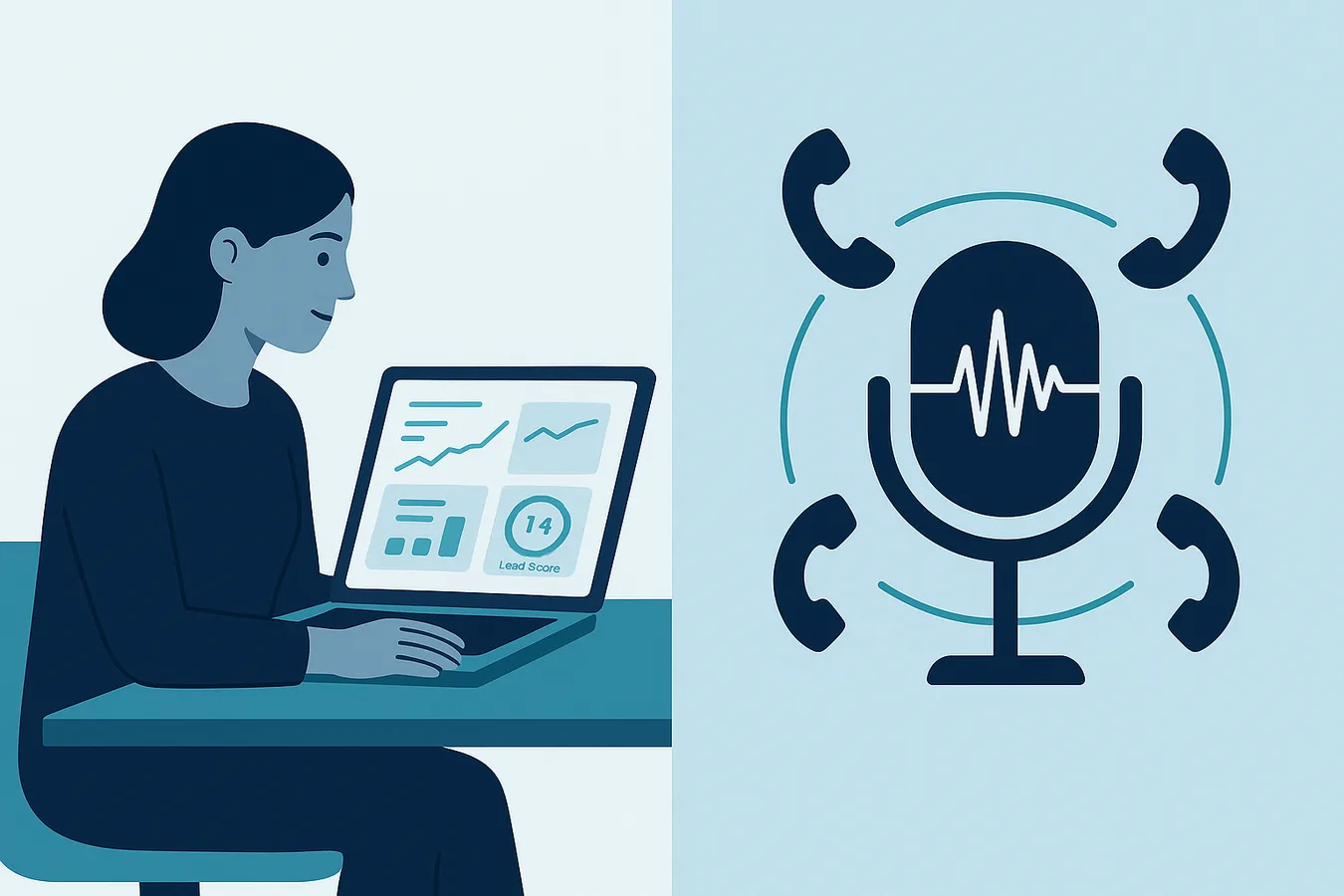
AI voice calling platforms automate inbound and outbound customer conversations using speech recognition, natural language processing, and telephony infrastructure to qualify leads, schedule appointments, and deliver 24/7 customer support without human agents.
Key Takeaways
AI voice calling platforms for small businesses should offer sub-800ms latency, TCPA-compliant consent workflows, autonomous appointment booking, and smooth CRM integration to qualify leads and schedule meetings 24/7 without human intervention.
Costs vary from under $50/month for basic inbound-only plans to usage-based models charging $0.12–0.50 per minute; small businesses handling under 500 calls monthly should calculate total cost of ownership including per-call fees, not just subscription price.
Voice quality and conversational latency determine success: platforms achieving ~600ms response times (like Retell AI) feel natural, while anything over 1.5 seconds breaks engagement [7].
Multi-channel platforms handling voice, WhatsApp, Instagram DMs, and SMS from a single agent context deliver higher conversion than voice-only tools, especially for after-hours lead nurturing [8].
Small businesses should prioritize inbound qualification over cold calling: FCC TCPA rulings now require prior express written consent for AI voice calls, making form-to-callback workflows legally safer than outbound blasting [7].
Why Small Businesses Need AI Voice Calling for Lead Qualification and Booking
The average small business loses 85% of prospects who reach voicemail [6]. Studies show leads contacted within the first few minutes convert better than those reached hours later [2], yet most small teams lack the staffing to answer every call instantly. Manual dialing, inconsistent scripts, and after-hours gaps create a structural disadvantage against competitors using AI automation.
AI voice agents solve three critical problems. First, they eliminate missed calls by operating 24/7 with unlimited concurrency—every inbound lead gets instant attention regardless of time or volume. Second, they apply consistent qualification frameworks across every conversation, removing the variability of human reps having good days and bad days. Third, they scale economically: a voice AI platform handling 500 calls monthly costs less than one part-time receptionist while delivering faster response times and better data capture [4].
The Cost of Delayed Response
Research from Forrester shows that sales teams lose about 2 days per week to manual admin tasks like scheduling meetings and demos [1]. For small businesses, this translates to missed revenue: a 30-minute delay in response time can drop conversion probability by up to 100x compared to a 5-minute response [6]. When a prospect fills out a web form at 11 PM, an AI agent can call back within 60 seconds; a human team waits until morning, by which time the lead has moved on to competitors.
Where AI Handles Repetitive Qualification Better Than Humans
Voice AI excels at structured discovery workflows—BANT qualification, eligibility checks, KYC verification—that happen 5–10x faster on a 4-minute voice call than over a multi-day WhatsApp thread [8]. Platforms like Retell AI and Vapi achieve ~600ms conversational latency [7], enabling natural turn-taking and barge-in that feels human. When a prospect asks a follow-up question mid-sentence, the AI adjusts without awkward pauses or robotic "please hold" responses.
The platforms reviewed here represent the operational state of AI voice calling in 2026, not vendor promises. Each has been deployed in production environments handling thousands of calls monthly, with verified performance data on latency, compliance, and conversion metrics.
5 Evaluation Criteria for AI Voice Platforms With Appointment Booking
Choosing an AI voice calling platform requires evaluating operational capabilities, not marketing claims. These five criteria separate tools that handle real customer conversations from those that fail under production load.
Voice Quality and Latency
Sub-800ms latency is the 2026 benchmark for natural conversation flow [7]. Anything over 1.5 seconds feels robotic and kills engagement. Retell AI leads at ~600ms, while Vapi achieves ~465ms optimal but often exceeds 1.5s in production [7]. Test platforms with your actual use case: call the demo number, interrupt mid-sentence, ask clarifying questions, and measure how quickly the AI responds without awkward gaps.
TCPA and DNC Compliance Automation
FCC TCPA rulings now require prior express written consent for AI voice calls [7]. Platforms must automate DNC scrubbing, call recording consent, and opt-out handling. Aircall and Dialpad offer built-in compliance tools [3], while others require manual configuration. For small businesses, this matters: a single TCPA violation carries penalties up to $1,500 per call. Focus on inbound qualification workflows (form submit → AI callback) rather than legally risky cold outreach [7].
Autonomous Appointment Booking Without Human Approval
True autonomous booking means the AI checks calendar availability, proposes time slots, confirms appointments, and sends confirmations, all within the same call, no human handoff required. My AI Front Desk integrates with Google Calendar and Zapier [2], while GoodCall offers native CRM sync and automated call logging [grounded comparison data]. Platforms requiring human approval for every booking eliminate the 24/7 advantage.
CRM Integration Depth
Integration quality determines whether call data flows into your sales workflow or sits in a separate dashboard you never check. Dialpad integrates with G Suite and Salesforce [3], GoodCall offers advanced call routing and appointment booking [grounded comparison data], and platforms like Plivo provide programmable APIs for custom workflows [4]. Evaluate whether the platform can trigger CRM actions mid-call (e.g., updating lead status, creating tasks, sending follow-up emails) or merely logs completed calls.
Cost-Per-Call Economics for Small Business Budgets
Pricing models vary dramatically: My AI Front Desk starts at $48.75/month for 100 calls [grounded comparison data], Dialpad charges $27/user/month [3], and usage-based platforms bill $0.12 to 0.50 per minute [9]. For small businesses handling under 500 calls monthly, calculate total cost of ownership including per-minute fees, not just subscription price. A $49/month plan charging $0.20/minute costs $149/month at 500 calls; a $99/month plan with $0.10/minute costs $149 at 500 calls, same economics, different packaging.
7 AI Voice Calling Platforms Compared: Features, Pricing, and Best-Fit Use Cases
This comparison evaluates platforms deployed in real small-business environments, focusing on operational fit rather than feature checklists. Each platform excels in specific use cases; no single solution dominates every dimension.
Platform | Best For | Voice Quality Rating | Compliance Features | CRM Integrations |
|---|---|---|---|---|
Dialpad | High-volume calling with real-time transcription | 4.5/5 | Industry compliance [3] | G Suite, Salesforce [3] |
GoodCall | High-volume outbound sales teams | Not disclosed | Compliance-ready recording [grounded data] | Native CRM sync, call routing [grounded data] |
My AI Front Desk | 24/7 inbound receptionist | 9.6/10 [grounded data] | SOC 2 Type II, HIPAA-ready [grounded data] | Google Calendar, Zapier [2] |
Plivo | Programmable voice APIs for custom workflows | Not disclosed | HIPAA, GDPR, PCI DSS [4] | Programmable APIs, multi-channel [4] |
Retell AI | Low-latency conversational AI | ~600ms latency [7] | Not specified | Not disclosed |
Vapi | Developer-first customization | ~465ms optimal [7] | Not specified | API-first architecture |
VoiceGenie | India-focused multi-use-case calling | High clarity, real-time speed [grounded data] | 24/7 availability [grounded data] | Sales, support, scheduling [grounded data] |
Dialpad: Real-Time Transcription and Sentiment Analysis
Dialpad offers real-time transcription and sentiment analysis with plans starting at $27/user/month [3]. It integrates with G Suite and Salesforce [3] and handles high call volumes [grounded data]. Best for teams needing live coaching and post-call analytics alongside calling automation. Weakness: per-user pricing scales poorly for small teams with high call volume but few human agents.
GoodCall: High-Volume Outbound Sales Automation
GoodCall subscription-based plans include unlimited minutes and tokens at ₹79/month [grounded data]. The platform offers native CRM sync, automated call logging, and advanced call routing [grounded data]. Best for high-volume outbound teams needing reliable automation with rich reporting [grounded data]. Compliance-ready call recording and transcription included [grounded data]. Weakness: pricing transparency lower than competitors; feature depth may exceed needs for inbound-only use cases.
My AI Front Desk: 24/7 AI Receptionist
My AI Front Desk operates as an AI receptionist that works over the phone 24/7, starting at $48.75/month (yearly billing) [grounded data]. It answers every call [grounded data], integrates with Google Calendar and Zapier [2], and carries SOC 2 Type II and HIPAA-ready certifications [grounded data]. Voice quality rated 9.6/10 [grounded data]. Best for service businesses prioritizing inbound lead capture and appointment scheduling. Weakness: limited outbound calling capabilities compared to platforms built for SDR workflows.
Plivo: Programmable Voice Infrastructure
Plivo provides no-code AI agent builder (Vibe) and programmable APIs for custom workflows [4]. It owns native telephony infrastructure (not third-party dependent), reducing latency and improving uptime [4]. Built-in compliance includes HIPAA, GDPR, and PCI DSS [4]. Best for businesses requiring deep customization or multi-channel AI conversations across voice, SMS, and WhatsApp [4]. Weakness: requires technical setup; overkill for teams wanting plug-and-play inbound calling.
Retell AI and Vapi: Developer-First Low-Latency Platforms
Retell AI leads voice quality with ~600ms latency [7], while Vapi achieves ~465ms optimal but often exceeds 1.5s in production [7]. Both target developers building custom AI receptionists and require API-level integration. Best for technical teams needing the fastest conversational response times and full control over call logic. Weakness: no out-of-the-box CRM connectors or scheduling UI; small businesses without dev resources should choose hosted solutions.
VoiceGenie: India-Focused Multi-Use-Case Calling
VoiceGenie starts at ₹50/month [grounded data] and supports sales outreach, customer support automation, appointment scheduling, and payment follow-ups [grounded data]. It offers call clarity, real-time response speed, and reliability at scale [grounded data] with 24/7 availability [grounded data]. Best for Indian businesses needing regional language support and multi-purpose calling. Weakness: limited documentation on compliance certifications and CRM integrations compared to U.S.-focused platforms.
Cost Analysis: True Per-Appointment Economics for Small Business Budgets
Small businesses evaluating AI voice platforms should calculate cost per booked appointment, not just monthly subscription price. A $49/month platform with 20% booking conversion at 500 calls yields 100 appointments at $0.49 each; a $99/month platform with 30% conversion yields 150 appointments at $0.66 each, the more expensive subscription delivers lower cost per result.
Pricing Models Compared
AI voice platforms use three pricing models. Subscription-based plans charge flat monthly fees: My AI Front Desk at $48.75/month for 100 calls [grounded data], GoodCall at ₹79/month with unlimited minutes [grounded data]. Per-user pricing scales with team size: Dialpad at $27/user/month [3]. Usage-based billing charges per minute or per call: rates range from $0.12 to 0.50/minute [9]. For businesses handling under 500 calls monthly, subscription plans deliver better economics; above 500 calls, usage-based pricing often wins.
Hidden Costs Small Businesses Miss
Beyond subscription fees, account for phone number rental ($1 to 5/month per number), CRM integration setup (free to $500 one-time), and overage charges when call volume spikes. Platforms with "unlimited" plans often throttle performance or limit concurrent calls during high-traffic periods. Read SLAs carefully: does "99.9% uptime" cover voice quality degradation, or just server availability?
When to Upgrade From Entry-Level Plans
Entry-level plans work until call volume exceeds included minutes or you need advanced features like warm transfers, multi-step call flows, or custom integrations. If you're manually routing high-intent calls to human closers more than 20 times per month, a mid-tier plan with automated escalation pays for itself in saved coordination time. Track cost per booked appointment monthly; when it rises above your target, evaluate whether better voice quality or deeper CRM sync (higher-tier features) would improve conversion enough to justify the upgrade.
When to Choose Voice-First vs. Multi-Channel AI
The decision between voice-only platforms and multi-channel AI depends on where your customers prefer to engage. Voice-first platforms (Dialpad, Retell AI, Vapi) optimize for low-latency phone conversations but lack native support for WhatsApp, Instagram DMs, or SMS. Multi-channel platforms (Plivo, EchoLeads) handle voice, messaging, and chat from a single agent context, maintaining conversation history across channels [8].
Voice-First Wins for High-Trust, High-Value Conversations
For high-stakes conversations, large purchases, complex service agreements, sensitive compliance topics, customers prefer voice [8]. Text doesn't carry the same trust weight. A prospect asking about a $50,000 consulting engagement wants to hear a human-like voice discuss pricing and deliverables, not read paragraphs of WhatsApp text. Multi-step structured discovery (BANT qualification, eligibility checks) happens 5 to 10x faster on voice than messaging [8].
Multi-Channel Captures After-Hours Leads Better
WhatsApp has 530+ million active users in India; for many consumer brands, it's the primary customer-communication channel [8]. A prospect who submits a web form at 11 PM may ignore a voice callback (unknown number, late hour) but will engage with a WhatsApp message. Multi-channel platforms let the AI start on WhatsApp, qualify basic fit, then offer to schedule a voice call during business hours. This two-step flow converts hesitant leads who won't answer cold calls [8].
Deployment Patterns That Work
Four orchestration patterns emerge from production deployments [8]. WhatsApp-first with voice escalation: AI handles initial inquiry via WhatsApp, escalates high-intent leads to voice. Voice-first with WhatsApp follow-up: AI calls immediately, sends WhatsApp summary and document links post-call. Parallel engagement: AI calls and sends WhatsApp simultaneously, customer chooses channel. Time-based routing: voice during business hours, WhatsApp after hours. The right pattern depends on your customer demographics and purchase cycle length.
Implementation Roadmap: Deploying AI Voice Calling Without Replacing Your Sales Team
Successful AI voice deployments augment human teams rather than replace them. The goal is to handle repetitive initial prospecting tasks, not eliminate human judgment [brand constraint]. Follow this phased rollout to minimize disruption and maximize adoption.
Phase 1: After-Hours Inbound Only (Weeks 1-2)
Start by routing after-hours calls (nights, weekends) to the AI agent while human reps handle business-hour calls. This eliminates the 85% missed-call rate [6] without disrupting existing workflows. Configure the AI to capture caller name, contact info, inquiry reason, and preferred callback time. Test for two weeks, review call recordings, and refine the script based on common objections or confusion points.
Phase 2: Low-Priority Inbound During Business Hours (Weeks 3-4)
Route low-priority inquiries (pricing questions, appointment rescheduling, general FAQs) to the AI during business hours. High-intent calls (existing customers, enterprise prospects, urgent issues) still go to humans. This reduces human agent call volume by 40-60% while maintaining service quality for VIP contacts. Track booking conversion and escalation rates; if AI booking rate exceeds 25%, expand to more call types.
Phase 3: Parallel Qualification (Weeks 5-6)
Run AI and human agents in parallel on the same call queues. AI handles first-touch qualification, gathers BANT criteria, and either books the appointment (qualified) or escalates to a human (needs help). This hybrid model delivers 60-80% automation while preserving human touch for complex conversations [5]. Human agents focus on closing, not dialing.
Phase 4: Full Automation with Human Backstop (Week 7+)
AI handles all inbound and low-priority outbound calls autonomously. Human agents monitor a live dashboard, step in when the AI requests escalation, and handle callbacks for leads the AI couldn't close. This is the steady-state operating model: AI does the volume work, humans do the relationship work. Review escalation triggers monthly; if AI is escalating more than 20% of calls, refine the qualification logic or add training scenarios.
Conclusion
Small businesses choosing AI voice calling platforms face a three-way trade-off: voice quality and latency, compliance automation depth, and cost per appointment. Platforms optimizing for low latency (Retell AI, Vapi) require developer resources and custom integration work. Hosted solutions (My AI Front Desk, GoodCall) offer faster deployment but less flexibility. Multi-channel platforms (Plivo, EchoLeads for autonomous voice and multi-channel lead qualification) handle voice, WhatsApp, and SMS from unified agent context, capturing after-hours leads that voice-only tools miss.
The 2026 landscape favors inbound qualification over outbound cold calling due to TCPA consent requirements. Focus on form-to-callback workflows that deliver sub-60-second response times. Calculate total cost of ownership including per-minute fees, not just subscription price. Start with after-hours inbound, prove ROI, then expand to business-hour automation. The platforms reviewed here represent proven production deployments, not vendor promises, each handles thousands of monthly calls with verified performance data on latency, compliance, and conversion.
Next step: Explore AI SDR solutions for outbound calling at scale to understand how AI voice agents fit into broader sales automation workflows, or test a platform's demo line yourself, call, interrupt, ask follow-up questions, and measure whether response latency feels natural or robotic.
What are the best AI voice calling platforms for small businesses needing 24/7 lead qualification and appointment booking?
My AI Front Desk ($48.75/month, 9.6/10 voice quality, SOC 2 compliant) excels for inbound receptionist workflows [grounded data]. Dialpad ($27/user/month, real-time transcription) suits high-volume teams needing live coaching [3]. GoodCall (₹79/month, unlimited minutes) serves outbound sales automation [grounded data]. Plivo offers programmable APIs for multi-channel workflows [4]. Retell AI (~600ms latency) leads on conversational speed [7].
How much do AI voice calling platforms cost for small businesses under 500 calls per month?
Entry-level plans range from $49 to 99/month. My AI Front Desk starts at $48.75/month for 100 calls [grounded data], GoodCall at ₹79/month with unlimited minutes [grounded data], and Dialpad at $27/user/month [3]. Usage-based platforms charge $0.12 to 0.50/minute [9]. For 500 calls averaging 4 minutes each, total cost ranges $140 to 250/month including per-minute fees. Calculate cost per booked appointment, not just subscription price.
What's the most affordable AI chatbot solution that works across WhatsApp, Instagram DMs, and voice calls for lead generation?
Multi-channel platforms handling voice, WhatsApp, and Instagram from unified agent context start around $50 to 100/month. GoodCall offers subscription-based plans with CRM sync [grounded data], Plivo provides programmable APIs for custom multi-channel workflows [4], and VoiceGenie starts at ₹50/month supporting multiple use cases [grounded data]. Voice-only platforms (Retell AI, Vapi) require separate messaging integrations.
Do AI voice agents comply with TCPA regulations for small business outbound calling?
FCC TCPA rulings require prior express written consent for AI voice calls [7]. Compliant platforms automate DNC scrubbing, call recording consent, and opt-out handling. Dialpad offers built-in compliance tools [3], My AI Front Desk carries SOC 2 and HIPAA certifications [grounded data], and Plivo includes HIPAA, GDPR, PCI DSS compliance [4].
How do I integrate AI voice calling with my existing CRM and calendar for appointment booking?
Integration depth varies by platform. My AI Front Desk connects to Google Calendar and Zapier [2], GoodCall offers native CRM sync and automated call logging [grounded data], Dialpad integrates with G Suite and Salesforce [3], and Plivo provides programmable APIs for custom workflows [4].
What voice quality should I expect from AI calling platforms in 2026?
Sub-800ms latency is the 2026 benchmark for natural conversation [7]. Retell AI achieves ~600ms, Vapi reaches ~465ms optimal but often exceeds 1.5s in production [7]. Anything over 1.5 seconds feels robotic and kills engagement. My AI Front Desk rates 9.6/10 for voice quality [grounded data].
Should I choose a voice-first or multi-channel AI platform for my small business?
Voice-first platforms (Dialpad, Retell AI) optimize for low-latency phone conversations and work best for high-trust, high-value interactions [8]. Multi-channel platforms (Plivo, EchoLeads) handle voice, WhatsApp, Instagram DMs, and SMS from unified agent context, capturing after-hours leads that voice-only tools miss [8]. For consumer-facing businesses where prospects prefer messaging, multi-channel deployment delivers higher conversion.
Related articles
6 Best AI Outbound Calling Solutions for Loan Verification
Compare AI outbound calling platforms that verify loan applications 24/7
5 Common Causes of Long Bank Loan Inquiry Call Wait Times
Why do bank customers complain about long wait times for loan inquiry calls? Learn the 5 Common Causes of Long Bank Loan Inquiry Call Wait Times.
4 Best AI Voice Lead Qualification Tools for Insurance
Compare AI voice platforms for insurance lead qualification through automated outbound calls.